

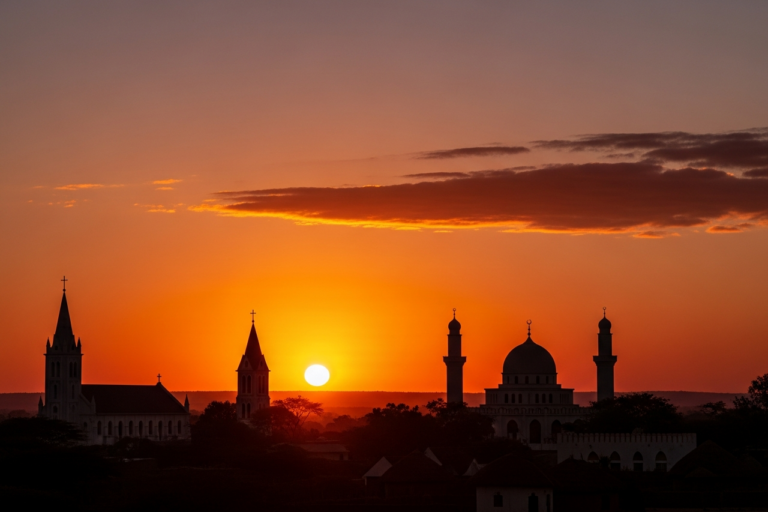
Key Highlights
-
Tanzania is known for its religious diversity. You will find Christianity and Islam are the main faiths in the country.
-
The Christian population is more than half of all people in Tanzania. Muslim communities are found in many places, mostly in coastal areas and in Zanzibar.
-
Alongside these big religions, indigenous beliefs are still part of the culture and spiritual life. This is strong in many rural areas.
-
The country’s constitution supports religious freedom. This means different religious groups are able to live together in peace.
-
There have been both Arab traders and European missionaries in Tanzania’s history. They helped shape how religion looks throughout the country today.
-
The way so many faiths are part of life makes for a rich culture. People from many religious groups have a history of living in harmony.
Introduction
Welcome to the United Republic of Tanzania. This country is famous for Mount Kilimanjaro and the Serengeti. But there is much more here. Tanzania is known for its religious diversity. You will see people with different faiths in the cities and villages. Faith is important to the people of Tanzania.
In this article, you will learn about the different religions in Tanzania. People follow Christianity, Islam, and indigenous beliefs. You will also see how religious teachings shape the culture and society of Tanzania.
Historical Overview of Religion in Tanzania
The story of religion in Tanzania shows how different cultures and people have met over a long time. Long ago, Arab traders came to the east african coast. They brought islam with them. This had a big effect and you can still see signs of it today.
Later on, european missionaries went to the mainland. They were there to share christianity. The new religious beliefs mixed with traditional african religions and local customs. This made a spiritual setting that was special to Tanzania. All these changes helped form the country we know now. Let’s see how these influences grew and shaped life there.
Influence of Early Missionaries and Traders
Traders from the Persian Gulf and Western India started coming to the East African coast as early as 1000 CE. Many of these traders were from Arab areas, so they brought Islam with them. You can still see traces of this in the area. For example, a mosque was built in Zanzibar City in 1107 CE. It shows that Muslims have been here for a long time. At first, this influence was mainly on the coast. Places like Bagamoyo grew to be key trading ports and had many Muslim communities.
In the 1500s, Portuguese explorers and European missionaries began to visit as well. They came to the coast and then went further into the country. They wanted to share Christianity with people who had not yet met Muslims. This meant that new religious groups formed, and it added to the mix of faiths in the area.
Later, in the eighteenth century, an Omani kingdom took over Zanzibar. This made Islam stronger in places like the east African coast and big towns such as Dar es Salaam. Because of this long history of different people and faiths—from Muslim traders to European missionaries—the country now has many kinds of religious groups. This is why you can see so many faiths in Tanzania now.
Development of Indigenous Spiritual Traditions
A long time before Islam or Christianity came, Tanzania had many different traditional African religions. The people in this land were deeply connected to the earth, their community, and the spiritual world. Every ethnic group had its own set of beliefs, religious practices, and ways to follow old customs. These were passed down from their parents and grandparents.
When new religions came, they did not completely replace the older spiritual traditions. Instead, these older beliefs and newer faiths mixed together. That is why you can find a special blend of religions in many places. This is easy to see, especially in rural areas where local customs and ways of life still matter a lot.
So, many people in Tanzania today might call themselves Christian or Muslim. But, they often still use parts of their old faith and indigenous beliefs in their daily life. This shows how strong and flexible these spiritual ways are. Old religious practices are still a big part of what makes Tanzania’s culture unique.
Religious Demographics and Statistics
It can be hard to know the full picture of religious diversity in Tanzania. This is because the government has not asked people about their religious affiliation in census surveys since the year 1967. The government did this on purpose to help people see themselves as one group and not focus on differences about religion.
Still, groups like Pew Research Center and some faith-based groups share their own numbers. Their estimates give us an idea of how people in Tanzania practice different religions. These numbers also show how religious diversity adds to the country’s social life. Now, let’s talk about the latest numbers and how things have changed over time.
Current Distribution of Faiths in Tanzania
Tanzania’s population is predominantly Christian, with a significant Muslim minority. The Christian population is spread throughout the country, in both urban areas and rural villages. Muslim communities are most concentrated along the coast, in cities like Dar es Salaam, and on the Zanzibar archipelago, where Islam is the faith of 99% of the population.
In addition to these two major religions, a portion of the population adheres to traditional beliefs. Many people also blend their Christian or Muslim faith with indigenous spiritual practices, showcasing a unique religious syncretism.
Here is an estimated breakdown of the religious distribution in Tanzania:
|
Religion |
Estimated Percentage |
|---|---|
|
Christian |
57% |
|
Muslim |
31% |
|
Ethnic/Traditional Beliefs |
11% |
|
Hindu |
1% |
Trends in Religious Affiliation Over Time
The government stopped collecting data about religious affiliation in the census after 1967. Still, religion stayed important in Tanzanian society and changed with time. At first, the government wanted people to think more about national unity than about which religion they followed.
In the last few years, the government has started to talk more openly about the different religious groups in the country. This happened because there were a few moments of tension between these groups. Faith-based groups stepped forward to help. They try to solve problems and help people of different religions understand each other. The government often works with them.
The government always wanted people’s public identity to be separate from religion. Still, many people in Tanzania share their faith openly and with pride. You can see this in what people wear and how they celebrate in public. People and groups accepting different religious views has helped keep peace in Tanzanian society. It lets all kinds of people live side by side.
Main Religions Practiced in Tanzania
The religious landscape in Tanzania has two main faiths. These are Christianity and Islam. Christianity is the largest religion. More than half of the people in the country follow this religion. The christian population comes from many different groups. You can find many denominations in all parts of the country.
Islam is the second-largest faith in Tanzania. There are strong muslim communities, mostly along the coast. You will also find a lot of muslim people living in Zanzibar and on other islands. Both of these religions are a big part of daily life and culture in the country. Now, we will talk about the different groups and the practices inside Christianity and Islam.
Christianity: Varieties and Communities
The Christian population in Tanzania is very mixed. You will find people from different groups. Roman Catholics are a big part of the christian population. There are also many Lutherans and Anglicans. The country is full of beautiful religious sites. Some are big cathedrals in the towns while others are small churches in rural areas. For example, you can visit the Karatu Lutheran Church outside the city.
Besides these older groups, pentecostal christian groups are getting more followers now. These newer groups are growing fast. Their worship is loud and full of energy. They like to bring people together and work as a close community. This adds more variety to the christian population in Tanzania.
Different groups have their own ways of showing faith. How people practice can change a lot from one place to another. Still, all of them are part of the strong Christian presence in the country. Their beliefs have a big effect on social services and public holidays that people enjoy across Tanzania.
Islam: Presence and Practices
Islam has been in Tanzania for a long time, especially on the coast and the Zanzibar archipelago. Most of the Muslims in Tanzania follow traditional Islamic teachings. Their culture comes from early Arab traders. The adhan, which is the call to prayer, is heard from mosques five times a day in towns and cities.
Muslim communities are an important part of life, especially in Zanzibar where almost all people are Muslim. The president of Zanzibar shows the importance of this. There is a legal system for Muslims that has a chief qadi. The chief qadi deals with things like marriage and inheritance using Islamic law.
You can see the strong presence of Islam in everyday life. Women wear hijabs and men use taqiyahs. Many people enjoy celebrations for Islamic festivals in public. The influence of Islam is part of the culture and social life of the coastal areas and other parts too.
Indigenous Beliefs and Traditional Religions
Besides Christianity and Islam, traditional beliefs still play a big role in Tanzania’s spiritual life. Many people in rural areas mix these indigenous beliefs with practices from Christianity and Islam, instead of following them as a separate religion.
These local spiritual practices help people feel closer to their ancestors, the land, and the history of their community. Even if you do not see them as much as the big religions, their impact on culture and daily life is strong. Now, let’s look at some examples of these practices and see the roles they have in society.
Local Spiritual Practices Across Ethnic Groups
Tanzania has more than 120 different groups of people. Many of them still keep their own local customs and indigenous beliefs. These ways of life often focus on honoring ancestors, respecting nature, and keeping peace in the community. In rural villages, these traditions are important in how people live every day.
These practices change over time. Many people in Tanzania now follow Christian or Islamic faiths. Even so, they do not let go of their old traditions. Instead, they mix the new and old ways, so their faith is special and fits their life.
Some regular parts of these spiritual customs are:
-
Rituals to honor ancestors and ask for help from them.
-
Using traditional healers and herbalists for health and well-being, both of the body and spirit.
-
Ceremonies that mark farming times, like planting or harvesting.
Local customs and indigenous beliefs are still strong, and rural villages keep these traditions alive.
The Role of Magic and Witchcraft in Society
In Tanzania, many people in rural areas still follow traditional beliefs. Magic and witchcraft are a large part of this, and they are linked to the history of the people there. These beliefs shape how people think and act together in their groups.
For many in Tanzania, these beliefs are not just about superstition. They help people make sense of good and bad things that happen. The Berkley Center and other groups say that traditional beliefs often mix with main religious beliefs and practices. This is called syncretism. It is not rare for people to follow both at the same time.
The system can make life feel steady for some, but it can also bring problems. There have been disagreements and even fights because of talk about witchcraft. This shows that there is still tension between new ideas and old ways of looking at the world. In all, Tanzania’s different religious practices show just how closely faith, culture, and daily life are linked together.
Minor Religions and Other Faith Communities
Christianity and Islam are the main religions in Tanzania. Even so, the country’s religious diversity is made richer by smaller religious groups. These people may not be as many in number, but they still help shape Tanzania’s multicultural life. They have their own places of worship and religious sites as well.
Some of these minority faiths are Hinduism, Sikhism, and the Baháʼí Faith. They add even more to the spirit of the country. The fact that they are present shows that there is a feeling of tolerance and living together in Tanzania. Now, we will look at some of these religious groups and see what they give to the nation.
Hinduism and Its Contributions
Hinduism in Tanzania is practiced by a small but well-known group. Most of them are people of Indian background. Their families came to East Africa a long time ago. These people are mostly found in cities. You can find many of them in Dar es Salaam.
Even though the Hindu group is not large, it has given a lot to the country’s economy and jobs. Their presence helps to make urban life lively. Colorful temples, called mandirs, are important religious sites and places of worship for this group.
These temples are more than just spots for prayer. They are places where people meet, celebrate festivals like Diwali, and do charity work. Through these events, the Hindu community has become a strong part of Tanzania’s multicultural scene. They help add to the country’s religious diversity.
The Bahá’í Faith, Sikhism, and Other Groups
Besides Hinduism, there are other minority faiths in Tanzania. These add to the country’s mix of religious groups. Sikhs, who mostly came from India, now live in many large cities. They have set up gurdwaras, which are their places of worship. This group is known for being about service and fairness to all people.
There is also the Baháʼí Faith in Tanzania. People from different backgrounds belong to this group. This religion teaches that everyone in the world should be together and united. It has been getting bigger over time and is now another part of the religious groups found in the country.
The fact that these minority faiths can be open and active is proof that there is religious freedom in Tanzania. Even though these groups may not be large, they help make the country a place where different kinds of beliefs can live together. They also add their own parts to what makes up the country’s identity.
Religion and Tanzanian Culture
In Tanzania, religion is not just something people keep to themselves. It is a big part of daily life in Tanzanian society. Faith affects the way people act and think. It shapes customs, family life, and the choices people make every day. Religious leaders are important in the community. People look to them for advice, and they often help guide the community when there are problems.
You can see how faith and local customs are mixed together all over the country. They show up in many places, like at festivals, with food, and when people come together for big moments in life. All these things in Tanzanian society have some part of religion in them. Let’s take a closer look at the way faith and local customs shape the everyday life and the celebrations of people living in Tanzania.
How Religion Shapes Daily Life
For many people in Tanzania, faith helps guide their actions. It shapes how they live each day. Religious teachings play a big part in how people treat each other, both at home and in the community. Matters of religion are open and shared. Many show their faith for all to see and it is a normal thing in society.
You can spot this influence in greetings, as well as the value they put on family and community. There is great respect for elders. The call to prayer for Muslims and the church bells for Christians both show how religion shapes the daily routine.
Religious institutions do a lot more than just spread beliefs. They set up schools and clinics to help people. These services be part of daily life in the community. This mix of faith and care shows that religion is active in everyday life. It is more than just beliefs. It is something people can see and use.
Influence in Festivals, Food, and Family Traditions
Religion has a big impact when it comes to festivals and special days. Big Christian holidays like Christmas and Easter are celebrated with a lot of excitement. Islamic festivals such as Eid al-Fitr and Eid al-Adha are also marked with large gatherings. In these moments, people pray, eat together, and spend the time with their family and friends.
Food is a big part of these religious practices. Many special meals are made and shared with others. In coastal areas where there are many Muslims, dietary laws like halal are followed. These food traditions are important. They help keep everyone’s religious identity strong and bring the community closer together.
Family traditions are often set by their religion, too. People mark important life events through religious ceremonies and local customs.
-
Weddings and funerals often have long walks or gatherings from the whole community. This brings together both religious and cultural ways of celebrating.
-
Naming a baby may include a blessing from the family’s religion.
-
Many children get raised with religious education as a big part of their lives.
These local customs in different places are shaped by religious practices, especially in coastal areas. They help bring people together and keep their beliefs alive.
Conclusion
Religion is important in shaping culture in Tanzania. Early missionaries left their mark, and indigenous beliefs are still part of the mix. Every faith adds something special to the country’s identity. When you learn about different religious practices, you get to know more about Tanzanian life. It also helps to build respect and open talks between people from different groups. As you look into the lively religious scene, think about how each tradition shows the values, rituals, and ways people live every day. If you want to know more or have questions, please reach out and connect with us!
Frequently Asked Questions
Is religious freedom protected in Tanzania?
Yes, there is religious freedom in Tanzania. The country is a secular state. Its rules give people the right to have freedom of conscience and to follow their religion. Even if the government does not keep track of religious affiliation in its counts, you will see many religious institutions working well and without trouble in the country.
Are there regional differences in religious practices across Tanzania?
There are big differences in religious practices in different places. The people in the coastal areas and the Zanzibar archipelago are mostly Muslim. This goes back a long time, to when Arab people brought their religion there. But in the inland and rural areas, you see more people who are Christian. Many in these places also mix their major faiths with traditional African beliefs and customs.
How do religious organizations operate within Tanzania?
Religious organizations in Tanzania work out in the open and are important in the lives of many people. They manage schools, hospitals, and charities. This happens both in urban areas and rural villages. Religious leaders in the country are respected by people. Even so, they are mostly expected to stay apart from any political party. This helps to keep peace in the community.



