

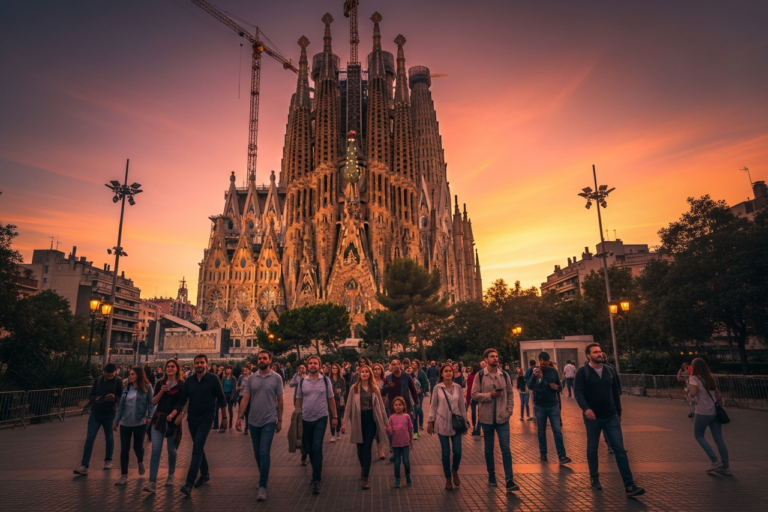
Key Highlights
-
Spain’s history has a strong link to the Catholic Church. This still shapes the country’s culture and way of life.
-
The Spanish Constitution says people have religious freedom. Because of this, you see more religious diversity in the country.
-
Most people still say they are Catholic. But, there is a clear change. Many younger generations now have no religion.
-
Other groups like Islam, Judaism, and Protestant Christianity are becoming bigger minority religions in Spain.
-
Well-known religious events like Holy Week are still a big part of Spanish culture.
-
Secularism is also going up. Many people call themselves Catholic, but do not practice their faith much.
Introduction
Spain is a place where history and faith are mixed together. There are big cathedrals and lively festivals. Religious beliefs helped shape Spanish culture. Spain was always known as a Catholic country. Now, the people have different backgrounds and beliefs. If you want to understand religion and Spanish culture, you need to look at history and how things are today. Attitudes of people are also changing. This guide will show you the interesting world of religious beliefs in Spain now.
Spain’s Religious Landscape Today
The religious scene in Spain is now more mixed than ever. Catholicism still holds the main spot, but you can see a move towards more religious diversity. Many of the Spanish population now follow other religious beliefs or choose to have no religion.
This change shows wider shifts in society, such as more people coming to live in Spain and a rise in being secular. The old religious beliefs are joining with, or being switched for, new views, so the spiritual life in Spain is lively and always changing. Let’s look at the main religions and how the Spanish population is changing in more detail.
Overview of Major Religions Practiced in Spain
Spain has long been known for the Catholic Church. This group is still the biggest of all religious groups here. About 52% of people say they are part of the Roman Catholic Church. But how often people take part in church is not the same for everyone.
In recent years, many other faiths have grown in Spain. Protestant Christianity is now a key minority religion. There is also a strong Muslim community. Some people in Spain follow Judaism or newer movements as well. These followers of other faiths help build the rich mix of religions in the country.
The main religious groups are:
-
Roman Catholicism
-
Islam
-
Protestant Christianity
-
Judaism
-
Other minority faiths and non-religious people
Demographics and Regional Differences
The distribution of religious beliefs across Spain is not uniform. The total population of over 46 million people shows diverse patterns of faith and identity that differ between the autonomous communities. Regional governments often reflect the unique cultural and historical identities of their areas, which can include religious affiliation.
For instance, some regions like the Basque Country and Catalonia have strong regional identities that sometimes intersect with religious or secular sentiments. A survey revealed that a high percentage of people in the Basque Country and Galicia feel more connected to their regional identity than to a national Spanish one. The Canary Islands, due to their history and location, also present a unique demographic profile.
Here is a look at how regional identity can compare to national identity:
|
Region |
Sense of Regional Identity |
|---|---|
|
Basque Country |
80% feel more Basque than Spanish |
|
Galicia |
75% feel more Galician than Spanish |
The Role of Catholicism in Spanish Society
For many years, the Catholic Church was at the heart of Spanish life. You can still see its influence in many parts of Spain today. Roman Catholicism is not the official state religion now, but it is still a big part of the country’s culture, art, and the way people live. A lot of people in Spain get their religious beliefs from this old tradition.
But the place of Catholicism in the world now is not so simple. Many people say they are still Catholic, but fewer people take part in religious services, especially the younger ones. The next parts will talk more about how the Catholic Church shaped Spain in the past and what that means in today’s world.
Historical Influence of Catholicism
The roots of the catholic church in Spain go back a long way. They started right after the roman empire ended. In 589 AD, Spain chose catholicism as the state religion. After many years when parts of Spain were under Muslim rule, most of the area was under christian rule by 1250. This let catholicism become an important part of who the Spanish people were.
When Queen Isabella I and King Ferdinand II joined together in the 15th century, they made the catholic church even stronger. It became the main state religion. During the golden age of Spain, the church helped the king and queen make their country bigger and more powerful around the world.
Because of this, for most of Spain’s history, if you were Spanish, you were also catholic. The religion shaped what people thought, how they made art, and how things worked in daily life. You can still feel this in Spain now, even as there are new ideas and changes in society.
Catholicism’s Presence in Modern Spain
The Roman Catholic Church still has a strong presence in modern Spain. You will find cathedrals and churches all over the country in both big cities and small towns. These places stand out as important landmarks. They are popular with people who travel to Spain and also show the country’s history and culture. Many of the buildings have famous art inside, and people work hard to keep them in good shape.
But even though you see the Catholic Church everywhere, fewer people in Spain go to religious services as they used to. A lot of older people still follow their faith, but there is a drop in the number of parish priests. Younger generations are less likely to go to church, even if they still call themselves Catholics. For many, joining the roman catholic church is now more about showing who they are and where they come from, not what they believe or do every day.
So, the church is still easy to see and plays a big role in public life in Spain. But the number of people who show deep faith is getting smaller. The Catholic Church is a part of what makes Spain unique, even if it’s not part of everyone’s day-to-day life.
Irreligion, Secularism, and Atheism in Spain
Spain still holds many religious traditions. But now, more people in the Spanish population are saying they do not follow any religion. More people now share that they are atheist, agnostic, or just not religious. This is a big and slow change happening in Spain today.
You can see this change most with young people. The same thing is also happening in other parts of Europe. More people want to keep their own beliefs and not link them with religious groups. In the next parts, you will see data that show how more people in the Spanish population now pick a non-religious way. You will also read about how people feel about this shift.
Rise of Non-Religious Identification
Sociological research, like the CIS survey, finds that more people in Spain do not call themselves part of any religion. This group is now a big part of the country and it is starting to change the way Spain looks as a whole.
This change is easy to see among younger generations. Many young people have grown up around the Catholic church, but they do not follow its religious beliefs. This shift with young people means more in Spain will likely not follow a religion in the next few years.
Here are some main reasons why this is happening:
-
People are moving away from old, formal groups.
-
There is more access to different kinds of information and ways of thinking.
-
Many young people feel their own values match better with secular or modern ways, instead of religion.
Social Attitudes Toward Irreligion
The number of people in Spain who are not religious is growing. This is changing how people think about beliefs in the country. More people are starting to accept the idea of a society where there are both religious and non-religious views. The laws in Spain help support this change.
Spain’s constitution gives people basic and fundamental rights. One of these is freedom of conscience. That means these rights are not just for those who believe in a religion, but also for people who do not. Atheists and agnostics get legal protection, too. Public authorities need to be neutral on these issues.
Sometimes there can be problems, especially when religious and secular values do not agree. But most of the time, the way things are going shows the society respects different beliefs and non-beliefs. This is an important part of Spanish democracy and human rights today.
Minority Religions and Diverse Faith Communities
Spain has seen a rise in religious diversity. The country is now home to more minority religions that have become easier to see. There is still a Catholic majority, and many people in Spain are not part of any religion. But now, more religious communities are finding their place. This adds to the cultural and spiritual life of Spain.
These religious groups include those that have been in Spain for a long time. Some are new, brought by people who have moved there from other countries. Let’s take a closer look at some well-known minority faiths in Spain, such as Islam, Judaism, and Protestantism.
Islam and the Muslim Community
Islam has a long past in Spain. It began in the time of Al-Andalus, many years ago. Today, the Muslim community, with both Spanish citizens and people who moved from other countries, is one of the biggest minority religious communities in Spain. Many came from North Africa.
In the last few years, there has been a big jump in the number of Muslims living in the country. Because of this, you now see more places of worship and cultural centers. The religious communities are full of life, add to the country’s mix of people, and bring color. But this group sometimes faces trouble getting along and worry about how others see them.
Muslims are one of the main groups of people who came to Spain from other places and brought new faiths. They are part of what makes the country full of different cultures now. Their presence links Spain back to an important piece of its history and helps guide how the country will change in the years to come.
Judaism’s History and Presence
Judaism has been in Spain for many years, just like Islam. There was a large Jewish community that lived for a long time before they had to leave in 1492. Now, a small group of Jews has made Spain home again. This group is important to the country’s mix of religious minorities.
Jewish groups, such as the Federation of Jewish Communities of Spain, help build Jewish life to make it strong. They focus on sharing Jewish heritage and making sure the community’s needs are looked after. They run synagogues, cultural centers, and school programs in cities like Madrid and Barcelona.
Even though the Jewish community is small, its history means a lot. Its presence helps Spain connect with its past and shows that there is now more religious tolerance and diversity in the country.
Protestant and Evangelical Movements
Protestant Christianity has been in Spain for a long time. It has grown a lot in the past few years. Now, it is one of the biggest and most lively minority religions in the country. This growth is seen in both native people, and people who moved to Spain from places like Latin America.
The Federation of Evangelical Religious Entities of Spain (FEREDE) speaks for many christian groups. It fights for their rights. It also gives all protestant christianity groups a united voice. Evangelical churches are seen for their strong work in the community and lively religious services.
These new movements bring a fresh side to christianity in Spain. They give us a new choice apart from the well-known Catholic Church. The expansion of these churches shows that more and more people in Spain like different types of christian groups and ways to worship.
Other Religions: Buddhism, Hinduism, Paganism, and Beyond
Spain’s religious diversity is not just about the main Abrahamic religions. The country now has a small but growing number of people who follow other faiths, like Buddhism and Hinduism. There are also groups of people who practice modern Paganism and other spiritual ways.
These religious groups help make Spain more multicultural. Their numbers are not as big as the followers of other faiths, but these groups show that Spain is more open to different beliefs now. Next, we will talk about how these new groups are growing and how immigrant communities play a role in Spain’s religious diversity.
Growth and Visibility of New Religious Groups
The number of new religious groups in Spain has gone up over the last few years. Even though their number of followers is not very big, these groups are often strong and active. For example, Buddhism has started to catch the interest of many people in Spain.
Religious organizations that represent these faiths now appear more often. They open temples, set up places to meditate, and make groups for their culture. Scientific research in Spain is now looking at these new spiritual trends. The research follows how these religious groups grow and what they mean for people in Spain.
The reasons these new religious groups are growing include:
-
People are now interested in different types of spirituality.
-
Immigration brings in religions from other countries.
-
There is a want to find a group outside old religious systems.
-
Different cultures are sharing ideas with each other around the world.
Immigrant Faith Communities
Immigration has been a main reason for religious diversity in Spain. People who come from other countries bring their own beliefs and ways of worship. This has changed the country’s religious scene in a big way. Immigrants from Latin America help make the Catholic and Evangelical Christian groups stronger.
At the same time, people from North Africa, the Middle East, and Asia build strong Muslim, Hindu, and Buddhist groups. They often set up their own places of worship and social circles. These places help people hold on to their culture and religion.
Having so many different groups makes Spanish life richer. There are new traditions, festivals, and ways to see the world. But it also means Spain has to work on being truly open, so all religions can live together in peace.
religious diversity, places of worship, latin america
Religion in Spanish Culture and Traditions
Religion is a big part of Spanish culture. Even if people’s religious beliefs change, the old force of Catholicism is still strong. People see this every day and during different events, big and small. The effect of faith is everywhere.
Many traditions in Spain are known across the world. A lot of these show up in colorful festivals that honor a patron saint. These things all tie back to the history of religion in Spain. You will read how these festivals still go on and learn how religious beliefs help some customs stay strong, even as life becomes more modern.
Religious Festivals and Their Popularity
Religious festivals are still really popular in Spain. They bring in big crowds from both the local area and from tourists. These events are a big part of Spanish culture. They mix religious feelings with coming together as a group. Almost every city, town, or village in Spain has the festival for its patron saint every year.
The best known festival is Holy Week (Semana Santa). It happens with big processions in places like Seville and Valladolid. These events are large and need a lot of work to keep public order. But they still keep a strong feeling of seriousness and old tradition.
The ongoing popularity of these festivals shows they have become more than religious events. For a lot of people, they are important to spanish culture and help people feel close as a group. Some of the big festivals are:
-
Holy Week (Semana Santa)
-
The Fallas in Valencia
-
Corpus Christi
-
Festivals for local patron saints across the country
Everyday Customs Shaped by Religion
Religious beliefs have done more than just inspire big festivals in Spain. They have shaped many daily habits and ways of living in the country. The calendar is full of both national and local holidays. Many of these holidays come from religion, like Christmas, Epiphany, and All Saints’ Day.
The education system also shows this influence. Spain has public schools. Parents can pick religious education, most often Catholic, for their kids. The offer comes from a history where the state and church worked together. This is still talked about a lot.
Some common Spanish phrases come from religion too. Ideas about family and community have deep roots in Catholic ways of thinking. Even though many people do not follow religious beliefs as closely now, the culture they helped create can still be felt every day.
Freedom of Religion in Spain
Spain makes sure people have religious freedom by law. The 1978 Spanish Constitution was a big change. It stopped Spain from being a country that followed one religion. Now Spain has a government that does not mix with religion. It gives everyone the right to believe what they want.
The Ministry of Justice handles this promise of religious freedom. It keeps a list of religious groups and gives them legal status. The next parts will show the exact legal protections for these groups. It will also talk about how minority religious groups live under these laws.
Legal Protections for Religious Practice
Spain has strong laws for religious freedom. The Constitution says no religion will be the main one of the state. This keeps church and state apart. It helps all people and groups have the right to practice their religion or to have none, both at home and in public.
The Constitutional Court makes sure these rights stay safe. Public authorities must always be fair and must not help one religion more than any other. The Ministry of Justice works with some important minority religions. This includes Islam, Judaism, and Protestantism. They get rights like the Catholic Church, in areas such as education and tax benefits.
This setup lets people follow any faith, as long as they respect public order and the rights of other people. The laws show a new, democratic way to handle religious freedom and religious diversity.
Experiences of Religious Minorities
Spain’s laws give people the right to religious freedom. But for religious minorities, life can still be hard. With legal status, their groups can set up places of worship, run schools, and open cultural centers without hiding.
Still, some things do not go easy. Some minority religious communities say they face bias from others or run into trouble with paperwork. Getting permits for new places of worship can be tough at times. Even though these problems happen, things are moving forward. Minority religions now get more respect and fit in better with Spanish society.
The way these groups live shows that Spain is changing from a mostly one-religion country to one with many. It is not just about legal status. People also need to change how they see others and learn about different cultures.
Shifts in Religion Over Time
The story of religion in Spain has been changing all the time. Over the past few years, the country went through big changes because of new people coming in and changes in society. Sociological research shows that fewer people follow old religious ways now. There is also more variety in beliefs and more people who do not follow a religion.
This change did not start recently. It goes back to Spain’s past, shaped by its history and how quickly it became a democracy. We will look at the social changes that led to this shift. We will also look at the main events that shaped Spain’s religious history.
Influence of Demographic and Social Change
Demographic change has played a big role in shaping how religion works in Spain. The country saw fast economic growth. It also joined the European Union. Because of this, people became more open-minded. Younger generations, in particular, grew up in a society that is more open and less focused on religion than the one their parents knew.
Immigration is another important factor. People came from Latin America, Africa, and Asia. They added new religions to the mix and built strong non-Catholic communities. Because of this, Spain is no longer seen as only a Catholic country.
These social and demographic changes made religion in Spain more complicated. Some people think it means less faith. Others say it is not less faith, but a change. The country now has a mix of beliefs, and many groups live side by side.
Key Moments in Spanish Religious History
Spain’s religious story has had some big turning points that made it what it is today. Before the catholic church became the main faith, people in the Iberian Peninsula followed different beliefs during the roman empire. Later, Moorish rule made the area an important Islamic center in Europe.
The Reconquista ended with full christian rule in the late 15th century. This time began Spain’s golden age, when having a strong catholic church identity gave the country power. Years after, the spanish civil war and Franco led to the church becoming closely linked to the state. Religion became wrapped up in politics.
After 1975, Spain changed to democracy and people had new religious freedom.
Key historical moments include:
-
The catholic church became the main faith after the roman empire.
-
Christians, Muslims, and Jews lived together but also had fights across centuries.
-
Spain came together under catholic leaders, starting its golden age.
-
The government and catholic church separated after the spanish civil war and the Franco period.
Conclusion
To sum up, understanding religion in Spain helps you see how people live there. The country has a long history with Catholicism. But now, you can find more and more different faiths in the country. This mix of beliefs shows how Spain is always changing.
As more people move away from religion and minority religions are easier to see, it is important to notice how religious freedom shapes daily life. Whether you enjoy Spain’s lively festivals or spend time with its many groups, knowing about the country’s different faiths makes your visit better.
If you want to learn more about Spain’s religious traditions or have questions while planning your trip, feel free to ask for a free consultation!
Frequently Asked Questions
What is the most common religion in Spain today?
The main religion in Spain is Roman Catholicism. About 52% of the Spanish population say they are part of the Catholic Church. But even with many people having catholic religious beliefs, there is now more religious diversity in Spain. Not all people who say they are Catholic go to church or take part in the same way. Some go often, while others do not.
How has the proportion of non-religious people changed in Spain?
In Spain, there are now more people who say they are not religious than before. This rise has been clear over the past many years. Sociological research, like the CIS survey, shows more people now say they are atheist, agnostic, or just not involved with any religion. This is a big change in who makes up the country.
Are religious festivals still widely celebrated in Spain?
Yes, people in Spain still celebrate religious festivals with a lot of energy. Things like Holy Week and the festivals for a patron saint are a big part of Spanish culture. For many, these events are about the culture and bring people together, no matter what religious beliefs they have. These festivals mix old ways with having a good time in the community.
Spain’s Religious Landscape Today
Spain now has more religious diversity but Catholicism is still common. More people do not follow any religion and many small religious communities are growing. People in the country have different religious beliefs and belong to many religious communities. This change is seen across the autonomous communities. It affects the total population.
Overview of Major Religions Practiced in Spain
The main religion in Spain is Catholicism, and most people belong to the Catholic Church. Still, other religious groups are getting bigger, like Protestant Christianity and Islam. These minority religions, plus people from other faiths and those who do not follow a religion, make Spain a place with many different religions today.
Demographics and Regional Differences
Spain’s total population is different in parts of the country when it comes to religious beliefs and culture. The Basque Country has a strong local identity. This can impact which religion people follow there. Governments in autonomous communities such as the Canary Islands also show this mix. They act based on the area’s own people and their backgrounds.
The Role of Catholicism in Spanish Society
The Catholic Church is not the official state religion anymore. But, it still has a big part in Spanish life. For a long time, the religious beliefs of Spanish society were shaped by Roman Catholicism. Now, fewer people go to religious services, but the catholic church is still important in the country.
Historical Influence of Catholicism
After the time of the Roman Empire, Catholicism’s power grew stronger under Christian rule. It became the state religion during the Golden Age in Spain. For many years, this history helped put Catholic religious beliefs deep into the nation’s law, culture, and identity.
Catholicism’s Presence in Modern Spain
The Roman Catholic Church still plays a big role in Spain today. You see this in its old buildings and in the way it has shaped the culture. But there are fewer parish priests now. Not as many people go to religious services as before. This shows things are changing. However, the Catholic Church still gets help from income tax deductions.
Irreligion, Secularism, and Atheism in Spain
Secularism, atheism, and people not choosing religion are growing in Spain. This is happening more in younger generations. Sociological research shows that many people are leaving organized religion. They are leaning more toward a secular way of thinking.
Rise of Non-Religious Identification
More people in Spain now say they are not part of a religion. This is a big change in the country. We know this because of scientific research and what the CIS survey shows. People are moving away from old ideas about religion and its role in daily life. This shift points to a new way the society in Spain thinks about belief and religion.
Social Attitudes Toward Irreligion
People in Spain are more open now to those who do not follow a religion. The country has laws that make sure everyone’s fundamental rights are safe. Religious freedom and a country that is not run by religion can work together with public order. The human rights of people who do not believe in a religion are also protected.
Minority Religions and Diverse Faith Communities
Spain has more minority religions now. There are many different religious communities and groups in the country. People who follow other faiths besides Catholicism are a big part of the new religious diversity and the multicultural way of life in Spain.
Islam and the Muslim Community
The Muslim community is one of the biggest minority religious communities in Spain. It adds to the religious diversity of the country. Many in this group are from immigrant faith communities. They have set up many places of worship. This group is now a big part of modern Spanish life.
Judaism’s History and Presence
There is a small group of Jewish people in Spain again, even though there was a sad past. The Federation of Jewish Communities is one of the big groups that speaks for Jewish people in Spain. This group is one of the oldest religious minorities in the country. They work to keep their religious beliefs and culture alive.
Protestant and Evangelical Movements
Protestant Christianity is getting bigger in Spain and adds to the country’s religious diversity. The Federation of Evangelical Religious Entities speaks for many of these Christian groups. They are well known for how active their communities are and for lively religious services. More people join them as the number of followers keeps going up.
Other Religions: Buddhism, Hinduism, Paganism, and Beyond
Besides mainstream faiths, there are a growing number of other religious groups in Spain. These include Buddhists, Hindus, and Pagans. These minority religions and their religious organizations play a part in making religious diversity stronger in the country. They also attract followers of other faiths who want a different spiritual path.
Growth and Visibility of New Religious Groups
New religious groups are growing and more people in Spain know about them now. Even though the number of followers in these groups can be small, scientific research says these religious organizations help make Spain’s religious diversity stronger. They also change the spiritual life of the country.
Immigrant Faith Communities
Immigrant faith groups add a lot to religious diversity in Spain. There are people from Latin America, Africa, and Asia who have made strong religious communities here. These people bring many beliefs with them, as they are followers of other faiths.
Religion in Spanish Culture and Traditions
Religious beliefs are a big part of Spanish culture. They shape things like festivals that honor a patron saint. They also affect choices for religious education. This link to faith is still strong, even if people change how they follow it over time.
Religious Festivals and Their Popularity
Religious festivals are still very big in Spanish culture. Holy Week and days for a patron saint bring a lot of people together. These events mix faith and old ways. They get big crowds and they need there to be work done to keep public order. People come together at these times to feel like one group.
Everyday Customs Shaped by Religion
Everyday habits in Spanish culture come from old religious beliefs. You can see this in things like when people have holidays, the way they talk, and how students in public schools can still choose religious education. This is true even now, when not many people go to religious services like before.
Freedom of Religion in Spain
Freedom of religion is a basic right in the Spanish Constitution. Public authorities, like the Ministry of Justice, must make sure that everyone gets religious freedom. This means the state will be fair and will protect many different beliefs.
Legal Protections for Religious Practice
Spain has strong laws that help people practice their religion. The Ministry of Justice looks after these laws. The Constitutional Court also protects these important rights. Registered religious organizations in Spain get legal status. Because of this, they are free to operate within the law.
Experiences of Religious Minorities
The lives of religious minorities in Spain have gotten better since they now have a legal status. There are still some problems, but with the protection of their human rights, these religious communities can follow their faith. This helps make the country more diverse.
Shifts in Religion Over Time
Religion in Spain has changed a lot over time. This is because there have been changes to the people in the country and the things that have shaped their religious beliefs. Sociological research shows that younger generations are moving away from old traditions. Now, they are choosing more secular ways and there is more diversity when it comes to what people believe.
Influence of Demographic and Social Change
Changes in who lives in a place and the way people live, often because of economic growth and more people moving to Spain, have had a big impact on religious beliefs in Spain. Sociological research finds that younger generations are not as religious as older ones. This shift has led to a society that is more diverse and less focused on religion.
Key Moments in Spanish Religious History
Some big moments in Spain’s religious history are when it took on Catholicism after the Roman Empire. Spain started Christian rule and brought it all together as the state religion in the Golden Age. The country played a tricky part in the Spanish Civil War with its religion.
What is the most common religion in Spain today?
The main religion in the Spanish population is Roman Catholicism. The Catholic Church is the biggest group there. But now, these traditional religious beliefs are not the only ones people have in Spain. There is more religious diversity, and many people do not practice any faith.
How has the proportion of non-religious people changed in Spain?
In the past few years, more people in Spain do not follow a religion. Many of them now say they are atheist or agnostic. This is not only happening in Spain. It is part of a bigger change in Europe. As a result, there are less traditional religious activities and connections among the people.
Are religious festivals still widely celebrated in Spain?
Yes, religious festivals are still a big part of Spanish culture. Events such as Semana Santa and La Tomatina bring in thousands of people every year. These festivals show strong traditions in the country. They mix faith and community life, which is why they still matter to people in Spain today. They also let us see the rich cultural heritage of Spain.



