

Key Highlights
-
Saudi Arabia is known as the birthplace of Islam. Sunni Islam is the state religion here. It has a big effect on the laws and way of life in the country.
-
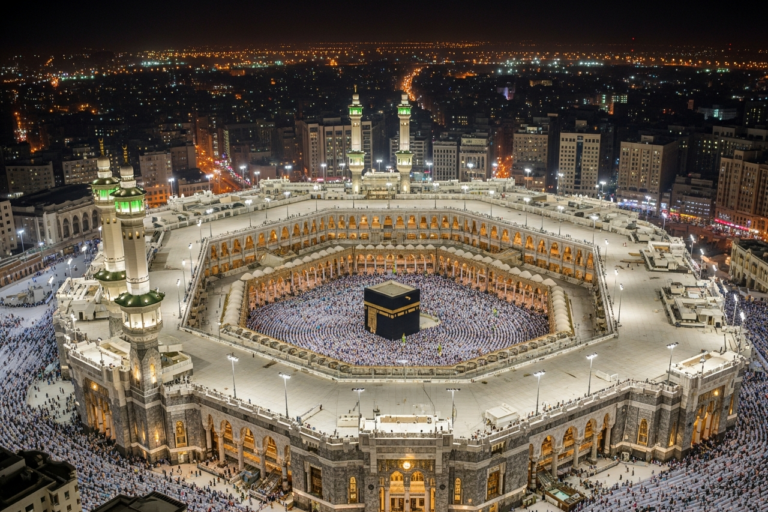
Mecca and Medina are in Saudi Arabia. These two cities are the most holy places for Islam. Millions of people go there every year for a religious trip.
-
Sunni Islam is practiced by most people. Still, there are some religious minorities too. A large group of Shia Muslims live in the Eastern Province.
-
Many parts of life are ruled by religious laws, as the legal system uses Sharia. How these laws are followed depends on the way people read and use them.
-
The legal system in Saudi Arabia does not allow public worship for people who are not Muslim. This rule is important because of the many foreign workers in the country.
Introduction
Welcome to a look at religion in Saudi Arabia. This country is the home of the Islamic religion. The identity of the kingdom is closely tied to its faith. Islam is not only a part of life in Saudi Arabia. It is also the state religion and the base for its laws and way of life. To know about Saudi Arabian daily life, history, and culture, you need to understand how important religion is. This article shows the main faith in Saudi Arabia, talks about other religious groups, and explains how these beliefs shape the nation.
Historical Overview of Religion in Saudi Arabia
The religious history of Saudi Arabia goes way back, even before the country was created. The Arabian Peninsula has long been a place where cultures and religions come together. But in the 7th century, something big happened. This moment changed the future of the region and the world.
Many years later, leaders made a strong partnership that helped build the religious establishment we see today. Let’s look at the main times in history that shaped the religious side of the region, starting from ancient periods through the birth of the Saudi state.
Religion in Pre-Islamic Arabia
Before Islam began, the Arabian Peninsula had many different beliefs. Many tribes believed in and prayed to more than one god. They had many idols that stood for these gods and goddesses. These idols were found everywhere. Mecca was already an important place that people traveled to. The Kaaba in Mecca held many of these idols.
People call this time the pre-Islamic period. Life was centered around tribes. People were loyal to their own tribe first. These groups did not come together as one. Most people were polytheists, but there were also groups of Christians and Jews living in some parts of the Arabian Peninsula. This mix of religions helped shape life during that time.
People followed rules and ways of living based on what their tribe believed and did. This way of living and thinking set things up for a big change that was coming. This big change would join the peninsula and deeply shape what saudi society would become.
The Emergence and Spread of Islam
The 7th century was a big moment because of the life and teachings of Prophet Muhammad in Mecca. Mecca is where Islam began, making the Arabian Peninsula the start of a new faith with one God. This faith spread fast to other places in the region. The prophet Muhammad shared messages from God. These messages became the Quran, which is the Islamic holy book.
This new faith asked people to worship only one God, called Allah. It also gave a clear set of rules that changed how people lived. The first Muslim community started in Medina. This helped the Islamic world grow quickly. The holy mosques in Mecca and Medina are important to people who practice Islam.
Islam is the most common religion in Saudi Arabia. It shapes nearly every part of daily life. There are rules for law, behavior, and how people live that come from the faith. Islamic ideas are found in how the country is run and in Saudi Arabia’s culture. That is why many in the islamic world see the Kingdom as a center for the faith.
[saudi arabia, prophet muhammad, daily life, holy mosques, islamic world, arabian peninsula, birthplace of islam]
The Alliance of Al Saud and Muhammad ibn Abd al-Wahhab
In the 18th century, an important partnership started that would change the path of the modern Saudi state. Muhammad ibn Saud, who was a leader in the Najd region, teamed up with Muhammad ibn Abd al-Wahhab. He was a religious leader that called for a return to what he said was the pure, original form of Islam. In 1744, they made an agreement that mixed strong political goals with deep religious feelings.
This partnership gave the ruling family, Al Saud, support for their plans to expand. The interpretation of Islam that Muhammad ibn Abd al-Wahhab promoted is now often called Wahhabism. This way of life pushed strict following of the Quran and the Sunnah, and it became a core part of the Saudi state and later rulers.
This old alliance still helps make the Kingdom of Saudi Arabia what it is today. The tie between the Al Saud family and this main form of Islam continues to shape the country’s religion, day-to-day life, way of leading, and attitude of the modern Saudi state.
Dominant Religion: Sunni Islam
Sunni Islam is the state religion of Saudi Arabia. Its beliefs shape the country. The Saudi Arabian government and the religious leaders work closely together. The government follows a certain way of practicing Sunni Islam. This way affects Saudi laws, the education system, and daily life. The Basic Law of Governance of Saudi Arabia says that Islam is the state religion. It says the Quran and the Sunnah are like the country’s constitution.
This section talks about the main parts of Sunni Islam that are important in Saudi Arabia. It looks at the big religious groups that help guide people in Saudi Arabia, and shows how this faith is found in the lives of Saudi citizens each day. It also explains that Saudi citizens are required by law to be Muslim.
Core Beliefs and Practices of Sunni Islam in Saudi Arabia
Most Saudi citizens are Sunni Muslims. Their daily life is shaped by a strict view of Sunni Islam. This view comes from the Hanbali school and focuses on following the fundamentals of the Islamic religion. People live by traditional Islamic values in everything they do.
The main ideas are built around the Five Pillars of Islam. These beliefs guide how people act each day, week, and year. The Five Pillars show what is most important in the Islamic religion.
Key practices include:
-
Saying the declaration of faith (Shahada).
-
Praying five times a day (Salat) facing Mecca.
-
Giving money or help to charity (Zakat).
-
Fasting in the month of Ramadan (Sawm).
-
Going to Mecca for pilgrimage (Hajj) if you are able.
These parts of Sunni Islam are shared by everyone. They shape the daily life of Saudi citizens and reflect strong islamic values and the fundamentals of the islamic religion.
Religious Authorities and Institutions
The Saudi government keeps a strong group of religious leaders and groups to manage how religion works in the country. The main group is the Council of Senior Scholars. These top Saudi scholars help interpret Islamic law. They give advice to the king about religious issues. They guide the public on how to act and what rules to follow.
The Ministry of Islamic Affairs, Dawah, and Guidance is another big part of this system. It looks after the many mosques in Saudi Arabia. It chooses and checks the imams. It also runs religious outreach programs inside the country and in other places. The ministry makes sure the government’s interpretation of Islam is taught in all parts of the nation.
These groups work together with the Saudi government to make people follow one way of practicing religion. The Council of Senior Scholars and the Ministry of Islamic Affairs help set the country’s religious habits. With these bodies, public life follows the official interpretation of Islam. This is how the government keeps everyone behaving and believing in the same way.
How Sunni Islam Shapes Daily Life
In Saudi Arabia, Sunni Islam is more than just a religion. It is a key part of daily life that touches everything, from how people act each day to how they treat each other in the society. The day moves with the five calls to prayer. Stores and offices close for these, so workers can take time for public worship at mosques nearby. This tying together of faith and daily routine is what makes this way of life so clear in Saudi society.
Islamic values play a big role in how people live, speak, and dress. Ideas like modesty, respect for older people, and the need to put family first are built into life in Saudi Arabia. You can see these rules in how people talk to one another, in dress codes, and in how men and women are kept apart in many public areas. The whole society is set up to follow Islamic values.
The impact of Islam shows up in many parts of daily life:
-
Public Schedule: The work and school week moves around the big Friday prayer service.
-
Business: Shops and offices pause during the times for prayer.
-
Social Norms: There is often a divide between men and women, and people wear modest clothes.
-
Legal System: The country’s laws follow Islamic Sharia.
This deep effect of the religion shapes nearly every part of daily life for people there.
Religious Minorities in Saudi Arabia
Sunni Islam is the main religion in Saudi Arabia. But, there are also religious minorities in the country. The Shia Muslim community is the largest group of Saudi citizens who are not Sunni. There are also a lot of foreign workers living and working in Saudi Arabia. They come from many backgrounds and follow other religions like Christianity, Hinduism, and Buddhism.
Life is not the same for all of these minorities. In this section, we look at where the Shia community lives and how they practice their faith. We also talk about the lives of non-Muslim groups who are in Saudi Arabia as foreign workers. The way people from different religious backgrounds live together in the kingdom is also covered here.
Shia Muslim Community: Distribution and Practices
The Shia Muslim community constitutes a notable minority of Saudi citizens, estimated to be around 10-15% of the citizen population. The primary difference between Sunni and Shia Muslims stems from a historical disagreement over the succession to the Prophet Muhammad. Shias believe leadership should have remained within the Prophet’s family, starting with his son-in-law, Ali.
These Shia citizens are concentrated in specific parts of the country. The largest community resides in the oil-rich Eastern Province, particularly in the oases of Al-Hasa and Qatif. Smaller communities also exist in other areas, such as Najran in the south and near Medina in the west. Their religious practices, such as the commemoration of Ashura, differ from those of the Sunni majority.
Here is a look at the main Shia communities and their locations:
|
Shia Group |
Primary Location(s) |
Key Characteristic |
|---|---|---|
|
Twelvers |
Eastern Province, Medina area |
The majority Shia group, following twelve Imams. |
|
Ismaili (Seveners) |
Najran Province |
A smaller group following a different line of Imams. |
|
Other smaller groups |
Medina area (e.g., Nakhawala) |
Historically distinct communities in the Hejaz region. |
Treatment and Status of Other Religious Minorities
Outside the Shia community, most other religious minorities in Saudi Arabia come from people who work there but are not from the country. Many of these foreign workers are Christian, Hindu, Buddhist, or have other beliefs. These non-Muslim people face strong limits on how they can follow their religions.
In Saudi Arabia, the law does not let people practice any religion in public except Islam. Because of this, you will not find public churches, temples, or other places where non-Muslims can worship out in the open. Private worship is mostly allowed, but it is not fully safe and is often watched by the government. This is why groups that care about human rights often bring up worries about religious freedom for these people.
The way these religious minorities are treated is not simple:
-
Non-Muslims can usually hold private religious meetings, but the law does not clearly protect them.
-
It is against the law for non-Muslims to try to spread their religion.
-
Bringing non-Islamic religious books or materials into the country can be limited.
-
All foreign workers, no matter their background, must follow Islamic customs and laws.
So, in Saudi Arabia, religious freedom is a big issue for many foreign workers and religious minorities. Many groups are still asking for more rights and freedom for these people.
Social Dynamics between Sunnis and Shias
The way Sunnis and Shias interact with each other in Saudi society is not simple. There have been many years of problems between them. For a long time, some rules and talks from the government made Shia practices look wrong. This has caused Shias to be left out in many areas. Because of this, there is a lot of mistrust and division between the two groups.
Many Shias say they face unfair treatment when they try to get jobs, go to school, or deal with the justice system. Groups like Human Rights Watch talk about how Shias do not get many top jobs in the government or the army. Shias have also found it hard to build mosques or places for their community. In Saudi society, Shias are a religious minority, and they often feel left out.
Lately, the government has tried to help all people feel more united and to lessen tension between Sunnis and Shias. But it is not easy because old ideas and past troubles still get in the way. There is still a big challenge for people in Saudi society who want all groups to really be equal and included. Human rights and fair treatment for everyone are still big issues that many think about.
Legal Framework and Religious Laws
The legal system in Saudi Arabia is like no other. It is based on Sharia, which means Islamic law. In Saudi Arabia, there is no line between religious law and state law. They are the same. The Saudi government follows a certain way of looking at Islamic law. They use the Quran and the Sunnah to set rules for everything in life. This goes from how they handle crime to things like family matters.
This system makes one set of religious rules for how people should act in public and in their lives. Next, we will look at where these rules come from, how they are used by the saudi government, and what they mean for religious practice. We will talk about rules for everyone, and also about what non-Muslims can or cannot do.
Constitutional Principles on Religion
The rules for how Saudi Arabia works as a country are found in the Basic Law of Governance. This was set up in 1992. Article 1 of this law says right away that Saudi Arabia is an Islamic country. Its religion is Islam. Its rules come from the Quran and the Sunnah, which are the teachings of the Prophet Muhammad. Because of this, Islam is the state religion. It is used for all laws and is part of every part of life there.
The Basic Law gives the Saudi Arabian government the job to protect Islam, follow Sharia, and “enjoin good and forbid evil”. People do not get freedom of religion. The laws are set up to support only one way of Sunni Islam.
This also matters when people talk about citizenship. While it is not written clearly that every citizen must be a Muslim, you have to be Muslim to get Saudi Arabian citizenship. If a Muslim in Saudi Arabia stops being Muslim, this “apostasy” is a crime that can be punished by death. So for all practical reasons, to be a Saudi citizen is the same as being a Muslim. This keeps the country’s strong religious identity.
Enforcement of Islamic Law (Sharia)
In Saudi Arabia, the way Sharia is enforced uses a system with many state groups. The main justice system has courts and judges. These judges handle both civil and criminal cases using Islamic law. They are religious scholars who learn a fixed way of Islamic law, or Islamic jurisprudence. The Ministry of Interior runs the regular police, who do general law work.
In the past, the Committee for the Promotion of Virtue and the Prevention of Vice, also called the religious police, was well-known for enforcing religious and social rules. This group made sure shops shut down during prayer times, and that people kept to public dress codes. Their power has gone down a lot in recent years. Still, their past actions show that the country wants to enforce public morality.
The government in Saudi Arabia uses several ways to make people follow their view and interpretation of Islam:
-
A justice system that uses Sharia law in every decision.
-
Religious groups run by the state who support just one interpretation of Islam.
-
Laws that make people act in public by what Islamic rules say.
-
Teaching and media that repeat these religious norms.
Religious Restrictions and Public Practice
Saudi Arabia puts in place tough rules about religion. The government does not let people take part in public worship if the faith is not Islam. You will not see churches, temples, or other religious buildings for non-Muslims in the country. This makes it clear that public worship for any religion other than Islam is not allowed.
This rule makes things hard for all the people from other places who live in Saudi Arabia. There are many expatriates in the Kingdom who do not have much religious freedom. Most of the time, private worship happens. But there is a lot of worry because the law is not clear. Police could raid a house and arrest people if they think the group is too big or gets noticed. People in minority faiths always feel unsure about what could happen.
The country also controls what you can say about religion. You cannot go against the government’s interpretation of Islam. If you try to push other beliefs or question what is taught, it is illegal. People who do this face strong punishment. The religious rules in Saudi Arabia are some of the strictest found anywhere, and there is a lot of talk around the world about how these strict rules impact people’s lives.
Keywords: saudi arabia, interpretation of islam, public worship, religious freedom, freedom of expression
Places of Worship and Pilgrimage
Saudi Arabia has a special place in the Muslim world. It is home to the two holy cities, Mecca and Medina. The Grand Mosque in Mecca and the Prophet’s Mosque in Medina are the most important places for Muslims. Every year, millions of people go to Saudi Arabia for Hajj or Umrah. These trips are deeply spiritual for every Muslim who makes them.
But you will not find any non-Muslim houses of worship in Saudi Arabia. This is a key part of life there. The country is known for only having Islamic places to pray in. In this section, you will learn about the holy cities, what makes the Islamic pilgrimage important, and why Saudi Arabia does not allow churches or other non-Muslim religious buildings.
The Holy Cities: Mecca and Medina
Mecca and Medina are at the heart of the Muslim world. Their importance is hard to put into words. Mecca is the holiest city in Islam. The Kaaba, a cube-shaped building, sits in the middle of the Grand Mosque. Muslims all over the world turn to face the Kaaba when they pray. Every year, people go there for the Hajj pilgrimage.
Medina is the second holiest city. It is where Prophet Muhammad started the first Islamic community. His tomb is in the Prophet’s Mosque in this city. Medina marks the start of the Islamic state and means a lot both for faith and for history. Both of these holy mosques are huge and are always getting bigger to fit more people who come to worship.
Only Muslims can go into Mecca and Medina. This rule shows how special these cities are in the Islamic faith. For many millions of Muslims, both cities are strong signs of unity, the past, and devotion. They make Saudi Arabia the spiritual center of their faith and life.
The Hajj and Umrah Pilgrimages
The Hajj and Umrah are very important trips in Islam, and both happen in Saudi Arabia. The Hajj is a trip to Mecca that every healthy and able Muslim should do at least one time in their life if they have enough money for it. Hajj takes place in one main month of the Islamic calendar. There are many rituals that people do during this time.
The Umrah is often called the “minor pilgrimage.” It has some of the same rituals, but it is shorter and can be done any time during the year. Both Hajj and Umrah are big spiritual steps for people, and they bring millions in the Muslim world to Mecca each year.
These religious trips mean a lot in Saudi Arabia, for people who visit and for Saudi citizens. The Saudi government spends a lot to keep everything running well, like travel, places to stay, safety, and health care. This shows how important Saudi Arabia is for the Muslim world.
Absence of Non-Muslim Houses of Worship
There are no non-Muslim houses of worship in Saudi Arabia. This is because it is an official policy set by the Saudi government. The government follows a strict reading of Islamic texts, and that is why it does not allow the building or public running of churches, temples, or any other non-Muslim religious site. This rule applies everywhere in the country.
The reason for this policy is that Saudi Arabia, and the Arabian Peninsula, are seen to have special meaning in Islam. Many people there think their land is holy because it is the birthplace of Islam. They feel that other faiths should not be shown or practiced in public, and this is especially true around the holy cities. Because of this, non-Muslim public worship is not allowed.
This rule affects the many foreign workers living in Saudi Arabia. Most of the time, private worship in people’s homes is ignored by the authorities. Still, people from other cultures or religions have no official places where they can meet, practice their faith in public, or build a community. Because of this, religious freedom in Saudi Arabia continues to be a big topic when other countries talk with the Saudi government.
Religion, Society, and the State
In Saudi Arabia, religion, society, and the state are closely tied together. The ruling family has always gotten its right to lead from watching over the faith. In this country, religion is not a thing that stands apart. It is the main base that the saudi government and saudi society stand on. All politics and how the leaders rule are seen through the rules of Islam.
In this part, we will see how this strong mix shows in real life. We will talk about the role of religion in politics. We will talk about how it shapes what people think is right and how the law is kept. We will also show how it helps build the saudi national schools. This will show the deep mark faith makes on all parts of the state.
Role of Religion in Politics and Governance
Religion is at the center of both politics and how the saudi government works in saudi arabia. The royal family, who leads the saudi government, gets much of its power from showing that it will protect and stand by Islam. The King’s title, “Custodian of the Two Holy Mosques,” shows this important religious duty.
Islam is the state religion and shapes both the rules and laws in saudi arabia. Big political choices are often explained using religion. The saudi government often looks for the help of the religious establishment to keep the country steady and to strengthen its right to lead. In saudi arabia, religion and politics are very connected, so the government’s moves seem to match what is believed to be God’s law.
This way of ruling is used to keep everyone following the same path. When roles in power are shaped by religion, any attempt to disagree with the government could be made to look like it is against religious beliefs too. The saudi government uses its hold on religious places, news, and what gets taught in schools to tell people that being loyal to the state also means being good in the eyes of their faith.
Public Morality and the Committee for the Promotion of Virtue
For many years, the main group in Saudi Arabia that watched over public rules was called the Committee for the Promotion of Virtue and Prevention of Vice. Many people know them as the religious police or Mutawa. This group worked for the government. They made sure that people followed the state’s strict ideas about Islamic law.
People would often see the religious police walking or driving through the cities. They checked if shops closed at prayer time. They watched the way men and women dressed. They also stopped men and women who were not related from being together in public. The religious police could stop people, ask questions, and even take people in for more checks. In fact, they were a very strong part of daily life. They helped keep everyone doing the same things.
In 2016, there was a big change. The religious police lost much of their power. They could not arrest people anymore. Now, they had to tell regular police if someone broke the rules. This change was huge for daily life in Saudi Arabia. Yet, the idea of promotion of virtue and prevention of vice stayed the same. The state still wants people to follow these ideas, but leaders use new and less direct ways to do this now.
Education and Religious Curriculum
The education system in Saudi Arabia plays a big role in teaching the state-approved interpretation of Islam to Saudi youth. The religious curriculum in public schools is large and required for students at every level, from elementary to secondary school. The Ministry of Education checks the material to make sure it matches the country’s official religious beliefs.
Islamic studies classes fill much of the school day. These courses teach the Quran, the sayings of the Prophet called Hadith, Islamic jurisprudence, and the main ideas of the Wahhabi interpretation of Islam. This way, all students get one clear message about religion from a young age.
This approach helps the government make sure people follow the same beliefs:
-
Mandatory Religious Education: Every student must learn a full Islamic curriculum.
-
University Focus: Islamic studies are still important in higher education.
-
Textbook Content: School books help support national religious and cultural values.
-
Teacher Training: Teachers prepare to teach this exact curriculum, which shapes how young people see the world.
Contemporary Issues and International Perspectives
In the last few years, Saudi Arabia has seen many quick changes in how people live and work. This is happening under the leadership of the Crown Prince. The country has changed rules about religion as well. Still, there is a lot of focus from other countries about human rights and religious freedom in Saudi Arabia.
This last part will look into how the country now handles matters of faith. It will also show how groups from around the world and watchers see religious freedom in Saudi Arabia right now. This will help you see how things are changing and what outside pressure the nation faces about human rights and international religious freedom.
Recent Changes in Religious Policy
The Saudi government, led by Crown Prince Mohammed bin Salman, has made many changes in the country. These changes are meant to help the economy and modernize society. One big step was in 2016, when the powers of the religious police were cut back.
The Crown Prince has often spoken about the need for Saudi Arabia to follow a more “moderate” form of Islam. He wants to limit the reach of strict clerics who do not support his plans. You can see these changes with women now allowed to drive and with public entertainment venues being open again. People in Saudi Arabia were not allowed to have these things before for religious reasons.
Even with some new freedoms, the saudi government has not let go of tight control. There is still a strong crackdown on people who disagree with the new plans. Clerics and people who speak up against the government, including activists, are still being arrested. So while day-to-day life may be more open now, the state is in control, just with new policies and priorities under Crown Prince Mohammed bin Salman.
International Views on Religious Freedom
International groups often say that religious freedom in Saudi Arabia is very limited. Human rights groups like Amnesty International and Human Rights Watch, plus groups like the U.S. Commission on International Religious Freedom, share reports about the country’s strict rules. The lack of legal support for religious minorities is their main worry.
Big news outlets like The New York Times often share stories about problems faced by Shia citizens and people from other religions who live there. There is a ban on any non-Muslim worship in public. Apostasy is treated as a crime. Discrimination also happens to those who are not part of the main religion. Reporters keep writing about these issues.
International reports and ratings talk about some main problems:
-
There is zero public worship allowed for non-Muslim religions.
-
Shia citizens face deep-rooted discrimination.
-
The death penalty can be given for crimes like apostasy.
-
Strong blasphemy laws limit freedom of expression.
All these things make Saudi Arabia one of the toughest countries for religious freedom in the world.
Conclusion
In the end, religion has a big part in how culture and social life look in Saudi Arabia. It goes back to when Islam started and is important in the way people live each day, how the country is run, and what people think is right. Knowing about the rules in the country and what makes Sunni Islam special helps you see more of the true nature of Saudi Arabia. Things are changing now with new rules about religion, but faith is still very important to many people in Saudi Arabia. If you want to know more or have questions about religion in Saudi Arabia, you can reach out for help or to talk about it.
Frequently Asked Questions
Is public worship of religions other than Islam allowed in Saudi Arabia?
No, the Saudi government does not let people do public worship for any religion except Islam. Because of this, there are no churches, temples, or other non-Muslim places to pray in the country. This rule is a big limit on religious freedom for religious minorities in Saudi Arabia.
What rights do religious minorities have in Saudi Arabia?
Religious minorities in Saudi Arabia do not have many rights. Non-Muslims in the country are not allowed to show their faith in public. Shia citizens in Saudi Arabia say they face unfair treatment in many parts of life. Sometimes, non-Muslims can pray in private, but there are no laws to protect this right. This is why many human rights groups are worried about the way people are treated in Saudi Arabia, especially religious minorities and Shia citizens.
Have there been any significant changes to religious laws in recent years?
Yes, with the current Crown Prince in place, the Saudi government has made big changes to its religious policy. The power of the religious police is now less. The country is also working to have a more open and friendly social feel. But, the legal system still follows Sharia law. There are still limits on non-Muslim worship.



