

Key Highlights
-
Rwanda’s constitution gives people the right to religious freedom, but new government rules have made things harder for some religious groups.
-
Most people in Rwanda practice Christianity. Roman Catholicism and Protestantism are the two main branches.
-
Islam is also an important religion in Rwanda. The number of Muslims in the country went up a lot after the 1994 Rwandan genocide.
-
Religious institutions were linked to the rwandan genocide in many ways, and in some cases their involvement was tragic.
-
The government has shut down thousands of places of worship because they did not meet new safety and legal rules.
-
New laws say that pastors must now have theological degrees, and there are stricter rules for how religious institutions must be run.
Introduction
Let’s take a closer look at religion in Rwanda. This is a place with a long and deep spiritual past. Its people have believed in something bigger for many years, long before the time of colonial rule. Religion is important for all of them and still shapes life in their country today.
The Rwanda constitution gives people religious freedom and the right to practice any faith. This means you see many kinds of beliefs living together here.
This article will talk about the rich history of religion in this country. We will look at the old faiths that were here first. We also talk about the big faiths people follow today and how religious freedom is changing for them all.
Religious Landscape of Rwanda
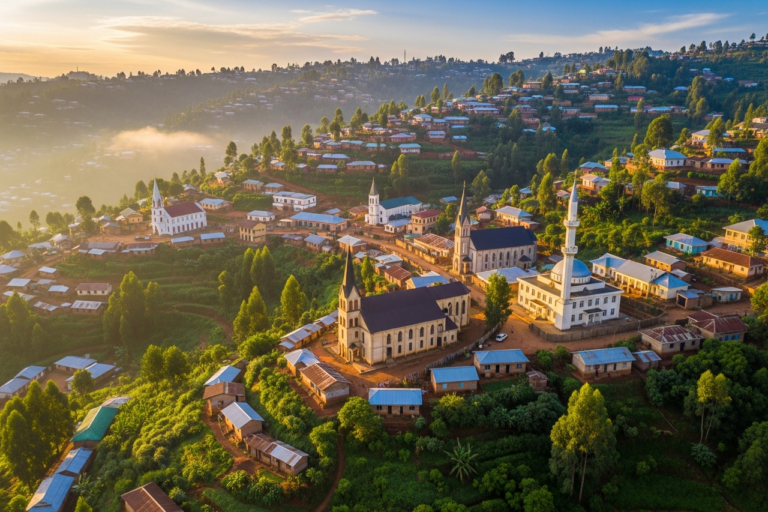
Rwanda has many religious groups, and most people there are Christian. You can see a lot of different places of worship in the country. There are big cathedrals and small, local mosques. All these show the mix of religious affiliation among the people.
Christianity is the main faith, but other world religions are in Rwanda, too. The history of faith here is interesting. There have been changes over time, and new beliefs have come in from other places. This makes Rwanda’s spiritual life special. When you look at these different groups and places of worship, you can learn more about the country’s culture.
Major Religions and Their Representation
The major religion practiced in Rwanda today is Christianity. The religious demographics are heavily skewed towards various Christian churches. The Roman Catholic Church has historically been dominant, a legacy of Belgian colonial rule. However, you will also see a strong presence of Protestant denominations throughout the country.
Beyond these major groups, you can find other Christian denominations like Jehovah’s Witnesses. Islam also represents a significant minority religion. In recent years, even Judaism has established a presence with the opening of the first synagogue in Kigali. This diversity shows a country where many faiths have found a home.
Here is a look at the major religions practiced in Rwanda:
|
Religion |
Notes |
|---|---|
|
Roman Catholic |
Historically dominant due to Belgian colonial influence. |
|
Protestant |
Includes Pentecostal, Presbyterian, Anglican, and Baptist churches. |
|
Islam |
A significant minority faith with a growing community. |
|
Other |
Includes Jehovah’s Witnesses and a small Jewish community. |
Evolution of Religious Demographics
The way people think about religion in Rwanda has changed a lot over time. Long ago, before the country had outside influence, people in Rwanda followed their own spiritual ways. These ways were based on their belief in “Imana.” When missionaries came at the start of the 20th century, they brought Christianity with them. This new faith spread fast, and soon Christian churches became very important in daily life. This change had a big effect on old religious practices.
After the 1994 Genocide against the Tutsi, many Rwandans changed their religious affiliation. Some felt that Christian churches had let them down or not kept them safe. Because of this, a lot of people turned to new groups. The number of Muslims in Rwanda has even gone up, maybe as much as twice what it was before, because people wanted different beliefs and communities.
In the last few years, it has sometimes been hard for people to have true religious freedom. Since 2018, the government decided to make new laws for religious places. Because of these laws, thousands of churches had to close. This has made a difference for the total population, changing who can go where to pray. Now, people are talking more about what the state should and should not do when it comes to how they worship or practice their religious belief.
Christianity’s Influence in Rwanda
Christianity has a big impact in Rwanda. It guides the way people act in their daily lives, and also shapes the country’s politics. Missionaries brought it here, and now it is a deep part of how people in Rwanda live. Religious leaders from the catholic church and other groups are respected in the community.
A lot of religious institutions try to help people by giving important social services. You can see how christian religious practices shape life in Rwanda, from the way the country spends its holidays to the way people get married or say goodbye at funerals. For most people, these things are a big part of who they are.
Roman Catholicism in Rwandan Society
The Roman Catholic Church has been in Rwanda for a long time and has shaped much of the country’s history. Missionaries brought it in 1900. It became the main religion, especially during the time when Belgium ruled Rwanda. Now, you can spot their large and beautiful places of worship in many towns and villages. These buildings stand out and show that the church is still very important.
Catholic religious leaders have a big role in these communities. The church does more than hold Sunday mass. It is a big part of the every day life for many. Ceremonies like first communion, weddings, and funerals are done here. These gatherings often bring together the whole town or village, whether people come to honor, celebrate, or mourn.
But the reach of the Catholic Church does not stop there. People say that Marian apparitions have happened in Rwanda. Because of this, many pilgrims visit and make these places of worship even more significant. The Catholic tradition is truly woven into how people in Rwanda live. The church helps to bring people together and keeps faith alive every day.
Protestant and Other Christian Denominations
Next to the Catholic Church, Protestant churches also play a big part in Rwanda’s religious life. Groups like the Presbyterian Church, Pentecostals (called ADEPR), Seventh-day Adventists, Anglicans, and Baptists have a lot of followers. These religious groups came to Rwanda in the early 1900s. Since then, they have grown and now, they be found in many areas of the country.
Many of these denominations join together under groups like the Protestant Council of Rwanda. This group helps organize what they do and speaks for their interests. In Rwanda, you will see that these churches do a lot for their people. They hold long services and help with weddings and baby naming events. These special times often mix faith and local Rwandan ways.
The rise of Protestant churches and other Christian groups shows how faith is always changing in Rwanda. These religious groups bring new ways to worship and get people active in the community. Because of that, they help make Rwanda a mixed and rich place for belief and give spiritual homes to many people.
Islam and Minority Faiths
Rwanda is mostly a Christian country. Even so, Islam has an important role there and many people respect it. The majority of Muslims in Rwanda follow the Sunni branch. They have been in the country since the early 1900s. Most of them came from Zanzibar as traders.
Rwanda is known for giving people religious freedom. This means people there can follow Islam or any of the world religions without fear. Such freedom helps all religions live together in peace. It also helps make the country more open to other cultures and beliefs.
Islamic Practices and Community Life
Islamic practices play a big part in the lives of Muslim community members in Rwanda. The story of Islam in the country started with the building of the first mosque, Al-Fatah Mosque, back in 1913. Now, the country has many mosques. These places are used for prayer, learning, and for people to come together.
Social welfare is very important to the Islamic community in Rwanda. The people in the community take care of one another, showing strong support for all members. Many Muslim women wear headscarves and dress in a way that covers their bodies. Their clothing is known to be bright and full of color, which shows the link between their faith and their culture.
After the 1994 genocide, the number of Muslims in Rwanda went up. This happened because many people liked how the community acted during that crisis. Now, Islam has a stronger place in Rwandan life and is seen as an important and respected minority group.
Other Minority Religions and Their Cultures
Beyond Christianity and Islam, Rwanda also has other minority religious groups. These groups add to the country’s rich religious culture. Even though these religious groups are not large, they have their own places and ways to worship. There is not much evidence of people facing religious discrimination in Rwanda. Most people are free to follow and practice the faith they choose.
One of the well-known minority religious groups in Rwanda is Jehovah’s Witnesses. You may see them in different parts of the country. There is also a Jewish community that is new to Rwanda. This group does not have ties to the Middle East in Rwanda’s past, but it is starting to grow today.
Key minority religious groups in Rwanda are:
-
Jehovah’s Witnesses: This Christian group is well-known and active in Rwanda.
-
Judaism: The Jewish community is small but growing and opened the first synagogue in Kigali in 2019.
-
Traditional Beliefs: Some people add traditional beliefs to their main religion.
Government Regulation and Religious Freedom
The Rwandan constitution says that people have freedom of religion. But now, the government has made more rules for religious activities. In 2018, a new law brought in tough requirements for faith-based organizations. This means there is a mix of religious freedom and government oversight.
This has made people in other countries take notice. Groups like the U.S. Department of State and human rights organizations watch what is going on. The government says that these rules will help people be safe and stop fraud. Still, some think the new rules are just too strict.
Keywords used: religious freedom, freedom of religion, department of state
Legal Framework Governing Religious Activity
The laws that manage religious groups in Rwanda have become tougher. The main rule is the 2018 law for Faith-Based Organizations (FBOs). Now, to run legally, a religious group must get a certificate of legal personality from the government. Getting this paper is now a lot harder and costs more.
These rules say that pastors must have a degree in theology. Groups must also follow certain building and safety standards. Without an authorization letter, it is not allowed for people to meet for religious reasons, not even in a home. This has made many worry about how the need for public order can hurt the rights of others to practice their faith.
There is also the penal code. It is there to help make these laws work. The government says these rules help with safety and stop people from being taken advantage of. Critics think the laws give the government too much say in which religious practices are allowed. There could be problems for some groups. They think it could hurt key freedoms for people.
Government Approaches to Religious Groups
The Rwanda Governance Board (RGB) is the main group the government uses to work with religious groups. The RGB is the key person in charge of registering and watching over these groups. It makes sure that places of worship follow the safety standards set by the 2018 law.
The government has been very strict about this. Lately, a lot of churches have been closed because they did not follow the rules. The government says it wants to keep people safe and stop any religious discrimination or harm from “rogue pastors.” But closing these churches has affected many people, especially those in Pentecostal churches.
The government does a few things as part of this plan:
-
Strict Registration: New groups must pay a non-refundable fee and have a high number of founding members.
-
Enforcement of Standards: Churches that do not meet building rules, soundproofing needs, or do not have enough parking will be closed.
-
Clergy Qualifications: Pastors need to have theology degrees. Many small churches have a hard time with this rule.
Religion During the Rwandan Genocide
The role of religion in the 1994 Rwandan genocide is a tough and complicated part of the country’s past. Many people saw religious institutions as safe places, but during this time, these same places turned into sites of terrible killings. The Catholic Church and many other Christian groups were connected to both the social and political life in Rwanda, and what they did or did not do made a big difference. Some church leaders took part in the ethnic violence, while some others showed great courage and risked their lives to save others.
After this, the country had to think hard about what the role of religion should be. People lost trust in their religious institutions, and many started to look again at their faith after the genocide. The events in 1994 showed how faith and the Catholic Church could get used for political goals. But it also showed that faith could help people be brave even in terrible times.
Religious Institutions’ Role in 1994 Events
During the events in 1994, the role of religious institutions was troubled. Many people ran to churches, thinking they would be safe. But many of these places turned into sites of mass killings. The failure of many Christian churches to help and protect people left the nation with great sadness.
The Catholic Church faced much criticism. Some priests and nuns were accused of taking part in the violence or not stopping it. This went against what the church was supposed to stand for. It left many Rwandans with a loss of faith.
After what happened, there were many allegations of poor conditions and help for the violence that hurt the image of the country’s well-known churches. This left people disappointed. More schismatic religious groups started forming as people looked for new religious groups and communities where they could find guidance and support. This made a big change in the religious landscape of the country.
Post-Genocide Reconciliation and Faith-Based Efforts
After the genocide, faith-based groups had a crucial role in helping Rwanda heal and come together again. Many religious leaders and groups worked hard to rebuild trust in the country and supported national unity after what happened in 1994.
Churches and mosques were important places. People met there to hear and share messages of peace, forgiveness, and living together. Religious leaders from different groups got together to fix broken relationships in the community. They started community development projects and offered counseling too. These places gave people a way to talk about their pain and to help each other move forward.
These actions have been vital. By putting a focus on shared values and the need for everyone to heal, faith-based projects are helping to bring people together and create a new feeling of national unity. Religious leaders and their groups still play a key part in helping Rwanda with reconciliation even today.
Social and Cultural Impact of Religion
Religion plays a big role in Rwandan life. It is a part of the customs and things people do every day. Religious practices shape family celebrations and help set up community activities. Many faith-based groups lead in giving social welfare, like education and healthcare, to the people.
Different religious practices also guide community activities. Church services, prayers at the mosque, and faith events are all main social gatherings where people come together. This helps people feel a sense of belonging. It also makes the bonds in their communities stronger all over the country.
Religious Traditions Shaping Rwandan Customs
Religion in Rwanda has mixed with old customs and changed many ways people do things. For example, many people now mix the Rwandan tradition of naming a baby with ways from church. Baby naming, which is an important event, usually happens along with a Christian welcome or after church ends. This shows how the old and new come together.
Christmas and Easter are days for all people to rest and enjoy with their families. People also mark Islamic holidays like Eid al-Fitr in public. Everyone gets to be part of these days, showing the mix of faiths on the country’s calendar. When people celebrate these big days, it helps the whole community feel close. There is community cohesiveness as everyone takes part.
Some special events, like the apparitions of the Virgin Mary at Kibeho, are now reasons for people to travel and give prayers. Because of these, the way people feel and think about their beliefs changes. These religious ways do more than just go along with the old ways—they help make the customs new, making life in Rwanda rich and always changing.
Faith and Community in Daily Life
In Rwanda, faith is part of daily life, not just something people do on Sundays. It is tied closely to the things people do each day and in the community. For many community members, a church or a mosque is the main place where their friends and family gather. It is normal for people to ask, “Which church do you go to?” when they meet someone new.
Faith-based activities are not just about worship. Religious groups play a big role in social welfare. They help people who need support. This brings people closer and helps everyone care for each other.
Religion touches everyday social life for people in the country. Here are some ways:
-
Social Gatherings: Big events like weddings, funerals, and baby naming ceremonies usually focus on religious practices and bring the whole community together.
-
Mutual Support: Churches and mosques often work as a kind of safety net. They give both practical help and hope to people in their group.
-
Community Projects: Faith communities often start and work on projects to help the area. This makes them an important part of life for many.
These things show how important religious groups, social welfare, and community activities are for the people in Rwanda.
Challenges Facing Religious Communities
Religious communities in Rwanda now face many challenges. The country does say that the people have religious freedom in its laws. But new rules from the government make things hard for many faith-based groups. The government now asks for tough rules about signing up, how buildings are made, and who can lead these groups. Because of this, thousands of churches have closed.
This change is hard for small and less wealthy religious communities. They may not have enough money or other things needed to meet the rules. These issues make many people think about how to keep a balance between government control and the right to worship. The problem is serious for some of the most vulnerable populations in these groups, as their religious freedom can be at risk.
Religious Conversion Trends
Religious conversion is becoming more common in Rwanda. The ways people see religious belief keep changing. After the 1994 genocide, many people started to question their religious affiliation. They wanted something new for their faith. So, there have been big changes in what religions people follow.
The freedom of thought and belief, given by the constitution, lets people pick a new religion if they want to. Because of this, some groups like Pentecostal churches and Islam have grown. People say they like the strong community these groups have. They also like the different ways they can worship.
Key trends in religious conversion include:
-
Post-Genocide Shifts: Many people moved to Islam or became part of Pentecostal churches after 1994.
-
Growth of Pentecostalism: Pentecostal churches keep drawing in new people. The reason is their lively style and caring community.
-
Individual Choice: People often make a personal choice about faith. They may join a new group to find meaning or to feel more at home with others.
Interfaith Relations and Cooperation
Interfaith relations in Rwanda show positive signs. People from different religious groups now focus more on working together. After the genocide, leaders from Christian, Muslim, and other faith communities saw it was important to build peace and national unity. This new way of thinking brought many groups to act side by side.
Many religious groups join together to handle problems in society. They also take part in national events. They stand up for interests that matter to all. Christian and Muslim holidays are both honored as public holidays. This is one way people see mutual respect. This teamwork helps build strong ties and keeps the social fabric tight.
Each group keeps its own identity, but most agree that joining hands is needed for the country’s good. This way of coming together is sometimes set up through an umbrella organization. At times, it is just informal networks. These things let all faiths join efforts for Rwanda’s future, while making sure there is no loss of political rights.
Conclusion
In the end, religion in Rwanda brings many types of beliefs and customs together. There is a strong tie to Christianity, and Islam is growing as well. Small groups also keep their own faiths alive. All of these help shape daily life and how people see the world around them. Over time, who practices which religion, and how the government deals with religious freedom, has changed and grown. This shows that faith is always moving and changing in Rwanda.
The past is important when you look at religion here, too. The Rwandan genocide and the steps toward making peace after it show how much religion can help people come together and heal. When you try to know more about religion in the country, you will see it does not just change rules or culture. It also helps make daily choices for most people.
If you want to know more or have any questions about religious freedom or the Rwandan genocide, you can ask anytime.
Frequently Asked Questions
What are the current trends in religious freedom in Rwanda?
Right now, the government has more control over religious groups than before. The constitution says people have freedom of religion. But after a 2018 law went into effect, the Rwanda Governance Board began to set hard rules. Because of this, thousands of churches have had to close. People are now worried about how well religious freedom is working in real life.
Are there any significant minority religions in Rwanda, and what are they?
Yes, there are some minority religions in Rwanda. Islam is the biggest, and many people joined the Muslim community after 1994. There are also Jehovah’s Witnesses in Rwanda, along with a small number of Jews. These groups are free to practice their faith. But like all religious groups in the country, they sometimes meet problems.
How does religion influence everyday social life in Rwanda?
Religion has a big effect on how people live day to day. There are many community activities and religious practices that play a key part in social events like weddings and funerals. Faith-based groups give a lot of social welfare and help to people in their group. They also help keep the community together. These groups often mix what they do with old customs. This is one way they make sure their members get what they need.



