

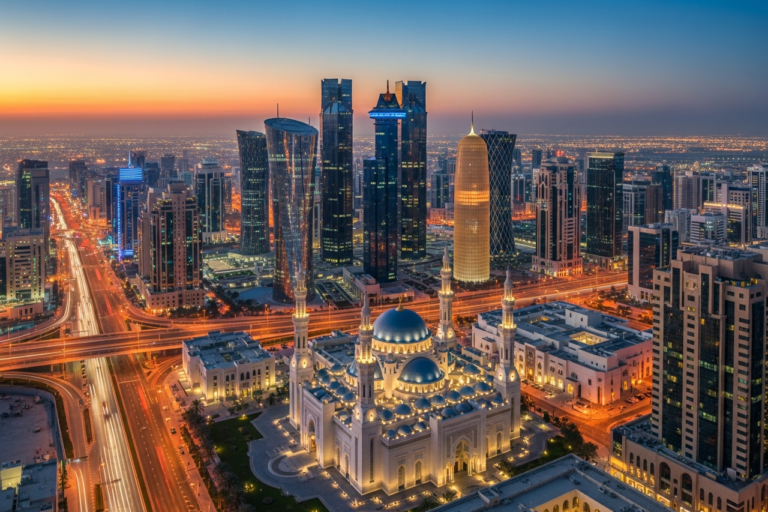
Key Highlights
Here are the key things you should know about religion in Qatar:
-
Islam is the main state religion. It has a big impact on life in Qatar and on its laws.
-
The country’s laws come mainly from islamic law. This shapes the rules people follow every day.
-
Islam is still the main religion, but there is some religious diversity. This is because many people from other countries live and work in Qatar.
-
People who are not Muslim can practice their own religion. The country lets them use special places for churches or other religious sites.
-
The government watches over how people practice their religion. It does this to make sure there is public order and everyone gets along.
-
Most daily life is linked with religious values. This can be seen in things like business hours and how people act with each other.
Introduction
Qatar is in the Middle East. It is a place where old ways and new ideas meet. Religion is very important here. There are many different religious groups in Qatar. They help make life and society in the country special. To really understand Qatar’s culture and laws, you have to know about its religious groups and their beliefs. This article will talk about how faith is a big part of life in Qatar.
Overview of Religion in Qatar
Islam is the state religion in Qatar. This fact shapes how the country runs and how people live. For Qatari nationals, Islam is not just a belief. It is a way of life that affects their rules and the way people act. The principles of islamic law are a main source for the country’s rules. These guide many things in both public and private life.
You can see this strong link to Islam everywhere in Qatar. There are public prayer rooms and many people use religious greetings. The next parts will give you more about the history, the groups of different faiths, and how religion shapes modern Qatari society.
Historical Roots of Islam in Qatari Society
The history of Islam in Qatar goes back many years. It has played a big part in shaping the country’s way of life and rules. Since Islam came to the Arabian Peninsula, it has been the main source of both spiritual and moral guidance for people in the region. Islam is the main religion practiced here, and you will find its influence in almost everything in society.
Islamic instruction has built a strong base for Qatar’s growth. The ideas from Islamic teachings help guide people in daily life. They shape how families live, how people do business, and much more. Because of this, religious values are always a big part of life in Qatar.
Over the years, values in Qatar have also mixed with other cultures, like those from East Asia. Trade and migration brought these influences. Still, the heart of Qatari society holds on to its Islamic heritage. If you want to understand how Qatar works today, you need to know this history. Islamic law still guides much of the country’s modern legal system and is a key point of reference.
Key Influences Shaping Religious Practices
Religious practices in Qatar come from both state rules and local culture. Islam is the state religion, so it shapes much of daily life. The government also works with other religious groups to keep things peaceful. The Ministry of Islamic Affairs has a big part in managing religious life, especially for Muslims.
There are several important things that shape religion in Qatar. Some of these are:
-
The government works hard to keep public order.
-
The laws in the country are based on Islamic principles.
-
There is a big mix of people from other countries living in Qatar.
-
The country follows some international standards, like those made by the United Nations.
Because of this mix, Islamic values get promoted but other faiths have their own space too. The government tries to keep people working and living together smoothly, so everyone can practice their faith. This says a lot about how religion part of daily life and culture in Qatar.
Religious Demography and Population Data
Qatar’s population is incredibly diverse, a fact clearly reflected in its religious demography. While Islam is the dominant faith, a significant portion of the total population consists of expatriates who practice other religions. This mix includes Christians, Hindus, Buddhists, and followers of other faiths, creating a multicultural environment.
Population data provides a clearer picture of this diversity. The religious affiliation of residents is a key statistic for understanding the country’s social makeup. Religious minorities, primarily from South and Southeast Asia, Europe, and other parts of the world, make up a substantial part of the workforce and society.
The breakdown of Qatar’s population by religion highlights this variety. Here is an approximate look at the religious composition based on available data:
|
Religious Affiliation |
Percentage of Population |
|---|---|
|
Islam |
65.5% |
|
Christianity |
15.4% |
|
Hinduism |
15.1% |
|
Buddhism |
3.8% |
|
Other/Unaffiliated |
0.2% |
How Religion Shapes Modern Qatar
Religion, mainly Islam, plays a big part in the lives of people in Qatar. The Qatari government uses Islamic law as the main source when it makes rules and decisions. You can see this in the country’s laws, in the days they set as public holidays, and in the way the cities are made. Mosques and other Islamic institutions are found all over.
Religion touches the daily life of everyone living in Qatar. It is normal to hear people say “Inshallah” (if God wills) when they talk with each other. People who are Muslim or not Muslim both use these phrases. Business hours often change for special times like Ramadan. Places like malls or offices have prayer rooms, so faith and prayer is part of how people use these spaces.
The Qatari government has a policy of reviewing its laws and what it does to make sure they follow Islamic values and meet the wants of a modern society. This shows how Qatar tries to keep its culture strong while also connecting to the world. Religion, through islamic law as the main source, and Islamic institutions, shapes daily life and culture in Qatar.
The Dominant Role of Islam
Islam is not just the biggest religion in Qatar. It is the state religion and is at the heart of the country’s laws and way of life. The laws in Qatar come from islamic law. This helps set the rules for how people live there. Most Qatari Muslims are Sunni Muslims, and they follow the Hanbali school.
Sunni Islam is the main group, but there is a small Shia community as well. The state lets some different views of Sharia be heard, but the Sunni way is what guides public rules. The next parts will talk about the Sunni and Shia groups in Qatar, how mosques are part of life, and the way Islamic events are celebrated.
Sunni Islam in Qatar
Sunni Islam is the main kind of faith in Qatar. Most people in the country, especially citizens, follow Sunni Islam. Qatar goes by the Hanbali school of islamic law. This affects the way the country sees Islamic rules and how those rules work in daily life.
The Ministry of islamic affairs looks after all religious matters there. It makes sure all islamic instruction and mosques are managed in the right way. Because of this, sunni muslims in Qatar get a steady, agreed-on way of learning about Islam and practicing it. The government keeps the Sunni view as the main form of Islam.
This setup keeps the big crowd in Qatar united in their beliefs. Qatar works with the united nations about many things. Still, in the country, all religious life comes from the Sunni ways and deep roots in islamic law. So, Sunni Islam is at the heart of who Qatar is.
Shia Minorities and Their Communities
Qatar is mostly Sunni, but there are also Shia minorities living in the country. These Shia communities are smaller than the Sunni group. Still, they get to keep their religious practices and community life. The government lets Shia Muslims have their own mosques. They can take part in their faith, celebrate their holidays, and perform their chosen rituals.
The legal system in Qatar follows a Sunni view of Islamic law. But, there is some room for Shia interpretation of Sharia, too. This is mostly true when talking about personal status issues for Shia people. So, the community can make some legal choices inside their group.
Like other religious minorities, Shia practices are watched by rules that help keep public order. The government lets them follow their faith in private and in places that are set for them. No one gets in their way as long as they follow the rules. This shows that not only the majority, but other religions and sects can live and practice in Qatar.
Role of Mosques and Imams
Mosques play a big part in religious and community life in Qatar. They are not just places of worship. They are also places where the community meets and people get islamic instruction. Imams lead the prayers and give sermons. The Ministry of Endowments and Islamic Affairs picks and looks after these key people.
The mosques and imams do more than just daily prayers. They are important in these ways:
-
They give religious instruction and guide the community.
-
They are centers where important religious rites happen, like marriages and funerals.
-
They help make community bonds stronger with social and education activities.
-
Imams give Friday sermons that often speak about social and moral topics.
Many big mosques in Qatar are beautiful places to see. They are open to tourists too. People can visit them to look at Islamic art, learn about islamic instruction, and see some history. These sites show off the country’s islamic heritage and stand out as cultural landmarks.
Islamic Festivals and Observances
Islamic festivals are big events in Qatar. People celebrate them with much excitement, and these become public holidays. These times are very important in the culture of Qatar. People use these days to think about faith and to enjoy with their community. The two biggest Islamic festivals are Eid al-Fitr and Eid al-Adha.
These festivals help families and whole communities come together. Some things that happen during these festivals are:
-
Special prayers take place in mosques and sometimes outside.
-
People enjoy meals with their family, friends, and neighbors.
-
People give some money or food to those who need help.
-
Gifts are swapped, and people wear new clothes.
-
There are public events and celebrations held everywhere in the country.
During Ramadan, which comes before Eid al-Fitr, Muslims do not eat from sunrise to sunset. They pray more and spend time thinking about their beliefs. This changes daily life quite a lot. The daytime is slower, but the evenings become lively with plenty of both social time and religious events. All this shows how closely faith and culture are linked in Qatar.
Legal Framework and Government Regulation
The Qatari government works to keep a balance between Islamic law and what a modern, mixed group of people need. The country’s rules say Islam is the state religion. Sharia is a main source the government uses for laws. This legal setup is the base for how religious life happens in Qatar, and it plays a role in how much religious freedom there is.
The constitution says people have certain freedoms, but these must be in line with public order and Islamic ideas. The government watches and guides religious activities to be sure they follow the country’s laws and what the people value. In the next sections, you will learn about the main rules in the constitution, laws about religious freedom, and what the government does in this area.
Constitution and Religious Provisions
Qatar’s constitution is the main set of rules for how religious life works in the country. It says that Islam is the state religion, and it makes Islamic law the main rule for making other laws. This makes the principles of Islam a big part of the state’s identity and legal system.
There are also parts of the constitution that talk about religious freedom and practice. While it puts Islam first, it tries to keep a balance with the country’s promises under international agreements. Here are some important points about religion in the constitution:
-
The law gives everyone the right to worship, as long as it follows the rules and keeps public order.
-
The state has to watch over religious activities and groups.
-
The country promises to follow international charters and covenants, like the International Covenant on Civil and Political Rights, which Qatar has joined.
This way, the government can step in to make sure religious freedom fits with the idea of public order, religious freedom, political rights, and the law based on Islamic law. The state allows people to show their religion, but it is careful to control how it is done.
Religious Freedom Laws
Qatar allows people who are not Muslim to practice their own religion. However, there are some rules they have to follow. People are not allowed to leave Islam for another religion, and there are serious punishments for those who try. But, people from other religions can meet and pray in private places or in certain compounds. This shows that people can practice other religions, but the government controls how they do it.
The main reason for these rules is to keep public order. Non-Muslims are not allowed to try and get others to join their religion. People cannot do anything in their religion that seems to go against Islam or the country’s laws. These rules are there to stop any upset and to make sure Islam stays important in the country.
Qatar has signed some international human rights agreements. Still, its own laws focus more on local customs and religious ideas. This means that religious freedom is given, but it comes with limits. The country tries to find a balance between letting people follow their own religion and keeping order and the Islamic way of life.
Regulations on Religious Gatherings
Yes, there are some limits on religious gatherings in Qatar. The main goal is to keep public order and show respect for the country’s laws and customs. You will see Muslim worship in many places. But for religious minorities, gathering rules to worship are more strict.
The government has set up special places, like the Religious Complex, for non-Muslim groups to hold worship services. If people want to gather for worship outside these areas, they must get permission. In most cases, they are not allowed to meet in public. There are a few important rules on this:
-
Non-Muslim religious gatherings should be held in churches or sometimes in private homes.
-
It is not allowed to have public marches or show non-Islamic religious symbols out in the open.
-
Anyone who wants to organize a big gathering may have to work with the police or other officials to be sure everything is safe and legal.
The government has a policy of reviewing these rules to keep up with the different needs of its people, including religious minorities, but it wants to stand by its main beliefs. This helps people practice their faith while following the laws and public order in Qatar.
Ministry of Endowments and Islamic Affairs
The Ministry of Endowments and Islamic Affairs is often called the Ministry of Islamic Affairs. It is the main group in the government that looks after religious life in Qatar. The ministry’s main job is to make sure Islamic affairs in the country follow the state’s view of Islam.
The ministry does a lot of work. It runs every mosque in Qatar. It also picks and trains imams and checks what they say in Friday sermons. The ministry gives Islamic instruction through many types of learning and books. This helps shape how the Muslim people in Qatar see their faith.
The ministry also helps take care of issues that involve non-Muslim religious groups. There might be other departments that first sign up these groups. But the Ministry of Islamic Affairs makes sure all religious activities stay in line with public order and the country’s Islamic ways. In this way, the ministry is key for the government when it comes to religious freedom.
Other Religions Practiced in Qatar
Yes, people also follow other religions in Qatar. This is mostly because the country has many migrant workers and people from other places in the world. These religious minorities have brought their own faiths, so now Qatar has a mix of religions. The government gives some religious freedom to these religious groups, but they must follow rules.
Many of the most common minority faiths are Christianity, Hinduism, and Buddhism. The government has let people build christian churches. There is a system for these religious groups so they can practice their religions. The next sections will talk about the communities of Christians, Hindus, Sikhs, Buddhists, and other groups who live in Qatar.
Christianity in Qatar: Community and Worship
Christian communities in Qatar come from many places around the world. Most members are expatriate Christians. These communities include many christian denominations, like Catholic, Protestant, Anglican, Coptic, and Greek Orthodox groups. The qatari government has chosen to officially recognize some of them.
The qatari government wanted to give these christians a place to pray. So, it gave land to build christian churches all in one spot, called the Religious Complex. Each christian group has its own church there. They can also hold their own regular worship and do religious rites. This setup lets people worship in a safe and planned way.
Life for christian communities in Qatar is about careful balance. They feel managed tolerance. The Qatari rules say you cannot try to convert others in public, and people must worship in certain places only. Still, expatriate christians are allowed to practice their faith with their own groups. This way, they can keep their faith and identity while they live and work in a muslim country.
Hinduism and Sikhism Among Expatriates
Hinduism and Sikhism are followed in Qatar mainly by migrant workers and people from South Asia. Many come from India and Nepal. These groups make up a big part of the country’s population. They bring the culture and religious ways from their home.
There are no special public places of worship for Hinduism or Sikhism in Qatar, unlike for Christianity. So, followers of these religions pray and hold religious events in private. Most of the time, this happens inside their homes or in small group gatherings with other people from their community. This is how they keep their customs and beliefs alive, even if they are not seen in public.
Even though there are not public temples or Gurdwaras, the government usually does not get involved in these private ways of worship. The government only asks that these religious practices do not break public order or cause trouble. Because of this, people who follow Hinduism, Sikhism, or other faiths from southeast Asia and east Asia can keep their beliefs and their ways of worship, as long as they also follow local laws.
Buddhism and Other Faiths
Buddhism is another faith in Qatar, mostly followed by people from East Asia and Southeast Asia. Many of them are from places like Sri Lanka, Thailand, and Nepal. Buddhists, like Hindus and Sikhs, do not have any official public temples for worship in Qatar.
These religious groups practice their faith in a quiet way. They usually hold religious gatherings in private, like in homes or in community halls. This way, they meet for prayer and for meditation without showing it in public. The practice is allowed as long as it does not draw attention and people respect public order.
The fact that there are Buddhists and other small religious minorities in Qatar shows that there are people from all over the world living here. The government lets these groups keep their spiritual life to themselves. This has helped allow different faiths to live in peace under the country’s Islamic system.
Interfaith Dialogue and Relations
Qatar is working hard to support interfaith dialogue as part of both its foreign policy and its public outreach. The government has set up different groups and centers to help people of different religions understand and respect each other. The Doha International Center for Interfaith Dialogue (DICID) plays a big role here.
These steps help Qatar become a place where people all over the world can talk about culture and religion. The work includes:
-
Hosting annual meetings, where religious leaders from many countries meet and talk.
-
Pushing for studies and research about religious tolerance and how people live together peacefully.
-
Talking with big groups like the United Nations about protecting human rights and religious freedom.
-
Working with the Ministry of Foreign Affairs to create good relations with other countries.
Within Qatar, religious freedom is controlled at home, but these steps on the world level show that Qatar wants to take part in global talks about being open and respecting all people. This approach shows that Qatar is trying to keep the country steady inside, and at the same time, show the world that it is open and supports dialogue.
Religious Sites and Activity
Qatar has many places of worship that show its Islamic roots and the blend of cultures from people who live there. Most of these are mosques, but there are also spots for non-Muslim religious services. These places are used for faith, but they stand out because of the way they look too.
Many tourists can visit the most famous religious sites in Qatar. This gives you the chance to see and feel the country’s spiritual and cultural side. In the next sections, you will learn about the main mosques, churches, and other centers, and you will find out the rules for each of these religious places.
Major Mosques and Landmarks Open to Visitors
Yes, a few big mosques in Qatar welcome people who are not Muslim. This gives you a good way to see Islamic buildings and learn about life in the area. These spots are not only for prayer, but they are also big cultural parts of the city.
The Imam Muhammad ibn Abd al-Wahhab Mosque, called the State Mosque, is the biggest mosque in Qatar. You should see it because of its nice look. People can go there when there are no religious services happening. A few other well-known mosques that might let you take a tour or have set times to visit are:
-
The Education City Mosque, which stands out because of its new and special style.
-
Katara Mosque, which has lovely blue and purple mosaic art.
-
Msheireb Mosque, a simple but good-looking building right in Msheireb Downtown Doha.
When you go to any of these places, remember to wear clothes that cover you well. Be polite during any religious services that may be going on. Some of these places offer tours where you can learn much about what happens at a mosque and what the mosque means to the people there.
Churches and Non-Muslim Centers
To make room for its large Christian population, the Qatari government has set aside a special place for Christian churches. This area is called the Religious Complex, and it is in Mesaimeer. Many different Christian denominations have their churches here. These churches can hold worship services and do community activities.
This complex is the main place for public Christian worship in the country. There are several groups with churches in the Religious Complex. They include:
-
The Catholic Church of Our Lady of the Rosary.
-
The Anglican Centre, which serves many Protestant groups.
-
Churches for Coptic, Indian Orthodox, and other Christian groups.
Christian communities there have an organized and regulated way of doing things. The Qatari government shows it is ready to offer space for religious minorities by allowing these christian churches in a certain area. But this is limited to this one place. Christian denominations and other religious groups that do not have their own buildings usually worship in private.
Regulations on Building Non-Islamic Places of Worship
The Qatari government has very strict rules for building places of worship that are not Islamic. To build one, a group must get official approval. These buildings can only be put in special spots chosen by the government. The main spot for these buildings is the Religious Complex, where you will find all the official churches.
Any group that wants to put up a place of worship must follow a long application process. This goes through different government offices, like the Ministry of Foreign Affairs and sometimes the Ministry of Islamic Affairs. The Qatari government is the one that gives the land for these places if they get approval.
This rule lets the government control both where and how places that are not Islamic are set up. The process gives a place for worship, but at the same time, keeps it in just a few areas. So these groups cannot have their temples or churches in public places that are not approved. This relates to how the country, including the Ministry of Islamic Affairs, treats religious minorities and their places of worship.
Guidelines for Religious Gatherings
The rules for religious gatherings in Qatar help keep things orderly and follow local laws. The Ministry of Endowments and Islamic Affairs supports and encourages Muslims to gather in mosques. These prayers happen every day. There are also Friday sermons and special holidays for the people.
If you are not Muslim, there are more rules to keep in mind. Public worship is usually allowed only at the Religious Complex. Sometimes, these events can also happen in private homes. For big gatherings outside these places, people have to get special permission from the authorities.
The main idea behind these guidelines is that showing your religion should not bother others or go against the country’s rules or Islamic values. Because of this, things like public marches, outdoor sermons, or trying to get others to join your faith in public are not allowed for non-Muslims. These rules help manage religious life so it fits with Qatar’s way of life and beliefs.
Religion and Daily Life
Religion plays a big role in daily life in Qatar. It shapes the way people talk to each other and also affects family law. Islamic instruction and values show up in many areas. You can see it in social rules and public order. You also hear the call to prayer often. This is something people do every day. Life in the country often goes around religious events.
This link between faith and daily life is clear in how people dress, in business hours, and in family law. The next parts will show how things like rituals, prayer, fasting, and laws in Qatar all come from its strong religious roots. These things play a big part in public order and in what people do every day.
Rituals, Traditions, and Social Customs
In Qatar, people follow many customs and ways of living that come from Islamic instruction. You will hear words like “Alhamdulillah” (praise be to God) and “Inshallah” (if God wills) almost every day. These simple sayings are part of the language for people from all walks of life, and they show how much faith is in daily life.
Family is very important in Qatar. Many traditions and daily routines are built on family time. The work week is set up so most people can take part in Friday afternoon prayer. After prayer, families often get together for a big meal. Most homes have a “majlis,” which is a room for talking, hosting friends, and spending time with family. The majlis helps people stay close and keep strong ties with others.
Many customs come straight from Islamic instruction. It is common to see signs of respect for elders, warmth toward guests, and strong family unity. Major life moments, like birth and marriage, include special religious rites. All these things tie faith to both private and public life for people in Qatar.
Prayer, Fasting, and Dress Codes
Prayer, fasting, and wearing modest clothes are important parts of daily life in Qatar. You can see these customs all around you. Muslims pray five times each day, and you will hear the call to prayer coming from mosques across the city. It is normal for people to step out of meetings to pray. Most public buildings have special rooms for this.
Fasting in the holy month of Ramadan is a key practice in Islam and is observed by everyone in Qatar. During this month, Muslims do not eat or drink from dawn to sunset. This is a time to think deeply about your faith. Life slows down during the day, work hours may change, and things get busy again at night once the fast ends.
The people in Qatar also follow certain rules about what to wear, based on their faith and culture.
-
When you visit religious places such as mosques, men and women both need to dress modestly.
-
Women are usually asked to cover their hair, and headscarves (abayas) are often given to guests.
-
For everyone, loose clothes that cover the arms and legs are expected.
-
Modest dress is not required by law for foreign visitors in public, but it is still appreciated and seen as showing respect.
Impact on Business Hours and Public Life
Religion plays a big role in setting business hours and the flow of daily life in Qatar. The workweek is Sunday to Thursday. This makes Friday free for Muslims to rest and pray.
The changes are bigger during times like Ramadan. People who are fasting have shorter working hours. Many restaurants and cafes do not open during the day, but after sunset, they open for Iftar, when people break their fast.
Religion shapes public life in other ways, too:
-
Each day, shops may close for a short time when it is time to pray.
-
Public events and media outlets try not to upset religious feelings.
-
You can only buy alcohol from a place with a license, and there is even less alcohol during Ramadan.
-
People are asked not to show affection in public, as this goes against strict social rules.
Family Law and Religious Influence
In Qatar, family law is closely tied to religion. The legal rules for personal status cases like marriage, divorce, and inheritance are all based on islamic law. This is true for all Muslim people living in Qatar, no matter where they come from.
Qatari nationals and other Muslims follow these rules for important parts of family life. Marriage contracts, child custody, and who gets what after someone passes away are all decided in the unified court system. These courts use rules based on the Hanbali school of islamic law, which is known for being strict.
For people who are not Muslim and come from other countries, personal status cases can sometimes follow the laws of their own country. But these laws must not go against public order or what is seen as right in Qatar. If people from different backgrounds go to court, islamic law will often be used. This shows how strong of a role islamic law has in shaping family law and personal status cases for everyone in Qatar.
Religion and Qatar’s Expat Community
Qatar is home to a big and varied group of expats. Many of the people here, including migrant workers and professionals, bring lots of different religious beliefs. There are also many expatriate Christians and others with different faiths. These groups have built strong communities so they can practice their religion. But, they still have to follow the rules set by the country.
Expats get to practice their faith in a few ways. They meet for organized religious services inside set areas. They also come together in smaller, private groups, and sometimes use big community networks. In the next sections, you will find out more about what rights non-Muslim expats have, the challenges they face, and how they live out their religious life. You will also see what support they get to keep their spiritual life strong.
Rights and Challenges for Non-Muslim Expats
Non-Muslim people living in Qatar can follow their religion, but there are some big limits. The main thing is, you can show your religion only in private places or certain set spots. It is not legal to try to spread your faith to others in public. Groups like the United Nations and the U.S. Department of State often talk about this kind of religious freedom in their reports.
People from outside the country who live in Qatar get many things from being there. But they do not have many political rights and must follow rules based on Islam. This sometimes means they cannot bring in some religious materials, or there may not be enough space, other than the official Religious Complex, for worship.
Still, even with these problems, the government lets expats have a religious life, but under control. This way, Qatar tries to follow rules set by the united nations, but also wants to keep its own ways and beliefs strong.
How Expats Practice Their Faith in Qatar
Expats in Qatar have to find different ways to practice their faith. They adapt to what is possible in the country. For a lot of people, the expat community is very important. It gives the help and community they need. It is also a place where they can live out their religious life. Christians, for one, go to the churches in the Religious Complex. This area acts as a center for worship and social events.
Some faiths do not have public places of worship, like Hinduism and Sikhism. People from these groups mostly practice at home. Many times, they meet in homes to take part in religious rites, celebrate their special days, and pass down their culture to their kids. These close groups help keep their faith and ways alive.
Bringing in religious materials, though, can be checked to make sure they are for personal use and not to try to change others’ beliefs. Even with these rules, expats still find ways to stay close to their faith. They do this through the help of others, meeting in small groups at home, and making use of the limited public places of worship they have.
Community Support Networks
Community support networks play a big role for expats who want to practice their faith in Qatar. The groups, made by people with the same faith or home country, help expats feel that they belong. Many people in expat religious groups count on these networks for support in a new country.
These groups are much more than a place to worship. They do a lot for their members’ happiness. The main things these support networks do are:
-
Set up private gatherings for prayer or religious festivals.
-
Offer both social support and someone to talk to when life gets tough.
-
Give tips and info to help people get around daily life in Qatar.
-
Work to keep faith and culture strong for their children.
A group can be a large church or just a few friends who meet to pray. These systems are very important for expats who want to keep their faith strong and stay close to people from their own religions. Community support networks help turn Qatar into a “home away from home” for all different religious groups.
Integration and Cultural Exchange
Expats in Qatar often build their own groups. But, there are chances to mix and share cultures with local people. This helps locals and expats learn from each other. Many people meet at work, where they live, and at international schools.
Places like Qatar University and other international schools in Education City bring together staff and students from many backgrounds. They help people talk to each other. It can break old ideas and make people understand each other better. Students and teachers talk about their customs, faiths, and lives. They help others see new ways of living.
Even with all this, blending is sometimes shallow. People talk often, but avoid difficult topics like faith. Expats mainly follow their beliefs with their own community. Still, Qatar’s mix of cultures lets people pick up little things from each other every day.
Recent Changes and Trends in Religious Freedom
In recent years, Qatar has dealt with changes around religious freedom. The Qatari government has taken part in big interfaith talks. At the same time, the rules inside the country still stay strong. This is because the leaders move carefully and think about issues in the region and worries about political Islam.
The government follows a policy of reviewing its laws and actions. This makes small changes happen instead of major shifts. The next parts will look at how this policy of reviewing works, how people feel about diversity, and what could happen with religious freedom in a country where the qatari government tries to mix tradition with working with the world.
Policy Shifts Over the Past Decade
In the past ten years, Qatar has made slow and steady changes in religious freedom. The Qatari government takes its time to look at the laws and update them bit by bit, instead of making big changes fast.
One big change came when the Religious Complex opened. This was an important moment because it brought christian churches together in one place and gave them official rights. It showed that Qatar wants to help the many Christian people who live and work in the country. Other updates have happened too, such as:
-
The government is still taking part in talks about religion with other countries.
-
It is now a bit easier to get approval for events or activities if you are not a Muslim.
-
There is more acceptance, in an informal way, for different groups who want to worship privately.
These changes show that the qatari government wants to be seen in a good way around the world and host top events. Still, the policy of reviewing and latest updates are controlled closely so they fit in with Qatar’s own way of life and values.
Societal Attitudes Toward Religious Diversity
People in Qatar have different views about religious diversity. These views are changing with time. Every day, locals meet and work with many people from different countries and faiths. This happens a lot because Qatar has a big expatriate community. Places like Doha show this best, where you will see people of many backgrounds living and working together.
But, a lot of people still have strong, traditional beliefs. These come from family customs and what they see or hear on local media outlets. Most people in Qatar feel it is fine for others to follow their own religion, but they want this to happen in private. They do not want anything that takes Islam out of its main place in public life. Social media has a big part here too. It can help people share ideas and learn. Still, it can also make conservative views stronger.
So, most people in Qatar look at religious diversity in a practical way. They know that their country needs workers from all over the world, so having many religions is normal. But people also want non-Muslims to keep their faiths private and always show respect for local Islamic rules.
Challenges and Opportunities for Tolerance
Qatar has to deal with both problems and chances when it wants to create more religious tolerance. The biggest problem is how to keep its strong Islamic roots but still meet the human rights and needs of its many religious minorities.
The country can use its work in interfaith talks to spread more tolerance at home. There are some main things Qatar could do next:
-
Expand education about different cultures and religions.
-
Set up clear ways for different religious groups to talk with each other in Qatar.
-
Make rules and steps easier for religious communities.
-
Match what happens in the country with the human rights standards it talks about at big meetings like the United Nations.
Qatar will have to be careful with old social habits to fix these problems. But if it makes use of these chances, the country can raise its place in the world and make life better for all its people. This will also make Qatar stand stronger as a link between different cultures.
Future Outlook for Religion in Qatar
The future of religion in Qatar will likely stay the same, but change slowly over time. Islam will keep its main place in Qatar’s life, and that won’t change. The Qatari government will keep looking at how things are done to make sure these fit with what the world needs today. This careful way of handling things will shape how religious freedom looks in the future.
As Qatar brings big events and many different people to work in the country, the government may need to make more changes to help its many religious groups. It might make rules for religious gatherings easier, or let local groups take on more projects.
Still, the government will be careful with any changes. They want to keep the Islamic character of the country safe. The Qatari government’s policy of reviewing will most likely stay as a way to let many religions practice, but within clear and tight rules. This will create slow changes in religious freedom, while letting the country keep its values.
Conclusion
Religion has a big part in how people live and connect in Qatar. Islam has deep history here, but there are many other religions too. This mix of beliefs makes the place unique and interesting. When we learn about each other, it helps us show respect and helps us live together in peace.
Today, you can see signs that religious freedom is getting stronger in Qatar. That brings both good chances and some things to work on when it comes to being more open to all. As Qatar grows and changes, letting all groups feel welcome can help build a society where everyone belongs.
If you want to know more about religious practices in Qatar or have questions, let me know!
Frequently Asked Questions
Is it permissible to bring religious texts or items into Qatar?
You can usually bring your own religious texts and materials into Qatar for personal use. But you cannot bring large amounts to share or give away, because it is against the law to try to convert others. All religious texts may be checked to make sure that they do not go against Islamic law or the public order.
Can non-Muslims visit mosques in Qatar?
Yes, non-Muslims can go to some big mosques in Qatar. The State Mosque is one of them. These places welcome people who visit when there is no prayer going on. You have to dress in the right way and be respectful. Some mosques will also give guided tours. This helps you learn about the religion and the culture.
Are there any dress requirements at religious sites?
Yes, there are strict dress codes at the religious sites. You need to wear clothes that are not tight. Your outfit should cover your shoulders and knees. If you are a woman, you will have to cover your hair. Most mosques will give you an abaya, which is a cloak, and a headscarf to wear, so you follow the rules during your visit.



