

Key Highlights
Here’s a quick look at what you will get to know about religion in Norway:
-
The Church of Norway is an Evangelical Lutheran group. It is the biggest religious group in the country, but it is not the state church now.
-
Norway’s religious history began with Old Norse beliefs. Later, Norway slowly became Christian in the ninth century.
-
The Norwegian Constitution gives everyone religious freedom. People can believe what they want, so there are many kinds of beliefs.
-
These days, there are less people who follow a religion very closely. More people choose other faiths like Islam, Catholicism, and Buddhism. Members of the church still exist, but their numbers are changing.
-
Even though many are members of the church, not many practice religion every day. Most Norwegians only go to church for big events in life, which shows how people in Norway are becoming less religious.
Introduction
Welcome to a look at the spiritual heart of Norway. The story of religion in this beautiful Scandinavian country is just as dramatic and moving as the well-known fjords there. Long ago, people in Norway worshiped Norse gods. Then, over time, Christianity took hold. These changes in religion have helped shape what many people in Norway think and feel today. The church of norway has always been very important, but now the country is home to many different faiths and people who do not follow any church at all. Let’s see how history and life today make up the story of religion in Norway.
Historical Roots of Religion in Norway
Norway has a long history with faith and belief, beginning before Christianity came to the land. Early Norwegians followed the Norse religion. This was a way of life filled with old beliefs, stories of gods and giants, and exciting tales. These early beliefs were a big part of daily life for many, lasting for hundreds of years.
The move to Christianity did not happen right away. It took many years. Some important people, like King Olav Haraldsson, helped guide the way. Big events, like the Battle of Stiklestad, also played a role in changing hearts and minds. Later on, the Protestant Reformation came to Norway with King Christian III of Denmark. Because of this, the religious life of the country changed in major ways once again. Now, we will take a closer look at these key times in Norway’s story.
Norse paganism and early spiritual traditions
Before Christianity came, the early Norwegians followed the Norse religion. This religion was based on Germanic myths. It was polytheistic, so people believed in and worshipped many gods and goddesses. Some of the main gods were Odin and Thor. People thought these gods lived in a place called Asgard. But they also interacted with people on earth, which they called Midgard.
The religious practices at that time were full of big stories about conflict. These did not happen only between gods, but between them and other things too, such as giants. One famous old belief was about how a huge fight caused the world to burn down. After that, the world would come back and start again. These old beliefs helped people understand the world and what their place in it was.
As well as following the Norse religion, the Sami people had their own way of looking at life and spirituality. Their religious practices were different. The Sami religion was focused on nature. They also had shamans, called noaidi, who could connect the normal world with the spiritual world.
The Christianization of Norway
The start of the Christian faith in Norway began around the ninth century. Missionaries from the British Isles and Germany came to the area. Some Vikings who got converted, and then returned home, helped spread the new beliefs too. This move from old beliefs to Christianity was slow. It took people a few hundred years to fully change across the country.
One key person in this change was King Olav Haraldsson. At first, he tried to push Christianity on the people with force. But his real impact came after his death at the Battle of Stiklestad in 1030. After he died, many people said they saw miracles at his tomb. Because of this, more people began to leave their old beliefs behind. Olav later became a saint and is now the patron saint of Norway.
After King Olav died, nobles in Norway worked to build up the church. They started putting up more places of worship. By 1153, the Church of Norway, set up in the Roman Catholic tradition, was made official. Its reach even went to places like Greenland, Iceland, and the Isle of Man.
Evolution through the Reformation and modern era
The religious scene in Norway changed a lot in the 1500s because of the Lutheran Reformation. King Christian III of Denmark and Norway became part of the Lutheran church, and in 1537, he made the Evangelical Lutheran faith the official religion for Denmark and Norway. He did this to make the bond between Denmark and Norway stronger.
This choice made the country drop ties with the Roman Catholic Church. The Catholic Archbishop, Olav Engelbrektsson, had to leave Norway. This was a big moment in Norwegian church history. The Catholic bishops were put in jail, and many priests started to use the new Lutheran beliefs and some Lutheran rituals in a quiet way. This is why the switch did not cause a lot of trouble for the people.
By the year 1600, most people in Norway followed Lutheranism. All signs and ways from the Roman Catholic Church were not allowed any more. Then in 1814, the Norwegian Constitution made Evangelical Lutheranism the state religion. This new way of faith stayed as the official state religion, and helped shape Norway’s church and country for almost the next 200 years.
The Church of Norway
The Church of Norway is the biggest religious group in the country. It is an Evangelical Lutheran church, and has played a big role in Norway’s life and government for many years. For a long time, it was known as the official religion of Norway.
This church was the state church for almost 500 years. In 2017, there was a big change. The church was no longer attached to the state. This new step gave the Lutheran church more freedom, but it still means a lot to many people in Norway. Now, let’s take a closer look at the church of norway, how it is set up, and what it believes.
Structure and organization
The Church of Norway is set up using a network of parishes. Each local church has a pastor and a parish council that people vote for. In 2015, there were more than 1,200 parishes in the country. This setup helps the church involve both pastors and regular members in leading the church, which shows how they include the community.
One main group that runs things is called the General Synod. This group meets every year to talk about church business and work together. The synod has members picked from the church and some pastors, plus people from the indigenous Sami group. This way, many people get to share their thoughts. The Norwegian royal family is still linked with the church, too.
From 2017, the church’s pastors stopped being government officials. This was a big move to keep the church and state more apart. The church of norway has also tried to include more people by letting women become pastors since 1961. By 2015, about one out of four pastors were women.
Beliefs and practices
The beliefs of the Evangelical Lutheran Church of Norway come from the early days of the Christian faith. The Bible is the main guide for everything to do with faith in this church. At the heart of the Evangelical Lutheran faith is God’s forgiveness and the need for faith to be saved.
In the Church of Norway, people take part in a few important religious practices. The group shows their faith by singing hymns in Norwegian and saying statements of belief called creeds. The main sacraments are baptism and the Eucharist, which uses bread and wine as symbols. These parts of the service are seen as ways that God gives grace to people.
Some core creeds said at services are:
-
The Apostles’ Creed
-
The Nicene Creed
-
Luther’s Small Catechism
These religious practices help people today feel a part of the long history of Lutheran worship. This history goes all the way back to the start of the Lutheran church and the Reformation.
The church of norway, lutheran church, evangelical lutheran church, and evangelical lutheran church of norway are all linked by these christian beliefs and acts of faith. These religious practices help members feel close to each other and to their shared history.
Historical significance and impact
For many years, the Church of Norway was more than a place to pray. It was tied closely to the state and part of everyday life in the country. The Norwegian Constitution of 1814 made the Evangelical Lutheran faith the official state religion. This move put the church of norway right at the heart of norway’s laws and culture.
Back then, the church of norway was called the state church. Its leaders were seen as government officials. The church got its money from the state. This strong link between the state church and the government had an influence on things like schools and even national holidays. The king was in charge of the church, and the government’s people ran the daily work.
It all changed in 2017. The state and church split, ending a tradition that had lasted for almost 500 years. But even now, the Constitution of Norway still says the church of norway is the “national church.” This shows the old ties of the official state religion are still part of who norwegians are. That past keeps playing a part in Norwegian life.
Religious Demographics in Modern Norway
The way people practice religion in modern Norway is changing and has become more mixed. While most of the total population still connects with the Church of Norway, the numbers are shifting in a new direction. Statistics Norway now shows more people have no religious ties at all. This shows that there is a rise in people who want a more secular way of life.
Immigration also plays a part in this change. It brings in and helps grow new minority religions. With the well-known Lutheran church still big, there are also strong Catholic, Muslim, Buddhist, and other communities in Norway now. Let’s look at the numbers to see how the modern religious mix looks today.
Percentage of Christians in Norway
Christianity remains the largest religion in Norway, with a significant majority of the population identifying as Christian. The Evangelical Lutheran Church, also known as the Church of Norway, accounts for the largest portion of this group. According to Statistics Norway, a large percentage of Norwegians are members of the church.
However, being a member doesn’t always translate to active participation. While around 70% of the population belonged to the Church of Norway in 2017, there is a noticeable generational shift. For instance, while most funerals are church burials, a smaller percentage of newborns are baptized in the church.
Other Christian denominations also contribute to the religious society. The Roman Catholic community is growing, partly due to immigration. Here is a general look at the affiliation with Christian communities.
|
Religious Community |
Approximate Membership |
|---|---|
|
Church of Norway |
~62% of the population |
|
Roman Catholic Church |
A growing minority |
|
Other Christians |
Various smaller groups |
Minority religions: Islam, Judaism, Buddhism, Hinduism
Norway is known for having many Lutherans. But the country also has other religions that add to its mix of cultures. In recent years, more people from other parts of the world have come to Norway. This has helped these groups grow. Now, you can find Muslim, Jewish, Buddhist, and Hindu communities across the country.
Islam is one of the largest religions for the minorities in Norway. Its number of followers is getting bigger. The Catholic Church is also growing and now is an important part of the religious mix. Other Christian groups are here too, like Orthodox Christians.
Some of the main minority religions in Norway include:
-
Islam
-
Roman Catholicism
-
Buddhism
-
Hinduism
-
Judaism
People in these groups have built churches, mosques, and temples. They have set up places where they can meet and share their culture. This helps make Norway more religiously diverse.
Secularism and those with no religious affiliation
A big change in Norway today is the rise of secularism. More people say they have no religious affiliation. This shows a bigger change across Europe, where people see personal belief as something different from religion. Many now say Norway is a least religious country when it comes to practice.
A lot of Norwegians let humanist values guide their life stance instead of following religious rules. The Norwegian Humanist Association is a leading group for people who want a life guided by a secular or philosophical outlook. It is one of the largest philosophical communities in Norway. The group also gives people non-religious options for important events, like weddings and funerals.
Having this growing secular viewpoint does not always mean people leave tradition behind. Many Norwegians who are not religious still join in with cultural holidays, like Christmas, that come from religious ideas. They see these as a part of our culture, not something spiritual.
Religious Life and Culture
Religion still has a significant role in Norwegian culture, even though many people are not as religious as before. You can see the influence of religion in many things. This includes the country’s main holidays and festivals, and also in its art and buildings. These old traditions have helped make the nation what it is over many years.
Most people do not take part in daily religious practices. But important events like baptisms, confirmations, and funerals usually be tied to religious places. This mix of daily life and a touch of old Christian customs gives Norway something special. In the next part, we will look at how religion still shapes the way people live, the festivals they have, and their traditions in Norway right now.
Religion’s role in daily life
For many people in Norway, religion is more about culture than deep belief. A lot of people are members of the Church of Norway, but not many go to church on a regular basis. This shows that being members of the church of Norway has more to do with tradition and who people are, rather than taking part in religious practices every week.
Secularism is strong. Many people pick a humanist life stance, which means they look at personal ethics and values without linking them to a higher power. Still, religion has a significant role when it comes to big events in life.
Key things connected to the church of Norway include:
-
Baptisms for newborns
-
Confirmations for teenagers
-
Weddings and funerals
These traditions are still common for members of the church of Norway, even for those who are not very religious. This shows that the church stays important in the way people in Norway go through different stages of life.
Religious festivals and holidays
Religious festivals and holidays are a big part of life in Norway. They mix old spiritual ideas with the way people celebrate today. Christmas (Jul) and Easter (Påske) are the biggest holidays. Almost everyone in the country joins in, even if they do not share the same beliefs.
These festivals are closely tied to the church of norway and the customs found there. Christmas is a good time for being with family. People enjoy their favorite foods and many go to church. Even those who do not often visit church go at these times. The norwegian royal family also joins in these religious events. This makes them even more special in the country.
Important holidays that come from these beliefs include:
-
Christmas (Jul)
-
Easter (Påske)
-
Pentecost (Pinse)
These events show how art and traditions that started with religion now fill the year. They help set the pace for life in Norway.
Influence of religion on Norwegian art and traditions
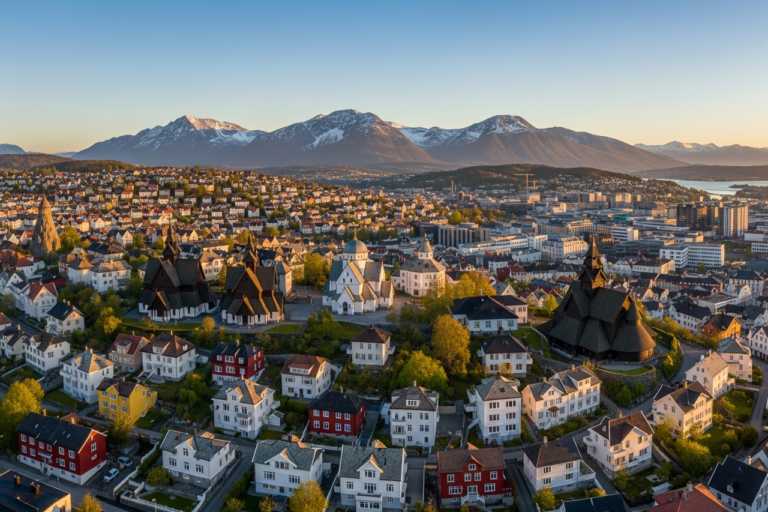
The influence of religion can be found in much of Norwegian art and traditional ways of life. For a long time, the church was the main supporter of art in Norway. Because of this, there are many great cathedrals, detailed woodwork pieces, and lovely paintings that show strong religious ideas. The well-known stave churches show a mix of Christian and older pagan images. This makes them special.
Norwegian church history can be seen in the country’s music and books as well. Many old hymns and faith-based songs have been sung for many years. These have helped shape the music Norwegians listen to and enjoy. A lot of famous writers and music makers have used stories from the Bible and other religious ideas for inspiration, no matter what their personal religious affiliation is.
This important history still makes people in Norway proud. It is also a big part of the country’s culture. When you visit its museums and old sites, you see how faith and Norwegian church history have led people to create art and music for over a thousand years.
State Policy and Religious Freedom
The Norwegian state has a strong rule on religion. It wants everyone to have freedom and be equal. In Norway, the law gives religious freedom as a key right to all people. This lets people in Norway follow any religion. It also lets people choose not to have any religion at all.
In the past, the Evangelical Lutheran faith was the official religion. Now, the government tries to be more fair. It treats every faith and each life-stance group the same way. Norway shows its promise to religious freedom with strong laws. This idea is at the heart of how people live in Norway today. In the sections below, we will talk about how this works in schools and see how it is different or the same in other Nordic places.
Religious education in schools
Religious education in Norwegian schools is made to be open to everyone and fair to all views. The subject is often called “Christianity, Religion, and Ethics” (KRLE). It is meant to give students knowledge about the Church of Norway and other world religions. It also teaches about different ways people think about life. The goal here is not to push any one faith. Instead, it is to help people in a religious society understand and respect each other.
Government officials create the curriculum. Every student must take this subject. It teaches about how Christianity has shaped Norwegian history and culture. Students also learn about the beliefs and customs of other big religions, like Islam, Judaism, and Buddhism. The topic also covers secular ways people look at the world, like humanism.
This way of teaching religion shows that Norway cares about having citizens who know about many points of view. Teaching students about different faiths and ideas helps keep religious freedom strong. It gets students ready to live in a world where people believe different things.
Legal protections and comparison with other Nordic countries (Sweden, Denmark)
Norway has strong laws that protect religious freedom. This right is an important part of human rights and is written into Norway’s constitution. Because of this, all religious and life-stance groups get the same treatment and can do their work without trouble. Norway also gives money to religious groups that are registered, based on how many people are in each group. The way these groups are funded is a lot like how the Church of Norway gets their support.
If we look at Norway and its Nordic neighbors, we can see ways they are the same and ways they are different. Sweden and Denmark both have a long history with the Lutheran church, just like Norway. But over time, they have moved more in the direction of making the church and the government separate.
Here’s a quick comparison:
-
Sweden became separate from its church in 2000. This was earlier than Norway.
-
Denmark still has an official state religion, which is the Evangelical Lutheran Church. This makes Denmark’s system different from both Norway and Sweden.
-
All three countries care about religious freedom and help support smaller faith groups.
So, we can see that even though each of the three countries is a bit different, all of them in Scandinavia are moving toward the same ideas—offering equality and more choices when it comes to religion.
Conclusion
To sum up, if you want to know about religion in Norway, it’s good to notice how important it is now and in the past. Norway has a long history of beliefs, starting with Norse pagan traditions. Later, the country changed as Christianity spread, and many other beliefs appeared over time. The church of norway is a big part of Norway’s story, showing where the country comes from and how people practice their faith today. Even as more people turn away from religion, it still shapes the way Norwegians see art, culture, and daily life. If you want to learn more—maybe for your own beliefs or just out of interest—getting to know these religious traditions will help you see Norway differently. It can also help you better understand people in general. If you want to go further, you can ask for a free meeting to talk about how this could help you learn about different cultures.



