

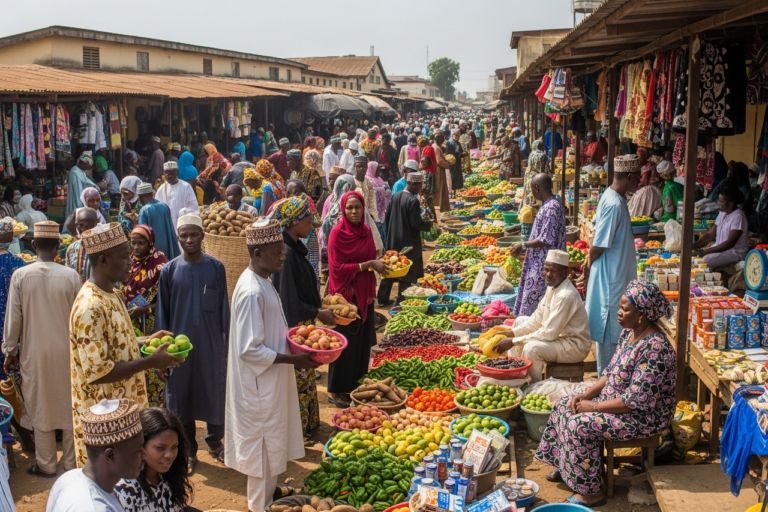
Key Highlights
Here’s a quick look at Nigeria’s religious landscape:
-
Nigeria has many religious groups, but the two major religions are Islam and Christianity.
-
The muslim population is mostly in the north, while the christian population mainly lives in the south. The numbers of both groups are almost the same.
-
There are big regional differences in the country. Most people in the north are muslim, while most in the south are christian. People in the middle belt practice a mix of religions.
-
Old local beliefs still guide the way some people live. Some of these beliefs work with Islam and Christianity.
-
Nigeria’s constitution promises religious freedom. Still, the country often deals with problems from conflict and social trouble between groups.
-
Most people follow the two major religions, but there are some smaller faiths and new movements. These add more to Nigeria’s overall religious identity.
Introduction
Welcome to a look at Nigeria’s spiritual life. Nigeria is one of the most religious countries in the world. Here, you will find many types of faiths coming together. The large total population of Nigeria is shaped by religious beliefs. These beliefs are part of its different ethnic groups.
To know Nigeria’s religion is to see a key part of who they are. It shows in day-to-day life. It comes out in how people express their culture. Religion plays a big role in how people connect with each other and in national politics.
Overview of Religion in Nigeria
Nigeria is a country in West Africa. There are three major religions there. These are Christianity, Islam, and African Traditional Religion. These religious groups have helped shape the country’s story. They also still have a big role in people’s lives today. In one of the biggest places in West Africa, many things can impact the way people see the world because of these beliefs.
The religious groups often mix and work together in Nigeria. Over time, how people follow these beliefs has made a special culture that you will see all over the country. Christianity and Islam have lots of followers in Nigeria. Still, African Traditional Religion is important for many people. This is a way to see how different beliefs live side by side in one place. The mix of these major religions is part of the country’s long story, and it shows the strength in the local culture even today.
Next, we will talk about the history behind these religious groups and the major religions that people in Nigeria still follow now.
Historical Context and Religious Introduction
Before Christianity and Islam came, people from different ethnic groups in Nigeria followed their own local religions. These ways of believing were tied to the land and to the way people lived. When Christianity and Islam were introduced, things changed a lot for religion in Nigeria.
Islam came first to northern Nigeria in the 11th century. Traders from North Africa, Mali, and Guinea brought it into the area. People, especially the Hausa, took it in and supported it. In the 19th century, the Fulani Jihad happened. Usman Dan Fodio led this movement, and it made Islam even stronger in the north.
Christianity had its roots in British colonization. By then, the north was already Muslim. The south, though, gave a place for Christian missionaries to spread their faith. These events help us understand how religion is spread out and how different groups relate to each other in Nigeria today.
Major Religions Practiced Across the Country
The three major religions in Nigeria are Christianity, Islam, and African Traditional Religion. The Christian population and Muslim population together make up most of the people in Nigeria. Both groups are almost the same size. While the two are the largest, local beliefs and practices are still important. Some people mix these traditional systems with the two big religions, or they follow some ideas from both.
In many homes, people from different religions live together. This shows the way people in Nigeria can accept each other. Still, Christianity and Islam have grown by asking others to join, which has sometimes led to a drop in followers of traditional religions.
Nigeria also has other faiths, although not many people follow them. These include:
-
Hinduism
-
The Baháʼí Faith
-
Judaism
-
The Grail Message
-
The Reformed Ogboni Fraternity
Religious Demographics and Statistics
Knowing about Nigeria’s religious groups helps you see how its people connect. The total population of Nigeria is almost half Muslim and half Christian. Research from groups like the Pew Research Center shows this even split. This makes Nigeria special in how its people follow different faiths. These facts show that the country is home to many followers of both Islam and Christianity.
The number of people in each religious group is not the same all across the country. Each area of Nigeria can look very different. Some places are more mixed, and this can also sometimes cause people to not get along. Next, we will talk about where the Christian and Muslim populations live. We will also look at the share of people who stick to traditional or local religions.
Christianity Population and Distribution
The Christian population in Nigeria is one of the largest in Africa. Christians are concentrated predominantly in the southern and central parts of the country. You’ll find that regions like the southeast (Igboland) and the south-south have some of the largest Christian populations, with vibrant church services being a central part of community life.
Even in areas where they are a Christian minority, such as some northern states and the Federal Capital Territory, their presence is significant. The diversity within Christianity is vast, with numerous denominations from Catholic and Anglican to a booming Pentecostal scene drawing millions of followers.
The distribution is not uniform, as different denominations have stronger footholds in specific areas. This table highlights some key regional concentrations for certain Christian groups.
|
Denomination |
Primary Regions of Influence |
|---|---|
|
Catholicism |
Igboland (Southeast) |
|
Anglicanism |
Yoruba areas (Southwest) |
|
Assemblies of God |
Edo area (South-south) |
|
Indigenous Churches (Aladura) |
Yoruba and Igbo areas |
Islam Population and Distribution
Nigeria has one of the largest Muslim communities in West Africa. In the northern states, Islam is the main religion. The culture and the law in these places come from Islamic beliefs. The biggest groups of Muslims are the Hausa and Fulani ethnic groups.
In this part of the country, one major part of Islam is sharia law. Twelve northern states use sharia law as part of their legal system. These states have sharia courts. The sharia courts work on civil and criminal cases for people who are Muslim, but there is also a normal legal system for everyone. The way these two kinds of law are used together is special in this area.
Most people practicing Islam live in the north, but there are also many Muslims in the southwest, especially among the Yoruba ethnic group, and in other places too. This shows that Islam and sharia law reach far beyond just the northern states, touching the lives of many people and ethnic groups in Nigeria.
Traditional and Indigenous Religions Share
Before Christianity and Islam became well known in Nigeria, the spiritual life of all ethnic groups here was based on traditional African religions. Now, these local beliefs are followed by fewer people, but you will still see them being practiced. They are especially strong in some communities in Yorubaland and places close to it.
These religious groups are not all the same. Each has its own way and is linked to a specific ethnic group. They have their own gods, special ways of doing things, and ideas about how the world works. One common thing is the belief in a main creator, other smaller gods or spirits, and a strong respect for their ancestors. A religious ceremony is often very important for the people. It brings people together to mark seasons, festivals, and big moments in life.
Many people who say they are Christian or Muslim still hold on to some parts of traditional beliefs. This mix of faiths is easy to see. Some turn to these old ways for healing or when they need advice, even if they mostly follow Christianity or Islam. This shows that the roots of these spiritual systems are still very deep in the everyday life of people here.
Christianity in Nigeria
Christianity in Nigeria is full of life and so many different groups. There are many christian denominations found all over the country. You can see the old Catholic Church here, but there are also many new and growing churches like the Pentecostal movements. This faith means a lot to people in Nigeria and plays a big role in the country. The Christian Association of Nigeria, or CAN, brings many of these groups together under one main group.
There are also other big churches like mainline Protestant churches and Aladura churches, which are a part of Nigeria’s own christian denominations. Many people follow these ministries. We will look at the most important groups, like the Catholic Church, Protestant churches, and the strong Pentecostal groups, that have changed the way people see faith in the nation.
Catholicism and Its Influence
The Catholic Church has been in Nigeria for a long time. It is very active, especially in the southeast, where most of the Igbo people live. This church is one of the biggest Christian denominations in the country. It has many dioceses and parishes all over Nigeria.
The Catholic Church does more than just have church services on Sundays. It gives many people education and healthcare. The church runs lots of schools, hospitals, and programs to help people. This has made the Catholic Church a big part of life for many in Nigeria.
The church is more than a place for religious ceremony and religious instruction. It is part of the everyday life of its followers. The Catholic Church’s clear order and strong beliefs help bring people together. This gives millions in Nigeria a feeling of peace, safety, and togetherness.
Anglican and Protestant Denominations
Protestantism in Nigeria goes back many years and is linked to the time when the British ruled the country. The leading Protestant churches have many people who follow them and have much power in the country. One of the biggest groups is the Church of Nigeria of the Anglican Communion, which has a large Anglican population, mostly in the Yoruba-speaking parts of the southwest.
There are also other strong groups that stand by the Anglicans. The Nigerian Baptist Convention and the Methodist Church are important in the list of leading protestant churches. They both have a history of working on church growth, setting up schools, and helping their communities in different ways.
These churches have done a lot for the total Christian population in Nigeria. They are known for planned worship meetings, big church groups, and helping out a lot with schools and social care. Because of all this, they play a strong role in the social and moral life in their community for a long time.
Pentecostalism and Charismatic Movements
Over the last few decades, there has been fast growth in Pentecostal and charismatic churches in Nigeria. This movement has changed the christian population a lot. There are mega-churches now that bring in millions of people. These churches often talk about personal salvation, divine healing, and prosperity. Many Nigerians find these messages fit well with what they need and want.
Pentecostalism has grown because of strong leaders. There is also a lot of use of media and social media. Their message shares hope and power with people. The Assemblies of God is one major group here. It was started in Nigeria by Augustus Ehurie Wogu. This church is very well known, especially in the Edo part of Nigeria.
Most of the big and well-known churches now belong to this movement. We see that the country’s religious life is not what it used to be. Some of the major Pentecostal and charismatic churches are:
-
Redeemed Christian Church of God
-
Winners’ Chapel (Living Faith Church Worldwide)
-
Christ Embassy
-
Mountain of Fire and Miracles Ministries
Christian Missions and Evangelism in Nigeria
Evangelism is seen as a key part of being a Christian in Nigeria. You can see it in big events at stadiums and in small, everyday talks in the local areas. Different groups and people in the Pentecostal and charismatic churches spend a lot of time trying to spread their message and bring in more people.
Because spreading the word is so important, people have started groups to join their work together and show they are a team. The most well-known of these is the Christian Association of Nigeria (CAN). This group stands for many churches and speaks up for their needs across the country.
Church services in Nigeria are made to reach new people too. These services go out on television, radio, and are put online. All this talk about mission and outreach is one strong reason why there is good growth and life in the churches in Nigeria.
Keywords: formation of associations, church services, Christian Association of Nigeria
Islam in Nigeria
The muslim population in Nigeria is one of the biggest in Africa. Islam is a main part of life in the northern states and also has a strong presence in other places. Most of the muslims in Nigeria are sunni muslims. They follow the maliki school of jurisprudence. This way of thinking guides how they practice their religion and, in many northern states, how sharia law is used.
But, not all muslims in Nigeria are the same. There are many who are shia muslims. There are also people in sufi brotherhoods. In the next sections, we talk about the different groups inside Islam and look at how the religion shapes life for people across Nigeria.
Sunni Islam and Dominant Sects
The vast majority of Muslims in Nigeria are Sunni Muslims. This group is not only the largest one in the country, but also in the world. Most of the Sunni Muslims in Nigeria follow the Maliki school of jurisprudence. This is one of the main schools of law in Sunni Islam.
Following the Maliki school of jurisprudence affects daily life, religious practices, and how legal matters work in communities. This is most clear in the northern states, where the rules come from Sharia law. The Hausa, Fulani, and Kanuri are some of the biggest ethnic groups in Nigeria. They make up the largest Muslim populations, and are mostly Sunni.
Though the Maliki school is the main one, there is a small group of Sunni Muslims who follow the Shafi’i school. There is some variety in how Sunni Muslims practice their faith. Even if the differences are hard for outsiders to see, they help make Nigeria’s Islamic life richer and more complex.
Shia Community and Other Islamic Groups
Even though Sunnis are the biggest group, Nigeria also has a number of Shia Muslims. There are about four million Shia Muslims in the country. Most of them live in Sokoto, a state in the north. The spread of Shia Islam in Nigeria comes mostly from the work of Ibrahim Zakzaky. He was the one to help many people in Nigeria learn about this part of Islam.
There are also other Muslim groups in the country. One of them is the Ahmadiyya movement. It started in Nigeria in 1916. The group has set up numerous Ahmadiyya centres, and you can find big mosques in cities like Ibadan and Abuja. The Ahmadiyya group is about 3% of the total Muslim population and is known for starting the first Muslim newspaper in the country.
There is the Nigerian group of Quranists too. People also call them Kalokato. This group does not follow any texts outside the Qur’an. They are found mostly in poor parts of the country. The fact that these groups are in Nigeria helps show that there is a lot of different thinking and beliefs among Muslims in the country.
Islam’s Presence in Nigerian Society
Islam has a strong effect on many parts of life in Nigeria, especially in the north. In big northern cities like Kano, Kaduna, and Sokoto, you can see Islamic culture, ways of doing things, and law in the way people live every day. This is easy to notice because sharia courts are in use in twelve northern states.
Religious instruction for Islam is found almost everywhere. There are Quranic schools that teach children in these places. Things like religious ceremony, daily prayers, Friday Jumu’ah prayers, and yearly celebrations like Eid are big events. These bring people together and help them share the same values.
The role of Islam also shows in media and the things people talk about in public. The Ahmadiyya group started the first Muslim newspaper in Nigeria, called “The Truth.” This gave Islam a way to share its views. From law and religious instruction to how people act and what goes out in the news, you can find Islam’s mark on the area. It is an important part of life in the northern states, the cities of Kano, and all over the country.
Influence of Sufi Orders
Sufism is seen as the spiritual side of Islam. It has deep roots and influence in Nigeria. Many Sunni Muslims are members of Sufi brotherhoods. People often call these groups “tariqas.” Members of Sufi brotherhoods focus on being simple, developing a close bond with God, and finding meaning beyond normal life. The Qadiriyya and Tijaniyyah orders are the two biggest Sufi groups in the country.
These groups are known for their focus on peaceful living. Over the years, they have helped spread Islam in Nigeria without the use of force. One thing that is special about them is their religious ceremony. It often includes the group coming together and chanting God’s names, which people call dhikr. This makes them different from other Islamic groups.
It is also important to know that not every group that uses Sufi ideas is the same. In the 1980s, a group called Yan Tatsine caused violence in Nigeria. The group’s leader was Alhaji Mohammed Marwa Maitatsine. Yan Tatsine was not like the other Sufi brotherhoods, as most members of Sufi brotherhoods stand for peace and tolerance.
Traditional Indigenous Religions
Long before Islam or Christianity came to Nigeria, there were local beliefs followed by many ethnic groups in the country. These old beliefs were at the heart of people’s culture, their ways, and how they shaped life in their groups. Many people in Nigeria today say they are Christians or Muslims. But local beliefs have not gone away.
People still follow them, sometimes with other faiths. You can see these beliefs in the way people hold their festivals, make their art, and set values for their towns or families all over Nigeria. Now, we will look closer at the traditional religions of the Yoruba and Igbo people. We will also see how the idea of spirituality is a big part of their daily lives.
Yoruba Religion and Practices
The traditional Yoruba religion is a mix of many spiritual beliefs. It is built around a group of gods called Orishas. These Orishas work as go-betweens for the people and one main creator named Olodumare. The faith is very tied to Yoruba culture. The old city of Ile-Ife is seen as the spiritual center for this religion. A main idea in the beliefs is ‘Ayanmo’. This means that every person has a set destiny.
A religious ceremony is very important in Yoruba practice. This can be a festival or ritual for one of the many Orishas, and people take part in these all year. People also honor their ancestors by making offerings to family members who have passed away. The Ifa oracle is another key part. Priests called Babalawos use the oracle to help people make big decisions in life.
Some old groups have changed over time to fit today’s world. The Reformed Ogboni Fraternity is one such group. It started from the old Ogboni secret society. It shows that these spiritual beliefs and traditions still have a role in Nigerian life now.
Igbo Traditional Beliefs
The Igbo people are one of the largest ethnic groups in Nigeria. Their traditional religion is named Odinani. These local beliefs focus on one main God called Chineke or Chukwu. It is said that this God made the world. The Igbo believe each person has a ‘Chi,’ which is a spirit. It is thought that this spirit leads a person through life.
Odinani includes many other spirits called Alusi. These are not as strong as Chukwu, but each has its own job. Such spirits are Anyanwu, who is tied to the sun, and Amadioha, who brings thunder and helps with justice. The spirits work between people and Chukwu. These beliefs are part of how the Igbo people see and live in the world.
Another big part of Igbo beliefs is ancestor worship. The Igbo say that ancestors leave this life and move to a spirit world. From this spirit world, they can help and guide those who are still alive. The Igbo build shrines for their ancestors. They make offerings to get help and blessings. This custom keeps the link strong between families and generations.
Role of Spirituality in Everyday Life
In Nigeria, the spiritual life is strong and not just kept for Sunday. It is a big part of daily living. Many people use their spiritual beliefs to guide what they do, what choices they make, and how they get along with others. Every big moment—like birth, a religious ceremony for a wedding, or even death—comes with lots of prayers, whether it is Christian, Muslim, or a traditional style.
Spirituality touches all that people do in the country. Based on what a health survey says, many people talk to religious leaders about their health and how they feel before they even visit a doctor. People listen to these leaders a lot. There is also a lot of religious instruction for children from when they are young, and this helps them know about right and wrong.
Spirituality gets into everyday life in these ways:
-
People pray every day and spend time alone with their faith.
-
The names given to children are often special and have deep meaning about God or faith.
-
People reach for guidance or advice from spiritual leaders for their jobs or personal lives.
-
Groups get together for big festivals and parties that are usually based on religion.
Other Religions and Minority Faiths
Christianity and Islam are the main religions in Nigeria. But there are other smaller religious groups too. The Nigerian constitution says people have religious freedom. Because of this, everyone can follow their own faith. But, some of these smaller groups face problems with their human rights and being accepted by others.
These faiths might not have a lot of people, but they make Nigeria’s beliefs more rich. In the next part, you will see more about these minority faiths. This includes the Baháʼí Faith, Hinduism, and Judaism. There are also new religious movements that are growing in Nigeria.
Baháʼí Faith and Its Nigerian Community
The Baháʼí Faith is one of the small religious groups in Nigeria. It was first brought to the country in the middle of the 20th century. Since then, it has become a steady community, though the number of people is still small. The faith teaches that all people are one and that the main religions of the world are deeply connected.
This small group can be found in different parts of Nigeria. The people in this group talk about things like peace, fairness, and everyone being equal. They do things like starting learning programs and talking with people from other religions.
Even though there are not many of them, the Baháʼí community in Nigeria takes part in talks about coming together and living with differences. They work hard to bring together different ethnic backgrounds and religious groups. The way they live shows the main ideas of their faith in a place where there can be many divides.
Hinduism and the Indian Diaspora
Hinduism in Nigeria is followed mainly by people in the Indian community. Most of them have come from India or are people with Indian roots who now live in the country. There are not many of them, but they have made a place for their religion there.
You can find most people who follow Hinduism in big cities. This is where most Indians in Nigeria live. In these cities, there are some temples and centers where people can come together, pray, and remember their culture. The Hare Krishna group has a lot of members, and some Nigerians join them too.
Hinduism in Nigeria shows that the country has ties with people all around the world. Some important things to know about it are:
-
It is mainly followed by Nigerians from Indian families.
-
Temples and community places are found in the bigger cities.
-
Some groups, like ISKCON (Hare Krishna), have some local Nigerian members.
Judaism and Interfaith Relations
Judaism in Nigeria is followed by a small but growing group of people. This group has both expatriates and Igbo-Nigerians who say they are Jews. The Igbo Jewish community says they have a long-standing tie to ancient Israel. They keep Jewish traditions like the Sabbath, the food laws, and holidays.
These religious groups have set up synagogues and community centers. Most are found in the southeastern part of Nigeria and big cities like Abuja. They work hard to connect with the global Jewish community. They do this to get support and be recognized for what they do.
Their presence gives something new to Nigeria’s religious scene. It also matters in how different faiths get along here. As the Igbo Jews shape who they are in a country where most people are Christian or Muslim, they keep the talk about faith, family history, and religion open in modern Nigeria.
Emerging Religious Movements (Chrislam, Grail Movement, etc.)
Nigeria’s religious scene is always changing. There are new groups and paths that come up. One group, called Chrislam, stands out because it mixes parts of Christianity and Islam. The people who follow it read both the Bible and the Qur’an. They don’t see this as a problem. Their goal is to bring Christians and Muslims together.
There’s also the Grail Movement. This group follows the Grail Message. The main focus is to help people understand the laws of nature and creation. The Grail Movement is not like regular religions. It is a fresh thought on how people can look for new ways of faith away from the main churches or mosques.
In recent years, more people in Nigeria have started calling themselves non-religious. Groups like the Humanist Association of Nigeria are part of this change. They speak for values based on reason and want a society where religion and decision-making can be separate. With all these different views and changes, Nigeria is now a place where many new spiritual and non-spiritual ideas grow side by side.
Regional Differences in Religious Practice
Religion is not the same across Nigeria. There are big differences depending on where you are in the country. Nigeria can be split into three main parts when it comes to religion. The northern states have mostly Muslim people, the south is made up of mostly Christians, and the middle belt is mixed and sometimes has disagreements about faith. This split in where people live and their religion has a big impact on the country’s social and political life.
These differences by region show up in the country’s laws, culture, how people act toward each other, and who they support in politics. In the next parts, we will talk about how Islam is strong in the northern states, what religion looks like in the south and the middle belt, and how people show their religion in cities compared to the countryside.
Northern Nigeria: Islam’s Dominance
The northern states of Nigeria are the main place where Islam is followed in the country. The Muslim population here is much bigger than other groups. It is a big part of life, culture, and the law in this area. Most of the Hausa and Fulani ethnic groups who live in the northern states are Muslim.
One thing you will notice in this region is sharia law being used. Twelve northern states have put Islamic legal ideas into their penal codes. They made sharia courts to help Muslims settle both civil and some criminal cases. These courts work at the same time as the regular courts in the country.
Because of this, Islam is a big part of everyday life. The day is shaped by prayer times, and Islam affects the rules people live by and how leaders are chosen. Christian minorities also live in the north, but most of the region has a strong Islamic identity.
Southern and Middle Belt: Diversity in Faith
The south of Nigeria is very different from the north. People in the south are mostly Christian. There is a very big Christian population there. In the southeast, many people are Catholic. In the southwest, there are many Anglicans and Pentecostals. This area has a strong and active Christian culture.
The Middle Belt in Nigeria is known for its huge variety of religious groups. Many different ethnic groups live there. Most of these groups are Christian or follow traditional religions, but there are also many Muslims in the region.
Because of all these faiths and ethnic groups, the Middle Belt shows what the bigger picture of Nigeria looks like when it comes to religion. At the same time, this diversity has sometimes led to conflict in the area, as people compete for resources and power, and these fights can become about religion too.
Urban vs. Rural Religious Expression
Religious expression in Nigeria is not always the same in the city and the countryside. In big cities like Lagos and Abuja, there is a mix of people from many religions and backgrounds. You see a lot of interfaith meetings. At the same time, there can be a lot of competition among religious groups. That is why you see many churches and mosques in these places.
But in the countryside, most people in a village usually follow the same religion. The village might be all Christian, Muslim, or follow the old traditional faiths. In these rural places, people tie their religion to family life and old ways. A religious ceremony often brings everyone in the village together.
People show their faith in different ways too.
-
Urban areas: You will find many big churches and mosques. The services there are often well-planned and use a lot of media.
-
Rural areas: Places to worship are smaller. Prayer is close and personal, and held in a small church, mosque, or a traditional shrine.
-
Syncretism: In rural areas, it is common to blend old beliefs with either Christianity or Islam.
People take part in a religious ceremony in their own way, depending on where they live.
Religion and Society in Nigeria
Religion shapes life in Nigeria in many ways. It touches politics, schools, and how people get along with each other. The role of religion is not simple. It offers people good values and some help in life. At the same time, it can lead to fights and religious violence. The levels of social hostilities because of religion are a big problem for the country.
The Government of the Federation says it is secular. This means religion is not part of official policy. But religion is still a major part of public life. In this text, we look at how religion affects the government, what it does for education and social welfare, and the way different religious groups deal with each other in Nigeria.
Influence on Politics and Governance
Nigeria does not have a state religion, but faith shapes what happens in both politics and government. Many politicians in Nigeria talk about faith to win people over. A lot of big choices made by leaders are seen through a religious view. The government of the federation works hard to keep things even between the two main religions in the country.
Groups from outside, like the U.S. Department of State, watch how religion affects life in Nigeria. They often write reports about religious freedom and problems around faith in the country. Religion helps bring people together in some ways. However, it can also lead to religious violence, especially when it is time to vote for new leaders.
Religion plays a role in how Nigeria deals with other countries too. For example, the debate about whether Nigeria should be part of the Organisation of Islamic Cooperation shows how people still argue about if religion should have a big part in the nation’s foreign relations and its identity.
Religion’s Role in Education and Social Services
Religious organizations give a lot when it comes to education and social services in Nigeria. From early missionary schools to today’s faith-based universities, these groups have helped shape the way people learn in the country. Religious instruction is a major part of what they teach.
These groups do more than just teach. They help with health and welfare too. Many hospitals, clinics, and orphanages are run by Christian or Muslim organizations. When you look at a health survey, you see that these faith-based places are often where most people go for care, especially in places that do not get much help.
The formation of associations for charity and development is part of religious life in Nigeria. These groups bring people and resources together so they can offer important social services. They fill gaps left by the government and show the good things religion can do for the country.
Inter-religious Relations and Coexistence
The story of interfaith relations in Nigeria has both peace and conflict. Many people in Nigeria have good moments with each other, even if they do not share the same faith. They see friends and neighbors who believe in different things, and they often get along well in their everyday lives. But it is also true that Nigeria has seen times of religious violence and deadly religious riots. This happens often in the Middle Belt and some parts of the north.
Getting and keeping religious freedom for everyone in the country can be hard. Sometimes, people can use the tension between different groups to score political points. This makes others wary or angry. When radical groups step in on either side, it can make things worse, and that can put the country’s fragile unity at risk.
Still, many people in Nigeria do not give up. They want to connect with each other and build better interfaith relations. Here are some main ways that people try to move forward:
-
Interfaith dialogue initiatives are led by religious leaders.
-
Grassroots organizations work to bring people together and help them understand one another.
-
The shared experience of daily life in mixed communities shapes how people get along.
-
Constitutional guarantees of religious freedom in Nigeria give a strong legal base for everyone to live together in peace.
Conclusion
Religion is a big part of life in Nigeria. It has shaped the way people live and see the world around them. Christianity, Islam, and traditional beliefs all have a strong place in the country’s history and culture. These different faiths make Nigeria special and give it a mix of ideas and values.
When you know about the different religious groups and what they bring to life, you can better understand politics, schools, and how people of different beliefs get along. It is good to think about how these faiths touch daily life and change the ways people connect in their homes and towns.
Talking about religion with others can help people get along and work together. If you want to know more about this topic, you can reach out any time for more information!
Frequently Asked Questions
How has the religious landscape changed in recent years?
Lately, there has been a big rise in Pentecostalism among the christian population. This change has a lot to do with social media. The Pew Research Center has numbers that show how things are changing. There are also new groups popping up that mix or question old beliefs. All of this makes the spiritual scene more lively than it was before.
Is Nigeria officially a Christian or Muslim country?
Nigeria does not have a state religion. The Nigerian constitution says the country is a secular state. This means the government of the federation cannot pick any religion. There is a muslim population and a christian population that are about the same in number. Its official status is neutral. The law gives freedom of religion to all citizens.
What challenges does religious freedom face in Nigeria?
In Nigeria, religious freedom faces big problems because there is a lot of trouble between different faith groups. In twelve northern states, Sharia law is now part of the penal codes. This move makes some people worry about human rights, especially for minorities. Often, these tensions lead to violence. This is a big threat to peace for all.



