

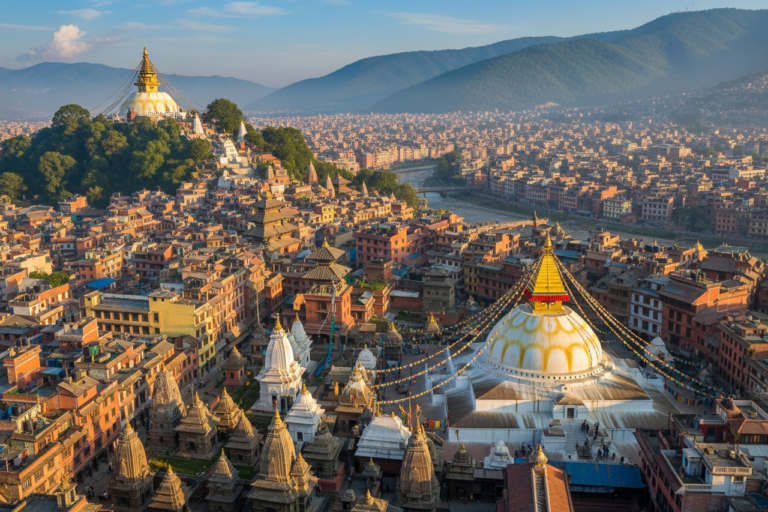
Key Highlights
-
Nepal is a country with a lot of religious diversity. Hinduism and Buddhism are the main faiths that the Nepalese people follow.
-
There are many old Hindu temples and important Buddhist monasteries all over Nepal. These places show the deep spiritual story of the country.
-
In the past, Nepal was a Hindu kingdom. Now, it is a secular state. The law makes sure everyone in the country has religious freedom.
-
People with different faiths live together in Nepal. Many Nepalese people mix Hindu and Buddhist traditions in their lives.
-
The way people practice religion here is like living history. You can see both old traditions and how different beliefs now live side by side.
Introduction
Nepal sits high in the Himalayas. It is a place where the spirit feels alive every day. For the Nepalese people, religion is not just about what you believe. It is something you do with your heart. Old customs, colorful festivals, and deep love for faith all play a part. This overview talks about religion in Nepal, showing how rich and different it can be. Hinduism and Buddhism are the main beliefs. There are also many other peaceful ways of worship in the land. By mixing all these, the Nepalese make the country special.
The Religious Landscape of Nepal
Nepal shows true religious diversity. Many different faiths live side by side and have done so for years. Most Nepalese people follow Hinduism. Buddhism is also strong and a big part of the country. Besides these main religious groups, there are communities of Muslims, Christians, and followers of local traditions like Kirant.
This mix of different faiths makes Nepal a place with many types of spiritual life. The census data helps us see the groups of people and their beliefs. But, day-to-day life is more lively. Many religious practices mix together, and people often take part in more than one tradition. Now, we will look at the population numbers and how these beliefs are spread across Nepal.
Major Religions and Population Percentages
According to the country’s census data, Hindus make up the largest religious group in Nepal by a significant margin. Following them are Buddhists, who have a long and storied history in the region. Muslims and Christians constitute smaller but established minority communities.
Recent data shows some shifts in these percentages. While Hinduism remains dominant, there has been a notable growth in the Christian population. The number of adherents to Christianity is conservatively estimated at over 800,000, illustrating a gradual change in the nation’s religious demographics. Other indigenous faiths, like Kirant, also contribute to the spiritual mosaic.
Here is a breakdown of the main religious groups based on recent population estimates:
|
Religion |
Approximate Population Percentage |
|---|---|
|
Hindus |
81% |
|
Buddhists |
11% |
|
Muslims |
4.2% |
|
Kirant/Other |
4% |
|
Christians |
3% |
Religion by Region: Urban vs. Rural Differences
The way religious groups live in Nepal changes between cities and villages. In the Kathmandu Valley, you can see Hindu and Buddhist sacred places close to each other. It is common for people to worship together at these sites. This part of the country shows a good example of how different religious communities can live side by side.
The Terai region in the south of Nepal is where most of the country’s Muslim people live. These groups have been in the area for many years, and they keep their own way of life and beliefs.
Up in the high Himalayas, many people follow Tibetan Buddhism, especially the Sherpa community. You can notice that the number of followers in these different groups changes a lot when you go from crowded cities to quiet villages high in the mountains. This shift shows how Nepal has a mix of different people and parts of land.
Historical Roots of Religion in Nepal
The story of religion in Nepal goes back to ancient times. It helped shape the way people live and who they are. For many years, Nepal was the world’s only Hindu kingdom. This made the laws, arts, and traditions center around Hindu ways. Hinduism came to Nepal thousands of years ago. Buddhism started in Nepal.
When Prithvi Narayan Shah joined the country as one group in the 18th century, Nepal became a Hindu state in a stronger way. That history is still a big part of Nepal. Now, let’s look at the early customs and see how religion is still part of daily life in Nepal.
Ancient Traditions and Early Influences
Long before Nepal was unified, the land had many kinds of spiritual ways. Hinduism, called Sanatan Dharma, started to move into the Kathmandu Valley from the Indus Valley in India about 2000 BCE. The first beliefs mixed with the local practices of groups like the Kirat and Limbu people.
Buddhism also comes from ancient times in Nepal. Siddhartha Gautama, who later became Buddha, was born in Lumbini. As time went on, ideas from Tibet brought a new form of Lamaist Buddhism, especially in the north, where there are mountains. This mix of local and outside beliefs made a spiritual base that is very different.
How these traditions joined together during ancient times is a big part of Nepal’s religious story. One faith did not push the other out. Instead, they often came together. People shared gods and holy places, and these are still important today. This long history of working together helps explain the special cultural identity Nepal, and places like the Kathmandu Valley, have now.
Impact of Religion on Nepalese Culture and Society
Religious beliefs are at the center of daily life for most Nepalese people. Many people start their day with prayers. There are also big religious ceremonies for important events in life. The religious practices people follow shape both their own lives and life in the community. Each year, there are many festivals connected to Hindu and Buddhist calendars. These festivals bring families and the whole community together to celebrate.
But there have been problems, too. In Nepal, the old caste system is connected with some Hindu traditions, leading to caste discrimination and the division of people into groups. The country’s constitution now has special rules made to help support and protect people who have faced these problems. This includes the Dalit community. The goal is to fix what went wrong in the past.
Still, for the most part, religion in Nepal brings people together. It is often linked with art and beauty. Nepalese music, art, and buildings are full of religious themes. Religious practices give people in Nepal their main source of identity, show them what is good or bad, and help people in a community stand with each other.
Hinduism in Nepal: Distinctive Features
Nepal is not called a Hindu nation these days. Still, the way people practice Hinduism in Nepal is special. This place is known as the home of Sanatan Dharma in the Himalayas. Hinduism in Nepal is a mix of well-known customs and very old local ways. You can see many Hindu temples and religious places in the country. They are everywhere, from big buildings in the cities to small shrines in villages.
This kind of Hinduism comes from years of Nepal staying on its own and mixing with other faiths like Buddhism. There are some unique rituals in Nepalese Hinduism. Now, let’s talk about what makes these customs and pilgrimage spots so important for Hinduism in Nepal.
Unique Practices and Rituals
The way people follow Hinduism in Nepal is special. It mixes old ways of worship with local ideas. The way folks honor gods and goddesses feels different from other places. You can find parts of their faith that you won’t see outside Nepal. This mix of local and old beliefs is what makes Nepalese spirituality stand out.
In daily life, people show devotion in many small ways. They give flowers at shrines in their town. They keep up with fasts as part of their faith. One thing that is well known is the role of living goddesses, or Kumaris. These are young girls who are seen as showing the power of the divine.
Here are some unique Hindu practices you will find in Nepal:
-
Worship of Living Goddesses (Kumaris): Young girls are picked to be living images of the goddess Taleju.
-
Syncretic Worship: Hindus and Buddhists in the Kathmandu Valley often worship under the same roof. They also have respect for the same gods.
-
Animal Sacrifices: Some big Hindu events, like the Gadhimai festival, still have animal sacrifices.
-
Unique Festivals: In Kathmandu, people celebrate Indra Jatra. This is a festival that mixes religion with the everyday culture of the Kathmandu Valley.
Major Temples and Pilgrimages
Nepal is a place where many people go to pray. It has some of the most important hindu temples in the world. These religious places bring in followers from all over. They are at the heart of life for people in Nepal. The capital, Kathmandu, has temples everywhere. You can find old sites in almost every part of the city.
Many sites in Nepal are linked to gods and stories that belong to the people there. Going on a trip to these holy places is special and means a lot to each person. Pashupatinath Temple is one of the main places for followers of Lord Shiva. It sits by the Bagmati River. People also use this spot for funeral services.
Here are major hindu temples and religious places you can visit:
-
Pashupatinath Temple: This is a UNESCO World Heritage site in Kathmandu. It is for Lord Shiva. Many thousands come here, especially when the Shivaratri festival is on.
-
Changu Narayan Temple: It is thought to be the oldest temple in Nepal. It is for Lord Vishnu.
-
Manakamana Temple: This holy place honors the hindu goddess Bhagwati. You have to go up a hill to reach it. There is a cable car for visitors.
-
Budhanilkantha Temple: In this temple, you can see a big statue of Lord Vishnu lying down. It is made from one large block of black stone.
Buddhism’s Legacy and Present Role
Buddhism is very important in Nepal. It is the birthplace of Siddhartha Gautama, the Buddha. You can see this in the many buddhist monasteries and sacred places all around the country, mostly in the mountains. Many buddhists live here, and a lot of tibetan buddhists have made Nepal their home.
Today, buddhism is part of the daily life in Nepalese society. It is not something old but something people still follow. The ideas of peace and care for others are part of everyday life and the arts. Now, let’s look at the sacred history of buddhism in Nepal and see how it still shapes the culture.
The Birthplace of Buddha and Sacred Sites
Nepal is a very important place in world religion because it is where Siddhartha Gautama was born. He is better known as Buddha. The town of Lumbini is his birthplace and is marked as a UNESCO World Heritage site. Every year, many Buddhists from around the world visit Lumbini as a pilgrimage. The area is full of buddhist monasteries built by different countries. This makes Lumbini a center for peace, reflection, and worship.
Besides Lumbini, there are many other sacred places in Nepal. Kathmandu has the Swayambhunath and Boudhanath stupas. These are well-known symbols of buddhism in Nepal. People come to these sites for worship. At these places, you often see prayer wheels being turned and prayer flags waving in the wind.
Here are some of the most important sacred buddhist sites in Nepal:
-
Lumbini: This is the birthplace of Lord Buddha. It has the Maya Devi Temple as well as many international monasteries.
-
Swayambhunath Stupa (Monkey Temple): This old stupa is on a hill overlooking Kathmandu. It is important to both buddhists and hindus.
-
Boudhanath Stupa: One of the largest stupas in the world. It is a main site for Tibetan buddhism in Nepal.
-
Tengboche Monastery: This famous monastery is in the Everest region and offers great views of the Himal
Influence of Buddhism on Daily Life and Arts
The effect of Buddhism in Nepal goes far beyond monasteries and stupas. It is a part of every day for the Nepalese people and can be seen in the art and lives of many. People in Nepal often focus on love, staying peaceful, and being kind to one another. These ideas show up in the way people act and talk to each other. This helps make life in Nepal calm and friendly.
Buddhist themes can be seen in much of the art in Nepal. For example, there are Thangka paintings, detailed mandalas, and statues of Bodhisattvas. These pieces of art are more than just to look at—they help people meditate and learn deep lessons though simple pictures and shapes.
For the buddhism followers in Nepal, some religious practices are done every day. People walk around the stupas and say special mantras. The calm feeling inside the monasteries gives the nepalese people a place to feel safe and peaceful, mostly in mountain areas. This helps them find a good mix between the things they need and their spiritual needs.
Conclusion
In Nepal, religion plays an important part in the lives of the people. The country is home to a mix of faiths like Hinduism and Buddhism. These two religions live side by side, with both being a big part of local culture and history. The spiritual scene in Nepal is lively and has close ties to daily life, with customs passed down from one year to the next.
If you want to understand the nepali people, learn about their religious practices. Whether you visit old temples or join local celebrations, you will see how religion reaches every part of life. It shapes who people are and how they work in their community. Take some time to look at this special side of nepali culture. It makes your visit much better and helps you know what makes nepal such a special place.
Frequently Asked Questions
Is Nepal officially a secular country?
Yes, Nepal became a secular state in 2008. Its 2015 constitution made this clear. The Government of Nepal does not favor any religion. It works to protect all faiths practiced since ancient times. This shift supports human rights. It also helps everyone enjoy religious freedom. The move toward secularism lets people in Nepal follow their own beliefs.
How common is religious diversity and coexistence?
There is a lot of religious diversity in Nepal, and people get along well. In Nepal, it is normal to see different religious communities, like Hindus and Buddhists, use the same special places. They often take part in each other’s festivals, too. This good way of living between people of different faiths is something the Nepalese people are proud of. Protection of religion is a big part of their rules, and the constitution says everyone in Nepal can follow their own religion.
Are there unique religious festivals in Nepal?
Nepal is known for its special festivals. Hindus, Buddhists, Christians, and Muslims all have their own holidays. Hindus and Buddhists mark big events. Some of these are Dashain, Tihar, and Buddha Jayanti. These festivals bring people together and fill the country with colors. Christians celebrate Christmas. Muslims join in with Eid. All these days help make Nepal’s culture bright and full of life.



