

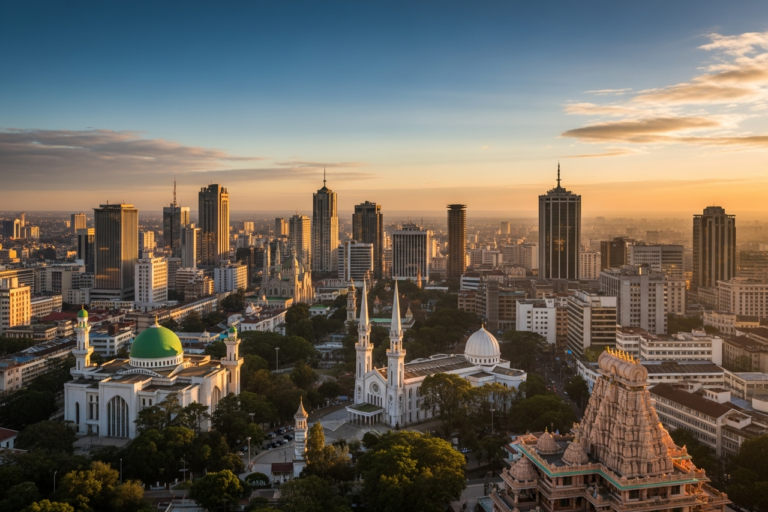
Key Highlights
-
In the country, most people are Christian. More than 85% of the population of Kenya say they belong to a Christian group.
-
Islam is the next biggest faith. There is a large Muslim population, especially near the coast and in the east.
-
Some folks still follow traditional religions. These are not as common now, but they still impact the way many people in Kenya live and think. People sometimes mix these beliefs with Christianity or Islam.
-
The country’s constitution gives everyone religious freedom. All different faiths can exist side by side.
-
The main religions are Christianity, Islam, Hinduism, and many indigenous faiths.
-
Religious leaders and faith communities help shape social life and often get involved in politics too.
Introduction
Welcome to Kenya. The country is lively and full of color in East Africa. People here come from many backgrounds and believe in different things. Religion shapes the lives of most of the total population. It affects how people live every day and how they celebrate holidays. This article will look at the many religious traditions found in Kenya. Christianity and Islam are followed by a lot of people. Still, indigenous faiths continue to be part of life. To know the heart and soul of Kenya and its people, you have to understand the religious traditions around the country.
Overview of Religion in Kenya
Religion is part of life for many people in the country. It shapes the way of life for a lot of people in Kenya. The country does not have an official state religion, but most of the population of Kenya belongs to one religious group or another. These religious beliefs are not just something for home or personal time. People often show their faith in public, and it is important to the identity of many communities.
You can see faith in the big cities and in small villages. It touches daily life everywhere. The country has many different religious beliefs, and this adds to the culture for many people. Sometimes, though, it can also lead to social tension. In this quick overview, you will learn a bit about how faith has grown over time, the current number of people in different religious groups, and how much it affects Kenyan culture.
Historical Evolution of Religious Traditions
The religious history of Kenya shows big changes over time. Before the colonial period, people followed many different indigenous faiths. Each tribe had a belief that there was one creator God. These Gods had names like ‘Ngai’ or ‘Were’. The traditional beliefs were very close to the land and the spirits of their ancestors.
When European missionaries came, things started to change. The spread of Christianity began with their arrival. Missionaries made schools and hospitals, and that helped their new faith become part of local communities. At the same time, the Muslim religion stayed strong, especially in the coast and east of Kenya. It had been active in those areas for many years, thanks to trade with Arabs.
As the years went on, many people switched to Christianity or Islam. But most did not let go of all their traditional ways. Many mixed the new religions with their old beliefs. This kept the culture alive, even while new practices grew in Kenya.
Present-day Religious Landscape
Today, most people in the country are Christian. Christians make up more than 85% of the total population. You will find many types of churches in Kenya. There are big groups like Catholic and Anglican churches. There are also more and more independent churches and new religious groups each year.
The Muslim population is the next largest group. It includes about 11% of the people in Kenya.
There are also other smaller religious groups. For example, Hinduism, Buddhism, and Sikhism are seen, especially with those who have Indian roots.
Religious leaders from the main faiths play a big part in the country. They get involved in both social and political things and guide people in what’s right.
Kenya now has a lively and rich mix of faiths. Religious beliefs are still a key piece of identity and daily life for most people.
Influence of Religion on Kenyan Life
Religion plays a big part in the way of life in Kenya. It is not just about going to services or saying prayers. Religion affects how people act, what is important in the community, and even family law in some places. Religious institutions like churches and mosques are at the heart of the community. They give people education, help with health care, and offer support.
The advice of a religious group can shape big moments in life, like birth, marriage, and death. Faith communities help people feel like they belong and have a place, building networks that support their members. These networks are central to how people live together.
You can see the influence of religion in the country’s calendar, where Christian and Muslim holidays are public holidays. Religion gives people a strong base for moral rules and how to be with others, making faith a key part of life for most in Kenya.
Demographic Distribution of Faiths
To understand the religious makeup of the country, you need to see how different faiths are spread out. Data from the Kenya National Bureau of Statistics shows that most people in the population of Kenya say they are Christian. The Bureau of Statistics also gives us more details about the religious beliefs and backgrounds found in all the ethnic groups in Kenya.
Christianity is common in many places, but there are regions where other religious beliefs are found. The total population is not spread out evenly in Kenya. For example, you will see more Muslim communities along the coast and in the northeastern part of the country. The sections below take a closer look at the population of Kenya and show where the main faiths are found in each region.
Christian Population and Regional Presence
The Christian population is the largest religious demographic in Kenya, but it is not a monolithic group. It comprises numerous Christian denominations, with the Roman Catholic Church, Anglican churches, and various Protestant and Evangelical churches having strong followings. Geographically, Christianity is dominant in many parts of the country, particularly in central regions like Mount Kenya and across Western Kenya.
Different denominations have established strongholds in various areas, often due to the historical activities of missionaries. For instance, some regions might have a higher concentration of Catholics, while others are predominantly Protestant. This regional distribution contributes to the diverse cultural and religious texture of the nation.
Here is a breakdown of the major Christian groups based on the 2019 census:
|
Christian Denomination |
Percentage of Population |
|---|---|
|
Non-Evangelical Protestants (e.g., Anglican, Presbyterian) |
33.4% |
|
Roman Catholic Church |
20.6% |
|
Evangelical Protestants |
20.4% |
|
Other Christian Denominations |
11.1% |
Muslim Communities Across Kenya
The Muslim population in the country is the second biggest group of faith. This group is found mostly on the coast. The coast has a long past with trade and has been in touch with the Arab world. Cities like Mombasa have a large Muslim community. Life on the coast is shaped by Islamic culture and is a big part of their way of life.
Muslim populations also live in northeastern parts of Kenya. Many ethnic Somalis live there. In these parts of Kenya, the Muslim religion is more than just a belief. It works as a full way of life and affects how people live every day.
You will find followers of the Muslim religion in many towns and cities across the country. The Muslim community is a key part of Kenya’s story. It adds to the country’s mix of cultures and religions.
Other Religions and Minority Groups
Kenya has more religions than only Christianity and Islam. There are a number of minority groups and religions here. Hinduism is a big religion, mostly followed by the Kenyan-Indian community. The Hindu Council of Kenya speaks for this group. It helps with both cultural and religious events. It also takes care of temples in big cities.
Indigenous religions are not followed by many, but they mean a lot to the people who practice them. These belief systems belong to different ethnic groups. Many customs and the way people think come from these traditions. Often, they work alongside other religions.
There are other minority faiths too that make up the mix of religions in Kenya. These include:
-
Buddhism and Sikhism: These are mainly practiced by the Indian community in Kenya.
-
Traditional African Religions: Some tribes like the Turkana and Samburu still keep their old beliefs.
-
Atheism/No Religion: There are some Kenyans, and the number is slowly going up, who say they have no religion.
Main Religions Practiced
Kenya is a country where many people have very strong beliefs. Most of the total population follows Christianity. This is the top religion in the country. Islam is the next biggest faith. It is popular in some parts of Kenya.
The country also has traditional religious traditions and other small religions, including Hinduism. These add to the spiritual mix in Kenya. There is no state religion in Kenya. Still, the main faiths shape the culture, laws, and everyday life. This leads to a rich and lively religious scene. In the next sections, you will learn more about these main belief systems.
Christianity: Denominations, Spread, and Practices
Christianity in Kenya is very mixed, with many different groups. People in the country mostly belong to Roman Catholics, Evangelical Protestants, or big churches like the Anglicans and Presbyterians. There are also many independent churches that mix Christian teachings with African customs.
The spread of Christianity in the country grew fast during the colonial years. Missionaries set up schools and health centers back then. Because of this, the faith became a big part of life in Kenya. Now, churches are at the heart of most communities.
As a religious group, Christians in the country show their faith in many ways. They go to church often, help others in the community, and go to religious festivals. The teachings of the religion help guide how people in the country live. This includes how they treat their families and how they act each day. The Christian faith is a strong base for life in Kenya.
Islam: Sects, Customs, and Centers
The Muslim population in Kenya has been a big part of the country for a long time. Most of the people who follow the Muslim religion in Kenya are Sunni, and they believe in the Shafi’i school of Islamic law. You can see Islam’s strong influence on the coast and in the northeastern areas, where it shapes how many people live.
Islamic law, called Sharia, guides the personal status of Muslims in the country. It takes care of marriage, divorce, and inheritance through Kadhis’ courts, which are recognized by Kenya’s legal framework. This lets the Muslim religion play a part in the lives of its followers.
Mosques are key places of worship for the Muslim population and also important places where the community comes together. In cities like Mombasa and Lamu, there are lots of mosques and these cities are known for their deep Islamic roots. The mosques there help keep Islamic law and customs alive, and they also offer religious education and programs.
Hinduism and Smaller Faiths: Role and Significance
Although Hinduism and some other smaller faiths are practiced by very few people, they still have a big impact in the country’s multicultural society. Hinduism is mostly followed by the Indian community in Kenya. This group has helped a lot with the economy and culture of the country. The Hindu Council of Kenya is an important group for the community. They keep temples open and organize cultural events.
Indigenous religions are still present, mainly in people who stick to more traditional ways of living. These beliefs are tied closely to nature and family history. They are a big part of Kenya’s roots. Religious leaders in these groups take care of old traditions and pass down knowledge.
There are also new religious groups and faiths like Sikhism and Buddhism in the country. These groups are small. Even so, they help the country’s religious life stay open, diverse, and rich.
Traditional African Religions
Before Christianity and Islam came to Kenya, traditional African religions were the main way people believed and lived. Every ethnic group had their own name for the supreme creator and their own set of rules and stories in these indigenous faiths. These religious traditions focused on the belief that there is one great God. People saw this God as far away, so they often looked to the spirits of their ancestors to help them talk with God.
Many people in Kenya now follow other religions, but traditional religious groups still have a big impact. For some, mostly in rural areas, these beliefs are still the main way of life. For many others, pieces of traditional African religions mix with Christianity or Islam. This mix shapes how people in Kenya see the world and their own culture.
Core Beliefs and Spiritual Practices
Many of the traditional beliefs in Kenya are based on the idea that there is one creator God. This God is called by different names, such as Ngai, Were, or Asis. People often connect this God to big things in nature, like the sun or tall mountains. One mountain that stands out is Mount Kenya. Spiritual practices help people keep things good between the community, nature, and their God.
Another part that is very important is the strong ties that people feel with their ancestors. They believe that ancestors are still close to their families. Ancestors watch over people and can speak to God for them. People give offerings and pray to their ancestors. They do this to ask for help and blessings in their lives.
Key spiritual practices include:
-
Rites of Passage: These are ceremonies for big moments in a person’s life, like when they are born, become an adult, get married, or die.
-
Veneration of Sacred Places: Some natural places are very special, like the kaya forests of the Mijikenda people. These places are known as kaya forests and are protected as special places of worship and for rituals.
Community Rituals and Ancestral Worship
In traditional African religions, people come together for community rituals. These events help build strong social bonds and take care of people’s spiritual well-being. Most times, elders or spiritual leaders lead the group. The group might pray for things like rain, hope for a good harvest, or work to cleanse the whole community. These rituals help everyone feel they belong and share the same values.
A big part of these traditional ways is honoring ancestors. Families and clans will show respect to their loved ones who have passed away because they believe the spirits can still affect their lives. They give gifts like food, something to drink, or livestock to make peace with these spirits and ask for their help and safety.
This strong link to people in the past helps to keep traditional ways and old knowledge alive from one year to the next. Even if people don’t hold big rituals as much as they did before, they still respect their ancestors. That respect for the past is still important in most cultures, even for those who follow other religions now.
Kenyan Tribes and Religious Affiliations
In Kenya, there is often a close link between ethnic groups and their main religions. People may have their own beliefs, but over time, some Kenyan tribes have had strong ties to certain faiths because of the way they changed or mixed their ways with new ones. The mix of faith and tribal culture has helped shape the country and its society.
Many tribes took up Christianity, while some turned to Islam. A few kept their old faiths. Knowing how ethnic groups are tied to religions helps us understand Kenya’s different communities better. The next parts look more closely at these links.
Key Tribes Associated with Christianity
Many of the biggest Kenyan tribes are mostly Christian. This comes from the work of missionaries who focused on central and western Kenya. There are a lot of Christians among the people living in the highlands around Mount Kenya and in the green lands in western Kenya. These groups often mix Christian beliefs with their own old customs.
Some tribes with a lot of Christians are the Kikuyu, Luhya, Kamba, and Kalenjin. The church is very important for them. It is not just a place to pray. It is used for social events, learning, and even politics. These tribes have strong ties with groups like the Catholic, Anglican, and Presbyterian churches.
Key Kenyan tribes with many Christians are:
-
Kikuyu: This is Kenya’s biggest group. Most of them are Christian. They have used church groups to start new schools and join politics.
-
Luo: Most Luo are Christian. Their great music style is now a part of church life.
-
Kamba: Kamba people are very good at art. Many are Christians and their faith is a big part of life for them.
Tribes Influenced by Islam
Islam has a big influence on tribes that live on the coast and in the northeast of Kenya. The Swahili people are found by the coast. They have followed the Islamic faith for hundreds of years. Islam is an important part of Swahili culture and language. For the Swahili, to be Muslim is a huge part of who they are.
In the northeast, the ethnic Somalis are another group where the muslim population is strong. Islam shapes most things in the lives of ethnic Somalis. It guides how people in this muslim community act and follow rules, and how they look at their own culture. Their strong faith sets them apart from other ethnic groups in Kenya.
There are other ethnic groups too, like the Mijikenda who also live on the coast, as well as some in the north of the country. Many people in these tribes are part of the muslim community now. It was their close links to Arab and Swahili traders that brought the religion to them. Over time, Islam has lived alongside or sometimes replaced the traditional beliefs these groups once held.
Heritage of Indigenous Faiths in Tribal Culture
The heritage of indigenous faiths is still a big part of tribal culture for many groups in Kenya. This is true even if most people in these groups are now Christian or Muslim. The local communities keep many traditional beliefs. These include what they think about their ancestors, spirits, and how nature is special. These ideas help shape how people in these groups live and think.
Many people do not feel that following traditional beliefs goes against their new religion. They think it is just part of who they are, so it works with their faith now.
For example, there are still important rites of passage in many local communities. Circumcision ceremonies are a common practice. These, and other rituals, come from very old traditional beliefs and have a deep spiritual meaning. People also show strong respect for elders and ask them for advice. This is another important part of their heritage.
Some groups hold onto their indigenous faiths even more. These include the Maasai, Samburu, and Turkana tribes. For them, traditional beliefs are not just old ways. These beliefs are a real and active part of their daily life. They help these groups know how to treat their land, care for their animals, and guide the whole community.
Religion’s Impact on Society and Culture
Religion has a big effect on Kenyan society. It is part of the country’s way of life and helps shape the national identity. It also guides what people see as right and wrong. The country celebrates many public holidays that match with major religious festivals. Here, faith is not just a private thing. You can see it in the country’s politics and everyday life.
You can spot this strong religious influence in the country’s music, arts, and books. The ideas from different faiths help form the values of the community and guide how people act. The sections below will show how religion is seen in the country’s festivals, customs, and the creative side of its way of life.
Religious Festivals and Public Holidays
Religious festivals are big public celebrations in Kenya. These festivals show the mix of faiths in the country. The government in Kenya says that the main Christian and Muslim holy days are public holidays. So, followers can take part in these special days with their family and community. On these holidays, people get together for church or mosque services, big meals, and other gatherings.
On Christian holidays like Christmas and Easter, many people in the country travel home to be with family for this time. Churches fill up for services and you hear songs and prayers everywhere. During Muslim holidays, like Eid al-Fitr and Eid al-Adha, followers go to the mosques to pray, then visit friends and share what they have with others.
Here are some main religious public holidays in the country:
-
Christmas and Easter: These are the most important Christian holidays.
-
Eid al-Fitr and Eid al-Adha: These are two big Islamic events that mark the end of Ramadan and the act of giving.
-
Diwali: Many in the Hindu community join in this event. While it is not a national public holiday, it is a key celebration.
Religion in Everyday Kenyan Customs
Religion plays a big part in the daily lives of people in Kenya. It is normal in this country for public meetings to start and end with a prayer. Some business events do this too. This shows that many people feel faith should guide each part of life, not just when alone.
Family law is affected by religion for many groups. For Muslims, Kadhis’ courts deal with things like getting married and passing down land or things in a family. They do this by Islamic rules. For lots of Christians, the rules of the church about family and what is right or wrong have a big effect on the choices they make.
Traditional beliefs are still strong, especially outside the cities. Things like important life steps, showing respect to older people, and doing what the village or group expects all come from both old customs and religion. Religion is all around in Kenya. It helps shape how people act toward others each day.
Keywords: family law, traditional beliefs
Religion’s Role in Arts, Music, and Literature
Religion has for a long time been a strong part of the country’s arts, music, and books. In Kenya, gospel music is one of the most popular kinds you will hear. Songs of praise and worship play in many places and on the radio all the time. This type of music mixes new music with old African beats. This blend brings a special sound that comes from the country.
In stories and books, you will often see religious themes and people. Writers in the country talk about faith, what is right and wrong, and how old ways of thinking meet newer religions. Some religious leaders in Kenya have also written important books. These texts help guide public talk and shape the way of spiritual life.
You can also see religious traditions in the visual arts and crafts of the country. Wood carvings may show bible stories or old spiritual figures. Islamic calligraphy and shapes often are seen on mosques and in homes of Muslim people. Religion, in all these ways, keeps being a lively force in the country’s culture and adds something special to all forms of art here.
Religious Freedom and Legal Framework
Kenya has strong laws that support religious freedom. The constitution of Kenya clearly gives every person in the country the right to follow their own conscience, faith, and religion. People can practice, worship, and teach any religion. You can do this alone or with other people.
This right is in the constitution, so the government does not have a state religion. Because of this, there is a lot of religion in the country. Government officials have to protect these rights. But there are still some problems. The next parts talk about what the constitution says, what government policies are, and human rights issues about religious freedom.
Constitution and Rights for Religious Groups
The Constitution of Kenya is the main law that protects freedom of religion in the country. It clearly says that all people in Kenya have the right to follow any religion. They can choose, change, and show their religious beliefs without being afraid of the government. This right is there for every religious group, and it lets them set up places of worship and handle their own matters.
The country has also agreed to world laws on human rights, like the International Covenant on Civil and Political Rights. These laws help keep these rights safe. In Kenya, religious groups can sign up with the government. After that, they get legal rights to own things, run schools, and do charity work.
The Constitution of Kenya makes sure people have these rights:
-
The right to freedom of conscience, religion, thought, belief, and opinion.
-
The freedom to show their religious beliefs in the way they worship, practice, teach, or observe.
-
The right to not be forced to do anything that goes against what they believe or their religion.
Government Policies and Regulation
The constitution gives people in Kenya the right to religious freedom. Even so, the government makes some rules for religious organizations. The main goal of these policies is to stop people from being taken advantage of and to limit extremist groups. For example, religious leaders may now need to get formal theological training.
The government made a task force to check how religious institutions are regulated, because of worries about accountability. Some faith leaders do not support these proposals. They worry that it could take away some of their freedom to practice religion. At times, the high court has to make decisions to help keep a balance between what the state wants for security and what people need for religious freedoms.
There is no state religion in Kenya. Still, the government works with faith-based groups, mostly in education and healthcare. Even with this teamwork, government officials have to be careful. They must find the right balance between working together and regulating these groups. There are still strong discussions about how much power the government should have over religious institutions.
Challenges Facing Religious Freedom
Even though the law gives people religious freedom in Kenya, there are still many problems. The biggest problem is from groups like al-Shabaab. This group has attacked Christians before. Because of this, people worry more about staying safe. These problems are worse on the coast and in the northeast.
Human rights groups talk about other problems, too. They say some of the government’s counter-terrorism actions have led to arbitrary arrest and sometimes extrajudicial killings. Most of this affects the Muslim community, and this makes some people feel the state is against them. It has caused trouble between different faiths at times.
Human rights organizations keep watching what is going on. They ask leaders to support plans that protect national security and also give people their freedoms. Getting this to work well is a big challenge for Kenya. The country wants to be peaceful and fair to all its people.
Interfaith Relations in Kenya
Interfaith relations in Kenya can be both calm and tense at the same time. Most of the time, people from different faiths get along with each other. Interfaith dialogues happen a lot here. In the country, religious leaders from different faith communities, like Christian, Muslim, and more, meet often. They work to build peace, spread religious tolerance, and help everyone stay united.
But, Kenya has seen trouble too. There are times when Christians and Muslims have disagreed or fought. This often starts because of what some extreme groups do or because some people in politics try to make things worse. Still, people keep working hard to grow religious tolerance and help everyone understand each other. These steps are important so everyone in the country can live well together. The next parts will show both the good things and problems in these efforts.
Examples of Harmony and Dialogue
There are many good things happening in Kenya when it comes to interfaith harmony. Interfaith dialogues often take place in the country at the national and local levels. These meetings bring religious leaders and followers from different faiths together. They talk about shared problems and help to build respect for each other. These forums are important because they help break down old ideas people may have about other religions.
In local communities, you can see Christians and Muslims living next to each other. They join in on community projects and help one another when things get hard. Embassy officials and some groups from other countries often help support these efforts to boost religious tolerance in Kenya.
Here are some notable examples of this harmony:
-
Joint statements from religious leaders calling for peace and against violence during times like elections.
-
Interfaith committees that work together on projects in the community, for example building schools or clinics.
-
Simple acts of kindness. One example is when Muslims kept Christians safe during an attack. These stories have become strong signs of unity among people.
This kind of teamwork in Kenya shows how people can work well together no matter which religion they follow.
Historical Conflicts and Reconciliation Efforts
Kenya has had some trouble with religious conflict in the past. Tension has often come up between Christians and Muslims. Many times, it is tied to politics, money problems, or the spread of extreme ideas. In recent years, some terrorist groups attacked certain religious communities. These attacks made old problems between the groups worse.
These acts caused fear and made people not trust each other. Interfaith relations in the areas hit by these attacks have been put under a lot of strain. When the police work on stopping terror, some Muslim communities felt left out or blamed for things they did not do. This feeling of being treated unfairly was made worse by how these operations were carried out.
To help the situation, there have been big efforts for people to come together again. Religious leaders are leading many of these efforts. They work hard to fix the split and help grow a national identity that all can share. This work wants all people to look past their own religious traditions. The goal is to make a future where people can face problems as one group and support peace in their country. Steps like open talk, including everyone in the community, and looking at why these fights start in the first place are important moves by religious leaders to keep Kenya safe and strong in the coming years.
Conclusion
In the end, religion is a big part of life in Kenya. It helps shape the culture and the way people connect with each other. In Kenya, there are many beliefs. The country has Christianity, Islam, and traditional African religions, along with other faiths. This mix of religious traditions brings people together and gives them a strong sense of who they are.
When you know about the history and how these beliefs have changed over time, you can see how important, they are in daily life, in the way people follow customs, and even in rules and laws. The different groups often talk and work together to understand each other. At times, there are problems, but some days bring hope and new ways of living together.
If you want to know more about the religious traditions that are important in Kenya, feel free to ask for a free consultation!
Frequently Asked Questions
What is the largest religion in Kenya?
The biggest religion in the country is Christianity. The Kenya National Bureau of Statistics says that more than 85% of the total population is Christian. There are many groups and traditions in this religion. This is why it plays a big part in Kenya’s social and cultural life.
How do tribes influence religious practices?
Kenyan tribes play a big role in shaping religious life. They mix their traditional beliefs with others like Christianity or Islam. Because of this, people create their own ways of worship and special rituals in their community. The customs from their ancestors still guide how they pray and live with others. This is how Kenyan tribes help keep their unique culture alive through their faith.
Are there specific customs visitors should know about religion in Kenya?
Yes, people who visit should show respect for religious customs. When you go to places of worship like churches or mosques, make sure to dress in a modest way. It is good manners to accept prayers if they are made in public gatherings. You should know that religious leaders have a lot of respect in many local communities. Faith is often part of the art and daily customs in these groups.



