

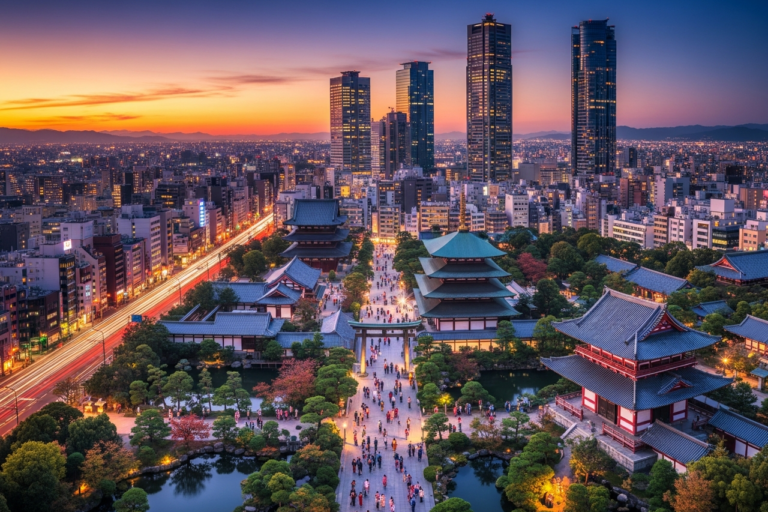
Key Highlights
-
Religion in Japan brings together Shinto and Buddhist ways and this mix sits deep in japanese culture.
-
Most japanese people take part in religious rituals when there are births, weddings, and funerals. They do not need to have a strong religious affiliation to do this.
-
Shinto is a faith that comes from Japan itself. It is all about nature and the kami, or gods. Buddhism looks more at the afterlife.
-
Religious freedom is fully protected in Japan. This lets people follow minority religions and allows new religions to develop.
-
Festivals, known as matsuri, are important in japanese society. They bring people together and join community fun with spiritual traditions.
-
Even though many japanese people live in a secular way each day, religion is still key to their identity. It helps make family and community ties stronger.
Introduction
Welcome to the world of religion in Japan. Here, things are not about strict rules. Instead, you will see a bright mix of both Shintoism and Buddhism. For a lot of Japanese people, religion is something very private and it is close to family. It is an important part of Japanese culture. Most do not visit a place to worship often. It is more about how to live your life and what feels right and good. In this guide we talk about what makes the spirit world in Japan special. You will read about old shrines, new rituals, and how people bring faith into daily life.
Overview of Religion in Japan
The main religions in Japan today are Shinto and Buddhism. One does not replace the other. For a long time, these two have lived side by side. They mix together to form a special japanese religion. People in Japan do not usually stick to just one faith.
Instead, they take part in rituals from both. For example, a child’s birth can be celebrated at a Shinto shrine. Later, a funeral for a person may follow Buddhist customs. This way of doing things shows how religion in japan today is a part of everyday life and what most people in the total population do with their religious affiliation.
Historical Roots of Japanese Religions
Shinto is the indigenous religion of Japan. It goes back a long way and started taking shape in Japan’s early history. At first, it was the belief system of groups that were organized by clans. People saw kami, which are like gods or spirits, in the world around them. For example, mountains, rivers, and big or strange trees all had their own kami. The top clan back then, called the Yamato clan, made up stories that said the emperor came from the sun goddess, Amaterasu.
By the third century B.C.E., the cultivation of rice had become an important part of life in Japan. Around this time, people started to connect Shinto rituals with planting and harvesting rice. There were big community parties at these times. These events were meant to keep the balance between humans, nature, and the kami.
In the sixth century, Buddhism came to Japan from Korea and China. At first, a lot of people found its ideas hard to get. But after a while, important people at the court started to accept it. Buddhism did not replace Shinto, but instead the two started to mix together. This mix has shaped Japanese beliefs and ways of thinking for many years.
Current Religious Demographics
While the majority of Japanese people may not consider themselves “religious” in a formal sense, religious practices are very common. Many people participate in rituals at key life moments, such as births, weddings, and funerals. According to the U.S. Department of State, a large portion of the total population engages with both Shinto and Buddhist traditions.
This lack of exclusive religious affiliation means that many people identify with both faiths. There are millions of followers of Buddhism, but many also revere Shinto kami. This dual participation is a defining feature of the religious landscape in Japan.
Below is a general look at religious affiliation, though numbers can overlap significantly due to syncretic practices.
|
Religion |
Approximate Number of Adherents |
|---|---|
|
Shintoism |
Over 80 million |
|
Buddhism |
Over 70 million |
|
Christianity |
Around 2-3 million |
|
Other Religions |
Several million |
Shinto – The Indigenous Faith
Shintoism is the native faith of Japan, and it is tied to the land and life around it. People believe that kami, or gods, are in all parts of nature. They are found in trees, rocks, animals, and even sounds. This respect for nature plays a big part in Japanese culture. You can see it in things like beautiful flower arranging and garden design.
If you walk around Japan, you will come across many beautiful shrines. These shrines are at the center of many religious ceremonies and community events. People visit them to pray, come together, and feel close to the kami. In this, we will look at what Shinto stands for and how the beautiful shrines mean so much in Japanese culture.
Core Beliefs and Practices of Shinto
The main ideas of Shinto focus on being pure, living in peace, and showing respect for nature and ancestors. This is not a faith with rules that you must always follow. For many, Shinto is more like a way to live every day. The religious rituals often bring the family together and help everyone in the family and community feel closer.
When you go to a shrine, you will see some steps people always follow. The first thing you should do is use the bamboo ladle at a small water fountain by the gate. You use it to wash your hands and rinse your mouth so you start your visit clean. At the main altar, the traditions include ringing a bell, making an offering, clapping to invite the kami, and then saying a prayer. These rituals help you ask for good things in life, like health, success, and other worldly benefits.
Key Shinto practices include:
-
Purification (Misogi/Harai): Wash yourself to clean your body and spirit before going into the holy area.
-
Offerings (Shinsen): People give food, drink, or money to the kami.
-
Prayers (Norito): You or a priest say prayers.
-
Festivals (Matsuri): The whole community has events to honor the kami and make community ties stronger.
-
Symbolic Meals (Naorai): People share a meal together and symbolically share it with the kami.
Role of Shinto Shrines in Community Life
Shinto shrines are much more than a place to pray. They are the center of many communities in Japan. These beautiful shrines bring people together for local festivals, or matsuri. These festivals are important for building community ties. At these events, you can see parades, listen to music, and eat good food. People get a chance to connect with their traditions and each other.
These local festivals often match the seasons and the farming year. For example, the annual celebration of sakura, or cherry blossoms, comes from Shinto beliefs in how nature changes over time. Many shrines host these events. Because of this, they hold a strong place in the heart of both social life and spiritual life.
There are both small shrines in neighborhoods and large, famous shrines you may visit. All these beautiful shrines have a special role in Japanese society. They host important ceremonies for life events, give you a quiet place to think, and help everyone remember what they share. In this way, they bring each community together.
Buddhism’s Influence in Japan
Buddhism came to Japan in the sixth century. Since then, it has had a big effect on the culture and spiritual life of the people. Shinto religion mostly focuses on life now, but Buddhism brings the idea of the soul and life after death. It gives people a way to reach enlightenment. Today, many followers of Buddhism visit Buddhist temples to pray and think deeply.
Different groups, like Zen Buddhism, have shaped art, buildings, martial arts, and even the tea ceremony for many people. Buddhist rituals play a big part in funerals and remembering loved ones. Now, we can look more at the Buddhist sects and the special things they do.
Buddhist Sects and Temples Across Japan
Buddhism came to Japan and changed over time. It became many important groups, each with its own beliefs and customs. Some well-known groups are Shingon, which is a special kind of Buddhism, and the Pure Land sects that focus on being devoted to Amida Buddha. You can find Buddhist temples for these groups in different areas of the country.
Zen Buddhism is one of the most famous. It was big with the samurai because they liked its focus on discipline, meditation, and trusting yourself. Zen buddhism has shaped the country in other ways, too. It influenced things like painting with ink and how gardens look. Buddhist priests help many people by teaching and guiding followers in each group.
If you want to see this history, you can go to Nara. That city has an extensive museum of buddhist art with items from many times. Places like these and the many buddhist temples all over the country let us learn a lot about the wide range of Buddhist ways in Japan.
Buddhist Rituals and Daily Customs
Buddhist rituals are a big part of daily life for many Japanese people. These traditions are seen at important times too. Shinto rituals are about new things in life, like when a baby is born or people get married. Buddhist ceremonies, though, are more about endings and remembering people. Most Japanese funerals are led by Buddhist priests.
Many families take time to visit family graves too. Around O-Bon in August, people go back to their hometowns. They clean the ancestral graves and pray for their late family members. This is a key part of both Buddhist and Confucian thinking about showing respect for ancestors.
It’s very common for people to stop by temples to pray for things they need in this world. Someone might pray for exam success, good health, or other blessings. Other well-known customs include:
-
Purchasing Charms: Many will buy charms called omamori at temples. These are said to protect you or bring good luck in different parts of your life.
-
Offering Incense: People often burn incense at temples. This is offered as a kind gesture and to help with purification.
-
Memorial Services: On certain anniversaries after a loved one has passed away, families will hold memorial services for them.
These Buddhist rituals are important to Japanese people as they mark big events, look for worldly benefits, and care for their family’s memory.
The Relationship Between Shinto and Buddhism
The way Shinto and Buddhism mix in Japan shows how different beliefs can come together. Both of these religions have been in Japan for many years. They have lived side-by-side and changed each other a lot. Because of this, there is a special way of looking at faith in Japanese culture. Most Japanese people see no problem with taking part in the ceremonies of both religions.
By blending, these two ways of thinking have made many shared traditions. For the Japanese people, it’s not about having to choose between one or the other. People in Japan take parts from both to deal with all parts of life and death. This has made a big mark on how they live and think. Next, we will look more at these shared practices and the ways they stand apart.
Syncretism and Shared Traditions
Syncretism in Japan can be seen in how simply Shinto and Buddhism have come together. There was a long time when people in Japan saw Shinto kami as forms of buddhas and bodhisattvas. Because of this, both faiths can be used side by side. You may even find them in the same temple-shrine areas.
There are a lot of shared traditions because of this mix. It is not strange for family members to have a Shinto ceremony for a wedding, and later have buddhist ceremonies for funerals. People handle things in a practical way, so they get to use both religions in their lives. The religion they follow can change by the occasion.
If you go on a classic trip across Japan, you will see this blend everywhere. You can find a Buddhist temple, but it might have a Shinto shrine on its grounds too. Because of this history, for a lot of Japanese people, Shinto and Buddhism are not fighting each other. They are seen as parts of something bigger—a rich, shared spiritual life.
Differences in Rituals and Celebration
Shinto and Buddhism live together peacefully in Japan, but they have their own ways of doing things and believe in different things. Shinto deals more with things that happen in life and the world around us. When you see people celebrate a birth or a Japanese wedding, it is often done with Shinto religious rituals. If there is a hope for a good harvest or when people want to have success in life, they go to Shinto shrines to pray. People can also visit these places to ask for some other worldly benefits.
On the other hand, Buddhism pays more attention to what happens after life ends. Most funerals are Buddhist, and remembering ancestors is an important custom in Japanese culture. Both Shinto and Buddhism give people different charms—these omamori can help with many things, like wanting to pass an exam, stay safe while traveling, or other requests.
Key differences include:
-
Life Events: Shinto is used for birth and marriage, while Buddhism is there for death and remembering those who have passed.
-
Places of Worship: Shinto rituals are done at shrines that have torii gates. Buddhist rites are held at temples.
-
Focus of Prayer: People pray in Shinto for good things in life or to be pure. In Buddhism, prayers are more about becoming wise and hoping for a good afterlife.
-
Clergy: Shinto priests are called kannushi, and Buddhist priests are called bōzu. Both this groups
Christianity, Islam, and Other Minority Religions
While Shinto and Buddhism are the main religions in Japan, the country also has other religions. Christianity, Islam, and faiths from the Middle East and around the world are followed by small but active groups. These minority religions are only a small part of the total religious affiliation in Japan.
The Japanese constitution gives people religious freedom. This lets every religious organization practice out in the open. Even though not many people belong to these groups compared to Shinto or Buddhism, these religions bring variety to Japan’s spiritual life. Next, we will look at the history of Christianity and other small faith groups.
History and Status of Christianity in Japan
Christianity came to Japan in the 16th century. Catholic missionaries were the first to bring the religion here. At first, some people did become followers. But soon, the religion faced hard times from the Tokugawa government. By the 17th century, the Tokugawa government stopped Christianity. They thought it would bring foreign ideas and upset the social order.
In the late 19th century, the religion came back when Japan opened up to the rest of the world. Protestant missionaries started schools and hospitals in the country. They also supported human rights and helped Japan change to a modern country. Still, Christianity has always been small in the country. Usually, only one or two percent of people in the country believe in it. Being a Christian mean people had to follow just one faith. This made it hard in a country where religious life is more open.
Now, in Japan, there is no official state religion. The government protects religious freedom in the constitution. Christianity is a religious organization that is still only a small group in the country. You will find churches and groups in many places. They are free to live with their beliefs and practice their religion.
Other World Religions and Small Faith Communities
Japan is not just a place for Christianity. The country also has many other minority religions from all around the world. These small faith groups may not have a long list of members, but they all add to the country’s mix of cultures and faiths. Some of these religions have come from East Asia or other areas recently.
The people in these groups can be open about their faith. They can do this without any problems from political authority. Even though there are not a lot of members when you look at the country’s religious affiliation, their communities are busy and full of life. Some examples are Islam, Hinduism, Sikhism, and Judaism. Most of these groups meet in big cities where there are more people from the Middle East and different countries.
Some of the minority religions you can find in Japan are:
-
Islam: There is a small group who practice the faith. Many are from the Middle East or Southeast Asia. Some Japanese people also join them.
-
Hinduism: Most people in this group come from India and Nepal.
-
Sikhism: This community is not large, but they can be found in places like Tokyo.
-
Judaism: This group is very small, with synagogues in cities such as Tokyo and Kobe.
New Religious Movements in Modern Japan
The 20th century brought many big changes, especially after the crushing war defeat. People lost their belief in the state-sponsored Shinto and stopped seeing the emperor as divine. This collapse of religious belief left a big gap. Out of this vacuum, many new religions (shin shukyo) started to appear. These groups helped people get real benefits and gave them a sense of belonging, which was important in fast-changing times.
Most of these new religions are small, but some, such as Soka Gakkai, have grown and now have millions of followers. Others, like the Aum cult of the divine truth, got attention for bad things they did. All of these movements show how the meaning of religion keeps changing in modern Japan.
Postwar and Contemporary Religious Groups
After World War II, there was an economic miracle in Japan. But at the same time, many people felt empty inside. The emperor said he was not a god anymore, and people started to question old beliefs. This opened the door for new religions. These new groups gave answers and a sense of purpose to people.
Most of these new religions had a person in charge who was very charming. They often said their members could get things in life like good health and money. While many of these groups were not dangerous, some, like the aum cult of the divine truth, made people afraid. The aum cult was behind the 1995 Tokyo subway gas attack. After this, many people started to not trust new religious movements.
But even with this fear, a few new religions have become big in Japan. Soka Gakkai is one well-known group. It is based on Buddhism and has millions of people who follow it. Soka Gakkai has a big role in things like politics and religious education. The success of Soka Gakkai and other groups shows that religion in Japan is always changing. New religions and the goal of getting worldly benefits play an important part in this story.
Social Impact of New Religions
The social impact of new religions in Japanese society is both wide and hard to sum up. For the people who join, these groups give a strong sense of being in a close group. They offer support, help, and a goal for life. The groups ask members to join in a lot of religious activity, which helps to fill open spaces left as older ways of life disappear in busy cities.
But many people in Japan look at these new religions with doubt. Big things, like the Aum Shinrikyo attack, made people worry about cults, tricks, and money scams. Some new religions get blamed for trying too hard to get new members or for not showing respect for cultural values in Japan. This can cause stress and fights in the country.
Still, these arguments do not change the facts. Groups like Soka Gakkai and other new religions have changed how people in Japan see politics, help others, and talk about culture. Their spot in Japanese society is now big and clear.
-
Community Building: They help members form close bonds with other people.
-
Political Influence: Some, including Soka Gakkai, take part in political work.
-
Social Welfare: Many do things for charity and help the community.
-
Public Scrutiny: They get looked at by the media and talked about by the public often.
Religion in Japanese Culture and Festivals
Religion in Japanese culture shows itself in a bright and lively way at many festivals, or matsuri. These local festivals let people take part in both religious ceremonies and happy times in the community. They show the core values the nation has.
There are thousands of these festivals in Japan. Each is linked to a certain shrine or temple, and often matches the change in the season. People at these festivals see the spiritual life of Japan with their own eyes. Ancient ways are kept alive with music, parades, and food. Now, let’s talk about some key holidays and practices in this culture.
Major Religious Holidays and Popular Traditions
Some of the biggest days in the Japanese year come from old religious customs. The new year, which is from January 1st to the 3rd, is a very important holiday. At this time, families go to shrines for the first visit of the year (hatsumode). They pray for good luck and hope for good things to come. People also go to the ancestral graves of their family members.
O-Bon is another important event. It happens in August. People believe the spirits of their ancestors come back to the world of the living. This festival can feel a bit spooky, but the spirits are welcomed. All through the year, there are local festivals linked to the cultivation of rice and to looking out for the well-being of their community.
These customs are a big part of day life now in Japan. There is the annual celebration of sakura when people go out to see cherry blossoms. Coming-of-age ceremonies are also held in early January for young people growing up.
-
New Year (Shogatsu): This is the most important holiday, and it includes shrine visits and family time.
-
O-Bon: A Buddhist festival in August for remembering ancestors’ spirits.
-
Shichi-Go-San: A Shinto ceremony for kids ages three, five, and seven.
-
Coming of Age Day: This day is for people turning 20. There are ceremonies and shrine trips.
Spiritual Practices in Everyday Life
Spiritual practices are a part of the day life of many Japanese people, but they may not call it “religion.” You can see this in the small religious rituals people do each day. For example, many keep small charms called omamori. They get these from temples or shrines. The omamori are there to give good luck or to keep you safe.
It is also common for someone in Japan to read their fortune using omikuji. You will find these slips of paper at shrines or temples. If you get a bad fortune, it is usual for you to tie it to a tree branch on the temple or shrine grounds. That way, you can leave the bad luck behind. These simple acts let people in Japan feel they are part of a bigger spiritual tradition.
There is also the love for nature in Japan. This comes from old beliefs that started with the cultivation of rice. Taking a short time to enjoy the cherry blossoms or the bright colors of autumn leaves is a habit for many people. This show of care comes from Shinto ways. These acts help to fill everyday life with a feeling of what is special and sacred.
Conclusion
Religion in Japan brings together old ways with new ideas. The mix of Shinto, Buddhism, and minority religions shows us how the spiritual life is connected with community and culture in japanese society. If you look at the beliefs in these groups, you get to see how japan’s religious ways have lasted and changed over time. People follow their faith with simple things every day or in bigger moments like festivals and rituals. Religion in japan helps shape how people feel and live. Seeing this can help you better understand the depth and variety of human faith there. If you want to know more about the spiritual side of japan, you can reach out to talk some more!



