

Key Highlights
-
Jamaica is known for its wide religious diversity, and most people follow Christianity.
-
The country’s constitution gives strong freedom of religion to all citizens and religious groups.
-
Rastafarianism is not the biggest faith, but it brings a large cultural impact in Jamaica and around the world.
-
Next to the main religions, traditional African beliefs like Revivalism are still followed.
-
Most Jamaicans are part of Protestant denominations, but many types of faiths live side by side without trouble.
-
Even with legal protections for freedom of religion, some groups like Rastafarians face discrimination from society.
Introduction
Welcome to Jamaica. This island is full of life and color. It is famous for the beaches and the culture. It also has a rich mix of different faiths. Have you ever thought about what religions play a role in this Caribbean country? The Jamaican constitution says there has to be both freedom of thought and freedom of religion. This means many people with different ideas and beliefs all live side by side. Most people in Jamaica follow Christianity, but Rastafarianism is also well known all over the world. Religion is part of daily life here and is important in national holidays. You can see how these faiths shape all areas of life in Jamaica.
Overview of Religious Diversity in Jamaica
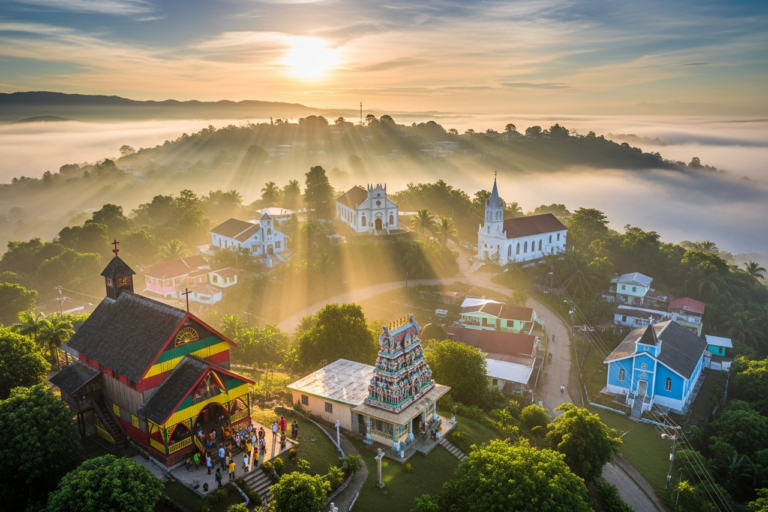
Jamaica has a lot of religious diversity. There are many religious groups that live on the island. Most people are part of different Christian denominations. But many other faiths are there, too. This comes from a long history of people from different cultures living in Jamaica.
The 2011 census shows that the island has many beliefs. Most people are Christian. But there are groups of Rastafarians, Muslims, Hindus, Jews, and Baha’is. Some people also follow traditional spiritual practices. There are also many who say they have no religious affiliation.
Historical Roots of Religion in Jamaica
The historical role of religion in Jamaica shows how things can change and still stay strong. The history of worship in Jamaica is shaped by beliefs from Africa and Europe. Many of these come from the island’s time under colonial rule and the hard times people faced.
African influences played a big role in forming religion in Jamaica. Enslaved people brought these beliefs with them. Over time, they mixed with Christianity that came from English colonists. This created new ways of worship that many people in Jamaica still follow. It shows how people can hold on to their faith and make it their own, even in tough times.
The Bible was brought to the island by missionaries. It became very important for the people, but they often saw it with their own eyes and felt it in their own way. Because of this, Jamaica now has a style of worship and belief that mixes what came from Africa, the English, and the Bible. This has made religion in Jamaica special and different from anywhere else.
Current Demographic Trends in Religious Affiliation
Understanding the current religious affiliation in Jamaica reveals a predominantly Christian country with a multitude of denominations. The 2011 census provides the most recent detailed snapshot of how Jamaicans identify their faith. A large number of citizens are members of the church, belonging to a specific congregation.
While registration with the government isn’t mandatory for a religious group to exist, many choose to incorporate to gain legal benefits like owning land. This formal process helps track the variety of denominations present on the island. The census data shows that many Jamaicans are affiliated with specific Protestant groups rather than identifying as non-denominational.
Here is a look at the religious breakdown according to the 2011 census:
|
Religious Group |
Percentage of Population |
|---|---|
|
Church of God |
26% |
|
Seventh-day Adventist |
12% |
|
Pentecostal |
11% |
|
Baptist |
7% |
|
Anglican |
3% |
|
Roman Catholic |
2% |
|
United Church of Christ |
2% |
|
Jehovah’s Witnesses |
2% |
|
Methodist |
2% |
|
Revivalist |
1% |
|
Rastafarian |
1% |
|
No Religious Affiliation |
21% |
|
Other |
8% |
Christianity and Its Influence
Christianity is the main faith in Jamaica. You can see signs of it in every part of the country. There are many churches throughout the towns and cities. It shapes the way people live, the days they celebrate, and even their traditions. Most people who follow christianity in Jamaica are Protestant. They belong to different groups, called denominations.
Even though Protestant groups are found all over Jamaica, there is a long history of catholicism too. Both catholicism and the different christian denominations help make the spiritual life in Jamaica full and interesting. Next, we will look more at the main Protestant groups, the catholic community, and see how christianity affects daily life for the people in Jamaica.
Protestant Denominations in Jamaica
The Protestant faith in Jamaica is very wide and covers many different groups. Each group has its own story and way of worship. When you check the census, you will see that many people on the island belong to a Protestant group. This makes Protestants the biggest religious group in Jamaica.
Most Jamaicans stick with one denomination. They don’t just say they follow Protestantism. Some of the biggest groups are:
-
Church of God: This is the biggest group. It has 26% of people in Jamaica.
-
Seventh-day Adventist: This group is also big. About 12% of Jamaicans belong to it.
-
Pentecostal: This group is lively. It makes up 11% of the people.
You will also find other Protestant groups like the Baptists, the Methodist church, and the Church of the United Brethren in Christ. All these different denominations show the strong and changing style of worship in Jamaica. Jamaicans also take pride in their own ways to worship. Revivalism, for example, mixes Christian and African traditions. It is special to Jamaica and has its own meaning for the people.
Roman Catholic Presence and Practices
The Roman Catholic group in Jamaica is smaller than the Protestant groups, but it’s been important in the country for a long time. Only about 2% of the people follow Catholicism, but the church has a big effect, mostly because of its places of worship and work in schools and social services.
The Catholic Church runs many places of worship, public schools, and groups that help people all over Jamaica. These places are not just for worship, but for people to meet and support each other. Many of their public schools get money from the government and are part of the system that helps kids in Jamaica learn and grow.
Having Roman Catholic traditions gives something extra to the Christian way of life in Jamaica. What they do and how they help people show that the different denominations in the country can live together in peace. The work they do makes the spiritual life in Jamaica stronger.
Impact of Christianity on Jamaican Culture and Daily Life
Christianity has a big impact in Jamaica. You can see it in many parts of life, and the way people talk often includes words about religion. Big national events usually have Christian prayers and church services. The faith helps shape customs, holidays, and how schools work.
In school, religious education is part of the public school curriculum. It teaches about the history and ideas of religion in society. Many schools are linked with Christian churches.
-
Churches run some public schools, and the government pays for these.
-
Students can join group worship in school, but it is not required.
-
Religious schools welcome students from all faiths.
These religious practices show up not just in schools, but all over. At events like the National Interfaith Thanksgiving Service, you will see Christian leaders together with ones from other religions. This shows how much Christianity matters in public life in Jamaica.
The Role of Rastafarianism
Rastafarianism is more than just a religion. It started in Jamaica and became known all over the world as part of the island’s culture. Even though not many people on Jamaica follow it, the rastafari movement has shaped how the island is seen by others. The roots of Rastafarianism center around respect for Haile Selassie I, the former emperor of Ethiopia. People now see this belief as a big part of Jamaica.
Rastafarianism reaches outside its spiritual teachings. It is strong in reggae music, which plays a big role in spreading its message. Bob Marley and other artists made reggae music popular worldwide, helping people know about Rastafari and its beliefs. Now, let’s look at where this movement started and why it matters so much for culture.
Origins and Beliefs of the Rastafari Movement
The Rastafari movement started in Jamaica in the 1930s. This was a time when many people were waking up to new social and political ideas. The movement grew in poorer areas, where people wanted a new way to think about who they are. It gave hope by looking at the Bible in a new way and making a strong link to Africa.
Haile Selassie I, the last emperor of Ethiopia, is at the heart of what Rastafarians believe. The people who follow this movement, called adherents, see him as the Messiah. They think he is God here on Earth and a sign of Black freedom. For many, Ethiopia is seen as the promised land or “Zion.” It is a special place for them to connect with their roots and spirit.
You can see beliefs in the way Rastafarians live. For example, they wear dreadlocks. These dreadlocks show their deep faith and remind them of the Lion of Judah. Rastafari is not just about religion for Rastafarians. It is a way to live in all parts of life. Their beliefs shape how they think, act, and challenge what is normal.
Rastafarianism’s Cultural and Social Significance
The effect of Rastafarians in Jamaica and other places is huge. At first, people saw the group as a small political movement. Now, its signs and ideas are a big part of Jamaica’s culture. What they believe shapes art, language, and the way people think on the island.
Reggae music has been the main way for all this influence and change. Musicians who play reggae music talk about Rastafari worship and send messages of peace, fight, and thoughts about spirit everywhere. These reggae artists are like the face of Rastafarians for many people outside Jamaica. This mix of music, worship, and political movement makes Rastafarians well-known in the world, even if not everyone understands them.
The Rastafarian community in Jamaica had to deal with unfair treatment in the past. Still, they keep speaking up for fairness and keeping their culture safe. Jamaica’s government now honors their work, looks back on events like the Coral Gardens incident in 1963, and celebrates what Rastafarians do for the country’s culture.
Other Major Religions and Indigenous Beliefs
Jamaica is not just known for christianity and rastafarianism. There are other faiths in the country too. Some groups have been in jamaica for a long time. This includes people who follow Judaism, Islam, and Hinduism. There are also a few buddhists on the island. All of these help make jamaica a place where many different cultures and religions mix.
Besides these big world religions, the country still has old and traditional African faiths. Some of these are Revivalism, Kumina, and Pocomania. These beliefs keep jamaica’s African roots alive. Next, let’s look at these traditional ways and the smaller religions that bring even more to Jamaica’s spiritual life.
Revivalism and Traditional African Faiths
Jamaica has a rich mix of religious beliefs that come from Africa. Revivalism is one of the most well-known religions. It mixes Christian and African ways of worship. The census shows that about 1% of people in Jamaica call themselves Revivalist. But the effect of revivalism is much bigger than that.
Kumina and Pocomania are two other faiths that are part of this history. Both be african influences and use drumming, dancing, and spirit possession. These traditions are strong in Jamaica. They have lasted for a long time, showing the people’s deep love for african ways.
Back in the colonial days, there was a law made to make Obeah and Myalism illegal. These were also faiths people brought from Africa. The law is still there, but now nobody tries to use it. Both Obeah and other practices keep going, mostly in country areas. This shows how strong and lasting Jamaica’s african spiritual heritage is.
Judaism, Islam, and Minority Faiths in Jamaica
Jamaica shows a strong level of religious tolerance. You can see this in how many different faiths have been well-settled. The Jewish group is small, with about 500 members. Still, their history goes back many years on the island. Kingston has the old Shaare Shalom Synagogue, and that building really shows the long history of Jews in the city.
The Islamic community also takes part in every day life in Jamaica. The Islamic Council of Jamaica says there are about 6,500 Muslims. They run several schools and help a lot with education in the country. People from different faiths in Jamaica, such as this group, live side by side in peace and have talks to understand each other better.
You will find other small faith groups also living and taking part in life in Jamaica. These add even more color and variety to the country. Some of them are:
-
Hindus: About 1,800 people.
-
Baha’is: Around 270 adherents.
-
Buddhists: Not as many as the other groups but still an important one.
These people might be fewer in number, but they are a big part of what makes Jamaica open to all kinds of faiths.
Religious Freedom and Interfaith Relationships
Jamaica is proud of how it protects religious freedom. The country’s constitution makes sure that everyone has the right to freedom of religion and freedom of expression. The Jamaican government works hard to create a place where people of different faiths can live together and get along.
There is a strong sense of teamwork between different religious groups. Organizations like the Jamaica Council for Interfaith Fellowship help leaders from Christian, Jewish, Muslim, Rastafarian, and other groups. They talk to each other and help bring tolerance. The legal support and respect the people have for each other play a big part in keeping peace between religions in Jamaica.
Coexistence and Legal Framework for Religious Expression
The cornerstone of religious harmony in Jamaica is its legal framework. The Constitution of Jamaica explicitly provides for freedom of thought and religion, allowing individuals to practice their beliefs alone or in community. This right is protected as long as it does not infringe on the rights and freedoms of others.
The government’s respect for freedom of religion is also noted in international reports, such as those from the U.S. Department of State. While there are some challenges, like the unenforced colonial-era law against Obeah, the overall legal environment is one of tolerance. The public school curriculum, for instance, includes nondenominational religious education overseen by the Ministry of Education.
The system for religious groups to operate is straightforward and accessible. Here’s a look at how it works:
|
Legal Provision |
Details |
|---|---|
|
Incorporation |
Groups can incorporate through the Companies Office to hold land and gain legal status. It is not mandatory. |
|
Tax-Exempt Status |
Registered charities can apply for tax-free status, regardless of religious affiliation. |
|
Education |
Religious groups can operate schools but must admit students of all faiths if receiving public funds. |
|
Foreign Workers |
Foreign religious workers must obtain a visa and work permit to operate in the country. |
Conclusion
In the end, knowing about the many religious practices in Jamaica helps us understand the country’s culture and people. There are different beliefs in Jamaica, like Christianity, Rastafarianism, and old local faiths. These all show the strength and close bonds of Jamaicans. Each group brings something special to life there. This mix helps people get along with each other.
When we learn about these religions, we see what matters to the people in Jamaica and how they connect with others every day. This knowledge helps us see why cultural diversity is so important. If you want to know more about religious practices in Jamaica or want to talk about it, you can always reach out.



