

Key Highlights
-
Catholicism is the dominant religion in Italy. About 74.5% of the total population say they are Catholic.
-
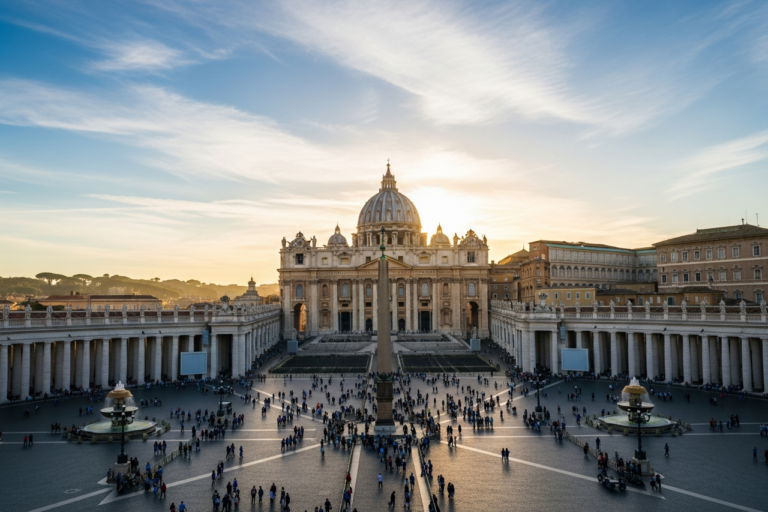
The Catholic Church has a lot of influence. This is because Vatican City is right in Rome.
-
There is religious freedom in Italy. This means people can follow other faiths besides Catholicism.
-
Around 15.3% of people say they are atheist. About 4.1% of the total population are agnostic.
-
There are also minority beliefs like Islam, Orthodox Christianity, and Judaism. They have their own places to go and pray.
-
Catholicism is part of the culture, but not many go to church every week. The number who go is lower than the number who say they are Catholic.
Introduction
When you think about religion in Italy, you might first think of the big churches and the heart of Christianity, Vatican City. That’s true, since Catholicism has shaped Italy for many years. Right now, most people in Italy still follow the Catholic faith. But there is a lot more to religious belief in Italy than you may see at first. The country has deep roots in tradition, but there are also many other faiths in Italy now, and more people with no religious ties at all. This mix gives us a fresh look at modern spiritual life in Italy.
Historical Foundations of Religion in Italy
The story of religion in Italy goes back a long time and has many big moments. It does not start with the cross you may know now. Long ago, people in Italy believed in many gods from old Roman ways. These beliefs were part of daily life. Later, a new religion came to take the place of the old ways on the land.
When Christianity started to grow, it changed Italy and other places too. The Roman Catholic Church became a main group of power, with the Pope as the leader. The Pope stayed in what is now Vatican City. This made Rome the most important place for Christian people. We will talk about how the old ways in Italy turned into Christianity, and see how the Catholic Church grew over many years.
Ancient Roman Spiritual Traditions
A long time ago, before the Roman Catholic Church had all the power, the people in Italy followed old Roman spiritual ways. In the city of Rome, they believed in many gods and goddesses. There was a god or goddess for almost everything, like war or growing food. These beliefs were part of daily life and were important for how things worked in the city. Temples were big places in every community, and people celebrated festivals for different gods through the year.
But things started to change when Christianity showed up. This new faith believed in just one god and brought a new way for people to find comfort and to come together. At first, it spread slowly, but soon more and more people in Rome and Italy joined in.
In time, Christianity took over, and the old pagan ways of the people faded away. This big change gave Italy a whole new religious face. Rome then turned into the center of this new faith, with the Vatican set right in its own small 0.17 square miles. Today, you can still see signs of those old traditions in some customs and the old sites in Rome and other parts of Italy.
Emergence of Christianity and the Papacy
The spread of Christianity in the Roman Empire was a big change in Italy’s story. At first, it was a small group that faced hard times, but it grew and became the main religion. This change did a lot to how people saw God and also changed how the government worked. The city of Rome was not just the main place for the empire but later turned into the center of this new faith.
The change became strong when the papacy started. The Bishop of Rome, who people now call the Pope, became the head leader of the Western Church. The residence of the Pope in Rome made the city of Rome the main place for Christianity. It is still this way today. Because of this, the Church had a lot of power in Italy and all over Europe for a long time.
On this spot, which people now call Vatican City, the papacy got more power. It tied both religious strength and government control together. This new system made Christianity the main religion in Italy and changed its future. The impact of Rome, the Vatican, and the Pope is still strong even now.
Evolution of Catholicism Through the Ages
Catholicism in Italy has changed a lot over the years. It is not something that has stayed the same. The Roman Catholic Church has found ways to deal with the ups and downs that came with big events, like the Renaissance and the unification of Italy. At times, the Catholic Church has helped shape the whole country. There have also been times when its influence went down, but it has always been part of Italian life.
In the past, deals like the Concordat set out clearly the rights, role, and limits of the Catholic Church in public life. These agreements moved catholicism from being the official religion in Italy to just being a really important part of the culture, but not mixed with the government.
Right now, under Pope Francis, the catholic church is still changing. How the Vatican and Italy work together has shifted too. There is more focus on the world and on new ways of thinking. Because of these changes, we can see that while the roots of catholicism are very deep in Italy, the way people in Italy live out their faith will keep changing.
Contemporary Religious Demographics
Italy is an interesting place when it comes to faith today. The Catholic Church is still the biggest group. About 74.5% of the total population in Italy say they are Catholic. But now the country is more mixed than before. There is data from places like the Pew Research Center and the Department of State that shows there are more people who are atheist, agnostic, or part of other religious denominations.
Things are changing and some smaller faiths are getting bigger. Islam is now one of the main non-Christian religions in Italy. In the next parts, you will see how catholicism is still important, how non-religious groups are growing, and why other religious communities also have a place in Italy.
Catholicism and Its Current Influence
While Catholicism is no longer the official religion, it remains the dominant religion in Italy by a wide margin. The Roman Catholic Church’s influence extends far beyond Sunday mass, shaping culture, holidays, and even the country’s physical landscape with its thousands of parishes. The proximity of the Vatican also gives the church a unique and powerful presence in the national consciousness.
However, a distinction exists between cultural and practicing Catholics. Are most Italians still practicing? Statistics suggest a gap. While a large majority identify as Catholic, weekly church attendance is much lower, at around 19%. This indicates that for many, being Catholic is more about heritage and tradition than strict religious observance.
Many Italians celebrate religious holidays and participate in traditions like baptism, but daily or weekly engagement is less common. This shows a cultural attachment to the faith that doesn’t always translate to active practice.
|
Religious Practice Among Italian Catholics |
Percentage |
|---|---|
|
Weekly Church Attendance |
19% |
|
Pray Daily |
31% |
|
Attend Services Monthly |
43% |
|
Attend Only for Ceremonies |
23% |
Growth of Atheism and Non-religious Affiliations
Along with the strong hold of Catholicism in Italy, there is also a big and growing trend where more people are turning away from religion. Many people in the total population now say they have no religious belief. Some people are atheists and do not believe in any god. Others are agnostics, who say that we cannot know if there is a god or not.
So, what part of the total population in Italy is atheist or does not have a religious belief? Recent numbers show that about 15.3% of people call themselves atheists. Another 4.1% say they are agnostic. When you add this to others who have no belief, these groups form a big minority in Italy. This shows things are changing fast in Italian society.
Studies by places like the Pew Research Center say this change shows a future where having a religion is more about your own choice, not just what you get from your family and culture. As more people pick a non-religious path, there are more different worldviews in Italy, a place once known a lot for Catholicism.
Presence of Minority Religions in Italy
Besides Catholicism and people who do not believe in any faith, Italy has many different minority religions. The country’s mix of beliefs grew because of people moving to Italy from other places. This allowed new faiths to settle in, making the spiritual life in Italy even richer. Muslims are now one of the biggest minority groups in Italy, making up about 4.1% of the population.
How diverse is faith in Italy? There are not just Muslims, but also old and new groups like Orthodox Christians, Protestants, and some of the oldest Jewish communities in Europe. Groups such as the Jewish Community of Milan stand out in the country.
Other religions you can find in Italy are:
-
Jehovah’s Witnesses: This group has about 250,000 members.
-
Buddhists and Hindus: These groups are smaller but are growing. Buddhists make up about 0.5% and Hindus are about 0.3% of the people in Italy.
-
Pentecostal Christians: There are around 150,000 people with the Assemblies of God in Italy. This group is well known and is part of the Protestants.
Italy’s religious world shows a wide mix of faiths, with many old and new groups, like the Jewish communities and the Assemblies of God, finding a place in the country. This makes Italy an interesting spot in Europe for all who want to know more about different religions and those who follow
Religious Diversity and Cultural Impact
The religious mix in Italy is more wide than many people think. Catholicism is big, but there are also other religious denominations that shape the culture in the country. Jewish communities have been around for hundreds of years, and these days, faiths like Islam and Buddhism are getting bigger. This rise is mostly because of people moving into Italy.
With new faiths growing, there are both good things and some challenges. Groups such as the Church of Jesus Christ and different Protestant groups are finding their place in Italy. The next parts will show how these religious denominations add something special to Italian life. You will see how their beliefs affect daily habits, festivals, and holidays in the country.
Contributions of Various Faiths to Italian Society
The many faiths in Italy help make society richer in many ways. They add to Italy’s culture, social life, and learning. The Union of Italian Jewish Communities is an example. It stands for one of the oldest Jewish groups in Europe. These Jewish communities have shaped Italian art, science, and food for thousands of years.
Other groups, while smaller, still have a big effect. The Waldensian Evangelical Church started in Italy before the Reformation. This church has always worked for fairness and letting people believe as they want. There are also newer groups. These people help through charity, talking between faiths, and sharing culture. This makes society in Italy more open to all.
Here are some ways these groups give to the country:
-
Muslims: Muslims have community centers and mosques. They give help to people and take part in local projects.
-
Buddhists: Many Buddhist centers teach mindfulness and peace. They try to help the public feel well and calm.
-
The Church of Jesus Christ: This group helps with aid and has social work that supports families.
These groups all play a part in making Italy more open, helpful, and welcoming for everyone.
Religion’s Role in Festivals, Holidays, and Daily Life
Religion plays a big role in the daily life of people in Italy, and Catholicism is at the center of that. The country has many festivals and holidays tied to the catholic church. For example, Easter and Christmas are some of the most important events in the whole country. You will see both quiet church services and loud street parties during these times. In Holy Week, there are many processions that go through towns. The pope sometimes speaks to huge crowds. These events bring both christians and people who are not very religious, as they all come to join in the tradition.
Religion still shapes Italian culture and society in the present. The catholic church is seen past just big holidays. In most public schools, students have the option to get catholic religious classes. The local parish is often a main place where people come together, and it’s open to young and old. Church bells still ring out the time each day in many places.
For a lot of people, these holidays and traditions are now just a part of their culture. They might join a saint’s day fair just as much as a food fest. These things help them feel a bond as people from Florence or Rome. It shows that while not everyone is active in praying or going to church, religion leaves a strong mark on how people think and act.
Religion, Law, and Modern Freedom
The Italian constitution says that everyone has freedom of religion. This idea has helped shape how the state and different faith groups work together in Italy. The Concordat with the Catholic Church gives it a special place, but the government tries to make sure that everyone’s human rights are protected, no matter what they believe. The U.S. Department of State and other groups keep an eye on this promise.
But making this happen for every religion is not always simple. Non-Catholic religious denominations may go through a hard process to get legal recognition and to have the same benefits as the Catholic Church. The next sections will look at how the law treats different religious groups and what’s changing for freedom of religion in Italy.
Legal Status of Religious Groups
In Italy, the way the law sees a group of faith changes what rights they have with the government. The Roman Catholic Church has a special spot because of the 1929 Concordat. This deal gives it many benefits, like support from a “church tax” and using its own rules for some things.
Other religious groups, like the Waldensian Churches or Jewish communities, need to work out their own “intesa” with the government to get the same treatment. This move gives the group a legal spot, gets them money from the church tax, and brings them some other rights. The Confederation of Methodist and Waldensian Churches, jewish communities, and buddhists already have done this.
But it is not simple for all faiths to get these deals. The whole process is often slow and filled with politics. Many religious denominations in Italy, with a big part of the muslim group, do not have their own “intesa”. They can still come together and pray, but because they do not have a deal, they do not get the same recognition or support as the roman catholic church and other groups with one.
Recent Developments in Religious Freedom in Italy
Recent reports on international religious freedom, including those from the U.S. Department of State, say that Italy mostly has strong freedom of religion. The government, along with the Prime Minister and cabinet, speak out to support these rights. Cases of discrimination in society are not common. But there are some problems that stay.
One main problem is that some minority religions, like Islam, have a hard time getting an “intesa” with the state. Because of this, many groups do not get formal recognition. This makes it tough to open official places to worship, like mosques. Local politics sometimes discuss these issues. They also connect to talks about immigration and how people fit into society.
All this shows that while Catholicism has been the main religion in Italy for most of its history, the country’s laws and society are slowly making room for more than one faith. Watching over human rights and religious freedom is important to people both in and outside of Italy. It helps make sure the country handles its changing religious story in a good way.
Conclusion
Religion in Italy is made up of many different beliefs, both old and new. These beliefs show the nation’s story and how people in Italy have lived with faith for many years. Long ago, the ancient Roman way of life helped start many of the beliefs people have today. Catholicism has played a big part in Italy’s history for a very long time.
Now, things are changing. You can see the number of people in different groups going up and down, and more minority faiths are seen too. But when you look at the day-to-day life of people in Italy and the way they celebrate and make choices, you can still see religion is important.
When you start to understand all the ways faith works in Italy, you find a special part of what makes this country unique. Let the story of Italy’s religious path open your eyes to how belief and way of life come together—not just for people in Italy, but maybe in your own life, too.
Frequently Asked Questions
How has Italy’s main religion changed over time?
Italy changed its main religion from old Roman beliefs to Christianity. The Catholic Church became the main religion in Italy. The pope lives in what is now called Vatican City. This made the Vatican an important place. Today, Catholicism is still important in Italy. But the country is now more open to new ideas, and you can see people have many different beliefs. Even so, the Catholic church still has a strong effect on Italy’s history and culture.
What percentage of Italians are non-religious or atheist?
More people in Italy now say they do not follow any religion. Out of the total population, about 15.3% say they are atheists. Another 4.1% say they are agnostics. This information comes from places like the Pew Research Center. It shows that more people in Italy are moving away from religion.
Does religion still influence Italian culture and society?
Religion plays a big role in Italian culture, even for people who are not part of it. Catholicism helps shape big holidays like Easter. It also has an effect on the calendar and the ways people spend time together. You can see this in public schools, where many offer lessons about Catholicism. This part of life stays strong, even though people’s religious belief may change over time.



