

Key Highlights
Here’s a quick look at the religious picture in Israel:
-
Israel is set up as a jewish state, with the vast majority of its people being Jewish, as shown by the Israel Central Bureau of Statistics.
-
The country does not have an official state religion by law, but Judaism has a big and key role in how the country works.
-
The main religions followed are Judaism, Islam, Christianity, and the Druze faith. There are also other smaller religious groups in the country.
-
Your religious affiliation matters, mostly for things like marriage and divorce. These matters of personal status go through religious courts in Israel.
-
The Law of Return lets Jewish people from anywhere in the world move to Israel. This changes both who lives in the country and the religious groups in it.
-
Israel has many different religious groups, with people who are secular, ultra-Orthodox Jews, and many in between. There are also different Christian and Muslim groups living in the country.
Introduction
Welcome to a journey into the heart of religion in Israel. This country is known as a jewish state, but you will find many religious groups here. The land is home to a lot of different religious beliefs, and each group has its own way and story.
Judaism is very important to the people who live in Israel. It’s at the center of how many see the country. But, it is not the only faith found here. The nation has many religious groups that keep their own ways alive.
To know what life in Israel is like, you need to know about this mix of religious beliefs. It’s a big part of what makes the country special. Now, let’s see how these many different faiths live together in this one place.
Overview of Religion in Israel
Israel is in the Middle East. It is known as a Jewish state, and its faith is a big part of its national identity. The largest religions here are Judaism, Islam, and Christianity. You will also find people who practice the Druze faith and some belong to other small groups.
In Israel, your religious affiliation can shape how you live. The state lets different faith leaders make some choices. This means there is a strong link between people’s beliefs and their daily life. Let’s look more at the many religions people follow here and the long history that has shaped the country’s ideas about faith.
Diversity of Faiths and Beliefs
When you look at Israel’s population, you will see it has many religious groups. The vast majority of people, about 70%, are part of the Jewish population. But even within this group, there is a lot of variety. Some are very observant, while others are not religious at all.
Beside the Jewish population, there are other important religious minorities. Muslims are the largest group after Jews. They make up over 22% of the people. Christians are nearly 2%. People in the Druze community are about 1.7%. These numbers show what Israel looked like before the 1967 borders.
Israel also has many foreign workers. These workers come from different places and bring their own religious traditions. Some have Protestant, Roman Catholic, Buddhist, or Hindu faiths. All these religious groups make Israel a place where many kinds of people live together. Each group has its own beliefs and customs, which makes the country’s social life rich and colorful.
Historical Roots of Religion in the Country
The religious identity of Israel is tied to its long history. The land means a lot to Jewish people, Christians, and Muslims. For Jews, Israel is where their ancestors lived. This helped drive the Zionist movement and led to the state of Israel in 1948.
Israel was built as a Jewish state because of this deep connection to the past. The Declaration of the Establishment of the State of Israel promises freedom of religion. Still, Jewish history and tradition shape the character of the nation.
Christianity starts here too, with this land as the place where Jesus lived, taught, and died. For Muslims, many holy sites are in Israel, including the Al-Aqsa Mosque in Jerusalem. Because the history is so important to so many people, Israel is a special place for religious heritage.
Judaism – The Core Religion
Israel is a jewish state that puts Judaism at the heart of its national life. It does this even though it has no official state religion. The tie with the jewish people and the land is a key part of how the country is shaped. Jewish law and jewish traditions touch most parts of public life. They help set holidays, and guide some of the legal system.
This effect does not mean that all of the jewish population in Israel is religious. There is a big range in how people follow jewish law and jewish traditions, from very strict groups to more open streams of judaism. Some follow every rule, and some do not. It’s a mix that makes things lively or even sometimes challenging. Now, we go on to learn more about these different streams of judaism and what they mean for jewish people in Israel.
Major Branches of Judaism in Israel
Inside Israel, there are many streams of Judaism. Judaism is not the same everywhere, and you will see different ways people practice it. Each stream brings its own way of looking at tradition and daily life. The stream that is strongest and has official approval is Orthodox Judaism, as it keeps a strict hold on jewish law.
But not all Israelis connect with one stream or even with any stream of Judaism. The bigger groups you will see are:
-
Orthodox Judaism: This is the only stream that the state says is official for things like marriage and divorce. This group has Modern Orthodox and Haredi (ultra-Orthodox) people in it.
-
Conservative Judaism: In Israel, this is also called Masorti. These people try to stay close to tradition, but also let new ideas have a place.
-
Reform Judaism: This group is the most open. Reform Judaism talks a lot about important life values and lets each person choose how to believe and practice.
Conservative judaism and reform judaism are both getting bigger and have won some rights from the courts. But the government gives them much less support and government funding than orthodox judaism gets. Also, they do not have the same level of official honor or power as orthodox judaism does. Many Israelis call themselves “traditional” or “secular.” That means they live in jewish culture but do not follow all the strict rules.
Role of the Chief Rabbinate
The Chief Rabbinate of Israel is a strong part of the Israeli government that deals with the main religious issues for the Jewish population. At the head, there are two chief rabbis. One is Ashkenazi, with roots in Europe, and one is Sephardi, with roots in the Middle East or Spain. They both act as top legal voices in Jewish law.
This group is tied closely to the government and is the only group that can handle some parts of daily life. The Chief Rabbinate takes care of marriage, divorce, burial, and Jewish conversion for people who are Jewish in the country. It also checks and approves kosher food for places to eat and other products all over Israel.
Since the Chief Rabbinate of Israel holds this official spot, what they decide based on their strict way of reading Jewish law often shapes how life will be. The way things go sometimes cause problems with people who want more separation of religion from the state or are part of other streams of Judaism. Many who do not want such strict rules, or who are not very religious, often wish for more say in these matters.
Jewish Religious Law and Daily Life
In Israel, jewish law, called Halakha, does not just cover the synagogue. It also guides both public life and daily routines. Even though israeli law is mostly secular, some things are decided by religious courts. One big area is matters of personal status like marriage and divorce. Each recognized community has its own religious leaders who handle these things.
Jewish citizens in Israel do not have the option for a civil marriage. All weddings must happen with an Orthodox rabbi and be under the Chief Rabbinate. This system causes problems for couples from different faiths, same-sex couples, and some Jews who do not fit the Orthodox rules.
Jewish law shapes the public sphere in Israel, too. The country’s basic laws call it a “Jewish and democratic state.” Jewish holidays are national holidays. Shabbat makes a big impact on public transportation and business hours in most cities. This shows how religious practice is part of daily life.
Conversion to Judaism in Israel
Converting to Judaism in Israel can be a tough and sometimes hard process. It is watched over by the state’s top religious leaders. To have your religious affiliation shown as Jewish, you must go through a formal set of steps. This process must be accepted by the Chief Rabbinate. They only follow Orthodox rules.
The process means you have to study a lot about Jewish law and tradition. You also need to live as someone who keeps Jewish rules, and you have to stand before a religious court called a beit din. Only conversions done by these special Orthodox courts are recognized when it comes to matters of personal status like marriage inside Israel.
This issue of conversion matters a lot for people who come to Israel under the law of return. This is true for those who have a Jewish father but not a Jewish mother, so they are not Jewish by Orthodox law. The Supreme Court has let some non-Orthodox conversions from other countries count for citizenship. But the road to full religious status in Israel is still difficult and highly controlled.
Secular and Religious Divisions Among Jews
The Jewish population in Israel is not all the same. It is split between secular and religious groups. These splits are about belief, but they also affect politics, society, and everyday life. You will see all kinds of people there. Some are ultra-Orthodox Jews and spend most of their time studying religion. Others are secular Jews who want religion and the state to be kept apart.
This makes Israel a country with many different Jewish communities. Each group has its own way of living, its own values, and its own idea of what the country should be. In the next parts, we will look at these main groups—orthodox Jews, secular Jews, and others that are between them. We will also look at the agreement made to help them deal with their differences.
Orthodox and Ultra-Orthodox Communities
The Orthodox and ultra-Orthodox (Haredi) groups are the most committed when it comes to following Jewish law in Israel. Orthodox Judaism is the official branch in Israel. People in this group, including those known as the Religious Zionist camp, mix modern living with keeping Jewish law.
Ultra-Orthodox groups mostly live in closed neighborhoods. They spend their time studying the Torah and keep their way of life apart from the rest of the country. You can often tell them apart because of their unique clothes and customs.
These groups have a lot of power in politics, mainly through political parties like United Torah Judaism. They push for rules that help their communities, like money for religious schools and not having to do military service for students in yeshivas. Their strong follow-through to Jewish law sometimes causes trouble with people who are more secular about how daily life and public rules should be.
Conservative and Reform Movements
The Conservative and Reform movements are called Masorti and Yahadut Mitkademet in Israel. These groups are more liberal streams of Judaism. You can find more people in the United States that follow these streams, but they are slowly getting more followers in Israel, too. They give people another choice besides the government-approved Orthodox Jewish ways.
Conservative Judaism tries to keep Jewish tradition but brings it into modern life. It takes a middle route. Reform Judaism, on the other hand, cares more about what each person decides and about the main ethical ideas of the faith. It lets people move away from strict Jewish law in a bigger way.
Even though there are more people joining these movements now, they still have big problems. The state does not fully recognize them. They can’t handle marriages or conversions, and they get much less government funding than Orthodox groups get. But through Supreme Court cases and work by regular people, they keep pushing for more religious choices and acceptance of their streams of Judaism in Israeli life.
Secular Jewish Israelis
Many people in Israel’s Jewish population see themselves as secular, or Hiloni. The central bureau of statistics says that about 45% of Israeli Jews would say they are secular. For these people, being Jewish has more to do with culture, nationality, and a shared history than following religion.
Secular Jews come from many walks of life. Some still keep a few Jewish traditions, like spending time with family on holidays or having a Passover Seder. But they do these things mainly for cultural reasons, not just religious ones. They often want a democratic state. They also believe there should be a clear separation of religion from the way the government and laws work. Most do not want religious law to shape public life.
You can find the highest number of secular Jews in places like Tel Aviv. This city has a lively and open feel, and people are busy at all hours—even during Shabbat. This kind of lifestyle is very different from more religious cities like Jerusalem, where things slow down for days of worship.
The Status Quo Agreement
The “Status Quo” is not a written law, but it is an understanding that has shaped how religion and the state live together in Israel since the time before the establishment of the state. This was a deal made to help keep the peace between people who were religious and those who wanted a less religious country when the jewish state was being planned. The Status Quo still affects life in Israel today.
This agreement covers important parts of religious life in Israel. It mainly keeps things the way they were under the British Mandate. The main points are:
-
The Chief Rabbinate is in charge of personal status matters like marriage and divorce for people who are Jewish.
-
Shabbat (the Sabbath) is the official day of rest. There are limits on public transportation and business in many places on this day.
-
Any institution that gets public money must serve food that is kosher.
This way of doing things is meant to keep a balance, but it leads to many arguments in politics and society. The Israeli government and different religious groups sometimes fight over this because some people want to give the Status Quo more power and some want to end it, so that it has less influence in the modern jewish state.
Christianity in Israel
Christianity in Israel is one of the country’s important religious minorities. There are over 185,000 people in the community. This faith means a lot in history because Israel is the place where Christians believe Jesus lived, taught others, and died. The country has some of the most famous holy places for Christians.
There are many different groups in the Christian community. There are several christian churches and denominations here. The christian clergy work hard to help their people and to take care of the holy places. Now, let’s talk about the different groups and their role in the Holy Land.
Major Christian Denominations
The Christian community in Israel is made up of many groups. These traditions and rites have been in the Holy Land for a long time. You can see different denominations, and each has its own leaders and history. The Melkite Greek Catholic Church is the biggest group, but there are many other denominations too.
The major Christian denominations you can find in Israel include:
-
Greek Orthodox Church: This is one of the largest and oldest Christian communities in the region.
-
Roman Catholics: This group includes the Latin Patriarchate of Jerusalem and other Catholic rites.
-
Armenian Apostolic Church: This community has an old quarter in the Old City of Jerusalem.
-
Syriac Orthodox Church: This is one of the oldest Christian communities in the Middle East.
There are also Protestant, Coptic, and Ethiopian Orthodox communities here. Every denomination looks after its own holy sites, schools, and ways to help people. This mix creates a rich and lively religious diversity in the country.
Historical Significance for Christians
For Christians all over the world, Israel is known as the Holy Land. It is a place with deep history and meaning. The Bible talks about this land, and it is where the Christian faith started. Jesus lived and taught here. This close link makes Israel a main spot for travel and prayer.
Some big moments in Jesus’s life happened here. He was born in Bethlehem. He died and was brought back to life in Jerusalem. These things are at the heart of what Christians believe. The Church of the Holy Sepulchre, found in the old city of Jerusalem, is thought to be where Calvary and Jesus’s empty tomb are. This church is one of the most important places for Christians.
Christian communities have stayed in Israel since the early days. These groups have an important role in keeping the faith’s history alive. They take care of churches and keep old traditions going. They help mark this special land for many people around the world.
Role of Christian Institutions
Christian churches and other Christian institutions in Israel are important to their own people and the country as a whole. These are not just places to pray. The churches and their groups also help with schools, healthcare, and social care.
Many Christian churches run schools. These schools are known for good teaching. They help both Christian and non-Christian students. Christian organizations also own hospitals and clinics. These offer important healthcare to many people. Christian clergy give spiritual support. They also look after church buildings and holy sites.
Missionary activity is legal. However, offering goods or money when telling people about Christianity is limited. This kind of activity can lead to problems. Mostly, Christian institutions try to help their churches and the community. They do this by giving help with learning, health, and social needs. These efforts add value to the lives of people in Israel.
Important Christian Sites
Israel has many holy places that have a big meaning for Christians all over the world. Every year, these sites bring in millions of people who want to follow the path of Jesus and the early saints. The state and the different Christian groups have a big role in taking care of these holy places and keeping them safe.
Some of the most important holy places for Christians are:
-
The Church of the Holy Sepulchre: This church is in Jerusalem. Many people believe Jesus was crucified, buried, and came back to life here.
-
Nazareth: This is the city where Jesus spent his early years. People come here to visit the Basilica of the Annunciation, which stands as a big pilgrimage spot.
-
The Sea of Galilee: This area is where Jesus taught many people. There are places here like Capernaum and the Mount of Beatitudes that people visit.
These holy places in Israel are not just old sites from history. They are lively spots where people pray and show their faith. They give people a chance to feel close to the main stories that are part of being Christian. Because of these holy places, Israel stands out as a special place full of faith and meaning for Christians everywhere.
Islam in Israel
Islam is the second biggest religion in Israel. Israeli Muslims are the largest group of religious minorities in the country. Most of them are Sunni Arabs. They play an important role as part of Israel’s different groups of people.
The Muslim communities have their own religious courts. They also have their own schools and leaders. The state supports all of these. Their roots in the land are very old. Now, let’s look at these communities, their history, and their religious groups in Israel.
Muslim Communities and Sects
The Muslim population in Israel is made up of different groups, but most people belong to one main group. The vast majority of Israeli Muslims are Sunni Arabs. This group is the largest branch of Islam in the world. You will find most of their communities in the Galilee region, which is in the north. There are also many in cities like Haifa and Jaffa, where people from different backgrounds live together. In the Negev desert, many Bedouin towns are home to Israeli Muslims as well.
Besides the Sunni Arabs, there are some smaller Muslim groups and sects in Israel and around it. These include:
-
Ahmadiyya: This is a small community. Its Middle Eastern headquarters is in Haifa.
-
Circassians: This group is small and not Arab. They are Sunni Muslims who have lived in Israel for many years.
-
Bedouins: These are both semi-nomadic and settled tribes. They live mostly in the south and are mainly Sunni Muslims.
Although people talk a lot about the Sunni Muslims, these smaller groups help show the larger picture of Muslim life in Israel. It is good to remember that Israeli Muslims are not the same as those in the West Bank and Gaza. People living there are under different laws and political rules.
Historical Legacy of Islam
Islam has been a part of what is now Israel for a long time. The faith came to the area in the 7th century. Since then, Islamic empires and rulers have had control over the land many times. This long history is still seen in the local culture, in buildings, and in how religion looks in the country.
Before the establishment of the state in 1948, Arabs were an important part of the people who lived there. Most of them were Muslim. There are still many mosques, shrines, and old buildings in the country. These places show the strong Islamic roots of the land. Jerusalem is very important for Muslims. It is the third holiest city in Islam. The Al-Aqsa Mosque and the Dome of the Rock are there.
Even now, the Ahmadiyya Muslim group has its Middle Eastern headquarters in Haifa. This long and deep history is still important for the Muslim people living in Israel. It helps them feel close to a past that goes back more than a thousand years.
Mosques and Islamic Education
Mosques are at the center of life for Israeli Muslims. People use them for prayer, learning, and coming together as a group. There are hundreds of mosques in the country. Some are very old and sit in ancient cities, while others are in new buildings in small towns and villages. These mosques help keep religious practices and culture strong.
Islamic education is part of the school system in Israel. The Ministry of Education looks after a special curriculum for Arab schools. This lets students learn both Islam and the Arabic language. So, Muslim children can learn about their faith and where they come from, right in their everyday schools.
Besides public schools, lots of mosques also give classes for people of all ages. These classes focus on the Quran and Islamic basics. Because of this two-part system, the next group of Israeli Muslims can hold onto their religious ways but still be part of the rest of Israeli society.
Muslim Religious Leadership
The Muslim religious leadership in Israel works inside a system the state recognizes. It is not set up like the Chief Rabbinate for Jews, which is run from the center. Instead, the Muslim leadership is local, but it is still linked to the government. The state chooses judges, called qadis, who lead Sharia courts.
These religious courts handle matters of personal status for Muslims. This includes marriage, divorce, and inheritance. It is much like the way religious courts for other groups work. This setup lets the Muslim community take care of its own issues by Islamic law, with the state’s support.
Spiritual leaders called imams lead prayers in mosques. They also give advice on religion to their people. Many imams are picked by locals, but the state helps hire and pay some religious officials. This makes an official system for Muslim religious leadership that is mixed with the state structure, at least in part.
Other Religious Minorities
Israel has more than the big religions. It also has some smaller but important religious minorities. Each group has its own identity and beliefs. These smaller groups help make the country’s culture and religion more diverse. Their religious affiliation is official. They also get to handle their own matters.
The Druze, Baháʼís, Samaritans, and African Hebrew Israelites are a few of these groups. They all have made their own special space in Israel. Let’s find out more about these communities and what they believe.
Druze Community and Their Beliefs
The Druze are a small group of people who speak Arabic and have their own special religion. This faith started from Ismaili Islam back in the 11th century. Their beliefs are private. They do not share them with people who are not Druze. Only their wise elders, called uqqāl, are taught the full religion and can see the holy texts.
In Israel, about 150,000 Druze live mostly in villages in the Galilee, on the Carmel, and in the Golan Heights. Druze men, unlike many other Arab citizens, are called to serve in the Israel Defense Forces. Many people know them as being very loyal to the country.
The Israeli government started to see the Druze as a separate religious group, not as Muslims, in 1957. The Druze have their own religious courts to deal with matters of personal status, like marriage and divorce. They follow their old ways in these courts. Because of this, the Druze can keep their special culture and religion in Israel.
Baháʼí Faith in Haifa
The Baháʼí Faith is a new religion that started in the 19th century. Its world center is in Israel, in the cities of Haifa and Akko. The Baháʼí people do not have a local community in Israel. This is their own choice. Still, Israel has their main administrative and holy places.
The Baháʼí World Centre is a top spot for Baháʼí followers who come to visit from many parts of the world. These beautiful holy places are also favorite places for tourists. The main sites are:
-
The Shrine of the Báb in Haifa. It has a golden dome and gardens on terraces.
-
The Shrine of Baháʼu’lláh near Akko, which is the holiest spot for Baháʼís.
-
The administrative buildings of the Universal House of Justice on Mount Carmel.
The Baháʼí stay in Israel is just for running their offices and for pilgrimage. They do not do any missionary work in the country. They are not political and keep a good relationship with the Israeli government, which takes care of their holy places.
Samaritans and Their Identity
The Samaritans are one of the world’s smallest and oldest religious groups. They say they come from the ancient Israelites in the northern kingdom. This group is not Jewish, but they do share the same roots with the Jews. The Samaritans believe their Torah is the real and original one.
There are just a few hundred Samaritans left in the world. They live in only two places now. Some live on Mount Gerizim, which is close to Nablus in the West Bank. The rest live in Holon, a city that is near Tel Aviv. The Samaritans follow their own set of customs. They have their own high priest and religious calendar. Every year, the most important event for them is the Passover sacrifice on Mount Gerizim.
Even though there are not many of them, the Samaritans have kept their identity for thousands of years. They are part of both Israeli and Palestinian life, and they hold both Israeli and Palestinian citizenships. This gives them both hard challenges and good chances. People see them as a bridge to ancient times in the land, as they are different from Judaism and Christianity.
African Hebrew Israelites of Jerusalem
The African Hebrew Israelites of Jerusalem are a lively and small group. Most of them live in Dimona, a town in southern Israel. This religious community started out in Chicago in the 1960s. Their leader was Ben Ammi Ben-Israel. They believe that they are from ancient Hebrew tribes. They say their people went into Africa after the Second Temple was destroyed.
In 1969, the first people from this group began to move to Israel. They wanted to be in the place they call their old home. At first, it was very hard for them. The government did not see them as Jewish people. It took time to get official papers and to stay in the country.
Over the years, this group of religious minorities has found a place in Israel. Many are now Israeli citizens. Some of them work in the army. Their way of life is different from others. They do not eat any animal products. They once allowed polygamy, but new members do not do this now. They also have special holidays and customs. This makes them one of the most unique religious minorities in Israel.
Smaller Faith Communities
Besides the main minorities, Israel also has many smaller faith groups. Many of these are people who came from other countries for work, or are immigrants. Some are small groups of believers who live in the country now. Their religious affiliation adds to the mix of beliefs you can see in Israel.
These communities are different from each other. One group, Messianic Jews, still keep their Jewish identity and customs, but they also believe Jesus is the Messiah. There are about 10,000 Messianic Jews in Israel. Most of the main Jewish communities do not trust them much.
There are other smaller faith communities, like:
-
Buddhists and Hindus: Most of them are foreign workers from Asia.
-
Jehovah’s Witnesses: This is a small group, but they are active.
-
Various Protestant denominations: These groups are often made up of people who are living in the country but were born somewhere else, or who moved here.
These groups might not have the same history or official recognition as the bigger communities. Still, they are a part of the modern religious life in Israel.
Religion and the State of Israel
The link between religion and the State of Israel is very complicated. Many people talk and argue about this topic. The Basic Laws say Israel is a “Jewish and democratic state.” This means the country has two sides, and this causes tension that does not go away. There is not a full separation of religion and government, but the state of Israel does not officially name a state religion.
The Israeli government takes part in religious life. It gives money to religious groups and lets religious courts have legal power. This deep link shapes the law, politics, and how people live every day in the country. Let’s look at how this works, from the rules set by the basic laws to how people deal with personal matters in these religious courts.
No Official State Religion
You might find it interesting that the state of israel does not have an official state religion. The state of israel is called a “Jewish and democratic state,” and it is clear that Judaism has a very important place. But even with this, Judaism is not named as the one official religion by law like in some other countries.
The people who started the state of israel chose not to do this. They wanted to stop big fights between those who care a lot about religion and those who do not. So, they made the “Status Quo” deal. This puts Judaism at the center of public life, but it does not make it the only religion of the state. This setup tries to keep the balance between being a democratic state and having a jewish look and feel.
But since there is not a clear separation of religion and the state, religious groups like the Orthodox Chief Rabbinate have a lot of power in everyday life. This means that, in israel, religion and the government are closely tied in the system, but there is not just one faith set out as the only one in law.
Religion in Legislation and Policy
Religion has a big effect on Israeli law and policy. The country’s Basic Laws act as a sort of constitution. They call Israel a “Jewish… state.” This phrase shapes how people in Israel see their country, both for faith and for national pride. The basic idea often shapes laws and court rulings.
The government takes part in many things related to religion. There is direct government funding for religious groups. The state pays for places like synagogues and religious schools called yeshivas. It also pays the salaries of rabbis and other people who work in these groups. Religion also shows up in politics.
Here are the main ways religion shapes Israeli policy:
-
Political Parties: Parties based on faith are usually very important when forming a government. Their support helps push through laws and funding that fit their beliefs.
-
Personal Status Laws: Religious courts handle all matters for people around marriage and divorce.
-
Public Observance: There are laws about things like shops closing on Shabbat and limiting sales of non-kosher food.
All these show that faith and tradition are tied closely with Israeli law. Religion is part of almost every big decision in government.
Marriage, Divorce, and Religious Courts
In Israel, matters of personal status, including marriage and divorce, are dealt with by religious courts. Civil courts do not handle these issues. Each recognized group has its own court. So, Jewish people must use Orthodox rabbinical courts for marriage and divorce. Muslims, Christians, and Druze also use their own religious courts for these matters.
This system means there is no civil marriage in Israel. It causes problems for lots of couples. Couples from different religions, same-sex couples, and those wanting to skip a religious ceremony face big hurdles. Many Israelis go out of the country to get a civil marriage. The state must legally accept these marriages.
The fact that jewish law and other religious laws are needed for such important life choices leads to a lot of debate within Israel. It shows the conflict between the country’s wish to be democratic and its religious setup. Many people in Israel do not have the freedom to marry in the way they want, and this makes things hard for them.
Religious Laws Affecting Public Life
In Israel, jewish law and religious practices play a big role in daily life. These rules go past what people do at home. The reason for this is the “Status Quo” agreement. It set how some religious things are part of public life to help people get along.
One of the most common things people see is Shabbat, the jewish Sabbath. From Friday night to Saturday night, public transportation is stopped in most cities where most people are Jewish. Many shops, restaurants, and other businesses close, too. This makes life harder for the people who do not rest or follow Shabbat.
There are other ways these rules affect life, too. Most government offices and many businesses only have kosher food. During Passover, selling leavened bread is not allowed in lots of places. Because of these religious rules, day-to-day life in Israel has a special jewish tone. But these rules also make conflict between people who follow the religion and those who do not.
Religious Freedom and Rights
Israel’s Declaration of Independence says that everyone should have freedom of religion. The supreme court and the country’s laws help to make sure this promise is kept. The government works to keep the rights of all people there, so they can follow their faith and go to their holy places.
But, in real life, freedom of religion in Israel is not simple. Orthodox Judaism has a special place in the country, and religious courts have strong power. This makes it hard for people from other faiths, or for religious pluralism. These things can be tough for minorities. I will talk about the laws that protect freedom of religion and give details about the rights of smaller groups, as well as some of the work and problems the country still faces.
Legal Framework for Religious Liberty
The legal rules for freedom of religion in Israel are based on main legal papers and many rulings from the supreme court. They are not found in just one article of the basic laws. Israel’s 1948 Declaration of Independence clearly says that there is “freedom of religion, conscience, language, education and culture” for all people living in the country.
There is no clear right to freedom of religion in Israel’s basic laws. But the supreme court has said that the Basic Law: Human Dignity and Liberty protects this right. The court is important in dealing with arguments between religious rules and the rights of each person. It often works as a guardian for people’s freedoms.
At the same time, the legal system sets up religion as part of the state. The country supports and funds religious courts for Jewish, Muslim, Christian, and Druze groups. These courts have control over family issues like marriage and divorce. This creates a system where Israel says it has freedom of religion, but religious courts also get power from the law to have a say in people’s lives.
Protection of Holy Sites
Israel has many holy places. These places are important to Jews, Christians, Muslims, and some other faiths. The government sees protecting the sites as one of its jobs. It is written into the law. The 1967 Protection of Holy Places Law says it is a crime to harm or block access to any holy place.
The government works to let all religious groups reach their holy places. This is not easy, especially in Jerusalem. Many sites are close to each other and belong to different religions. There is a special unit in the government that works just on protecting these places.
Key parts of this protection include:
-
Legal Guarantees: The law clearly works to stop harm to holy places.
-
Freedom of Access: The state promises that people from all religions can get to their sacred sites.
-
Maintenance and Security: The government gives security and helps pay to keep important sites safe and in good shape.
This rule is needed to keep peace and let people from religious minorities, and all faiths, feel respected. These holy places mean a lot to millions of believers around the world.
Rights of Minority Faiths
Israel gives many rights to its recognized religious minorities. Groups like Muslims, Christians, and the Druze get official state recognition. This lets them have their own religious courts, which handle things like marriage and divorce for their people.
These groups also get government funding for their places of worship and religious needs. The money helps pay for clergy, support worship spaces, and take care of cemeteries. In schools, there are different classes in Arabic that teach students about their own religion and culture.
But things are not the same for small, unrecognized faiths or for foreign workers who come from other countries. These groups can pray and gather as they want, but they do not get the same government funding or legal support. They also do not have official religious courts, so they must deal with more rules and do not have help from state-backed religious leaders.
Challenges to Religious Freedom
Even though the law says people should have religious freedom, Israel still has problems making this happen for everyone. One big reason for this is that the Orthodox Rabbinate has all the power over Jewish personal status issues, so no other groups get a say. This means that people who are not Orthodox, or are not very religious, find their freedom limited.
In recent years, there have been many arguments and legal fights. Some of the big issues include civil marriage, prayer rules at the Western Wall, and non-Orthodox conversions. The Supreme Court has ruled on many of these problems and sometimes says Israel needs more religious pluralism. However, these decisions often get pushback from politicians and are hard to start in real life.
Missionary activity is also a touchy subject. The law says it is allowed, but it often causes problems among people. Some smaller religious groups, like Messianic Jews, have said they face both social and official discrimination. All these things show that Israel is still working to find a balance between being a Jewish country, following democratic values, and giving everyone full religious freedom.
Religion and National Identity
In the State of Israel, the idea of being a Jewish state means that the Jewish faith, its history, and its culture are a big part of the country. This is not something you can pull apart. You see it in the way the state symbols look. You notice it in when the people have their holidays.
This tie between faith and the nation is a big part of public life. It shapes how people talk with one another. It helps decide how they see their country and who they are. No matter if you are a religious zionist or you do not practice faith, you are part of this. The state’s religious side is with all people who live there. Now, let’s look at how this shows up in many areas of life in the State of Israel.
Zionism and Jewish National Consciousness
Zionism is the political movement that helped create Israel. It is mainly tied to Jewish national feeling. Modern Zionism started as a mostly non-religious idea. Still, the movement got much of its drive from the old religious bond that Jewish people have with the Land of Israel.
The deep links between land, people, and tradition are right at the middle of Israel’s national identity. Zionism took the hope of going back to Zion, which was more of a religious wish, and made it real politics. This changed what it means to be Jewish. Now, it is not just about religious affiliation. It is also about being part of a nation.
The Law of Return shows this idea in a clear way. This law says that anyone with at least one Jewish grandparent can move to Israel and get citizenship. It makes clear how being part of the Jewish people, in both religion and being a nation, is still one of the most important parts in how Israel works.
Religious Symbols in State Life
Religious symbols play a big part in the official life of the Jewish state. This shows the close connection between Judaism and the national identity of the State of Israel. These things are more than just items from the past. They show what the country is like today. You can find them in the state emblems, on the money, and inside government buildings.
The main example is the flag of the State of Israel. It has the Star of David on it and looks like a Jewish prayer shawl (tallit). These are clear signs showing a strong link to the Jewish faith.
There are also other important religious images in the life of the state:
-
The Menorah: This is the seven-branched lamp from the old Temple in Jerusalem. It stands for the Jewish state. You can see it on state papers and in front of the Knesset, which is the parliament.
-
The Knesset: Each meeting in the Israeli parliament starts with a prayer.
-
Oaths of Office: Officials who hold high jobs often swear their oaths on a Bible.
These symbols remind people of the Jewish history and roots that are a big part of the State of Israel today.
Influence on National Holidays and Rituals
The calendar and the daily life in Israel are shaped by Jewish national holidays and customs. The main holidays in the country are Jewish holidays. Their celebration is important for everyone, as they impact schools, businesses, and government offices.
Holidays like Rosh Hashanah (the Jewish New Year), Yom Kippur (the Day of Atonement), and Passover are more than just religious times. They are big national events. On Yom Kippur, the whole country stops. There is no traffic, and all shops shut down. This way the country follows religious time is one thing that makes Israel stand out.
Even state events that do not seem religious still have religious parts in them. For example, when there are ceremonies to remember fallen soldiers, people often say the Kaddish, which is a special Jewish prayer. This mix of old traditions and national culture means that all Israelis, including those who are not very religious, follow a calendar and a way of life connected to the Jewish past.
The Role of Religion in Public Discourse
Religion is a big and steady part of talks in Israel. People in the country often talk about who they are, what rules to have, and what will happen next. Many of these talks use religious words and ideas. This happens in the parliament, on the news, and when people meet day to day.
Political parties with strong religious ties have a big say in these talks. They push for things like rules about Shabbat, laws about kosher food, and the way kids learn about religion in school. When these political parties join the government, their ideas get a lot of say at the top.
Groups like the Israel Democracy Institute study how religion and the government mix. They write reports that make more people talk about these things. Military service for the ultra-Orthodox and the rights of other Jewish groups are talked about often. So in Israel, people find it hard to talk about politics or how people live without bringing up religion.
Interfaith Relations and Dialogue
In a country where many religious groups live close to one another, it is very important for these groups to get along. Many people and groups in Israel work hard to help Jews, Muslims, Christians, and Druze talk to each other and understand one another. They want to help everyone work together and live in peace.
Even though most news stories focus on problems, there are still examples of religious leaders and local people working together. Still, there are some problems, too. In the next parts, we will look at how these religious groups relate to each other in Israel. We will talk about both how they help each other and what problems they face.
Collaboration Between Religious Leaders
There is a long history of different religious leaders working together in Israel, even though the area is very complex. Rabbis, imams, priests, and Druze sheikhs often join each other to speak for peace. They talk about big social issues they all see and say no to violence. These leaders know that people in their communities listen to what they say.
There are many ways that these leaders work together. They sometimes release public statements when things get tense. In these messages, they ask people to stay calm and show respect to each other. You will also find them in meetings called interfaith councils or forums. Here, they get to know each other and work for the same things, like help to protect holy places or push for fairness in society.
It is important when these leaders work as one. It shows people that there can be both talk and respect between different faiths. While this does not get rid of all the old problems right away, it gives hope. It shows that a more peaceful way of living together is possible.
Efforts Toward Interfaith Understanding
Beyond just well-known religious leaders, there is a lively network of grassroots groups in Israel that want to help different religious groups understand each other. These groups work in cities and towns to bring people of all kinds of faiths together. They believe the best way to break down walls is by people meeting face to face.
Most of these groups create real chances for people from different religious groups to meet and work with each other. They do this by setting up activities everyone can join. Their work builds peace from the ground up.
Some common efforts include:
-
Youth Programs: Jewish, Muslim, and Christian teenagers join the same summer camps, play sports together, and make art together.
-
Joint Study Groups: People from different religious groups meet to learn about each other’s books and customs in a kind way.
-
Community Projects: People from all kinds of faiths team up and do things, such as caring for a community garden or picking up trash around a neighborhood.
Doing this helps people see each other as people just like them. Over time, it builds trust and makes empathy grow, which are very important for people to get along for good.
Sources of Tension and Cooperation
The relationship between Israel’s many religious groups is made up of both tension and working together. The biggest reasons for stress are linked to political problems, fights over holy sites, and differences between the Jewish majority and the religious minorities, like Arab groups.
When people fight over land, safety decisions, or what it means to be a country, these problems often become about faith as well. This can make the gap between people even bigger. The debate around Jerusalem and its important sites brings out many of these issues. The special place given to Orthodox Judaism sometimes causes anger for religious minorities and for Jews who are not part of the Orthodox group.
Still, there are strong reasons for people to come together. A lot of people in Israel, no matter what background, want peace and a good life. Because of this, you will find people working as a team in jobs, schools, hospitals, and other parts of life. Local groups across different faiths do hard work to help people connect. This shows that even when there are problems, people can find ways to work as one.
Religion and Peacebuilding Initiatives
Peacebuilding in Israel often connects with many religious beliefs. When people see the value of what they have in common, it can help Jewish, Muslim, and Christian groups talk with each other. Projects that bring different religious groups together, like interfaith talks and work in the community, help people understand one another and show respect.
Religious leaders have a big role in these efforts. They often help as mediators in difficult times. When these leaders and projects support working together and caring for others, people start to see places of worship not just as holy spaces but as places for everyone. This new way of thinking tries to show that faith, when shared, can bring people together in a place where things can be hard.
The Importance of Jerusalem
Jerusalem is a bright spot of hope for people of faith. It is the center for three big religions: Judaism, Christianity, and Islam. The city is more than a spot on the map. It has deep meaning and is very important for many people. Many old religious ways are strong inside the city’s old walls. A lot of people travel there every year, hoping to find peace and feel closer to what they believe.
There are many kinds of people in Jerusalem. These groups all have different ways of life and belief. Their meeting together brings talks and better understanding between them. This helps the different religious groups look for ways to work together. Because of this, Jerusalem stays a key place in the middle east. It helps build talks about faith, life together, and how we can get along, not just there, but across the world.
Spiritual Center for Major Religions
Israel is a special place for people who follow Judaism, Christianity, and Islam. Every year, millions of people go there to see important religious sites. The Old City of Jerusalem is in the center of it all. People from all over the world come to the old city because it has holy places for all three religions.
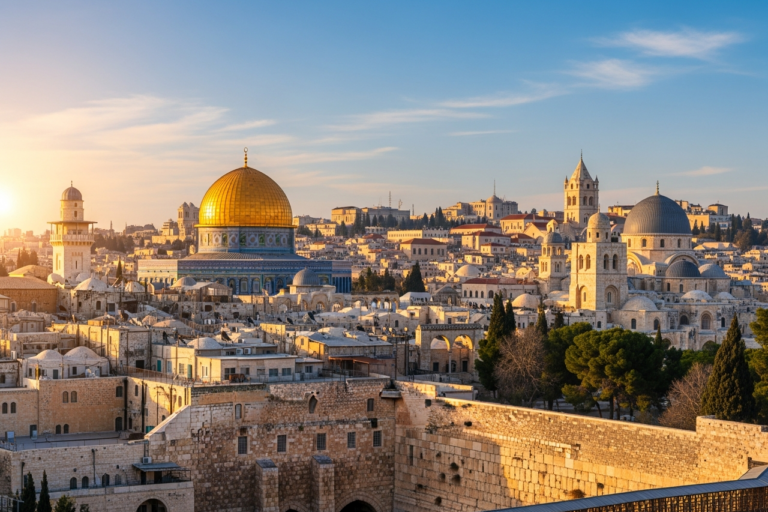
Jews go to the Western Wall. It means a lot to them and shows how they feel close to the divine. Christians visit the Church of the Holy Sepulchre. They believe it is where Jesus was put on the cross and rose again. For Muslims, the Al-Aqsa Mosque in the old city is very important. It is one of the most holy sites in Islam.
Key Sites: Western Wall, Church of the Holy Sepulchre, Al-Aqsa Mosque
The Western Wall is part of the Second Temple and stands for Jewish strength and hope. Many people come here looking to feel closer to their faith. Close by, you will find the Church of the Holy Sepulchre. This place means a lot to Christians. People believe that Jesus was killed and came back to life at this spot, so many come here as part of a trip for their beliefs.
The Al-Aqsa Mosque is also found on the Temple Mount. It is an important place for Muslims all over the world and is a strong sign of what they believe. These three sites are important for the different religious beliefs in Israel. They give people a special way to see the deep and rich spiritual background of the country.
Religious Administration in Jerusalem
In Jerusalem, religious administration is very important. There are many religious groups like Orthodox Judaism, Christianity, and Islam in the city. Each group has its own way of being led. For example, the chief rabbis or other clergy lead these groups. These leaders help the people with both spiritual and everyday matters.
The leaders often have to look at matters of personal status for their followers. This can be things like marriage, divorce, and other life events. The rules that they use in daily life often come from their beliefs.
The religious authority in Jerusalem is separate from the state government. This makes the connection between the israeli government and the religious groups complex. The israeli government needs to work with chief rabbis and other religious leaders so Jerusalem can be both fair and respectful of every group. This helps keep a mix of democracy and local religious life.
Pilgrimage and Tourism
Pilgrimage and tourism in Israel bring people close to their spiritual roots. Many people from all over the world come to see holy places. They visit the Western Wall and the Church of the Holy Sepulchre. These sites have deep meaning for those who come. This flow of travelers leads to more cultural exchange. It also helps the local economy.
Some people take part in spiritual journeys here. They join events during Jewish festivals or even the Muslim Hajj. There is also a mix of different religious practices in Israel. Orthodox, Conservative, and Reform Judaism are all present. This makes the experience even fuller for those who visit, giving them new things to see and do on their trip. This mix lets everyone get something special out of their time in Israel.
Demographics of Religion in Israel
There are many religious beliefs and groups in Israel. The Jewish population makes up the vast majority of people there. Inside this group, you will find Orthodox, Conservative, and Reform Judaism, along with many secular Jews. Many religious minorities also live in Israel. Some of these are Israeli Muslims, Eastern Orthodox Christians, Roman Catholics, and Druze. They all help add to the mix of people in the country. Immigration has brought more change, too. For example, many Jews came from the former Soviet Union, and they became part of this mix. To really understand Israel, you have to see how all these groups work together and shape one another.
Relative Sizes of Main Faith Groups
In Israel, there are people from many faiths. Jewish people make up about 74% of the country. They follow different ways like Orthodox, Reform, and Conservative Judaism. Israeli Muslims are around 18% and most of them are Sunni. Christians make up close to 2%. Some follow Eastern Orthodox, others are Roman Catholic, and some go to different Protestant churches. The rest of the people include Druze and other religious minorities. All these groups bring something their own to the country. The different religious practices go back a long time and show how deep and rich the history is here today.
Trends in Religious Practice
Religious practice in Israel is changing all the time. It brings together old ways and new ideas. Now, more secular Jews mix the culture and their faith by following tradition in less strict ways. At the same time, people want to look at different streams of Judaism, like Reform and Conservative styles. These groups search for a way to make faith more open so more people can fit in.
Israeli Muslims and Christians are also seeing changes. Many of them now focus more on their own beliefs instead of following set rules. This brings out the many sides of faith in Israel. It gets people to talk and to respect each other’s ways. The country makes room for everyone, so all groups can feel welcome.
Impact of Immigration on Religious Diversity
Immigration has helped shape the way people in Israel practice their faith. Many Jewish people came to Israel from the former Soviet Union and other places. They brought the streams of Judaism they followed, their habits, and their beliefs. This gave more color to the Jewish community. People from Ethiopia and other countries also came and added to the story of religion in the country.
Now, you will find more people who are either religious Jews or do not follow faith in their daily life. Because of immigration, there are also more religious minorities such as Muslims and Christians. These groups take part in Israel’s growing and varied society. All of this lets people in the country talk about their different ways of life and beliefs.
Geography of Faith Communities
Many faith groups live and grow in Israel, and this shapes the culture here. The Jewish population is the largest in the country. There are many groups within the Jewish faith, from Orthodox to Reform Judaism. Next, you will find that Israeli Muslims, most of them Sunni Arabs, have strong communities too. They live in different regions, like the Galilee and the West Bank.
Many Christians live in Israel as well. You see Christian groups such as Eastern Orthodox and Roman Catholics. Many of them live in cities like Jerusalem and Nazareth. In this jewish state, the close connection between geography and religious beliefs is easy to see. Different faiths have a big part in life here, each in their own spaces, and it makes Israel a special place.
How Religion is Determined Officially
In Israel, the way a person is seen by the state when it comes to religion is very important. This affects things like marriage and getting to be a citizen. The law of return makes it easy for Jewish people to move to Israel. A vast majority of people say who they are to the central bureau of statistics, which uses this information to keep track of religious affiliation.
If someone wants to change their religion and be seen as Jewish, the steps can be long and hard. People often need to have this change accepted by the chief rabbinate of Israel. There are also religious minorities, including Messianic Jews and Christians. They can find it is not easy to get their faith recognized. Because Israeli law uses religious beliefs for many things, this means people in Israel, who come from many different groups, still have big talks about whether there should be civil marriage or not.
Population Registry and Religious Identification
In Israel, the population registry is important because it helps decide a person’s religious affiliation. This affects a lot in both their daily life and legal matters. The registry shows the different religious beliefs people have in the state of Israel. For example, it lists people as Jewish, Muslim, Christian, or others. Jewish people might be named as Orthodox, Reform, or secular. People from religious minorities, like the Druze and Bahá’ís, also get their own place in this system. These groups are marked in a way that matches their background.
These labels do more than just describe someone—they can shape things like marriage or who must join military service. This system is here because Israeli law wants to make sure all religious beliefs and groups are seen clearly and fairly. By doing this, the country has a set and organized way to handle religious identity for all people living there. This helps keep things fair and open for the many people that make up the democratic state of Israel.
Conversion Processes and Recognition
Understanding how conversions are seen in Israel can be a journey with different options. The Chief Rabbinate has a big part in saying what conversions count. This often makes things hard for those who come from different faiths. There are a few streams of Judaism, like Orthodox and Reform. Each has its own rules for people who want to convert.
The Law of Return in the jewish state lets people who convert to Judaism become citizens. This helps many feel that they belong. Still, there are many cases where rules about who is accepted are not the same. Many face this problem, especially people in jewish communities all over the world. It shows how many ways there are to have faith in Israel.
Impact on Citizenship and Rights
Citizenship and rights in Israel are closely linked to religion. This shapes the way people see who they are, and the way they use different services. The Law of Return lets Jewish people—including those from the former Soviet Union—move to Israel and become citizens. But for some religious minorities, such as Christians and Muslims, things can be hard. They may have problems to get things like civil marriage or to deal with military service. The way religious affiliation connects to citizenship rights is very important. It shapes how religious groups talk to the Israeli government. It also affects how all the different religious groups live together in the country.
Religion’s Influence on Education
Schools in Israel show the many streams of Judaism in the country. Religious schools, like yeshivas, focus on different streams of Judaism. These streams include Orthodox, Conservative, and Reform groups. The schools give a strong religious education but also teach other subjects too. In public schools, students learn about religion to help them better understand the country’s main beliefs and what people do in daily life. When religious lessons become part of public education, it shows how important faith is each day. The mix of learning styles helps students grow in school and gives them a stronger sense of their cultural roots. This helps shape a group of young people who know a lot about their background.
Religious Schools and Curricula
In Israel, religious schools have a big impact on how students see themselves and their faith. These schools often give a special kind of learning that mixes religious lessons with everyday school subjects. Students in Jewish schools learn about Jewish law and spend a lot of time studying the Torah. In Muslim and Christian schools, kids focus more on their own books and ways of worship. This kind of schooling helps students understand their own beliefs better. It also helps them learn to respect other religious practices. More than that, these schools help people talk and find ways to live together in peace. They show why it is important to know about different religions in a country with many cultures.
Inclusion of Religious Studies in Public Schools
In public schools across Israel, students learn about many religious groups. These classes help them understand culture and beliefs. Students get to know about what others believe, and this helps build respect between them.
In schools that do not teach from a faith view, the focus is mostly on the history and culture of different religions. Other schools that do follow a faith train, such as orthodox or messianic Judaism, will teach more about their faith’s rules and ways.
This mix in teaching shows how many different ideas and ways of living there are in Israel. There are people from orthodox, reform, and messianic Judaism, and there are also many Muslim and Christian people. The way the schools teach helps students talk with and learn from each other. It gives them a chance to understand others, even if they do not share the same faith.
The Role of Yeshivas and Seminaries
Yeshivas and seminaries are very important in shaping the religious identity of the Jewish community in Israel. At these places, people study Jewish texts like the Torah and Talmud in depth. Here, students and their families build a strong bond with Jewish law and tradition. But it is not only about learning. These schools are also a place to meet others, make friends, and bring people together.
In recent years, the job of yeshivas has grown. Many have started using new and modern ways to reach out to secular Jews. But they still hold on to their old values. By doing this, they help add more color and meaning to Israeli life and the way people believe and practice their faith.
Contemporary Issues in Religion and Society
There are some big issues in Israel right now that link religion and society. People see a lot of disagreements between religious groups and those who are not religious. A common problem comes from how people feel about religious practices. For example, there are many arguments about public transportation running on the Sabbath. People also talk a lot about the part women play in religious life.
Political parties often fight over religious pluralism, or the idea that more than one way to be religious should be allowed. They try to find a balance between Jewish law and the country’s democratic values. At the same time, what happens in religious educational groups starts questions about who gets left out and if there is space for many kinds of beliefs. The need for open talk is important to help everyone in Israel’s many different groups understand each other better.
Gender Roles and Religious Practice
In many religious groups in Israel, gender roles play a big part in shaping beliefs and religious practices. In Orthodox Judaism, men often lead prayers and study texts. Women usually help in family and community life. On the other hand, Reform Judaism pushes for equal roles and lets women serve the same as men in religious functions. These gender dynamics have changed over time because society has changed. The talk about gender roles is still going on, and it affects how religious practices be followed. It has brought more talks about equality, inclusion, and looking at sacred texts again to help bring gender fairness.
Religion in the Political Arena
In Israel, religion and politics are closely linked, and this affects the way people in the country live. There are different religious groups, like the many streams of Judaism, that have a lot of say in political choices. These groups can help shape laws about things like marriage and divorce, which are important matters of personal status. Political parties in Israel often follow certain religious beliefs. These groups can change the outcome of elections and decide what the Israeli government does on things such as civil marriage or money for religious groups.
Because people in Israel have many different religious affiliations, this mix between religion and politics is always changing. These changes show how important freedom of religion is to many people. There are ongoing talks about the separation of religion from the government and laws, as people try to find the best way for all groups to live together. This is a big part of life for the Israeli population and the way the country works.
Debates Over Religious Pluralism
Talk about religious pluralism in Israel often shows there is some tension between people from different faiths. The vast majority of the people are Jewish. However, there are many streams of Judaism. These include reform and conservative movements. There are also Muslim and Christian communities living in the country.
This diversity brings up questions about who is given a voice in the government and how religious courts and secular law work together. People keep talking about the separation of religion and the state. This discussion is important because it shapes both laws and daily life. Many advocacy groups ask for more freedom of religion. They want options like civil marriage, more room for different religious practices, and greater acceptance for all. The goal is to help all people live together in harmony in this lively country.
Conclusion
Religion in Israel is a big part of the country’s way of life. Different religious beliefs shape things like laws, schools, and rules, which shows there is a close link between faith and the government. Many religious groups live together in this Jewish state. They all share their own customs and ways, and this helps make the country’s life full and interesting. When people understand these things, they can value what makes Israel special. It is also important to talk and work together with others, so people from any faith can live better lives in this country. This helps all the citizens and residents.
Frequently Asked Questions
What are the main religions practiced in Israel today?
The main religions in Israel today are Judaism, Islam, and Christianity. Each of these helps make the country’s spiritual life diverse. Judaism is the biggest religion in Israel. There are also many Muslims and Christians. Together, they give Israel a rich mix of cultures and beliefs.
How are religious communities officially recognized in Israel?
In Israel, the government keeps track of people’s religious affiliation through an official population list. This list shows which religion each person is part of, and it helps decide many things. It affects who you can marry, education, and the help communities give to people. Because of this, religious communities have a strong role and say in day-to-day life in the country.
Does Israel have an official state religion?
Israel does not have an official state religion. But Judaism is the main religion and culture in the country. Israel does give rights to all religious groups. The country works hard to make sure every faith has a voice. This is important because there are many different people living in Israel.
FAQ.)
What are some common questions people have about religion in Israel? They want to know how religion and society work together. They also ask about how being part of a certain faith can affect citizenship in the country. People often look at how the arrival of new immigrants changes the mix of religious groups. Many ask about the place of Jerusalem and why it is important to many different religions.



