

Key Highlights
-
India is where many big world religions started. These include Hinduism, Buddhism, Jainism, and Sikhism.
-
Hinduism stands out as the main religion. Close to 80% of people in India follow Hinduism. This shows just how important religion is in the country.
-
There is also a lot of religious diversity in India. You can find many Muslims, Christians, Sikhs, and Buddhists living here.
-
The census data says Islam is the second biggest religion in India. Christianity comes after that.
-
Over many years, the history of faith in India mixes beliefs that grew in India with others that came from outside the country.
-
Many things people do each day are tied to religious practices. These cover everything from everyday rituals and big festivals to what people eat.
Introduction
Welcome to a journey through the spiritual heart of India! The indian subcontinent has been home to many ancient faiths. It is a place where some of the world’s deep religious traditions started. From the snowy peaks in the north to the warm shores in the south, you can see religion in every part of daily life. This mix of beliefs makes India one of the most interesting and spiritual places you can find on Earth. Are you ready to explore this rich mix?
Historical Evolution of Religion in India
The story of religion in India goes back thousands of years. Over time, faith in this part of South Asia changed and grew. People in the land mixed their own ways of believing with ideas from traders, outsiders, and missionaries. That made the spiritual life in India different from anywhere else.
Across the years, many religious groups came up and some went away, but each one left something behind in Indian society. From the old days with early beliefs to the time when global faiths came in, the path of religion shows how flexible and strong it has always been. Now, we can see how these traditions started and how they changed the nation.
Prehistoric and Indus Valley Spirituality
Long before the big religions we know today, people in prehistoric India had their own ways to connect with spirits and the world around them. The story of faith in this area starts in the old Indus Valley Civilization, many thousands of years back. We do not have books or written words from that time. So, we cannot say for sure what they believed. But, clues found by digging at old sites help people guess what life may have looked like.
When people started to dig up these places, they found objects that some people say show mother goddesses. These items point to a focus on things like fertility and nature in their early religious practices. People also found seals that show animals and some figures sitting in what looks like thoughtful or meditative poses. This shows that the people from the Indus Valley may have been into some kind of worship and may have spent time doing spiritual practices.
Life to do with the spirit in the Indus Valley was full and used lots of symbols. Even though we do not yet fully know all the details, this was the start of something that is part of India’s spiritual roots. These first ways to practice their faith set the stage for many beliefs and religious practices that would grow over time.
Formation of Vedic Traditions
Around 1500 BCE, big changes started in India’s religious history when Aryan people came to the north. They brought new beliefs and rituals. These became the start of hindu traditions, which were later called the Vedic traditions. This time got its name from the Vedas. The Vedas are a group of old hymns and texts that are the first scriptures in Hinduism.
These old texts talk about things like gods, stories, and ways to live well. They gave people advice on living a good life. Back then, the Vedic religion was all about special fire sacrifices and many rituals. These were done by priests called Brahmins. They gave respect to many gods, who stood for things in nature, like fire (Agni) and thunder (Indra).
With time, these basic ideas grew and changed. More thoughts and new teachings were added. These things helped build what we now know as hindu traditions. This time was important for India. It set up beliefs that still have a big effect on people. Today, Hinduism is the oldest and most common religion in India.
Emergence of Jainism and Buddhism
In the 6th century BCE, people started to question old spiritual ideas. During this time, two important new paths came up in the world of religion: Jainism and Buddhism. Both gave different choices to those who did not want to follow Vedic rituals. They also spoke out against some things that were common in society back then, like the caste system.
Jainism goes back to the 9th century BCE, but Mahavira brought it to life again. In Jainism, the main idea is not to hurt any living thing (ahimsa). People who follow this path think every living creature has a soul. The teachings of the Jinas, who are saints that have broken free from the world, tell people to live by a strict code if they want to stop being born again and again. Anyone who follows these teachings of the Jinas tries very hard every day not to hurt or kill even the smallest insect.
A bit later, around 535 BCE, Prince Siddhartha Gautama started to teach people. He became known as the Buddha. He came up with the “Middle Way” as a path to feel true peace. In his teachings of the Buddha, he said people should not go for extreme acts of self-punishment, but they should not run after their wants too much either. Instead, they should spend time on meditation and be kind so that suffering will end. Buddhism, just like Jainism, did not support the caste system. Both showed
Influence of Persian and Hellenistic Cultures
India’s spiritual story became richer because of its ties with the west. The Persian culture started to shape India long ago. It brought new ways of thinking, fresh beliefs, and Zoroastrianism. This old religion began in Persia, which is now Iran. Many Parsis came to India and made it their home.
After that, India met people from Central Asia. When Alexander the Great came, the country faced new art and thoughts from his people. Hellenistic ideas mixed in with Indian ways. You can see the mix in artwork and buildings of that time. These different styles made something special in Indian art.
Much later, the Mughal Empire rose up. The empire stayed true to Islam, but its leaders came with Persian roots. Because of this, Indian art, language, and ruling methods all started to change and grow. These new changes put another layer on India’s already rich heritage.
Arrival of Christianity and Judaism
Christianity has deep roots in India, and many people do not know how old it is. Some people say that the Apostle Thomas came to the country in the first century CE. He is believed to have started one of the oldest Christian communities in the world. Later, Christianity spread more when Western missionaries arrived around 1500 CE.
There is a large group of Christians in Goa, which sits on the southwest coast. Goa was a Portuguese colony for many years. Now, Christianity is the third-biggest religion in India. There are lively Christian communities in many Indian states, especially in the south and east parts of India.
Judaism has also been in India for a long time. Jewish communities have lived in places like Kerala and Maharashtra for many years. These religious groups are small but have always been a part of India’s mixed culture. People in these groups have lived in peace with other faiths. The Indian government knows there are many different beliefs in the country, and it works to protect all of them by law.
Introduction of Islam and Sufism
Islam came to South Asia soon after it started. Traders and merchants from the Middle East brought it with them. With time, more people followed this religion, especially when different Islamic kings and rulers came. The Mughal Empire was the biggest of these. It ruled over northern India for a long time.
Today, in India, Islam is the second-largest religion. This country has the one of the largest Muslim groups in the world. Most Muslims are in northern India near the Ganges River. There are also many in Kashmir, in eastern India close to Bangladesh, and in big cities across the country.
Sufism is a special branch of Islam. It is known for its spiritual side and songs. Sufism also grew in India. Sufi saints talked about love and being close to God. Their message brought together people from different religious communities. This created a mix of Islamic ways and local customs. Today, people from many faiths still visit Sufi shrines.
Sikhism and the Bhakti Movements
The Bhakti movements were strong across India. They told people to have a close and heartfelt link to God. These movements did not focus on strict rituals or caste systems. Instead, they spoke of love and faith as simple ways to reach God. All this spiritual energy changed Hinduism and, at the same time, helped start some new faiths.
In this spirit, Sikhism was born in Punjab during the 15th century. Guru Nanak started Sikhism. It is a faith with one God, and it teaches everyone is equal. Sikhism also says it is good to help others, stand for what is right, and stay loyal to one God.
The thoughts and words of Guru Nanak and the nine Sikh gurus who came after him are the heart of Sikhism. The last of them, Guru Gobind Singh, gave the Sikh people their strong identity. He made the Guru Granth Sahib, the holy book, the forever spiritual teacher. The sikh gurus made Sikhism a faith that has its own clear voice. It is now an important and strong part of India’s proud and diverse religion and culture.
Colonialism and Modern Religious Reform
The arrival of European powers brought a big change to India. It started with the trading groups like the East India Company. The British Raj soon made its hold strong. This time of new rule brought changes in how people lived, ruled, and thought about religion in India.
With Western ways and Christian missionaries coming in, many people in India started to think hard about their own beliefs. Leaders and people from different religions took time to look at what they did and what they believed. Because of this, there were a lot of social and religious reform movements during the 1800s and 1900s.
People in these movements wanted to fix some problems, question old ways, and make some old traditions work in a new world. This period was very important. It helped shape what religion and being part of a nation would mean. It also played a big part in the fight for Indian independence and what came after, when the nation was free from the British Raj.
Key points involved the role of the india company, the east india company, the long effects of the british raj, and the journey toward indian independence.
Major Religions Practiced in India Today
India today shows the real meaning of religious diversity. People in India follow many faiths. Hinduism has about 80 percent of the people. India is a home to busy and strong religious communities from other faiths too. Because of this, it is one of the top countries in the world for religious diversity. Islam is the second-biggest religion here. After that, you will find Christianity, Sikhism, Buddhism, and Jainism as well.
All these faiths live next to each other. This makes the spiritual scene in South Asia very special. Each group brings its own way of life, its own holidays, and its ideas to the country’s life. Now, let us get a closer look at these big religions and how they are part of modern India.
Hinduism: Beliefs, Practices, and Sects
Hinduism is the oldest and most common religion in India. It is not just one single group or church. Instead, it is more a way of life that covers many beliefs, customs, and ways of thinking. There is no one founder for Hinduism, and there is no main rule everyone must follow. At the heart of this faith are a few important ideas that guide the lives of those who follow it.
These beliefs are found in many hindu traditions. They help people know where they fit in the world. Here are the main ideas:
-
Dharma means knowing and doing what is right, and understanding your duty.
-
Samsara is the never-ending cycle where the soul is born again and again.
-
Karma says what you do in this life changes what will happen to you in the next one.
-
Moksha is the main goal. It means being free from being born again.
The caste system was once a big part of how people were sorted in Indian society. Today, it is against the law in India, but in some places it still has an effect. Hinduism has a lot of different parts and gods. The main ones are Shiva, Vishnu, and Brahma, but there are many local gods and goddesses, too. All of these gods show different sides of a bigger and deeper truth.
Islam: Diversity of Denominations
Islam in India shows a lot of diversity. It is not just one group or way of life. There is a large and old Muslim population in the country. Indian Muslims belong to different groups and follow many ways of practicing Islam. Each school of thought has its own views and customs. This comes from a long history of Islam in this part of the world.
The vast majority of Muslims in India are Sunni. There is also a good number of Shia Muslims. Some smaller groups like the Ahmadiyyas and those who follow Sufism are also there. The main groups are:
-
Sunni: This is the largest group of Muslims in India and around the world.
-
Shia: This group is smaller but still important. They have their own days and ways of worship.
-
Sufism: This is the mystical side of Islam. It has deep roots in India.
There are Muslims in many parts of the country. Most of them are in northern India, but you will find strong communities in the south and west, too. This mix and variety make Islam a living and important part of India’s religious life.
Christianity: Varieties and Traditions
Christianity in India is a faith with a long story and many ways of worship. It is the third-biggest religion in the country, and you can find its people living all over India. The Christians in India follow many different traditions, from old Eastern ways to Protestant and Catholic groups.
In Kerala, there are the Saint Thomas Christians, who say they started in the first century. Catholic groups in Goa began when the Portuguese came. Later, Protestant missionaries came to India and brought even more ways for people to follow Jesus. Now, there are many Christian groups in Indian society.
The different Christian religious communities have helped India a lot, mostly in teaching and health care. They have started some of the best schools and hospitals in the country. They help people from every religion and every background and have become a big part of India’s everyday life.
Sikhism: Teachings and Customs
Sikhism is a faith that believes in one God. It is based on the teachings of the ten Sikh gurus. It started with Guru Nanak and went on until Guru Gobind Singh. This religion shows people the way to live with selfless service, social justice, and equality.
One of the main teachings of the Sikh gurus is that all people are equal. Sikhism does not allow any type of unfair treatment because of caste, creed, or gender. You can see this belief in what happens at every Sikh temple. In each Gurdwara, there is a langar, or kitchen, that gives a free meal to everyone. Here, people from all walks of life sit together and eat as one group.
Sikhism sees its holy book, the Guru Granth Sahib, as the living guru. Sikhs can be noticed by articles of faith, like uncut hair kept in a turban and a steel bracelet. About three-fourths of Sikhs live in Punjab, India. Sikhism is a strong and well-known religion in this area.
Buddhism: Historical and Contemporary Practice
Buddhism started in India around the 6th century BCE. Over time, its presence in the country got smaller, while it spread and grew in other parts of Asia. For almost 1,500 years, Buddhism was a big religion in India before it started to fade away. But now, this faith is coming back in a strong way.
Buddhist ideas and teachings reached many places and touched many people. The main teachings are the Four Noble Truths and the Eightfold Path. These give a way to end pain in life and reach Nirvana, which is a state of total freedom. Buddhism says to not use violence, care for others, and always pay attention to the present moment.
Now in India, Buddhism is growing again. Part of this is because of what scholars have done and the work of Dr. B.R. Ambedkar, who became a Buddhist along with many who followed him in the 20th century. Today, millions of people in India practice Buddhism. Large groups of Buddhists live in Maharashtra and in the Himalayan areas. This shows a new start for an old faith in the place where it first began.
Jainism: Core Principles and Communities
Jainism is one of the most old and deep religious traditions in India. It goes back as far as the 9th century BCE. The faith is built on the idea of ahimsa, or non-violence. This means you must not bring harm to any living thing. Jains say that every living being, no matter how tiny, has a soul. Each one is important and should be kept safe.
This belief changes how Jains live every day. They eat a strict vegetarian diet. They do not eat root vegetables such as potatoes and onions. This is because taking them out of the ground could hurt small organisms in the soil. The people who follow this faith the most closely may even wear masks over their mouths. They do this so they do not breathe in and kill small bugs by accident.
Jains are a small group, with only about five million followers. But the religious communities have made a big mark on Indian culture. They are known for making progress in areas like business and ethics. Jains are found across many Indian states. They follow the teachings of the Jinas, wise teachers who show people how to be free.
Zoroastrianism and the Parsi Community
Zoroastrianism is one of the world’s oldest religions that believes in one god. It started a long time ago in ancient Persia, which is now called Iran. The people who follow this religion are known as Parsis in India. Parsis came to India more than a thousand years ago. They left their home to escape trouble in their old country. When they got to India, people welcomed them. Ever since then, the Parsi community has grown and been part of life in India.
The teachings of the prophet Zoroaster are the base of the faith. Zoroastrians believe in the power of Ahura Mazda as the one true god. Their worship uses fire as a symbol. The fire is a sign of purity. Many of their temples are called “fire temples” because of this. Zoroastrians also have customs that are different from other religions. One custom is that they do not bury or burn the body when a person dies. Instead, they place the body in something called a “Tower of Silence” and let it be with the open sky.
The Parsi community is small compared to other groups in India, but their contributions to the country’s progress are great. Most Parsis live in Mumbai. People in India see them as an important part of the nation’s mix of religions.
Judaism and Other Minority Faiths
India is not just the home of the major religions, but there are also many smaller but important religious groups in the country. One of these is Judaism, which has been in India for a very long time. Groups like the Cochin Jews of Kerala and the Bene Israel of Maharashtra go way back and are a part of India’s story for many years.
The Baha’i Faith is another small faith in India. This faith wants all people to come together and be one. It started in Persia in the 19th century, but now the biggest Baha’i group in the world lives in India. The Lotus Temple in New Delhi is a beautiful place, and it stands for this faith and its idea of unity.
In India, there are also other small religious groups, like animist and tribal belief systems. These are very old and were here before many of the world’s main religions. All these groups help make India’s spiritual life very rich and full of different people and ideas. The Indian constitution says that each of these religious groups can follow what they believe. This helps all groups grow and gives more to the country’s culture.
Population Breakdown by Religion
To really see India’s religious diversity, it is good to look at the numbers. The census of India shares a close, up-to-date look at the country’s religious mix. It shows how people in India follow different faiths. From the latest census data, we get to know that Hindus form the vast majority of the population.
But the data also points out the strong presence of minority religions. This helps us understand how the country brings together many faiths. The numbers do not just give us totals for the nation. They also show interesting patterns in different regions. Let’s look more at these details to see how these groups change from one part of India to another.
National Census on Religious Demographics
The Government of India, through the Census of India, regularly collects comprehensive data on the country’s population, including religious affiliation. This census data is the most reliable source for understanding the religious demographics of the nation. The 2011 census provides the most recent detailed breakdown.
According to these figures, Hinduism is the dominant religion, comprising nearly four-fifths of the population. Islam is the second-largest religion, with a substantial following that makes India home to one of the largest Muslim populations in the world. Christianity, Sikhism, Buddhism, and Jainism follow, each with millions of adherents.
This data allows for a detailed analysis of religious composition across the states of India. Here is a simplified breakdown based on the 2011 census data:
|
Religion |
Population Percentage |
|---|---|
|
Hinduism |
79.8% |
|
Islam |
14.2% |
|
Christianity |
2.3% |
|
Sikhism |
1.7% |
|
Buddhism |
0.7% |
|
Jainism |
0.4% |
|
Other/Unspecified |
0.9% |
State-wise Distribution and Hotspots
The religious map of India does not look the same everywhere. It has a mix of different groups that live close to each other in certain regions. Most indian states have a hindu majority, but some places have more people from minority religious groups, and this creates special spots where religious diversity is high.
For example, the state of uttar pradesh has a very large muslim population. West bengal and bihar also have a high number of muslims living there. In the south, you will find that states like kerala have many christians and muslims, along with the hindu majority. Tamil nadu is also known for its diverse mix of religious groups. Punjab, in the north, stands out because it is the main state where sikhs make up the majority.
Buddhism is strong in sikkim and in areas of maharashtra. The northeastern indian states add more to this religious diversity, with many christians living in nagaland, mizoram, and meghalaya. Because there is this variety from state to state, the country shows just how deep and wide its different religious groups go.
Population Trends and Growth Rates
Looking at population trends and how fast the group grows helps us see how the religious communities of India change over time. Census data from the years shows that while the share of each group changes slowly, how fast these groups grow often comes up in public talks.
In the past, some religious groups with a higher fertility rate grew faster than others. But new studies and census data now show that these gaps are getting smaller. Things like education, economic development, and better healthcare play a bigger part in changing fertility rates for all religious groups, which leads to everybody becoming more alike in this way.
Some main things we see from these population trends are:
-
The fertility rate in all major religious groups has come down.
-
The difference in fertility rates between these religious communities is getting smaller.
-
Now, economic development and other factors matter more for group growth than just religion.
-
India’s total population is not growing as quickly now as it did before.
Minority Religions and Their Presence
India’s identity is shaped by its mix of different faiths. Many of these are minority religions. Even though they do not have as many people, they have a big role and impact in the country. The Indian government counts Hindus, Muslims, Christians, Sikhs, Buddhists, and Jains as main religious communities. There are rules that help protect every one of these religious groups and their rights.
There are also other small yet important faiths. These are Zoroastrianism, known as Parsis, Judaism, and the Baha’i Faith. These groups tend to gather in certain towns or areas. For example, the main place for the Parsi group is Mumbai. The Baha’i Faith stands out in New Delhi.
All of these religious minorities add a lot to the culture, business, and learning in India. The fact that they can live and grow here shows India’s strong past of religious tolerance. Because people from so many different religious communities live together here, India is often called a small version of the world for religions.
Urban vs. Rural Religious Affiliations
Religious groups in India are not the same in every area. There are clear differences between villages and cities. Most people in India live in rural areas. In these villages, people often share the same religion. Their daily lives can look alike, but if you look at the whole country, the mix of religions is still broad.
Cities and union territory areas stand out for something else. In urban areas, people move in from many places for work and better lives. This brings different groups together, leading to greater religious diversity. It is common to see many communities living, working, and meeting each other each day.
For example, a rural place in a state like Rajasthan may have mostly Hindu people. But in big cities like Mumbai or Delhi, you will see large groups of Hindus, Muslims, Christians, Sikhs, and Jains all living near each other. This gap between urban and rural religious makeup is a key part of what shapes the states of India. It helps us see how union territory areas and cities keep showing new patterns in religious diversity.
Religion and Migration
Religion has a big part in why people move, both inside India and for people from India who now live in other places. Many move for jobs or money, but they take their faith and way of life with them. This helps make new, mixed communities wherever they go.
For Indians outside the country, they set up strong religious communities, like Hindu temples in the United States, Sikh places in Canada, and mosques started by Indian Muslims in the United Arab Emirates. These places help people stay close to their culture. They give people a way to find others like them, make a new home feel familiar, and keep their own ways and beliefs.
These centers also act as places to celebrate, share, and teach old traditions, especially to children. From Sri Lanka to the UK, Indian religious practices help people remember where they come from. They show how Indian faiths and culture are now spread around the world and keep a strong connection to the home country.
Projected Future Demographics
Projecting how religious groups will change in the future is not simple. But if we look at the current population trends, we get some idea of what could happen. Groups like the Pew Research Center study census data and fertility rate numbers to try and see what India’s religious mix may look like in the next few years.
Reports say Hinduism will still have the most followers in India. However, by 2050, India will likely have the world’s largest Muslim population, going past Indonesia. This can happen because the Muslim population is younger on average and has a slightly higher fertility rate. Still, this fertility rate is going down and is close to the national average now.
It is also key to understand that these are only estimates that use what we know right now. Things like education and economic development from the government of india can change these numbers in the future. The government of india looks at these trends through its regular census data. No matter what, all signs show that India will keep its religious diversity for many years.
Legal Status and Constitutional Protections
The Indian Constitution gives a strong base for keeping religious freedom safe. India is a secular country, so it does not have one state religion. Because of this, the government of india promises freedom of religion to all people in the country. This idea is very important for the country’s democracy and is watched over by the supreme court and other judges.
The rules in the indian constitution make sure every person gets the right to practice, talk about, and share their religion. This right can be limited if it affects public order, good morals, or health. The government of india must treat every religion the same way. Today, let’s look at the way these rights and laws are set up and how they really work for people.
Secularism and the Indian Constitution
Secularism is a basic idea in the Indian Constitution. But in India, it does not mean that the state is completely separate from religion, as it is in the West. In India, secularism means the state should keep a fair distance from all religions. The government must treat every religion with the same respect.
The Indian Constitution says that the Government of India and state governments cannot treat anyone differently because of their religion. This rule helps to keep public offices fair. People from all religious communities must get the same rights and chances.
In India, the government has the right to step in and help religious communities or change rules about religious practices, if needed. These actions aim to make things better for everyone, not to be against any religion. The government wants to make sure no religion controls the country and that all people and their rights are safe.
Fundamental Rights and Religious Freedom
The core of religious freedom in India is found in the Fundamental Rights part of the constitution. Articles 25 to 28 talk about the rights that people and groups have about religion. These rights can be protected by law. If people think their rights have been hurt, they can go to the Supreme Court.
These articles give a strong promise that people in India are free when it comes to faith. Each person can follow and practice their own religion. Religious groups can also have control over their own choices. The government of India says some key things are allowed with religious freedom:
-
The right to freely show, practice, and tell others about your religion.
-
The right of religious groups to manage their own choices about religion.
-
Freedom from paying taxes used for the good of any one religion.
-
Freedom from religious lessons in schools that get money from the state.
The government of India must keep these basic rights safe. These rules form the base of the country’s dream to be fair to all and to respect all kinds of religious groups. This shows the country’s strong will for religious freedom and to make sure people can stay true to what they believe.
Recognition of Official Religions
India does not have an “official religion” set by the government. The country is made to be secular by its Constitution. This means the Government of India cannot choose or favor any one faith over the others. But for things like government work and laws, the government does see and work with several main religious groups.
When it comes to counting people or working out personal laws, the government of india lists Hindus, Muslims, Christians, Sikhs, Buddhists, and Jains as the important religious communities. In its legal system, the word “Hindu” can sometimes also include Buddhists, Jains, and Sikhs, like in the Hindu Marriage Act.
This does not mean the government puts some people above others. Instead, it is there to notice the mixed nature of the country. It makes sure people can follow their own rules in family matters when possible and needed. This is how the government of india deals with its many religious groups while still following the law that says all are equal and the state does not take sides.
Personal Laws Influenced by Religion
A special part of the Indian legal system is that personal laws depend on religion. These laws deal with things like marriage, divorce, inheritance, and adoption for different religious communities. The Government of India kept this system from the colonial days.
Hindus, Muslims, Christians, and Parsis each have their own personal laws. For example, the Hindu Marriage Act is for Hindus, Buddhists, Jains, and Sikhs. Muslims use their personal law, which is based on Sharia.
Many people talk about this system. Some want a Uniform Civil Code so the same laws would work for everyone, no matter their religion. Supporters say this would help national unity. Others think it might take away the right of religious communities to control their own rules.
Role of the Judiciary in Religious Matters
The Supreme Court and High Courts in India have a big job when it comes to handling religious freedom. They help figure out what people and groups can do with their beliefs, making sure it fits with the constitution.
The Supreme Court is often asked to decide what counts as an “essential religious practice.” It also needs to say how much the state can get involved with religious groups. Each decision tries to keep balance between old beliefs and constitutional ideas like equality and liberty.
The court has made many important decisions about religious laws. These decisions shape how we talk about secularism and rights around religion in India. The Supreme Court acts as a guard on state power and backs the promise that all people will have religious freedom.
Controversies in Religious Legislation
The mix of law and religion in India has given rise to many big debates. Stories about new religious laws often get people talking, and the Times of India is one of the places you will see these stories reported the most. A lot of these issues come from old beliefs meeting newer rules found in the country’s constitution.
Things like personal laws, changing one’s religion, and rules about how to manage religious places have all led to heated talks and courtroom fights. One long-running problem is if India should have a Uniform Civil Code. This would mean everyone in India has to follow the same set of laws, not different rules for each religion. It is not an easy topic.
The Supreme Court has played a big part in sorting out these fights. What the Court decides can change a lot for many people. All these problems show how hard it is to balance religious diversity with the goal of being a fair, secular nation. The Supreme Court’s role is important as it helps people find answers when things get tough.
Religion and Social Structure
Religion in India is more than what people believe inside. It is part of the way the society works. You can see the effect of religion in family life, in groups, and in the order of Indian society. Many people get their sense of right and wrong from their religion. It helps guide how they act with others.
In the past, the caste system was a big part of how things were set up. Even though it is not a rule now, the caste system still touches the way people get along. Also, many times, religious groups help people and are a part of everyday life for the community. Let’s look at how religion plays a role in the social life of Indian society in many ways.
Religion and the Caste System
The caste system is a old social ladder in India that comes from Hindu traditions. People in this system are put into groups by birth. Each group is tied to certain types of work. The caste system has lasted for many years. It is also one of the most debated parts of Indian society.
The main levels in the old caste system were:
-
Brahmin: This group included priests and learned people.
-
Kshatriya: This group had warriors and rulers.
-
Vaishya: This group worked as merchants and farmers.
-
Shudra: These are the people who labored and gave services.
People who were not part of these groups were called Dalits. They carried out the hardest and lowest tasks.
The Indian constitution now makes it illegal to treat people badly because of caste. The government has set up policies to help those who faced caste bias. Still, the caste system has not gone away. It can still shape how people treat each other and the chances they get, mostly in country areas. But its grip on people is not as strong in cities and with change brought by new ways of living.
Gender Roles in Religious Life
Religion in India is important in shaping how people see the roles of men and women in families and in religious communities. Many old customs, and the way people read religious texts, can give different jobs and hopes to men and women when it comes to religious practices and daily life.
In the past, in many religious communities, men often had the main roles as leaders, teachers, or priests. Women were mostly given jobs around home life and taking care of family rituals. But this idea does not fit every group, and the part women play in religious practices can change a lot based on the faith and region you are in.
Lately, more people are raising questions about old views of religion that give more power to men. Now, you will see more women stepping into public roles in religious life. There is also more talk about men and women being treated equal in religious communities. The way people see gender roles, both in marriages and in society, is still changing and is talked about often in today’s India.
Religion’s Role in Education
Religion has been important for education in India for a long time. In the past, schools were often part of temples or places where monks lived. People learned about their religion along with other subjects. This way of teaching is still seen today.
There are many schools and colleges run by religious groups. These places want to give modern education and also teach religious and moral values. For example, Christian missionaries made many good schools and colleges across India.
The government gives money to schools that do not teach religion, but schools run by religious groups are still very important. They help the public education system by giving chances to learn to millions of kids. People say these schools are good, and they help India become more educated and skilled.
Impact on Marriage and Family Customs
Religion has a big effect on marriage and family habits in India. For many people, a wedding is not just a legal event. It is also seen as a holy act, with the whole process shaped by religious practices and old traditions. These ways can change a lot depending on which religion you follow. Even different areas in the same religion can have their own customs.
A lot of big family decisions, like who you marry and how you celebrate key events, are still guided by religious practices. Many people still marry within their own religion or group, known as endogamy. But, you will see more couples from different religions getting married now, mostly in big cities.
Religion also tells people how to treat elders, what family means, and who should do what at home. As people get more education and India modernizes, some of these habits are changing. Still, for most families, religion is a main part of daily life and how they live together.
Pilgrimages and Sacred Sites
Pilgrimage is part of life for many people in India. Every year, millions go to places that people think are holy. They believe these trips help them get closer to the spiritual side of life. In India, there are many temples, shrines, rivers, and mountains said to be special.
These holy places are more than just spots where people pray. The sites are full of life, faith, and trade. Every place has its own story and reason for being holy. People from all over India and from other countries come to visit. Some of the most important places to go are:
-
Varanasi and the Ganges River for Hindus.
-
Amritsar’s Golden Temple for Sikhs.
-
Bodh Gaya for Buddhists.
People often make these trips during big festivals. These sites then become crowded with many people who share the same beliefs. The huge gatherings and true passion during events like the Kumbh Mela are unlike anything else. You will not find religious gatherings like this anywhere else in the world.
Religious-Based Social Welfare
In India, religious communities play a big part in giving social help to people. Many of these groups are guided by charity, kindness, and selfless service. They have large networks that support millions.
They do many important things. Some of these are running hospitals, schools, orphanages, and homes for seniors. They help during disasters, give out free meals, and help poor or needy people. It does not matter what faith someone has. The Sikh tradition called langar is a good example. It gives free meals to hundreds of thousands of people every day.
This social support by religious communities is a key part of the safety net in India. It adds to what the government does and often helps people who do not get other help. For many, this work is more than charity. It is a deep part of their faith.
Religion and Daily Life in India
In India, religion is a big part of everyday life. It is not just about going to temples, mosques, or churches. You can see and hear faith all around you as soon as the day starts. There are morning prayers, the sound of temple bells, and people calling others to prayer. Simple things people do each day have spiritual meaning.
This strong link with faith shows up in many ways. There are special rituals, bright festivals, food habits, and the clothes people wear. The religious calendar guides many people in how they live each day. Here is how these religious practices become part of daily routines for people all over the country.
Rituals in Everyday Routines
For many people in India, the day starts and ends with religious practices. These things help give order, bring peace, and make people feel close to their gods. In many Hindu homes, there is a common way to start the morning. People light a lamp and say prayers (puja) at a small home shrine before they begin their normal day.
Muslims who follow their faith closely say prayers five times each day. They face Mecca when they pray. These religious practices are not hard chores. Instead, the people think of them as a way to make each day holy and keep their faith in mind all the time. Small things in daily life, like making food or getting ready to travel, often start with a short prayer or offering.
Having these regular, small religious practices helps make each day steady. These things also teach the values of each faith. For many, these daily acts are a private way to show love to their religion and live out their spiritual beliefs through normal life.
Festivals and Celebrations
India shows its religious diversity best during its many festivals and celebrations. You will see the whole country come alive at these times. The calendar in India is full of festivals. These mark changes of season, harvests, and some important events in the lives of different gods or saints. It is a time when people come together. This time is full of happiness, community, and a new spiritual energy.
These celebrations are usually open to everyone, and are enjoyed by people from many backgrounds. Big festivals that are celebrated in almost every part of India include:
-
Diwali: This is the Hindu festival of lights. Nearly everyone takes part in it.
-
Eid: The muslim population celebrates Eid to mark the end of Ramadan.
-
Christmas: Many cities show great excitement for Christmas. It is special for Christians.
-
Vaisakhi: This festival is important for Sikhs and Hindus. It marks the new year and the start of the harvest.
These festivals are not only about religion. They bring fun, music, eating good food, and color into people’s day-to-day life. They also help people from all religions come closer. People get to know each other better, and there is more goodwill between all everyone.
Diet and Dietary Restrictions
The way people eat in India is shaped by their religious practices. What people eat or what they do not eat often shows what their faith says about being pure, about not hurting others, and about respect for every life. Because of this, there is a wide and rich food culture all over the country.
Many Hindus, and especially some Brahmin groups, do not eat meat. All people who follow Jainism are also vegetarian. The Jain diet is even stricter. Jains do not eat meat or root vegetables at all, because digging up these foods can hurt small life in the ground. Muslims in India follow their own religious practices, too. They do not eat pork and they only choose halal meat.
These rules about food are more than just things to follow. They are important religious practices. These eating habits help people show who they are as a group and as a person. Food is also a big part of religious offerings. You will see food at the center of many festivals and family events in India. This is why food and religious expression go hand in hand.
Religious Dress and Symbols
In India, people often show their religious identity with what they wear or by using certain symbols. These things are not only for special days. For many, they are a normal part of each day and remind them of their beliefs and community.
A Sikh man wearing a turban and a steel bracelet (kara) is easy to spot by his faith. Many married Hindu women put a bindi on their forehead and have sindoor (red powder) in their hair part. Some Muslim women also wear a hijab, or cover themselves with a burqa. This way, they show both their religion and who they are.
Such religious clothes and items mean a lot to the people who use them. They are a way to proudly show one’s faith and background in a country with many beliefs. The styles and ways of wearing them may be different, but clear religious symbols are seen everywhere in India’s daily life.
Life Cycle Ceremonies
From birth to death, many big moments in the life of people in India are marked by big religious ceremonies and customs. These events mean a lot to people. The whole family and community get involved, and the events help make big changes in life special.
Ceremonies start when a baby is born. There are rituals to name the child and to celebrate that they are here. There can be other big ceremonies as the child grows. Marriage is one of the most important moments. It has day-long or even multi-day holidays with many detailed rituals. These rituals can change by each religion and area. For example, in a Hindu wedding, the couple needs to walk around the sacred fire for the wedding to be seen as complete.
After this, when someone dies, there are set funeral customs based on religion that help the soul move on. Hindus may cremate the person on the banks of the Ganges river. For Muslims and Christians, the custom could be burial. These last rituals help families get comfort and say goodbye, using the old wisdom from their faith.
Unique Regional and Local Practices
India is full of many special customs and beliefs, not just the main religions that people know about. The country is big and some parts of India have their own folk traditions, local gods, and ways that mix different religions.
In many Indian states, people pray to both local gods and the more well-known Hindu gods. These village gods watch over people and each one has their own rituals and festivals. In the same way, people show respect to Sufi saints and visit their shrines. Both Hindus and Muslims can go to these places to ask for blessings.
These customs in the different parts of India show how open and flexible your faith can be. From people in Kerala worshipping snakes, to the special religions of tribes in the northeast, each group adds something special to the spiritual life found across all Indian states.
Art, Culture, and Religion
In the Indian subcontinent, the art, culture, and religion are all closely linked. For a long time, people’s faith has been one of the main reasons for people to create art. You can see this in big buildings, dance, and music. The indian subcontinent is known for its religious diversity, and because of this, there are so many different types of art in the region.
Every religion has added something special to the culture. They each show their own style and symbols. You will see stories, ideas, and gods from these religions in stone carvings, paintings, and shows. This strong bond between faith and art has led to some of the best art and buildings in the world.
Architecture: Temples, Mosques, Churches, and Gurudwaras
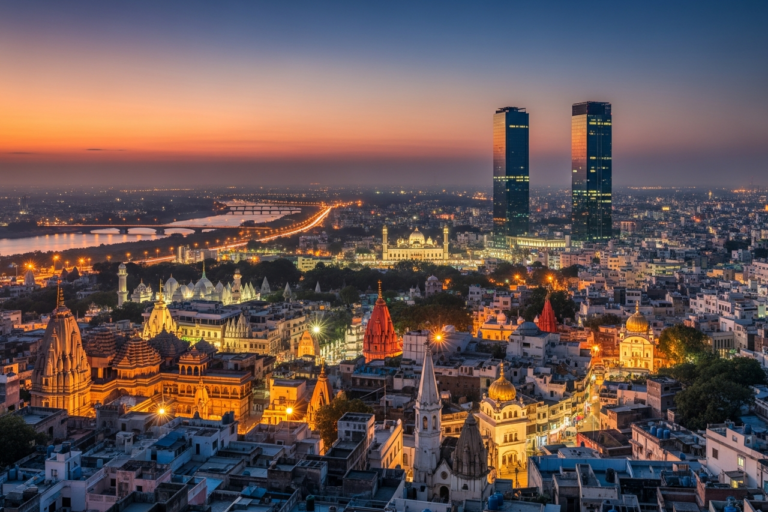
The skyline of India shows its religious diversity. You can see the tall towers of temples, the large domes on mosques, the church spires, and the calm look of gurudwaras. Every kind of religious building tells us about the faith and the history of the people it belongs to.
Hindu temples look special because of their detailed carvings and tall gopurams. These temples are built to be homes for the gods on Earth. Mosques and tombs, like the Taj Mahal, are great examples of Islamic architecture. They stand out with their domes, tall minarets, and simple, clean designs. The churches in India may look like the old Baroque buildings you see in Goa, or they might show newer ways of building.
Sikh gurudwaras, such as the beautiful Golden Temple in Amritsar, mix Mughal and Rajput styles. They have water pools (sarovar) around them. This mix of religious buildings not only helps people pray, but also gives India its own shared artistic look. This is a clear sign of religious diversity in the country.
Literature and Scriptural Heritage
India has a long history of books and holy writings. These are closely linked to the many religious communities found in the indian subcontinent. Old books like the Vedas, Upanishads, Mahabharata, and Ramayana are more than just spiritual texts. They are also a big part of indian society and shape how people live and think.
These important works show the different stories, beliefs, and ways of worship that have grown through many years in the indian subcontinent. Regional books, written in local languages with local stories, also show how religion has helped shape languages. This wide collection of writings keeps on giving new ideas to many people. It shows the deep connection between faith and creativity in this part of the world.
Music, Dance, and Performing Arts
India has a lot of music, dance, and performing arts. These are a big part of its culture. People do not just enjoy them; they also help share deep religious and spiritual ideas found in many traditions. Classical dances like Bharatanatyam and Kathak are famous. Folk dances are loved in small villages. Each show has its own story and history.
There is also special music based on spiritual lessons. Some songs follow the teachings of Sikh Gurus. Others are devotional songs from Hindu traditions. These pieces make people feel more connected to their faith. All these forms show how much variety there is in religious beliefs in India. Art here is a way to celebrate and also to show spiritual feelings.
Visual Arts and Iconography
Across the Indian subcontinent, you can see visual arts and iconography used to show deep religious beliefs and stories from different cultures. Temples in the area often have detailed carvings and wall paintings. These artworks show stories of gods and important events. They usually follow the teachings found in Hindu traditions, as well as Buddhism and Jainism. The different images do not just show gods. They also share ideas that help people understand big thoughts about life and faith. This is why spirituality becomes easier for the vast majority of people to get.
The art gives people in religious communities a strong sense of identity. It brings them together since they all enjoy and follow the same art forms and customs. This history of making art together helps the culture grow. The beauty in these images and statues also reaches people who do not always know every small detail about the stories or beliefs inside them, making the culture in India rich and colorful for everyone.
Religious Themes in Indian Cinema
Looking at religious themes in Indian cinema shows us many stories that touch people in different ways. Films in the indian subcontinent, from old epics like the Mahabharata to newer movies about faith, often show the deep feelings of spirituality and right or wrong. You can find big and small religious communities in these stories. This lets people see what belief and devotion look like through the eyes of others. Music and acting in some famous films share powerful messages with us, and help connect many cultures across the indian subcontinent. These movies not only keep us interested, but they also help us think about and talk about how religion shapes daily life.
Influence on Languages and Scripts
The connection between religion and language in India is interesting to see. Many religious communities have shaped regional languages. They have given these languages spiritual words and ideas. In northern India, Sanskrit has influenced many languages. Tamil has taken words from Hindu traditions. This mix of languages shows the multicultural life in the indian subcontinent. Religious texts helped create scripts, and that has led to different ways of writing in the states. For example, Urdu is used in places where there are many Muslims. All of this gives India a lively and rich language history. It also shows the country’s strong spiritual and cultural story.
Religious Minorities and Indigenous Faiths
Many religious minorities and groups with old beliefs add a lot to the mix of faiths found in India. There are strong tribal groups with their own ways of living and thinking. They show the deep roots of local customs in a very clear way. Many of these groups follow animism. They look up to nature and its many parts. They show respect through rites and gathering with others. New groups and ways of faith are also growing. This change shows how old and new ideas can work together. It lets people be a part of the world today while still holding on to old beliefs. You can see this mix in interfaith marriages. Here, new ways of doing things are born as families come together. These moments show how India can join many as one, making its religious world open and full of life for all people.
Tribes and Their Distinct Beliefs
Tribal communities in India play a big part in shaping the country’s beliefs and ways of life. Each tribe, like the Santhals in Jharkhand and the Gonds in Madhya Pradesh, has its own customs and special ways of doing things. Many of their beliefs are about nature, honoring their ancestors, and marking the changes in the seasons. Their bond with the environment helps them feel like they are part of a group and adds to their sense of who they are. This is a key part of religious diversity. The history of the region and different parts of life also play a role in how these tribes follow their spiritual ways.
Animism and Nature-Based Worship
Animism and nature-based worship in India show how people respect the environment in many indigenous groups. This belief says that all things in nature, like rivers, mountains, trees, and animals, have a spirit. Many tribes, especially in Madhya Pradesh and Odisha, do rituals that honor these parts of nature. They see them as signs of divine power. This bond helps people stay in harmony with the land. It teaches them to care for nature and protect all kinds of life. Because of this, animism is still strong in India. It shows how deeply people feel about the link between spiritual life and nature.
Growth of New Religious Movements
Faith in the indian subcontinent has changed a lot over time. New religious groups have come up because of changes in society. Many of these groups blend old beliefs with new ways that connect well with young people. They put more focus on personal experience instead of strict rules. That makes them more open to everyone and helps build strong community bonds.
Some well-known examples are spiritual leaders in the indian subcontinent who talk about basic truths and helping others. These groups mix with old traditions, making religion lively and full of color. The indian subcontinent shows how belief keeps growing and can change to fit modern life.
Interfaith Marriages and Hybrid Traditions
Interfaith marriages show how people from different religious backgrounds come together. They bring new cultural experiences and help people from different groups understand each other better. Many couples mix traditions from both of their faiths. This helps them keep their heritage alive in a new way. When they celebrate with rituals from both sides, it is a sign of their love. It also shows how Indian society is changing over time. This mix shows how strong religious practices are, and it reminds us how important unity and religious tolerance are in Indian society. These marriages help make life in India more open and lively for all of us.
Role of Religion in the Indian Diaspora
For many people, religion is an important link to their culture, especially for those from the Indian diaspora. In places like the United States and the United Arab Emirates, Indian communities keep up their religious practices. They often mix these with local ways, making something new and special. Festivals, rituals, and times they gather help bring people together. This helps all of them feel they belong, and it builds their identity through the faith they share.
Blending these for new places can also lead to people from different backgrounds talking to each other about faith. This helps everyone learn more and adds to sharing between cultures. It also shows why religious tolerance matters. It is key for better and peaceful relationships among the different groups living together in these societies.
Religious Tolerance, Pluralism, and Conflict
Many parts of India show how people can live together with respect for all beliefs. The country is known for religious tolerance and a mix of cultures, which you can see in its history. In these parts of India, there are many religious communities and religious groups. Each one helps build the country’s shared culture. The Indian Constitution gives everyone freedom of religion, so different practices can grow.
But, it’s not always easy. Sometimes, there are tensions between groups. This shows how hard it can be when many faiths meet. Even so, new acts to bring people together show that there is a will to work through these problems. The work of media and schools is also important. They help people learn about each other, support understanding, and make society stronger, even with all the differences in its religious communities.
Historical Perspective on Tolerance
Throughout time, the Indian subcontinent has shown what religious tolerance can look like. During the Mughal Empire, there were leaders like Akbar. He wanted people from many faiths to talk with each other. This made space for everyone to feel accepted. Important people like Guru Nanak, and Guru Gobind Singh taught others to live in peace. They wanted different religious communities to get along. This spirit was very helpful when the British Raj was in power.
The Indian Constitution also lets people have freedom of religion. This shows the heart of Indian society, where there are so many people from different backgrounds. You can see examples of people from different groups working together, and you will also find times where beliefs mix together. All of this has made the Indian subcontinent a place where everyone adds to the bigger story.
Government Policies on Pluralism
Efforts in India to support pluralism are based on the country’s constitution. It gives everyone freedom of religion and says people from all religious communities must be treated the same. The Indian government has many policies that help build a more inclusive society. These steps promote talks between different faiths and help people learn from each other’s culture. Because of this, many kinds of religious practices grow in the indian subcontinent.
One important group is the Ministry of Minority Affairs. This group works to improve the social and economic development of minority groups. It also helps make sure their voices and ways of life are valued in India. By teaching respect for these differences, these policies support the rich mix of religious communities we find in the indian subcontinent.
Communal Harmony Initiatives
Many efforts to keep families and groups living in peace in the indian subcontinent focus on helping different religious communities get along. Groups work hard to help people talk to each other, do things together in their area, and learn about and respect each other’s beliefs. Actions like big meals shared by everyone and peace marches get people from different religions talking and knowing more about each other. The indian government also sets rules and runs plans that make sure all religious communities are a part of the country’s talks and events. All this, from small local movements to government action, helps fight problems between people and makes everyone more united in the indian subcontinent.
Instances of Religious Tensions
Religious tensions in India often come from old, complex issues. This includes things from the time of the partition and even the days when the country was under foreign rule. There have been serious problems, like fights between religious groups in places such as Uttar Pradesh and Gujarat. These events make it harder for people to live together in peace, and sometimes it breaks trust among different groups.
But even after these hard times, some people and communities want to talk things out. They work to help everyone get along and start projects to bring peace. The Indian government and the Indian Constitution focus on protecting religious freedom. The goal is to bring people together and keep peace among all the different religious groups across the country.
Addressing Segregation and Integration
Segregation and integration within religious communities in India often show larger social trends. In places like Uttar Pradesh and West Bengal, you can see a long history where different religious groups live near each other but still have their own spaces. Bridging these gaps takes real effort. It needs honest talks and understanding between people of different faiths.
The Indian government and many NGOs work on programs to help different groups mix and learn from one another. When people join in cultural events like festivals or take part in shared school activities, they help make each group stronger. At the same time, they help all of Indian society grow closer. These steps let people enjoy the country’s rich mix of backgrounds and support unity across India.
Role of Media and Education
Media and education help build religious understanding and respect in indian society. When media shows stories from many faiths, people get to know more about each other. This makes them understand other religions and can help everyone get along. It helps people come together in a place with lots of religious diversity.
Schools and colleges also play a big part. They push students to think for themselves and talk about their beliefs. When students learn about different religions, it makes them respect other points of view. This open way of teaching helps students stay open-minded.
When media and education work together, it creates a strong base for people to live side by side in india’s mixed-up society with so much religious diversity.
Frequently Asked Questions (FAQ)
Many things help make India known for its strong religious diversity. India’s total population is over 1.4 billion. The country has many religious communities. It also has a big Muslim population and many local faiths as well. Thanks to the Indian Constitution, people there have freedom of religion. Many different beliefs can grow and have a place. Unique religious practices are seen everywhere, from what Sikh gurus teach to the long and rich traditions of Hinduism and Buddhism throughout the Indian subcontinent. The mix of so many ways of faith not only shows diversity, but it also shows how people in India have lived, worked, and changed together over the years.
Why is India considered a religiously diverse country?
India’s religious diversity comes from its long history of different faiths coming together. Many people in India follow Hinduism, Islam, Christianity, Sikhism, Buddhism, and Jainism. There are also many local beliefs and ways of worship. All these things give India a rare mix. This helps people in the country live with each other’s faiths. It shows that there can be many spiritual paths at the same time.
How does India protect religious freedom for its citizens?
India works to protect religious freedom by its Constitution. This law gives everyone the right to practice, share, and speak about their religion in the way they want. There are also many laws and rules that help keep the country fair to all. These also keep the rights of minorities safe. Groups in the community also help by making space for talks and building understanding between all the different faiths in India.
What are some unique religious practices found only in India?
India is known for its special religious practices. People here enjoy bright and lively festivals like Diwali and Holi. There are many different rituals that happen in the temples. You will see a range of offerings given at local shrines by the people. In India, people practice yoga and Ayurveda too. These things show how religious practices connect the mind, body, and spirit. All of this together shows the rich spiritual heritage of the country.
Evolving Nature and Future of Religion in India
The way people follow religion in India is always changing because of modern life. As life and society grow and change, and as the world becomes more connected, you can see many people mix old beliefs with new ideas. For example, in cities of Uttar Pradesh and Tamil Nadu, people often mix their traditional ways with new styles of worship. These changes make religious practices in these states fresh and different.
The Indian diaspora is spreading Indian religious practices to other countries too. This creates a mix of old and new beliefs in many places around the world. When people from different faiths talk to each other and share their thoughts, there is more open thinking. This will likely push the future of religion in India toward more unity and peace. This lets all communities understand each other better.
Modernization and Changing Religious Identities
In India, the old ways of following religion are changing as the country grows and modern life spreads. Globalization, economic development, and people moving to cities all have a big impact. Young people in the cities often look for new spiritual ideas. At the same time, they respect their background and try to keep it in their lives. This creates a mix of old and new beliefs. As new groups and ways of worship appear, different practices come together and form new traditions that fit in with how things are now.
You can see this change clearly in states like West Bengal and Tamil Nadu. Here, there are many types of cultures, and they all shape how people follow religion. The Indian constitution gives the people the freedom of religion. This law means anyone can choose what they believe or how they pray. So, people in these places can talk about or change their faith as society grows and changes. This freedom helps support religious tolerance among all kinds of people.
Conclusion
To sum up, religion in India is like a mix of many beliefs, customs, and cultures. This mix helps the indian subcontinent by making people talk to and learn from each other in different religious communities. As time goes on, new ideas and old ways will work together to shape what comes next for these faiths. It is important for people to accept and respect each other if they want peace in this area. When people see and respect different spiritual paths, India can keep its religious communities lively and open for all.



