

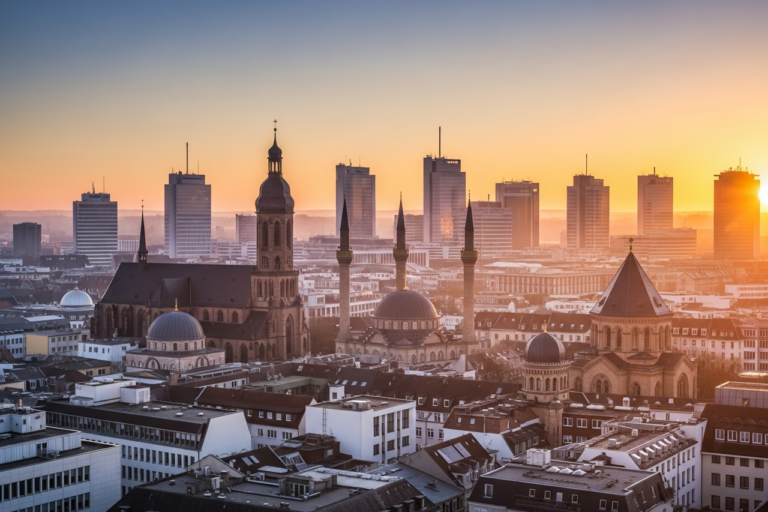
Key Highlights
-
In Germany, about half of the people say they are Christian. This makes it the main religion in the country.
-
The religious landscape in Germany has many different groups. Islam is the second largest religion. After that, you can find Judaism and other faiths.
-
More than a third of the German population does not have any religious affiliation. This number keeps growing over time.
-
Germany’s Basic Law gives everyone freedom of religion. This lets all religious communities practice what they believe.
-
The state and religious communities work together, mostly in things like social services and education.
-
The German government works to make sure religious freedom is there for all people.
Introduction
Welcome to a look into Germany’s religious landscape. The country has old traditions. At the same time, there is a growing mix of different religious communities. More people also now do not follow any religion. In Germany, the history of Christianity goes back a long way. Today, many other faiths are part of public life. This article talks about the past, the present, and what can come next for religious beliefs in Germany. You will see how people with faith and those without it share space and shape the nation’s culture and public life.
Historical Evolution of Religion in Germany
The story of religion in Germany goes back a long time. There is a deep history behind it, and you can still see its effect on the country now. In the early days, people had pagan beliefs. Later, the Roman Catholic Church became the main faith, and the catholic church changed the way people lived. The spiritual life in Germany has been changing ever since.
One big change was the Protestant Reformation that started in the 16th century. This event changed how people saw religion in a big way. It brought new religious practices and started many years of tension and more changes. Now, let’s look at the main times that have shaped what religion means for people in Germany.
Ancient Germanic Beliefs and Roman Influences
Before Christianity was common, the land that is now Germany was full of different tribes with their own old ways of thinking about the world. Their early spiritual beliefs were closely tied to nature. There were many gods and goddesses, each linked to different parts of life and the world around them. These ideas were an important part of early German culture.
When the Roman Empire started to grow, it brought big changes. The Romans came with new ideas and added their own beliefs to the mix. Their presence helped make it easier for new ways of thinking, like Christianity, to come in later.
This time set the stage for the many changes that happened over the years. The ways of the people and the bigger outside powers mixed together, especially when the Holy Roman Empire rose up. All of this led to big changes in what people believed.
The Christianization of German Territories
The spread of Christianity in German lands took many years. It did not happen fast. Missionaries went from place to place. They started christian churches and built monasteries. These new places became centers where people learned and formed new ideas. This change took people away from the old beliefs.
After some time, roman catholicism became the leading religion in these areas. It brought together many different groups under one faith and leader. The church soon played a large role in how people lived. It also became important in how rulers governed their people.
As years passed, many saw this faith as a big part of who they were. Church leaders set up new church regions called dioceses. People also built big cathedrals that stood out in each place. These steps made christianity, and the christian churches, a strong part of both religion and culture for german christians. This faith guided their daily life, traditions, and even how their land was led for many generations.
The Reformation and Its Long-term Effects
The 16th century changed the religious landscape in Germany in a big way. This happened because of the Protestant Reformation. People like Martin Luther started this movement. They spoke out against the roman catholic church and brought in new ways to think about christian belief and how people worship.
This major change gave rise to the evangelical church and many protestant regional churches. It also split people in the German-speaking lands. There were fights and problems, but there was also now more religious choice among christians.
We can still see what the protestant reformation did even now. It did not just lead to a break between catholics and protestants in Germany. It also helped shape the german language and culture. It plays a role in how church and state work together even today.
Religion in the German Empire and Weimar Republic
During the German Empire from 1871 to 1918, the religious landscape had two main Christian groups. Protestantism was the main religion, mostly in the north and east. Catholicism was stronger in the south and west. The federal states often matched these religious lines.
When the Weimar Republic started in 1919, the new constitution made church and state separate. It also promised religious freedom. This gave way to more room for different religious practices. Still, people in society did not always agree with each other.
Even with this change, religious communities and groups still had a big part in public life. What was set up during this time shaped how the state works with religious groups. These rules are still important for Germany and its people today.
The Impact of World War II on Religious Life
The Nazi rule and World War II hurt religious life in Germany in a big way. The Nazis targeted and killed a large number of European Jews during the Holocaust. This wiped out almost all of the strong Jewish communities that had lived there for years.
Christian churches had it hard, too. Some church leaders and members tried to stand up to the Nazis. But many went along with them. This brought about big moral and spiritual troubles for these groups. This time brought big changes to religion for the whole German population.
After the war ended, religious institutions in Germany had to come to terms with what happened and work to rebuild. The damage was not only to buildings. It cut deep into the spirit of the people. These wounds on the religious life of the nation still matter and are talked about today.
Post-War Division and Religious Change in East and West Germany
After World War II, Germany was split into East and West. This caused two separate ways for people to follow religion. In West Germany, the christian churches were rebuilt. You could see these groups take part in the new society that wanted everyone to have a say. Their traditions and ideas stayed strong.
But things were not the same in East Germany. There, the socialist government pushed for people to not believe in religion. The people in charge in east germany tried hard to get everyone to be atheists. They did not let churches, or any other religious groups, be very active in public life. Religion was pushed to the side, and a lot of people gave it up.
This split in the way both areas worked led to big changes you can still see now. Most people in the former east germany do not follow a religion. You can trace this back to the old rules put in place by the country’s leaders. This story shows how much a government can shape the spiritual life of its people.
Current Religious Demographics in Germany
Today, the religious makeup of Germany is changing. Christianity is still the main religion, but it is not as strong as it was before. Now, over one-third of people in Germany do not belong to any religious group.
There is also more variety in religious communities in the country. Different religious communities, including a large number of Muslims, are becoming a bigger part of German life. The next sections will show a closer look at these trends, with numbers and the way things change in different federal states.
Overview of Religious Affiliation Statistics
When looking at religious affiliation in Germany, Christianity is still the largest religious group. The Roman Catholic Church and the Protestant Church together account for about half of the population. Specifically, the Catholic Church has around 19.8 million members, and Protestant churches have nearly 18 million.
Islam stands as the second largest religion, with an estimated 5.3 to 5.6 million followers. A much smaller but historically significant Jewish community numbers around 90,000 in official communities. However, the fastest-growing group is those with no religious affiliation, making up over a third of all people in Germany.
Here is a simple breakdown of the major religious groups by membership:
|
Religious Group |
Number of Members (in millions) |
|---|---|
|
Roman Catholic Church |
19.8 |
|
Protestant Church |
17.9 |
|
Muslims |
5.4 (estimated) |
|
Jewish |
0.09 |
Religious Demographics by State (Bundesland)
The way people follow different religions in Germany is not the same everywhere. It changes a lot from one federal state to another. This is because of the country’s history. In the south and west, for example in Bavaria and North Rhine-Westphalia, you will find more Catholics.
But in the north, most people are Protestant. This split between Catholic and Protestant areas has been part of local life for a long time. People in different places often keep the traditions of their own religious communities. Even today, you can see that these old patterns are still there.
The biggest change is between the former East and West. The federal states in East Germany have more people who do not belong to any religion. This comes from the time after the war, when the government in East Germany supported people being non-religious. Because of this, there are more people with no religious beliefs in those places.
Trends in Religious Identification Over Time
The religious landscape in Germany has been changing a lot in recent years. The biggest trend is that fewer people belong to the two main Christian churches. Both Catholic and Protestant churches are losing members every year.
At the same time, more and more people say they have no religious affiliation. Studies like those from the Pew Research Center show that being less religious is becoming more common in German society.
Key trends include:
-
A steady decrease in membership in both Catholic and Protestant churches.
-
A big rise in the number of people who call themselves non-religious.
-
The Muslim population is getting bigger, mostly because of immigration.
-
Smaller religious communities are growing too, which adds to the mix of beliefs.
-
The overall religious landscape in Germany is now more split and open to different faiths.
Influence of Immigration on Religious Diversity
Immigration has played a big part in changing the religious landscape in Germany, especially in recent years. People coming from many places have brought lots of new faiths and traditions with them. This changed what was once a mostly Christian country.
The most important change has been the rise of a growing Muslim community. Many migrants from Turkey, and now from different Middle Eastern countries, have moved here. Because of them, Islam is now the second-largest religion in Germany. You can see new mosques and cultural centers set up in many places across the country.
Immigration has also given new life to Jewish communities. After 1990, Jews from the former Soviet Union came to Germany. Their arrival helped jewish life grow again. All in all, having people come from other countries keeps shaping and adding to the religious landscape in Germany.
Christianity’s Role in Modern German Society
Even though fewer people join Christian churches now, the Catholic Church and the Protestant churches are still important in German life today. The Catholic Church and the Protestant churches, like the Evangelical Church, are still big names. They are important in public life. These groups run a lot of nursing homes, hospitals, and kindergartens across the country.
The Roman Catholic Church and the Protestant churches also work together with the state. Because of this, they get to help shape things like public holidays and school lessons. This partnership between the church and the state is special in Germany. The next sections will look at the place of each group in public life, and how they shape both schools and days off for people.
Protestant Churches and the Evangelical Tradition
The Protestant churches in Germany work together under one main group called the Evangelical Church of Germany (EKD). The EKD is made up of 20 different regional churches. Some of these are Lutheran, some are Reformed, and some are United. Together, they have about 18 million members. That means most people who are Protestant in Germany belong to one of these churches.
These Protestant churches have a big role in public life. You can find them helping out with schools, hospitals, and many social welfare programs. They run a lot of these places, and this work helps many people across the country. The churches, and the groups linked to them, help make the country a better place.
The Evangelical Church of Germany also works with the state in some things. For example, the state lets the church give religious instruction in public schools. It shows how the church and state still work together. Because of all this, the Protestant tradition has a strong influence on German society today.
Evangelical Church of Germany (EKD)
Catholicism: Presence, Practice, and Influence
The Catholic Church in Germany is the largest religious group in the country. There are about 19.8 million members who are part of the church. It is a part of the bigger Roman Catholic Church under the Pope. You will find 27 church regions called dioceses here. There is also the very active German Bishops’ Conference.
In public life, the catholic church has a lot of influence. It gives many people jobs and runs a lot of schools, kindergartens, and hospitals. So, the church does a lot of work when it comes to social help. Some of its money also comes from the state.
There has been a drop in people who attend weekly church services and follow old religious practices. But the catholic church is still important when people talk about the right and wrong way to live, and what the society needs. You can see its presence in local politics, yearly events, and day-to-day life. This is even more clear in places in the south and west, where roman catholic roots are strong.
Eastern Orthodox and Other Christian Groups
Besides the two biggest denominations, Germany has many other Christian groups. Orthodox Christians are a big part of this, with about 3.85 million people. Most of them came from Eastern and Southeastern Europe. This group has grown a lot because of people moving in from outside Germany.
There are also many Protestant free churches in the country. These include Baptists, Methodists, and Pentecostals. They are not part of the main EKD. All together, these groups have around 285,000 members.
The New Apostolic Church is another group that you can find in Germany. So, all these smaller Christian groups, like the orthodox churches and Protestant free churches, plus the New Apostolic Church, help make the Christian life in Germany rich and varied. These churches often help people of certain backgrounds or ways of thinking about faith.
Christian Holidays and Their Social Importance
Christian holidays are a big part of public life in Germany and show up all through the year. Christmas, Easter, and Pentecost are special because they are national public holidays. On these days, people close their businesses and slow down. This way, they can have time with their family and the people in their community.
Many Germans, like young people and those who do not go to church often, see these holidays as more about culture than about religion. These days matter the most for tradition. They help people mark the change of seasons and give a chance to rest and have fun, even if someone does not share the same religious beliefs.
These holidays help bring everyone together. They give order to the year and keep up the country’s culture. Here are the main protected holidays:
-
Christmas
-
Easter
-
Pentecost
-
Ascension Day
Islam in Germany Today
Islam is now a bigger part of religion in Germany. There are about 5.3 to 5.6 million Muslims in the country. Muslim communities there come from many places and have different ways and traditions. The number of Muslims keeps growing, so you can see them more often, with mosques being built in a lot of cities.
To help with talking and living together, there is something called the German Islam Conference (DIK). It is a group where the state and people from muslim communities can meet. They talk there to help with problems everyone shares and to fit Islam better in Germany. The next parts will talk more about the number of muslims, their daily life, and the German Islam Conference.
Muslim Population and Ethnic Origins
The Muslim communities in Germany come from many backgrounds. People have roots in over 50 nations. This comes from many years of people moving in and starting new lives. The largest number of Muslims in Germany are from Turkey. Most Turkish families came during the “guest worker” time in the 1960s and 70s.
In recent years, the number of Muslims in Germany has gone up. Many have come as refugees and migrants from Syria, Iraq, and Afghanistan. These newer groups add even more variety to the Muslim communities already here.
Because there are people from so many places, there is not just one “Muslim community” in Germany. There are many different groups. Each has its own culture, language, and way to understand their faith. This mix is now a key part of the German population when it comes to Islam.
Mosques, Community Centers, and Education
As the number of Muslims has gone up, the support systems for their religious and social needs have grown too. Mosques and community centers are now important places for Muslim people. They are not just for prayer. People also use them to meet with others, learn, and take part in the culture.
One big thing that has happened is the growth of Islamic religious education in state schools. Knowing it is needed, the German state is trying to train more teachers and make the right classes for religious instruction. German universities now give programs to train imams as well.
All these things show that there is a bigger move to bring Islam into public life. Here are some of the main parts:
-
Establishing mosques and community centers as places of worship.
-
Offering Islamic religious education in state schools.
-
Training imams at German universities.
-
Fostering dialogue between Muslim communities and the state.
Experiences of Muslim Germans in Everyday Life
The life of Muslim Germans is not the same for everyone. Some have found a good place in German society and give a lot in many areas of life. But there are also everyday problems. These can include bias and unfair treatment in places like public areas, when looking for homes, and also at work.
People often talk in public about things like religious practices. For example, there have been talks about women wearing headscarves or building minarets. These debates show that there are still problems for some people. State authorities need to find a way to let people have religious freedom while also listening to what people in the country are worried about.
Young people sometimes find it hard to mix being German and Muslim at the same time. They move between what their families teach them and what they see in the wider society that has many different ways of life. Because of this, many young people are making new styles of German-Muslim identity for themselves.
Judaism and the Jewish Community
Jewish life in Germany went through a terrible time during the Holocaust. But since then, there has been a strong comeback. Now, the Jewish community is an important and lively part of the country’s religious landscape. There are about 200,000 Jews who live in Germany. Many Jewish communities are growing and doing well.
The Central Council of Jews in Germany started in 1950. It is the main political voice for around 100 Jewish communities. This recovery shows the strength of people and how they can start again. The next parts will talk more about the past and what Jewish life is like now in Germany.
Historical Roots of Judaism in Germany
Judaism has been part of Germany for over 1,700 years. Early Jewish communities started in the Rhineland long ago. Over the years, jewish life had both good times and very hard times. Jews gave a lot to German science, culture, and ways of thinking.
Then, the Holocaust took place. Six million Jewish people across Europe were killed. Most jewish communities in Germany were destroyed. The rich culture and bright jewish life that was once strong in Germany was almost wiped out.
Still, after World War II, there was a slow and tough start to build things back up. Now, Jewish communities are growing again. Some are more traditional, while groups like the Union of Progressive Jews are more open. Today’s jewish life is tied to a deep and complex past.
Jewish Life and Organizations Today
Jewish life in Germany is lively and getting bigger now. This has happened because many Jews came from the former Soviet Union during the 1990s. With these new people, old jewish communities grew and some new groups started. They brought new energy and ideas.
The Central Council of Jews in Germany stands for almost 100 jewish communities. These groups have about 90,000 members. The Central Council speaks up for their needs in politics and in everyday life. It also helps people feel connected to their culture and build a strong jewish identity.
Today, jewish communities in Germany have many beliefs. Some are more liberal. Others are very strict, or orthodox. The places of worship like synagogues and community centers are important. They are where people pray, meet, and hang out together. These places help keep jewish life strong and growing in the country.
Commemoration, Remembrance, and Education
Commemorating and remembering the Holocaust is very important in today’s Germany. It helps shape the country’s identity and its bond with Jewish communities. Germany is deeply committed to honoring the victims and teaching the next generations about the terrible things that happened during the Nazi era.
Education plays a big part in this. In German schools, learning about the Holocaust is a must. All over the country, there are many memorials, museums, and centers where people can learn more about this sad part of history. Putting time and work into education is one way to fight against antisemitism.
Germany’s dedication to these actions helps make sure something like this does not happen again. Some important factors in this promise are:
-
Holocaust lessons being a required part of what students learn in school.
-
Building major memorials, like the Memorial to the Murdered Jews of Europe in Berlin.
-
Keeping Jewish institutions safe and supporting good jewish life.
-
Bringing people together to talk and learn from each other through interfaith work.
Other Religions and New Religious Movements
Germany has more than just Christianity, Islam, and Judaism. There are many other religious communities and beliefs here. Some might be smaller in size, but they all help the country become more open to different religions. You will find the religions like Buddhism and Hinduism. There are also new groups and other kinds of spiritual movements.
All this shows that many people in Germany now look for their own ways to feel closer to something bigger. More people choose not to follow old ways, but to make their own path to find meaning. The next sections will talk more about these religious communities and how they fit into the spiritual life of Germany.
Buddhism, Hinduism, and Sikhism in Germany
Faiths from Asia are now in Germany too. Buddhism has a small but loyal group of people. There are a few hundred thousand who follow it or feel close to it. You will see many Buddhist centers and temples around the country. These centers show different types of practice, like Zen and Tibetan Buddhism.
Hinduism is mostly followed by people who came to Germany from India and Sri Lanka with their families. There are a few dozen Hindu temples, called mandirs. These places of worship help people come together. They keep their traditions and take part in their culture.
Sikhism is also part of German life, and the number of Sikhs in the country is growing. Most Sikhs in Germany have roots in Punjab, India. You can find Sikh places of worship, called gurdwaras, in major cities. These places meet the religious and social needs of the Sikh community in Germany.
Neopaganism, Baháʼí Faith, and Alternative Movements
Germany’s religious landscape is made up of many groups, including some small faiths and different movements. Neopaganism is one of these. It tries to bring back old European beliefs from before Christianity. People in these groups like to focus on nature, old stories, and the beliefs from ancient Germanic or Celtic times.
The Baháʼí Faith has been in Germany for a long time. This group is known for believing in unity and good relationships between different religions. Its people take part in many social and educational activities all over the country.
There are also some groups that are not as big and are on the edges of the religious scene. For example, the Church of Scientology does have people in Germany. But state authorities do not trust it and intelligence services keep an eye on them. The German government does not see this group as an official religion.
Smaller Communities and Interfaith Initiatives
Smaller religious communities in Germany have a big impact on the country’s religious landscape. Groups like Jehovah’s Witnesses, the New Apostolic Church, and different Orthodox Christian congregations bring their own beliefs and ways of doing things. This adds to the variety found in bigger Christian churches.
There are also more interfaith groups working together, helping different religious communities talk to each other and close gaps between them. Events run by the Central Council of Muslims and Jewish organizations help people understand each other.
Working together like this matters in a society that values freedom of religion. It lets people share what they believe and respect others at the same time.
The Rise of Secularism and Non-Religious Belief
One of the most important trends in Germany today is that more people are moving away from religion. A big and growing number of German citizens do not follow any religion. Now, over one-third of the people say they do not belong to a formal religion. This change is happening fast.
The move away from old religious beliefs is having a big effect on German life. It puts an end to the long-time rule of christian churches. It also changes how people talk about values, morals, and what it means to be a part of a group. The next parts will show more about non-religious beliefs in Germany.
Atheism, Agnosticism, and Humanism in Society
The group of people in Germany who are non-religious is not all the same. There are many different beliefs inside this group. Some people in it are atheists, some are agnostics, and some believe in humanism. Atheists say that there are no gods. Agnostics say they do not know if there are gods, or they think no one can know.
Humanism is a positive way to live for those who are not religious. It focuses on human reason, caring for others, and being responsible. Humanist groups in Germany work for non-religious values. They also offer other ways for people to have events like weddings or funerals that are not based on religion.
You see these secular groups more now. They are more active and better organized. These groups speak up in public about their beliefs. They ask for a clear line to be drawn between church and state. They stand up for the many Germans who want to live without religion.
Secular Demographics and Regional Variation
The secular demographics in Germany show strong regional variation. The divide between the former East and West is particularly stark. In the states of East Germany, the majority of the population is non-religious. This is a direct legacy of the decades of state-promoted atheism under the socialist regime.
In the west of the country, while secularism is also on the rise, the rates of religious affiliation are still significantly higher. Major cities across Germany, however, tend to be more secular than rural areas, reflecting a broader European trend.
Here’s a simplified look at the regional variation:
|
Region |
General Religious Leaning |
|---|---|
|
East Germany |
Predominantly non-religious |
|
West of the country (South) |
Predominantly Catholic |
|
West of the country (North) |
Predominantly Protestant |
Reasons for Leaving Religious Institutions
Many people in Germany leave the major Christian churches every year. They have different reasons for doing this. Some want to step away from their religious beliefs. Others feel that the church is not in line with their own values anymore.
One big reason for leaving is the church tax. In Germany, if you are part of the Catholic church or the Protestant churches, you pay a church tax. This tax is usually around 8-9% of your income tax. The state takes this money and gives it to the churches. For many, this cost is a reason to get out.
Still, there is more to it than just the money. Here are some main reasons people leave:
-
People do not agree with what the church teaches or where it stands on social issues.
-
There have been scandals, especially in the Catholic church.
-
Religious convictions are less important to many in daily life now.
-
People want to avoid having to pay the church tax.
People think about both what they believe and what impacts their money when leaving the christian churches. For some, their connection with faith is changing, while others want fewer costs taken out of their income tax.
Religion, State, and Society
In Germany, the relationship between religion and the state is called “constructive neutrality.” The state and churches are not in conflict with each other. They are separate, but they work together in many areas of public life. This way of working shapes things like taxes and education.
Freedom of religion is a right protected by the constitution. But this partnership gives religious groups a special place in society. The next parts will explain how this system works in real life, from the constitution to religious instruction in schools.
Freedom of Religion in the German Constitution
The main rule for religious freedom in the Federal Republic of Germany is in Article 4 of the German Constitution, also called the Basic Law. This rule makes it clear that “freedom of faith and of conscience and freedom to have or talk about a religious or philosophical creed cannot be taken away.”
This rule looks after not just the freedom to hold your own religious beliefs, but also the freedom to practice a religion out in the open. It is also just as important that it gives people the right not to have a religion. This means that the state does not pick sides when it comes to any of these ideas.
The Federal Constitutional Court says the state should act with “constructive neutrality.” The state does not connect itself with only one religion, but it sees that religious communities can have a good role in society. This leads to a working relationship between the state and all worldviews, not a hard line that separates them.
Church Tax, Religious Education, and State Interaction
The partnership between the church and the state can be seen in three main areas. The first is the church tax. In this system, the state takes a tax from people who are members of approved churches. The state then gives this money to the churches so they can pay for their social work.
The second area is about religious education. In most federal states, students get religious instruction as a part of the normal courses in state schools. Teachers who give these lessons must have agreement from their churches. The state has also started to offer more options for Islamic religious education.
The last area is about how the state works with religious communities to run things like hospitals and kindergartens. This kind of system, where the state and churches are so closely connected, comes from decisions by the Federal Constitutional Court. It is something special to Germany and shows how its way of dealing with church and state is different from other places.
Conclusion
In the end, the story of religion in Germany is made up of many parts. It comes from the long past, the people who live in the country now, and the mix of many beliefs. Old German traditions are there, and at the same time, people are seeing more who do not follow any faith. All of this shapes how people in Germany live today. Knowing about these things helps us see what has happened before and where Germany may go next. When we see all the different faiths and ideas, we get the chance to see how talking and living together makes our lives better. If you have questions or want to know more, you can reach out any time.
Frequently Asked Questions
What are the main religions practiced in Germany today?
The main religion in Germany is Christianity. The Catholic and Protestant churches are the biggest religious communities there. The second largest religious group is Islam. There is a big change in the religious landscape now, as more people have no religious affiliation. Right now, over a third of the population is not part of any religious group.
How is religious freedom protected in Germany?
Religious freedom is well protected in Germany’s Basic Law. Article 4 says that everyone has the freedom of faith. The state has to stay neutral, but it still works with religious groups when it comes to things like religious instruction. The Federal Constitutional Court supports this way of working together.
Keywords used: freedom of faith, religious instruction, religious freedom, basic law, federal constitutional court
What percentage of people in Germany identify as non-religious?
About one-third of German citizens, around 36%, do not have a religious affiliation. The number of people in Germany who are not religious is growing. This shows a big change in the country’s secular group. In the federal states of east germany, more people do not have any religious ties. There, most of the population is not part of any religion.



