

Key Highlights
-
Fiji stands out for its wide mix of religions in the South Pacific. The main faiths are Christianity, Hinduism, and Islam.
-
The country’s rules say Fiji is a secular state. This means it gives freedom of religion to all its people.
-
In Fijian society, religious affiliation is often tied to ethnic lines. Most indigenous Fijians follow Christianity, while most Indo-Fijians are Hindu.
-
Religion plays a big part in Fijian culture. It shapes national holidays, family routines, and even daily life.
-
Even though most people in Fiji are Christian, they respect other beliefs strongly.
Introduction
Welcome to Fiji. You will find that fijian life is as colorful as the coral reefs around the islands. The spiritual life here is part of the country’s cultural fabric. People have a vibrant blend of cultures and that shows in the different faiths they follow. Religion is not just for Sundays in Fiji. It is with people every day, shaping things like community gatherings and family meals. This guide will take you through the spiritual life and the way people live in Fiji.
Overview of Religion in Fiji
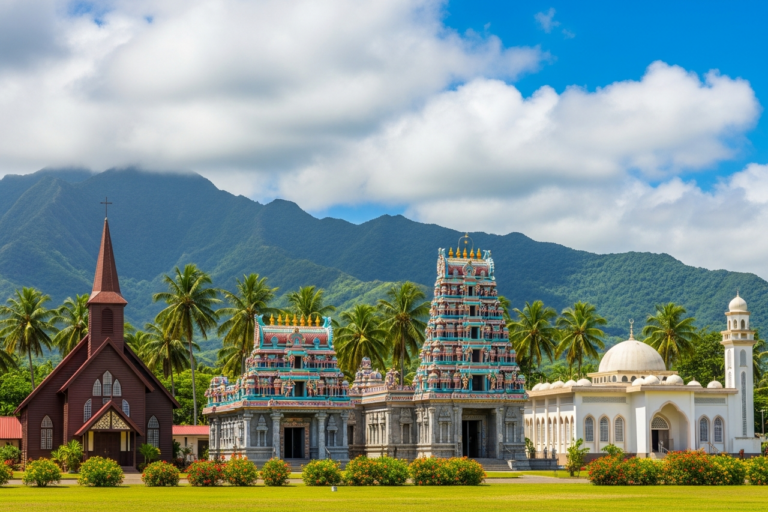
Fiji is known among the Pacific Islanders for its wide range of beliefs. The biggest religions here are Christianity, Hinduism, and Islam. All of these add to the country’s special feel. In Fiji, it is common to see churches, temples, and mosques close to each other in the same area.
The people’s faith is a big part of life here. Most indigenous Fijians believe in Christianity. In the Indo-Fijian group, most people are Hindu, and there are also many who follow Islam. This short view gives you an idea of Fiji’s diverse beliefs.
Religious Diversity in Fiji
The social life in Fiji is made stronger by its wide range of religious beliefs. The country is not just home to different faiths. It is also a place where diverse traditions help build a shared Fijian identity. You can notice this when people from many backgrounds get together for religious festivals. They share food, spend time with each other, and enjoy their customs.
Fijian culture mixes religious elements from many different faiths. People might hear Christian songs sung in the indigenous iTaukei language. There are lively Hindu festivals and quiet times of prayer in the Muslim community. All of these religious traditions bring something special to the country. They help make Fijian culture strong and full of life.
In some places, you may see a church, a Hindu temple, and a mosque close by each other. Having these places so near to each other is a clear sign of how much people in Fiji connect every day. It also shows the respect and understanding at the heart of their social diversity.
Historical Roots of Faith in Fiji
To understand religion in Fiji now, you need to know its history. Before the 19th century, the indigenous people of Fiji had their own spiritual ways. Things started to change with the arrival of Christian missionaries in the early 1800s. This was when life, faith, and beliefs on the islands began to shift.
During the British colonial era, many workers from India came to work on sugarcane farms in Fiji. These workers also brought their own faiths. Because of them, Hinduism and Islam spread across the islands. This move of people helped build the mix of religions you see in Fiji today.
All these changes over the years shaped the country’s religion. Now, most of the indigenous people practice the Christian faith. For the Indo-Fijian community, Hinduism and Islam are very strong. There is more than one main religion, and each one is a big part of Fiji’s history and life.
Major Religions Practiced in Fiji
Fiji has people who follow many different religions. But three stand out the most. These are Christianity, Hinduism, and Islam. Christianity is the dominant religion in Fiji. Most people in Fiji practice it. But the country also has many people who follow Hinduism and Islam. The mix of religions shows the diversity in Fiji.
Data from the Fiji Bureau of Statistics tells us these religions are more than numbers. They are part of real and active groups. These religions help shape Fiji’s holidays and traditions. The way people live and work in Fiji also depends on the religion they follow. Let’s take a closer look at these big religions and the communities who belong to them.
Christianity and Its Denominations
Yes, Christianity is the main religion you will see in Fiji. Over 64% of people there say they are Christian. For many indigenous Fijians, their spiritual life is strongly connected to the church. You can see beautiful places of worship in both villages and cities all across the islands.
The Methodist Church is the biggest group and has a big role, especially in rural areas. But, Fiji is also home to other groups like Roman Catholics, Assembly of God, Seventh-day Adventists, and Anglicans. These different groups show that people express Christianity in many ways in the country.
Some schools in Fiji may offer religious instruction, but it is not something every child has to take. This means families can decide how they want their children to grow in their faith. Churches are at the heart of community life in Fiji and do much more than just Sunday services. They are the main places where people gather together and support each other.
Hinduism Among Fiji Indians
Many Fiji Indians follow Hinduism. It is the second largest religion in the country. People brought this faith to Fiji when the descendants of Indians came as laborers back in the 19th century. Now, you can see vibrant Hindu temples all over Fiji. These places are not just for worship, but also key parts of the community.
Most Indo-Fijians are Hindu, but there is a Muslim community and a smaller Christian group among them too. It shows that their group has diverse beliefs. You can often hear people speaking Fiji Hindi at religious ceremonies and in their everyday talk.
Hinduism in Fiji has many festivals, rituals, and ideas that make it special. The families and the temples give religious instruction to the young ones. Parents and elders make sure the faith and culture live on, passing these to the next generation.
Islam and Other Minority Religions
There is a smaller Muslim community in Fiji that makes up over 6% of the population. Most people in this group have Indian roots, and their mosques are a big part of Fiji’s buildings and its faith life. They have key Islamic celebrations, and these are holidays everyone in the country knows about.
There are also smaller groups of Sikhs, Baha’is, and Buddhists in Fiji. The small Chinese community often follows Christianity, but there are some who have other faiths as well. All of this shows that Fiji is open to different beliefs.
Different religious organizations speak up for these groups and help make sure they get what they need. This mix of religious affiliation helps Fiji be a warm and accepting place, where people holding many beliefs can live together in peace.
The Influence of Religion on Fijian Culture
The influence of religion on Fijian culture is strong and easy to see. It shapes the way people talk to each other, what the community values, and how the day goes by. Fiji’s vibrant blend of cultures comes from its many traditions and the religious beliefs that guide them.
The food people eat and the festivals they celebrate both show how important religion is in their lives. You can also see it in daily life. These deep ties make Fijian culture full of ceremonies and close bonds among people. Next, we will look at how the influence of religion and diverse traditions show up in festivals, in everyday social life, and in how families do things.
Festivals and Religious Celebrations
Fiji’s calendar has many religious events. This shows the multicultural side of the country. The celebration of national holidays for every faith is a big part of what keeps people together. It helps the people have unity and respect for everyone’s background. At this time, it’s normal for neighbors who come from different lives to share meals and take part in all the fun.
Each faith brings its own vibrant customs and rich traditions to Fiji’s big events. These are times when you can see and hear the best of Fijian culture. You also get to taste so many new things. The food is always a star, with spicy Indian curries and savoury lovo feasts being served at many tables.
Key religious celebrations include:
-
Christmas and Easter: These are for Christians. People go to church and have family time, which can include tasty savoury lovo feasts.
-
Diwali: This is known as the festival of lights for Hindus. On this day, homes will shine with lamps, and families eat sweets along with spicy Indian curries.
-
Prophet Mohammed’s Birthday: For the Muslim people, it’s a day for prayers and to do things that help others.
In Fiji, everyone comes together for celebration of national holidays. They enjoy rich traditions, their own vibrant customs, and all the things that make Fijian culture so special.
Role of Spirituality in Social Life
Spirituality is very important in Fijian society. It helps make a strong sense of community. People do not go to religious gatherings just to worship. The church or temple is a big part of social life, where everyone meets, shares news, and is there for each other. This happens most in rural areas, as the church or temple is often at the heart of village life.
Spiritual life brings people together. It helps everyone feel like they belong to a group. Whether it is a Christian church service, a Hindu ceremony, or a Muslim prayer time, these events build stronger ties among people. There is also a support system for families and each person there.
Different religions in Fiji teach values like being hospitable, showing respect to older people, and working together. These values are part of Fiji’s culture and are why people in Fiji are known to be warm and friendly. Spiritual life shapes how people connect in all parts of social life.
[fijian society,rural areas,spiritual life,sense of community]
Impact on Family Traditions
Family traditions in Fiji are deeply influenced by religious beliefs. When big things happen, like births, marriages, or funerals, families take part in religious ceremonies and rituals. These moments help bring comfort and order. They also keep families connected from one year to the next.
The country has many different beliefs, so family traditions are not always the same. Some Christian families sit and pray together. They also eat traditional iTaukei dishes to mark special days. In Hindu families, they might do a puja right in their home temple. These ways help keep faith at the center of their lives.
Religious communities play a big part in family support. Many churches, temples, and mosques offer a network of help. Sometimes, this help is social and sometimes it is financial assistance. These places work as another part of the family, showing how faith and community go hand in hand.
Religion and National Identity
Religion is a big part of Fiji’s national identity. Even though the constitution calls for a secular state, you can see faith all around in Fiji, and it shapes how people think and live. The country’s identity comes from many roots. There are the native Fijian background, Indo-Fijian history, and many other cultures mixed in. Religion is important to all of these groups.
This mix means that being from Fiji does not mean you are part of just one faith. The national identity welcomes many beliefs. How the country handles this mix of faiths is key to Fiji’s story. It shapes the nation’s politics, how people get along with each other, and how others in the world see Fiji.
Faith in Fiji’s Constitution
The country’s constitution is the core of religious freedom in the Republic of Fiji. It makes the nation a secular state. This means there is a strong line between religion and the government. This principle keeps the rights of all citizens safe, no matter what they believe.
A report by the U.S. Department of State says that the constitution clearly protects religious liberty. This gives every person the right to their own beliefs. People can follow their religion alone or with others. They can do it in public or in private.
Key provisions include:
-
The right to freedom of religion, conscience, and belief.
-
No discrimination based on religious affiliation.
This legal system helps different faiths live peacefully in Fiji. It makes sure religious liberty stays a promised right for everyone in the republic.
Religion’s Role in Community Unity
Religion in Fiji is a strong part of the community. When people have the same faith, they build a close sense of community that helps the group. These groups give help and support to their members. This is a big reason why Fijian society stays close, from small villages up to the whole country.
Interfaith events are also important in Fiji. People from Christian, Hindu, and Muslim groups all celebrate each other’s holidays. This shows religious tolerance and helps people learn about other beliefs. You will also see leaders from different faiths work together. They often meet to talk about peace and how to help others.
This way of working together and showing respect shapes the shared Fijian identity. There can be problems, but, the focus on community and being open to different beliefs helps bring people together. This teaches all in Fiji that everyone is part of one nation, no matter what they believe.
Religious Demographics in Fiji
Knowing more about the religious groups in Fiji helps us see what people believe in the country. Recent years have shown that most people there are Christian.The data is from the Fiji Bureau of Statistics. You will also find that there are Hindu and Muslim groups, and some smaller faiths too.
These numbers do not stay the same over time. People move in and out of Fiji and this, along with changes in birth rates, changes the numbers for each faith. Let’s look at the numbers and see how things are changing for religion in Fiji in recent years.
Population by Religion
Fiji’s population is a testament to its religious diversity. The major religions each have a substantial following, creating a truly multicultural society. According to the most recently available detailed census data, the breakdown of religious affiliation showcases a clear Christian majority.
Hinduism is the second most followed religion, with about 27.9% of the population identifying as Hindu. This percentage primarily represents the Indo-Fijian community. The data clearly shows the significance of all three major faiths in the country.
The population breakdown by religion is as follows:
|
Religious Group |
Percentage of Population |
|---|---|
|
Christianity |
64.5% |
|
Hinduism |
27.9% |
|
Islam |
6.3% |
|
Other/None |
1.3% |
This table illustrates the religious landscape and underscores Fiji’s respect for different beliefs, where even minority faiths represent tens of thousands of people.
Trends and Changes Over Time
The makeup of religions in Fiji has changed over the years. These changes mostly happened because of movement of people and old events. That is how the main Christian and Hindu groups formed, split up along ethnic lines.
In recent years, the percentages for each group have stayed mostly the same. Still, there are small changes. Some religious organizations say their groups are getting bigger. A lot of this growth comes from community projects and social work. More smaller Pentecostal churches now pop up as well.
Also, when people leave Fiji for jobs or school, it changes the balance of religion in the country. Demographers and religious organizations watch these trends to see how the country’s spiritual makeup is changing.
Religion in Daily Life
In Fiji, religion is a big part of daily life. It is not just for special days. Many people start and end each day with a prayer. Their spiritual life shows in the way they talk, their values, and the strong sense of community they have.
You can see how much faith means here. Kids go to schools that are full of faith-based teachings. Places of worship are at the heart of many towns and even more important in rural areas. The next parts will look at how faith shapes everyday things people do, how it is part of education, and how it can be seen at work too.
Worship Practices and Rituals
Worship and religious rituals play a big part in Fijian life. Christians see Sundays as special. Families put on their nicest clothes and go to church. The services are known for strong singing. In rural areas, the sound of the lali, a traditional drum, lets people know it’s time to worship.
Hindus worship every day. Some pray at a small shrine at home. Others take part in bigger events at colorful temples. At these temples, people give flowers and food as offerings. They also chant mantras.
Muslims pray at mosques. They do this every day. Friday is special for them. That’s when everyone gathers for the main worship of the week.
These religious acts set the pace of life. They help people in Fiji feel close to their faith and to each other. Whether these rituals are in public or done at home, they stay as a steady and comforting part of life.
Faith-Based Education
Faith-based education has been a big part of Fiji’s history. Many schools in Fiji started with help from churches like the Methodist, Catholic, and Anglican, as well as Hindu and Muslim groups. These places of education now belong to the whole school system in the country.
Even though religious groups own these schools, the Ministry of Education makes sure they follow the same rules as other schools. They are open to all students, no matter what faith they follow. The government also gives money for each student, so these schools can be for everyone.
The law says schools can offer religious instruction, but it is not something everyone has to do. If a student or their parents do not want to take part in these religion classes or activities, they can ask to be left out. This system gives people the choice in what part of any education is right for them. It helps balance religion in school with what each family wants.
Religion in the Workplace
Religious freedom is part of the workplace in Fiji. People can have and show their own religious beliefs at work without fear. Most employers in Fiji respect the faith of their workers. It is normal to see a small religious object, like a symbol or picture, on someone’s desk.
But, showing your religious beliefs at work should not take away the rights or freedoms of other people. The constitution has rules that let the government limit how people show their religion. These rules can be for reasons like public safety, public health, or public order. This helps to keep the workplace safe for all people and protects the freedoms of others.
The law gives strong protection to people, but what really happens every day is that most people respect each other. Many people from different faiths work together. On major religious holidays, workers sometimes share food and celebrate as a group. This makes a good and friendly place to work and shows that people want to include everyone.
Religious Freedom and Rights
Fiji’s constitution gives strong support to religious freedom and lets people have the liberty to follow their beliefs. It says that everyone in the country can choose, practice, or even change their religion. The government cannot step in or stop people from doing this. These rules help to make Fiji a place where people are open and welcome everyone.
But these rights have some limits. The government can set some rules if it is about keeping public order or making sure other people’s rights are safe. Up next, we will look at what the law says about these protections and some of the things that get in the way of having full religious freedom.
Legal Protections for Faith Communities
The main laws that protect faith communities in Fiji are in the country’s constitution. It clearly says Fiji is a secular state and gives the right to freedom of religion and belief. The laws also say that it is a crime to spread hate against any religious group. This helps stop acts of intolerance.
Every religious group has to register with the government if they want to own property or get tax breaks. This is a simple process and the same for all types of faiths. Registration gives these groups an official status, so they can operate by law.
The constitution looks to balance rights. It says that freedom of religion may be limited to keep people safe, protect public health, and respect the freedoms of other persons. This part makes sure that the actions of one group do not harm the whole community. It helps create a space where diverse beliefs can exist together in peace.
This balance between religious freedom, public safety, and the freedoms of others builds a society where people from different backgrounds live well together in a secular state.
Challenges to Religious Freedom
Sometimes, people in Fiji still face problems with freedom of religion, even though there are strong laws to protect it. There have been times when tension grew in the country. This mostly happens because of political issues and ethnic lines, which often link to religious affiliation. These moments show how the nation upholds religious tolerance.
When there is sacrilege, like someone damaging temples or churches, the police treat it as a crime. These acts do not happen often, but they hurt the community. The government always speaks out against them and says everyone should show mutual respect.
The government says any limits on religious activities are there for public order or public health. They are not aimed at any one group. Finding the right way to protect religious freedom and keep peace in society is still a task for the country.
Societal Respect for Different Beliefs
A big part of life in Fiji is the high level of respect people have for each other, no matter what they believe. In Fiji, people who come from Christian, Hindu, and Muslim backgrounds all mix, work together, and live side by side without fighting. There is a friendly feeling between everyone, and many Fijians feel good about this.
This respect for diverse beliefs in Fiji really shows when there are national holidays. Families and whole groups will share food and their ways of celebrating with people who are different from them. Diwali, Christmas, and Eid are all celebrated with the same excitement. Taking part in each other’s traditions helps people of different faiths get closer and understand each other.
This respect for others goes further than just the big religions. It also includes traditional religion and smaller groups who believe in something different. Although there have been problems in the past, the main idea now is “live and let live.” Because of this, there tends to be peace between all the different faiths across Fiji.
Conclusion
Religion is important in shaping how people live in Fiji. There are different beliefs like Christianity, Hinduism, and Islam. The spiritual life in Fiji helps people come together and makes them feel part of the country. Festivals, rituals, and education based on faith add meaning to people’s lives. These things also help all groups feel at home with each other. Knowing about this can help us see how lively and peaceful the society is. If you want to know more about the spiritual life or religion in Fiji, or you have questions, you can reach out for more answers.
Frequently Asked Questions
Is Christianity the most common religion in Fiji?
Yes, Christianity is the main religion in Fiji. About 64.5% of people there follow it. The Methodist Church is the biggest group. It has a strong impact on indigenous Fijians. Even though Christianity is common, Fiji is a secular country. The people respect all faiths.
What percentage of Fiji’s population follows Hinduism?
The Fiji Bureau of Statistics says that about 27.9% of the people in Fiji follow Hinduism. Most of the people who practice this faith are descendants of Indians who came in the 19th century. There are many beautiful hindu temples all over the islands.
How do different religions contribute to Fiji’s social diversity?
Different religions add to Fiji’s social mix. Each brings its own festivals, ways, and values. There are Christian, Hindu, and Muslim groups in the country. Together, they help create a rich mix of cultures. This blend of religious elements helps build a shared Fijian identity based on respect and celebration.



