

Key Highlights
-
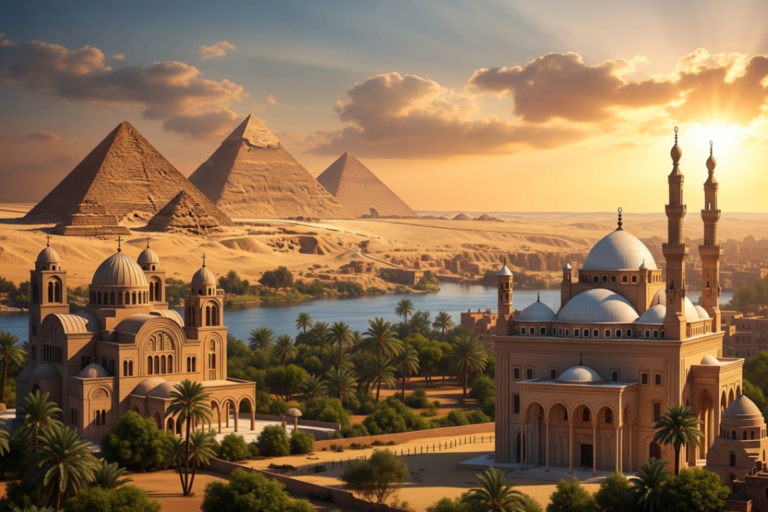
Sunni Islam is the state religion of Egypt, and most people in the country follow it. Egypt also has the biggest Christian community in the Middle East.
-
The Coptic Orthodox Church is the main Christian church in Egypt. It plays a big role in the country’s national identity and history.
-
Religious traditions from both Islam and Christianity are a big part of Egyptian society. These beliefs help shape laws, holidays, and daily life.
-
Egypt has lived with different faiths for a long time, but today there are challenges when it comes to religious freedom and some groups face discrimination.
-
The government works to encourage religious tolerance, but problems are still there, especially for faiths that are not officially recognized and in rural areas.
-
Ancient Egyptian religious beliefs were about many gods and life after death. These older ideas are still seen in Egypt’s cultural heritage.
Introduction
Religion plays a big role in Egyptian society. It is at the heart of life for people in Egypt and helps shape their national identity. There are two main religions in the country: Islam and Christianity. The vast majority of people in Egypt are Sunni Muslims, but there is also a large Christian group. In fact, Egypt has the biggest Christian community in the Middle East. Because of this, different faith groups live and work together, sharing their past and adding to the culture of the nation. Religion touches many parts of life, from the daily routines of people to the way national holidays are celebrated.
Historical Overview of Religion in Egypt
The religious history of Egypt is a long story. It shows how people’s beliefs have changed and lived together over time. From ancient pharaohs to today, faith has always been at the heart of Egyptian life. For thousands of years, Egypt has been the starting place for strong religious traditions. At first, there were many gods, and later the land became important for the abrahamic faiths, like Christianity and Islam.
This timeline shaped Egypt’s cultural heritage and how people live here. When Christianity came, it built a strong coptic community. This group is still one of the biggest parts of the christian population in Egypt today. After that, sunni islam spread across the land. It made Islam the state religion for the majority of the population. This mix of religious traditions is a big part of what makes egypt today what it is.
Ancient Egyptian Religious Traditions
Ancient Egyptian religious traditions were a big part of life for more than 3,000 years. This state religion was not like the religions with only one god that are common today. The people of Egypt believed in many gods and goddesses. They thought these gods controlled things in the natural world. The deities were close to people’s lives. Egyptians thought the gods could help them, so they did religious rituals like prayers and gave offerings to get their favor.
The pharaoh was important in all this. He acted as a go-between for the people and the gods. Because of this, the state used a lot of resources to build temples and to hold big ceremonies. These ceremonies were to keep things in order in the world. You can see how the state religion became a key part of the cultural heritage of Egypt. It was central to their identity.
Along with the big ceremonies and official religious rituals, people still had their own ways of asking for help from the gods. They prayed and used magic for their own needs. This mix of what the state did and what people did for themselves gave Egypt a rich religious life. It was not at all like the monotheistic beliefs that people in Egypt mostly follow now.
Introduction of Christianity to Egypt
Christianity came to Egypt in the middle of the first century. This was an important change for the country’s religious life. People say that Saint Mark the Evangelist started the Coptic Orthodox Church of Alexandria. This church became one of the oldest and most important christian communities in the world.
Early Christians in Egypt spread the faith fast. In time, it became the main religion in the area. The coptic orthodox church became a key part of life for many people. It made its own way of faith, church services, and ways of doing things. These traditions and church services were very important for the community.
Today, the coptic community is still the biggest christian group in the Middle East. It is a direct link to the first days of Christianity in Egypt. The coptic orthodox group keeps a strong spiritual and cultural heritage. They have kept this for almost two thousand years. Their place in Egypt shows just how deep the roots of christian communities are in the nation.
Arrival and Spread of Islam
The arrival of Islam in the 7th century changed Egyptian history and people deeply. Arab Muslim armies, following the Prophet Muhammad, came into Egypt. Over time, Islam slowly became the main faith. Many Egyptians began to change the way they worship, taking on new religious and cultural ways.
Sunni Islam became the biggest religious group and most people began to practice this form. This change helped make Islam the state religion, which it still is today. The values from Islam began to guide the law, how leaders work, and how people live each day. This time was the start of a new path in Egypt’s spiritual life.
With the rise of Islam, a new religious group joined the mix, making the Muslim majority and Christian minority that still exists in modern Egypt. This is a big part of what makes Egypt what it is now. Places like Al-Azhar in Cairo are known all over the world as top centers for Sunni Islam study and thought.
The Ottoman Era and Religious Dynamics
During the time of the Ottomans, which started in the 16th century, there were big changes in how religious groups were treated in Egypt. The Ottomans followed the way of the Sunni Muslims, and they usually let people from religious minority groups, like Coptic Christians and Jews, keep their own faiths. Their rules gave some level of religious tolerance and freedom.
The religious affairs of non-Muslims were mostly taken care of by leaders from their own groups. This was important because it let these groups run their own courts for things like marriage and inheritance. These courts helped people in these groups keep their own way of life in egyptian society.
Still, life was not always easy for non-Muslims. How they were treated often changed with different local leaders and with shifts in politics. Even with these ups and downs, the years of Ottoman rule kept the long-held idea of religious diversity in Egypt, which has carried on into the present day. This history shaped the way different religions get along now, and it still has an effect on personal status and religious tolerance in the country.
Religion in Modern Egyptian History
In modern Egyptian history, religion has always been a big part of building national identity and politics. After the 1952 revolution, there were big changes in how the state handled religious affairs. The government under Gamal Abdel Nasser pushed for a secular Arab kind of nationalism, but religion stayed strong and important in society.
The way the state deals with different religious groups has changed over the years. The Coptic Orthodox group, for example, has faced problems like being left out and having a hard time building churches or getting equal rights. At the same time, Islamic groups such as the Muslim Brotherhood have become key political groups. They play a big role in shaping both the religious freedom and social discussions in Egypt today.
Worries about state security often affect how the government deals with religious affairs. This has sometimes led to less religious freedom for some people. Egypt’s way of handling religious tolerance is not always easy. There are times when things move forward and other times when challenges remain. Making sure all citizens get equal rights and protections, no matter their religious identity, is still a work in progress.
Ancient Egyptian Beliefs and Practices
The ancient Egyptian religion was a lively system that touched every part of life for more than 3,000 years. People there believed in many gods and goddesses. These gods were thought to control nature and the world around them. Their beliefs were at the heart of their cultural heritage and their religious identity.
Unlike many religions today, which may have one main source of legislation, ancient Egyptian religious traditions were shared through big religious rituals, myths, and temple worship. The state religion put the pharaoh in a special place. He was seen as a god who had to keep the balance in the universe. Let’s look at some of the main things about these old beliefs.
Polytheistic Pantheon and Major Deities
Ancient Egyptian religious beliefs had many gods and goddesses. The people did not see these gods as ideas, but as real forces in the everyday world. They showed them with bodies like human beings and with the heads of animals. The gods were believed to rule over things like the Nile river flooding and the sun rising every day.
Some of the main gods were Ra, who was the sun god and thought to create all things; Osiris, who was in charge of the underworld and coming back to life; and Isis, who was the mother goddess with great magic and who protected her people. The stories about these gods were full of their close family ties and explained how people thought the world began and what kept it running right.
There were many religious rituals meant to respect and please these gods. Egyptians believed if they did the right ceremonies, life would stay good for everyone. The close link between the people and this whole group of gods is what makes ancient Egyptian religious traditions so different and special.
Afterlife Concepts in Ancient Egypt
The idea of life after death was at the heart of what the ancient Egyptians believed. They put a lot of time and energy into getting ready for what would come after death. They thought life would go on in another world. Their funerary practices were more than just saying goodbye to a loved one. The people thought these religious rituals were needed to help the soul move into the next world.
They held that the soul had to join with the body for life to go on forever. That is why mummification mattered so much. It kept the body safe and whole. They buried the dead with many goods, some food, and even texts such as the “Book of the Dead.” They thought these things would help the person deal with the dangers they might meet in the underworld, which they called the Duat.
The last part of the afterlife journey was called the “Weighing of the Heart” ceremony. Osiris led this important event. The heart of the person who died was weighed against a feather from Ma’at, who was the goddess of truth and justice. If their heart was light and had no sin, the soul was allowed to go into the Field of Reeds, which was like a never-ending paradise. This idea of judgment and life after death shows how the ancient Egyptians thought living with good morals was at the center of their religious affairs and their religious rituals.
Temples, Rituals, and Priestly Roles
Temples in ancient Egypt were not just where people went to pray. People thought they were the homes of the gods here on Earth. These religious institutions were big and powerful. They owned land and gave jobs to many people. Every day, priests took care of the statue of the god in the deepest part of the temple.
The priests followed a set routine for their work. They woke the god’s statue each morning, then washed and dressed it. They also gave it food and drink. Most people were not allowed into the most holy part of the temple. But the public got to join festivals and sometimes saw the statue in special processions.
Inside this religious group, priestly jobs were organized by level. High priests had the most power and worked as main go-betweens for the gods and the pharaoh. Other priests taught, managed land, or handled different ceremonies. All parts of this group worked together to keep things good with the gods and keep life running smooth.
State Religion and Daily Life
In ancient Egypt, the state religion was deeply tied into everyday life. The pharaoh was at the top of this, not just ruling as a king but seen as a god. People believed he was the living form of the god Horus. One of his main jobs was to be the high priest for everyone in the land. He did special rituals to keep Ma’at, which is the idea of balance and fairness, in order.
This way of believing was found everywhere in society. Big festivals for the gods brought people together, and building large temples and pyramids took help from the whole country. All of this made the state religion even more powerful. Things that had to do with gods and the state could be seen in the calendar, the way people made a living, and even in the laws.
But religion wasn’t only about big events or the pharaoh. It was part of daily life for regular people too. Each person had their own religious practices. They wore special items to protect themselves, talked to the gods when they needed help, and brought little gifts to their local shrine. Egyptians did not belong to a religious group the way people might today. Still, most of them believed their personal status and their good life came from how the gods saw them and from their own way of practicing religion.
The Rise and Influence of Christianity
The rise of Christianity in Egypt brought a big change to the way people worshipped. Over time, the old pharaonic traditions were replaced by the new faith. The Coptic Orthodox Church of Alexandria became the main religious group. For many years, it was at the center of life for a lot of people in Egypt. The Coptic community grew strong and made its own customs and groups.
Today, Egypt has the largest Christian population in the Middle East. The Coptic Orthodox Church is still a big part of life for many. There are other christian communities too, like the Coptic Catholic and Armenian Apostolic churches, which add to the wide mix of faiths in the country. We will now look at how Christianity grew in Egypt and what lasting marks it left on people and the land.
Early Christian Communities in Egypt
The first Christian communities started in Egypt very early in the history of the faith. People say St. Mark the Evangelist came to Alexandria around the middle of the 1st century AD and brought Christianity with him. The new faith grew fast in this city by the sea. It first spread among Greek-speaking people in cities and then reached the people in the countryside who spoke Egyptian.
The people in these early groups became a strong religious group. They often had to deal with troubles and even danger from the Roman rulers. Still, they met for prayer, helped each other, and built close ties. The Coptic Orthodox Church became their main support and leader. It gave the growing Christian communities a way to be together and to grow.
Church services became the heart of their life. People would gather there for prayer, learning, and to be with others. This time of growth turned the Coptic Orthodox Church and its followers into a big part of life in Egypt. Because of this, the faith went on to become the main religion of the country for many years.
The Role of the Coptic Orthodox Church
The Coptic Orthodox Church has been a key part of the Coptic community for almost two thousand years. It is one of the oldest groups in Christianity. The Coptic Orthodox Church has helped shape who the Coptic people are and kept their old traditions safe in Egyptian society. The Pope of Alexandria leads the church and is seen as taking the place of St. Mark. He has a lot of power in the church.
The church has not just focused on faith. It also has been important in social and cultural life. Thanks to its parishes, the Coptic Orthodox Church gives people education, healthcare, and support for daily life. Church services are much more than just time to pray. They are big social events that keep the coptic community together.
Christian leaders in the church are also strong voices for the coptic community. They speak up for their rights and deal with the politics inside Egyptian society. Their work has helped the coptic orthodox community stay strong through hard times and holds their special place in Egypt’s culture.
Christian Monasticism in Egypt
Egypt is known as the birthplace of Christian monasticism. In the 3rd and 4th centuries, many Christians wanted a deeper life with God. They decided to give up their normal lives and spend time in the desert. People like St. Anthony the Great and St. Pachomius started this way of living. Some lived alone, while others formed small groups of monks focused on prayer and a simple life.
These early groups grew and became important religious institutions. They were centers for teaching, art, and learning. They played a key part in building the Coptic Orthodox Church. Monasteries became well-known places. Many people came from different parts of the Christian world for help and answers.
The ways started by the desert fathers and mothers have lasted for many years. Today, Egyptian monasteries are still busy places for worship and quiet thought. Monks and nuns there give their whole lives to living simply and praying. Their strong link to many old rules is still a big part of the Coptic Orthodox Church and its church services.
Christianity’s Cultural and Artistic Legacy
Christianity has played a big role in Egypt’s cultural heritage and art. During the Coptic period, artists created a special style. This style mixed old Egyptian art, Greco-Roman ideas, and Christian symbols. You can see this in the bright paintings on old monastery walls, the shaped designs on church doors, and the colorful pictures that show saints and stories from the Bible.
The coptic community also kept this tradition alive in their books. Coptic writers made beautiful copies of the Gospels and other holy texts. The Coptic language, which comes from the ancient Egyptian language and uses Greek letters, was mostly kept alive because the church used it for worship and prayer books.
The coptic community feels very proud of this cultural heritage. It is also a big, important part of Egypt’s national story. It lets people stay close to the early years of Christianity in Egypt and reminds us of a time when people made new kinds of art and showed deep faith—a time that still encourages artists and people who study history today.
The Advent and Dominance of Islam
The start of Islam in Egypt in the 7th century changed a lot for the country. It was the time when the society, culture, and religious identity began to look very different. As many years went by, Sunni Islam became the religion most people followed and was made the state religion. The rules of Islam, called Islamic law or Sharia, then became a main source of legislation in Egypt. They affect a lot of what people do every day.
Today, Islam is a big part of life in Egypt. Most of the people in the country follow it. You can hear the call to prayer from the minarets, and people take part in holidays that are special to their faith. Now, let’s talk about how Islam spread across Egypt and the main groups that keep it strong.
Spread of Islam Across Egypt
After the Arab conquest in the 7th century, Islam started spreading across Egypt. It did not happen fast. People changed their faith little by little over many years. At first, Muslim leaders set up their capital and power centers in the north. But the religion slowly moved to Upper Egypt and other places.
As time passed, more people became part of the new religious group. Islam went from being the belief of leaders to being the state religion for almost everyone. Arabic became the language for work and government. Most people got to enjoy social and money benefits when they joined the bigger group.
By the medieval years, Sunni Islam was fixed as the state religion. Most people followed it. Mosques began to rise in many spots. With this, Islamic culture grew strong. All of these changes made Egypt a Sunni Muslim country like the one we see in Egypt today.
Sunni Islam: Mainstream and Schools of Thought
Most Muslims in Egypt follow Sunni Islam. Sunni Islam is the biggest branch of the religion in the world. It is the main form of Islam in the country, and its beliefs shape public life and the way people talk about religion. Followers of Sunni Islam say that the community should choose who comes after the Prophet Muhammad.
Inside Sunni Islam, there are different schools that show how to understand islamic law. In Egypt, the Shafi’i and Maliki schools were important in the past. Now, the legal system uses ideas from many schools. Sharia is a main source of legislation in the Egyptian constitution.
This system guides the way life works for Egypt’s largest religious group. It touches personal things, like marriage and inheritance. It also affects wider social rules. How people interpret and use these teachings is at the heart of religious discourse in Egypt today.
Shia and Minority Islamic Sects
Sunni Islam is the main faith in Egypt. But there is also a very small group of Shia Muslims. Shia Islam is the second-biggest branch of Islam in the world, yet there are not many followers of it in Egypt. Long ago, the country was ruled by the Shia Fatimid dynasty. They founded Cairo in the 10th century. Later, Egypt went back to having Sunni Islam as the leading faith.
Today, Shia Muslims in Egypt follow their religion in quiet ways. This religious group does not show their religious affiliation openly. Many people may not know if a person is part of this group because the social climate makes it hard to speak out. They sometimes deal with negative views from other people and from those in power.
Besides the Shia, Egypt has people who follow Sufi orders. Sufism is not its own religious group, but it is a spiritual part of Islam. Sufi orders are old in Egypt, and they care about a person’s inner faith and spirit. These people are still part of the Sunni Islam community. Their way of worship and how they honor saints is what makes them different from others.
The Al-Azhar Mosque and Islamic Scholarship
The Al-Azhar Mosque was started in Cairo in 970 AD. It is one of the most important religious institutions in the Islamic world. For more than a thousand years, it has been a main place for learning about Sunni Islam. The mosque is connected to Al-Azhar University, and students come from all over the world to study there.
Al-Azhar has a key part in guiding religious thinking in Egypt and other places. The scholars at Al-Azhar give fatwas, which are religious rulings. They also write books and join debates about faith. Many people think of this place as the main center of moderate Sunni Islam. It is a trusted authority when it comes to religion.
Because it is so well-known, Al-Azhar has a lot of influence in Egypt. It works closely with the government and offers advice about religious topics. Al-Azhar also helps run many schools and mosques. The Grand Imam of Al-Azhar is very well respected in Egypt and in many other parts of the Muslim world.
Other Recognized Religions in Egypt
In Egypt, Islam and Coptic Orthodoxy are the largest faiths. The government also recognizes two other Abrahamic religions. These are Judaism and other Christian groups. There are some small religious groups, like Coptic Catholic and Protestant communities. They have been in the country for a long time, even though there are not many of them. Their legal status lets them keep their own religious institutions and follow their practices.
But religious freedom in Egypt has limits. The state does not recognize religions outside Islam, Christianity, and Judaism. This creates problems for other minorities. Now, let’s look at these recognized and smaller religious groups in Egypt.
Judaism: Historical and Modern Presence
Judaism has been in Egypt for thousands of years. There was once a large and active Jewish community in cities like Cairo and Alexandria. They played a big role in the culture and business life of the country. This religious group had their own synagogues, schools, and places to meet.
But things changed in the 20th century. After Israel was formed and Arab nationalism grew, the vast majority of Jews left Egypt. Now, very few Jewish people still live there, and most of them are in Cairo.
Even though only a handful of people are left, Judaism still has legal status as a religion in Egypt. The government has also started to protect some important Jewish sites, like the Eliyahu Hanavi Synagogue in Alexandria. These steps show the country’s diverse history, but there are still questions about religious freedom for the other groups.
Catholic and Protestant Christian Communities
Besides the coptic orthodox church, Egypt has other christian communities. Some of these are Catholic groups, like the coptic catholic church. This group connects with Rome but keeps its own ways and leaders. There are also Greek, Maronite, and Armenian Catholic groups. Each has its own religious institutions.
Protestant churches came to Egypt in the 19th century. This happened when American and European missionaries brought their faith. These churches are now called the Evangelical Church of Egypt. They have their own schools, seminaries, and groups for the community.
These christian communities are smaller than the coptic orthodox church. Still, the state does officially recognize them. This lets them have freedom to worship, build churches, and run their own work. They help make Egypt’s christian community more diverse.
Other Small Religious Groups
There are some small groups in Egypt, besides the big known faiths, that go through a lot of problems. The Baha’is and Jehovah’s Witnesses are examples of these groups. The state does not recognize them. This means their legal status is not clear, and this causes big problems for people in these groups.
Since the state does not officially recognize them, they cannot build places to worship or start places for their community. People in these groups have a hard time getting basic papers, like national ID cards or marriage certificates. The state only lets you say you are Muslim, Christian, or Jewish on these documents.
This makes a big difference in their lives. It also puts many limits on religious freedom and the freedom of belief. The constitution of Egypt says people should have these freedoms, at least on paper. But in real life, people with a faith the state does not recognize are in a tough spot. They often face rude treatment from others and get watched by the state too. All of this shows that there is a big gap between what the law says and what really happens for religious minorities in Egypt.
Contemporary Religious Demographics
Knowing about the current religious groups in Egypt helps you see how the country works. Most people in Egypt are Sunni Muslim. They are the vast majority of the population and can be found in many places in the Middle East. The next biggest religious group in Egypt is the Coptic Christians. They make up most of the Christian population in the country. In fact, they are the biggest Christian group in the whole Middle East.
The government does not often collect official numbers on religious affiliation. So, most figures you hear are just estimates. Even though the exact number may not be clear, you will notice how these two main faiths touch daily life. You can see their influence in big cities and in the rural areas of Upper Egypt. Now, let’s take a closer look at how many people follow each group and what is happening with religious identification in Egypt.
Population Breakdown by Faith
The religious demographics of Egypt are dominated by two main faiths. While official census data on religion is not publicly available, estimates provide a clear picture of the country’s religious composition.
Sunni Muslims make up the largest religious group, comprising an estimated 90% of the population. They are spread throughout the country and their faith, Sunni Islam, is the state religion. The remaining 10% of the population is primarily Christian. The vast majority of this Christian population belongs to the Coptic community, specifically the Coptic Orthodox Church.
Other religious groups are very small. This includes other Christian denominations like Catholics and Protestants, as well as the tiny, historic Jewish community. Unrecognized faiths, such as the Baha’i Faith, are not counted in official estimates.
|
Religious Group |
Estimated Percentage of Population |
|---|---|
|
Sunni Muslim |
~90% |
|
Coptic Christian |
~9% |
|
Other Christian |
<1% |
|
Other/Unspecified |
<1% |
Regional Differences in Religious Affiliation
Religious affiliation in Egypt is not the same everywhere. There are clear differences in each area. The Christian population is found more in some places. In Upper Egypt, areas like Minya and Asyut have been home to some of the biggest Christian communities for a long time.
In other parts, there are mostly Muslims. The rural areas of the Nile Delta have very few Christians, especially when compared to cities or places in Upper Egypt. Big cities like Cairo and Alexandria are more mixed. You will see many people from christian communities and the Muslim majority living in the same place.
Some cities, like Port Said by the Suez Canal, are known for being more open to all kinds of people. This is because they were important for trade with the world for many years, so many groups came and stayed through time. Even with these differences, Sunni Islam is the state religion. It is the main faith in every part of Egypt.
Urban vs. Rural Religious Practices
There are clear differences in religious practices between city areas and rural areas in Egypt. In big cities like Cairo and Alexandria, life moves faster. People in the city care about religion, but how they show it can change from place to place. These changes come from new and global ideas. People in cities also have more types of religious institutions to go to and listen to.
But in rural areas, religious practices are more old-fashioned and focus a lot on the whole group. Religious rituals are a big part of how people spend each day. The things people expect from each other come from their religious values. People in these places often stick together more. Leaders like the imam or priest in the community have a lot of say.
In the country, people often mix folk customs with their main religious rituals. For example, in a small village, a “moulid” (a party for a saint) might bring everyone together. In a big city, this kind of event is not as common or as important.
Trends in Religious Identification
Trends in religious identification in Egypt show that faith is a big part of people’s lives and the country as a whole. For most people, being in a religious group is not just something private. It is a key part of who they are, and it is something they get from birth. It is also written on their main papers. Because of this, people do not change their religion often, and if they do, it can be hard with family, friends, and the law.
In the last few years, more people now show their faith openly. You can see this in how many Muslim women wear the hijab, and how more people go to mosques and churches. This shows that each religious group feels their religious identity is even stronger now.
At the same time, there are more quiet talks about religious freedom and about what role religion should have in the government. Many young people, because they are connected to the world, sometimes ask questions about old traditions. Even while public religious acts grow, these young people help make the changes. This means religious identity and national identity are now changing in Egypt in new ways.
Islam’s Role in Egyptian Society
Sunni Islam is followed by the vast majority of people in Egypt. It is the main faith in Egyptian society. The effect of Sunni Islam can be seen in many parts of life. It shapes the legal system, daily habits, and social rules. Most Egyptians set their day by the five daily prayers. The sense of community and family is also built on Islamic values.
You can find the teachings of the Prophet Muhammad and the ways of Islam in all places of Egypt. They are there in crowded cities and in quiet rural areas. This section will look at some main Islamic customs, festivals, and ways of living that shape everyday life in Egypt.
Islamic Practices and Festivals
Daily life for many Muslims in Egypt follows a pattern shaped by important Islamic practices. One of the biggest parts of life for them is Salat, which means the five prayers that happen every day. You can hear the call to prayer, or Adhan, from mosques all over the country. These prayers help people remember God again and again throughout their day.
Religious festivals are some of the biggest events in Egypt every year. The whole country takes part, and they are seen as national holidays. These celebrations are marked by special religious rituals. People come together with their family, give help to the poor, and share joy with friends. During these times, the community becomes closer and their bonds, both daily and spiritual, get stronger.
Two of the main religious festivals are:
-
Eid al-Fitr: This is the “Festival of Breaking the Fast.” It comes once Ramadan is over. For three days, you will see people sharing meals, wearing new clothes, and visiting with family and friends.
-
Eid al-Adha: Also called the “Festival of Sacrifice,” this day remembers how the Prophet Ibrahim was ready to sacrifice his son. On this day, animals are sacrificed as part of the religious rituals, and the meat is given out to family, neighbors, and those in need.
The Significance of Ramadan
Ramadan is very important in Egypt. It is more than just a religious event; it is a big part of the culture. Most people in Egypt are Muslims, and they take part in fasting during this month. They do not eat, drink, or meet other needs from dawn until sunset. This fast, known as Sawm, is one of the Five Pillars of Islam.
During the days of Ramadan, people spend more time thinking, praying, and helping others. At night, everything changes. When the sun goes down, families break their fast with a meal called Iftar. The streets of Cairo and other cities come alive. People go out, families meet, and special foods fill the tables. You can see colorful lanterns (fanoos) hanging around the city.
This time brings extra meaning to many. There is a stronger feeling of the community. Many follow the religious rituals, including the nightly Tarawih prayers at the mosque. The month ends with Eid al-Fitr, a happy festival. This is what many in Egypt look forward to every year.
Friday Prayers and Mosques
Friday is the most important day each week in Islam. The congregational Friday prayers, called Jumu’ah, are a key part of Islamic life in Egypt. On this day, Muslims come together at mosques. The imam gives a sermon, known as khutba, and then everyone performs a special prayer as a group. For men, it is seen as their religious duty to go.
Mosques are the main religious institutions among Muslims. They are used not just for prayer, but also for learning, meeting, and social help for people in the community. In Egypt, many mosques are managed by the Ministry of Awqaf. This group often decides what the Friday sermon will be about.
The weekly Friday prayers help strengthen community ties and faith. It is normal in Egypt to see full mosques, with people overflowing onto the streets around them. This shows the big role that worship as a group still has for Egyptian Muslims.
Islamic Family and Social Structures
Islamic rules shape the way families and society work in Egypt. The Islamic family is seen as the most important part of egyptian society. There is a big focus on family ties, showing respect for elders, and marriage matters a lot. Family life is often led by the father, who is the main figure at home.
Laws about things like marriage, separation, and inheritance are based on religion. Most people, who are Muslim, follow rules that come from Islamic Sharia. This means your personal status in the law connects with your religious affiliation and the religious group you are part of.
These family and religious rules help people stay close and united in egyptian society. Family and religious identity fit closely together. When big events happen, like a birth or a wedding, people celebrate them in ways that show these old beliefs still shape their lives today.
The Position of Christianity Today
Christianity in Egypt today shows great strength and a strong connection to its roots. The Coptic Orthodox Church makes up the vast majority of Egyptian Christians. This church is active and holds a lot of influence. The Coptic community lives mostly in Upper Egypt and big cities. They play a big role in the nation’s life and hold tight to their religious identity.
Even though they make up a smaller group, the Christian community is seen in many parts of Egyptian life. Christian leaders hold important places in public life. Church services are at the heart of the community. Let’s take a closer look at what the Coptic Orthodox community brings, how they celebrate, and the challenges they face.
The Coptic Community’s Influence
The Coptic community may be small in number, but it has a big role in Egypt. It is the largest non-Muslim religious group in the Middle East. The Coptic community is a key part of Egypt’s story. Many in this group have become well-known in business, arts, and politics. They help push the country forward.
Christian leaders, especially the Pope of the Coptic Orthodox Church, hold a lot of respect. They have strong moral power in the country. These leaders speak up for the coptic community. They talk with the government about the things that matter and work to bring people together. The way the church is set up gives great support to their people.
You can really see the strength of the coptic community in everyday life. Churches are not just for church services or prayer. They are always busy with youth groups, school help, and other services. These church gatherings help people feel close to each other and hold on to their special traditions as coptic orthodox. This helps keep their identity strong.
Christian Holidays and Celebrations
Christian holidays play a big part in the religious practices of Egypt’s Christian community. These are special times for worship, for family to come together, and for keeping old traditions. Some of these holidays are very important and be counted as national holidays, showing the country’s respect for its Christian history.
The government makes Coptic Christmas an official holiday for everyone. So all Egyptians can join in the happiness. This move is seen as a sign of national unity. During these holidays, church services see many worshippers, and people cook special meals at home.
Key Christian holidays celebrated in Egypt include:
-
Coptic Christmas: This is on January 7th and is the top holiday for the Coptic Orthodox religious group. People start with a 43-day fast. At midnight, there is a special mass.
-
Easter: After a 55-day fast called the Great Lent, Easter arrives. This day is full of joy because it marks the resurrection. People go to church services and have big family meals.
-
Sham el-Nessim: This event comes from old Pharaonic roots. It happens on the Monday after Coptic Easter, and both Christians and Muslims take part in it with celebrations.
These holidays help people come together and show what is good about the year for both individuals and the whole country.
Churches and Monasteries in Egypt
Egypt has some of the oldest churches and monasteries in the world. Many of these places are still active religious institutions today. They show the long and rich Christian history in the country. You can find old monasteries in the Eastern Desert and see historic churches in Old Cairo. These buildings are both beautiful and special for the people.
Monasteries like St. Anthony’s and St. Catherine’s have been centers for the Coptic Orthodox Church for over 1,500 years. They hold important things like old icons, manuscripts, and art used for worship. People from the country and visitors come to these places for prayer, peace, and to take part in their faith.
The churches all over Egypt are at the heart of local Coptic Orthodox communities. In the past few years, the government has made it easier to legalize and build new churches. This is a big step for the christian population. For many, these churches are more than buildings. They are a sign that faith is alive and strong for us all.
Social Challenges Facing Christians
Christian communities in Egypt are part of the country, but they still face many social problems. One big challenge is the way people treat them in daily life. There is often discrimination at work, in places to live, and in social circles, especially in rural areas.
There are also worries about freedom of belief. The law says everyone should have religious freedom, but there are still tough rules about building churches and getting permission for them, even if things are better now. Personal rights are another issue. It can be hard for some people to change from Islam or say they do not have a religious identity at all.
At times, there are problems with sectarian violence. These are often caused by local fights, and while not common, they do happen now and then. Media reports talk about these events, and that can make things harder for both sides. Fixing these challenges is important. It will help all Egyptians get equal rights and make the country a more open place for everyone.
Minorities and Less Common Beliefs
Apart from the main faiths in Egypt, there are some smaller religious groups and beliefs. The way the state deals with these groups can be very different. Some Christian and Jewish groups get official approval. Others, like people who follow the Baha’i Faith, do not have any legal status. This makes it hard for them to take part in community activities or go about their daily life.
This situation shows the challenges for religious freedom and tolerance in Egypt. When the state handles religious affairs, it gives certain rights to well-known religions but not to others. Because of this, some groups do not feel safe and have trouble living openly. Now, let’s look into what these small groups go through.
Baha’i Faith in Egypt
The Baha’i Faith has been in Egypt for more than a hundred years. But, this religious group has had many big problems because it is not recognized by the state. In 1960, the government closed all Baha’i institutions with a presidential order. The faith has had no legal status since then. Because of this, the Baha’i community cannot set up any official places of worship or community centers.
The fact that there is no recognition gives this group a lot of trouble in their daily life. A main problem has been with the national identity card. In the past, people could only choose Muslim, Christian, or Jewish as their religion on their ID cards. So Baha’is could not get important papers for a long time.
In 2008, a court said that Baha’is could leave the religion part on their ID cards blank. This gave them some help, but it did not solve everything. This is not the same as full legal status for the Baha’i Faith. People in this religious group still cannot freely practice their religion. Their marriages are not recognized by a Baha’i personal status law.
Limitations for Smaller Religious Groups
Smaller religious groups in Egypt face many limits. This is mostly because they do not have legal status. The government only recognizes Islam, Christianity, and Judaism. If you are in another religious group, you do not have legal coverage. This makes it hard for these groups to enjoy religious freedom.
When you do not have legal recognition, your group cannot build or register a place to worship. You also cannot set up community groups or have your personal status laws about marriage, divorce, or inheritance accepted. These people have to practice their faith in private. They often fear people around them and worry the state may step in.
There have been legal challenges to this system, but most have not worked. For example, the Supreme Administrative Court has said the government does not have to recognize some faiths. This backs up how things are now. So, smaller religious groups have very few ways to gain legal status and get the basic rights that people from the three accepted religions get.
Unrecognized and Underground Beliefs
For people in Egypt whose religions are not recognized, faith is often something they practice in secret. This means that groups like Jehovah’s Witnesses and atheists have to keep quiet about what they believe. If they share their ideas with others, they may face risk or trouble from state security. Because there is no legal status for them, they have to keep their activities inside and away from people who might report them.
Atheism is not a crime in Egypt, but egyptian society still looks down on it. If someone comes out as an atheist, they might get accused of saying bad things about religion, which is not allowed by the law. This makes many people with these ideas feel afraid. The best way for them to stay safe is to keep their beliefs private.
The government usually acts out of fear for social peace and national security. It sees some unrecognized religions as a possible cause for trouble. Because of this, religious tolerance can be hard to find. The right to have your own beliefs is there, but you do not really get the freedom to show or practice faiths that are not approved by the state.
Religion and Egyptian Law
Religion plays a big part in how Egypt’s law and government work. The constitution says Islam is the state religion. It points to Islamic law, or Sharia, as a main source of laws. This has a strong effect on many things, like family rules and what society sees as right or wrong. It also shapes the legal status of all people in the country.
The constitution says people have religious freedom. But, this is not a complete right and is shaped by the state religion’s rules. Because of this, religious minorities face a complex mix of rules, especially with personal status and how the law sees their groups. Let’s take a closer look at how faith and law come together in Egypt.
Constitutional Guarantees of Religious Freedom
Egyptian law has rules to support the freedom of belief. This idea is a big part of the nation’s main rules. Article 64 of the Egyptian Constitution says people have the right to follow and practice their religion. The state wants to build a place where many religions can live together. This makes it possible for groups like the Coptic Orthodox Church and Sunni Islam to both belong. The law also cares about smaller religious groups and their rights. Still, making these promises real in people’s lives can be hard. There is a need for more talk and support in Egyptian society to be sure that all groups, like the Coptic Orthodox, feel safe and respected.
Sharia and Its Application
Sharia has a big part in how life is run in Egyptian society. It affects things people do every day and this is seen in both private and public tasks. Most of the laws people follow are based on how the vast majority sees things, especially the Sunni Muslim group. Many daily things, like marriage, inheritance, and family matters, follow Islamic law. This helps set cultural rules and adds to national identity.
The rules in Sharia law have also shaped how religious affairs are looked after. Even though freedom of belief is important to everyone, Sharia plays a main role in talks about religious practices for all groups. This includes the Coptic Orthodox group and other Christian communities.
Legal Status of Religious Minorities
Legal recognition for religious minorities in Egypt is key to shaping the role they have in Egyptian society. The Coptic Orthodox Church is one group that is officially recognized. But there are still challenges, like issues with church construction and laws about personal status. Copts and other Christian communities often deal with legal problems that affect their daily lives. There can be limits on their religious rituals and on being able to build new places to pray.
Events like Coptic Christmas show the strong cultural heritage and important place of these groups in Egypt. These events also remind people of the value they bring to the country. This goes on while people in Egypt keep talking about religious freedom and national identity, thinking about what these things mean for everyone.
Family Law and Religious Courts
Family law in Egypt is closely tied to religious courts and affects the personal status of people from many faiths. For Muslims, Islamic law guides things like marriage, divorce, and inheritance. These cases are usually handled by Sharia courts. For those who follow the Coptic Orthodox faith, the Coptic Orthodox Church has the right to manage these same matters, making sure their own religious traditions are followed.
This setup shows how the different beliefs in Egyptian society have shaped everyday life. It also affects family life and what people expect from each other. By looking at how these legal rules work, you can see how religious identity and personal rights fit together in Egypt. This brings out both the country’s rich cultural heritage and the ongoing talks about religious freedom.
The Influence of Religion on Culture
Religion has a big role in shaping the culture we see in Egypt. Many important moments in life are marked by religious rituals. The Coptic Orthodox Church and Islam both have great influence, and their spiritual ways touch everyday life. You can see religious themes in traditional music, art, and stories. These things let both Coptic and Muslim groups celebrate their rich cultural heritage.
How people dress also shows their religious identity, since there are special clothes for both daily life and big festivals. When it comes to food, religious dietary rules shape what people eat. These food customs make Egyptian society even richer, bringing everyone together as they all share their own special traditions.
Religious Art, Music, and Literature
Egypt has a deep history filled with art, music, and stories that show the beliefs and ways of different faiths. You can see this in the detailed art of the Coptic Orthodox Church and the moving music in Islamic prayers. Each type of art helps people feel close to their faith. There is also traditional music that plays a big part in religious rituals and special times, like Coptic Christmas and Ramadan. This helps people come together when they gather to celebrate these moments.
Stories and books also help people from different faiths talk and learn from each other. They often highlight shared moments and history. These forms of art and culture do more than just support religious identity. They help everyone feel that they are part of one group, building national unity while letting many different voices be heard.
Religious Dress Codes and Symbols
In Egyptian society, what people wear for their faith is a big part of who they are. The hijab is important for many people following Sunni Islam. It is seen as a sign of modesty. There are others in the Coptic Orthodox group who put on special clothes during church services, especially when it is Coptic Christmas. These ways of showing faith help many people feel strong about their own religious identity. At the same time, it helps bring communities together in Egypt today.
People do not just keep these traditions in church or at home. You can see them in everyday life, too. Some wear symbols on their clothes or as jewelry. These things show the strong cultural heritage in the country. They help show how many different beliefs mix together in Egypt today.
Impact on Food, Customs, and Daily Habits
Food, customs, and daily habits in Egypt are shaped by the country’s many strong religious beliefs. Most people follow Muslim dietary laws, so they eat only halal foods. This means many menus all over Egypt have special choices to meet these needs. On the other hand, Coptic Orthodox traditions also play a big role. For example, during some fasts, there are rules about what foods people should not eat, and this can change their daily meals.
Festivals and religious events are a big time for families and the community to come together in Egypt. These times help everyone feel close and part of one group. Both Islamic and Christian events add to the life and color of egyptian society. They show how people share customs, mix old and new ways, and keep a sense of both harmony and diversity.
Religion in Festivals and National Holidays
Celebrations in Egypt often bring together many different religious traditions. This mix has made a rich part of cultural life in the country. Major festivals like Coptic Christmas and Eid al-Fitr let families and their friends unite. During these times, you can see religious rituals that help build national unity. In the country, the vast majority of people, whether they are Sunni Muslims or Coptic Christians, take part in these happy days. For many, these celebrations are a big part of egyptian society.
National holidays also show how religious and civic life come together. For example, events like Revolution Day remind people of the strong ties between faith and love for their homeland. These festivals are more than just parties. They help keep social bonds and cultural heritage alive in everyday life.
Education and Religious Instruction
In Egypt, both school lessons and religious teaching have a big impact on how students see the world. In public schools, lessons about Islam are often included because Sunni Islam is the main religion and it shapes culture in the country. At the same time, top places for learning like Al-Azhar give deep religious lessons. Students come from all sorts of backgrounds, such as the Coptic Orthodox and other Christian communities, and this helps build national unity. The books used in schools mostly share points from the Islamic view, but they also talk about different religions in Egypt. This mix helps people in Egyptian society understand faith in new ways. It also helps start talks about freedom of belief and personal rights.
Teaching Religion in Public Schools
In Egyptian public schools, students learn about religion, and this is very important. The state religion is Islam, so most students are taught about it. Kids from christian communities, like those who follow the coptic orthodox church, also have their own religious classes. These lessons help students understand their faith. They also work to teach kids about religious tolerance.
The curriculum includes main ideas of Islam. It can also tell about abrahamic faiths and the cultural heritage of Egypt. Teachers want the class to be a place where everyone is respected. Students can talk openly about their own religious practices and listen to what others have to say.
Al-Azhar Educational Institutions
Al-Azhar schools have a long history in Egypt and are known for their strong effect on people. These schools, which are made up of both universities and seminaries, bring in students from many different faiths. The mix of students helps make a place where people can learn with respect and understanding. Many people who finish their studies here go on to have important jobs in the coptic community and in the whole egyptian society. They help build bridges between people through talks between different faiths.
The system at Al-Azhar teaches a lot about sunni islam, but it also talks about how important it is to show respect and give space for religious freedom. Because of this, these schools help bring national unity to egypt today, bringing people together from different backgrounds.
The Role of Religious Identity in Higher Education
In Egyptian higher education, religious identity has a big impact on how students feel and act. Many students, especially from the Coptic Orthodox community and Sunni Muslim group, find that their faith is a big part of their life at school. It shows up in the way they make choices and how they take part in class.
Universities become places where people can talk about their religious beliefs. This helps everyone understand each other better. Many schools also add religious studies to their courses. This brings students closer by teaching them about the different parts of Egyptian history and culture.
The way education and faith mix in these schools shows the effort to create an open and caring space. It helps keep national unity strong between all religious groups.
Religious Content in Textbooks
Educational materials in Egypt tell us a lot about religious life there. The school textbooks show Islamic teachings and also talk about other beliefs, like the Coptic Orthodox Church. This helps show how religious tolerance is important in Egyptian society. Sharing lessons from different faiths can help students understand one another better and support national unity, even though there are many types of people in the country.
But, there are still issues. Some groups think their beliefs are not talked about enough in these books. That can change how people see religious practices. Finding a good balance in this kind of content can help students respect every faith. That can make society come together as one strong group.
Religion in Government and Policy
Religion has a big part in how Egypt makes rules and runs its government. The state religion is Islam, and it shapes many laws and the way things are done. Islamic law is often the main source of legislation. Leaders from different faiths are part of the government. They help bring the communities together and talk about problems. This work also helps build national identity and brings people closer, even if they are different.
But there can still be problems, especially with religious freedom. The Coptic community and other minorities sometimes face challenges. The government and people in Egypt today keep trying to talk and work on these issues. They want to find ways for more religious tolerance and decide how much faith should show in public life.
Representation in Government Positions
In Egypt today, the way people be shown in government jobs shows the country’s different religions. The coptic community makes up a smaller group, while the vast majority of people are Sunni Muslims. Still, the Coptic community helps keep national unity strong. Even so, the political rights of religious minorities like the coptic orthodox sometimes face problems, which can make it hard for them to be seen in leading government spots. The state religion controls many laws, so non-Muslims, like those in christian communities, often find their chance to take part limited. This brings up talks about freedom of belief. Even with all these problems, people from the Coptic Orthodox Church and other christian communities try hard to help everyone be included in politics. They work to push for more talks and understanding between all faiths.
The Role of Religious Leaders in Politics
Religious leaders in Egypt have a big role in politics. They help connect faith and the way the country is run. Many important people, especially from the Sunni Islam community, talk about things that change the views of the public and shape policies. Their jobs are not just about guiding people in a spiritual way. They also speak up for laws that fit with religious values, which can affect national identity and how the nation stays together.
The Coptic Orthodox Church is also key. Its leaders stand for the Christian minority in Egyptian society. They often work with others in politics to push for religious tolerance and keep the peace in Egypt. This makes them very important when people talk about politics and the future of the country.
Government Regulation of Religious Affairs
Government oversight is very important for religious affairs in Egypt. The Ministry of Awqaf manages mosques and checks all Islamic activities. It works to make sure everyone follows Islamic law. This law is the main source of rules in the country. The main goal of this is to keep national unity and stop any kind of extremism. This also shows the government’s promise to support religious tolerance in egyptian society.
Coptic communities and other religious groups live in this system, too. They want to get official recognition for their religious practices and rituals. There is a balance between giving people freedom of belief and keeping state security safe. This balance guides the legal status of all religious practices. Because of this, people often talk about these issues in egyptian society.
Issues of Religious Legislation
The laws about religion in Egypt have a big impact on religious freedom and people’s daily practices. In the country, Islamic law is mixed with state laws. This mix sometimes makes it hard for non-Muslims, especially when it comes to questions like personal status. For example, when there are plans for new churches or when any religious groups want to be recognized legally, every step in the process gets checked very closely.
The Ministry of Awqaf works to control religious affairs, but it can sometimes have issues with how the Coptic Orthodox Church works on its own. These problems show just how tough it is to keep national unity while also allowing different religious identities to have space in Egyptian society.
Freedom of Religion and Restrictions
Freedom of belief in Egypt is there, but there are some limits. The laws control many things about religious practices. This includes rules about building new churches and about how religious institutions run. Most of the people in Egypt are Sunni Muslim. But there are other groups, like Coptic Christians and some other faiths, who can have problems using their rights.
The government watches over religious buildings and asks for them to be registered. This can make it hard for people to show their beliefs. People need to talk about these rules to help the country move toward more religious tolerance. If communities work together and talk more, it will help everyone practice their beliefs in a better way. This will make it possible for all people, from the majority of the population and also from smaller groups, to have freedom when it comes to their religion.
Laws Affecting Religious Practices
In Egypt, laws about religious practices are closely connected with how people live. The Egyptian Constitution says people have freedom of belief. But there are many rules that control what religious groups can do and how they show their faith.
For example, the Coptic Orthodox Church has a long history. But to build new churches, the group must get approval from the government. This shows the balance between the state religion and the rights of smaller groups.
Also, laws that deal with family issues, like marriage and inheritance, are based on both Islamic and Coptic customs. These personal status rules do not just touch people’s private lives. They are also part of the bigger story in Egypt about religious tolerance and what creates the country’s national identity.
Government Oversight of Religious Buildings
The Ministry of Awqaf is mostly in charge of making rules for religious buildings in Egypt. The government checks that mosques and churches are safe and follow building rules. This way, the places also help keep the sense of community and cultural heritage strong. It can take a long time for the coptic orthodox church and other religious groups to get a permit to build new places to pray. This process shows how things work in egyptian society.
The government oversight is important for more than just safety. It helps people from different faiths to live together better and supports religious tolerance. In this way, the ministry of awqaf works to bring peace among the vast majority and the majority of the population’s beliefs.
Registration and Official Recognition
The way religious groups register and get approved in Egypt is very important for them to work in an open and legal way. State security keeps a close eye on these steps all the time. Religious institutions, like the Coptic Orthodox Church and other christian communities, must give a lot of paperwork to the Ministry of Awqaf. The state watches these groups carefully. This affects how they start new places for people to gather and pray.
There are laws in Egypt that say there is freedom of belief. But in real life, it can still be hard for smaller groups to practice their faith. It takes time and work to follow all the rules. Even though it can be tough to move through the system, these rules are a part of helping build religious tolerance in egyptian society. For the coptic orthodox church and other religious institutions, understanding these laws is important for going forward.
Conversion and Its Legal Implications
Changing your faith in Egypt can be complicated. The government mainly decides a person’s legal status by looking at their religious identity. For many people, switching to Islam is easy. The rules give full support to people who choose Islam because of Islamic law. But, for those who leave Islam for Christianity or another faith, things can be hard. It is not simple to get legal documents like national identity cards updated. These often show your first religion, and that makes the change tough.
This is because personal status law in Egypt is closely connected with your religious affiliation. This link shapes much of a person’s personal status and their legal status too. For egyptian society, this shows why people need to talk more and try to understand each other. It is important for different religious groups to look for new and better ways to get along.
Societal Attitudes and Interfaith Relations
Interactions between different religious groups in Egyptian society show a mix of old traditions and beliefs. The majority of the population is Sunni Muslim. Still, christian communities, like coptic orthodox and armenian apostolic, are a big part of the national identity. Even though there have been times of tension in the past, many people work for religious tolerance and help bring everyone together.
Community activities often bring people from different faiths to the same place. This helps build mutual respect. Media reports have a good impact, sharing stories of interfaith talk and better understanding. These changes give us a look at ae egyptian society that wants harmony and peace between different faiths, sharing its own cultural heritage.
Social Dynamics Between Muslims and Christians
In Egypt today, Muslims and Christians live together, and the way they connect is full of life. The mix brings good things but also some tough moments. In big places like Cairo and Port Said, you can see people from both Sunni Muslim and Coptic Orthodox groups. They join in events, festivals, and use common spaces. This shows a rich mix of traditions. Still, there are some tensions in society because beliefs and religious practices are not the same. The media often makes things worst. The vast majority wants to get along, but politics and old arguments can make it hard for people to feel united. There is a need for steady talks and respect between the groups to keep national unity strong.
Cooperation and Tension in Communities
In Egyptian society, the Muslim and Christian communities often work together. They share a lot of the same cultural heritage and feel a strong national identity. People from both groups take part in joint activities, like talking about their faiths and helping out in the neighborhood. These things help everyone understand each other better and bring more unity.
But sometimes, things get tense, mostly in rural areas. Here, old problems and differences can come up. These make it harder for people to get along. New issues have tested religious tolerance. Still, these hard times also give leaders from the Coptic community and the Sunni majority a chance to talk and work together for peace. They often push to solve problems that matter to all people in Egypt.
It is very important for the people to build trust. This helps their communities grow stronger and closer together.
The Role of Media in Shaping Perceptions
In Egyptian society, the media has a big role in how people see religion. News outlets and social media talk about the lives of many groups, like the Coptic Orthodox and Sunni Muslims. This kind of coverage can help people understand each other more. At the same time, it can sometimes show where there is tension. When the media highlights talks between faiths and what people in the community are doing, it helps to build religious tolerance and bring about national unity.
The way the media talks about religious minorities affects how many people feel on subjects such as taking part in politics and new churches. These stories help show what life is like in Egypt today. They also shape how society reacts and what the country becomes.
Interfaith Initiatives and Dialogue
Many interfaith projects help bring people together in Egypt. These projects help the Coptic Orthodox Church, Sunni Islam leaders, and people from other faiths talk with each other and work on the same goals. They set up community activities. For example, they hold cultural events and public talks. By doing this, they help national unity and build strong ties between different groups.
People take part in these events. They work on group projects and share experiences. This helps them see and value each other’s cultural heritage. It also shows why religious tolerance is so important. These talks help shape how people in Egyptian society think and act. They make life better for everyone.
Change and Continuity in Egyptian Religious Life
There is a mix of old and new in Egyptian religious life. Many people, especially in the coptic community, still follow old traditions. For example, coptic christmas is a big event with deep meaning. These customs are a strong part of day-to-day life. At the same time, more people in Egypt now choose non-religious ideas. They get to decide what guides their lives. This is a big change from how things used to be.
Some things from other countries also come in because of globalization. This changes how the people think about faith and how it fits with modern ways. There is now a lot of different kinds of religious discourse. So, the pull between keeping old ways and trying new ideas makes the culture special. This keeps Egypt’s spirit lively. It also shows how Egypt has a long and great story with many views on faith and cultural heritage.
Rise of Secularism and Non-Religious Identities
In the past few years, there has been a clear move towards secularism in Egyptian society. Many people, especially young ones, now look for non-religious identities. They want to find other ways to see the world and step away from old beliefs. This shows the growing need for freedom and lets people question what they grew up with.
The growth of secular ideas helps open talks between people of different religions, like the Coptic Orthodox community and Sunni Muslims. Even though the vast majority still stick to their religious traditions, exploring secularism makes Egyptian society more colorful. It lets more people see other points of view as the world gets more connected.
Revival of Traditional Practices
In Egyptian society today, more people are going back to old ways in their different religious groups. The coptic orthodox church and Sunni Muslims stand out here. They both show much love for their cultural heritage and religious identity.
People take part in festivals, join rituals, and come together at big gatherings. With this, they keep strong links to each other. These events also help show the history and strong beliefs that are a big part of who they are.
Young people, in particular, want to know more about how those before them used to live. As they do this, there is also more chance for interfaith interaction. Different groups now talk and work together even more. This helps make Egyptian society closer and builds national unity.
So, the coptic orthodox, Sunni Muslims, and other groups use these traditions to give new life and meaning to their lives. The old ways bring everyone together and build a stronger community for all.
Impact of Globalization on Religious Belief
Globalization has brought many different ideas to the religious scene in Egypt. The coptic orthodox group, sunni muslims, and other communities now deal with changes in how they follow their faith and customs. These new exchanges between beliefs can help people understand each other more. But, it can also cause problems, as global trends may clash with how local religious groups feel about their identity. A rise in information and ways to talk to each other lets more people join in talks about religion and religious freedom. Because of this, we see more new churches and projects. These show how beliefs in egyptian society mix and change, and they help share the rich cultural heritage of the country.
The Future Outlook of Religion in Egypt
There are new changes happening in Egypt when it comes to how people show their faith. It might seem complicated, but many people feel hopeful about the future. People from different faiths live together here. Sunnis and the coptic community often share this space. This can help people from these groups talk more and learn to respect and understand each other.
What happens with religious practices in Egypt can depend a lot on what the state wants and how society changes. You see a lot of this in big cities like Cairo and Alexandria. Young people today are becoming more secular, which means they are starting to think again about the old ways of looking at faith. This could lead to a wider acceptance of different kinds of religious identity.
The way cultural heritage mixes with new things from today will probably keep growing. In the end, Egypt could see more people accepting different religions and more tolerance because of these trends.
Conclusion
Religion is a big part of life in Egypt. It shapes how people make art, play music, and celebrate different festivals. The Coptic Orthodox Church and many Islamic groups all take part in making the country’s national identity. This mix has been around for a long time and can be seen in history.
Today, old customs and new ways live side by side. There are some challenges, but people also keep busy traditions. This shows that the country moves between new ideas and beliefs that have lasted for years.
In Egypt, it is important to have freedom of belief. People need to understand and work together. When everyone can follow their faith in open and respectful ways, it helps keep Egypt’s strong history of religious diversity. This is good for all citizens and adds to what makes Egypt special as a country.
Frequently Asked Questions
What are the main religions practiced in Egypt today?
The main religions in Egypt today are Islam and Christianity. Islam is the most common. Christianity is mostly represented by the Coptic Orthodox Church. There are also a small number of Jews and people with other faiths. These groups add to the rich mix of religions found in Egypt today.
How does religion shape daily life and culture in Egypt?
Religion is a big part of daily life in Egypt. It shapes how people act, what they do together, and the way they celebrate. It also has an effect on how families live, what food people eat, and the way holidays are enjoyed. Art and books in Egypt often show the connection to religion, blending both old customs and new ideas. All these things together give Egypt a strong and special identity.
Are there freedoms and restrictions for religious groups in Egypt?
Egyptian law gives some freedoms to people from different religious groups. The laws make sure their practices stay within what the constitution allows. But, there are limits, mostly for groups that are not Muslim. These limits can make it hard for such groups to do their activities and be seen by the government. It is still hard for Egypt to find the right balance between freedom and rules for all the different religious groups in the country.
How has ancient Egyptian religion influenced modern Egypt?
Ancient Egyptian religion still shapes life in modern Egypt. You can see this in cultural traditions, art, and the festivals that people have today. Things like myths, rituals, and even building styles from the past are still part of life now. These old beliefs mix with Islamic culture and help form what it means to be Egyptian today.



