

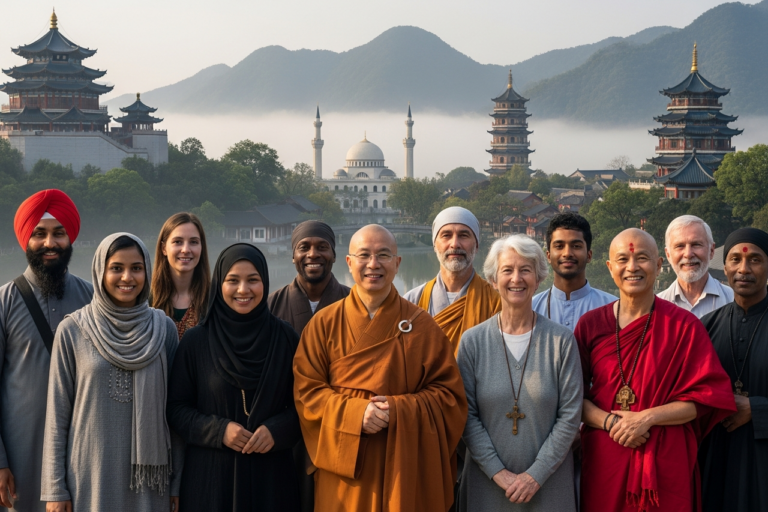
Key Highlights
-
In the People’s Republic of China, religion is a mix of many beliefs, cultural ways, and spirituality. Most of the time, these all blend together and it is common for people to follow more than one tradition.
-
The Chinese government has five main religions that it lets people follow. These are Buddhism, Taoism, Islam, Catholicism, and Protestantism.
-
Many Chinese people also keep up folk religions and ways like ancestor worship. For them, these are just a part of Chinese culture, and not always seen as a formal religion.
-
The constitution of China gives people freedom of religious belief. But what people do for their religion is watched and managed by the state council and Chinese authorities.
-
In recent years, more people want to learn about spirituality and bring back religious practices across the country.
-
The Chinese government keeps a close eye on religious organizations, from Buddhist temples to house churches. There is careful control over what they do.
Introduction
Religion in China is very different from what people see in many Western countries. Instead of one main faith, there is a mix of many beliefs, customs, and ways to connect with the spirit. In the republic of china, things changed a lot after it was founded. The Chinese Communist Party says that it does not follow any god. In the past, the communist party tried to stop many religious activities. But in recent years, more people have started to take part in these activities again. The Chinese government, though, still watches what goes on when it comes to religion.
Defining Religion in China: Concepts and Practices
In China, the line between religion, culture, and how people think is not clear. Many Chinese people mix religious beliefs with their daily life and culture. For them, religion is not just about being part of religious organizations.
This way of looking at things makes it so that many do not say they follow one religion. Still, they take part in different spiritual practices. Folk religions and other more organized faiths are all part of this mix. The types of beliefs among Chinese people are varied. Let’s look at how folk religions and other religious beliefs guide what Chinese people do and believe.
Understanding Chinese Terminology of Religion
To really get religion in China, you have to know some local words. When people talk about “religion” (宗教, zōngjiào), they usually mean groups that have strict rules and leaders. That is why the chinese government only lets five faiths be official.
But there are many religious practices that do not fit this idea. In chinese culture, folk religion is made up of different beliefs and ways of doing things. These include ancestor worship, praying to local gods, and respecting natural powers. This is a big part of life in China. Most see it as a tradition instead of a set religion.
This difference matters. Folk religion does not have a set group or rules you have to join. It is part of how many people live and think. You can take part in these traditions even if you do not see yourself as religious in the usual Western way.
The Intersection of Spirituality and Formal Religious Practice
For most people in China, spiritual life often shows up in what they do each day, instead of going to a church or temple every week. Religious beliefs in China shape how people live by mixing many customs and ways from the old days. A person may pray for good luck when they visit a Buddhist or Taoist temple. They might honor their family members at home, and they often follow Confucian ideas when they deal with other people.
These religious activities are personal and fit into daily life. For example, many will visit temples at New Year to ask for good things in the coming year. Others burn incense for their ancestors on special days. Practices like feng shui are used by many to make sure there is peace in the home or to help with business.
This mix of beliefs is a special part of Chinese religion. It is what many people call religion with “Chinese characteristics.” It shows that both formal religion and old customs can live side by side. This way, people choose from different spiritual sources to guide them in their lives.
Traditional Beliefs Versus Organized Religions
There is a big difference between Chinese folk religions and the organized religions the chinese government recognizes. Folk religions are usually local and change from one family or group to another. These groups do not have one set of rules or any formal leaders.
Organized religious bodies like Mahayana Buddhism or Catholicism are different. These groups have leaders, special books, and their own order. The chinese government works with these religious organizations in a different way than with folk religions.
Here’s an easy list to show how they compare:
-
Folk Religions: People see these more like family or town customs. They are not as controlled, but they also do not get help from the chinese government.
-
Organized Religions: These are on official lists. The chinese government keeps a close watch on them and makes rules for them.
-
Syncretism: Many people take part in both types. They mix things from Mahayana Buddhism, Taoism, and folk religions in their own lives.
This way of doing things means there is both order and freedom in religion. Both organized religious bodies and folk belief systems be part of daily life. They meet and their ideas change each other.
Religion, Worldviews, and Social Identity in China
In China, religion and belief touch the social identity and worldview of many people, even if they are not in formal religious groups. Many Chinese people take ideas from Buddhism, Taoism, and folk stories. These ways are a big part of their history and what they believe. They help people see their family, their community, and their own place in the world.
You can also look at Confucian thoughts. These ideas are not really a religion, but more a way of life. Confucian values shape how people act with others and teach what is good or bad. These ideas help build the shared social identity people have. At the same time, people show respect for their ancestors. This act helps keep families close and asks people to honor their parents, which is key in Chinese culture.
Some people get a strong bond with others in clear religious groups. But for many Chinese people, religious beliefs and the old cultural ways make a shared feeling of who they are. It helps people feel close to the past and handle the present. It also makes the line between being “religious” and being “Chinese” not so clear.
Religious Diversity and Pluralism
China is a big country with many different faiths, but many people do not notice this. Most Han people follow a mix of Buddhism, Taoism, and old folk religions. There are also 55 ethnic minorities in the country. These groups each bring their own beliefs, which adds to the wide range of religions in China. This mix is a key part of what makes religion in China so special.
The Chinese government tries to manage all these beliefs by working with special religious organizations for the five main recognized faiths. But there are still many other beliefs and folk religions. These often do well in small towns and in places where there are more ethnic minorities.
Places that have the most religious diversity are usually where there are the most ethnic minorities:
-
Xinjiang: This area is where Uyghur and other Turkic Muslim groups live.
-
Tibet and surrounding provinces: These places are known for Tibetan Buddhism.
-
Yunnan: People here come from many backgrounds. They practice Buddhism, Taoism, Christianity, and their own local folk religions. Some follow old animistic faiths too.
Historical Development of Religion in China
The story of religion in China has a long history. There have been times of big growth and also times of hard struggles. People across different dynasties, new ideas, and rulers have helped shape this spiritual path. At first, people in China followed ancestor worship. Later on, religions from other places came in. These changes made the land’s beliefs very different from what they first were.
When the Communist Party rose to power, everything changed fast. During the Cultural Revolution, there were strong efforts to take away the old religious practices. Much was lost during these times. Still, religion did not disappear. Faith stayed in the hearts of many people. Now, we can look back and see how these changes shaped the religious organizations and beliefs people have in China today.
Prehistoric and Ancient Roots
The oldest forms of religious beliefs in China started way back in prehistoric times. People then believed in folk religions. They felt that spirits lived in the natural world around them. This simple idea helped shape Chinese culture.
Ancestor worship became a big part of this. People thought their dead family members lived on in some spirit world. They also believed these spirits could change things for the living. This belief made family ties and respect for older people very strong. It still matters a lot today.
These early religious beliefs laid the ground for Chinese folk religions. Over time, these thoughts about nature, spirits, and ancestors changed and mixed with new ideas and religions. The old and the new grew together through the years.
The Rise of Imperial Cults
During China’s imperial times, religion and the state were very much linked. The emperors were often called the “Son of Heaven.” People saw them as a bridge between the skies and the people on earth. Because of this, there were imperial cults. These were big religious activities paid for by the state to keep the world and the empire in balance. They also helped make the ruler look rightful in his power.
These cults had many detailed rules and events. The emperor and government officials took part in these at important altars, such as the Temple of Heaven in Beijing. They did these things to honor Heaven, Earth, and different gods. The goal was to get blessings, safe crops, and keep the empire steady.
These types of imperial cults stopped when the last dynasty ended. But, the thought that the state should handle and lead religious affairs did not go away. It still matters a lot today. The idea can be seen in the modern policies of the Chinese government and the State Council on religious activities.
Impact of Dynastic Changes on Religious Landscape
Throughout China’s long past, every new dynasty changed the way people looked at religion. When an emperor liked a faith, it helped the religious organizations grow. The emperor could also build big buddhist temples and monasteries. Some rulers liked Buddhism a lot and did just that.
Other dynasties backed Taoism or Confucianism and made them the main beliefs for the state. These changes from one dynasty to the next made it so that beliefs would mix. Sometimes, Taoist gods were added into Buddhist groups. Folk religions would also take things from both Buddhism and Taoism.
No one religion ever stayed on top for a long time. Religion in China turned into a big mix of many traditions. They would rise and fall but almost never be lost. People had to change and live with each other’s beliefs because the way rulers ran things kept changing.
Foreign Influences and Syncretism
China has never been fully cut off from others, and you can see this in the way different religious groups have a place in the country’s history. These groups came into China through trade routes like the Silk Road. People brought in new ideas about religion and life. Many things from outside were mixed into local ways, and this process has shaped the way people in China see faith. Over time, this mixing of different beliefs became a big part of how China dealt with religion.
A great example is when Buddhism came in from India. Over many years, it changed and grew into something special, called Mahayana Buddhism.You see it mixed with old Chinese thinking and styles of art too. After that, Islam and Christianity found their way in. Traders from Arab countries, as well as people from Persia, helped bring Islam. Later, Christian ideas were introduced by people from Europe, like missionaries and some in foreign affairs, and these beliefs have been growing more in recent years.
People in China have not always reacted the same way to new beliefs from outside. Sometimes there was a warm welcome. Other times, people or leaders pushed back, and their feelings often had to do with the state of foreign affairs.
-
Buddhism: Came from India and became one of the main religions in China.
-
Islam: Came through Arab and Persian traders.
-
Christianity: Was brought in by European missionaries, and its place has gotten bigger in recent times.
Transformation During the Modern Era
From the 19th century on, big changes came to religion in China. Western powers came in, and there was trouble inside that ended the old imperial rule. The people of China started to see their old beliefs challenged. New thinkers said religion was holding the country back from moving forward.
When the People’s Republic of China started in 1949, everything changed. The chinese government followed atheist ideas and tried to control all religious activities. During the cultural revolution from 1966 to 1976, things got very hard for people of faith. Temples were torn down. religious practices were not allowed.
But after these years, the 1980s brought some new religious freedom. The chinese government allowed some religious activities, though they watched them closely. In recent years, there has been a big return of faith. Many people have taken part in religious practices again.
Religion and Revolution: The 20th Century Shifts
The 20th century in China was a time of big changes, and religion played a key part. The Chinese Communist Party saw religion as “spiritual opium.” The party said it held people back. They wanted to build a new society that was not based on religion and was secular.
When the Communist Party began leading China in 1949, it started to break up religious institutions step by step. This effort peaked during the Cultural Revolution. That decade was full of religious persecution. Clergy went to prison. Places of worship were ruined. Many people had to give up their faith.
The effects from this time lasted for years. Some religious practices came back in the 1980s, but the memories of those harsh times stay alive. Today, they still affect how religious communities and the state deal with each other. The story of the 20th century in China shows how much political ideas can shape people’s faith.
Demographics: Religion by Numbers
It is hard to know the exact number of religious believers in China. The government, academics, and groups like the Pew Research Center all share different numbers about how many people have a religion. Many people in China may not call themselves members of a religion, but they still do spiritual things.
Even with these problems, we can learn a little about the size of China’s religions from the numbers out there. Some data says hundreds of millions of people in China are religious believers in some way. Let’s look at what we know and talk about how tricky it is to count people of faith in such a big and mixed country.
Major Surveys and Population Estimates
Pinpointing the exact number of religious believers in China is a complex task. Surveys from different sources, including the Pew Research Center, academic institutions, and official bodies like the China Christian Council, often produce different figures. This is because “religious adherence” can be defined in many ways.
For example, government figures for Christians often only include members of state-sanctioned churches, while other estimates attempt to count those in unregistered “house churches” as well. Similarly, hundreds of millions are thought to practice folk religions, but they are rarely counted in official statistics because they don’t belong to formal religious organizations.
The table below provides a general idea of population estimates, but it’s important to remember these are approximations of a fraction of the total population.
|
Religion |
Estimated Number of Adherents |
|---|---|
|
Chinese Folk Religions |
200–400 million+ |
|
Buddhism |
180–250 million |
|
Christianity |
60–90 million |
|
Islam |
20–30 million |
|
Taoism |
12–20 million |
Challenges in Measuring Religious Adherence
Measuring how people follow religion in China is hard for many reasons. The state is officially atheist. In the past, religion has been kept down in the country. Because of this, people may not say what faith they have, especially to government officials or when talking with people they do not know during surveys.
The idea of being “religious” also means something different here. Many people do take part in religious activities like going to temples or honoring their ancestors. However, they might not say they are members of any set religious groups. This kind of cultural spirituality does not fit well in a normal survey checkbox.
There are a few main problems, such as:
-
Fear of Reporting: Some people worry they could have trouble if they say they are part of a faith.
-
Defining Membership: It is tough to count people who follow folk religions with no clear rules. It is also hard to count people who join unlisted groups, like house churches.
-
Syncretism: A lot of people mix different beliefs. This makes it tricky to say each person belongs to just one religion.
Because of all this, any numbers about people and faith in China can only give a rough idea.
Regional Concentrations of Faith Traditions
Religious practice in China is not the same everywhere. Some religions are mostly found in certain parts of the country. This is because some ethnic minorities keep their own religious customs that have lasted for many years. The country shows a great mix of religions in these places.
For instance, Islam is the main religion in western autonomous regions. The Ningxia Hui Autonomous Region has a lot of Hui Muslims. Xinjiang is where many Uyghur Muslims live. At the same time, Tibetan Buddhism is very important for people in the Tibetan Autonomous Region and some provinces like Qinghai and Sichuan.
Here are some examples of where certain religions are found:
-
Tibet and surrounding areas: This is a big place for Tibetan Buddhism.
-
Xinjiang and Ningxia: These are mostly Muslim regions.
-
Yunnan Province: This place has a lot of religious groups. Many ethnic minorities have their own religions here.
Rural Versus Urban Patterns
There are clear differences in how people practice religion in rural and urban parts of China. Folk religions and customs that honor ancestors are much stronger in small towns and villages. Local temples in these places often act as the main spot for social life and spiritual events. Many people join together for religious activities here.
Urban areas look very different. As cities have changed and grown, old beliefs are often not as strong in daily life. But there is now more interest in religion too. Cities see more organized groups, like Christian and Buddhist religious bodies, start up with younger and more educated people joining them to find something deeper in life.
These religious organizations in cities do things differently from those in the countryside. They spend more time helping people grow on their own and building a strong community through their services. The fast changes as people move into cities keep shaping how folk religions and religious activities look in both city and country areas.
Age, Gender, and Religion in China
Age and gender are important in the story of religious beliefs in China. In the past and according to many surveys, older people and women are often more active in religion. Women are usually the ones who keep family traditions like ancestor worship. They also join more temple activities.
But now, things are changing. More young, urban Chinese people show interest in faith. As life gets busy and stressful, these young people look for meaning and community. They turn to faiths like Buddhism and Christianity for help.
Getting full data about the total population from the Pew Research Center is not always easy. Still, we can see that religious beliefs are changing for Chinese people. The idea that religion is only for older people does not hold true anymore. Many young people in China want to find their own way when it comes to faith.
Ethnic Minorities and Religious Varieties
China’s ethnic minorities play a big role in the country’s religious mix. For many of these groups, religion is not just what they believe in. It is a big part of who they are as a people. This is not always true for the Han majority, where faith is often more of something you hold in private or with your family.
You can best see how close ethnicity and religion are in some of these groups. For Tibetans, their tibetan buddhism is tightly tied to their everyday life and story. Many hui and uyghur muslims see their faith as something that helps shape who they are. These ethnic minorities have managed to hold onto their religion and ways for many years.
Some good examples are:
-
Tibetans: Most follow tibetan buddhism.
-
Hui and Uyghur Muslims: These are two large groups of muslims in China.
-
Mongolians: Many are followers of a kind of tibetan buddhism.
-
Dai people in Yunnan: Many follow theravada buddhism.
All of these groups add a lot to what makes China’s mix of religions so rich.
Main Religious Traditions in Contemporary China
Today, China is a place where many religious and spiritual ideas meet. The government says there are five main religions, but in real life, things are more mixed. Old ways of thinking, local beliefs, and faiths from other places all come together. Buddhism, Taoism, and Confucianism have been part of Chinese culture for a very long time.
There are also many folk religions that people follow. Christianity is getting bigger, and Muslim groups have a long history in China too. Different religious organizations help people take part in these faiths. All of these beliefs mean something special for the people who practice them. Now, let’s look at these main faiths and see how each one fits into Chinese culture.
Buddhism: History and Current Presence
Buddhism came to China from India more than 2,000 years ago. It is now the biggest and most common organized religion in the country. Over time, it mixed with Chinese culture in many ways. This led to the rise of new groups like Mahayana Buddhism, which turned into the main form there. Buddhist temples, art, and ideas have left a strong mark on Chinese culture.
During the Cultural Revolution, life was very hard for Buddhist monks. Many temples were ruined and people who followed this faith were not safe. But things started to change after the 1980s when new government policies came. Since then, Buddhism has grown, and many temples have been rebuilt. They are full of both monks and people who want to learn or pray.
Today, Buddhism has more followers than any other religion in China. You can see it everywhere, with millions of people who follow Buddhist practices. People chant, pray, and even travel on major trips for their faith.
Taoism: Philosophy and Ritual Practice
Taoism is the native organized religion of China. It started with old books that talked about how to live in harmony with the “Tao,” which means the natural way things work in the universe. Taoism mixes these ideas with traditions that help people stay healthy, live longer, and find balance in spirit.
Taoism fits in well with folk religions in China. Many gods from these folk religions now belong to Taoism too. Taoist priests do rituals for the people, like funerals and festivals. It can be hard to tell where Taoism ends and where folk beliefs begin.
Today, taoist temples are busy places for worship and for keeping chinese culture alive. While there are fewer actual Taoists compared to Buddhists, Taoism is a big part of chinese culture, medicine, and spiritual life. Its influence is strong and runs deep.
Confucianism: Moral System and Civil Life
Confucianism is often called a way of thinking more than a religion. It has been at the heart of Chinese life for over two thousand years. People learn from it to be good, stay loyal to their family, respect rules, and show respect for leaders. For many years, it was the main idea the government followed. Schools in China also taught its ideas to many generations.
Confucianism does not have a clear group of leaders or weekly meetings like some other religions. Still, it gives people a strong way to think about how to live and work with others. In the 1900s, some people spoke out against it, but now more people are starting to see its value again. They think it can give people pride in their culture and help keep society steady.
The effects of Confucianism can be seen in these areas:
-
Family Values: People learn to honor and care for their parents and older family members.
-
Social Order: Each person should do their part in society well.
-
Government and Ethics: Government officials use its rules to make good choices and serve the country right.
Chinese Folk Religion: Ancestor Worship and Local Customs
Chinese folk religion is a lively mix of beliefs and ways of living. It gives many chinese people a base for what they believe and do. This is not just one belief or single way of living. It is a group of customs that can be different from one place to another, and even from one family to another. Most of it centers around ancestor worship, where people honor their family members who have died. People also believe in a group of local gods, spirits tied to nature, and well-known figures from history.
Ancestor worship means that people show respect to family members who passed away. They use rituals and give offerings, thinking that their family who died can help or affect those who are still alive. This helps keep families close and makes traditions carry on through time. Many chinese people go to local or taoist temples to pray. They often ask for good health, luck, or protection from the gods.
Compared to religions that are big and put together, folk religion does not have a main leader or center. It is part of everyday life. For a lot of people, doing these customs is just a normal part of being chinese. It is a gift passed down in their culture, not something tied to a clear idea or faith like Buddhism or Christianity.
Islam: Hui, Uyghurs, and Other Muslim Groups
Islam has been in China for over 1,300 years. Many different groups practice Islam in the country. The two biggest groups are the Hui Muslims and Uyghur Muslims. Each has its own history and way of life, but they both have Islam at the center of their lives.
Hui Muslims look a lot like the Han Chinese people. What makes them different is that they follow Islam. You can find Hui Muslims living all over China. Uyghur Muslims are a Turkic people. Most of them live in the Xinjiang area in the west of China. Both Hui and Uyghur have built their own mosques and have their own ways of worship.
Religious organizations approved by the state watch over all Islamic activities. One of these religious organizations is the Islamic Association of China.
The main Muslim groups in China are:
-
Hui Muslims: They live in many places across China and are part of local areas.
-
Uyghur Muslims: They live mostly in Xinjiang and have a Turkic way of life.
Christianity: Catholic and Protestant Communities
Christianity has grown quickly in China over the last few years. It is now one of the biggest religions in the country. The Christian community is split into Catholic and Protestant groups. Both groups have their own way to work and deal with the government.
The government runs Christianity through two main religious organizations. The Catholic Patriotic Association is for the Catholic Church. The China Christian Council is for Protestant churches. These are the official groups allowed by the state. But many Christians still meet outside these groups. They join what are called “house churches.”
These house churches are not registered and they often face problems from the government. Their relationship with the authorities is not easy and can be tense. Still, both official churches and house churches keep growing. Many new people join, especially in cities. This makes Christianity stand out more as part of China’s religious life.
Other Recognized Religions
While Buddhism, Taoism, Islam, and Christianity are the main faiths in China, the Chinese government says there are five recognized religions. The fifth one is Catholicism. Most people think of Catholicism and Protestantism as the same because both are part of Christianity, but the government manages Catholicism with its own approved group.
Outside of these five, there are other faiths in the country. They are not recognized by the state. Some of these, like Judaism, have been around for many years but still have only a small group of followers. The Eastern Orthodox Church is another example. Besides these, many people follow local folk religions.
When the government keeps a set number of recognized religions, all other beliefs are left out. If your faith is not one of these, your religious group does not get the same support. This makes it harder for them to meet or share what they believe. These smaller faiths often face problems practicing out in the open because they are not part of official religious organizations.
Chinese Folk Religion in Depth
Chinese folk religion is one of the most common ways of belief among Chinese people, but many do not know much about it. It is not just one religion. Instead, it is a mix of different religious practices that are a big part of chinese culture. These include ancestor worship, believing in local gods, and taking part in seasonal festivals that go back many years.
For a lot of people in China, these religious practices are not just about following a formal religion. They are more like customs. Many see them as a way to honor their past and help keep harmony between the human world and the world of spirits. Now, let’s look more at the main beliefs, ceremonies, and why these ways are still important to the lives of chinese people.
Core Beliefs and Pantheons
The main idea behind folk religions in China is that there are many spirits, gods, and ancestors living in the world. People do not believe in just one holy book. Instead, they follow a mix of stories, local legends, and old customs passed from one family to another. The full list of these gods and spirits is not the same everywhere. It changes in different places.
Ancestor worship is at the heart of these folk religions. Many Chinese people think that family members who have passed away still watch over the living. They also believe these spirits can help or affect life on earth. This is why it is so important for people to honor ancestors and make offerings to them. People do this to keep their family safe and in good luck.
Some important ideas found in Chinese folk religions are:
-
A pantheon of gods: These gods can be nature spirits, local city gods, people from history who became gods, or gods for workers like farmers and fishermen.
-
Spirits and ghosts: People believe that the spirit world and our world can connect. Spirits can help, but sometimes they can upset things too.
Life for Chinese people can be very practical with these beliefs. They pray to the right gods for what they need, whether that is for health, money, or safety.
Festivals and Ritual Observance
Festivals and rituals are the heart of Chinese folk religions. They set the beat of the year and shape how many people live, every day. These religious activities are a big part of Chinese culture and can be seen everywhere. People from all walks of life take part, and it doesn’t matter what their official religion may be.
Many of these events happen at home, in clan halls, or in places of worship. They use special foods, offerings, and rituals to thank ancestors or please gods. For example, during the Qingming Festival (Tomb-Sweeping Day), families go to their ancestors’ graves to clean them and make offerings.
Popular festivals tied to folk traditions include:
-
Chinese New Year: People get together with family and honor ancestors and gods, hoping for a good year.
-
Dragon Boat Festival: This festival remembers an old poet and official. People join in rituals to keep bad spirits away.
-
Ghost Festival: At this time, many believe dead spirits visit the living.
places of worship, folk religions, religious activities, chinese culture
Continuity and Change Across Generations
Chinese folk religions have been able to last for many years. They have changed and stayed alive even when the country faced big political and social shifts. This includes times when the Chinese Communist Party did not support these practices. Still, people kept sharing their religious beliefs from parent to child.
But the way these traditions look now is not the same as before. Life in modern China brings fast city growth and new ways for people to live. This means folk religions often change, too. People in small towns or villages may still have big group rituals. Those who live in cities often do simple or private acts instead.
Now, a lot of young Chinese people feel more interest in folk religions. Many see these beliefs as an important piece of their history. For many, this helps them feel a strong bond to their roots as Chinese people in a world that is always changing. Because of this, folk religions will likely continue in new forms for years to come.
Difference from Institutionalized Faiths
Chinese folk religion is not the same as big religious organizations like Buddhism or Christianity. The biggest way they are not the same is that folk religions do not have a set structure. There are no holy books like the Bible. There are no formal religious leaders, and there is no way to join as an official member.
Instead, folk religions are made up of local customs and ways of doing things. People do not join by converting or becoming part of a group. They are part of it by taking part in family and community rituals. Everyday life and family ties are a big part of this. Many people follow folk religions and also take part in other religious bodies at the same time without any problem.
Key differences include:
-
Structure: Folk religions do not have a main leader or set of rules. They are not set up as large, formal religious organizations.
-
Adherence: People are involved because of their family, culture, and their town. There is no sign-up or rules to follow.
Because of this, folk religion is more open and personal for people who take part.
Regional Folk Deities and Ancestral Worship
One interesting thing about folk religions in China is that people worship different local gods in each area. Many Chinese people believe in ancestor worship, and you can find this practice almost everywhere that there are Han Chinese. But, the gods and goddesses people look up to can be very different, even between villages or provinces.
These gods come from many places. Some are from old stories about real people. Some are heroes in legend. Others are tied to nature or a special place. For example, the goddess Mazu is important for people who make a living on the sea. She is most respected in places on the coast, like Fujian and Taiwan. Some areas also have a city god that people say helps keep their community safe.
This big mix of gods is what makes these folk religions stand out.
-
Mazu: Prayed to in places by the sea for safety on the water.
-
Guan Yu: Once a famous soldier, now honored as someone who stands for trust, friendship, and money.
-
City Gods (Chenghuang): Each city used to have its own god who watched over the city and protected it.
All these local gods make folk religions very special for each person and for every community. The beliefs in these chinese people are close to their everyday life and connect them to those around them.
Buddhism’s Influence and Adaptation
Buddhism came to China from India a long time ago. It was not just another new faith. It changed and mixed with what people in China believed, then soon became a big part of life there. You can see how it shaped Chinese thinking, made its way into art, and showed up in daily life in many ways.
The Cultural Revolution tried to push Buddhism out, but that did not last. Buddhism has come back strong. Now, there are many Buddhist temples. These are busy places where people go for hope and direction. The teachings still help many today. Here is how Buddhism grew, changed with time, and shaped life in China.
Historical Arrival and Spread
Buddhism came to China around the 1st century CE. It was brought in by merchants and monks from India and Central Asia who traveled along the Silk Road. At first, people saw it as a new religion from another land. Many spoke about Buddhist ideas using Taoist words so that the local people could understand them better.
During the next few hundred years, more people started to follow this religion. This often happened when China was not united and there were lots of hard times. Teachings about suffering, how to solve it, and finding salvation helped many people feel better. The Mahayana way of Buddhism became very popular. It talked about the path of the bodhisattva and said that anyone could reach enlightenment in their life.
When the Tang Dynasty took power (618-907 CE), Buddhism became very strong in China. The emperors paid for beautiful Buddhist temples to be built. Important writings were translated into the local language. Religious activities connected to Buddhism became normal and important in the lives of people from every background. Buddhism was the top organized religion in China during this time.
Schools of Chinese Buddhism
As Buddhism started in China, it changed in many ways. There were now different groups, each with a special focus and set of things to do. These groups started to mix Indian ideas with local ways of thinking, especially Taoism and Confucianism. This mix gave Buddhism what many call “Chinese characteristics.” It also helped more people in China accept it.
Some of these groups were very focused on ideas. They drew in many students and rich people. Other groups cared more about doing things that showed their love for Buddha. These drew in more people from all parts of life. Over time, Buddhist monks in China worked hard to spread these teachings. They did this by translating old writings and starting new places to learn and pray.
Now, there are two big Buddhist schools in China that still be strong:
-
Pure Land Buddhism (Jìngtǔzōng): This group is about loving Amitābha Buddha. The main goal is to be born again in his Pure Land. People like this group because the main practice is easy—it just asks people to chant and repeat Buddha’s name.
-
Chan (Zen) Buddhism (Chánzōng): This group is about sitting quietly, meditating, and getting to know yourself better. If you practice this, you want to be awakened. It also took many ideas from Taoism.
Both schools are good examples of how Buddhism has changed in China while keeping many Chinese characteristics. Their teachings are still an important
Buddhist Temples and Monasteries
Buddhist temples and monasteries are some of the most well-known places of worship in China. These sites are not just for holding ceremonies. They are active centers where the community can learn, grow, and take part in spiritual activities. Inside, you will see many statues of Buddhas and bodhisattvas. The buildings show both Indian and Chinese styles mixed together.
In the past, these religious bodies owned a lot of land and were important for culture and learning. They gave scholars, artists, and Buddhist monks and nuns a place to work and live. These temples helped keep Buddhist teachings safe and share them with others.
Now, after they were rebuilt from the damage of past years, Buddhist temples are lively again. Many people go there to pray, give offerings, and look for advice. These busy temples all over China show how common Buddhism still is in everyday life.
Lay Practice and Pilgrimage
For most Buddhists in China, faith shows up in daily life more than in living as monks. Many people follow their beliefs while working, at home, and as part of Chinese culture. These religious activities help people find peace and know what is right and wrong. Some common things people do are reading or saying prayers, giving offerings at home shrines, and going to local temples.
One big part of the life of most Buddhists in China is going on a pilgrimage. Every year, millions of people visit holy mountains and well-known monasteries. Many believe these places have strong spiritual power. People take these trips to show their faith, to wish for good things, or to keep promises they made.
Some well-known pilgrimage spots and things people do are:
-
Mount Wutai: Many think this is the home of Manjushri, the Bodhisattva of Wisdom.
-
Mount Putuo: This holy island is where people worship Guanyin, the Bodhisattva of Compassion.
-
Visiting major temples: Lots of people visit temples on big festivals like the Lunar New Year to wish for good luck.
These activities and trips are a key part of both religious life and Chinese culture.
Buddhist Impact on Art and Philosophy
Buddhism has done much more than shape temples and rituals in Chinese culture. It changed Chinese art and the way people think. When Buddhism came to China, it brought new ideas, different art styles, and other topics for artists to show. This change inspired many people over the years and helped make some stunning Buddhist art that is known around the world.
Great stone statues stand inside Longmen and Yungang Grottoes. There are also soft ink paintings made by Zen masters. For a long time, these Buddhist themes have been important for art in China. The art you see is not just to look nice. It is also to teach people lessons and to show care and respect in a deep way.
When it comes to how people in China think and see life, Buddhism gave them new thoughts about what is real, who we are, and how the mind works. These new ideas changed the old ways of Taoists and Confucian thinkers and made them better. Because of this, new ways of thinking, like Neo-Confucianism, showed up. Neo-Confucianism mixed Buddhist thinking points with the ways of Confucian thinkers, and it shaped Chinese culture in new ways.
Taoism: Indigenous Roots and Modern Forms
Taoism is a spiritual path that started in China. It mixes deep ideas with special rituals. It began with old books that teach people to live in tune with the Dao, which is the simple and natural way the universe works. Later, this way of thinking grew into a true religion. It even formed its own group of leaders and its own gods.
Taoism is closely linked to Chinese culture and folk religions. It gives people ways to look after their health, live long lives, and grow spiritually. Even now, people still turn to its old teachings. Taoist temples are still busy and important. Today, these temples are key parts of culture and faith in China, cared for by big religious organizations.
Foundational Texts and Principles
The ideas behind Taoism come from a group of old and deep books. The best-known one is the Dao De Jing (Tao Te Ching). People say Laozi wrote it. This book talks about the “Dao” (the Way). It is something you can’t put into words, but it is the thing that runs through and rules the universe. It says people should live a simple life, avoid trying too hard, and act in a calm and natural way. This idea is called “non-action” or wu wei.
There is another important book called the Zhuangzi. This one tells stories to help people think about freedom, how things depend on each other, and living with all the changes that come with nature. These books create the main ideas of Taoism, and this is what makes Taoism stand out from other religions that are based on messages from gods.
Key principles from these books are:
-
The Dao (道): The calm and true path of nature in everything.
-
Wu Wei (無為): To act with ease and go with the flow, not fighting against how things want to be.
Ritual Practice and Priesthood
Rituals are very important for the spiritual lives of many people in China. In this country, there are many folk religions and organized faiths that mix together. People often use rituals that may have offerings, prayers, and times where people come together. These events give people a clear way to reach out to the divine and feel close to their cultural roots.
Religious figures, like priests in Taoism or Buddhism, also play a key part. They help link the divine to the people. They lead others through these rites and help keep old customs alive, but they also change with the times. In recent years, people have put even more value on these ritual practices. All this adds much to the spiritual life in China right now.
Taoism in Urban and Rural Life
Taoism is a big part of life for people in both cities and the countryside in China. It gives a spiritual path that fits well with what people do every day. In busy cities, taoist temples are quiet places where people can go to think and get away from all the noise. These temples hold rituals that show how people want to be closer to nature and live in harmony. In the countryside, people still follow old customs. Here, local events and folk religions mix together with taoist beliefs to keep traditions alive.
The ideas of Taoism focus on balance and keeping life simple. It helps people know how to get along with the world and with each other. Living this way brings people together and adds richness to Chinese culture.
Interaction with Other Chinese Religions
The way different Chinese religions interact is based on blending their parts together. Taoism, Buddhism, and folk religions often mix in everyday life. For example, buddhist monks and taoist priests may come together during festivals. This shows how people can live side by side, trying to help community well-being.
Confucian values are also added to these religious activities. This helps everyone show respect for traditions and stay close as a group. It is a big part of life for chinese people who still feel the impact that the republic of china has had on their society.
Because of this, people get a stronger spiritual life. It supports both what each person believes and what the whole group shares.
Taoist Festivals and Community Events
Taking part in the colorful world of Taoist festivals helps people come together and feel a sense of community. During these events, you can see old customs like making offerings and walking in processions. These give both locals and visitors a way to take part in the deep cultural history of Taoism. Some important festivals, such as the Lantern Festival and the Dragon Boat Festival, show the ideas of working in harmony and finding balance, which are at the heart of Taoist beliefs and the cycles we find in nature.
Community events help people connect with each other. They get to join in rituals that show respect for ancestors and the gods. When Taoists come together this way, they support their spiritual lives and also build stronger ties with others near them. This helps keep these valued traditions going strong.
Confucianism: Social Order and Ethics
Social harmony and living with good values are at the center of Confucian thought. This thinking highlights how important our ties with others are every day. The philosophy teaches people to show respect, loyalty, and a sense of duty, both in families and with others in the community. The goal is to help the group work well together, and you can still see its effect in China today.
Confucianism also shares values that shape how people act with each other, such as kindness and doing what is right. These teachings push people to work on themselves. By doing this, they help the group and keep strong bonds with others. Even now, this way of seeing the world still matters. It helps guide what is right or wrong for many people in China today.
Confucian Temples and Ritual Spaces
Confucian temples are lively places where people come together for culture and spiritual life. They show the values and ideas of Confucianism. Many of these temples have detailed buildings and are calm places. In them, you will see people do rituals that help spread social order and respect between family members.
People do more than just worship here. These temples are also used for group meetings and learning, which help remind everyone about old values. During rituals, people often show respect to their ancestors and stress the need for families to honor each other.
These temples act as a link between Confucian ideas and day-to-day life. They prove that these old teachings still matter and shape lives in modern Chinese society.
Influence on Education and Family
Education and family life in China today are closely linked to religious beliefs. These beliefs help shape values and drive everyday actions. For many people, what they learn from religion becomes the core of how parents raise their kids and how families deal with each other. It helps bring respect and peace at home.
In schools, what is taught often follows the government’s chosen religious views. This can change how students see the world and understand faith. As people look for what makes them unique, religions like Buddhism and Taoism can shape the morals in both families and education. This mix of old ways and new rules is part of what makes Chinese culture so unique.
Confucianism in Everyday Life
Confucianism has been a part of Chinese culture for many years. It shapes how people act with each other every day. Many people follow key ideas from it, like being good to parents and showing respect for older people. This helps keep families close and tight in China. These values also help guide people when they make choices or work with others in their community. They play a big part in keeping the peace among people.
In daily life, you can see the influence of Confucian thought in schools, where students are taught to respect their teachers above all. You can also find it in the workplace, where people work together and do their part. This deep culture is still strong in China today. Even as new problems come up, Confucian ways are still important in Chinese culture.
Revivals and Contemporary Relevance
In recent years, there has been a rise in revival movements within religious groups in China. The Chinese people are connecting more with their cultural roots through places of worship, like Taoist temples and Buddhist sites. Folk religions and new spiritual ways are also growing quickly. These grassroots efforts show how people want to keep their traditions alive.
Many young people now feel interested in the beliefs of their ancestors. They are searching for meaning and things that bring them together, even as society changes so fast. These waves of new and old religious beliefs are helping people find their goals and feel part of their communities as China keeps changing.
Relationship with Government Ideology
In China, the way religion and government beliefs mix is not simple. The Chinese Communist Party has a big impact on how things work. The country says that the people have freedom of religious belief, but this freedom is controlled by many rules and close watch. Religious practices have to fit the goals of the government, like social harmony and national security. Because of this, many religious groups have to change what they do to stay within what the state allows. This is how things are in China now. The mix of rules from the communist party, old customs, and the present day shapes how people show their faith. This brings new ways for people to practice it in their lives.
Abrahamic Religions in China
Abrahamic religions in China include Christianity, Islam, and Judaism. These all have their own stories and groups. Early Christian missionaries first showed up during the Tang Dynasty. In recent years, Protestant and Catholic churches have grown, but they often face state controls. Islam has strong cultural roots with Hui Muslims and Uyghur people. This adds rich colors to the country’s spiritual life. Judaism is smaller, but it has a deep history, especially in cities like Kaifeng. All of these faiths bring new traditions and help shape China’s culture. They show the mix of religious beliefs and practices among the people, including Hui Muslims.
Christianity: Early Arrival and Modern Growth
Christianity first came to China in the Tang dynasty. It spread mostly through trade and missionaries. As time went by, it changed so it could fit local customs. In recent years, there has been new growth, especially with young people in cities who want something more than their old ways give them. The Pew Research Center says this rise is happening in both church groups allowed by the chinese government and in small house churches. This shows that there is now a wide set of beliefs. Christianity today is still mixing with chinese culture. It gives meaning to many people and also deals with ups and downs between the church and the chinese government.
Distinction Between State-Sanctioned and House Churches
State-sanctioned churches in the People’s Republic of China follow rules set by the government and work with groups like the China Christian Council. These churches try to keep public order and support ideas set by the Communist Party.
House churches are different. They do not follow the same rules and often meet in private because people fear religious persecution. These house churches help build strong and lively groups. They let people make a more personal bond with their faith.
State-sanctioned churches give stability, but house churches value spiritual freedom. This shows that the Chinese people and the republic of China have many ways to practice Christianity. So, the division between house churches and state churches tells us a lot about religion in the People’s Republic.
Islam Among Han and Non-Han Peoples
Islam has a long history in China, and it can be seen in both Han and non-Han groups. The Hui Muslims are a big part of this and are mostly from Han roots. They mix their Islamic ways with Chinese culture. The Hui have built their own identity through their mosques and daily habits. On the other hand, Uyghur Muslims mostly live in Xinjiang, and their customs still show their Turkic past.
The Chinese government allows the Islamic Association of China, but they often put limits on how people can show their faith. This makes life hard for both Hui Muslims and Uyghur Muslims. By looking at all of this, we can see the many ways Islam is a part of Chinese culture and how it shapes people’s lives in China.
Jewish Communities in Historical Context
Throughout history, Jewish groups in China have had to face both good times and tough times. Jews first came to China during the Tang dynasty. They built communities in cities like Kaifeng. These early groups took on local customs, but still held on to their religious practices.
In more modern times, there have been cases of anti-Semitism and some religious persecution under different leaders. These events have shaped who they are.
Today, the Jewish community in China is small, but it is lively. There is a strong focus on keeping their culture alive and building links with others. This shows how they are a part of the bigger story of China’s history.
Baháʼí Faith and Its Presence
The Baháʼí Faith is part of many religions and has found its own place in China. It started in the late 1800s. This faith teaches that all people are one and says peace and harmony are important. There are not many Baháʼí followers in China, but you can find their groups in different areas of the country. These groups talk with others about ideas that fit with Chinese culture. In recent years, more people have become interested in the Baháʼí Faith. This has helped religious organizations and the Baháʼí come together. They want to help people understand and respect different beliefs in the community and in the country.
Religions of Ethnic Minorities
Ethnic minorities in China bring many different religious beliefs to the country. These beliefs help shape a rich culture for everyone. Tibetan Buddhism is very important for the Tibetan people. It guides the way they live and follow their own spiritual practices. The Yi people practice Bimoism. This faith mixes old traditions and shamanistic customs. For the Bai group, Benzhuism is key. They respect their local gods a lot in their daily lives.
In the north, Mongolian shamanism still plays a big part, helping people feel close to nature and remember their ancestors. All these groups keep their own ways, showing where they come from. These traditions add to China’s wide range of religious diversity. Folk religions are often mixed with bigger, established faiths. As a result, there are many colorful and lively celebrations in lots of communities.
Tibetans and Tibetan Buddhism
Tibetan Buddhism is at the heart of life for people in Tibet. It is the main part of their culture and shapes how they live. This tradition mixes wise ideas and ritual acts. It helps people feel close to what is holy. There are many monasteries and stupas in the hills and towns. These places of worship bring people together and are important for their community.
Tibetan Buddhist ways focus on being kind and aware. These things affect how people talk, live with their family, and work with each other. In recent years, the chinese government has brought some hard times. But even now, these spiritual ways keep going strong. They help keep the Tibetan culture alive and make people ready for tough times.
The Role of Bon in Tibetan Culture
Bon is an old faith that started a long time ago in Tibet. It is part of what makes up Tibetan life and who they are. Bon comes from roots in animal and spirit worship, called animism and shamanism. The followers of Bon think that people, nature, and the world of spirits are all tied together.
This belief helps bring the people closer. Bon groups often do rituals and ceremonies together, and it helps them have strong bonds with one another. In recent years, many who follow Bon have worked hard to keep its way of life going strong alongside tibetan buddhism. They take care of special places and keep the old ways and ceremonies alive.
With these efforts, the Bon community helps keep Tibetan life rich, even as things change and modern life grows. This helps to make sure that their one-of-a-kind culture will still be there in the years ahead.
Yi People and Bimoism
Bimoism is very important for the Yi people. It helps keep their culture strong and their way of life alive. This belief system mixes parts of animism and puts focus on nature and the spirits of their family members who came before them. Bimos are the spiritual leaders. They guide people through big moments like births, weddings, and funerals. Their rituals keep the whole group in balance. The Yi have many traditions that show how much they care for their land. Their spiritual ways help shape how they live every day. It is a mix of social rules and religious beliefs that stays with them from one generation to the next.
Bai People and Benzhuism
Among the Bai people who live in Yunnan province, Benzhuism is very important in their lives. This belief system is a big part of their culture and their daily spiritual activities. In Benzhuism, people respect and honor local gods called “benzhu.” They believe these gods keep their communities safe and bring good things.
The Bai often hold rituals at special places. Here, they perform bright and lively ceremonies. These events help people come together and feel close to one another. The stories and old tales linked to Benzhuism also show how close the Bai are to nature and their past. Because of this, Benzhuism is a main thread in the rich mix of beliefs found in the region. It lives side by side with Buddhism and other religions.
Every year, the Bai hold community events. At these events, people celebrate their past and show how lively Bai culture is.
Mongolians and Traditional Shamanism
Mongolians have a long and deep history with shamanism. This belief is an old part of their culture. Shamanism is about connecting people to the spirit world and the world we live in. People feel close to both nature and their ancestors through it. The ones who do these practices are called shamans. They lead people in rituals. These rituals often use drumming, singing, and dancing. Shamans ask spirits for help, advice, or healing in these ways.
These old traditions help keep Mongolian stories and wisdom alive. They also help bring people together in a strong community. Even though there are now many new ideas in Mongolia, many people still hold on to these beliefs. This shows how they keep their identity and feel close to their land and each other.
Other Distinct Minority Religions
Many different spiritual traditions live among ethnic minorities in China. These groups add a lot to the cultural richness of the country. For example, the Yao people take part in special rituals and honor their ancestors. These practices are closely linked with how they grow their food. The Miao are known for their bright festivals. They have spiritual ideas that focus on living in harmony with nature and showing respect to ancestors. The ways each group worships and believes show the many types of faith found in China. Even though there are rules set by the government, these spiritual practices continue. This helps keep their culture alive and brings people together. They play a part in making the wide mix of beliefs that shape the strong spiritual life of China today.
New Religious Movements in China
In recent years, new religious groups have started to grow in the People’s Republic of China. Many people in the country are looking for a spiritual path as life changes fast. This has led to more religious beliefs popping up in the people’s republic. Some well-known groups, like the Church of Almighty God and Falun Gong, have faced a lot of trouble. The government often looks at them closely, and there are claims of religious persecution. But still, these new faiths show that the people of China want many beliefs to be together in their society. The way the state acts and makes rules has a big impact on how these groups grow and if people in Chinese culture will accept them.
Origins and Growth of New Faith Communities
In recent years, new faith groups have started to grow in China. These groups mix old beliefs with ideas from today, making new ways for people to connect in their religion. As cities grow bigger and more people start to move around because of global changes, people want to find a place where they feel they belong. Falun Gong is one movement that shows how some mix spiritual actions with getting involved in society. This has found support with many Chinese people. Online platforms help these groups to connect and share, making it easier for people to join in, even though rules from the government and laws about religion can make things hard.
Popular Sects and Lineages
There are many spiritual groups in China. Each one adds something special to the country’s religious life. In recent years, Falun Gong and the Church of Almighty God stand out. They both have drawn a lot of attention. These groups started at the local level and brought people together.
Some other groups like the Quanzhen Order of Taoism focus more on harmony with nature. All these groups have their own beliefs. They also build strong communities. People come together to take part in shared events. They help each other, too. These groups show that faith can stay strong, even when society changes.
Role in Contemporary Spiritual Seeking
Today, a lot of people look for comfort and help in spirituality. People often mix old ways and new ideas when they search for something deeper. In cities, many people meet and share beliefs, which helps everyone learn about different paths. Some see how Taoism, Buddhism, and folk religions give good lessons. Many who explore these things spend more time in rituals, meditation, and talking with others. They want to find what matters to them and feel closer to their spiritual side, even with all the fast changes and busy life today.
Interactions with State Policy
In China, religious groups often deal with state rules when they want to practice their faith. Taoist temples, Christian churches, and other religious institutions must follow the laws set by the Chinese authorities. These laws control how religious activities are done and how much freedom people have with their beliefs.
The Chinese government also manages the rules for religious groups, including the steps they must take to register. Offices like the United Front Work Department check to see if everyone follows these laws. So, many religious believers change how they worship to fit these rules. There is often a careful balance between their faith and following what the state says.
Notable Examples and Figures
Throughout history, many people have helped shape religion in China. Qiu Chuji was a well-known Taoist leader. He changed how people think and practice their beliefs. Many followed him for his views on faith and daily life.
The Church of Almighty God has seen fast growth in recent years. The group’s meetings with Chinese authorities show there can be tension between people’s desire to express their faith and rules set by the government.
People like Zhang Rongliang are important to the house church movement. He stands for the strong faith that Chinese Christians have. These stories help us see the lively and changing world of religious beliefs in China.
Religion and Daily Life
Religion plays a big part in the daily life of many Chinese people. At home, you can find family altars that are used for worship. Families give offerings and say prayers for their ancestors. This shows how much people care about filial piety, which is a strong value in Chinese culture.
Religious holidays and festivals bring color to the year. These special days help to build a sense of community and bring people together. What people eat can also be shaped by their religious beliefs, so meal choices or how food is made may change because of faith.
Many times, religion guides social services too. For example, spiritual teachings or acts of kindness can help support people. This makes communities feel stronger and more united for everyone.
Family Altars and Household Worship
Many Chinese families set up family altars in their homes. These family altars become an important place for religious worship. On the family altars, you can often see ancestral tablets, incense holders, and some offerings. People do this to show love and respect for their family line and their cultural heritage.
Family members take part in small rituals like lighting incense sticks or giving food as offerings. This helps to bring everyone together and keeps a strong link with ancestors. It also helps people stick to their folk religions.
These acts show how much families value their ties to one another. The family altars are a way of keeping old customs alive in a simple way. By passing these habits to others, families keep their religious beliefs strong and help their community stay close and healthy.
Religious Holidays and Festivals
Religious holidays and festivals in China are special times for many different groups. People come together by sharing old beliefs and customs. During these events, you will see bright parades, group meetings, and old-style actions that mix folk religions, Buddhism, and Taoism.
Big days like the Lunar New Year and the Qingming Festival let people show respect for their past family members. At the same time, they stand for the important values of respect and family in the culture.
Festivals also give religious groups a way to show their special activities. This helps them feel close to each other. These moments also catch the eye of people who are curious and want to learn more.
Diet, Dress, and Social Customs
Culinary traditions are very important in Chinese culture. Meals mean a lot, and people often share them with their families and friends. This shows how much community and togetherness matter in the culture. Dress changes from one region to another. Traditional clothes are still worn during festivals and ceremonies. These outfits highlight local heritage and identity.
Social customs in Chinese culture stand on respect for elders and family connections. These customs guide how people act with each other and are part of daily life. Chinese New Year and other local festivals bring people together. These traditions give a sense of belonging. They mix religious beliefs, community ties, and cultural heritage. All of this comes together to make Chinese society rich and full of life.
Religion in Education and Upbringing
Bringing religious teachings into the educational system shapes the way young people think. Many families teach values based on spiritual practices. These ideas help children learn about different belief systems and about their culture. This kind of upbringing often mixes with lessons about right and wrong. It teaches kids to show respect and to help out in their communities. These things are a big part of keeping society together.
Schools talk about religious beliefs in different ways. It can depend on where the school is or what the rules are from the government. Some schools talk about folk religions or help students learn about the world’s big faiths. Others may focus more on what the state says about religion. This mix makes the educational system deeper. It brings together old traditions and new ways of thinking.
Charity and Community Service
Charity and community service are very important in the religious life of China. In the country, faith can be seen in what people do to help each other. Many places of worship, like Buddhist temples and Taoist groups, work hard to help those who need it in their areas. People from different religions get together and work as volunteers. They help by giving food, teaching, and making sure people can get healthcare. They also help different groups come together.
In recent years, religious institutions have worked more closely with local governments. They do this to reach more people and make their help go further. Working together in these ways not only builds stronger communities, but it also helps people live better lives. The kindness shown by these groups goes beyond religion and means a lot to everyone.
Regions of Religious Diversity
Different parts of China show many religious practices. These are shaped by the local cultures. In Xinjiang, Islamic heritage is strong, especially with Uyghur Muslims. They have their own lively traditions. Tibet is known for Tibetan Buddhism. Here, spiritual beliefs guide how people live and gather. Yunnan has a mix of cultures, where folk religions come together. In the coastal cities, Western influence helps Christianity grow as people move to these areas. Every place, from busy cities to quiet countryside, shows a unique way people follow their faith. All of this builds a rich mix of religious practices in the People’s Republic.
Xinjiang: Islamic Heritage
Xinjiang is in the northwest part of the country. The area has a long history of Islamic culture that goes back many years. The Hui Muslim groups are full of life in this place, and the Uyghur people show different ways to practice their faith. There are old mosques, busy markets, and a mix of older customs with Islamic beliefs. This comes together to make the place one-of-a-kind.
During festivals like Eid al-Fitr, families meet up, and people pray together. These times show how important faith is in everyday life. Even with problems in recent years, Islamic customs still be strong. They help shape what life is like for people living in Xinjiang.
Tibet and the Buddhist World
Tibet has a special place in the world of Buddhism. It is a key center for Tibetan Buddhism. This way of thinking is known for its deep rituals and teachings. People here focus on being kind and wise. There are many places of worship, and the monasteries are important. These are spots where monks and everyday people go to pray and learn. All this helps them grow spiritually.
The Dalai Lama is a strong symbol of Tibetan Buddhism. He stands for the traditions that have lasted through many changing times. In recent years, there has been much talk about Tibetan Buddhism around the world. This has helped people see the efforts to save the culture and the need for religious freedom in Tibetan communities.
Yunnan and Multicultural Practices
Diversity grows in Yunnan. Many ethnic groups live together and add a lot to life here. Folk religions and traditional rituals often mix with Buddhism and Taoism. This mix helps make new local customs.
Colorful festivals fill Yunnan. People dress in bright costumes and play music. These events show how important it is for people to join together in spiritual activities.
The government sees and supports the religious beliefs of ethnic minorities. Their help builds respect and teamwork. This way of living lets people learn about different belief systems. It also makes the area richer in culture and helps all people feel they belong.
Coastal Cities: Christianity and Western Influence
In coastal cities, you can see that the influence of Christianity and Western culture has grown a lot. This is clear in busy places like Shanghai and Guangzhou. These big cities have become places where many different religious practices from around the world meet and live side by side. State-sanctioned churches show a good working connection with the Chinese government. These churches help Christian communities to grow strong.
You can also see how faith meets the fast pace of city life. As a result, there are many services and social outreach programs. These help and give to the lives of many people in the city. When old ways and new ideas come together like this, it shows the special path that modern China is taking as it looks at its past and deals with the present.
Urban Centers vs. Rural Traditions
In busy city areas, you will see how modern ways mix with old ones to shape the way people follow their beliefs. You might find Taoist temples, new churches, and groups in the community all next to each other. This shows how much variety there can be in what people look for when it comes to faith.
Out in the countryside, people still feel closer to folk religions. Here, rituals and being with others in the community matter a lot. The way these two places live shows us how religious practices can look different. Cities often change because of the new, while the rural parts keep more of the usual ways of folk religions.
Urban and rural life both bring out the wide range of faith in China. You can see how the personal spiritual journey changes based on where a person lives. At the same time, both places help keep the rich history of belief alive, with Taoist temples and older traditions holding strong.
Religious Architecture and Sacred Sites
Wide views with holy places show the deep history of religious buildings in China. You can see city temples full of life and quiet shrines in the country. Each spot has its own meaning to the people. The sites bring people together and give them space to think. Many visitors take part in religious activities or look for peace inside these places.
Pilgrims often travel to sacred mountains. The ways and beliefs there have been followed for many years. It is important to keep these special buildings safe, as they show the many beliefs and art styles shaped by the history of Chinese people. Being at these holy places lets you see the old and deep spirit of Chinese people.
Temples, Mosques, and Churches
All across China, you will see many kinds of places of worship. There are temples, mosques, and churches. Each one is important for the people who go there. Taoist temples are old and full of the past. They let people feel close to nature and something beyond what you can see. There are also mosques, like the ones in the Ningxia Hui Autonomous Region. These are there for Hui Muslims. At these mosques, people mix their ways of living with how they worship. There are churches too, where state-sanctioned Catholic and Protestant groups meet. People who go to these churches feel they belong.
Every one of these places of worship has its own look and style. They stand out and are easy to spot. But more than that, they are a big part of Chinese life. The buildings and the people inside help shape the culture in each city and town. It is clear that in China, the use and meaning of a temple, a mosque, or a church goes far beyond the building itself.
Pilgrimage Routes and Holy Mountains
All across China, people travel along old pilgrimage paths and climb holy mountains. These places, like Mount Wutai and the sacred peaks of Tibet, are important for many. They go there to find peace or learn more about themselves. These trips are not just about moving your body. They are also about discovering your own beliefs and who you are.
When people join local traditions on these routes, they feel more connected to chinese culture and their own faith. They listen to mantras and bring gifts to temples. This makes each visit deeper. Nature, spiritual life, and togetherness all blend in these journeys. China has many faiths and these teachings bring everyone closer.
Urban Religious Sites and Shrines
In busy cities all over China, urban religious places and shrines give people a quiet place for spiritual practice. Taoist temples, Buddhist monasteries, and churches show us how different religions live together in today’s world. You will find that these places build strong connections. They welcome both locals and visitors.
Shrines made for local gods mix old traditions with how people live now. This shows that as cities grow, they still keep their culture. The energy in these sites tells us that religion stays strong in the city. It brings people together and keeps traditions alive for both young and old.
Preservation of Cultural Heritage
Preserving cultural heritage helps keep the long history of religious practices in China. Places of worship, like temples, mosques, and churches, show both great architecture and the deep values of their communities. In recent years, people have paid more attention to protecting these sites as cities grow fast. Traditional festivals and rituals help form strong community bonds and strengthen identity. Support from government groups and religious organizations can help protect these places. This makes sure that people in the future get to know and enjoy the rich cultural roots found in China’s religious practices.
Tourism and Religious Sites
Tourism in China is often a mix of travel and visits to religious places. The taoist temples in the mountains feel calm and let people see deep spiritual life there. Many also go to busy buddhist monasteries, where each site has its own ritual ways and styles that stand out. Big names like the Potala Palace in Tibet and the peaceful Shaolin Temple pull in both people who tour and those who believe deeply. These spots are not just places to pray. They help everyone learn more about culture and about the different religious practices in China. This helps people show respect and enjoy the many ways that religion grows in the country.
Religion and the Chinese State
Religion in China follows rules set by the state. The Chinese Communist Party controls how religious organizations operate. This includes the need for places of worship and the clergy to register. Their rules shape the way people carry out their religious beliefs all across the country.
In recent years, the government has made policies stricter. Officials look more closely at established institutions and new groups. The aim is to keep public order and protect national security. This government interest affects religious activities and the freedom of religious belief for communities throughout China.
Legal Framework for Religious Affairs
Dealing with religious affairs in China is not simple. The Chinese government sets up a system that tries to keep control while letting people follow their religion. Religious groups are made part of special groups that the government has picked. This is done so things stay safe and in order for everyone.
The rules tell places of worship what they can do and how they must run things. These rules also affect what religious figures can say and do. The State Council gives the main rules for all religious institutions and any group tied to them. All of these get watched closely to make sure they listen to what the Communist Party says. The government tries to keep in mind the different cultures of all the religions found around China. But the main goal remains to protect public order and national security while still letting people practice their faith.
Role of the United Front Work Department
The United Front Work Department is important in how religious affairs are handled in China. This group helps shape how the state works with different religious organizations. Its main goal is to make sure that religious groups follow the rules and ideas of the Chinese Communist Party. This helps to keep the country together and keep things steady in society.
The department looks after and manages religious practices. It also gives support to religions that the government officially accepts. The United Front Work Department brings government officials and leaders from religious groups together. This helps the Chinese Communist Party guide and control how people practice their religion. They try to balance giving advice and setting rules for religious organizations in China.
Registration and Recognition Process
It can be hard for religious organizations in the Republic of China to register and get recognized. The Chinese government asks all religious groups to sign up with the State Administration for Religious Affairs. This is done to make sure that these groups fit with the ideas pushed by the Communist Party. Doing this helps keep public order. It also lets groups get their places of worship, like temples or churches, and other support.
But if a group is not registered, it may have problems. There could be risk of going through trouble or persecution. It is important for religious figures and all believers to know how this works. This helps them follow the rules while living their faith in China.
Five Officially Recognized Religions
In the republic of china, there are five main religions. These are Buddhism, Taoism, Islam, Catholicism, and Protestantism. These faiths each have their own ways of worship and their own groups. They are part of the history and culture of Chinese people.
Buddhist temples are places where people use meditation. It is a way for people to find peace. Taoist groups teach about living with nature and how to be in balance.
The Islamic Association of China helps Hui Muslims and Uyghur Muslims. It works with them so people can understand more about these different groups. The religious bodies in the country are important. They give social services and help keep old traditions alive. They make life better for all Chinese people.
State Oversight and Religious Leadership
The governance of religion in China is mostly led by the Chinese Communist Party. The party controls many aspects of religious groups and what they can do. It has policies that make sure the party stays in charge. This control often reaches into the leadership and daily work of religious institutions. Most religious organizations must sign up with state-approved groups if they want to run openly. Also, local government officials watch over religious activities and make sure these follow the rules about national security and public order. The government wants this oversight not just to supervise religious practices but also to help build a peaceful society. This fits with what the communist party wants for their wider goals in China.
State Regulation and Religious Freedom
State regulation of religious practices in China has a big effect on how people believe and practice their religion. Government officials keep a close watch on religious gatherings and places of worship. They want to keep public order and handle national security concerns. In recent years, rules for clergy and registration for places of worship have changed. This has made things harder for some religious groups. The balance between freedom of religious belief and state control is tricky. Different religious associations and organizations now try to find their way and change how they work as Chinese authorities continue to set new rules.
Regulation of Religious Gatherings and Institutions
Regulating religious gatherings and places of worship in China is not simple. The Chinese government tries to find a balance between letting people have their own faith and keeping a close watch on all activities. Religious groups must sign up with the official groups, like the United Front Work Department. This is to make sure they follow the law and the rules. The rules also cover where people can meet for worship, so unregistered get-togethers that could lead to problems do not happen.
In recent years, the government has started to watch religious groups even more. This has made life harder for many religious believers and their communities. Even with these checks in place, many people still find ways to practice their faith. There is a lot of strength and hope as people work through the rules from the state.
Registration Rules for Clergy and Sites
If you want to work as a clergy member or open places of worship in China, you need to follow rules from the Chinese authorities. People who are new clergy members have to do what patriotic religious associations ask. This is to make sure you work well with the state. Also, places of worship have to sign up with the government. When you register, you get official papers that let you work by the law. The system helps with public order and aims to keep the health of citizens safe by watching over religious practices. By doing what is needed, religious organizations can help build better groups that do good things for everyone.
Recent Legislative Changes
In recent years, there have been many new laws in China that affect religious practices and freedoms. The Chinese government has made rules for places of worship much stricter. They want to make sure these places follow what the communist party wants and support state goals. As part of this, new laws now ask religious organizations to show more about what they do and let the state watch over them more.
This change has made many religious groups find new ways to follow the law. So, the people in these groups are always working to keep their religious beliefs. At the same time, they want to meet the Chinese government’s rules about public order and national security.
Impacts on Religious Education
The way schools work in China is changing, and this has a big effect on how students learn about religion. The government wants people to focus more on regular school subjects and not so much on religion. Because of that, students do not always get a lot of religious instruction at school. At the same time, religious organizations keep working to build extra programs for students. They want these programs to help young people feel more connected to their beliefs.
This is true in both big cities and the countryside. People in the community work hard to share religious practices that fit with daily life and local culture. As families deal with these changes, different ways to learn start to show up. These new ways mix old ideas with the new ways of learning. This helps each religion still be important for many people.
Policy Shifts in Recent Decades
In the last few decades, the Chinese government and the communist party have made big changes in how religion works in China. The leaders try to find a balance. They support some religious organizations, but they also keep a close eye on many religious activities. In recent years, the rules have become even stronger. This has an effect on places of worship, house churches, and folk religions, as well as other religious groups.
These changes happen because of government concerns about national security and making sure the country stays stable. Because of this, some people who have different ways of doing things find that their religious activities get more attention from officials. The way religion is done in China can change over time as these rules shape what people can and cannot do. All of this plays a big part in creating the religious climate in the People’s Republic.
Atheism and Secularism in China
Atheism and secularism are common in China today. This started because of the ideas of Marxism-Leninism. That way of thinking does not include any religious beliefs.
In recent years, things have started to change a little bit. Some young people now show interest in spirituality that goes beyond what the Chinese government allows. These changes can be seen in how folk religions and simple spiritual practices are showing up again.
Even though the Chinese government wants the country to stay secular, people still want to find meaning in their lives. Because of this, more people are exploring their own ideas about faith. All of this shows that people and the government have a complex relationship when it comes to spirituality and beliefs.
Marxism–Leninism and Official Atheism
Marxism-Leninism has had a big impact on the way the People’s Republic of China thinks, and it helps shape what the government does about religion. The government holds on to the idea of official atheism, which means they want to keep society mainly without religion. This fits with what the Chinese Communist Party wants. The government says that religious beliefs can stand in the way of peace in the country and can be a problem for public order.
In recent years, government officials have been keeping a closer watch on religious organizations. They want to make sure all places of worship follow what the state says. But even with these rules, the Chinese people still have many different beliefs. This mix brings a lot of color and life to the culture in the People’s Republic of China.
Public Attitudes to Religion
There are now many different views about faith among people in China. Some people hold on to old beliefs. Others mix these beliefs with new ways of thinking. This mix has made the country’s spiritual life very rich and interesting. For many, religious practices are an important part of their culture. But, there are also people who focus more on living in peace with others, in line with the government’s push for core socialist values.
Recent surveys by the Pew Research Center show that the people in China want to respect religious freedom. But, they also know that the government keeps a close watch on these things. This back-and-forth shows that people now look at faith in new ways. At the same time, religion keeps changing as part of life in China.
Rise of Secular Humanism
In recent years, there has been a rise of secular humanism in Chinese society. This way of thinking puts importance on human values and using reason. It often steps away from old religious beliefs. Many young people feel close to this idea as they try to find out who they are in today’s fast-changing world.
The educational system plays a big role in this change. It is built on science and asking questions, and it helps more people think this way. As more people talk about different topics, they start to look at these new ideas instead of sticking to the old ones. Now, people in China have growing talks about what’s right, what’s wrong, and what their duties are to others. This is starting to shape a new story for Chinese culture with today’s Chinese characteristics.
Interaction between Science and Spiritual Beliefs
Across China, the meeting of science and spiritual beliefs shapes a special story about the country’s culture. Many people put together old customs with new science. You see this a lot in traditional Chinese medicine. It uses whole-body care along with modern medical ways.
In recent years, people are talking more about how spiritual beliefs and science can go hand in hand. Many want to know if both can fit together. This is growing, especially with the youth. As more people look at both sides, there is now a better talk about health and life. This helps more people in China learn about well-being and what it means to be human in these changing times.
Nonreligious Social Rituals
Social interactions often depend on rituals that are not religious. The chinese people use these to build strong ties in groups and show who they are. Some examples are family gatherings, festivals for the seasons, and eating meals together. These make people feel part of something. When a child has a birthday or when weddings happen, people come together. This shows how important these bonds are.
In cities, the chinese people have many cultural events. Street fairs and music events are some of them. These help keep old customs alive and make for lively moments. You can see the mix of backgrounds among the chinese people in these rituals. They help people stay connected and give ways to show who they are.
Religion and Education
In the educational system of the People’s Republic of China, there is usually not much religious content. Students mostly study subjects that are not about faith. Sometimes, they talk about religion when they learn about their cultural history. Still, now there are some faith-based schools and other places where people can learn about religion outside the regular system. These options are growing, which shows more young people in the republic of china now want to know about their beliefs. Because of technology and the world fitting closer together, students are starting to find new ways to talk about values and old customs. This is helping bring more open conversations about what people believe in the republic of china.
State Curriculum and Religious Content
In recent years, the state curriculum in the People’s Republic of China has started to show more of the government’s rules on religious education. This is seen in the way schools stress atheism, which matches the ideas of the Chinese Communist Party and supports a society that is not religious. While there may be people with religious beliefs, the classroom does not give much space for them to talk about other faiths.
Still, some religious organizations try to bring in teachings that fit with local culture, offering a different look at spiritual education. Even with the limits set, there is a slow but steady talk about religion and ethics happening now. This new conversation is quietly shaping how students see their cultural identities.
Restrictions on Religious Instruction
In recent years, China has made stronger rules about teaching religious beliefs. Schools now do not talk much about religion. This changes the way young people learn about their own culture. For example, most classes do not cover folk religions, Christianity, or Buddhism in full. The focus is on non-religious ideas instead.
The Chinese government does this to keep public order and boost Chinese characteristics. But, these limits can bring problems for some religious groups. Families may still try to teach their kids about their own beliefs, even when schools do not allow it.
Faith-Based Schools and Unofficial Learning
Faith-based schools in China have to work with a lot of rules from the state. They try to focus on both teaching and keeping their religious beliefs. Students get a chance to learn about their religion as well as the standard school subjects. Still, rules set by the state can make it hard for these schools to be fully free when teaching about faith.
There are also other places where learning happens, like community events and small study groups. These places are very important in spreading both faith and knowledge. Here, people teach each other about their religious beliefs and tradition. They sometimes find it easier to talk about their faith than in official schools, even if there are challenges from the rules and from others in power.
Both school and community groups show how religion and learning come together for people in China today.
Young People and Change in Religious Identity
Interest in religious identity among the youth in China is changing fast. Many young people are now looking for spiritual experiences that feel right for them. They often mix their old beliefs with the values they see in the world today. You can see this change as young people explore their faith using ideas from folk religions or trying out new groups, like Falun Gong or other Christian groups.
More city living and more ideas from around the world make people want to find their own meaning in faith. Some still go to places like Taoist temples or Buddhist groups. But there are those who like small meetings or join house churches instead. These places help them come together and share what they believe.
International Exchange and Study
Expanding your world through exchange and study in other countries gives young Chinese people a good chance to learn about many religious beliefs and ways of life. Programs that let you travel and study abroad help you see different faiths and cultures up close. These programs let you learn more about global spirituality.
This kind of exchange often makes people want to look at their own local traditions again, mixing old practices with new ideas. As Chinese people start to notice how religion works in other countries, these trips and lessons can shape what they believe. They also help to start a bigger talk about religious freedom in the republic of china, and bring more openness for everyone in the future.
The Future of Religion in China
Emerging trends in cities show that things are changing for spiritual beliefs in China. As cities get bigger, different religious groups might find new ways to show their faith. This can help these groups meet and talk with each other. Young people are getting more interested in their faith now. You can see this in the comeback of folk religions and Tibetan Buddhism.
Technology, like social media, will also help spread religious ideas and build groups. Still, there are challenges ahead. The hardest part is making sure there is enough religious freedom, but also letting the government have control. All of this means the faith and beliefs of the Chinese people will be less simple and more colorful. The chinese people will take new steps, showing the rich strength and new ways of their identity.
Trends in Urbanization and Faith
Rapid urbanization in China has shaped the way people view faith. In the busy cities, old religious practices mix with new ideas. This has created a lively spiritual space. The young people often turn to new religious movements and practices. These fit with their hopes and dreams. They show how many are looking for spiritual fulfillment.
At the same time, cities have become centers for religious organizations and activities. There is more talk and sharing between different faiths. Community engagement is also growing. This changing mix of urban life and faith shows that religious beliefs and practices can change and grow as Chinese culture moves forward.
Religious Revival Among Youth
Many young people in China are showing a strong interest in religion again. For some, this interest mixes with their sense of who they are. These people, unhappy with chasing money and wanting something more, are looking to folk religions, taoist temples, and buddhist practices. They use these as a way to feel part of something and be with others.
This change is not just about personal searches. It also shows new ways of thinking about spiritual life for people. Some in China are starting to try things like falun gong. They do this even though the state has rules about what the people can do. For young believers, finding their roots makes them take part in the real and lively spirit of today’s China.
Role of Technology and Social Media
In recent years, technology and social media have changed how spiritual communities talk to each other and share their beliefs in China. Many people use online platforms as places of worship. Through these sites, religious organizations can bring together believers from the Ningxia Hui Autonomous Region, inner Mongolia, and other areas. These channels also let people share practices from folk religions and Tibetan Buddhism. This helps everyone feel like part of the group.
But the Chinese government watches these online talks closely. They want to balance religious freedom with national security. Because of this, these communities need to think carefully about how they use the internet.
Challenges to Pluralism
Pluralism in China comes with many problems. The government shapes most of the situation through its rules and actions. The communist party, mostly the Chinese Communist Party, keeps a close watch on religious groups. Because of this, people who follow different faiths can feel tension. The Chinese Communist Party wants everyone to have a strong national identity. This approach can stop some minority religious voices from being heard.
At the same time, quick growth and changes in the cities bring more issues. Sometimes old customs do not match up with today’s ways. Religious associations have to follow the local rules. They also want to keep their own ways and beliefs. All of these things make spiritual life and diversity not as rich as they could be in the country.
Forecasts and Expert Perspectives
Experts say there will be big changes in how people follow religion in China. More young people are showing interest in faith. As people search for deeper meaning, new religious groups could grow, along with old ones. Changes in culture and new tech will likely affect how people connect with their beliefs. Old ways and new ideas might mix. Still, the government will set rules on what people can do, so everyone will need to find a balance. When more people talk about religion, society may come to see religion in a deeper way. This can add to the mix of beliefs found in China.
Conclusion
Religion in China is not just about what one person believes. It’s also tied to the values in society. You can see this in the way people live, with different religions like Confucianism shaping how many act. For some ethnic minorities, Buddhist traditions are very much part of life. All of these different religious groups come together and shape culture in their own way.
In recent years, the relationship between religious groups and the state has changed. This has brought problems, but also chances for people and groups to grow spiritually. When people try to understand these changes, it helps them have more respect and also grows their interest in others, both in China and all over the world. In the end, learning about these changes can make us talk more openly and listen better when it comes to religion and who we are today.
Frequently Asked Questions
What are the most common religions practiced in China today?
The main religions people follow in China now are Buddhism, Taoism, Confucianism, and different types of Christianity and Islam. There are also native faiths from ethnic minorities in the country. All of these give China a wide mix of traditions and beliefs. This mix shows how old ways and new ideas come together.
How does the government approach religious regulations and restrictions?
The Chinese government has strict rules for religious gatherings. Groups must sign up, and the government checks on their activities. The reason for this is to keep society steady and to balance government ideas with the different beliefs people have. New laws show that there is still some struggle between what people want for themselves and what the government controls when it comes to religion.
How significant is religion in the daily life of an average person in China?
Religion plays a big role in daily life in China. It shapes how families act, how people celebrate, and how they deal with each other. Religion mixes with culture in many ways. This helps the people there focus on what is good for the community and on doing what is right. That is true even though the rules from the state and what people believe can be different by where they live or who they are.
References and Further Reading
If you want to know more about religion in China, there is a list of books, articles, and online links that can help. These resources give good details. They show you how the different religions and customs are linked. Reading these can help you see how the faiths and culture in China work together.



