

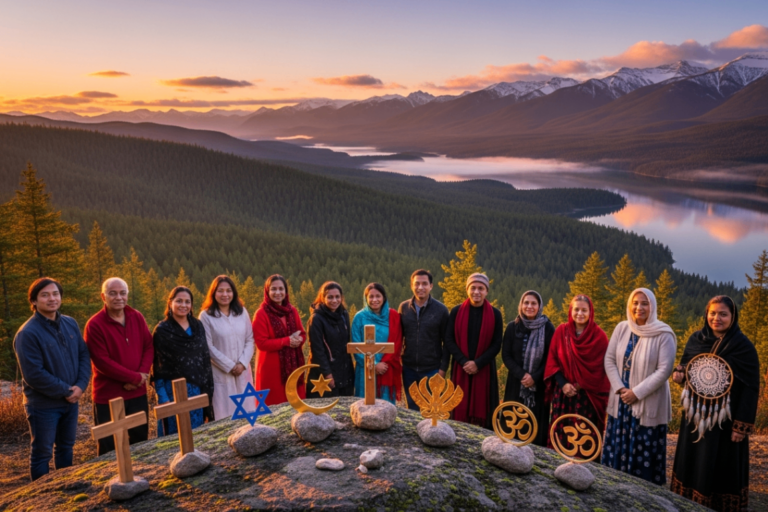
Key Highlights
Here are some important points about the religious landscape in Canada:
-
Christianity is still the biggest religious group, but the share of the population is going down.
-
More than one-third of the Canadian population now says they have no religious affiliation. This group is growing.
-
Immigration helps increase religious diversity. This makes the numbers in Islam, Hinduism, and Sikhism go up.
-
Statistics Canada shows that fewer people are attending religious services and fewer people say they have a religion. This is most true for younger generations.
-
Canadian society is different depending on where you are. In British Columbia, most people are less religious, while in Atlantic Canada, more people tend to keep traditional beliefs.
-
Indigenous spirituality is getting more recognition and people in the community are working to keep their traditions alive.
Introduction
Canada’s religious landscape has many different traditions and beliefs. There are more and more people who do not have a religious affiliation. Christianity was the main religion before, but now the population has many faiths. This change comes from immigration and new religious beliefs in the country. In this article, you will learn about the history of religion in Canada. We will talk about Indigenous traditions, global faiths that came later, and what spirituality looks like in Canada now.
Historical Overview of Religion in Canada
The story of religion in Canada is about change. In the beginning, Indigenous peoples had their own spiritual beliefs. These beliefs were tied to the land. Later, European settlers came and brought Christianity. This changed the religious landscape a lot.
Through the years, many groups came to Canada. Each brought new religious affiliation with them. Early on, it was the French and British settlers in places like British Columbia. Now, people from all over the world arrive. All of this has shaped Canadian society and made its spiritual environment open to many beliefs. Today, religion in Canada keeps growing and changing.
Indigenous Spiritual Traditions Before European Contact
Long ago, before Europeans came, the land we now call Canada was filled with many different spiritual beliefs. Indigenous peoples had their own ways of life and spiritual practices. These spiritual beliefs were not one single religion. Each nation and each group had its own ideas and ways. For Indigenous peoples, their spirituality touched everything they did. It shaped government, laws, health, and how they cared for the land. Certain places even carried special meaning and were seen as sacred.
Indigenous spirituality does not use one holy book or a group of leaders, like many religions seen in Canada today. It is passed to the next generation using stories, ceremonies, and by learning from Elders. These religious practices try to keep people, nature, and the spirit world in harmony.
Now, the Canadian population is starting to see just how important and complex these spiritual beliefs are and always have been. Knowing about indigenous spirituality helps us understand more about religious practices in Canada today and through its history.
Early French and British Colonial Religions
The French came to Canada first. They set up the Catholic Church as a main part of life, mostly in what is now Quebec. The Catholic Church played a big role in law, schools, and public life for many years.
After the British took over, the Anglican Church and other Protestant churches grew in power. This change brought two big Christian groups together, but there was often tension. Other followers, like Presbyterians and Methodists, also built their own places for worship. These groups later came together to form the United Church of Canada.
During this time, Canada became shaped by both Catholic and Anglican beliefs. In provinces like British Columbia, there were missions from both, as each colonial group tried to build their own way of life in the new land. Over recent years, the religious landscape in Canada has changed a lot. Still, you can see its roots in the country today.
19th and 20th Century Immigration and New Faiths
The 19th and 20th centuries were a time when religious diversity in Canada changed a lot, mostly because of immigration. Before, most immigrants were Christians from Britain and France. Then new immigrants started to come from other places in Europe and around the world, and they brought their own faiths. Some of these were Eastern European Jews who were escaping tough times, and Orthodox Christians from places like Ukraine and Greece.
During this time, people built the first synagogues and Orthodox churches in Canada. This made the country’s spiritual life richer. The cultural origins of these new immigrants were different, and their religious groups became places where people met and kept their language and traditions alive in the new country.
Did immigration play a role in religious diversity in Canada? Yes, it did. This was an important change that turned Canada from a country that mostly had two Christian cultures into the multicultural and multi-faith place it is now. These groups helped build the base for even more religious diversity that happened later in the 20th century.
The Influence of Missionary Activity on Canadian Religion
Missionary work had a big and often painful effect on Canada’s religious story. When European settlers first came, Christian missionaries—both Catholic and Protestant—tried to change the spiritual beliefs of Indigenous peoples. This happened because they thought their faith was better and wanted to make Indigenous peoples part of their way of life.
Religious leaders set up missions and schools in many places. Their goal was to take away the spiritual beliefs and ways of Indigenous peoples and bring in Christian ideas. This changed many cultural traditions and broke important bonds with past ways of living. The residential school system was the worst tool used for these changes.
Some people may have decided to follow Christianity on their own. But the story of missionary work is still very hard and debated. It changed the spiritual beliefs of Indigenous peoples at the roots and caused lasting hurt that is still felt in Canada today.
Modern Changes Since the Mid-20th Century
In recent years, the religious landscape in Canada has changed a lot. Since the mid-1900s, there has been a big move toward secularism. Many people no longer feel connected to traditional organized religions. Census data shows that the number of Canadians who say they have “no religion” keeps growing.
At the same time, more people from non-European countries have come to live here. They have brought other world religions like Islam, Hinduism, Sikhism, and Buddhism. This has made Canada’s big cities places with many different faiths. Along with these changes, fewer people now attend regular religious services. Even those who say they follow a faith go to services less often.
These changes are part of wider shifts in society. People now focus more on themselves and often doubt large institutions. Because of this, religious practices in Canada have become more mixed and many choose to practice their faith in their own way. Personal beliefs and practices now matter more to many than going to group worship.
Indigenous Religions and Beliefs
Indigenous spirituality is the oldest and most lasting faith in Canada. It is not just one religion. It holds many spiritual beliefs and ways to practice that are special to hundreds of Indigenous peoples. These spiritual beliefs are not only about your spirit. They also bring together your body and spirit. There is a big focus on living in balance with the land and everything in it.
For a long time, colonial rule tried to stop Indigenous spirituality. Still, now it is coming back strong. Many people are working to bring these old spiritual ways back. This move is a big part of Canada’s religious landscape. It helps with cultural healing and brings back pride for the people. The next parts look into the deep roots of these spiritual beliefs and how important they are.
Core Indigenous Spiritual Practices
Indigenous spirituality is shown in many ways. These religious practices highlight how every life is linked. They are not like the usual set weekly services. Instead, these practices often come from the seasons, the life cycles, and what the community needs.
One main belief in indigenous spirituality is there be a creator or Great Spirit. There are also other spirits in the natural world.
Stories told by word of mouth are important. Elders share these sacred stories, lessons, and histories with each new group. These stories help with moral lessons. They explain where the world came from and where people stand in it. Many people will do personal spiritual things, like vision quests or daily prayers. These build a close tie to the spirit world.
There are many ceremonies that use sacred medicines like tobacco, sage, sweetgrass, and cedar. They are used for prayer and to clean the mind and spirit. These are not used for fun. Instead, they serve as tools for sacred ceremonies. They help carry prayers to the Creator, help clean the spirit, and show respect.
Sacred Ceremonies and Rituals
Sacred ceremonies and rituals are at the center of indigenous spirituality. These events show strong community ties and a close link to the divine. Usually, respected religious leaders, like Elders or spiritual guides, run these ceremonies. These leaders know how to do them the right way. Some examples are sweat lodge ceremonies, potlatches, sun dances, and pipe ceremonies.
Each ritual serves its own purpose. People may use them for healing, to give thanks, to mark a big life change, or when they need guidance. These religious practices help keep spiritual beliefs alive. They also help make the community stronger. For example, a sweat lodge is a ceremony for cleansing. It helps clear the body, mind, and spirit through prayer.
The details about these ceremonies are usually sacred. They are not shared with everyone. Their power comes from specific ways of doing things and special teachings. They give people a living connection to their ancestors. It is a way that traditions of indigenous peoples stay alive over time.
Revitalization and Recognition in Modern Canada
In the last few years, there has been a strong push to bring back Indigenous spirituality in Canada. For a long time, it was held back by rules like the residential school system. Now, many Indigenous communities want to get their old spiritual ways and languages back. This is a key part of healing and choosing their own path.
Today, more people in Canadian society see and support this. Some of it comes from new law and political steps. The Canadian Charter of Rights and Freedoms helps protect freedom of religion. The courts have started to see the right of Indigenous peoples to follow their own ways. Now, some places let people do smudging ceremonies.
There are still problems, but Indigenous spirituality is now easier to see for people, and this is helping change the talk about religion in Canada. It makes people look again at old stories about the country and shows how important Indigenous ways are. The work to bring back these traditions is not just to remember old times, but to help them stay strong for all the people who will come next.
Impact of Residential School System on Indigenous Spirituality
The residential school system caused deep harm to indigenous spirituality. For more than one hundred years, these church-led, government-paid schools took indigenous children away from their homes and families. The main goal was to make them act more like people in Euro-Canadian culture. The system tried hard to wipe out their spiritual beliefs and ways of life.
The children were sometimes hurt badly if they spoke their own language or did anything from their culture. They had to turn to Christianity. People said that their own spiritual beliefs were either wrong or evil. This very hard attack cut off the line of spiritual knowledge from older people to the young. Because of this, a lot of culture and spiritual ways were lost. These losses still bring pain to indigenous peoples even now.
This system left behind deep hurt that goes from one generation to the next. It hurt not just the spirit of each person but also the strength of whole communities. Many people are now working to bring back indigenous spirituality, and this is a strong way for them to fight back and begin to heal. It also shows one of the biggest differences in spiritual beliefs and religious beliefs across Canada, since the pain is felt most in the places that had these schools.
Christianity in Canada
Christianity has been the main religion in Canada for a long time. It has shaped the country’s laws, culture, and everyday life. Right now, about half of the Canadian population calls themselves Christian. But the way people follow Christianity is changing. Roman Catholics are still the biggest group. Even so, religious attendance is going down.
There are many christian denominations among Canadians. There is the United Church. There are also evangelical groups. Orthodox Christians are becoming more common, too. The next parts will talk about these main christian denominations. It will show where they fit in modern Canada.
Major Christian Denominations and Their Distribution
Canada is home to a wide spectrum of Christian denominations, each with its own history and regional concentrations. According to the 2021 census, about 53.3% of Canadians identify as Christian. The main religions practiced in Canada under the Christian umbrella include Catholicism, Protestantism, and Orthodoxy. Roman Catholics form the largest group, with a significant presence in Quebec and among various immigrant communities.
Protestantism is highly diverse. The United Church of Canada and the Anglican Church are among the largest mainline Protestants, historically influential in English-speaking Canada. Additionally, there are many evangelical, Baptist, and Pentecostal churches, which have seen periods of growth. Orthodox Christians, while a smaller percentage, have established a notable presence, particularly in large cities, due to immigration from Eastern Europe and the Middle East.
Here is a breakdown of religious affiliation in Canada from 2021, showing the share of the Christian population alongside other faiths.
|
Characteristic |
Share of total population |
|---|---|
|
Christian |
53.3% |
|
Muslim |
4.9% |
|
Hindu |
2.3% |
|
Sikh |
2.1% |
|
Buddhist |
1% |
|
Jewish |
0.9% |
|
Traditional* |
0.2% |
|
Other** |
0.6% |
|
None |
34.6% |
Roman Catholicism: History and Current Trends
Roman Catholicism has been in Canada since the first French explorers came in the 16th century. For a long time, the Catholic Church was the most powerful group in Quebec. It controlled a lot, like education, social services, and much of public life. As Irish, Italian, and other European Catholic immigrants came, the church’s reach spread across the country.
Roman Catholics are still the biggest single religious group in Canada. But the Catholic Church has faced some tough times over the last few decades. The Quiet Revolution in Quebec in the 1960s made church attendance decline. It also cut the church’s influence in public life. This started happening in other parts of Canada too.
Even though numbers are getting smaller in some places, the Catholic Church still plays an important part in Canada’s religious life. Immigration from places like the Philippines and Latin America has helped many parishes get new energy. Still, the way people connect with faith is changing. Many are leaving old religious groups, and Catholicism is also seeing this shift in religious affiliation.
Protestantism: Diversity and Evolution
Protestantism in Canada is known for being different and changing over time. It used to be the main faith in the English-speaking part of the country. There are many groups inside it, from mainline protestants with a long history to churches that have new energy, like the evangelical ones. The United Church of Canada, which started in 1925 when Methodist, Presbyterian, and Congregationalist churches joined together, is now the biggest Protestant group.
Mainline protestant groups, like the United Church and the Anglican church, have been losing members. Fewer people are now going to their services compared to some years ago. This trend matches what is happening in the whole religious landscape of Canada, as fewer people are active in old Christian groups.
Some evangelical and Pentecostal churches are doing better. They keep members and sometimes grow, as they often welcome new people and offer worship that feels fresh. This shows that Protestantism in Canada is not just one thing. It changes, and there are many ways to be part of it. The united church and other groups play a part in this changing story of faith in Canada.
Eastern Orthodox Churches in Canadian Society
The Eastern Orthodox Churches in Canada came about because people moved here. Most of these newcomers were from Eastern Europe and the Middle East. Ukrainians, Russians, and Greeks were some of the first big groups to arrive. They set up homes mostly in the Prairie provinces and larger cities with factories.
This religious group keeps growing with more people coming. Some came from Serbia, Romania, and Lebanon. Orthodox churches do more than offer a place to pray. They are also key cultural spots. People use them to keep their language and customs alive. These places help members keep their sense of who they are, even in this new country.
Orthodox Christians do not make up a big part of the total population. Still, their special traditions, ways of worship, and art have added color to Canada’s mix of faiths. Their part in public life shows how the country is open to many ways of believing.
Christian Population Statistics
According to Statistics Canada and the 2021 Canadian Census, Christianity is still the largest religion in Canada. But it does not have the same strong hold it used to. The numbers show that 53.3% of the population called themselves Christian. This is just over half of the people, and is much lower than in the past, when most people in the country were part of this group.
When you look at the population by age, there is a big gap. Older Canadians are more likely to say they are Christian. Younger generations, on the other hand, often say that they have no religious affiliation. Because of this, the number of Christians is expected to keep going down as time goes on.
These statistics from Statistics Canada show that the country is changing when it comes to religion. Almost all christian denominations are seeing fewer members. This makes it clear that more people are moving away from organized religion, especially in younger generations.
Christian Festivals and Observances
Christian festivals and observances are a big part of the Canadian calendar. The two biggest holidays are Christmas and Easter, and these are official days off for everyone in the country. These festivals are central to the Christian faith. They are a time for special religious services and for families to come together all over Canada.
For many Christians in Canadian society, these holidays are the main times people go to church. Religious activities during these weeks are more than just the normal Sunday service. There are special church events, singing, and things for the community. At Christmas, you will find midnight masses and nativity plays. At Easter, people mark Good Friday with serious church services, then have joyful celebrations on Easter Sunday for the resurrection.
Besides Christmas and Easter, there are other Christian observances in Canada, but these are not public holidays. These include:
-
Ash Wednesday, which is the start of Lent for some churches.
-
Pentecost, when people remember the gift of the Holy Spirit.
-
Thanksgiving, which has a religious meaning for many families.
These events still matter to a lot of Canadians. They help people keep traditions and make each year special with religious services, church attendance, and other important religious activities.
Islam in Canadian Society
Islam is one of the fastest-growing religions in Canada. This is mostly because of immigration. Muslim communities are now strong and easy to spot in many places in the country, mainly in big cities. In 2021, around 4.9% of the Canadian population had a religious affiliation with Islam. That makes it the second-largest religion in Canada.
Canadian Muslims come from many different cultures and countries. They play a big part in making Canadian society rich and full of diversity. In the next sections, you will see how Muslim communities have grown, what their institutions are like, and the way they shape the culture in Canada. The rise of Islam shows which non-Christian religions are getting bigger in Canada.
Growth of Muslim Communities
The number of Muslim communities in Canada has grown a lot, especially in recent years. In the past, there were not many Muslims here for over a hundred years. But big changes started in the 1960s and 1970s. New immigration rules stopped giving special help to people from Europe. Because of this, more people came from the Middle East, South Asia, and Africa.
The trend has picked up in recent years. Now, Islam is one of the fastest-growing religions in the country. The 2021 census shows that almost 5% of people in Canada are Muslim. The Muslim group here is one of the most diverse. There are people from places like Pakistan, Syria, Egypt, and Iran.
This means Muslims are now a big visible minority group in Canada. With more immigrants and a younger population, this religious group is changing the face of many big Canadian cities.
Major Islamic Organizations and Mosques
As Muslim communities grow in Canada, the support for their religious and cultural life grows too. Many mosques and Islamic centers have been built, especially in big cities like Toronto, Montreal, and Vancouver. These places are not just for prayers. They also act as center points for community life.
These centers give many religious services. You can find Quranic classes for both children and adults, plus talks about Islamic topics. They also plan religious activities for big events, such as Ramadan and Eid. Many mosques go beyond worship. They offer help with food banks, family counseling, and community events. This helps newcomers settle in and supports families.
Some groups and mosques are very important for Muslim life in Canada, including:
-
The Islamic Society of North America (ISNA) Canada
-
The Muslim Association of Canada (MAC)
-
Local mosques like the Jami Mosque in Toronto
-
The Abbasi Islamic Center in different cities
These groups are essential for carrying out religious faith and for making community ties strong.
Cultural Contributions of Canadian Muslims
Canadian Muslims have added to canadian society in many ways. They come from different places and bring their own customs. You can see their touch in food, clothes, art, books, and learning. These new ideas and ways of living have helped canada be more open to different cultures.
In many canadian cities, people take part in Eid al-Fitr and Eid al-Adha festivals. These events often welcome everyone, including people who are not muslim. Muslim artists, writers, and thinkers have given new views on topics that matter in canada and in other places. Canadians seem to be open to religious diversity, as shown by how these events and customs are celebrated.
Muslims in canada join in many parts of daily life. At the same time, they keep hold of their own culture and beliefs. This has made them a good example of how to live together with difference, which is a big part of what makes canada strong. Their story shows that religious diversity can make the nation better for us all.
Demographic Profile of Canadian Muslims
The population of Canadian Muslims is young and growing fast. According to census data from Statistics Canada, there were almost 1.8 million Muslims in 2021. That was about 4.9% of the total population. This number has gone up a lot in the last twenty years. The population is the fastest-growing major religious group in Canada.
Many of them are young. The median age in the community is lower than the median age of the total population. This means the population is likely to grow more in the future. Most Canadian Muslims live in cities and urban areas. A big share are in Ontario, especially the Greater Toronto Area.
Immigration has shaped this group. The population is made up of mostly first or second-generation immigrants. Their countries of origin are diverse. This helps make Canada a mix of cultures, and adds to the way the country is changing today.
Judaism’s History and Presence
Judaism has been a part of Canada since the 1700s. Even though Jewish people are not a large group here, they have made big changes in Canadian society, culture, and public life.
Jewish people live in many parts of the country, and there are strong communities in cities like Toronto and Montreal. This story shows their strength and how they fit into Canadian society. It also shows how they keep their rich background alive. The next parts will look at the history of Jewish settlement and how the community lives and helps today.
Early Jewish Settlers and Communities
The history of Jewish people in Canada goes back to the 1760s. That was when the first Jewish settlers came to Quebec after the British conquest. In 1768, the first synagogue called Shearith Israel was set up in Montreal. This marked the start of a Jewish community in the country. During the 1800s, small groups of Jewish people arrived from Germany and Britain.
Most of the big growth happened from the late 1800s to the early 1900s. At that time, many Jewish people left the Russian Empire because of trouble and hard times. Thousands of them came to Canada and made new homes in places like Montreal, Toronto, and Winnipeg. They brought many rich religious and cultural ways with them to these parts of Canada.
Religious affiliation was a big part of who they were. They worked together to build places to pray, schools for their kids, and groups to help each other out. This wave of immigration built a strong base for the Jewish people in Canada today.
Contemporary Jewish Life and Institutions
Jewish life in Canada is lively and different in many ways. It includes the whole range of religious services, from Orthodox to Reform, and even people who follow secular traditions. The biggest groups of Jewish people are in Toronto and Montreal. There are also many living in Vancouver, Winnipeg, and Ottawa.
These groups have strong support from lots of groups and places. Synagogues are still important for religious services and for people to meet. But Jewish life is not just in synagogues. Jewish community centers, schools, and cultural groups help with learning, social life, and keeping old traditions alive. All these help Jewish people feel proud and connected.
The community also takes part in Canada’s public life. Many groups work to speak up for Jewish people, push for fairness, and start talks between different religions. Because of this, Jewish people and their ideas are always part of what Canada talks about as a country.
Cultural and Social Impact of the Jewish Community
Even though they make up a small part of the population, the Jewish community has had a big effect on Canadian society. People from this group have done well in fields like business, law, medicine, schooling, and the arts. Their hard work has helped shape the way people in Canada think and live.
The community cares a lot about education, helping others, and giving back. These values have touched many lives. Some of the best-known hospitals, schools, and cultural groups in Canada grow because of support from Jewish people. Giving to those in need and standing for what is right is very important to this community. This has helped not just their group, but all of us.
Jewish people have also played a big part in making sure there is religious diversity in Canada. They have a long history of standing up for the rights of all minorities and fighting against hate. Because of their work, Canada is now filled with many cultures and shows more respect for all cultural origins. This makes the country stronger and better for everyone.
Observance of Jewish Holidays and Customs
The way Jewish people follow their holidays and customs is an important part of life for them in Canada. These religious practices help the community stay connected to their history and faith all through the year. People take part in both weekly Shabbat (Sabbath) moments and special yearly festivals that mark big events in Jewish history.
The Jewish calendar uses the moon, so the dates of holidays change each year. People celebrate these festivals with their families at home and with others at synagogues. These major observances help set the pace and shape for Jewish life in Canadian society.
Here are some of the main holidays and what they mean:
-
Rosh Hashanah and Yom Kippur: These are the High Holy Days, which is a time for people to think about their actions, say sorry for things done, and pray.
-
Hanukkah: Also called the Festival of Lights, this goes on for eight days and marks the time when the Second Temple in Jerusalem was made holy again.
-
Passover (Pesach): This is a big festival that celebrates the time when the Israelites were freed from slavery in Egypt.
These special events are key to keeping Jewish identity strong and making sure traditions are given to the next generation. Religious practices are important for every member in Canadian society.
Buddhism, Hinduism, and Other Dharmic Religions
Dharmic religions like Buddhism, Hinduism, Sikhism, and Jainism are now a big part of religious diversity in Canada. This happened because many people have moved to Canada from Asia. The number of Hindus and Buddhist communities has gone up a lot in the past few years. They have built temples and centers, which are very important for their spiritual and cultural life.
The Sikh community also has a long history in Canada, and they have made a big impact. All these faiths give Canada’s religious scene a lot of new ideas and ways to practice their beliefs. You will read more about how these religions came to the country, the places they built, and how they live in Canada today. These changes show which non-Christian religions are growing in Canada.
Arrival Through Immigration Waves
The arrival and spread of Dharmic religions in Canada are tied to people moving from Asia. Before this, only a few people from these groups came. Most Hindus, Buddhists, and Jains moved here during the mid and late 1900s. This happened after Canada removed rules that kept people out because of their race.
The first groups came from South Asia, including India and Sri Lanka, as well as East Asia, such as China, Japan, and Vietnam. They brought their culture and religious ways with them. They wanted to start new lives but still hold on to their spiritual roots. Most of the people in these groups had good jobs and were well-educated. Many went to live in the largest cities of Canada.
As a visible minority in Canadian society, these groups had to work hard. They needed to fit in with others but also wanted to remember where they came from. It was important to start temples and centers for the community. This gave them a space to keep their faith strong and let their kids learn about their cultural origins. Because of these communities, the population in Canada is now much more mixed and lively.
Buddhist Temples and Centers
Buddhist temples and meditation centers are now easy to find all over Canada. This shows how diverse Buddhism is. There are places for many kinds of Buddhist communities. These include groups from Theravada, Mahayana, and Vajrayana traditions. They come from countries like Sri Lanka, Thailand, China, Vietnam, Tibet, and Japan.
These centers are not only for religious services. They are important for community life, too. People can join meditation classes, talks about Buddhist ideas, and fun events that teach about the culture. For many Buddhists, especially those who moved from other countries, the temple is a place to meet with people who speak the same language or share the same culture.
In recent years, there have been more non-Asian Canadians who want to learn about Buddhism. Many people like its lessons on mindfulness, being kind, and finding peace. Because of this, many cities now have groups for meditation and places to learn about Buddhism. These welcome a Western crowd. All these religious activities help make Buddhism a bigger part of spiritual life in Canada.
Hindu Temples and Festivals
As more Hindus move to Canada, Hindu temples, called mandirs, have become common in many cities. These temples stand out because they are big and beautiful. People use them to pray and take part in different religious practices. Inside, people offer prayers, known as puja, to many gods and get help with their spiritual needs.
The temples are not just open for prayers every day. They are also the place where big Hindu festivals happen. These festivals are full of life and excitement. They help connect people and show off the deep culture of Hindus. These events are a big part of keeping the group’s faith and culture strong.
Some key Hindu festivals that are big in Canada are:
-
Diwali: This is called the festival of lights. People light lamps, enjoy fireworks, and eat good food. It celebrates good winning over bad and light taking over darkness.
-
Holi: This is the festival of colors. People have fun throwing colors at each other. They welcome the start of spring.
Today, these festivals are well-known in Canadian society. Many public leaders join in with local people to celebrate together.
Sikhism’s Roots and Influence
Sikhism has a long history in Canada. The first Sikhs came to the country more than one hundred years ago. Since then, this religious group has grown a lot and is now one of the most important and well-known minorities in Canada. Many Sikhs live in British Columbia and Ontario. There, they have built close and busy communities.
Sikhs have given a lot to Canadian society. You can see their work in fields like business, politics, and the military. The Sikh ideas of service (seva), equality, and social justice match the values of multiculturalism in Canada. One big example is the langar, which is a free kitchen at every Sikh temple, or gurdwara. Anyone can get a meal at the langar, no matter their faith.
The Sikh community’s push for the right to practice their faith is clear in some important legal cases about religious freedom. Cases like the right to wear the turban in many jobs have helped Sikhs and other groups keep their beliefs. Their strong efforts have played a part in making Canadian society more open for all religious minorities.
Jainism and Its Small But Visible Presence
Jainism is not one of the largest Dharmic religions in Canada, but the group has made a name for itself. Most of the people in the Jain community be from India, and many started to come over in large numbers in the late 1900s. You can find most of them in big cities like Toronto.
This group follows key ideas like non-violence (ahimsa), open-minded thinking (anekantavada), and not holding onto many things (aparigraha). These are the values that shape the daily lives of Jains. These beliefs also help others look at the community with a lot of respect. Even though Jains do not have a huge group in Canada, they have been able to set up temples and places for culture so they can keep their own traditions alive.
Their religious affiliation is tied to these special ideas. Jains are known for living in a way that is calm and has a lot of rules. Their diet is mostly vegetarian or vegan, and that makes them different, too. This group stays closely linked to their cultural origins through their religious and social gatherings.
Sikhism and Its Role in Multicultural Canada
Sikhism is now a big part of Canadian society and shows how strong religious diversity can be. Sikhs have been in Canada for more than 100 years. They are now a key part of the country’s much larger mix of people. Their beliefs in fairness, helping others, and justice have done a lot for life in Canada.
You can see this diversity every day. Sikhs join in many groups and jobs across the country. In the next parts, you will get to know more about how Sikhs came to Canada, how the gurdwara brings people together, and how Sikhs have helped in public service. Seeing this group get bigger also shows how non-Christian faiths are growing in Canada.
Sikh Immigration and Settlement Patterns
Sikh people started moving to Canada in the early 1900s. The first group came to British Columbia from the Punjab region of India. These first settlers went through a lot of hard times and faced strong dislike from others. But they worked hard and found a place, mostly in the lumber and farming jobs. Even though there were tough rules against immigration, they made it possible for others to follow them in the years to come.
The biggest group of Sikh immigration happened after the 1960s. Canada changed its rules and started a points system for people who wanted to move there. This brought a larger group of Sikhs to the country. New communities grew quickly, especially in Ontario, with many in the Toronto and Brampton areas. People also moved to Alberta and Quebec.
Today, Sikhs are an important visible minority and a key religious group in Canada. Most Sikhs live in big cities, where their communities are large and close together. These places have turned into lively centers for culture and business. More Sikh families keep coming because of new immigration and natural growth.
Gurdwaras and Sikh Cultural Life
Gurdwaras are the main Sikh places for prayer and community life in Canada. These places are not only where people pray or sing hymns called kirtan. They are also busy places for the whole community that welcome everyone, no matter what you believe or where you come from. The Guru Granth Sahib, which is the Sikh holy book, is kept here and makes the space feel special.
One of the most important things at a gurdwara is the langar. This is a free community meal that everyone can have. Langar shows some core Sikh beliefs, like everyone being equal and helping others without wanting anything back, which is called seva. Gurdwaras also hold religious services, teach Punjabi language classes, and put on different cultural events. These things help people hold on to their cultural origins.
Key parts of life at the gurdwara are:
-
Daily prayers and worship services.
-
Parties for big Sikh festivals like Vaisakhi and Gurpurabs.
-
Being a place where people come together for help and to plan things for their community.
All these religious activities help make the gurdwara the lively heart of Sikh life.
Sikh Participation in Canadian Public Life
The Sikh community in Canada is very active in public life. Many Sikhs hold important jobs in all levels of government. You can see them in city councils and in the federal cabinet. Their role has brought more diversity to Canadian leaders. Now, this religious group has a strong voice in the country.
Sikhs also work in law, the military, and with the police. You will find Sikh people in the Royal Canadian Mounted Police too. A key moment was when Sikhs were allowed to wear turbans with the police uniform. This was a big win for religious freedom. It showed the group’s place in Canadian society.
The way Sikhs take part in these roles shows their wish to help the wider community. They keep their own faith and also join in to make things better for all. Seeing Sikhs in public life helps show the world that Canada is a good example of a multicultural society, where people keep their traditions and work together.
Other World Religions in Canada
Canada’s religious landscape is not just about the big faiths. There are also many other world religions and spiritual paths that help shape it. While these groups are smaller, people from the Baháʼí Faith, Druze, Zoroastrians, and Unitarian Universalists also make up the country’s religious group mix.
These groups bring even more religious diversity to Canada. Some of these are new religious movements and modern pagan traditions. You will find in the next sections short looks at some of these religious groups that might be smaller but are still an important part of Canada’s story.
Baháʼí Faith Community and Beliefs
The Baháʼí Faith has been in Canada for over 100 years. This religious group shows its main ideas of unity and peace around the world. The faith says that all religions have value and that all people should be together as one. One of the best-known signs of the faith in North America is the Baháʼí House of Worship near Chicago. But Canada is also an important place for the faith. Its leaders have praised the country for choosing to welcome many kinds of people.
The Baháʼí community in Canada is one of the first and strongest in the Western world. The group includes people from many cultures and countries. Many Baháʼís in Canada have come from Iran, the place where the faith began and where people in the faith still face problems.
Baháʼís work hard to support talks between different faiths, help social causes, and offer education. They believe that science and religion can go together. They also say men and women should have equal rights. Many of these ideas match what people in Canada think is good. The right for Baháʼís to follow their faith comes from Canada’s promise for freedom of religion.
Druze, Zoroastrian, and Unitarian Universalist Groups
Canada has a number of smaller, long-standing religious groups. Some of these are the Druze, Zoroastrians, and Unitarian Universalists. The Druze is a faith that began in the Middle East. Most of their community in Canada came from Lebanon, Syria, and Israel. They keep their strong community ties but also take part in Canadian life.
Zoroastrians follow one of the oldest religions that believes in one God. This religion started long ago in ancient Persia. In Canada, there is a small and active Zoroastrian community, mainly living in Ontario and British Columbia. They have set up places to meet so they can keep their cultural origins and religious customs alive.
Unitarian Universalism is another type of religious group found in Canada. This faith is open and welcomes ideas from many religious and philosophical traditions. Its members and their congregations welcome all, even those who do not believe in a god or are unsure. They often get involved in social issues. This helps shape a rich and diverse religious landscape in the country.
Paganism, Wicca, and New Religious Movements
Canada’s religious diversity now includes more people who say they follow Paganism, Wicca, or other new religious movements. Many of these spiritual paths focus on nature. The followers of these paths may believe in more than one god or think all things have a spirit. They offer another choice for people who do not want a traditional one-god religion. Some people do not always understand these groups. Still, they are a known part of the country’s religious world.
Wicca is a type of Pagan practice that many people know. It includes witchcraft and showing respect to a God and a Goddess. People who follow Wicca may join small groups. These groups are called covens. They gather to mark seasonal festivals, which are called Sabbats, and to do special rituals. The religious practices in Wicca can feel very personal. Each person, or each group, may do things their own way.
The growing interest in these new spiritual paths shows another side of religious diversity in Canada. There are not many people with this religious affiliation. However, their presence shows more people look for non-traditional, personal forms of belief. These new religious movements add something special to the way people talk and think about religion in the country.
Irreligion, Atheism, and Agnosticism
A big trend in today’s Canada is that more people are turning away from religion. Statistics Canada says that over one-third of the population now say they have no religious affiliation. These people, often called “nones,” include atheists, agnostics, and others who don’t belong to any religion.
This rise in secularism is changing Canadian society. It affects things like public policy and the values people have. The next sections will talk about trends in Canadian secularism, the people behind these numbers, and how this shift affects society. So, how many in Canada think of themselves as non-religious or atheist? The number is high and it keeps growing.
Trends in Canadian Secularism
Canadian secularism has grown over many years and changed a big part of the country’s way of life. Census data shows this trend clearly. More people in the Canadian population now say they have no religious affiliation, and fewer are going to religious services. In 2021, 34.6% of the population said they did not belong to any religion. This makes them the second-largest group after Christians.
The population of younger generations is even less likely to belong to a religion. Young people today do not go to religious services as much as their parents or older family members did. This means secularism is only going to get stronger with time.
This rise in non-religious views answers the question about how many in the Canadian population now see themselves as not being religious or as atheist. The number is now more than one-third of all people in the country. The latest census data and recent surveys show that having no religious affiliation might soon be one of the main things that define Canada.
Demographics of Non-Religious Canadians
The demographics of non-religious Canadians, as detailed by Statistics Canada, reveal some clear patterns. The highest rates of non-religious affiliation are found in British Columbia and the Yukon, where nearly half the population reports no religion. This group is also growing rapidly in other parts of the country.
Age is the most significant demographic factor. Younger Canadians are much more likely to be non-religious than older generations. This trend holds true across different regions and cultural backgrounds. Men are also slightly more likely than women to report no religious affiliation.
The non-religious population is not a monolith. It includes individuals who hold a variety of personal beliefs, from firm atheism to agnosticism or simply a lack of interest in organized religion. While the total population identifying as non-religious is 34.6%, the specific breakdown gives a clearer picture.
|
Religious Affiliation |
Share of Total Population |
|---|---|
|
None (Non-religious) |
34.6% |
|
Christian |
53.3% |
|
Other Religions |
12.1% |
The Rise of Humanism and Secular Organizations
As more people in Canada are not part of a religion, humanist and secular groups are getting bigger and having more say. These groups help people find a sense of community and a place to speak out, even if they do not follow any religion. Humanism is an idea that puts human reason, doing what is right, and care for others at the center. It gives people a way to live a good life, without the need for religious rules.
Groups like Humanist Canada and other local secular groups talk about these ideas in public life. They work to keep religion and the government separate. They stand up for science, and share a different view in talks about what is right or wrong.
As these groups grow, it shows that many people want to build strong communities and feel they have a purpose, even if they are not religious. They help Canada have more religious diversity by making sure the voices of those without a religion are heard. This also means there are more views in public life, not just those from religious organizations.
Social Impacts of Declining Religious Affiliation
The drop in religious affiliation is having a big effect on Canadian society. When fewer people in Canada say they belong to a religion, religious groups play a smaller part in public life. You can see this in talks about giving public money to religious schools, taking religious signs out of public places, and moving toward rules for public life that are not based on religion.
This change shows up in daily life, too. In the past, places like churches, temples, and mosques helped people come together, do charity, and support each other. Now, as fewer people go to these places, some wonder what will take their place. Some groups in the community, sports teams, and online sites are picking up these jobs.
Because the role of religion is different now, Canadian society needs to find new ways to help people feel like they belong, share values, and deal with big life questions. The fall in religious affiliation is changing the ways people in Canada connect, live, and find meaning.
Regional Patterns in Religious Belief
Canada is a big country, and people have different religious beliefs in its many parts. You will see big differences in how religious or not some places are. This religious diversity happens because of how people settled here in the past, who has moved to Canada, and what the local culture is like.
For example, the Atlantic provinces are known for being more Christian, while the West Coast is known for being more secular. These differences show how the parts of Canada can be very different from each other when it comes to religion. This mix makes Canada’s religious picture very interesting. So, are there clear regional differences in religious beliefs throughout Canada? Yes, there are, and the next sections will tell you more about them.
Religion in the Atlantic Provinces
The Atlantic Provinces—Newfoundland and Labrador, Prince Edward Island, Nova Scotia, and New Brunswick—have always been some of the most religious places in Canada. The religious landscape in this area is shaped by the past, when early groups from Scotland, Ireland, England, and France brought their Christian faith here.
When you look at all of Canada, you see that Atlantic Canada stands out with more people who say they are Christian. Many people there also say that religion is an important part of their lives. Even though church attendance is going down now, like it is across the country, it is still higher in the Atlantic provinces than the national average. Roman Catholicism is strong in parts of New Brunswick and Newfoundland. There are also many Protestant churches in Nova Scotia and Prince Edward Island.
But this area does see what is happening in the rest of the country. More people, mostly from younger generations, say they have no religious affiliation. Still, the Christian roots in the Atlantic provinces are an important part of who they are today.
Quebec’s Distinct Spiritual and Religious Identity
Quebec has its own spiritual style, which makes it different from the rest of Canada. For many years, the Catholic Church had huge control in Quebec. The church was in charge of education, health care, and a lot of everyday life. Most Quebec residents were Roman Catholics and followed church rules closely.
But in the 1960s, things changed during the Quiet Revolution. The area saw quick social change and a move away from religion. The Catholic Church lost its old power, and church attendance dropped a lot. Even now, many Quebecers still call themselves Catholic because of their background, but few people go to church.
This shift has made the religious landscape special in Quebec. The government now tries to stay neutral about religion. This can be seen in news about rules on religious symbols. Quebec’s religious landscape has a strong Catholic identity, but people live with deep secularism too. This mix still influences daily life for all, changing both Quebec and the rest of Canada.
Ontario’s Religiously Diverse Landscape
Ontario is the province with the most people in Canada. It has the most mix of religions in the country. The province started out with a strong Christian base, mainly Protestant and Catholic. But over the years, people from around the world moved here and changed it a lot. Now, you can find some of the largest and most lively groups of Muslims, Hindus, Sikhs, Buddhists, and Jews in Canada living in Ontario’s large cities. This is especially true in the Greater Toronto Area.
The total population of Ontario shows this change. While there are still more Christians, their numbers are going down. At the same time, there are more people from smaller faiths, and there are also a lot of people with no religion at all.
With so many groups mixed together, Ontario has become an important place for people from different religions to talk and share ideas. In the province, the total population meets every day in schools, at work, and in neighborhoods. Their everyday life together is a good example of what multiculturalism looks like in Canada. The way people interact in Ontario’s large cities and other places shows how everyone tries to get along and respect each other’s beliefs.
Prairie Provinces and Religious Life
The Prairie provinces—Manitoba, Saskatchewan, and Alberta—have a religious landscape that comes from their own history of people settling there. The first groups to shape faith in this area of Western Canada include people who follow Indigenous spirituality, Catholics, and mainline Protestants. Later, many people came from Europe. This brought more diversity. There were lots of Ukrainians, both Catholic and Orthodox, and Germans, like Mennonites and Hutterites. People from Scandinavia also came to the Prairies.
Because of all this, the Prairie provinces now have more religious diversity than Atlantic Canada. But, compared to British Columbia, they usually have higher rates of people going to church and being part of a faith. Mainline Protestants and Catholics still have a strong role in the Prairies. The region, especially Alberta, is also known for having many evangelical Christians.
In recent years, the Prairie provinces have welcomed even more people from around the world. This is growing the religious diversity even more. Immigration brings more Muslims, Sikhs, and Hindus, with many living in cities such as Calgary, Edmonton, and Winnipeg. All these changes make the spiritual life of this region even more complex.
British Columbia’s Pluralism and Non-Religious Majority
British Columbia is different from other places in Canada because most of the population here does not have a religious affiliation. The 2021 census shows that a large number of people in British Columbia say they are not religious. This makes the province the most secular area in the country.
The low level of religious affiliation has been part of British Columbia for a long time. Many people say it comes from the region’s past as a frontier, where groups and institutions were not as strong. Even with so many people who do not follow a religion, British Columbia also has a lot of religious diversity.
There are big Sikh, Buddhist, and Hindu groups here, mostly because the province is close to Asia. Many people from Asian countries have moved to British Columbia over the years. The mix of many people without religion and strong faith communities means the religious landscape here is like no other in Canada.
Spirituality and Faith in the Northern Territories
Spirituality and faith in the three Northern Territories of Canada—Yukon, Northwest Territories, and Nunavut—are different from much of the country. One big thing about this area is the strong role of indigenous spirituality. The people living there, especially the Indigenous groups, keep their spiritual beliefs and religious practices as an important part of their lives.
Christianity is also a big part of life in the North. It became popular because of missionary work that started in the 1800s. A lot of people in this region, both Indigenous and not, say they are Christian. Most are Anglican or Catholic. Many of these communities mix old Indigenous spirituality with Christian traditions.
People in the Yukon Territory have the same pattern as British Columbia. A very high number say they have no religious affiliation at all. Nunavut and the Northwest Territories are different. They have more people who say they follow a faith, which matches their bigger Indigenous populations. Life in the North is far away from the big cities and the culture is unique. This leads to a very special kind of spiritual beliefs and religious practices, not found in other parts of Canada.
The Impact of Immigration on Religious Diversity
Immigration is one of the biggest reasons for the rise in religious diversity in Canada. Over the past fifty years, most new immigrants have come from countries outside of Europe. These new immigrants have brought their own faiths such as Islam, Hinduism, Sikhism, and Buddhism. People’s cultural origins from around the world have helped shape the way religion looks in Canada today.
This flow of new people has changed Canada from a country that used to be mostly Christian. Now it is one of the most religiously diverse countries in the world. Has immigration changed religious diversity in Canada? The answer is yes. It has truly changed the nation’s makeup and the way our culture looks and feels.
Shifting Demographics Due to Newcomers
Religion in Canada looks different today because of new immigrants. Before the 1960s, most people who came to Canada were from Europe. This helped keep the population mostly Christian. Then, immigration policy changed. More people started coming from all over the world. This led to big changes in the country’s religious diversity.
Now, new immigrants from Asia, the Middle East, Africa, and Latin America help other religions grow quickly. Census data shows there are a lot more Muslims, Sikhs, and Hindus. At the same time, fewer people are Christian. Most of these new groups are younger. They also, on average, have more children than other groups. That is one reason the population for these religions keeps going up.
You can see these changes most in big cities, where the majority of new immigrants live. These places now have a lot of religious diversity. You will find mosques, temples, and gurdwaras in the city. The new population statistics make it easy to see how much immigration has helped shape religious diversity in Canada.
Integration of Religious Minorities
The way Canada helps religious minorities fit in is a big part of how the country does well with many cultures. There are some problems at times, but the country has made a good place for new immigrants to live their lives and follow their own religious practices. The Canadian Charter of Rights and Freedoms says people have freedom of religion and the right to make their own choices.
Religious groups take part in helping new immigrants. The people in these communities give newcomers help and support. This helps them get homes, find jobs, and feel at home in a new place. The different temples, mosques, and gurdwaras act as centers where people can keep their culture going and speak their main language.
Still, the work of fitting in goes both ways. Religious minorities try to get used to life in Canada and take part in the economy, politics, and all the different parts of everyday life. There are some ongoing talks about making room for religious practices at work and school. These talks about freedom of religion show that Canadians are always working on ways to create an open and fair society for all.
Interfaith Collaborations and Cultural Exchange
In Canada, people from different religions work together to build understanding and respect. These partnerships often help be part of community events that show shared values and traditions. This lets people see new cultural viewpoints. Workshops, team volunteering, and discussions get people talking. These talks help everyone feel more empathy.
Programs that let people exchange culture offer the chance to learn about the different spiritual beliefs and practices in this country. In these programs, people of many faiths get to celebrate each other’s festivals, enjoy food together, and take part in the arts. These moments make Canadian society stronger and richer. They also help people see how diverse and beautiful Canada’s religious landscape is. Everyone gets a chance to value the wide variety of spiritual beliefs and what makes up the bigger religious landscape in Canada.
Challenges and Opportunities for Immigrant Faith Communities
Moving through the religious landscape can be hard but also brings good moments for new faith groups in Canada. Many people who come to the country want to keep their own cultural and spiritual beliefs. At the same time, they try to fit in with others in Canada. This means they need to find a way to hold on to their traditions and also respect what is important in Canada.
On the other hand, these groups add a lot of life to Canada. They bring in new ways of worship and fresh points of view. Through talking to other faiths and sharing cultures, these immigrant groups help people see and accept different religious beliefs. This helps build links between people. In the end, work like this can help everyone in Canada get along better and feel more connected through their spiritual beliefs.
Religious Freedom and Law in Canada
In Canada, the Constitution gives people the right to religious freedom. This means anyone can follow their religion without any problems from others. The Canadian Charter of Rights and Freedoms makes sure that religious freedom is protected. Because of this, the religious landscape in Canada is very diverse and lively. The laws are made so many groups can practice what they believe. This includes those who follow Indigenous spirituality, Christianity, Judaism, and more. These different groups can live together in peace.
Still, there are times when issues come up. People might not always agree when public needs and personal religious practices clash. The Supreme Court has an important job. It helps explain the laws and makes sure that freedom of conscience and expression still matter. This is very important in a country like Canada where there is so much religious diversity.
Legal Protections for Religious Expression
Legal protections for religious expression in Canada are set by the Canadian Charter of Rights and Freedoms. This document gives people the right to practice the religion that they choose. Because of this, there is a wide religious landscape in the country. The Supreme Court has stood by these protections. It lets people and groups share their beliefs in public life. Groups like the Canadian Civil Liberties Association work to make sure these rights are respected. They help so that everyone can live with freedom of conscience and not worry about being treated unfairly. With many people valuing these rights, Canada works to keep them strong for all its citizens.
Landmark Cases and Public Policy
There have been big cases in Canada that changed how people deal with religious freedom. These cases made sure the country allows many different religious practices in its laws and rules. The Supreme Court has made some of these important decisions. What they say helps show how religious beliefs fit with laws people follow every day.
The Canadian Charter of Rights and Freedoms is very important here. It helps protect rights for all kinds of religious groups, like Indigenous peoples, Orthodox Christians, and those in smaller faith groups. People keep talking about these Supreme Court rulings. The way the court rules still changes how people look at and respect different kinds of religious practices and religious freedom in this country. It shows Canada keeps making sure religious beliefs are respected for everyone.
Religion in Public Spaces and Education
Public spaces and schools in Canada show the mix of different religious beliefs and practices. The country has a wide range of people from many faiths. Because of this, towns try to make everyone feel included in public life. Schools are now starting to see why teaching about religion matters. They want students to learn about and respect one another, which shows how much Canada cares about freedom of religion. Big cities and small towns both mark some religious holidays and special days. This helps create a place where all people feel at home. This mix of ideas and events helps build a strong and open group of people across Canada.
Accommodating Religious Practices at Work and School
Creating a workplace and school where everyone feels welcome means knowing and respecting the many religious practices people have. Employers and schools can help by being open with work and class times. This lets people take part in things like prayer, fasting, or celebrating holidays. Open talks are very important. If you listen to what people need, you can find ways that show you respect their beliefs.
In Canada, there are more rules now that let everyone show their spiritual beliefs. This helps people feel good at work and in school. It also brings more energy and care to Canadian society. It shows that all kinds of people can bring something good when there is respect for different religious practices.
Religion in Canadian Society and Culture
Religion has a big impact on Canadian society and its culture. It shapes the way people live, from the days that are national holidays to community beliefs. Many faith-based charities do good for social welfare. These groups help with real issues like homelessness and help with education too.
Across Canada, people’s views on religion have changed. There is a mix of old ways and new ideas now. In metropolitan areas, you can see a lot of diversity. There are many different religious groups, like the United Church and Indigenous spiritual communities. They all add something special to the Canadian religious landscape.
This change in faith and the mix of ideas makes life better for people in Canada. It helps all of us know more about each other and be more respectful. By working together, the United Church of Canada, other groups, and people everywhere help make this society strong.
Influence on National and Provincial Holidays
Many national and local holidays in Canada show the mix of different religious groups within the country. Christmas and Easter are big days for people who follow Christianity. At the same time, Diwali highlights the strong Hindu community. The findings from Statistics Canada show that these holidays help bring people of different faiths together. Also, areas like Quebec and British Columbia have their own local customs. This shows how much indigenous spirituality and the culture of newcomers count. As public life connects to spiritual beliefs, holidays give people a chance to share their culture. This helps build Canada’s multicultural way of life and makes community ties stronger.
Faith-Based Charities and Community Work
Many faith-based charities help people and do a lot for their local areas in Canada. They work to bring people together and help where needed. The Canadian Red Cross and many religious groups often take part in this work. They offer important things like food, help with housing, and other support to people who need it.
These programs show how religious affiliation can help make things fair for everyone and keep communities strong. Canada has a lot of religious diversity. In this kind of place, faith groups often join hands to help by starting food banks, helping folks find homes, and offering other outreach work.
When these groups support people, it helps improve Canadian society. It shows that people, no matter their background, share values and want to raise others up when life is hard.
Public Attitudes Toward Religion in Social Life
Views on religion in Canada are many and always changing. A lot of people here now show that they are open to many religious beliefs. You can see this in the different spiritual practices in the country, including indigenous spirituality and other big faiths from around the world. This makes room for more kinds of religious activities to be part of public life. There are some differences, though, between older people and younger generations.
Church attendance and how people take part in religious activities have changed in recent years. Even so, talk about faith stays strong. Many in Canada find that religion often adds good things to their communities. It also helps support people through charity. You see this in places like British Columbia and the Atlantic provinces, where these values help bring people together.
Conclusion
Religion in Canada is made up of many beliefs and customs from different times and places. The deep Indigenous beliefs and the strong immigrant faiths all help to shape Canada’s culture. Every piece adds to how the country looks and feels.
Learning about these different faiths can help us know Canada’s story. It also helps us feel close to others and show respect to the people around us. As the country gets more mixed, seeing the value in religious diversity will help everyone get along and work well together. If you want to know more about how these faiths shape life in Canada, you can reach out or keep looking for more information!
Frequently Asked Questions
What are the main religions practiced in Canada?
Canada has many different religious practices. Christianity is the biggest faith in the country. After that, you will find Islam, Hinduism, Sikhism, Buddhism, and Judaism. Indigenous spirituality is also very important and part of the culture. This mix shows Canada’s strong values of religious freedom and respect for all beliefs. It also highlights how people come from different backgrounds and how they live together.
How has immigration affected religious diversity in Canada?
Immigration has brought more religious diversity to Canada. People from all over the world come with their own faiths and customs. This helps people learn about different ways of life. It also gives a chance for more talks and sharing between groups. These changes help communities feel connected. At the same time, they can bring some problems with how people get along and understand each other.
What percentage of Canadians are non-religious or atheist?
Recent surveys show that about 24% of people in Canada now say they are non-religious or atheist. This is a sign that canadian society is moving more towards being secular. Now, there are more different beliefs and faith in Canada is changing.



