

Key Highlights
-
Brazil has the largest catholic population in the world, but the catholic church does not have as many people as before. In recent decades, fewer people are part of the catholic church.
-
Protestant and Evangelical churches have grown a lot in recent decades. This has changed the religious affiliation of many people in Brazil.
-
Afro-Brazilian religions, like Candomblé and Umbanda, play a big part in the country’s spiritual life. The process of syncretism helps these brazilian religions show how the country mixes different faiths.
-
Brazil does not have an official religion. The constitution says people are free to practice any religion. Because of this, there is a wide variety of brazilian religions in the country.
-
The number of brazilians who do not have a religious affiliation is going up. More people now say they are spiritual in their own way and do not belong to organized groups.
Introduction
Welcome to a look into the world of brazilian spirituality. Brazil is the biggest country in south america. Many people know it for its bright festivals and breathtaking landscapes. But, to really know brazilian culture, you have to dig deeper and see its many beliefs. The strong hold of catholicism stands out, but there are also many other faiths on the rise. brazilian religions are full of life, and they touch almost every part of daily living. They also help shape politics, who people are, and how they think in brazil.
The Religious Mosaic of Brazil
The story of religion in Brazil keeps changing over time. The Catholic Church has been the top religion there for many years, but now, the country is full of many different religious groups. This mix shows an important part of Brazilian culture. People here like to blend things and change so they can make their own special belief system.
This lively place has seen more people go to Protestant and Evangelical churches. At the same time, some still follow Afro-Brazilian faiths and Spiritism. Now, we will look at the main religions people practice, how fast Protestantism is growing, and how non-Christian groups are spreading. All these things add to the rich spiritual world of Brazil.
Major Religions Practiced in Brazil Today
Brazil is home to many kinds of religious beliefs. Still, most of the people follow the Christian faith. For a long time, the Catholic Church was the biggest group in the country. Even though the number of followers has gone down, the Catholic Church still has a big group of people who go to it. Today, there are many spiritual and religious practices in the country.
Because more people have changed their religious affiliation, other groups have started to grow. Protestant churches are now getting more members and are becoming very important in society. In addition to these types of Christian churches, there are also some belief systems that are special to Brazil and have a lot of followers.
You will see people practicing different faiths all over the country, such as:
-
Roman Catholicism
-
Protestantism (including Pentecostal and Evangelical denominations)
-
Afro-Brazilian religions like Candomblé and Umbanda
-
Followers of Spiritism, based on the teachings of Allan Kardec
Rise and Influence of Protestantism and Evangelical Churches
The growth of Protestantism in Brazil in the recent decades is clear to see. The older Protestant groups have kept the same number of people, but it is the Pentecostal and neo-Pentecostal churches that have got a lot bigger. These groups are now very easy to see and have a strong voice in the country.
Churches like the Assemblies of God and the Foursquare Church have brought in millions of members. There are new churches that started in Brazil, like the Universal Church of the Kingdom of God, that have gotten bigger fast. Their growth is seen not just in Brazil but around the world. Many people join these churches after leaving their Catholic faith.
These religious leaders and churches do more than just work in their own places of worship. They have become strong voices in both social and political areas. They help lead public talks and reach out into their local areas, and what they say connects with a lot of people in Brazil.
The Expansion of Non-Christian Faiths
Christianity is the main faith in Brazil, but the number of minority religions has grown over time. In the 20th century and even now, many non-Christian groups keep getting more people to join them. These groups help make Brazil’s spiritual life more rich and mixed.
African religions such as Candomblé and Umbanda are part of this. These faiths have deep roots in the country’s history. Spiritism is another belief system in Brazil. It is based on books written by Allan Kardec, a French teacher. Spiritism now has a large group of followers in Brazil, especially with people who are more educated.
Other major faiths from around the world are growing as well. Brazil now has more followers of groups like Jehovah’s Witnesses, Buddhists, and Muslims, too. This growth adds even more to the country’s strong and changing religious mix.
Historical Roots of Religious Diversity
Brazil has a long story when it comes to religion. This story goes back to the 16th century. When Portuguese groups came to Brazil, they brought their Catholic faith with them. They pushed it on the Indigenous people who lived there. At the same time, millions of African slaves came to Brazil by force. They brought their own strong spiritual beliefs.
The mix of European, Indigenous, and African faiths made something special in Brazil. These beliefs would fight with each other, join together, and change with time. If we want to know about faith in Brazil today, we have to know about these first big changes. Let’s look at the old ways of the Indigenous people. Think about how much Catholicism shaped people’s lives. This past helps explain why the country is open to so many faiths now.
Indigenous Spiritual Traditions and Their Legacy
Before Europeans came, many Indigenous groups lived in the land that is now Brazil. Each group had its own belief system. These beliefs were important to their way of living. The traditions were tied to nature, their people, and the spiritual world. For a lot of these groups, every part of the environment had special meaning.
When colonization started, these religious beliefs were challenged. The spread of Catholicism brought big changes. There was a process of syncretism. During this time, Indigenous spiritual ways were mixed with Catholic saints and church customs. This happened so people could still keep parts of their own faith, even as they had to accept new ones.
While some traditions did not remain, the effect of Indigenous spirituality can still be seen in Brazilian culture. You see it in stories, in art, and in how people still feel respect for nature today. These old beliefs are a big part of Brazil’s spiritual identity and help shape the country that we know now.
Colonial Catholicism and Its Enduring Impact
From the 16th century, the catholic church was at the center of life in Brazil. The church was not just about faith. It was a strong force that shaped the way people lived, led the country, and thought, during the years when Brazil was a colony. For a long time, to be from Brazil was almost the same as being catholic, and the catholic church held all the power.
This strong place in culture was set deeply and still affects life today. Even though not as many roman catholics now attend church as before, catholic church traditions, holidays, and ideas still play a big part in how people in the country think and act. For many years, the church was also the leader in teaching and giving help to people.
In the 20th century, the catholic church began to change, taking on new causes like liberation theology to help with social and political problems. This showed that the catholic church could still adjust and stay a key part of society. In this way, the church has not lost its mark on Brazil.
Religious Pluralism in Modern Brazil
The story of modern Brazil is all about more people following different belief systems. In the past, Catholicism used to be the state’s official religion. Now, Brazil does not have an official religion. This legal and social change makes it easier for many religious groups to grow. It has shaped the way people see faith in the country.
Today, there is more tolerance to different ways of worship, but there are still challenges. People can see all kinds of places of worship in cities and towns. There are old Catholic churches, new Evangelical mega-churches, Spiritist centers, and temples of Candomblé. This shows how much the country has grown in its identity.
The way these different faiths live side by side shows that people now move away from only one belief system. Now, the country is known for having many faiths at the same time. This mix of belief systems and religious groups is a big part of what makes Brazil unique.
Catholicism’s Role in Brazilian Culture and Society
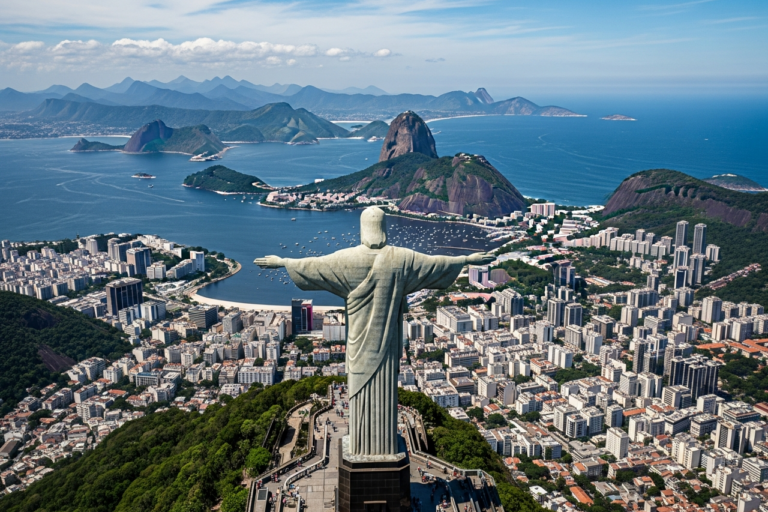
Even though there are fewer people in Brazil who belong to the Catholic Church now, the catholic church is still a big part of Brazilian culture and life. The catholic church has a long history here, and this shows up in the values and traditions of the people. You can also spot the church’s influence in many places, such as the famous Christ the Redeemer statue looking over Rio de Janeiro. This and other Catholic symbols have become a big part of how people think of Brazil.
The catholic population in the country is changing and there are new beliefs coming in. Still, the catholic church has a strong grip on social, political, and everyday life in Brazil. Next, we will talk about well-known catholic practices and holidays, how the church has power in politics and society, and how its events and signs show up in life for people in Brazil.
Prominent Catholic Practices and Celebrations
Catholicism in Brazil shows up in many ways, with lively practices and celebrations that are a big part of the country’s culture. Sunday Mass is very important and still draws many people, but there are also lots of festivals and personal ways to show faith. These traditions can look very different in big city areas like Rio de Janeiro and in quiet rural areas.
There is more than just the Roman Catholic Church in Brazil. Other groups exist, like the Brazilian Catholic Apostolic Church. They add other styles and meanings to how people take part in the catholic church here. Many people in Brazil have strong feelings for saints and the Virgin Mary. Many take part in pilgrimages and go to local events that honor these saints in their town.
Some of the most important Catholic festivals and activities are:
-
Carnival, which goes back to old catholic church customs before Lent.
-
Festa Junina (June Festivals), where people celebrate saints like Saint Anthony, Saint John, and Saint Peter.
-
The Círio de Nazaré parade in Belém, known as one of the largest gatherings of the catholic church.
-
Attending Mass in big places like Rio de Janeiro and São Paulo.
Catholicism’s Social and Political Influence
The Catholic Church has shaped life in Brazil in many ways. Its reach goes beyond just people who go to church. The church has been big in things like higher education and healthcare for a long time. It set up many of Brazil’s first big schools and hospitals. Because of this, the catholic church still has a lot of power in groups and systems today.
In the 20th century, there was a strong new idea called liberation theology that started with the catholic church in Brazil. Religious leaders saw their beliefs as a way to help people who are poor or having a hard time. They fought for human rights and pushed for changes to help all people have a fair shot. These religious leaders turned into key voices in fights for freedom and fairness.
Now, some political power has shifted to Evangelical leaders. Still, the catholic church is an important voice that speaks out on big topics like poverty or taking care of the land and nature.
Catholic Symbols and Festivals in Everyday Life
Catholic symbols and events are such a big part of brazilian culture that you can see them in daily life, whether people follow the faith or not. For example, there is the well-known Christ the Redeemer statue in rio de janeiro. Many people also wear small crosses. You will see these signs everywhere. They remind people of the country’s Catholic roots.
Big Catholic events shape the year in Brazil. Events like Carnival and the Festas Juninas started with religious beliefs, but they have become huge cultural festivals. People in Brazil and around the world know these celebrations for their mix of faith and fun. These gatherings show how people combine religious and everyday life.
This close link shows how much Catholicism is a part of the national identity in Brazil. The lively parties in the streets, the classic foods, and the big gatherings with friends and family during these festivals all prove that religion is tied to brazilian culture. Faith will always have an important place in the way people live and celebrate together.
The Vibrancy of Afro-Brazilian Religions
Afro-Brazilian religions come from the strength and ideas of enslaved Africans. These brazilian religions are an important and lively part of the country’s faith and culture. Religions such as Candomblé and Umbanda mix african traditions with Catholic and Indigenous beliefs. This mixing, called a process of syncretism, helped them keep going and grow, even when it was not easy for them.
These faiths praise many african deities. People call these gods orixás. One can see rich rituals in the way they dance, use music, and celebrate. Now, let us talk about how Candomblé began, look at the special process of syncretism in Umbanda, and see how these strong brazilian religions give so much to culture. We will also look at what people think about them today.
Origins and Core Beliefs of Candomblé
Candomblé is one of the best-known Brazilian religions. It started from African traditions that were brought to Brazil by enslaved people, mostly from the Yoruba, Fon, and Bantu groups. This faith is passed down by word of mouth in groups called terreiros.
The center of Candomblé is the worship of African deities called orixás. These deities stand for things in nature and also for different parts of human life. Every orixá has its own traits, symbols, and ways of worship. People in Candomblé believe in a creator god, but most prayers and rituals are made to these in-between gods. Candomblé mixes with Catholic beliefs. This process of syncretism joined orixás with Catholic saints so people could keep worshiping them.
In every ceremony, a pai de santo or a mãe de santo leads the group. They have careful rituals that use drumming, singing, and dancing to invite the orixás. Some types, like Tambor de Mina in northern Brazil, hold on to their own special African traditions too.
Umbanda: Syncretism and Contemporary Practice
Umbanda is a Brazilian religion that started in the early 20th century. It shows the process of syncretism because it mixes African religions, Catholic ideas, Indigenous beliefs, and French Spiritism. This blend makes Umbanda stand out as its own kind of faith. Many people sum up Umbanda with three words: charity, humility, and faith. People in Umbanda focus on helping others.
This practice is not like Candomblé, which keeps more of its African traditions. Umbanda uses a larger group of spirits. Its followers talk with the spirits of former slaves, called pretos velhos, as well as with caboclos, who are Indigenous people, and others. These spirits share their advice and healing. Religious leaders help lead and guide these meetings during ceremonies.
Umbanda grows fast in Brazil because it is open and can change to fit different people. It brings together many spiritual ideas found in brazilian culture. It also draws people from all backgrounds, making it very popular today.
Public Perceptions and Cultural Contributions
Many people see Afro-Brazilian religions in different ways. There is no doubt that they have shaped Brazilian culture. You can see their influence in music, food, and many of the festivals in Brazil. But even with so much influence, followers still deal with religious intolerance and persecution.
For many years, these religions were pushed down, and the people who followed them, especially Black women who often lead their communities, were kept out of public life. Even now, discrimination and attacks on places of worship happen. Much of this comes from a lack of understanding and from some religious groups that hold strict views.
Still, these brazilian religions have given a lot to the country. They have helped keep African traditions alive and been a way for people to stick together, share strength, and support each other. The growing attention and visibility shows just how strong they are and how important they have been—and still are—to brazilian culture.
Trends and Shifts in Religious Affiliation
The way people in Brazil choose their religion is changing a lot. In recent decades, the Brazilian census shows that there has been a steady drop in the number of Catholics. At the same time, more people in Brazil are joining Protestant churches. There is also a rise in the number of people who say they do not have any religion. This change is starting to shape the social and cultural identity of the nation.
This trend is not the same for everyone in Brazil. Age and where people live can make a big difference. Some groups are seeing the decline in old ways faster than others. More people want to say they are “spiritual but not religious.” It is important to look at how this trend in religiousness in Brazil is changing compared to other places in the world.
Decline in Traditional Affiliations
One big religious change in Brazil in recent decades is the steady drop in people who say they belong to the Catholic Church. Brazil still has the biggest Catholic population in the world. But fewer people now call themselves Catholic. For the first time in 2010, there was a drop both in the number of Catholics and their share of the population.
This drop is seen more among the young and people living in urban areas. In cities like Rio de Janeiro, less than half of the people say they are Catholic now. This shows that the religious landscape will look very different in the future than it did in the past.
There are many reasons people are changing their religious affiliation. One big reason is that a lot of people now choose to leave the Catholic Church they grew up in. Many switch to Protestant groups, or they just stop being involved in any church. This makes the religious environment in Brazil more diverse and mixed.
Growth of Spiritual but Not Religious Movements
Along with changes in organized religion, there is a big rise in Brazilians who say they are spiritual but not religious. This shows that people in Brazil want to have their own religious beliefs, not just follow rules made by big or old groups. Brazil is known to be a richly spiritual society, so faith can be found outside a church or temple.
One clear example is how many people are now followers of Spiritism. This belief system comes from the 19th-century work of Allan Kardec, a French teacher. Followers of Spiritism focus on doing good for others, believe in reincarnation, and think that people can talk to spirits. Even though there is some structure, the ideas in Spiritism bring in people who want a more personal or deep, thoughtful spiritual path.
A lot of people in Brazil now put together their own special sets of beliefs by mixing different ways of thinking and spiritual customs. This more personal style of faith looks like this:
-
Embracing main ideas from Spiritism without having to join a group.
-
Using things like meditation and mindfulness that do not need a religious label.
Comparisons of Religiousness: Brazil, US, and Europe
When it comes to religiousness, Brazilians generally report higher levels of belief and practice compared to many Western nations. According to data from the Pew Research Center, a large majority of the total population considers religion to be an important part of their lives, a contrast to the more secularized trends seen in much of Western Europe.
Compared to the United States, Brazil shares a similar landscape of high religious observance, though the specific affiliations differ. Both countries are experiencing a rise in the religiously unaffiliated, but the overall level of religious feeling in Brazil remains robust. The dynamic growth of Pentecostalism in Brazil is a key factor in its high religiousness.
Here is a general comparison based on Pew Research Center findings on the importance of religion:
|
Region |
Percentage of Adults Who Say Religion is Very Important |
|---|---|
|
Brazil |
High (Often 70%+) |
|
United States |
Moderate to High (Often 50-60%) |
|
Western Europe |
Low (Often below 30%) |
Legal Framework and Religious Freedom in Brazil
Brazil has strong laws that protect religious freedom. The Federal Constitution says people are free to follow any religion. You can pick your faith, practice it, change it, or choose not to follow any religion at all. This respect for many beliefs is a big part of Brazil’s democracy and human rights policy.
The country also makes sure to use the Penal Code to stop acts of hate or unfairness against someone for their religion. The law is clear about protecting all places of worship. But even with these rules, there are still some problems for certain religious groups. People from minority religions can still face social bias. In the next parts, we will look at how the rules and state plans work together to keep religious freedom safe in Brazil.
Constitutional Protections and State Policies
The Brazilian Constitution of 1988 is the main law that gives people freedom of religion in the country. It says that Brazil will be a secular state. This means there is no official religion, and the government can’t make or support one. The split between church and state is very important in Brazil.
State rules are set up to follow what the constitution says. The law gives religious groups the right to start up, have places of worship, and do their activities without trouble. Also, the constitution says people should not lose their rights because of their religious beliefs.
Key rights in the constitution are:
-
No one can take away your freedom of conscience or belief.
-
You are free to practice your religious rites.
-
People can get religious help in civil or military places.
Even with these good protections, fighting religious intolerance in Brazil is something that the government and the people still need to work on.
Conclusion
In short, brazilian religions mix many beliefs and ways of life. In Brazil, there is a strong tie to indigenous spirituality, along with the big impact of Catholicism. Many people also follow Protestant and Afro-Brazilian religions. You can see that religion is important in shaping brazilian culture and bringing people together.
Today, things are changing as more people follow a spiritual path that is not always tied to religion. However, they still hold on to their cultural roots and background. When you look at how these ways of faith come together, you start to see more about brazilian society and its people. If you want to know more about brazilian religions or have questions about brazilian culture, just let me know. I am here to help.
Frequently Asked Questions
How has the religious landscape in Brazil changed in recent years?
In the past few decades, the way people in Brazil choose their religion has changed a lot. The brazilian census shows there is a big drop in the number of brazilians who say they are Catholic. At the same time, many people join Protestant religious groups. The number of people who say they have no religion is also going up.
What role do Afro-Brazilian religions play in modern Brazil?
Afro-Brazilian religions like Candomblé and Umbanda play a big part in brazilian culture. They help keep african traditions alive and honor african deities. Because of a special process of syncretism, these brazilian religions have shaped the music, food, and festivals in Brazil. They are important places for people to come together and hold on to their spirit, even when they face prejudice.
How is spirituality outside of organized religion practiced in Brazil?
In Brazil, there is a richly spiritual society. Many people here find ways to practice spirituality without being part of an organized religion. Some are followers of Spiritism. They follow the belief system based on Allan Kardec’s ideas. These people like to focus on philosophy and their own way to connect with the world. There are also others who mix different traditions to build their personal spiritual path. They often want an individual connection, not just to follow rules made by institutions.



