

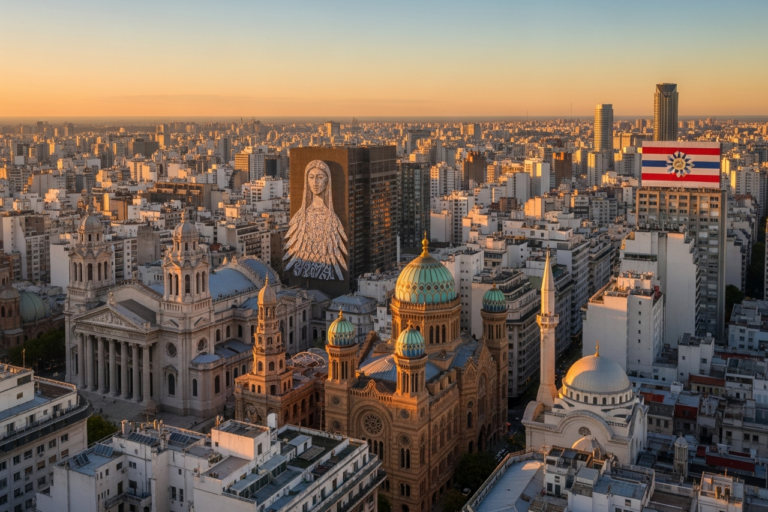
Key Highlights
-
Argentina has a lot of religious diversity, but the most common faith is Roman Catholicism.
-
The Catholic Church has been important for a long time in both the country’s culture and politics.
-
There are more and more evangelical churches, and they get many new members, especially from lower-income groups.
-
This country in Latin America also has one of the biggest Jewish communities, and it has a long story of people moving there.
-
The constitution protects religious freedom, so different faiths, like Islam and indigenous religions, can exist together.
-
Most people are part of a religion, but now there are also more people who are secular or do not follow a religion.
Introduction
Welcome to a look into the spiritual side of Argentina. This country has been shaped by many waves of people coming from Europe. Because of this, Argentina shows a mix of many different religious beliefs. In the past, most people there were Catholic. But now, there is no state religion. The country’s constitution gives people religious freedom. That means everyone can choose their own beliefs. Many kinds of faiths are now part of the nation. All of them add something special to the country’s national identity. Let’s see how the different religious beliefs in Argentina help make it so special.
The Religious Landscape of Argentina Today
Argentina is home to many faiths and traditions today. Most people in the country say they are Roman Catholic. Still, you will also find many other religious groups across Argentina. This shows how the country has been shaped by immigration and its promise of religious freedom in the law.
Everywhere you go, from big cities to far-off places, different ways to show faith can be seen. These beliefs have a big impact on how people in Argentina live, act, and see each other. This mix of religion helps form the heart of the nation’s culture and daily life. Next, we will take a look at which religions people in Argentina follow, how the numbers change over time, and what these faiths mean for the country’s identity.
Overview of Major Religions Practiced in Argentina
The primary religion in Argentina is Roman Catholicism, with a significant majority of the population adhering to its beliefs. However, the country is also home to a growing number of evangelical churches, which have seen a remarkable increase in followers in recent years. This rise in Protestantism adds another layer to the nation’s spiritual life.
Beyond Christianity, Argentina has notable religious minorities. It hosts one of the largest Jewish populations in Latin America and a small but vibrant Muslim population. These communities, along with followers of indigenous religions and other faiths, contribute to the country’s rich multicultural identity.
Here is a breakdown of religious affiliation based on 2019 estimates:
|
Religious Affiliation |
Percentage of Population |
|---|---|
|
Roman Catholic |
62.9% |
|
Evangelical |
15.3% |
|
No Religion |
18.9% |
|
Jehovah’s Witness & Church of Jesus Christ |
1.4% |
|
Other (including Islam, Judaism) |
1.2% |
|
Did not specify |
0.3% |
Demographic Trends and Regional Variations
Over the years, religious beliefs in Argentina have started to change. Most people still belong to the catholic church. But the percent of the total population who say they are Catholic has been going down. Information from the country’s national research institute shows that more people now say they are Evangelical Christians or that they do not have any religious affiliation at all. This points to a big change in what people believe about religion.
The country does not have the same level of religious adherence in every area. Buenos Aires is the place where people are least likely to have a religious affiliation. There, more people do not follow an organized religion compared to other regions. But in the northern provinces, like Salta and Jujuy, people show more religious devotion. It is more visible in these areas.
There is also a link between a person’s income and the religion they belong to. Evangelical churches hold more membership among people with less money and among those who do not feel they fit into the catholic church. So, these changes in religious beliefs in Argentina are connected to both where people live in the country and what their lives are like.
Religion and National Identity
Religion is a big part of Argentina’s national identity. For many years, the Roman Catholic Church has had a strong role in shaping social rules, politics, and culture in the country. The Supreme Court said that Roman Catholicism is not the state religion, but the church still has a big impact on public life.
When an Argentinian, Pope Francis, became the leader of the Roman Catholic Church, people felt a lot of pride. It made many feel the connection between Catholicism and Argentina was stronger. Even so, the country’s rules give freedom of religion. This means that people from other faiths, like the Church of Jesus Christ and Judaism, are also a part of the nation.
All of this shows how the old Catholic ways mix with new and different beliefs over time. People try to respect traditions, but they also accept and welcome a wider variety of religions for the future.
A Deep Dive into Catholicism in Argentina
Catholicism has had a strong influence in Argentina for a long time. It was brought here during the colonial period. Roman Catholicism is not just a religion in this country. It is a key part of the culture. You can see its reach in Buenos Aires with the big religious institutions. It is also everywhere through local parish churches.
The catholic church and its religious leaders have shaped the way people mark traditions, holidays, and even the way they talk about social and political topics. In this piece, we will look at where roman catholicism started in Argentina. We will also see how the catholic church affects daily life here and talk about some of the most famous landmarks.
Historical Roots and Growth of Catholicism
The story of the Catholic Church in Argentina goes back to the 17th century. This was when Jesuit missionaries came from Spain. These early religious organizations started missions and brought the Roman Catholic faith to this area. They set up a base that has lasted many years.
For a long time, the Roman Catholic Church had a special place in the country. It influenced how things were done in the government and in the lives of people. The church even got money from the state. But it was never named as the official state religion. The strong tie between the church and the country helped the Catholic Church become a main part in the nation’s growth.
As years went by, the way the church and the country work together has changed. But the long history of Catholicism in Argentina still matters a lot. The Catholic Church helped shape key laws and traditions. It is still an important part of what makes Argentina the country we see today.
Catholicism’s Influence on Argentine Society and Culture
Catholicism touches almost every part of daily life and culture in Argentina. You will see symbols like crucifixes everywhere, both in public places and in homes. This shows how deep the catholic church is in the hearts of the people. Many people in Argentina, even if they do not go to church often, still go to the church for big moments like births, weddings, and funerals.
Religious services for baptisms, weddings, and funerals bring families and friends together. They are an important part of life and mark big steps for both families and the community. While more older people go to Sunday mass than younger people, the traditions of catholicism stay strong and many keep it in their lives.
You can see the catholic church influence in many parts of society:
-
Public Holidays: People of all ages across the country celebrate national days like Christmas and Easter.
-
Social Values: The catholic church has helped shape how people act with each other and how families are formed.
-
Art and Architecture: In Buenos Aires and other big cities, you will find many churches and cathedrals. They are more than buildings; they show off the history, faith, and art of the people.
Prominent Catholic Institutions and Landmarks
Argentina has many beautiful Roman Catholic sites that are important to both the church and local culture. These places are not just for prayer. They are old buildings with amazing designs that bring people from all over the world. Buenos Aires, the capital, is known for its famous churches. These places have a lot of history.
One of the most well-known is the Metropolitan Cathedral in Buenos Aires. It is the main Catholic church in the city. This was also Pope Francis’ church when he was the Archbishop there. The front of the church has huge columns and the inside is very pretty. It is one of the main landmarks people visit. These religious institutions are very busy during the year. People go to daily masses. There are big festivals, too.
Here are a few well-known Catholic sites:
-
Metropolitan Cathedral, Buenos Aires: This is a big old church in the city. It is very important in the history of Roman Catholicism in Argentina.
-
Basílica de Nuestra Señora de Luján: Many people travel here to honor the country’s patron saint.
-
Jesuit Block and Estancias of Córdoba: This is a famous place that is protected by UNESCO. It shows how the Jesuits helped with religion and teaching in Argentina.
These religious institutions shape much of the city’s and country’s spiritual life with their religious activities and history.
Evangelical and Protestant Communities
Along with the main Catholic faith, there are evangelical churches and Protestant communities in Argentina. These groups are growing fast and now make up an important part of the country. In the last few years, evangelical churches have done well all over Argentina. They bring in many different people and help increase the religious diversity here.
These evangelical Christian groups are starting to show up more in the public eye. They include different Protestant groups and all kinds of evangelical Christian groups. Let’s look at how these churches have grown, how they take part in social and political issues, and what makes each group different from the other.
Growth and Distribution of Evangelical Churches
The growth of evangelical churches in Argentina has been one of the biggest changes in religion in the past years. More people in the country now say they are Evangelical Christian. Many switch to this faith because they like having a personal bond with God and being part of a lively group. This rise shows there is a shift in religious affiliation across Argentina.
The growth is not the same everywhere. There are differences in the regions. You will find evangelical churches all over, but they grow fastest in cities on the edges and in places where lower-income people live. The freedom of religion protected in the constitution helps these churches start up and flourish.
Many people are drawn to evangelical churches because they offer strong community support and connect with the daily needs of their followers. This makes evangelical christian groups seem like a good place for those who do not feel close to old religious institutions.
Social Engagement and Political Influence
Evangelical churches in Argentina do more than hold services. They take part in daily life and help the community. Many act as civil society organizations. They give the people help like social services, education, and support. Their religious activities often include outreach programs. These programs work to solve problems like poverty and addiction. Because of this, they have a strong connection to the people in their area.
In recent years, their political influence has risen. Religious leaders from evangelical churches are speaking out more about social and political topics. They push for their values in public. They bring their followers into political debates too. This is seen most when talking about issues affecting family and life.
The growing role of evangelical churches is changing the way church and state relate in Argentina. Before, the catholic church was the main religious voice in politics. Now, evangelical leaders take their place at the table. They represent a large and organized group.
Differences Among Protestant Denominations
The Protestant scene in Argentina is made up of many groups. These groups have their own ways of thinking and doing things. Evangelical Christian groups, with Pentecostals leading the way, are the biggest and continue to grow fast. But there are also other kinds of Protestants.
Some of the older Protestant religious communities, like the Methodists, Baptists, and Anglicans, have been in the country for a long time. They are not all the same. Each group has its own style of worship, church leadership, and thoughts about the bible. Along with them, other Christian groups, like Jehovah’s Witnesses and the Church of Jesus Christ of Latter-day Saints, help make the scene more varied.
The main Protestant groups are:
-
Evangelical Pentecostal Churches: These churches are big on lively worship and want people to have a direct, spiritual time with God.
-
Traditional Protestant Denominations: These include Anglicans, Methodists, and Presbyterians. Their services are usually more orderly and follow set ways.
-
Other Christian Groups: Examples are Jehovah’s Witnesses. They are known for talking to people about their faith and getting into community work.
This wide mix of churches shows how different life in Protestantism in Argentina can be. Whatever group you connect with, there is a place for everyone who wants to know more about jesus christ or be part of a church of jesus christ in Argentina today.
Judaism and the Jewish Community in Argentina
Argentina has a lively Jewish community with a long history. This group is one of the biggest in Latin America. The Jewish people have played a big part in shaping the country’s culture and life. The idea of religious freedom in Argentina helps Jewish life to grow and lets the country be full of religious diversity.
You can see synagogues, community centers, and many important Jewish organizations all over Argentina. The Jewish population here has built a strong and lasting role. In what comes next, we will look at the story of Jewish immigration, how this group added to local culture, and some major groups that help bring everyone together.
Historical Presence and Immigration Waves
The Jewish population in Argentina began with big movements of people from Europe. In the late 1800s and early 1900s, many Ashkenazi Jews came from Russia and Eastern Europe. They left because of hard times and trouble in their own countries. Argentina gave them new chances and a safe place to live. After that, Sephardic Jews also came from the Ottoman Empire.
This mix of people helped make the community strong and different. Argentina had religious freedom, so people could come and set up their own groups. They could keep their own ways and also fit in with others in Argentina.
Today, the Jewish community is still important. Leaders, like the president of AMIA, work hard to save this history. They speak up for the group, and help make sure no one forgets the rich story of these people and the waves of immigration.
Community Life and Cultural Contributions
The Jewish community in Argentina is active and lively. People in this group are known for their strong community life and for giving a lot to the country’s culture. Jewish Argentines do well in the arts, books, schools, and business. They help shape the way people in Argentina think and create.
Many Jewish religious activities, events, and social get-togethers bring people together. Families and friends enjoy Jewish holidays and festivals with energy and joy. These times are not just religious, but they also help show what the community is about. They make the group feel closer.
Jewish religious leaders and community members are part of civil society. They talk with people from other faiths and take part in social work. This teamwork helps grow tolerance and friendship. It makes the Jewish community feel even more part of Argentina.
Synagogues, Schools, and Jewish Organizations
There is a strong network of institutions that help the Jewish community in Argentina. Synagogues are at the heart of the community. They offer religious services and are a good place for people to come together. You will find both big, old temples in Buenos Aires and smaller, local synagogues in other parts of the country.
Religious education is an important part of life in this community. Many Jewish schools teach both standard school subjects and also cover Jewish culture, history, and Hebrew. These schools help younger people learn about their Jewish background.
Besides schools and synagogues, there are also many Jewish organizations in Argentina. They give important social, cultural, and welfare services to people in the community.
-
AMIA (Asociación Mutual Israelita Argentina): This is a main group that gives people social and cultural programs to help the community.
-
Templo Libertad: This is the oldest synagogue in Buenos Aires. Right now, it is also a place where you can learn about Jewish history as a museum.
-
Community Centers: These places are great for sports, the arts, and other social events. They help bring members of the community together.
Islam and the Muslim Presence in Argentina
The Muslim population may be smaller in Argentina, but it still adds a lot to the religious diversity in the country. People who came from the Ottoman Empire and the Middle East were the first to start this group. Over time, this community has grown and is now a part of Argentine society.
Argentina’s open attitude toward religious freedom has let Muslims set up mosques, an Islamic center, and many religious organizations. Now, let’s talk about how this group has grown, what its big institutions are, and how they take part in the larger culture.
Origins and Development of the Muslim Community
The Muslim population in Argentina started when people came from the Ottoman Empire. Most were from what is now Syria and Lebanon. This happened in the late 1800s and early 1900s. These people from the Middle East brought their religious beliefs and cultural traditions. They were the first to start Muslim communities in the country.
With time, these communities grew and worked to stay close. They formed religious organizations to help keep their faith and culture strong. They built the first mosques and set up places for prayer and meeting with other people. This helped shape the future for the next groups that would come.
Even though the Muslim population is smaller than other religious groups, it has been here for years. The story of Muslims in Argentina shows how people from the Middle East could become part of the country but still keep their religious beliefs and cultural ways.
Islamic Centers, Mosques, and Cultural Events
The Muslim community in Argentina has many religious institutions that help people connect and feel part of the group. These places, like mosques and Islamic centers, are found in several cities. People use them for prayer, learning, and community events.
The most famous place is the King Fahd Islamic Cultural Center in Buenos Aires. This is one of the largest mosques in Latin America. The Islamic Center is important not just for people living close by. It also helps spread Islamic culture to others through its cultural events and education.
These religious institutions are important for many activities and celebrations:
-
Eid al-Fitr and Eid al-Adha: People gather for prayers and share festive meals during these big religious festivals.
-
Lectures and Classes: They offer classes on the Quran, Arabic language, and Islamic teachings.
-
Interfaith Gatherings: These events help bring together different religious communities so people can learn from each other.
These places help the Muslim community in Buenos Aires and other cities have a strong and active life. They let people take part in religious activities, learn, and meet others.
Integration and Contributions to Argentine Society
The Muslim population in Argentina is a good example of how a group can fit well into a country where most people are not Muslim. Over the years, people from different Muslim religious communities have become an important part of Argentina’s social, work, and culture life.
Muslim religious leaders and civil society organizations in Argentina take part in talks and events with other religious groups. They work together to help people get along and respect each other. This work has helped bring people closer and make the country more accepting, which shows how much Argentina values religious diversity.
You can see what Argentine Muslims have done in business, politics, food, and the arts. Their story shows that it is possible for a smaller group to keep their own religious and cultural ways and still add a lot to the rest of society. This has happened because Argentina supports religious freedom for all its people, and that support keeps getting stronger.
Indigenous Religions and Spiritual Practices
Before Europeans came, there were many indigenous communities in Argentina. These groups had strong spiritual traditions. Today, the native religions and their religious beliefs are still practiced. They are an important part of the country’s culture. The religious diversity in Argentina includes these unique traditions.
Many indigenous people became Christians, but they still keep some traditional spiritual practices. Often, these blend with other religions. We will explore the traditional religious beliefs of Argentina’s native peoples. We will also look at their rituals, festivals, and how they are trying to bring back and recognize their faiths today.
Traditional Beliefs Among Native Peoples
The traditional beliefs of Argentina’s indigenous communities are close to nature and tied to their old lands. Indigenous religions, like those of the Mapuche in Patagonia and the Guaraní in the north, show that spirits, ancestors, and the natural world are all linked together.
A key part of these religious practices is great respect for the earth, called Pachamama in many Andean groups. Spiritual life is all about keeping balance with the environment and honoring the spiritual forces that control it.
Religious leaders, known as shamans, connect the human and spiritual worlds. They lead rituals, help with healing, and share old knowledge. These people help protect the traditional beliefs of their communities as the world changes and becomes more modern.
Rituals, Festivals, and Their Modern-Day Persistence
Many old rituals and festivals that come from indigenous religions are still seen in Argentina today. Some of them stay the same, and some mix with Catholic ways. People use these religious activities to show who they are and keep their spiritual roots alive.
The festival of Pachamama (Mother Earth) happens each August. At this time, people give thanks to the earth for all it gives. These rituals bring the community closer and help them feel a strong bond with the land. Folk saints like Gauchito Gil are not always part of indigenous religions, but they show a mix of popular faith and formal religion. He gets millions of followers every year.
These old and new traditions show the strength of indigenous spirituality:
-
Pachamama Festival: This festival is held each year in northwestern Argentina to respect Mother Earth.
-
Inti Raymi (Festival of the Sun): This Inca festival has come back. It celebrates the winter solstice.
-
Community Rituals: Leaders guide ceremonies for good harvests, better health, and for the people to feel well.
Revitalization and Contemporary Recognition
In the last few years, more people have started to notice and support the growth of indigenous religions in Argentina. Indigenous communities and civil society groups want to take back their spiritual roots and stand up for their culture. This is an important step for Argentina so it can show all the different types of religious diversity found in the country.
There are many efforts to get legal status for indigenous religions. People also work hard to keep sacred places safe. Getting recognized is not just about looking at what happened in the past. It is about making sure that indigenous ideas and beliefs remain a real part of life now in Argentina.
This new energy has also made space for interreligious dialogue. Now, indigenous faith leaders can meet and share ideas with leaders from other religions. This new recognition pushes back against old ideas and helps more people see to it that being religious in Argentina can mean many things for all the people who live there.
Secularism, Non-Religious Beliefs, and Changing Attitudes
Along with its many religious traditions, Argentina is seeing more people turn away from religion. The number of people with no religious affiliation is going up, especially for young people. Many do not follow any group or have strong religious beliefs. This change shows that people are thinking differently about faith and what it means to them.
The move toward secularism is changing how people talk in public and how they see religion in daily life. In this look at Argentina, we will talk about the growth of secular identities, what makes these changes happen, and how they affect people in the country.
Rise of Secular and Atheist Identities
One of the biggest changes in Argentina is that more people now see themselves as secular or atheist. The country’s national research institute found that about 19% of people say they have “no religion.” This is a big jump, and it means this group is now the second-largest after Catholics.
This change is stronger in younger people in Argentina. Many now say they are atheist, agnostic, or they just do not have any religious affiliation. It shows that younger Argentines are moving away from old religious beliefs and the ways that once shaped their lives.
The rise of people with no religious beliefs is not something seen only in Argentina. Many countries now see more people picking their own path instead of following old rules. This shift shows individual choice is now very important, and it is changing how people in Argentina look at their spiritual and cultural identity.
Factors Shaping Secular Attitudes in Argentina
Many things help the number of people with secular attitudes grow in Argentina. More people are living in cities, there is more education, and people can get information from all over the world. These changes help people in the country think more about themselves and question what they are told about religion.
The legal framework in Argentina says religious freedom is a right for everyone. This means people have the right to be part of any religion or to not join one at all. At the same time, there are now strong talks about human rights like gender equality and the right to make choices about your own body. With these talks getting bigger, some people feel that religious institutions do not go along with these changes. So, they move away from these groups.
Key factors include:
-
Social Modernization: More people now want to make decisions for themselves instead of following old practices.
-
Public Debates: There are fights and disagreements about what part the church should play in politics and social life. This has caused some people to turn away from organized religion.
-
Generational Change: Young people are usually less religious than older people in their families. This is happening in many places around the world.
These changes all play a part when we talk about religious freedom, human rights, and the role of religious institutions.
Impact on Public Discourse and Everyday Life
The rise of secularism has made a clear change in how people talk about things in Argentina. More people now talk about social topics using the language of rights instead of religious words. You can see this, for example, when people talk about same-sex marriage and abortion. In these talks, civil society often pushes for a clear line between the church and the government.
This new way of thinking is shaping how people see the catholic church and the government. Many now want the state to be even more secular. There have even been steps to stop public financial support for the catholic church. This shows how people’s views have changed.
In day-to-day life, traditions from religion are still a big part of culture. But fewer people now feel they must follow strict religious rules all the time. This growth in secular ideas lets more people share what they think, whether they are religious or not. It also helps make sure the national conversation has room for everyone. Different voices now help shape the way Argentina grows.
Conclusion
In the end, religion in Argentina is full of life and color. It shows the country’s long history and mix of many cultures. Catholicism has strong roots here. But you will also find growing numbers of Protestant groups, as well as people of Judaism, Islam, and old Indigenous ways. Each group adds something to the country’s story and who the people are. Today, many people move between old ways and that of new thinking. This shapes both what people talk about and how they live each day. When we learn how all these mix together, we get better at knowing the people of Argentina. It also reminds us how good it is to honor and enjoy many different beliefs. If you want to learn more about the great holidays people in Argentina have or you want to know about any of the smaller groups, feel free to ask and get a free talk!
Frequently Asked Questions
How does religion shape daily life and traditions in Argentina?
Religion plays a big part in daily life. It is there in things like cultural holidays, family traditions, and local events. The Catholic Church often helps people during important times in life. Jewish communities, evangelical groups, and people who follow indigenous religions also have their own lively religious services. Each group has their religious leaders who guide these services and celebrations.
Has religious freedom improved in Argentina in recent years?
Yes, religious freedom in Argentina is stronger now. The legal framework guards human rights, and the Supreme Court helps make sure that government authorities treat every religion fairly. Because of this, people with different beliefs, and those with no religion, feel more included.
What unique religious celebrations can visitors experience?
Visitors can see many different religious activities in Argentina. You may go to the big Catholic pilgrimage at Luján. There are also Pachamama celebrations from indigenous religions. Jewish organizations host bright and lively community events. All these activities help people understand the mix of cultures and beliefs in Argentina.



