

Key Highlights
-
Learning Dutch greetings is important. It helps you understand Dutch culture and shows respect.
-
You can say “Hallo” when you greet most people. Use “Hoi” with close friends or in informal situations.
-
Say “Goedemorgen” (good morning) for formal greetings or when you are in professional settings.
-
Use informal greetings when you are with family or friends. This makes things feel warm and friendly.
-
The way you greet people in Dutch chat often changes by the time of day—from morning to night.
-
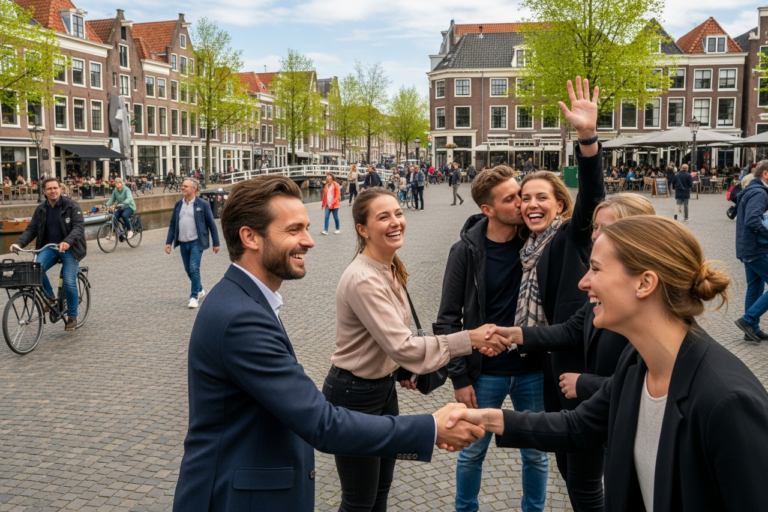
A handshake is also a big part of how people greet each other in the Netherlands. Body language matters, too.
Introduction
Are you thinking about going to the Netherlands, or do you meet Dutch people? Knowing some basic greetings can really help. Many people in the Netherlands can speak English well, but trying to use Dutch shows you care and respect them. In this guide, you will find common greetings that people use. This can help you talk with Dutch people in a way that feels friendly and open. Get ready to say “hello” like you live in the Netherlands!
Overview of Dutch Greetings and Their Importance
In Dutch culture, greetings mean much more than a simple hello. They show respect and are a friendly way to start talking to someone. Using the right greeting, like “good morning” or “good afternoon,” helps you set a good mood for your chat or meeting. This tells people you care and that you pay attention to their way of doing things.
Knowing when to use different Dutch greetings will make it easier for you to get along with others. You might say “good day” when you walk into a shop, or you can say something as simple as “hi” when you see friends. Picking the right greeting is important. It helps you talk with people the right way. Now, let’s see why these greetings matter so much in Dutch culture and what makes them different.
Why Greetings Matter in Dutch Culture
Greetings are an important part of politeness in Dutch culture. When you walk into a shop or a restaurant, it is normal to greet the staff. This small act is seen as a simple way to show good manners. It makes the place feel nice and friendly for all people there.
Also, taking the time to learn a Dutch greeting is a good and friendly way to connect with the people. It shows that you respect their language and want to join in with their culture. If your Dutch pronunciation is not perfect, people will still welcome your effort. This can help you have better chats with others.
In the Netherlands, greetings are a small daily act, but they still matter a lot. A greeting helps you build a bond, whether it is the first time you meet someone or you see them all the time. If you use this friendly habit, your time in the Netherlands will be better, and you will fit in more with the people.
Differences Between Formal and Informal Greetings
Knowing how to use formal greetings and informal greetings matters a lot for talking to people in the Netherlands. You use formal greetings in professional settings, when you talk to someone you do not know, or when you speak with older people. These greetings show respect and politeness.
But there are also casual greetings. You use these informal greetings when you are with your friends, your family, or people you already know well. These greetings help everyone feel more relaxed and friendly. If you use an informal greeting in a place where a formal greeting is needed, people may think you are being too familiar or not respectful. So, you need to know when to use each kind of greeting.
The best way to pick the right greeting is to look at who you are talking to and where you are. If you are not sure, use formal greetings, and wait to see if the other person starts using casual greetings. This is a good way to make sure you always show respect and give a good impression.
Common Ways to Say Hello in the Netherlands
When you start to learn how to say hello in Dutch, you find the basic greetings can help you in many places. “Hallo” is the universal greeting. You can use it at almost any time and any place. If you want to be more friendly or casual, you can say “Hoi” to people you know or are close to.
These basic greetings are good for new learners. You can remember and say them with ease. As you get more used to the Dutch language, you can add other greetings to your vocabulary. Now, we will see more about everyday greetings and how you should use them.
Everyday Greetings: “Hallo”, “Hoi”, and More
For your everyday talks in the Netherlands, knowing some basic greetings can help you a lot. “Hallo” should be your first choice. It means the same as “hello” in English and you can use it in many ways. People say it with friends, strangers, at shops, or in a café. This word is simple to say and always works.
If you want to sound more easy-going or are with people you know, “Hoi” works great. It is like saying “hi” and has a friendly, laid-back feel. Most people use it when being casual. Still, you should use “Hallo” whenever the moment feels a bit more formal.
Here are a few must-know everyday greetings in the Netherlands:
-
Hallo: The universal greeting for “hello.”
-
Hoi: An informal “hi,” good for friends and relaxed moments.
-
Dag: This means “day,” and people use it for both “hello” and “goodbye” in many situations.
Time-of-Day Greetings: “Goedemorgen”, “Goedemiddag”, “Goedenavond”
The Dutch often use greetings that correspond to the specific part of the day. These are generally more formal than “Hallo” or “Hoi” and are perfect for use in shops, restaurants, or professional environments. For example, “Goedemorgen” is the standard way to say “good morning.”
As the day progresses, your greeting will need to change. You would use “Goedemiddag” for “good afternoon” and “Goedenavond” for “good evening.” Paying attention to the time of day and using the correct phrase is a sign of politeness and will be appreciated by Dutch speakers. Don’t worry too much about the exact timing; a close guess is usually fine for learners.
Here’s a simple table to help you with the pronunciation and timing:
|
Dutch Greeting |
Pronunciation |
English Meaning |
When to Use |
|---|---|---|---|
|
Goedemorgen |
KHOO duh MORE khen |
Good morning |
Morning, until 12:00 PM |
|
Goedemiddag |
KHOO duh midakh |
Good afternoon |
Afternoon, from 12:00 PM to 6:00 PM |
|
Goedenavond |
KHOO dun AH fohnt |
Good evening |
Evening, after 6:00 PM |
Beginner’s Guide to Greeting People in the Netherlands
Are you feeling ready to try some Dutch greetings for the first time? It can be both fun and a bit scary. The big thing is to learn the basics and grow your confidence. You do not have to sound like a native speaker right away. What matters is that you try.
This guide is here to help you take those first steps. We will talk about what you need to start, an easy way you can follow, and how to pick the right greeting for every situation. Let’s get you ready to use Dutch greetings with confidence!
What You Need to Get Started with Dutch Greetings
Before you start using Dutch greetings, it’s good to know some basics. You don’t have to be an expert, but being ready helps a lot, especially if this is your first time speaking Dutch. Start by learning some simple Dutch greetings and basic words. This is a great first step.
It’s also a good idea to learn the Dutch alphabet and how words sound. Many Dutch words may look like English, but they say them in a different way. You can listen to audio clips or talk with a tutor to get the sounds right. This will help you feel sure of yourself when you speak.
Here’s what you can focus on to get started:
-
Learn a few basic greetings like “Hallo” and “Goedendag.”
-
Practice the pronunciation of key sounds.
-
Build a small vocabulary of polite words like “thank you” (Dank u wel).
-
Don’t be afraid to make mistakes; it’s part of the learning process!
Step-by-Step Process for Using Dutch Greetings
Greeting someone in Dutch can be easy if you break it down into small steps. By following these steps, you will feel more ready and not so nervous when you use your new skills. The main thing is to talk in a friendly way.
A good rule of thumb is to watch what other Dutch people do. See how they say hello to each other in different places and times. This helps you know what is the right greeting for each time. The Dutch are kind with people who are learning, so if you smile and try your best, people will like it.
Here is a simple set of steps to follow:
-
Assess the situation: Is it formal or informal?
-
Choose the right greeting for the context.
-
Make eye contact and smile.
-
Speak clearly and confidently.
-
Be ready to answer when they say hello back.
Step 1: Choosing the Appropriate Greeting for the Situation
The first thing you need to do is pick the right type of greeting for the situation. Think about who you are talking to and where you are. Is it a business meeting or just a casual time with friends? This will help you choose the right words to say.
If you are in formal situations, like a business meeting, talking to older people, or in professional settings, it is good to use greetings such as “Goedendag” (good day) or other time-related greetings. These words show respect. Being more formal is always better in these cases because it shows you are polite. Being too casual might not be good in these moments.
If it is an informal situation, when you are with friends, family, or people your own age, you can use casual greetings like “Hoi” (hi) or “Hallo.” Don’t feel like you have to know every type of greeting. It is fine to start with just one or two greetings that you know well. You can add more to your greetings vocabulary when you feel ready and can do this at your own pace.
Step 2: Using Body Language and Cultural Etiquette
Your words are not the only thing that matters when you greet someone. Your body language is also important in Dutch culture. When you meet someone for the first time, mostly in a business or formal setting, you should give a firm handshake. Look at the person when you shake hands. This shows you are sure of yourself and can help you make a good first impression.
A smile is a simple way to show that you are friendly. It is always okay to use a smile when you greet. Smiling helps you look open and ready to have a friendly conversation. You should know that hugs in the Dutch culture are only for close friends and family. You do not hug people who are strangers or just acquaintances.
Usually, people in the Dutch culture speak in a direct way and like honest answers. It works well to give a simple and real greeting with good body language. You do not need to give too much or look fake. Watch how the other person acts. Give them enough space and do what they do. This way, you will respect their customs the first time you meet.
Step 3: Responding to Different Types of Greetings
Knowing how to answer Dutch greetings is just as key as starting them. If someone says “Hallo,” you can just say “Hallo” back. Do the same for greetings that match the time of day. For example, if you hear “Goedemorgen,” answer with “Goedemorgen.”
When Dutch speakers ask “Hoe gaat het?” (How are you?), people often want you to keep your answer short and friendly unless you know them well. You can say, “Goed, dank je” (Good, thank you). It is also nice to ask, “En met jou?” (And with you?) in return.
When it is time to say goodbye, you have different choices. “Dag” works well for most times you say bye. If you want something a bit more formal, you can say “Tot ziens” (See you later). When you are with friends, a simple “Doei” is common. Answering the right way matters and will show Dutch speakers you care about the talk.
Variations in Greetings: Strangers, Friends, and Family
The way you greet people in the Netherlands can be very different based on who they are. You use one type of greeting when you meet strangers and a different one for friends or family. If you use a greeting that is normal with close friends when talking to a business acquaintance, it could feel wrong or too friendly.
It is important to know about these differences in greetings. This helps you handle these moments well. The words you pick and the actions you use might change too. Let’s look at how you can change your greetings with strangers, acquaintances, and with your friends and family in the Netherlands.
Greeting Strangers and Acquaintances
When you meet new people or acquaintances in the Netherlands, it’s best to use formal greetings, especially if you are in professional settings or a business meeting. Saying “Goedendag” (Good day) is a good way to start. It is polite, and it helps you make a good first impression.
A firm handshake is also something you should do when you meet someone for the first time. Look the other person in the eye and say your name clearly. This action shows confidence and that you take the meeting seriously. People use this in business and in formal social events.
When you see acquaintances again, you can keep using these formal greetings. Soon, you may notice that they begin to use “Hoi” or “Hallo” when they greet you. This is your sign that you can use these, too. Let them lead; that way, you will always be sure your greetings are right for each situation.
Greeting Friends and Family Members
When you are with friends and family, you can use much more casual greetings. You might say “Hoi” (Hi) or even “Hé.” These simple greetings are common when you greet close people. They help make a friendly and warm space. Formal greetings do not work as well in times like this.
You also see more physical gestures. People may not shake hands. Instead, they might hug or give three kisses on the cheek, going from one side to the other. This is very normal between friends and family, especially if you have not seen each other for a long time or you are together for a special day like a happy birthday.
All of this makes the whole talk feel more relaxed. It helps to set up a friendly conversation. People also use phrases like “Alles goed?” (All good?) to ask for a real answer, not just a simple yes or no. These casual greetings bring people closer and show you have a good, strong connection.
Cultural Customs and Etiquette When Greeting in the Netherlands
In Dutch culture, greetings are about more than just words. There are also special ways to act and certain rules you may not see written down. It’s important to know these if you want to show true politeness and respect. This is not only about what you say. How you say things and what you do at the same time matter too.
You will see many small things in the Netherlands, like shaking hands, kissing on the cheek, and how formal you have to be with each person. It is good to know all these things. By being aware of Dutch customs, you can greet people in the Netherlands with confidence and in a way that shows respect.
Physical Gestures: Handshakes, Kisses, and Hugs
Physical gestures play a big part in greetings in the Netherlands. The right way to greet someone will depend on how well you know them and the situation. The most usual way to greet someone, especially for the first time or in professional settings, is with a quick and firm handshake. People expect this kind of greeting when you meet for the first time.
The famous Dutch three kisses on the cheek are mostly just for friends and family. People give these kisses by touching cheeks with the person and making a light kissing sound in the air. You start with the right cheek, then switch sides twice. It’s common when you want to congratulate someone or see people you know well. Men in the Netherlands mostly give these greetings to their women friends and family. Women tend to do this greeting with both men and women.
Hugs are another way people greet each other. But these are usually just for very close friends or loved ones. Also, be careful that your body language matches the occasion. So, it’s good to know which greeting is right for each moment.
-
Handshake: For meeting people in professional settings and for first time introductions.
-
Three Kisses: For friends and family, and often for a special time or celebration.
-
Hugs: These are for people you are very close to, like good friends and family.
How to Greet Someone Older or in a Formal Context
When you greet someone older than you or when you are in a business meeting, it is important to be polite. In these times, it is best to use formal greetings. You can greet people with “Goedemorgen” for good morning, “Goedemiddag” for good afternoon, or use “Goedendag” for good day. All of these are the right choices in professional settings.
These formal ways to say hello show that you have respect. In Dutch culture, showing respect is very important, especially when you talk with older people or with your boss at work. Stay away from saying “Hoi” or “Hé” in these cases. These are too informal and can seem rude.
Along with saying the right words, make sure to give a firm handshake and look the person in the eye. If you know their name, use their last name with “Meneer” for Mr. or “Mevrouw” for Mrs. or Ms. For example, you could say, “Goedendag, Meneer de Vries.” This mix of the right greetings and your body language will help you make a good impression in Dutch business or formal settings.
Conclusion
In short, knowing how to use greetings in the Netherlands is important if you want to get along well with the dutch people. When you say “Hallo” to a friend or “Goedemiddag” to someone you work with, you show respect for dutch customs and culture. It helps when you learn both formal and informal greetings, plus the right body language and ways to act. This can help you make good relationships and leave a good impression.
If you plan to go to the netherlands or talk with dutch friends, keep in mind that a warm greeting does a lot. Pay attention to the small details of dutch greetings, and people there will welcome you. If you want to know more or have a question, feel free to ask!
Frequently Asked Questions
Is it appropriate to say “Hallo” or “Hoi” when meeting a Dutch person?
Yes, you can use it, but the situation matters. “Hallo” is a good choice for a universal greeting and works with most dutch people in the Netherlands. “Hoi” is more casual. It is close to saying “hi” in english. You should use “hoi” with friends, family, or people your age. If you are not sure what greeting to say, go with “Hallo” when you meet dutch people.
How do you politely greet someone much older than you in Dutch?
If you want to say hello to someone older in a polite way, use formal Dutch greetings. Say things like “Goedendag” for good day, “Goedemorgen,” or “Goedemiddag.” These Dutch greetings show respect. You should also use their title and last name. For example, say “Meneer” for Mr. or “Mevrouw” for Mrs. or Ms. This will show them you know about politeness and respect for people who are older.
Are Dutch greetings different depending on the time of day?
Yes, the way you greet someone in Dutch often depends on the time of day. People use “Goedemorgen” to say good morning. For good afternoon, they say “Goedemiddag,” and “Goedenavond” for good evening. In the Netherlands, it is a common and polite thing to do, especially when you’re in a formal place. These dutch greetings make you sound both friendly and correct.
What are some Dutch greetings I can use when traveling to Amsterdam?
When you are in Amsterdam, you can use easy Dutch greetings like “Hallo” for hello, “Hoi” for hi, and “Goedendag” for good day. People in Amsterdam understand English well, but trying few words in Dutch shows you care. Do not worry if your pronunciation is not perfect. People there will still like that you made an effort to use some Dutch greetings. Knowing a bit of their vocabulary is always good when you meet new people.



