

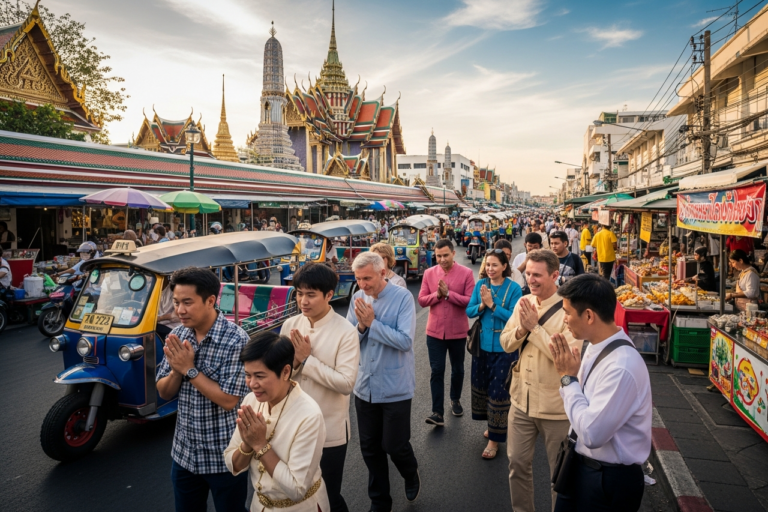
Key Highlights
-
If you want to connect with Thai people and understand Thai culture, you should know thai greetings well.
-
People use the word “Sawasdee” as a greeting word in the thai language, and it works for any time of day.
-
The wai gesture, where you give a slight bow and press your palms together, is an important sign of respect.
-
Thai greetings use polite particles like “khrap” for men and “kha” for women. These are needed if you want to be polite.
-
Social hierarchy is a big part of thai greetings. You need to greet someone with higher status or older with more respect.
-
The wai gesture is tradition, but sometimes, handshakes happen at work or where western style is used.
Introduction
Welcome to the lively world of thai greetings! Knowing how to greet thai people is not just about saying the right words. It is also about showing respect and care that is important in thai culture. When you use thai greetings, you show that you care about their rich culture and want to connect with them. You can also use the wai gesture and enjoy the way their language sounds. Every time you greet someone, you get the chance to feel thai culture in a real way. Doing so can help make your time in Thailand special and help you get much more out of the experience.
Greeting Customs in Thailand: Key Practices and Etiquette
When you go to Thailand for the first time, knowing how Thai people greet each other is important. In Thai culture, you see a lot of respect and politeness in their greetings. The way they use the Thai language shows this.
You do not need to learn many different words for “good morning” or “good evening.” Thai greetings are easy but mean a lot. If you know some simple ways to greet, you will feel good in social situations. You will also show respect and fit in better.
Let’s look at thai greetings. We will see how to say “hello” and learn how Thai people show respect in different situations.
1. Saying Sawasdee – The Classic Thai Hello
The most common way to say hello in Thailand is by using the greeting word “Sawasdee.” You can use this one word in the thai language at any time of the day. This makes it very easy for travelers because they do not need to learn other thai words for saying hello in the morning, afternoon, or evening.
“Sawasdee” comes from a sanskrit word “svasti,” which means well-being. It was first used in the 1930s and is now an important part of the way people greet each other in Thailand. When you say this greeting word, you are not just saying hello. You are also wishing good for the person you meet.
“Sawasdee” is simple. You can use it for both “hello” and “goodbye,” so it should be one of the first thai words you get to know. This makes it a good choice for anyone learning the thai language.
2. The Wai Gesture: Showing Respect with Your Hands
The wai gesture is an important part of thai culture. It shows respect without using words. To do the wai gesture, you press your palms together. Your hands look like you are about to pray. There is a slight bow of your head too. This sign of respect says a lot before you even speak. When you use the wai, you should not make eye contact. That shows humility.
The height of your hands when you do the wai gesture shows the level of respect. If you are greeting peers, your hands can be at chest level. For elders and monks, keep your hands higher. This is because thai people care about social hierarchy in thai society. It is good to watch how locals do it. That helps you learn the right way.
The person who is younger or with lower status usually starts the wai. The other person will return this sign of respect. If someone gives you a wai, it is polite to return it. Don’t worry if you are not sure about all the rules. A simple smile and nod when you return it means a lot and will always be liked.
3. Greeting Differences for Men and Women
Yes, there are clear differences in thai greetings that men and women use. You can see this in the thai language at the end of sentences when people speak. They use polite particles that show respect. Men and women say different particles when they greet others, and when they speak in other ways, too.
For men, the polite particle is “khrap”. You can say “Sawasdee khrap” to say “hello” if you are a man. In thai greetings, men use this word mostly when talking with strangers, elders, or in formal places.
For women, the polite particle is “kha”. Women say “Sawasdee kha” for a greeting. These differences are a big part of thai language. Using the right polite particle helps you show that you want to be respectful to both people and the culture.
4. Polite Particles: Adding “Krap” and “Ka”
Adding “khrap” for men and “kha” for women when you use thai greetings is the easiest way to sound more polite. These polite particles are put at the end of phrases in the thai language. They are a big part of how people speak in Thailand. The way you use them is like saying “sir” or “ma’am” in English, but in Thai, you use them a lot more.
These polite particles are not just for greetings. You put these at the end of many sentences to keep things respectful. When you begin your language learning journey, it is good to start getting used to saying them. Using these right shows you want to act in a polite way.
Practice helps a lot. Try saying full phrases like “Sawasdee khrap” or “Khop khun kha” (thank you) instead of just one word. This makes you remember if you should use “khrap” or “kha,” depending on your gender. Thai speakers will see you are making an effort. It makes talking with them go more smoothly.
5. Greeting Elders and People of Higher Status
Greeting elders and people of higher status in Thailand needs a bigger show of respect. This is a big part of thai culture. The wai gesture is used for this, but how you use it depends on who you talk to. Social hierarchy matters a lot in daily life.
When you greet an elder or a person with authority, you need to make a deeper and more respectful wai. Hold your palms together higher up. Your fingers should reach your nose or your forehead, especially for monks. You should also lower your head and body more.
This shows a sign of respect by letting them know their place in thai society and social hierarchy. The younger person or someone with lower status always does the wai first. Giving this level of respect is not just polite. It is what people expect and value when you greet elders.
6. Formal vs. Informal Thai Greetings
In the Thai language, the greeting you use depends a lot on the situation and who you are talking to. If you are in a formal situation, meeting someone for the first time, or speaking to elders, you should say “Sawasdee” and add the right polite word at the end. Men say “khrap,” and women say “kha.” This is the best way to give a polite greeting in formal settings.
With close friends and family, things are more relaxed. You can still use “Sawasdee,” but lots of people call each other by nicknames or use more casual greetings. In casual conversations, people often say “Sabai dee mai?” to ask “how are you?” The answer is usually “Sabai dee,” which just means “I’m fine.”
The time of day doesn’t really change the way you greet someone with the greeting word in Thai. But who you are talking to still matters. For example, a student will always use the formal style when they greet a teacher, no matter what time of day it is. If you are visiting Thailand and you want to be polite, it’s a good idea to use “Sawasdee khrap” or “Sawasdee kha” in any situation. This way, you show respect to everyone.
7. Essential Thai Greetings for Travelers
If you are going to Thailand, knowing some basic Thai greetings can make your trip better. When you use some simple greeting words, it can help you connect with people. You don’t have to be great at Thai, but a few easy words show you want to learn. These thai greetings can open up friendly small talk with people you meet.
It is not just about saying “hello.” There are other thai words that you will need when you travel. It helps to know how to say thank you and sorry too. Thai made simple means you use these easy words often in your day. The thai equivalent for these expressions is good to have.
Here are a few must-know Thai greetings and phrases for travelers:
-
Sawasdee khrap/kha (สวัสดี ครับ/ค่ะ): This one is used to say both hello and goodbye.
-
Khop khun khrap/kha (ขอบคุณ ครับ/ค่ะ): You say this to say thank you.
-
Khor thot khrap/kha (ขอโทษ ครับ/ค่ะ): Say this when you want to say sorry or excuse me.
8. When to Shake Hands in Thailand
While the wai is the usual way to greet in Thailand, there may be times when a handshake is offered. This happens mostly because of Western influence, especially in formal situations or when dealing with international companies. If someone gives you their hand, it is fine to shake it.
But, you should not start a handshake with thai people, mainly with women or elders. The wai stays as the most common and respectful traditional thai greeting. In most daily meetings, shaking hands can seem out of place and might feel awkward.
A simple tip is to let the other person decide. If they offer their hand, you can gently shake it. If not, use the wai. Knowing what to do in different situations shows you respect thai people and want to fit in well.
9. Greeting Customs to Avoid
To have good interactions with Thai people, there are some greeting habits you should stay away from. Thai culture puts a lot of value on respect and being careful with how you act. Some things that look normal in other places can be seen as wrong or rude in Thai society.
You should not get too friendly too fast when you first meet someone. Do not greet people in a loud way or shake hands in a rough way. You should also skip touching, like patting someone on the back. Most of all, do not touch anyone’s head. The head is seen as the most special part of the body.
Here are a few things to watch out for when meeting or greeting Thai people:
-
Touching someone’s head: Do not touch someone’s head. Thai people feel it is very rude and hurtful.
-
Pointing with your feet: In thai culture, feet are the lowest part of the body. Never point your feet at people or at anything sacred, as this upsets others.
-
Returning a wai to children or service staff: If kids or people working for you give you a wai greeting, just nod or smile back. That is much better than giving a full wai back.
If you keep these things in mind, you will find it easier to get along with thai people and show that you respect thai society.
10. Personal vs. General Greetings in Thai Culture
In Thai culture, how you greet someone can change a lot depending on the situation. For general greetings, like when you say “Sawasdee” to a shopkeeper or hotel receptionist, there is a set and polite way to do it. These moments follow rules that come from the social hierarchy. People usually use a respectful wai gesture and add polite particles.
When you greet close friends or family, things are much more easygoing. While many still say “Sawasdee,” a lot of people skip it and use nicknames or ask casual questions like “Pai nai ma?” This means “Where have you been?” You will also see the wai gesture less often with those you see all the time, like friends.
The big change is in how formal each greeting is. General greetings are all about showing respect in different situations and keeping things smooth in a social setting. Personal greetings, however, are about comfort, history with each other, and being yourself. They drop some of the structure you see in Thai culture and the social hierarchy. This lets people talk in a way that feels close and direct.
Common Mistakes with Thai Greetings and Etiquette
Even if you mean well, it can still be hard to get thai greetings and etiquette right when you are new. Many people who are learning slip up on some usual things, but there’s no need to be upset about it. Thai people are very kind when you try your best, and they often thank you for putting in the work. The first thing to do is spot these small problems so you can stay away from them.
From making mistakes with the wai gesture to not saying the tones right in the thai language, these small things often happen when you are doing language learning. This is all a normal part of growing as you use thai greetings. Now, let’s go through a few real examples of everyday slips. This will help you say hello with more confidence and know more about thai culture.
Misusing the Wai or Polite Language
For many people visiting Thailand for the first time, it is common to make mistakes with the wai gesture. One mistake is putting your hands too high when you do a wai, like when you give a high wai to a child or someone who works in a store. This can seem like you are not being serious or that you are making fun of them. The wai should match the person’s status.
People also get confused about when to return a wai. If a person who is the same age as you or older gives you a wai, it is polite to give one back. But you do not have to return a wai from someone who works in a shop, like a cashier, or from a little child. In these moments, it is good to just nod and smile.
Some people also use polite language the wrong way. If you forget to say “khrap” or “kha,” you may sound rude. Thai people are very kind, but when you try to add these polite words to thai greetings, it shows you care and thai people will notice your effort.
Overlooking Cultural Hierarchies During Greetings
Missing the way that thai culture shapes thai greetings is a common mistake for foreigners. The age and social rank matter a lot in Thailand. People use greetings to show their place in the group. If you don’t show the right respect to someone with higher status, it looks rude.
For example, the person with lower status or who is younger should start the wai. If you are older or ranked higher, you should let the other start and then reply with your own wai. This respect shows up in many everyday situations, like work talks and family events.
It is important to know how deep to bow and how high your hands should go when you do the wai. If you give the same wai to everyone, like you give it to both your close friend and a respected older person, it means you do not know the ways of thai culture. To get the hang of it, watch how Thais greet each other in real life.
Conclusion
To sum up, it is important to know and use the greeting customs in Thailand if you want to connect with the people and the culture. The classic “Sawasdee” and the wai gesture are used to show respect and good manners, which matter a lot in Thai society. You should also learn how greetings change depending on things like gender, status, and the situation. This can make your meetings go better and keep you from making mistakes. As you get ready to visit Thailand, keep these customs in mind. This will help you feel more at home and show that you respect the old ways of this beautiful place. If you want more tips, you can get in touch with our team for a free consultation.
Frequently Asked Questions
What is the most respectful way to greet someone in Thailand?
The best way to greet thai people is with the wai gesture. Put your palms together. Give a slight bow. If the person is older or has a higher place in the social hierarchy, make your hands higher and bow deeper. This shows respect.
Are there times when the wai gesture is not appropriate?
Yes, you do not always need to use the wai gesture. You do not have to give a wai to kids or service staff like hotel porters or cashiers. A nice nod and smile will be good for them. In some very casual or formal situations, especially with Westerners, the wai gesture can feel strange. But it is almost never a mistake.
What basic Thai greeting phrases should every visitor know?
Every traveler should know “Sawasdee khrap/kha” for hello or goodbye. You can use “Khop khun khrap/kha” to say thank you. There is also “Khor thot khrap/kha” when you want to say sorry or excuse me. These three polite phrases are some of the most useful Thai words. They will help you get through many social situations with respect when you visit.



