

Key Highlights
-
Switzerland has four official languages, so the greeting you use will depend on the area you are in.
-
“Grüezi” is the most used formal greeting in the swiss german-speaking parts. People use it as a polite way to say hello, especially to people they do not know yet.
-
In the french parts, people say “Bonjour” for hello, while in the italian parts they say “Buongiorno.”
-
If you talk with friends or younger people, you might hear informal greetings like “Hoi,” “Sali,” and “Salü.”
-
Picking the right greeting—formal or informal—is important in swiss culture and shows respect for others.
-
The greeting in switzerland will also change with the time of day. For example, people say “Guete Morge” as a way to say “good morning.”
Introduction
Welcome to Switzerland! If you are visiting, you will see that just saying “hello” can help you connect to people. In many places, a simple hello is fine. But swiss culture is bright and full of life because there are four official languages. These languages shape what daily life looks like for everyone. So, a greeting in Switzerland can stand out and feel a bit new or different from what you know. This short guide will show you the many ways the swiss greet each other in the country. It will help you go through the social scene with confidence and make you feel ready in your daily life.
Popular Ways People Greet Each Other in Switzerland
The first thing you should know about greeting someone in Switzerland is there are different ways to do it. This is because the country has four official languages. These are German, French, Italian, and Romansh. So, the most common ways to greet people can change by where you are in Switzerland.
Many people in big towns and cities know English. But it is good to try a greeting in the local language. Doing this shows you care about Swiss culture. It does not matter if it is your first time meeting someone or you are seeing a friend again. Knowing some common phrases can help a lot. Here are some popular greetings you will hear.
1. Grüezi – The Classic Swiss German Greeting
If you want to learn just one swiss german greeting, choose “Grüezi.” This is the polite way to say hello in the part of switzerland where people speak german. People use it when they talk to someone they do not know well, to shopkeepers, and in business too. The pronunciation might seem tricky at first. You can say it like “Gryətsi” or “Groo-et-see.”
The word “Grüezi” comes from the formal sentence “Ich grüsse Sie,” which means “I greet you” in german. Because of this, the greeting is formal. If you want to greet a group, say “Grüezi mittenand.” Even with its formal side, people use “Grüezi” all the time in daily life. So it is a good and friendly choice in most situations in areas where swiss german is spoken.
Knowing this swiss german greeting can help you make a good first impression. It tells people that you care and want to learn a little about the swiss culture. It is also one of the most polite ways to begin any conversation with someone in switzerland.
2. Bonjour – French-Speaking Swiss Greeting
When you travel to the western side of Switzerland, you will find the French-speaking part. Here, people use “Bonjour” as the main greeting. It is a polite greeting and means “good day.” You can use this greeting in formal or informal settings. “Bonjour” is a good and common greeting for shops, restaurants, and even out on the street.
This greeting is used a lot in some cantons of Switzerland. You will hear “Bonjour” in these places:
-
Geneva
-
Vaud
-
Neuchâtel
In more casual moments with friends or family, people might say “Salut.” But when you meet someone for the first time or need to act polite, “Bonjour” is still the right greeting to use. It shows respect and is a smart way to be nice in the French-speaking part of Switzerland.
3. Buongiorno – Italian-Speaking Swiss Greeting
When you travel to the southern part of Switzerland, you will notice that people there speak Italian. In this area, the most common greeting is “Buongiorno.” It means “good morning” or “good day.” You will mostly hear this polite form in Ticino and in some places in the south of Graubünden.
If you want a neutral greeting that can work in most places, you can say “Salve.” When you greet your friends, “Ciao” is used for both hello and goodbye. In the evening, people change the greeting to “Buonasera.” The pronunciation of “Buongiorno” is simple, so visitors can learn it easily.
When you use the right Italian greeting, it shows you respect the local language and love swiss culture. This small act helps you connect with other people. It can make every meet up in Switzerland nicer and more special.
4. Allegra – Romansh Greeting in Switzerland
In some valleys in the Swiss canton of Grisons, you can hear Romansh being spoken. Romansh is one of the four main languages in Switzerland. Not many people speak it, but it’s part of what makes Switzerland special. People in these places often use “Allegra” as a greeting. “Allegra” is a happy and friendly way to say hello.
If you want to use a more formal greeting for “good day,” you can say “Bun di.” Romansh is not spoken as much as German, French, or Italian, but it is still important to Swiss culture. It helps show how many ways people say hello in Switzerland.
When you learn and use a Romansh greeting like “Allegra,” you are showing respect for this side of Swiss culture. You may not travel to places where many Romansh speakers live, but knowing about it helps you understand more about the country’s rich and mixed history.
5. Informal Greetings: Hoi, Salü, and Sali
When you are with your friends, family, or people you know well, you can use greetings that are more relaxed. In places where they speak Swiss German, a few greetings are very common. People use “Hoi”, “Salü”, and “Sali” a lot. These are friendly ways to say “hi” or “hey” to someone. The greeting “Hoi” is what many younger people like to use often. If you want to greet a group of friends, you can say “Hoi zäme”. This means, “Hi everyone!”
These swiss german greetings are different from what people use in Germany. In Germany, most of them say “Hallo” when they want to greet someone in an informal way. Here are some common swiss greetings:
-
Hoi: This is said like “Hoy”. It is a very casual “hi”.
-
Salü/Sali: These sound like “Sa-loo” or “Sa-lee”. People got them from french and often use them when talking with acquaintances.
-
Ciao: You say this like “Chow”. It comes from Italian and you can use it for both hello and goodbye.
When you use how swiss german people greet each other in everyday social times, you will find it easy to connect with the locals. The right greeting can help you fit in with a group of friends or meet someone new.
6. Greetings by Time of Day: Morning, Afternoon, Evening
Just like in many other countries, greetings in Switzerland often change depending on the time of day. Using these phrases is a polite way to acknowledge the time and is appropriate for both formal and informal situations. These greetings are easy for visitors to learn and use. For example, “Guete Morge” is the perfect way to start your day when entering a bakery or greeting someone on the street before noon.
As the day continues, you can switch to “Guete Daag.” In the evening, “Guete Abig” becomes the standard greeting. This practice is not limited to Swiss German; it is common across all the language regions of Switzerland.
Here is a simple table to help you remember these useful phrases across the different languages:
|
English |
Swiss German |
French |
Italian |
Romansh |
|---|---|---|---|---|
|
Good morning |
Guete Morge |
Bonjour |
Buongiorno |
Bun di |
|
Good day/afternoon |
Guete Daag |
Bonjour |
Buongiorno |
Bun di |
|
Good evening |
Guete Abig |
Bonsoir |
Buonasera |
Buna saira |
Formal vs. Informal Greetings in Swiss Culture
Picking the right level of formality when you greet someone is very important in Swiss culture. There is a clear difference between a formal greeting and an informal one, and it depends on the situation. Using a formal greeting shows you have respect for the person you are talking to. People in Switzerland will expect this, especially with strangers, people who are older, or at work.
On the other hand, an informal greeting is for your friends, your family, and people you know well in relaxed moments. Knowing when to use each style helps you meet people the right way. You can avoid acting too friendly or too cold. In this article, we will talk more about how to use both types of greetings like a Swiss and why it is seen as a sign of respect.
Proper Etiquette for Formal Greetings
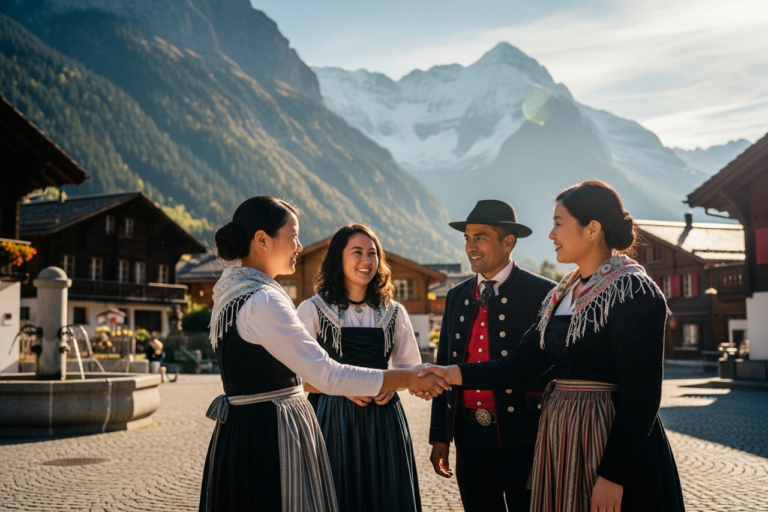
Proper etiquette for formal greetings in Switzerland is all about showing respect. When you meet someone for the first time, talk to an older person, or are in a work setting, you should use a formal greeting. People usually give a handshake and make eye contact for this. If you are in the German-speaking part of the country, you say “Grüezi.” If you are in the French-speaking region, the proper word is “Bonjour,” and in the Italian-speaking areas, you should say “Buongiorno.”
These kinds of greetings are a sign of respect and good manners. In daily life, it is the custom to greet people when you walk into small shops, wait in waiting rooms, or get into elevators. You only need a short and friendly greeting, but it goes a long way in Swiss life.
If you are new and a visitor in Switzerland, it is easy to follow this etiquette. Always use a formal greeting if you are not sure what to do. This is a good way to show you respect the customs of the Swiss people and want to make a good first impression right away.
When and How to Use Informal Greetings
Informal greetings work best when you are with people you know well, like your friends or family. In these informal situations, you will often hear words like “Hoi,” “Sali,” and “Ciao.” The type of greeting you use usually depends on your relationship with the person and their age. Younger people use these informal greetings a lot when talking to each other.
If you are in a group of friends, using an informal greeting can help you feel more at home. It can make you feel like you belong. But, if you are not sure what greeting to use, it is good to wait and see what the other person does first. Using a polite form is better until you get to know someone well.
For someone visiting, it helps to listen to how people greet each other in casual moments. You might want to say “Hoi” right away. Still, starting with “Grüezi” and switching to a more relaxed greeting as you become friendly with someone is a good and respectful choice. This is a nice way to handle greetings in new or different places.
Regional Differences in Swiss Greetings
As you travel in Switzerland, you soon see that the way people greet each other can change from one canton to the next. These small changes are a big part of swiss culture. They show how there is a lot of language mix in switzerland. Even when people speak the same language, local dialect can affect how words sound and what words they use.
These small differences help people feel proud and are part of their identity. You do not need to know each dialect well, but knowing about them can make your trip better. It will also show respect for the local culture, the dialect, and the vocabulary. In the next parts, you will find more about the ways people greet in different cities and areas.
Unique Greetings in Zurich and German-Speaking Cantons
In a busy city like Zurich, there is a mix of ways to say hello, and this shows how international it is. The most common formal greeting is “Grüezi.” The Swiss German dialect in Zurich, called Züritüütsch, puts its own touch on greetings. You can hear people use “Grüezi” all over—the trams, cafes, and at the market. People there also say greetings for morning and evening, like “Guete Morge” and “Guete Abig.”
Zurich is a big place for travelers and people from other countries. That’s why you might also hear someone speaking Swiss German say “Hallo” or the English word “Hello,” especially when talking with younger people or in the workplace. The way people say these words may sound a little different here than in some other parts of Switzerland, but you do not need to worry about small changes in pronunciation.
Most people in Zurich are used to visitors and are glad to meet people from all over. If you try to use a swiss greeting, they will appreciate it. If you are not sure what to say, a happy “Grüezi” is always the right greeting and works well any time with anyone.
Distinctive Greetings in Geneva and French-Speaking Regions
People in Geneva and the other French-speaking cantons have their own way of saying hello. “Bonjour” is the polite form you can use all day. When people meet for the first time, they often give a handshake and say “Bonjour.” This mixes both the French and Swiss way of doing things.
When you are with friends or people you know well, you can say “Salut.” Still, being polite is very important here. In Geneva, people say hello and goodbye to shopkeepers when they come in or leave a store. In this place, this is not just good manners—people expect it. It is a small sign of respect, and everyone knows how you act.
If you visit Geneva or other French-speaking cantons, remember this rule. If you don’t know which word is best, use the polite form. It is better to say “Bonjour” to the shopkeepers and other people. This helps you look good and makes your time in Switzerland better. It is a key way to get along with people and feel at home in a new place.
Conclusion
To sum up, knowing how people greet each other in Switzerland is about more than language. It helps you see and enjoy the wide mix of cultures in the country. You will hear people say “Grüezi” in Swiss German areas and “Bonjour” where people speak French. Each greeting tells you something special about that group.
If you are at a formal event or just having a chat, it is good to know that greetings are different in each part of Switzerland. This can make your trip much better and help you make real connections with people there. As you get ready to visit Switzerland, keep in mind that a simple “hello” in swiss german or french can break the ice and show respect for their way of life.
If you need help, I can give you tips on swiss customs and help you learn how to greet people so you feel more at home when you travel.
Frequently Asked Questions
What should a visitor know about Swiss greeting etiquette?
A visitor should know that the Swiss greet people in a polite and respectful way. When you meet someone for the first time, always use a formal greeting like “Grüezi” or “Bonjour” in shops or with strangers. In Swiss culture, it is good to make eye contact and give a handshake when you meet someone for the first time.
Can you greet anyone in Switzerland with ‘Grüezi’?
While “Grüezi” is a well-known and polite greeting, people use it mostly in the Swiss German areas. It is fine to say it in those places. But in the parts of Switzerland where people speak French, Italian, or Romansh, you should use their local greet words. For example, say “Bonjour” in French regions, “Buongiorno” in Italian regions, and “Allegra” in Romansh areas. This shows you respect their way of greeting.
How do you greet someone if you don’t speak their language?
If you don’t speak the local language, you can offer a friendly smile and just say “Hello” in English. This is a polite way to greet someone. In many city areas, people in Swiss towns and cities know some English. They will like that you try to be polite, even if you use a new language for you.



