

Key Highlights
-
The most common Swedish greeting is “Hej.” You can use it in almost any situation. It works both for formal and casual times.
-
People in Sweden often use first names to greet each other. They do not use formal titles like Mr. or Mrs., even at work.
-
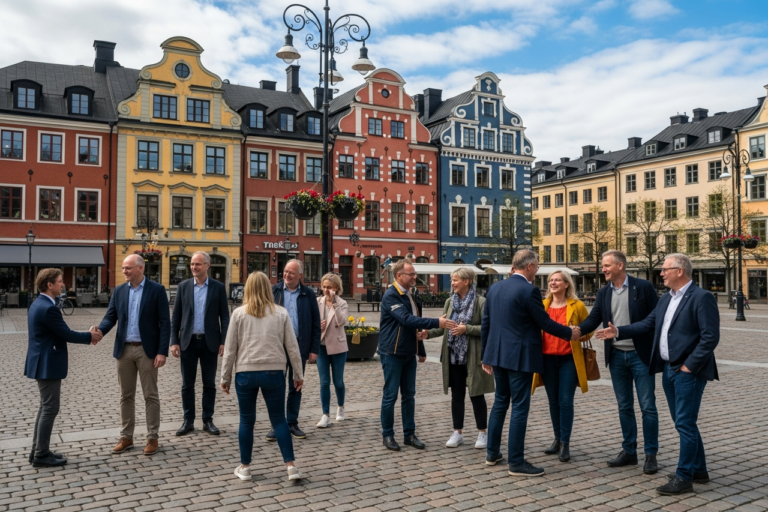
How people greet each other depends on the moment. A firm handshake is normal when you meet someone for the first time. Hugs are mostly for good friends.
-
There are some greetings for certain times, such as “God morgon,” which means good morning, and “God kväll,” which means good evening. People use these a lot too.
-
It is important to understand when to say a swedish greeting to people you do not know. You usually don’t greet strangers on the street, but you should do it when you go into shops.
-
Language learning tools like apps and books about culture can help you learn swedish greeting phrases and good manners.
Introduction
If you want to visit Sweden or talk with people from Sweden, it is good to know some local habits. Greetings are an important part of Swedish culture. If you learn how to give a proper Swedish greeting, you can make a good first impression. This also makes social interactions easy and smooth. In this guide, you will see the different ways to greet people by using the Swedish language. You will learn about simple words like “hej.” You will also find out when to use a handshake or even give a hug. Let’s start your journey to getting better at Swedish greetings.
Understanding Swedish Greeting Customs
The Swedish greeting is a big part of Swedish culture, where people like things to be easy and relaxed. In Sweden, your social status does not really change the way you say hello. It does not matter if you talk to a work colleague or a friend. Swedish people do not pay much attention to these things. They want everyone to feel the same when you meet.
Because of this, you will not often use titles or last names. Most people just use a simple and direct greeting. Most of the time, the atmosphere is easygoing. Let’s look at how history and new habits have helped make these swedish culture customs what they are today.
Historical roots of greetings in Sweden
The way people greet each other in Swedish culture comes from a history of being simple and clear. For a long time, the usual way to meet someone for the first time is with a strong handshake and looking straight at the other person. This shows that Swedes like to keep things open and honest. In the past, people did not use big or fancy greetings, and touching beyond a handshake was not common, especially if you did not know the other person well.
This style can surprise people who visit Sweden. For example, in Swedish culture, it is normal to introduce yourself. You do not have to wait for a friend to say your name for you. If you are with your friend who talks to someone you have not met, you are supposed to step up, shake hands, and say your name.
Being the one to say your name first plays a big role in how people act in Sweden. After a decade of teaching and watching how people do things, you can see that this way looks bold to people from other places, but in Sweden it is both polite and usual. It helps to break the ice and helps people get to know each other faster.
Modern influences on Swedish greeting etiquette
New trends now shape the way people greet each other in Sweden. This change comes from meeting more people around the world. While a handshake is still the safe choice for a swedish greeting, you may see hugs happening more these days. These hugs happen mainly between friends or sometimes even between a manager and a work colleague, especially with younger people.
But, most swedish people like their own space. Because of this, you should not try to give a hug or a kiss on the cheek to someone you don’t know. Cheek-kissing is common in other places, but not in a regular swedish greeting. It can make people uncomfortable. If you want to hug someone, it is best to do it after you get to know them instead of when you first meet.
There are also more the people now from all over the world living in Sweden. This mix of cultures means you can find a real blend of greeting styles. In places with people from different backgrounds, such as language classes, you may see handshakes, hugs, or just a wave. Everyone is trying to figure out how to fit in with swedish people but still keep a bit of their own culture, too.
Essential Tools for Learning Swedish Greetings
If you want to get better at Swedish greeting phrases, there are many tools that can help you learn. You do not need to do everything by yourself. Using different resources can make it easier to pick up swedish greeting words and see how people really use them.
You can learn from apps on your phone and get good tips from people who live in Sweden. These things will give you learning activities. They are more than just lists of words. They also help you understand when and how to use each swedish greeting.
Let’s go through some of the best tools out there. These can help language learners like you as you start to work on Swedish.
Language apps and phrasebooks
Language apps and phrasebooks can be great for anyone who wants to greet people the right way. Many apps use innovative language learning methods. Some of them have videos with native speakers, so you can see how words are said and watch their lip movements. This helps a lot to pick up on small details that you can’t always get just from reading. With features like lesson downloads, you can use them anytime and anywhere.
These tools are not just about easy words like “hej.” You also get examples of longer greeting phrases and questions that help you keep talking. Look for apps that give you:
-
Interactive exercises to help you practice greetings.
-
Audio clips made by native speakers so you can fix your accent.
-
Notes about culture that tell you when and where you should say certain phrases.
Phrasebooks, in both paper and digital forms, are helpful too. They put greetings into groups, like for formal, informal, or work situations. This means you always have the right phrase for any meeting, and you feel good when you talk to someone new.
Cultural guides and local advice
Apps can help you, but nothing is as helpful as cultural guides and advice from the locals when it comes to Swedish greetings. There is a lot of great information on blogs and forums by expatriates and friendly native Swedish speakers. They share their own stories and ideas. These guides talk about things that phrasebooks often miss, like what to do when saying hello to both Swedes and people from other places at the same time.
If you want something personal, it can be good to connect with enthusiastic tutors or do a language exchange. They will let you know right away if your way of speaking or saying things is right. Some sites let you talk with native speakers, so you get to practice in a friendly and easy way.
And do not forget: watch what is happening around you. When you are in Sweden, look at how people greet each other. It could be in a café, classroom, or anywhere else. Seeing and listening up close is one of the most real ways to get the best local advice possible.
Step-by-Step Guide: How to Greet People in Sweden
Are you ready to use what you know? This simple guide shows you how to greet someone the correct way in Sweden. Picking the right greeting phrase and gesture can help you give a good impression.
You will learn how to choose between formal and informal options. This guide also helps you know what to do when you say goodbye. These steps are here so you can feel sure when you meet new people. When you learn the correct pronunciation and right gestures, your greeting will sound and feel real.
Step 1: Choosing between formal and informal greetings
Your first thing to do is to choose if you need a formal or informal greeting. The nice thing about Sweden is that the people here are not really big on hierarchy, so most of the time, you will use informal hellos. In Sweden, you can say “Hej” almost everywhere. Use it when you meet a friend, talk to a bank teller, or even when you see your boss.
There are not many strict or formal ways to greet someone in daily life here. It is not common for Swedes to use titles like Mr. or Mrs. with a last name. Instead, everyone gets called by their first name, no matter how old they are or what their social status is. Because of this, the vibe here is friendly and equal from the first moment.
You can also use greetings that are right for the time, like saying “god morgon” or “good morning,” when you are in some professional settings to seem a bit more formal. Still, using “Hej” will always be good and nice, and you can’t go wrong with it.
Step 2: Using polite gestures, like handshakes or hugs
After you pick your greeting word, the next thing to know is which polite gestures to use. In Sweden, people do not use many physical greetings. The most common gesture is a firm handshake with eye contact. You should do this when you meet someone for the first time, either in a social or work setting. It is a good idea to say your name as you shake their hand.
Hugs are also part of the swedish greeting, but people use them most with close friends and family. If you have just met someone, you would not hug them. If you are not sure, let the other person offer the hug first. People in Sweden do not really kiss on the cheek to say hello. This gesture is not part of their custom and can make things awkward.
Here’s a quick summary of polite gestures:
-
Handshakes: This is what most people do when meeting for the first time.
-
Hugs: These are for friends and family.
-
Cheek Kisses: People in Sweden usually do not do this.
If you are not sure what to do, or it is your first time meeting someone, just give a wave and a smile. Adding a nice greeting word is always okay and safe.
Step 3: Greeting groups versus individuals
Greeting groups in Sweden is not the same as greeting just one person. When you walk into a room or join a small group, it is good to greet everyone. You do not have to go up to each person to shake hands, especially if the group is big. It is enough to look at the group, smile, and say “Hej!” or “Hej hej!”
If you are with a smaller group, people often greet each other one by one. If this is the first time you are meeting someone, you might shake hands. If you know them, a simple “hej hej” will work. The main idea is to make sure you greet everyone there. Not saying hello to someone at all can be seen as rude.
Knowing how to act in different social contexts matters in Sweden. You may see on a lively Swedish blog that the rules can change. If you are at a casual party, just saying “Hej!” or “Hej hej!” to the group is okay. If it is a business meeting, you are expected to greet each person, and shaking hands is the usual way, especially the first time you meet.
Step 4: Saying goodbye in social and professional settings
Saying goodbye is just as important as saying hello. It is also an important part of the conversation. The most common way to say goodbye in social interactions is “Hej då!” (Goodbye!) or, for something a bit lighter, “Hej hej!” (Bye bye!). Both phrases can be used in casual or professional settings. They are the common way people in Sweden end a talk.
If you are with friends, you can say things like “Vi ses!” (See you!) or “Vi hörs!” (We’ll keep in touch!). These phrases sound friendly and show that you plan to get in touch again soon. In more formal or work settings, you can just say “Hej då.” You could also use a time-based farewell, like “good evening,” or in Swedish, “God kväll.”
There are even more formal endings, but they are not used much in normal talk. The important thing is to end the conversation on a friendly and positive note. A simple “Hej då!” with a smile and a wave works well to finish most social interactions in Sweden.
Common Swedish Greeting Words and Phrases
If you want to sound like you live in Sweden, it is good to know the different swedish greeting phrases. Most people use “Hej,” and this word will help you a lot. But if you know a few more swedish words, you can have better talks with people. There are greetings for each time of day, and some are formal while others are not.
There are both simple greetings and examples of longer greeting phrases to help start a chat. If you learn these, you will feel more sure of yourself when you talk to others. Let’s look at some of the most used swedish greeting words and phrases in Sweden.
Everyday greetings: “Hej”, “Hejsan”, “Hallå”
In the Swedish language, a few key words form the foundation of everyday greetings. The most important greeting word you will ever learn is “Hej.” It’s incredibly versatile and can be used to say “hi” or “hello” to anyone, at any time of day, in any situation. You can say it to a friend, a shopkeeper, your boss, or a stranger. If you only learn one greeting, make it this one.
“Hejsan” is a slightly more cheerful and informal version of “Hej.” It works well in casual situations, like greeting friends or in relaxed service encounters. “Hallå” translates directly to “hello” and is most commonly used when answering the telephone. You might also hear it used to get someone’s attention.
While these greetings are simple, they are the building blocks of daily interaction in Sweden. Using them correctly will help you fit in seamlessly.
|
Greeting |
Pronunciation (Approx.) |
Common Usage |
|---|---|---|
|
Hej |
hey |
The most common, all-purpose greeting. |
|
Hejsan |
HEY-san |
A slightly more enthusiastic, informal “hi.” |
|
Hallå |
ha-LOH |
Primarily used when answering the phone. |
Time-specific greetings: “God morgon”, “God kväll”, “God natt”
Besides saying “Hej,” people in Sweden also like to use greetings that fit the time of day. Using the right one can show that you pay attention and care, which is nice in work or more formal places. “God morgon” means “good morning” and people use it until about 10 or 11 in the morning.
As the day goes on, the greeting will change. Even though it is not as common when you talk in a chill way, you can say “god dag” for “good day” or “god eftermiddag” for “good afternoon.” In the evening, you use “god kväll,” which means “good evening.”
“God natt” means “good night,” but you only use it right before someone is going to sleep. You use it when saying bye, not when you meet someone at night. Here’s a quick list:
-
God morgon: Good morning (used in the morning)
-
God kväll: Good evening (used in the evening)
-
God natt: Good night (used when leaving for the night or going to bed)
Cultural Nuances in Swedish Greetings
Mastering Swedish greetings is not just about learning new words. The way people say things and the emphasis of the words matters too. People also greet each other in different ways, based on where they are and who they are with. You have to know when to say hello to someone and when to leave them alone. This is important if you want to fit in.
These unwritten rules can seem hard to follow, especially if you are new. For example, you do not usually greet strangers on the street. But, if you go into a shop, you are expected to greet the staff. Now, let’s look at some of these specific situations to see how you can handle social interactions like people who grew up in Sweden.
When to greet strangers and when not to
Knowing when to say hello to strangers is an important part of the conversation when it comes to Swedish customs. In Sweden, people often like to keep to themselves in public places. You will not usually greet strangers when you walk on a busy street or ride public transport. People in Sweden value their privacy and like some space.
But the rule is not always the same. If you go hiking on a trail in the country or you are in an area with few people, it is normal to say “Hej” as you pass someone. Also, in your own apartment building, it is polite to give a friendly hello if you see a neighbor in the hallway.
You need to look at the situation to know what to do. In busy city areas, people like to move at their own pace and want to be left alone. In small and quiet places where people know each other, a short greeting is nice. This can show you want to be friendly but do not want to bother them.
Greetings in shops, cafés, and public spaces
When you go into shops, cafés, or other places in Sweden, it’s normal to say hello to the workers. People will often say “Hej” when they come in. This is seen as the polite way to start any first talk. It’s also common to say “Hej då” when you leave. People who work there notice this and it creates a friendly mood.
You should also do this in public places where you talk right to the staff. For example:
-
At a restaurant, say hello to the host or the person who waits on you.
-
At a hotel, greet the person at the front desk.
-
In a small store, just say hi to the shopkeeper.
Most friendly native Swedish speakers always greet staff this way. It is a simple way to show respect and be kind. You don’t have to greet strangers on the street, but when you know you will see or talk to a worker, it’s what people expect, because you are starting an initial conversation with them.
Conclusion
In short, knowing how to use Swedish greeting customs can really help you enjoy and connect with Swedish culture. The way people greet each other in Sweden has a long history, and it’s still important in new ways today. Each way that people say hello in Sweden helps build a sense of respect and togetherness.
Make sure to pick your greetings based on where you are. You should switch between formal or informal greetings, and be sure to follow the rules that matter when you say hello to groups or just one person. If you learn and use these ways to greet, you will leave a good mark and grow strong ties with people you meet in Sweden.
If you want to know even more about swedish greeting or swedish culture, you can look for workshops or learning tools that are made to teach you these things. Enjoy meeting people!
Frequently Asked Questions
What are the most common ways to greet someone in Sweden?
The most common Swedish greeting people use is “Hej.” This greeting phrase is easy and works in almost every situation you may be in. You can also say “Hej hej” to Swedish people. It’s a warm way to say both hi and bye. If you want the greeting to feel a bit more lively, try “Hejsan.” People use it in laid-back moments when talking to Swedish people.
How do Swedes typically say goodbye?
The most common way to say goodbye in Swedish is “Hej då” (Goodbye). You can also say “Hej hej” (Bye bye). These swedish greeting phrases work well in many social interactions. It does not matter if you talk to a friend or a work colleague. People also use “Vi ses” (See you) as a friendly option when saying goodbye in casual settings.
Is it common to greet strangers on the street in Sweden?
No, people do not often say hello to strangers on a busy street in Sweden. Swedish people like to keep their own space. They do not talk much to strangers in crowded places. But it is a little different when you are on a quiet hiking trail or walking in a small neighborhood. In these settings, it is good to say a quick “Hej” to others as it is seen as friendly by Swedish people.
What should I know about greeting groups in Sweden?
When you say hello to groups, it’s good manners to greet everyone. If you are with a small group, be sure to say hi to each person one by one. If the group is big, you can just say “Hej!” to the whole room. What matters most is that people know you are there in a nice way. This is an important part of the conversation in Swedish social etiquette.



