

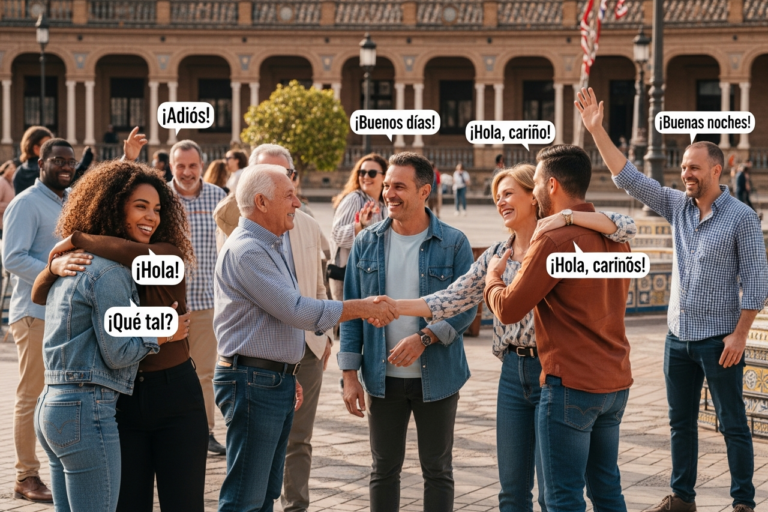
Key Highlights
-
Spanish greetings change with the time of day, like saying “Buenos días” in the morning.
-
You choose between the formal “usted” or the informal “tú” for your greeting, based on how well you know the other person.
-
There is more than just saying “hola.” People in Spain also say things like “¿Qué tal?” to greet each other.
-
There are many ways to say goodbye, not just “adiós.” People might also say “hasta luego.”
-
In Spain, in informal settings, people often greet with a kiss on each cheek.
-
The spanish greetings can change with slang or in different parts of spain, giving each area its own style.
Introduction
Are you getting ready to take a trip to Spain? Or maybe you want to get better at your Spanish skills? It is a good idea to start by learning the usual greetings. The right spanish greetings help you talk to native speakers and show that you respect their ways. It does not matter if you walk into a shop, try to meet someone new, or want to start speaking in Spanish. Saying “hello” is always a good way to make a good first link with people. This guide will show you the main greetings people use in Spain. You will learn what to say for both formal meetings and casual talks.
Common Greetings Used in Spain
In Spain, greetings are a big part of every day. People say things like “good morning” (Buenos días) or “good afternoon” (Buenas tardes) a lot. You will hear these Spanish greetings in shops, places to eat, and out in the street. They be a polite way for people to show respect as they go about their day.
Beside saying good morning or good afternoon, people use many other spanish greetings too. It is nice to know how to say a simple hello or “good night” in Spanish. It helps your talks with others feel smooth and friendly. Let’s look at easy ways to say hello and goodbye.
Everyday Ways to Say Hello
The most common way to say hello in Spanish is “hola.” This word is easy to use, and you can say it to anyone, no matter if it is a formal or informal moment. If you want to know more Spanish greetings, there are some other good words and phrases you can use, too.
Trying different ways to greet people makes you sound more like someone who speaks Spanish every day. For example, “¿Qué tal?” means “How’s it going?” and you will hear it a lot in everyday talks with friends or with people you just met. When you want to use a greeting at a special moment of the day, you can say “Buenos días” for good morning or “Buenas tardes” for good afternoon.
Here are a few must-know phrases to greet someone:
-
Hola: The usual “hello.”
-
Buenos días: Good morning.
-
Buenas tardes: Good afternoon.
-
¿Qué tal?: How’s it going?
-
¿Qué cuentas?: What’s up?
How to Say Goodbye in Spanish
There are many ways to say goodbye in the Spanish language, just like there are many ways to say hello. The one most people know is “adiós.” This is for when you do not think you will see the person for a long time. It is more strong than other ways to say goodbye. For other times, you might want to use a different phrase.
If you think you will see the person again soon, you can use phrases like “hasta luego” which means “see you later” or “hasta pronto” which means “see you soon.” These phrases help when you know you will meet again in a short time. You can also wish them “good luck,” or hope they have a nice day. At night, you can say “buenas noches.” People use this for both “good evening” and “good night” when they leave.
Here are some of the most common ways to say goodbye in Spanish:
-
Adiós: Goodbye.
-
Hasta luego: See you later.
-
Hasta mañana: See you tomorrow.
-
Chao: A casual “bye.”
Formal vs Informal Spanish Greetings
Knowing the level of formality is very important when you use spanish greetings. The way you greet someone depends on who you talk to. You may speak with a close friend, an older person, or someone at work. If you are in professional settings, you use formal greetings to show respect. Informal greetings are better to use with friends because they make the talk feel warm and easy.
This part of spanish language and culture is something all people should understand. If you know when to use formal or informal greetings, you feel more sure about how to act. We will talk about the difference between “tú” and “usted” and see how greetings can change in new or casual places.
When to Use “tú” and “usted”
One big thing in Spanish is knowing when to use “tú” and “usted.” “Tú” is the word for you when talking to friends, family, or people who are your age or younger. People use it when they feel close to each other and want to sound familiar.
“Usted” is the word you use to be more formal. You use “usted” when speaking with someone older than you, a boss, a doctor, or someone you do not know well, especially in a serious place. If you are not sure about being formal or not, it is always a good idea to go with “usted” to show respect.
You need to know that verbs change depending on if you are speaking with “tú” or “usted.” It is an important lesson for all spanish learners, especially if you are at the intermediate level. For example, you might say to your friend, “¿Cómo estás?” but you would say “¿Cómo está usted?” to someone you show respect to. Learning this makes using spanish better for everyone.
Professional and Casual Situations Explained
Knowing how Spanish greetings differ in formal and informal situations is key to making a good impression. In professional settings, greetings are more reserved and polite. You would typically use “usted” and phrases like “Encantado/a de conocerlo/la” (Nice to meet you) when being introduced to a new colleague or client. A firm handshake is the standard physical greeting in these scenarios.
In informal settings with friends or family, the atmosphere is much more relaxed. Here, “tú” is the norm, and greetings are more casual. You might hear friends say “¿Qué pasa?” (What’s up?) or “¿Cómo andas?” (How are you doing?). Physical contact, like a kiss on each cheek, is also very common. For advanced learners, adapting your vocabulary is the best way to sound natural.
Here is a table to help you distinguish between the two:
|
Situation |
Greeting Phrases |
Pronoun |
|---|---|---|
|
Professional/Formal |
Buenos días/tardes/noches, Encantado/a de conocerle, Mucho gusto. |
Usted |
|
Casual/Informal |
Hola, ¿Qué tal?, ¿Cómo andas?, Quiubo. |
Tú |
Time-Specific Greetings in Spain
In Spain, people like to greet each other based on the time of day. They do not just say “hola” all the time. You will often hear people use Spanish greetings that fit with the morning, afternoon, or evening. This is a normal and polite thing to do in daily life. You might hear these greetings when you go into a shop or when you meet someone while out on the street.
When you use these time-of-day spanish greetings, it shows you know about spanish customs. Saying “good morning,” “good afternoon,” “good evening,” or “good night” in Spanish is a big part of talking with others there. Let’s find out when to use each of these greetings. We will also look at some spanish greeting changes in other parts of spain you might come across.
Morning, Afternoon, and Evening Greetings
Yes, in Spain people use different greetings for the morning, afternoon, and evening. Using the right greeting is a sign of politeness. It also shows that you know the local customs. The day is split into three parts for greetings.
When you get up in the morning until around 2 p.m., you say “Buenos días,” which means good morning.
After lunch and until it gets dark, from about 2 p.m. to 8 or 9 p.m., you use “Buenas tardes.” This means good afternoon, but it also can be used for good evening in some settings.
Once it’s dark outside, “Buenas noches” is the greeting. It can mean both good evening when you show up somewhere or good night if you are leaving or saying goodnight before going to bed.
Here’s a quick guide:
-
Buenos días: Good morning (from waking up until about 2 p.m.)
-
Buenas tardes: Good afternoon/Good evening (from about 2 p.m. until 8 or 9 p.m.)
-
Buenas noches: Good evening/Good night (from 9 p.m. onwards)
Unique Regional Variations Across Spain
While people understand basic spanish greetings all over spain, the country is full of different languages and local sayings. You can hear many forms of slang, and there are different ways people greet each other, depending on what part of spain you are in. Native speakers in areas with their own culture and rules might say things you will not see in any textbook.
If you walk around madrid, you may hear some casual or direct greetings between people on the street. In other parts of spain, like catalonia or the basque country, you will hear both spanish greetings and words in their own languages, like catalan or basque. These different ways of saying hello show how rich and interesting the language in spain can be.
Here are some things to think about:
-
Pay attention to what spanish greetings locals use so you get to know the slang of the region.
-
If you do not know what a greeting means, just ask a native speaker. Most people in spain will be glad to tell you.
Conclusion
To sum up, learning how to say greetings in Spain can make the way you talk with people much better. This is true if you are going there or talking with people who speak Spanish. You should know the difference between saying “Hola” in a friendly way and saying “Buenos días” when you need to sound polite. Knowing how to use these in both informal and formal situations helps you talk in a real way. Also, it is good to know that different places in Spain might greet people in a few ways, and what you say might change depending on the time of day. When you talk to people in Spain next time, show them what you know about spanish greetings. If you want to know more about spanish language or things about Spain, you can always get in touch for help.
Frequently Asked Questions
Do people greet each other with a kiss or handshake in Spain?
Yes, in Spanish culture, people usually give a warm greeting. Native speakers, especially women, often give a light kiss on each cheek in casual meetings. They start with the right cheek. In professional settings or more formal places, a handshake is the right choice for Spanish greetings.
Are Spanish greetings different from other Spanish-speaking countries?
Yes, greetings can be different. While some ways to say hello are the same, there are also many different phrases that people use in Spain and Latin America. For example, “vosotros” is a word you will find in Spain, but you do not hear it in Latin America. Latin American Spanish has its own slang. People also use different phrases for greetings there that you might not hear in Spain.



