

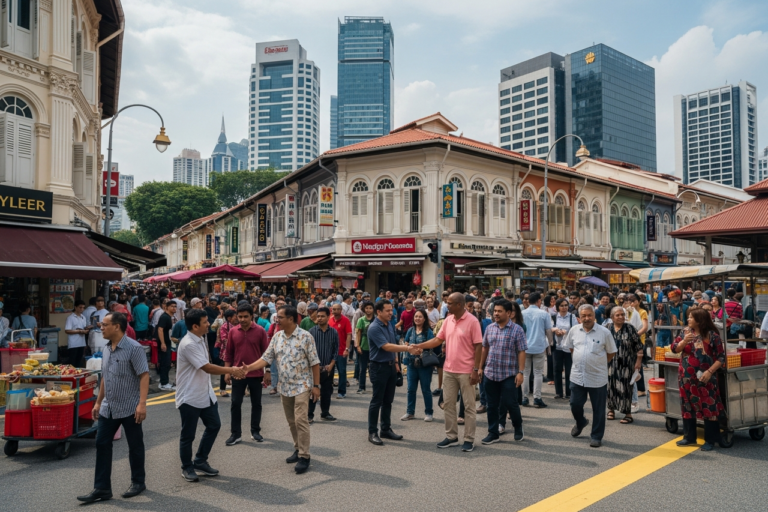
Key Highlights
-
Singapore is known as a multicultural country, with greetings changing among the Chinese, Malay, Indian, and Eurasian groups.
-
In a business meeting, the normal greeting is a firm handshake.
-
English is one of the official languages and most people use it for greetings and talking with others.
-
You need to know local etiquette, like using your right hand for gestures, to make a good impression.
-
When meeting someone for the first time, it is important to be formal; say their titles and surnames unless they tell you to do something else.
-
If you show genuine curiosity by learning some basic phrases, people will see that you respect the culture.
Introduction
Welcome to Singapore. This island nation is known for being a melting pot of cultures. You will see this in the way people live every day, like the food they eat or the words they use. Singapore has four official languages. These are English, Mandarin, Malay, and Tamil. People talk in many ways, and that makes Singapore special. If you come for work or for fun, it is good to know how people say hello here. When you understand these greeting customs, you can meet their warm and friendly people much easier. This guide will help you know how to say hello the right way in Singapore.
Understanding Singapore’s Multicultural Greeting Traditions
Singapore is a multicultural country, so its greeting customs mix parts from many different ethnic groups. In Singapore, people often change how they greet each other. It depends on the person they meet and where they are. This shows how flexible and open the island nation is with its social habits.
If you show genuine curiosity about the different traditions, people will notice and like it. Singaporeans shake hands a lot, and it is a good and safe greeting for most cases. Still, if you learn about the ways that Chinese, Malay, and Indian people welcome others, you can connect better with everyone. Let’s look at how this mix of customs changes the way people interact in Singapore.
The Influence of Ethnic Diversity on Local Greetings
The many cultures in Singapore shape how people greet each other. Because it is a melting pot of cultures, you will see different ways of saying hello in everyday life. Singaporeans know how to handle these moments and often change the way they greet, depending on who they are talking to.
For example, you may hear greetings in chinese dialects, Malay, tamil, or english. With the Malay community, people often give a gentle handshake and then touch their heart. Some older Chinese singaporeans might give a small nod instead of a handshake. In some Indian families, you may see the “namaste” sign, especially during special or traditional events.
This cultural mix keeps life interesting and open. It may look hard at first, but people in singapore will notice and value it if you try to follow their way of doing things. The best way is to watch, learn, and follow when it comes to greetings.
Language and Communication Styles in Social Interactions
Language is very important for social life in Singapore, as it shows the country’s mix of cultures. The four official languages are English, Mandarin, Malay, and Tamil. This makes talking with people in Singapore very different and lively. English is the main language for business and government work. So, it is a good one to use when you give greetings to others in most places. Still, there are various local dialects that you might hear when people talk in everyday life.
Formality matters, especially when you meet someone for the first time. It is normal to begin with formal greetings and use titles with surnames. This helps show respect, mainly if he or she is older or has some power at work or in the group. Later, your counterpart might let you to speak in a more casual or relaxed way.
This mix keeps things professional but opens the door to making personal bonds. Many Singaporeans also switch between languages very easily in talks. This skill of using more than one language is a key part of speaking and meeting people in Singapore.
Common Ways to Greet in Singapore
In Singapore, saying hello with a simple greeting is a good way to begin any talk. English is very common there. You can use basic phrases like “Hello,” “Good morning,” or “How are you?” in almost any place. Most people know these commonly used phrases and like to hear them.
But greetings in Singapore can be more than just words. People may say different things based on the time of day or why they are meeting. There are many everyday phrases you will hear. Singlish, which is a local way of speaking English, also has a big part in conversations.
Everyday Greetings and Phrases Locals Use
While you can use standard English greetings, Singaporeans have their own commonly used phrases for everyday talk. A simple “Hello” works anytime, but you may hear people say, “Have you eaten?” This question is not just about food. It is a warm way to show care, kind of like saying “How are you?”
Many greetings are direct and often fit the time of day. Using the right greeting shows you are both polite and paying attention to the person. These basic phrases are easy to pick up, and using them helps you get along well with people.
Here are a few simple greetings you can use:
-
Good morning / afternoon / evening: These classic English greetings are commonly used, and you can use them in any situation.
-
Hello / Hi: Great for informal situations and with friends or coworkers.
-
Apa khabar?: This Malay phrase means “How are you?” Many people understand it in Singapore. It’s a good way to show respect.
-
Selamat pagi / tengah hari / malam: These Malay words mean “Good morning,” “Good afternoon,” and “Good evening.”
The Role of Singlish in Daily Greetings
Singlish is the way people in Singapore speak a more casual and everyday kind of English. You will hear it a lot in places like hawker centers or when Singaporeans talk with friends. Singlish mixes English, Mandarin, Malay, and different chinese dialects to create its own style.
One thing many people know about Singlish is the way words like “lah” are added at the end of a sentence. For example, someone might say, “Hello, how are you lah?” These added words help make a greeting more friendly and show feeling. It gives the chat a good personal touch. Still, if you are just visiting singapore, it’s best to use regular english at first. This will help you not use singlish wrong. But, knowing how singlish works can really let you see more of the local culture.
Most singaporeans use singlish when they are in informal settings, like talking with friends or family. If you are in a business meeting, it is better to use formal english. Even so, these commonly used phrases are a big part of how people speak every day. It also shows how chinese dialects, malay, and mandarin all play a role in how singapore’s language grew.
Gestures and Body Language in Singaporean Greetings
In Singapore, people use more than just words when they greet each other. Gestures and the way someone moves matter a lot too. The most common way to greet someone, especially at work or at a formal event, is with a firm handshake. This handshake is seen as good, because it shows respect and can help people from different cultures feel welcome.
When you greet someone, you should use your right hand. Do not use your left hand, because some cultures in Singapore think the left hand is not clean. You also need to notice personal space. Try not to get too close, and stay away from things like hugging or any public displays of affection. Those acts are usually just for people who are very close, like family or good friends.
Let’s see what non-verbal cues are important to learn about greetings in Singapore.
Handshakes, Nods, and Other Common Gestures
In Singapore, people use a handshake as the main way to say hello, especially when they are at work. A good handshake is firm but short. It shows you have respect and feel sure of yourself. When you shake hands, you should always use your right hand. In Malay and Indian groups, people use their left hand for cleaning. So, they think the left hand is not clean.
A small nod of your head is also seen as a good and nice way to greet someone. Many times, people do this nod when speaking to those who are older or have a higher place in life. It is an easy way to show you see them and respect them without any touch.
Here are a few key gestures to remember:
-
Handshake: Offer a firm handshake with your right hand.
-
Nod: A slight bow of the head is a polite acknowledgment.
-
Using both hands: When giving or getting things like business cards, use both hands as this is a sign of respect.
-
The “Salaam” gesture: Some Muslims may use a move where they touch their own chest after a light handshake. It is good to give back a nod if you see this.
This covers the main ways people show a sign of respect and share greetings in Singapore, including how the right hand and left hand are used in Malay and other groups.
What to Avoid: Respectful Non-Verbal Communication
To make a good impression in Singapore, it is important to know which gestures not to use. The culture in Singapore values modesty and respect. Some actions without words can be misunderstood or seen as rude. For example, people do not like public displays of affection, like hugging or kissing. This is true, especially if you and the other person are not related and are from the opposite gender.
Your feet are said to be the lowest part of the body and seen as not clean. So, do not point your feet at someone, and do not use them to move things. Touching someone’s head is also not okay, because the head may be viewed as sacred in some cultures.
Here are some gestures to avoid:
-
Pointing with your index finger: Use your whole hand to gesture instead.
-
Excessive physical contact: Do not back-pat or touch others a lot unless you know them well.
-
Using your left hand: Give or take things with your right hand. If your right hand is busy, use your second hand to support your right wrist. This is a sign of respect.
-
Loud and expressive gestures: Be calm and act with control. This way is preferred.
It helps to remember these tips about your right hand, left hand, and using your second hand as a sign of respect. Avoid public displays of affection, pointing, touching, and actions with your feet, which is the lowest part of the body. These steps can help
Beginner’s Guide: How to Greet People in Singapore
If you are coming to Singapore for the first time, you might feel unsure about how to greet people there. But don’t worry too much! Singaporeans are kind and not quick to blame anyone for small mistakes. The main thing is to watch what others do, be polite, and try to learn. If you put in some effort, it will go a long way.
If you know some basic phrases and customs, you can greet Singaporeans with confidence and make a good first impression. This guide will tell you what you need to know before you begin and will share an easy, step-by-step way to follow greeting etiquette.
Essential Things to Know Before You Start
Before you say hello, you need to know a few things about singapore etiquette. People in singapore value formality and have a deep respect for hierarchy, mostly in business situations. It is best to use a formal tone first and wait for signs from others if they want to be more friendly.
Punctuality is a big thing in singapore. You should be on time for any meeting or event. This will show you respect the other person’s time and that you are professional. This one action can help start things off well.
It is also good to show genuine curiosity about the local culture. When you ask simple and real questions or listen with attention, people like it.
Here are some key points:
-
Respect hierarchy: Use titles and surnames when you talk to elders or your senior co-workers.
-
Be punctual: Come on time for all your appointments.
-
Observe and adapt: Watch how other people act and go with their way.
-
Maintain professionalism: Always keep a calm and respectful way of talking or acting.
Step-by-Step Guide to Greeting Etiquette
Greeting someone in Singapore can be broken down into a few simple steps. Whether you’re in a formal business meeting or at a casual social occasion, following a basic etiquette framework will help you navigate interactions smoothly. This approach will help you build positive business relationships and personal connections.
The process involves observing the situation, choosing the right words and language, and using appropriate body language. By being mindful of these elements, you can ensure your greeting is received as respectful and sincere. A thoughtful greeting sets the stage for a successful interaction.
Here’s a simple guide to help you:
|
Situation |
Greeting |
Gesture |
|---|---|---|
|
Business Meeting |
“Good morning, Mr. Tan. It’s a pleasure to meet you.” |
A firm handshake with the right hand, maintaining eye contact. |
|
Social Occasion |
“Hello, how are you?” |
A friendly smile and a slight nod. |
|
Meeting an Elder |
“Good afternoon, Uncle/Auntie.” |
A slight bow or nod as a sign of respect. |
Step 1: Assessing the Situation and Relationship
The first thing to do when you greet someone is to look at where you are. Is it a business meeting or a casual get-together with friends? The place will tell you the level of formality you need. At a business meeting, it is good to be more reserved and respectful. At social occasions that are more relaxed, you can act in a friendly way.
Think about your relationship with the person. If you are meeting someone for the first time, it is better to greet them in a more formal way. If you already know the person well, it is fine to say hi in a warmer and casual style. Remember that different ethnic groups will have their own customs too. You should always notice what people do and follow their way.
For instance, the handshake is normal at a business meeting with a Chinese colleague. When you greet a Malay friend, it is usual to use a softer handshake and then put your hand over your heart. Take a moment to check the atmosphere and decide on the best way to greet someone.
Step 2: Choosing the Right Greeting and Language
After you look at the situation, you should pick what words to use. English is one of the official languages in Singapore. Many people there speak English, so it is your best choice. You can say “Hello” or “Good morning”. These words are always okay to use, and people understand them.
If you know the person’s background, and you feel good about it, you can also greet them in their own language. For those who speak Mandarin, you can say “Ni hao”. If the person talks in Malay, you can use “Selamat pagi”. You can say “Vanakkam” for someone who speaks Tamil. Doing this shows you respect their culture in Singapore.
But you do not have to do this. A warm greeting in English works well, too. Many in a mixed group like it when people use English, since that is a language they all know. The main thing is to talk clearly and be real. This is important in any language you use.
Step 3: Using Appropriate Gestures and Phrases
The last thing to do is to put your chosen basic phrases together with the right gesture. As we talked about before, the usual way in most business and formal events is a firm handshake with your right hand. When you shake hands, add a smile and good eye contact. This shows warmth and can help you look sure of yourself.
Besides the handshake, a simple nod is a good sign of respect. You can use it in many settings. A nod can go along with what you say, or it can stand alone as a polite way to show you notice someone. When using basic phrases like “Thank you” or “Please,” giving a nod can help you show you mean it.
Make sure you pay attention to what your body is showing too. Stand tall. Keep smiling. Stay in the moment. If you mix polite basic phrases with respectful gestures, like shaking with your right hand, you will show that you care about others and the way things are done. This is a strong sign of respect.
Greetings Across Different Ethnic Groups
Singapore’s people come from different groups like Chinese, Malay, Indian, and Eurasian. Each group has its own rich past and way of life. You can see this mix in the way people greet each other in Singapore. A handshake is common for most, but there are also greetings special to each group that you might want to know.
If you learn these little differences, you can get to know people better. It could be about the words they use, like different Chinese dialects or even Tamil, or the ways they move, like a special gesture. Knowing about how people in Singapore greet each other shows you want to respect and connect with their culture. Here, we can look at some of these unique traditions.
Chinese, Malay, Indian, and Eurasian Customs
Each of Singapore’s major ethnic groups has special ways of greeting. These greetings help show the many sides of culture in Singapore. Many people in Singapore now use a handshake, which is seen as modern. Still, it is good to know about the traditional greetings.
Chinese Singaporeans, who are the largest group, often give a small nod or handshake. You may also hear greetings in Mandarin or other Chinese dialects. When meeting Malay Singaporeans, you can see a light handshake. Sometimes, they touch their right hand to their heart after, a move called the “salaam.” Indian Singaporeans, especially people who speak Tamil, often greet with “vanakkam.” For this, they put their palms together and give a little bow.
People from the Eurasian group, who have European and Asian roots, mostly greet with a regular handshake.
-
Chinese: A nod or handshake is normal. Using “Uncle” or “Auntie” for older people is a sign of respect.
-
Malay: The “salaam” move is a kind way to say hello. Always use the right hand for this.
-
Indian: The “vanakkam” or “namaste” gesture is common with family or at special events. A handshake is also fine.
-
Eurasians: The usual greeting is a firm handshake.
Unique Greeting Practices During Festive Occasions
Festivals in Singapore are full of color and joy. Each festival has its own greetings. Using the right greeting at the right time is a good way to show your genuine curiosity, share in the fun, and give respect to others and their culture.
For Chinese New Year, people often say “Gong Xi Fa Cai,” which means wishing you more wealth and good things. It is common to give and get mandarin oranges during this time. At Hari Raya Puasa, which comes after Ramadan, people greet each other with “Selamat Hari Raya.” When it is Deepavali, Hindus celebrate and you can say “Happy Deepavali.”
Festive greetings usually go along with simple customs. For example, during Hari Raya, people give green packets to others. Friends and family like to visit each other’s homes too. When you join in and use these greetings, you can really see the multicultural side of Singapore. It also makes you feel close to the people, their ways, and their festivals.
Greeting Etiquette in Formal and Business Settings
In Singapore, the way people greet each other in the business world comes from a place of formality, respect, and professionalism. When you go to a business meeting, the first impression you give can affect how things go with that person or company. Hierarchy matters a lot, so you should say hello to the highest-ranking person first.
When you greet someone in a business meeting, give a firm handshake, make direct eye contact, and show a confident smile. Being on time is also a big sign of respect in Singapore. People will see it as a must and not just something nice to do. If you understand these parts of etiquette, you can do well at work. Now, we will talk more about greetings, how they work in business meetings, and why hierarchy is important.
Professional Greetings and Business Card Exchange
In a Singaporean business meeting, people use formal greetings. You should greet the most senior person first. Then, greet everyone else after, going down in the order of hierarchy. Make sure to use your right hand for a firm handshake. This is the usual way to say hello. Also, add a polite verbal greeting like, “It’s a pleasure to meet you, Mr. Lim.”
When doing a business card exchange, be sure to show respect. Offer your card with both hands, or else use your right hand while your left supports it. The card should face the other person, so it is easy to read. When you get a business card, look at it for a short moment. Then put it in a cardholder or lay it on the table in front of you.
Do not write on someone else’s card in front of them. Never put the card straight into your pocket. How you treat a business card shows how you will act in the business relationship.
Formality and Hierarchy in Workplace Interactions
Formality is very important in the workplace in Singapore. People need to know about the order in their work setting. This helps to make sure that people talk to each other with respect and act in a professional way. When you meet someone for the first time, use their title and surname. For example, say “Dr. Tan” or “Ms. Chan.” You should not use first names right away. Save first names for people you know well, and only use them after you get the go-ahead.
This formality also shows in how you talk at work. It is good to be polite and not too loud or casual. Do not act over the top with jokes or laughter. Show respect to elders and people in charge. If someone in charge comes in, notice them first and show that you see them. Let them speak, and do not cut them off.
Here are a few tips on how to deal with workplace hierarchy:
-
Use titles: Always start with formal titles like Mr., Ms., or Dr. and use surnames.
-
Wait for the cue: Do not call someone by a first name until they say it is okay.
-
Greet seniors first: Always say hello to the most senior person in the room before greeting others.
-
Show deference: Listen well when a senior colleague is talking.
Useful Greeting Phrases for Tourists
When you travel to Singapore, you will see many amazing places. The airport is beautiful and the streets are busy. It is good to know some basic greeting words when you visit. Even though most people speak English, using some local greetings is a nice way to connect with people. People will like that you are trying.
These are some commonly used phrases that are easy to learn. They can help you talk to people and make your visit to Singapore better. Let’s go over a few simple words that could help you get along with everyone you meet in Singapore and make your time there more special.
Basic Words and Phrases for Visitors
If you visit Singapore, it helps to know some basic phrases. These can make it easier for you to get around the city and talk with local people. English is one of the main languages here, so you will be able to speak with most people. But if you add a local touch to your greetings, it can help you connect even more.
You can start by saying “Hello” or use greetings for the time of day, such as “Good morning.” One of the most friendly and commonly used phrases in Singapore is, “Have you eaten?” Locals say this to check on how someone is doing.
Here are a few basic phrases that are good for any visitor to know:
-
Hello / Hi: This greeting works everywhere in Singapore.
-
Thank you / Terima kasih (Malay): It is always good to say thank you. You can also use the Malay “Terima kasih,” which many people understand.
-
Excuse me / Sorry: These are important when you use public transport or walk in busy places.
-
How are you? / Apa khabar? (Malay): This is a nice way to begin a chat.
Use these basic phrases, some English words, and some Malay greetings to have a better time in Singapore. They help you blend in and make your trip smoother.
Tips for Making a Positive First Impression
Making a good first impression in Singapore is about being polite and showing respect. If you follow local etiquette when you say hello, you will go a long way. Smiling is something all people understand. It is an easy way to look friendly and welcome others.
If you add a smile to a nice greeting and a respectful way of standing, you will get off to a good start. It helps to have genuine curiosity about the people you meet and the way they live. Ask questions, listen well, and stay open to new ideas.
When you do these things, you show you value the people you meet and want a good talk with them.
-
Smile: This is a simple sign to show people you are friendly.
-
Be polite: Say words like “please” and “thank you.”
-
Observe and adapt: Look at how people act and fit in with their ways.
-
Show respect: Do not point your feet at others or touch someone’s head.
Conclusion
To sum up, knowing the different ways people say hello in Singapore is important. It helps you talk with others in a good way and gives you a better start. The words you use, along with the special ways people greet each other, matter a lot when you meet new people. By learning about these customs, you can be part of the rich mix of cultures in Singapore. This will help you get along better with local people. If you use the right greetings, you show respect and make your time in the city more fun. If you want to learn more about singapore greetings or the ways of the people there, you can ask for a free consultation.
Frequently Asked Questions
Are there greetings to avoid in Singapore?
It is smart to avoid greetings that are too personal. Public displays of affection, like hugging, do not happen much when people are just acquaintances. Also, do not touch someone’s head or point with your feet. The head is very special, and the feet are known to be the lowest part of the body. If you follow this etiquette, you will have a good interaction.
How important is formality when greeting someone new in Singapore?
When you meet someone new, it’s good to show formality. You should call people by their surnames with honorifics. This is a sign of respect for their place in the group or company. Such etiquette matters a lot, especially in business and formal situations. Wait until they tell you it’s fine to use first names before you get more friendly.
Which gestures are considered polite or impolite in Singapore?
A firm handshake with your right hand is a polite and common way to greet someone. When you use both hands to give or take something, it is a sign of respect. If you point at someone with your index finger, touch someone’s head, or show public displays of affection, it is seen as not polite. People always like it if you show a respectful way of acting.
How do Singaporeans greet each other during festivals or special occasions?
During big celebrations, Singaporeans often use certain greetings. At Chinese New Year, they say “Gong Xi Fa Cai.” On Hari Raya, it is “Selamat Hari Raya.” For Deepavali, people say “Happy Deepavali.” Using these basic phrases helps you show that you have a real interest and respect for Singaporeans from different ethnic groups. This also brings people together.



