

Key Highlights
Here’s a simple look at the main points about Portuguese greetings:
-
The most basic Portuguese greeting is “Olá.” You will hear it in all parts of Portugal, and the greeting is just a bit more formal.
-
People in Portugal often say greetings for the time of day. They say “Bom dia” for good morning, “Boa tarde” when they mean good afternoon, and “Boa noite” for good evening.
-
How you greet people also matters. If you are in a formal setting, people use a handshake. If they are friends, they will give two kisses on the cheek.
-
There is a clear line between formal and friendly greetings. If you talk to someone you do not know well, use “Senhor” or “Senhora.” With your friends and family, you use more informal greetings.
-
European Portuguese and Brazilian Portuguese both use these greetings. But how people use them, and some of the words or slang, changes by where you are.
These tips can help you understand when and how to use a Portuguese greeting, both in Portugal and with someone who speaks Brazilian Portuguese.
Introduction
Are you thinking about going to Portugal or do you just want to know more about its culture? It is a good idea to learn how people greet each other there. Just saying “hello” is a simple way to meet people. It can help you make new friends. In Portugal, how you say hello is more than just the word. You will need to notice how people act and follow their ways of doing things. This guide will help you see what to say and do when you meet people in Portugal. With this, you can feel good and ready when you talk to people in this great country.
Common Ways People Greet Each Other in Portugal
When you are in Portugal, you will find that people use a few common Portuguese greetings in daily life. The greeting you pick will often depend on who you are talking with and the time of day. If you know some of these easy Portuguese words, talking with native speakers gets much easier.
You can use a simple “hello” or go with a greeting for the time of day, such as “good morning.” You will hear people say “bom dia” for good morning, “boa tarde” for good afternoon, and “boa noite” for good night. These Portuguese greetings are simple, and you will use them a lot.
Now, let us look at the most common greetings you will get and use in Portugal.
1. Saying “Olá” – The Standard Portuguese Hello
The most common greeting in Portuguese is “Olá.” This means “hello” and people in all Portuguese-speaking places, like Portugal, know it. “Olá” is a bit more formal than some other greetings. It is a safe word when you do not know what to say. You can use it with a shopkeeper, a new person you meet, or someone older. “Olá” is always good to use.
In Brazil, people use “Oi” more when they want an informal way to say hi. But in Portugal, “Olá” is still the greeting most people use. Portuguese speakers in Europe like “Olá” for most things. The pronunciation of “Olá” is easy and does not change much, so you can feel good about saying it.
Saying “Olá” is the best way to start talking to someone with respect. It means you know something about the language and want to use it. After you say “Olá,” you can say other things, too. Starting with this greeting always helps keep things friendly.
2. Using “Bom Dia”, “Boa Tarde”, and “Boa Noite” for Different Times of Day
In Portugal, people often use a greeting that matches the time of day. This is part of normal life there. Most native speakers say these Portuguese phrases to be polite, in formal and casual settings. If you use these greetings instead of just saying “Olá,” you show that you understand local ways and respect the culture.
Portuguese greetings change during the day. People switch what they say by looking at the sun or thinking about when they eat. You will hear bom dia, boa tarde, and boa noite in many places, like in a cafe, a store, or even when doing business.
Here’s a simple way to know which Portuguese greeting to pick at each time of day:
-
Bom dia: Say this for “good morning.” Use it from the start of the day until noon. The words mean “good day.”
-
Boa tarde: This is for “good afternoon.” People use it from noon to about 7 p.m. or when the sun goes down.
-
Boa noite: People use this for “good evening” and “good night.” It is right to say from about 7 p.m. on.
By choosing the correct time of day greeting, you will fit in well with other people in Portugal. It is a simple way to make a good mark wherever you go.
3. Handshakes – The Universal Greeting in Formal Settings
When you meet someone for the first time in Portugal, you should use a handshake. This is common in professional settings and in formal situations. The handshake is polite and shows respect. In business, people give a firm handshake with steady eye contact. This way of greeting is the safest and best in formal situations.
If you say hello to a new colleague or a business partner, put out your hand for a handshake. It is also normal to use titles for Portuguese greetings, like “Senhor” for Mr. or “Senhora” for Ms., plus the last name when you first meet. Men in Portugal almost always greet each other this way with a handshake, even if they know each other well.
This simple act helps people from different cultures understand each other. It sets a professional tone right away. So, if you are ever unsure about the right greeting in Portugal, a handshake will always work in formal situations.
4. Kisses on the Cheek – A Typical Portuguese Custom
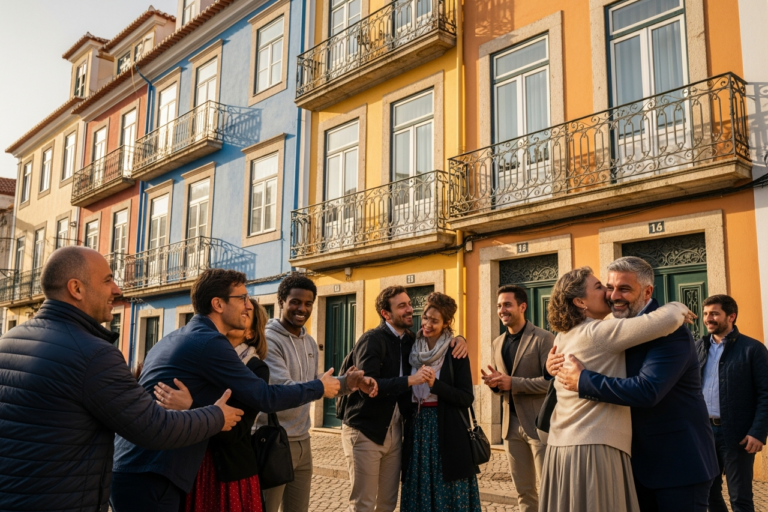
One of the most well-known Portuguese customs is greeting with two kisses on the cheek. People in Portugal use this friendly gesture in informal situations. Friends, family, and even people who know each other a little will do this greeting. They start by kissing the right cheek and then kiss the left one. This is common when women meet or when a man meets a woman.
This informal way of greeting usually comes with friendly words like “Tudo bem?” which means “How are you?” It shows there is a warm or close feeling between people. It is different from the formal handshake which people use in a more serious way. The two-kiss greeting is for people you know or for times you are introduced to someone in a social setting.
Most men in Portugal do not kiss each other on the cheek to say hello. Instead, they use a handshake or sometimes a quick hug. For all other people, the two-kiss greeting is natural. It is part of everyday life and informal situations in Portugal.
5. Hugs Among Close Friends and Family
In Portugal, people save hugs for those they are very close to. You give hugs to close friends or family. Many give kisses on the cheek, even to people they don’t know well. But, a hug means there is more care and feeling. You do not hug someone you just met, even in a relaxed setting.
There is a special time for hugs. It is a warm thing that happens when people are really at ease with each other. For example, two male friends might share a strong hug. Sometimes, this includes a pat on the back instead of a cheek kiss, which is more usual in portuguese greetings of men and women.
These are the times hugs are mostly used in portuguese greetings:
-
Among close family members, either when meeting or leaving.
-
Between very close friends, men or women, who have not been together for some time.
-
When there is something to celebrate or when someone needs care and support.
Knowing when to hug can help you fit in better when you are in Portugal or with your amigos.
6. Polite Greetings for Strangers and Elders
When addressing strangers, elders, or people in positions of authority in Portugal, it’s important to use polite greetings. This shows respect and an understanding of cultural norms. In these formal situations, you should use titles like “Senhor” for men and “Senhora” for women, often followed by their last name if you know it. These titles are the equivalent of “Mr.” and “Ms.” in English.
Another polite European Portuguese greeting is the word “Viva!” While it literally translates to “live,” it’s used as a way to wish someone good health and is a slightly more formal way to say hello. Combining this with a time-of-day greeting, such as “Bom dia, Senhora,” is a very courteous way to greet someone.
Using these polite forms of address is crucial in formal settings. Here’s a quick guide to help you:
|
Title |
When to Use |
Example |
|---|---|---|
|
Senhor |
When addressing an adult man you don’t know, an elder, or someone in a formal setting. |
“Bom dia, Senhor.” |
|
Senhora |
When addressing an adult woman you don’t know, an elder, or someone in a formal setting. |
“Boa tarde, Senhora.” |
Formal vs. Informal Greetings in Portugal
Knowing the key differences between formal and informal greetings helps you handle social situations in Portugal. The type of greeting you give depends on your relationship with the person. When you are in professional settings, talking to someone older, or meeting someone for the first time, you should use formal greetings.
On the other hand, you use informal greetings when you talk to friends, family, or people your age. These Portuguese phrases sound more relaxed. The main difference comes not just from the words you use, but from what you do with your body, too. In the next parts, you will see when to use each kind of greeting in Portugal.
When to Use Formal Greetings in Portuguese Culture
Knowing when you should use formal greetings is important if you want to make a good impression in Portuguese culture. These greetings matter in european portuguese, especially in professional settings or other times when you need to show respect. When you use them, people see that you understand social rules and want to be polite. If you are not sure what to do, it is better to be too formal than to be too relaxed.
In formal situations, language must be more polite. That often means you should call people “Senhor” or “Senhora.” In european portuguese, the verb you pick should match the level of formality. For instance, “Como está?” is the right way to say “How are you?” if it is a formal moment.
You should use formal greetings at these times:
-
In professional settings, such as business meetings, interviews, or when talking with clients.
-
When you talk to elders or to people who have power, like police officers or government officials.
-
When it is the first time you meet someone and it is not a social situation.
Informal Greetings for Friends, Peers, and Young People
When you are with friends, people your age, or those younger than you in Portugal, you can use a much more informal way to talk. These kinds of greetings help make the talk easy and relaxed. Instead of the formal “Como está?”, friends are more likely to say “Tudo bem?” or “Tudo bom?” They both ask if everything is good.
The word “Oi” is very popular in Brazil. It is now also used more by young people in Portugal. Still, “Olá” is common and used a lot. You will also hear slang phrases with friends. Young people in Portugal may say “Como é que é?” This is a very informal way to say “What’s up?” There is another casual phrase, “Tás bom?”, which is a slangy way to ask “Are you well?”
These informal way of speaking and greetings are for people you already know. It is not good to use them with strangers or when you need to be more formal. The best thing about these slang phrases is the warmth and good feeling they bring, especially when talking with your amigos.
Physical and Cultural Customs in Portuguese Greetings
What you say is not the only thing that matters. The way you greet people and different customs are very important in how people meet each other in Portugal. Non-verbal things, like your body language, are as important as words. Portuguese people may use handshakes or cheek kisses. The way you greet a person can help set how your talk will go.
If you know these customs, you will feel more at ease and not run into any strange or awkward times. In Portugal, you may find little changes in how people say hello in different parts of the country. Let’s explore these regional differences and learn about some special traditions in Portuguese culture.
Regional Differences and Unique Local Greeting Traditions
The basic ways to say hello in Portuguese are the same all over the country. But the way people greet each other can change a bit depending on where you are. People in each area have their own way of speaking. Their pronunciation and slang words can be different. The way someone gives a greeting might also be a little different. All of these small details make the culture of Portugal feel special.
For example, the number of kisses you give as a greeting can be different. In Lisbon and the south, most people use two kisses. But in the north, some people might only give one. These are small things you will learn if you watch and listen to the locals in each part of Portugal.
Here are a few things to think about when greeting people in different regions of Portugal:
-
Pronunciation: The way people speak up north, like in Porto, can sound very different from how people talk in Lisbon. Words like “bom dia” do not always sound the same in every city.
-
Number of Kisses: Watch what other people do in each place. The rule usually is two kisses, but sometimes you will see a difference.
-
Local Slang: Each city may have its favorite slang or ways to say hello. A Portuguese greeting or phrase that is common in one place might not be used much in another.
Whether you use “bom dia” or another Portuguese greeting, it is good to listen to how people around you say things. That way
Conclusion
To sum up, greetings in Portugal mix warmth with old customs. You can use a simple “Olá” or say the more formal “Bom Dia.” When you learn the way people greet each other in Portugal, you better your talks with locals. What you do matters, too. A handshake may be just right for a business time, while a hug works with close friends.
If you take part in these Portuguese greetings, you feel close to the people. It also shows that you have respect for what they do there. When you’re in Portugal, greet others with a warm greeting. This helps you get into the lively culture in a good way.
If you want to know more about Portuguese customs, you can reach out for a talk.



