

Key Highlights
-
The most used greeting in the Polish language is “Dzień dobry.” It means “good day” and is for formal situations.
-
For informal greetings with friends, people say “Cześć.” But younger people also use “Hej,” “Siema,” or “Elo.”
-
There are special Polish greetings for different times, like “Dobry wieczór” means “good evening.”
-
In Polish culture, there is a big difference between formal and informal greetings, so you should know which to use.
-
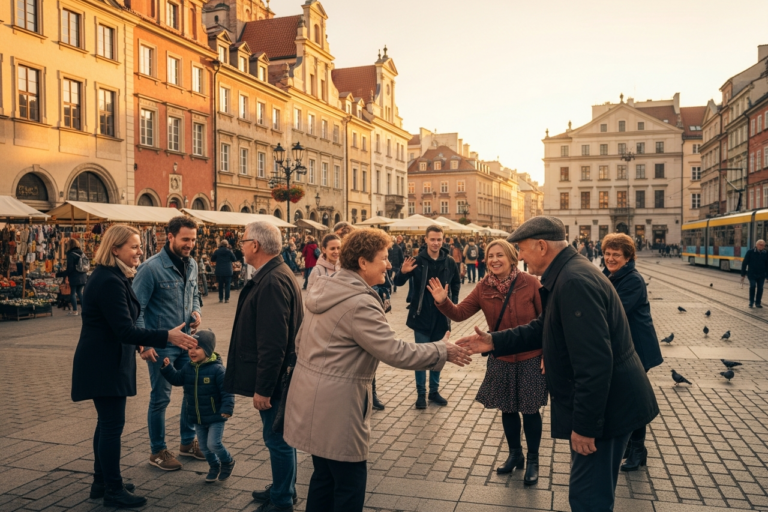
When people meet for the first time, a firm handshake is normal, no matter if it’s a man or woman.
-
When Poles answer the phone, they usually say “Halo.”
Introduction
Welcome to the world of Polish greetings! If you plan to go to Poland, want to say hello to your Polish friends, or just want to know more about the polish language, learning how to greet people is a great place to start. People in Poland care a lot about first words and greetings, and these moments say a lot about polish culture. This guide will show you some basic phrases. You will learn both formal and casual ways to say hello. These tips will help you make a great first impression and feel ready in any social situation with your polish friends.
Key Greetings Used in Poland
Learning some key phrases is a great way to start speaking a new language. When you greet someone in Polish, it can change depending on the time of day, who the person is, and where you are. Some polish greetings can be used with many people, but others are better for one kind of situation.
You can use a formal good day, or just say hi for a casual setting. If you know these polish greetings, like “Dzień dobry” or “Cześć,” you will feel better when talking with others. We will talk about the most common polish greetings for the time of day, evening, and other times, so you can use the right one for each moment.
1. Dzień dobry – The Standard Polish Greeting
“Dzień dobry” is maybe the most useful of all Polish greetings. The literal translation is “good day.” It is the greeting you should use in formal situations. You can use it to say both “good morning” and “good afternoon.” This makes it work well during most times of the day. People say it when they go into shops, meet someone for the first time, or in any formal or work setting.
If you want to be extra polite, add “Panu” for a man or “Pani” for a woman after the greeting. For example, you can say “Dzień dobry Panu.” This small change shows even more respect. It is a key part of Polish culture and the best way to greet someone you do not know well.
Even if you forget other Polish greetings, just knowing “Dzień dobry” will help a lot. It is the polite word to use during the day when you talk with people, and it works well from the morning until later in the day, before evening.
2. Cześć – The Casual Hello
If “Dzień dobry” is the formal way to say hello, then “Cześć” is the casual greeting. You say it like “chesht.” People use this word a lot around Polish friends, family, and people who are about the same age. It is a warm way to say hi, and you can hear it a lot in everyday times when people feel relaxed.
The big difference between “Cześć” and “Dzień dobry” comes down to how formal you want to be. You use “Dzień dobry” when you talk to strangers, older people, or at work. But “Cześć” is for your inner circle and close friends. You say it to people you call by their first name. That makes things friendly fast.
One more thing, you can say “Cześć” when you leave too. It works as “bye” in a casual chat. Just be sure to use it only with your close friends, polish friends, or people you know well. If you use it in a formal setting, it might sound too familiar for that moment.
3. Dobry wieczór – Greeting in the Evening
When day turns to night, the way you greet people in Poland will change too. You should say “Dobry wieczór,” which means “good evening.” This is the right formal greeting to use when it’s later in the day. People use it at night, just like they use “Dzień dobry” in the day. Use it when you go into a restaurant, go to an evening event, or say hello to someone you do not know well.
This greeting follows the same rules for being polite as the one used during the day. If you want to show more respect, you can add “Panu” for a man or “Pani” for a woman. For example, you can say, “Dobry wieczór Pani.” This way of speaking is part of polish culture. People will see that you want to be polite in the evening.
If you forget to say “Dobry wieczór,” you can still use “Dzień dobry.” Most people will accept it, even at night. But if you use the right greeting for evening, it will show that you know more about the polish language and their customs. In the morning, just stick with “Dzień dobry.”
4. Witam & Witamy – Greeting Individuals and Groups
The greetings “Witam” and “Witamy” are words you use when you welcome someone into your place. This could be your home or your office. “Witam” means “I welcome.” You use it when you are one person greeting somebody. For example, you can say “Witam” when a friend comes to your apartment. This helps you make your friend feel happy and at home.
“Witamy” is a little different. It means “we welcome.” You use it when there is a group of you and you are greeting one or more new people. Picture you and your family greeting guests who come for dinner. Here, your family can say “Witamy.” It is a good way to welcome a group and help them feel you are glad they came.
People mostly use these greetings when they are the host. It is not common to say “Witam” when you are visiting someone else. If you are the guest, you can say “Dzień dobry” or “Cześć,” depending on the place and time.
5. Hej, Siema, Elo – Informal Greetings Among Friends
Besides saying “Cześć”, there are a lot of other casual ways to say hi in the Polish language. Many of these Polish greetings are very popular with young people. You will hear these informal greetings a lot with close friends. Students often use them at university campuses, in text messages, and among Polish teens.
One of the most used greetings is “Hej”. It comes straight from the English word “hey”. People use it the same way—a fast and easy hello to a friend. Another big favorite is “Siema”. It’s a short slang way to say “Jak się masz?” which means “How are you?”. This one is really friendly and young Poles use it a lot.
Here are some informal Polish greetings you might hear:
-
Hej: This is a simple word for “hey” and is used a lot.
-
Siema: This one is a popular slang greeting, mostly for young people.
-
Elo: People use this as slang too. It is a bit like “yo”.
-
Siemka/Siemanko: These are forms of “Siema” and make things sound even more friendly.
These greetings are just for your inner circle, like your close friends. Do not use them when you are in a formal place.
6. Halo – Answering the Phone
When you pick up the phone in Poland, people usually say “Halo?” This greeting is a lot like “hello” in English or other languages. The word “Halo” is neutral. You use it to show the line is open and you are ready to talk. It works for both business calls and calls with friends.
After you say “Halo?”, the talk changes depending on who is calling. If a friend calls, you can switch to “Cześć” or “Hej.” But, if it is a work call or you do not know the person, the caller may give their name after you answer. You would then answer in a more proper way, maybe saying “Dzień dobry.”
In the polish language, think of “Halo” as the first word people use on the phone. People do not use it face to face. But, every time you make or get a call in Poland, “Halo” is likely the first word you hear or say. It is simple, and it is an important part of how people talk on the phone every day.
Formal and Informal Greetings in Polish Culture
Knowing the difference between formal greetings and informal greetings is very important in Polish culture. If you use the wrong one, it can feel strange or even upset someone. Use formal greetings when you want to show respect to people like elders, strangers, or anyone with power. Save informal greetings for your friends, your family, and people who are on the same level as you.
Most of the time, you keep using formal greetings until someone lets you call them by their first name. This step usually comes when you start to get closer. It is a big moment in the way people act with each other. Let’s see when you should use formal greetings like “Dzień dobry,” and when you can move to the more easy “Cześć.”
When to Use Formal Greetings Like Dzień dobry
Knowing when to use a formal greeting like “Dzień dobry” will help you make a great first impression in a lot of situations. This is the most common way people greet each other in a polite way in Poland. You can use it if you feel unsure what to say or if you want to sound respectful. “Dzień dobry” is the default greeting in formal situations.
It’s a good idea to say “Dzień dobry” every time you are in a professional setting. You should use it in a business meeting, at a job interview, or with people at work you do not know well yet. This greeting sets the right tone. It shows you mean to be polite and professional. If you need to greet a group in a formal place, just say “Dzień dobry” once out loud. That is enough for everyone in the room.
Below are some key formal situations when you should use “Dzień dobry”:
-
When you meet someone for the first time.
-
When talking to a person who is older than you.
-
In a professional setting like a business meeting.
-
When you speak to service staff, for example in a store or a restaurant.
When It’s Appropriate to Use Informal Greetings Like Cześć
Switching to a friendly hello like “Cześć” shows that the relationship is getting more relaxed and warm. This simple “hi” works well when you are in informal settings and feel comfortable with the people there. It’s often used with close friends, family members, and people you know well at work.
A good pointer is to say “Cześć” to people who are your own age or younger, especially when you are in a social place. But it’s not a good idea to greet someone you do not know with “Cześć” because it can come off as too forward or even rude. At first, it is better to say “Dzień dobry” and see if they are open to using a more relaxed way to talk.
Most of the time, the switch from formal to informal starts when the older person or someone more important makes the first move. Once you have been asked to use someone’s first name, you can feel good about using “Cześć” when you greet them.
Greeting Elders and Strangers Respectfully
In Polish culture, it is important to show respect to elders and people you do not know. The way you say hello is a big part of this. If you want to make a good first impression, use polite greetings. When you meet an older person or a stranger for the first time, say “Dzień dobry” or “Dobry wieczór.” This is always the best and safest way.
If you use informal greetings like “Cześć” with someone older or someone you just met, it can come across as wrong. It makes people think you feel close to them when you really are not. That is why it is better to be formal. Stay formal until they tell you it is okay to be casual. This way you are showing that you know Polish social rules.
Here are some tips for saying hello in a respectful way:
-
Use “Dzień dobry” with elders and people you do not know well.
-
Give a firm handshake if you are meeting for the first time.
-
Make eye contact to show you are really there with them and mean what you say.
-
Add “Pan” for a man or “Pani” for a woman if you want to be extra polite.
-
Wait for them to start using an informal greeting before you do.
Following these simple steps helps you make a good first impression. You also show that you care about Polish culture, use polite and not just informal greetings, and pay attention
Greetings for Different Times of Day in Poland
Just like in English, there are different Polish greetings you use at different times of the day. Some Polish greetings can be used any time, but others be specific to the morning, afternoon, or evening. Using the right greeting shows that you understand the polish language and how people use it in real life.
For example, you would not say “good evening” when it is the morning. The polish language has different ways to say hello based on the time of day. Let’s see how to greet people by saying “good morning” or “good evening,” and what changes with these polish greetings as the day goes on.
Morning, Afternoon, and Evening Greetings Explained
The Polish language simplifies daytime greetings. Unlike English, there isn’t a separate phrase for “good afternoon.” The Polish equivalent for both “good morning” and “good afternoon” is “Dzień dobry,” which literally means “good day.” You can use this versatile phrase all the way from sunrise until it starts getting dark.
Once evening arrives, it’s time to switch to “Dobry wieczór” (“good evening”). This is the formal and polite greeting for the later part of the day. Finally, when you’re saying goodbye for the night or heading to bed, you would use “Dobranoc” (“good night”). This is a farewell, not a greeting.
Here’s a simple table to help you remember:
|
Time of Day |
Polish Greeting |
English Meaning |
|---|---|---|
|
Morning |
Dzień dobry |
Good morning |
|
Afternoon |
Dzień dobry |
Good afternoon |
|
Evening |
Dobry wieczór |
Good evening |
|
Late Night (Farewell) |
Dobranoc |
Good night |
How Greetings Change Based on Time and Situation
The most common way to say hello in Polish is “Dzień dobry.” This works well in a formal setting at any time of day. But, it matters who you are talking to and where you are. Your words show both good manners and what is going on. For example, you would say “Dzień dobry” at a business meeting in the morning. If you are meeting a friend for coffee at the same time, “Cześć” is better.
In the evening, you should use “Dobry wieczór” when you need a good evening greeting in a formal place. This can be when you go into a theater or a nice place to eat. But, if it is an informal setting, like a pub with friends at night, just say “Cześć” or “Hej.” The way you know the other person changes your greeting at times like this.
The time of day is a good guide. Use a good morning greeting for the day and a good evening greeting for the night. Still, you should think about the situation to know if you need to be formal or informal. Always look at who you are with and where you are before you say hello.
Special Greetings for Holidays and Celebrations
Poland is known for its many special greetings during holidays and big events. People use these phrases to make special days feel important. They are a big part of the culture. If you learn and use these greetings, you can get closer to your Polish friends and family during the year.
When there is a birthday, people do not just say happy birthday. They often say “Wszystkiego najlepszego,” which means “All the best.” Another greeting you will hear is “Sto lat.” It means “One hundred years.” People use this to show joy, not only for birthdays but at weddings and other happy moments. It is a bit like saying “Cheers!”
Here are some greetings for big holidays:
-
Christmas: “Wesołych Świąt” (Merry Christmas)
-
Easter: “Wesołego Alleluja” (Happy Easter)
-
New Year’s: “Szczęśliwego Nowego Roku” (Happy New Year)
Cultural Tips for Greeting People in Poland
If you want to get good at using polish greetings, you need to know the basics of polish culture and how people act. It is not only about what you say. The way you say the words and the things you do with your hands and face are also important. If you follow these simple tips, you will give a good first impression. You will also feel sure of yourself when you have real conversations.
Gestures matter a lot in polish greetings, from giving someone a handshake to giving a cheek kiss. It helps to know the right way to greet one person and a group so you can connect well with your polish friends or at work. This will make things easy with the people you meet. Let’s find out what customs are important and what common mistakes you can avoid.
Proper Etiquette When Greeting a Group
When you walk into a room and need to say hello to a group, there are a few things you should know about Polish etiquette. If you are in a formal setting, you can just say one clear “Dzień dobry” to the group. You do not have to greet each person by name unless you get introduced one by one.
But if you are with polish friends, things are different. In more informal settings with close friends, it’s normal to greet every person one at a time. People often say “Cześć” and will give a hug or a kiss on the cheek. Men usually shake hands with men. Women may also hug or kiss each other. If a man is greeting a woman, he may wait for her to offer her hand first for a handshake.
Here are some tips for greeting a group:
-
In formal situations, a general greeting to the room is fine.
-
Among friends, greet each person individually.
-
Handshakes are common, especially among men or in business contexts.
-
Hugs and cheek kisses are reserved for close friends and family.
Common Mistakes to Avoid When Greeting in Poland
When you start to learn polish greetings, it is simple to run into some common mistakes. Staying away from these will help you make a good first impression, and show you have respect for the culture. One big mistake is to use informal greetings when you are in a professional setting.
There is a big difference between saying “Cześć” and “Dzień dobry”. If you use “Cześć” with someone older, someone you do not know, or your boss, people may feel it is rude. Another error is giving a handshake that is not strong. In Poland, when you meet someone for the first time, people expect you to give a firm handshake. This shows you have confidence and are sincere. If your handshake is soft, sometimes called a “dead fish,” it might not make a good impression.
Here are common mistakes to watch out for:
-
Using “Cześć” with strangers or in formal settings.
-
Giving a weak or limp handshake.
-
Forgetting to make eye contact during a greeting.
-
Initiating a switch to informal greetings with an elder.
-
Using slang like “Siema” outside of your close friend group.
If you want to give a good first impression, always remember to use the right polish greetings in a professional setting. Also, try to make eye contact and show respect from the first time you meet someone. This helps people feel good and welcome.
Conclusion
To sum up, when you learn greetings in Poland, you do more than just learn new words. You also get to know the small things that make polish culture special. The right greeting can help you connect with people and show them respect. You might use “Dzień dobry” in formal settings and “Cześć” when you are with friends. Each of these ways to say hello brings out the kindness and friendly side of Polish people.
It is good to think about the situation you are in and the person you are talking to. The best greeting depends on these things. When you use the right customs, you make your talking skills better. You also show that you value the rich ways and polish culture in Poland. If you want to know more about how people in Poland talk and act, you can get in touch and ask for more tips.
Frequently Asked Questions
What is the difference between ‘Cześć’ and ‘Dzień dobry’?
The big difference is how formal you want to be. “Dzień dobry” means “good day.” You use it when you speak to people you don’t know well, older people, or at work. It is a more formal way to say hello. “Cześć” means “hi.” You use it when you talk to friends, family, or people who are close to you. This is more relaxed. It is one of the most important things to know about polish greetings.
Is it appropriate to use informal greetings with strangers in Poland?
No, you should not use it in most cases. People save informal greetings like “Cześć” for close friends or family members. In Polish culture, saying “Cześć” to someone you do not know can look rude or too friendly. It is best to use a formal greeting like “Dzień dobry” at first, to show you are polite.
How do you politely say goodbye in Polish?
To say goodbye in a formal setting, people often use “Do widzenia,” which means “goodbye.” When you are with friends, you can say “Cześć,” as it can mean both “hi” and “bye.” You can also use “Pa” to say “bye” or “Na razie” for “see you.” If it is late at night, it is good to say “Dobranoc” because it means “good night.”



