

Key Highlights
-
The most common Urdu greeting is “Assalamu Alaikum,” which means “Peace be upon you.”
-
In Pakistani culture, respect is very important. People use formal greetings with elders and with people they just met.
-
Etiquette says you should greet the oldest person first when you are in a group.
-
Physical contact like handshakes between the opposite sex is not common. It is better to stay on the side of caution.
-
In Pakistan, greetings can help start a conversation. You can expect a friendly talk after greeting someone.
-
Learning some basic Urdu greetings shows respect. It also helps you make a great first impression.
Introduction
Greetings in Pakistan are not just saying “hello.” They are an important part of the culture. People in Pakistan value respect, hospitality, and being with others. When you greet someone the right way, you start a good connection. You show that you care about their customs. This matters a lot if you travel to Pakistan or talk with urdu speakers. Knowing the way people greet each other helps you make a great first impression. This guide will help you learn both spoken and silent greeting ways. That will help you fit in and feel welcome.
Common Ways to Greet Someone in Pakistan
In Pakistan, one greeting you will often hear in everyday life is “Assalamu Alaikum.” This phrase is a polite way to greet someone, whether you know them well or are meeting for the first time. If you want to be less formal, you can just say “Salam.” This is one of the most common greetings used by friends and younger Urdu speakers.
It is good to know these basic Urdu greetings. The way people greet each other can also change based on the time of day and how formal the meeting is. If you feel unsure about how to greet someone, you can ask a mutual acquaintance to help introduce you. Here are some other phrases you might want to use.
Everyday Urdu Greetings and Their Meanings
To say hello in Urdu, the principal language of Pakistan, the most widely used greeting is “Assalamu Alaikum,” which translates to “Peace be upon you.” It’s a respectful and warm greeting suitable for almost any situation. Native speakers will appreciate the effort, even if your pronunciation isn’t perfect. The standard response is “Wa Alaikum Assalam,” meaning “And peace be upon you too.”
After the initial greeting, it’s common to ask, “Kya haal hai?” which means “How are you?” This is a polite way to show interest and start a conversation. These phrases are fundamental to daily interactions and will help you connect with Urdu speakers.
Here are a few common Urdu greetings to get you started:
|
Greeting |
Pronunciation |
English Translation |
Context |
|---|---|---|---|
|
Assalamu Alaikum |
us-saa-laam-muu-alie-kum |
Peace be upon you |
Universal greeting for any situation |
|
Wa Alaikum Assalam |
waa-alie-kum-us-salam |
And peace be upon you too |
The standard reply to “Assalamu Alaikum” |
|
Kya haal hai? |
kya-haal-hey |
How are you? |
A friendly, informal follow-up question |
|
Aadaab |
aa-daab |
Respectful greeting |
A secular, formal greeting |
Time-Specific Greetings for Morning, Afternoon, and Evening
While “Assalamu Alaikum” can be used anytime, people in Pakistan also use time-specific Urdu greetings in everyday life, just like people do with English. Using these phrases shows you understand the language and culture more. These are easy to learn and keep in mind for different times of the day.
Saying things like good morning or good evening is always a kind thing to do. For example, when you see someone at the start of the day, say “Subha Bakhair.” There are also clear greetings for evening and night.
Here are the important time-based urdu greetings to use in everyday life:
-
Subha Bakhair: This means “Good morning” and is the best way to greet someone in the morning.
-
Shaam Bakhair: Give this urdu greeting for “Good evening” when you see people later in the day.
-
Shab Bakhair: Say this for “Good night” before you go to bed or when saying bye to people at night.
Formal vs Informal Greetings in Pakistani Culture
Yes, in Pakistani culture, there are clear ways to tell apart formal and informal greetings. The words and titles you choose depend on your bond with the person, how old they are, and where you are. Tradition and respect are big parts of etiquette, and knowing the right way to address someone is a polite way to show this.
It is important to know when to be formal, and when to speak in a familiar register. This helps you get along well with people. You need to pay extra attention when you talk to elders, professionals, or someone you just met, compared to how you greet friends or family. The next sections will tell you what phrases to use in each case.
When to Use Formal Phrases and Titles
In business meetings or when you talk to elders or respected people, using titles is very important. This helps to show respect to them. Instead of saying a person’s first name, you use a title with their last name. This is the usual way to speak in formal settings.
For men, you can use “Mister” or you may use “Sahib.” “Sahib” is often added after a man’s name, like “Ali Sahib,” to show politeness. When you speak to someone who has a high status, like the prime minister, you should be more formal with your tone. For women, the word “Mohtarma” is used instead of “madam.”
There are not many strict rules to learn, but it is important to be thoughtful about these customs. If you are not sure, it is always OK to begin with a formal greeting. You can change your words and tone if the other person wants to talk in a more easy way. Taking the time to use proper etiquette shows that you respect others in Pakistan.
Casual Greetings Among Friends and Family
When friends or family meet, the greeting is much more easy-going and friendly. People still say “Assalamu Alaikum,” but you will hear the shorter and more casual “Salam” a lot too. This familiar register lets people talk in a way that feels more warm and personal. You would not speak like this to someone you do not know well or to someone older than you.
After saying hello, friends like to use slang or ask things like, “Kya scene hai?” That is a way to ask, “What’s up?” You will often hear people call each other “Yaar” or “Dost,” which both mean “friend.” Speaking this way shows that the relationship is close and easy.
When talking with family in Urdu, people use special words that show love and respect. For example, you may call your father’s younger brother “Chacha” or your mother’s sister “Khala.” Using these family names every day is very normal. It is a big part of greetings in Urdu and helps everyone feel close to each other.
Cultural Etiquette and Gestures During Pakistani Greetings
In Pakistani culture, greeting someone is not only about what you say. It has a lot to do with the actions and things you do, too. The way people use their hands and body is a big part of how they show good manners and treat others in a kind and warm way. People in Pakistan use things like handshakes or a simple nod to show respect and to make others feel at home. Sometimes, what you do can be as important as what you say.
Knowing what gestures to use is important if you want to make a good mark in Pakistan. Using the right body language means you get and respect how things work in their culture. Let’s take a look at the usual physical actions and handshakes that are part of greetings in pakistani culture, and talk about the best times and ways to use them.
Handshakes, Salam, and Body Language
Handshakes are normal for men in Pakistan, but you need to know the rules about physical contact. When you shake hands, always use your right hand. the left hand is seen as not clean for greetings or giving things. A handshake shows warmth and friendship between men. This can be for friends or in work settings.
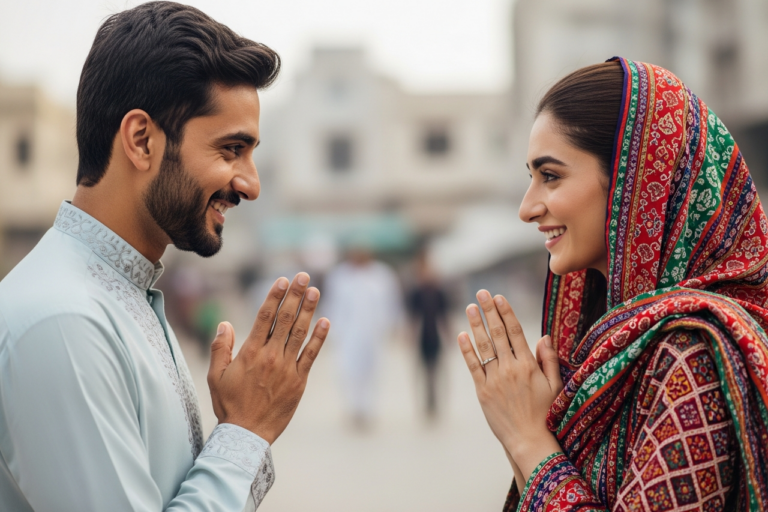
For the opposite sex, people do not usually touch in public. It is smart to be careful and wait for the other person to start a handshake. A woman may not put her hand out to a man, and he may not do the same for her. In this case, a small nod and placing your hand over your heart is a respectful way to show your greeting.
Here are a few tips about body language when you meet someone:
-
Do use your right hand for handshakes and when giving or getting things.
-
Don’t start a handshake with someone of the opposite sex unless they go first.
-
Do give a polite nod and smile as a good choice instead of a handshake.
Greeting Elders and Respected Individuals
When you greet elders or respected people in Pakistani culture, there are clear rules. You must greet the oldest person in the room first. The oldest person gets the greeting before anyone else. This shows the respect you have for the hierarchy. After greeting the oldest one, you greet the rest of the group by their order of age.
This particular order is seen as good manners. If you do not know the hierarchy in a group, then it is fine to greet all the elders together. Giving a slight bow of your head is also a sign of deep respect.
You should use special titles for elder family members in pakistani culture. Say “Khala” for your mother’s sister or “Chacha” for your father’s younger brother. Calling them by these names and not their real names shows love and respect. This practice helps keep the strong family ties found in pakistani culture.
Conclusion
To sum up, knowing about greetings in Pakistan can make your time with the local people much better. The Urdu greetings make your talks with the people more friendly. There are different ways to greet someone based on the time of day, and each one means a lot to the culture. These greetings show the warmth and hospitality of the people in Pakistan.
It is good to remember the difference between formal and casual ways of saying hello and the proper etiquette for things like handshakes and body language. When you use these greeting habits, you get closer to the people you meet. You also get to enjoy the culture more. If you are in Pakistan for work or just to explore, you should keep these things in mind. It will help you connect with people and learn about the vibrant life in Pakistan.
Frequently Asked Questions
Are there regional differences in how people greet each other in Pakistan?
Pakistan has many different languages besides Urdu. People speak Punjabi, Sindhi, and Pashto too. You may notice that people use different greetings in each region. Still, “Assalamu Alaikum” is a greeting everyone knows and likes. All Urdu speakers, and people in Pakistan, understand it.
Is it appropriate to shake hands with everyone in Pakistan?
In Pakistan, you should not shake hands with everyone. This is true, especially with people of the opposite sex. Handshakes are normal for men. But, you will not see much physical contact between men and women who are not from the same family. For good etiquette, you need to wait for the other person to start the handshake.
What are some must-know Urdu greetings for travelers visiting Pakistan?
For people going to Pakistan, the most important urdu greetings are “Assalamu Alaikum,” which means peace be upon you, and the answer, “Wa Alaikum Assalam.” It is good to know “Shukriya,” which stands for thank you, and “Khuda Hafiz,” which means goodbye. Locals will like it if you use these urdu greetings in daily talks in Pakistan. These words make everyday chats easy and nice.



