

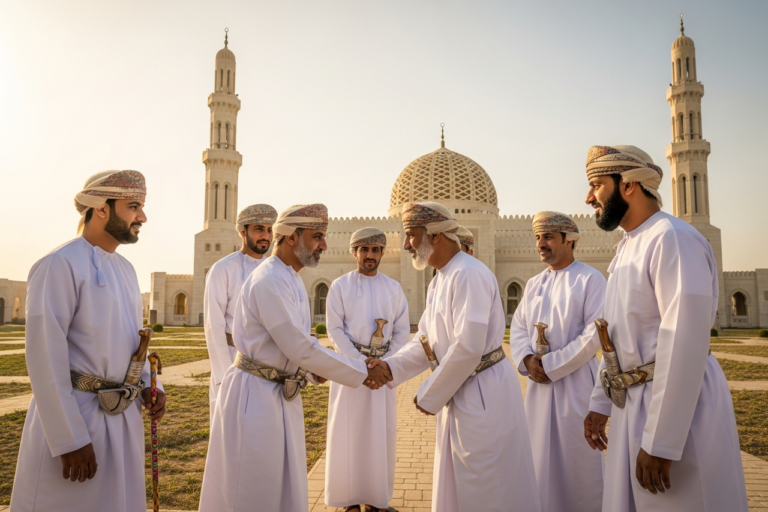
Key Highlights
-
Greetings play a big part in Omani culture. They help people make strong bonds and show respect.
-
People in Oman often use the Arabic greeting “As-salamu alaykum.” Some local Omani greetings are also common.
-
In Oman, the right hand should be used for handshakes and other gestures, and this is very important, especially with elders.
-
Gender is important too. Men and women who are not family members usually will not have any physical contact when saying their greetings.
-
When you learn about these omani customs—like not showing affection in public—it helps you have good meetings with others.
-
In oman, giving a warm smile and holding eye contact when you greet someone shows you are honest and open.
Introduction
Welcome to the beautiful Sultanate of Oman! If you plan to visit, it helps to know about local customs. This can turn your trip into something more special and help you learn more from your time here. A good way to start is by learning about greetings. In Omani culture, a greeting does more than say hello. It helps you build a bond with people and shows real respect. If you learn some words and a few hand signs, you will find people open up to you. This is how you can get to a deeper level and really connect with Omani people during your time in Oman.
The Importance of Greetings in Omani Culture
In Omani culture, greetings mean much more than being polite. They are a big part of how people connect with each other. A good greeting helps start trust and opens the door to new friends. When people in Oman take time for a good greeting, it shows they have respect and a good heart.
When you take part in these cultural norms and greet people in this way, you show that you are aware of the local culture. It tells others that you care about learning the Omani way of life. Doing this small thing can help you enjoy deeper and more real moments in Oman. Your time there will be more full and you will have stronger bonds with the people you meet. It is good to know why these greetings matter so much and how they show the values of omani culture.
Social Values Reflected in Greetings
The way people greet each other in Oman shows a lot about Omani culture. There is a strong sense of hospitality, respect, and community in the local culture. You can see all these values when people share greetings. The classic Arabic greeting, “As-salamu alaykum” (Peace be upon you), is used often. This greeting is not just “hello.” It is a wish for peace and well-being for the other person. It helps show the peaceful side of Oman and its people.
In Oman, people do not just stop at the opening words. They will often ask about each other’s health, family, and life in general. This shows that people really do care about others. It helps to make the community feel close and connected.
Arabic is the official language, but in Oman, the heart of the greeting goes beyond just the spoken words. The warmth and honesty behind the exchange are what is most important. Every greeting is a way to build strong connections and make everyone feel part of the community.
Why Greetings Matter in Daily Life
Greetings are an important part of daily life in Oman. You will see them in every gathering and when you meet people at work or even on the street. People in Oman expect you to greet them. A good greeting helps start a talk with a nice feeling.
If you visit Oman, taking time to greet people shows you know about omani etiquette. It means you respect local culture and have cultural awareness. Even a simple “hello” can help you get to know people better and break down walls. When you greet others, they see that you care about the place and do not just watch from a distance.
Over time, these greetings help build strong ties. Saying hello with a warm smile can lead to more, like sharing a coffee or getting asked to someone’s home. Sometimes it’s just a nice smile in return, but all of this shows the heart of omani hospitality. These small moments make every day better in Oman.
Traditional Greetings in Oman
The most common greeting in Arabic you will hear in Oman is “As-salamu alaykum.” It means “Peace be upon you.” The right way to answer is “Wa alaykumu s-salam.” This means “And upon you, peace.” People in Oman use this greeting everywhere. You can say it at any time of the day and in any place.
Besides this formal way to say hello, Omani people have their own friendly greetings. These greetings come from the Omani dialect. When you learn some of these Omani phrases, the people you meet will feel happy and surprised. Now, let’s take a look at the full Omani greeting and some other phrases you can use.
Understanding the Full Omani Greeting Phrase
A full Omani greeting is often a lively back-and-forth conversation that goes beyond a simple “hello.” After the initial “As-salamu alaykum,” it’s common to ask about the other person’s well-being and news. This reflects the personal and relationship-focused nature of the culture.
These useful phrases, spoken in the local dialect of Arabic, add a layer of authenticity to your interactions. For instance, after the initial greeting, one person might ask, “Kayf halak?” (How are you?), and the conversation will flow from there with more questions and responses. It’s a way to genuinely check in with one another.
Here is a table showing a typical conversational exchange. Trying a few of these Omani greetings will surely impress your new friends.
|
Omani Arabic (Phrase) |
English (Meaning) |
|---|---|
|
As-salamu alaykum |
Peace be upon you |
|
Wa alaykumu s-salam |
And upon you, peace |
|
Kayf halak? (to a man) / Kayf halik? (to a woman) |
How are you? |
|
Alhamdulillah, bikhayr |
Praise be to God, I am fine |
|
Mu akhbarak? |
What’s your news? |
|
Kullu tamam |
All is good |
How to Say Hello in Omani Arabic
“As-salamu alaykum” is the main way to say hello in Omani Arabic. But, there are other greetings you can use at different times of the day. These greetings help people feel warm, friendly, and welcome. They also show that you have taken the time to learn a bit of their language.
If you want to say good morning, you can use “Sabah al-khair.” This means “Good morning” in Arabic. The usual reply is “Sabah an-noor,” which means “Morning of light.” This talk helps make the start of your day good.
At night, there is a new greeting. You say “Masa al-khair” to mean “Good evening.” People answer with “Masa an-noor,” which means “Evening of light.” Using good morning and good evening in Omani greetings is a simple way to get to know people. It shows that you like their language and their ways.
Etiquette and Customs When Greeting in Oman
Besides words, Omani etiquette is about how you act and follow certain social rules. It’s good to know these customs if you want to show respect in the local culture. For example, you should always use your right hand when you shake hands, give something, or point at things. People here think the left hand is not clean.
You also have to watch out for what you do when it comes to touching others. Public displays of affection are not a part of Omani etiquette, so you should not do them. People put a lot of value on being modest in how they dress and act. The next sections will talk more about how to greet elders and what to think about with gender-specific customs in Omani life.
Showing Respect: Greeting Elders and Authorities
In Omani culture, people hold elders in the highest respect. It is very important to greet them in a polite way. You should always start the greetings when you see an elder and do it with real kindness. When an elder enters the room, you need to stand up to show them respect.
A younger person may take the elder’s right hand after a handshake and bring it to their own forehead or chest. This shows the elder a lot of deep respect. As someone from outside Omani culture, you do not need to do this move. But a respectful handshake using your right hand is always good.
Always speak to elders in a polite way and let them lead the talk. Keep good eye contact and listen when they talk. By following these Omani etiquette rules during your greetings, you will make a very positive impression and show that you respect their place and their wisdom.
Gender Differences in Omani Greetings
In Oman, the way people greet each other really shows their omani culture and follows their customs and beliefs. Men often greet with a firm handshake. If the men are very close, like good friends or family, they may touch noses lightly, which is called the “nose kiss.” Sometimes they may also give a kiss on the cheek.
If you are greeting someone of the opposite gender, things are different in oman. Physical touch is usually not used, unless you are close family. For men, you should not be the first one to offer a handshake to an Omani woman. The best thing is to wait and let her take the lead. If she does not reach out her hand, it is proper to just nod your head and give a friendly word.
The same goes for women too. A woman should not try to shake hands with a man unless he does it first. These habits do not mean people there are cold. They are about respect and keeping things modest in omani culture. Also, remember that public displays of affection between men and women are seen as not proper in Oman.
Physical Gestures and Protocols
Physical gestures play a big role in how people talk to each other in Oman. This is true for greetings too. The most used gesture is the handshake. The way you use it matters a lot. The handshake is a way to show warmth and friendship. But knowing when to use it, and how to do it right, is important.
These actions are important with other gestures as well. This includes making eye contact and how you act when you enter an Omani home. Knowing these non-verbal cues in Oman is just as important as using the right words. Now, let’s look at how handshakes and other gestures are used, and talk about common mistakes with greetings that people should avoid.
The Role of Handshakes and Other Gestures
A handshake is a normal and friendly way to say hello to people in Oman, especially with men. You should always use your right hand when you shake hands. Make your handshake gentle but also a bit firm. It might take a little more time than what you may know from Western countries. A long handshake shows that you want to be warm and honest.
When you shake hands, give a warm smile and keep steady eye contact. These two things are important. The smile and looking into their eyes are strong signs that you want to be nice and show respect. They also help you start a good bond quickly. People understand a smile everywhere. In Oman, a warm smile is very important when you really want to say hello in the right way.
After you shake hands, you can put your right hand over your heart. This means extra warmth and respect. Some people in Oman do this, and you can try it if you want. It shows you mean what you say and makes the meeting feel more close.
Mistakes to Avoid When Greeting Locals
To make sure you have a good time in Oman and connect well with the people, it helps to know some common mistakes that visitors make. When you show cultural awareness and do your best to follow Omani etiquette, you show respect for the local culture. This also helps you have better talks and meetings during your time in Oman.
The rules about physical contact and personal space might be different from what you are used to. What feels normal in your home may not be right for an Omani setting. So, it is good to know and keep in mind these local ways. They help you make a good first impression, avoid being uncomfortable, and show that you value the Omani culture.
Here are a few simple things to watch out for:
-
Using your left hand: You should not use your left hand to shake hands, give, or take items. Always use your right hand.
-
Initiating contact with the opposite gender: Do not try to shake hands first with someone of the opposite sex. Let the other person decide if they want to do the handshake.
-
Engaging in public displays of affection: Do not show physical affection toward your partner in public. In Oman, this is not okay.
-
Rushing the greeting: Give time and attention to greetings. If you move too fast or skip questions about health or family, it may come off as rude.
Being aware of local customs shows you care. Learning about Omani etiquette, using your right hand, being
Conclusion
To sum up, learning about and taking part in Omani greeting customs helps you get closer to the local culture. Greetings in Oman are not only a routine act. They show respect, warmth, and the important social values in Omani culture. When you get to know the common phrases and etiquette, you can really improve your talks and show that you get the small but important things that matter in Oman.
A simple handshake or a nod is not just about saying hello. These signs mean much more. They open the way for trust and strong ties with people you meet. As you get ready for your trip to Oman, keep in mind that a greeting goes a long way. It can help you make good connections that last.
If you wish to know more about Omani culture or want help with your trip, you can always ask and get more guidance!
Frequently Asked Questions
Are tourists expected to greet everyone they meet in Oman?
Tourists do not need to greet every person they see. But, it is good to greet people when you go into a shop or restaurant. It’s also nice to greet people if you talk to someone who works there. By following Omani etiquette and saying hello to the people you speak with, you show cultural awareness. This will help you get a warm Omani welcome.
What are 10 ways to greet someone in Oman?
You can greet people in Oman by using traditional Arabic greetings like “As-salamu alaykum.” You can also use time-specific phrases like “Sabah al-khair” to say good morning. Some people use spoken Omani greetings such as “Hayak.” If you want to add more to the greeting, you can use useful phrases like “Kayf halak?” which means “How are you?” and “Mu akhbarak?” which asks “What’s your news?” These Arabic greetings help you have a friendly and complete greeting exchange.
Can greetings differ between urban and rural Oman?
Yes, greetings in Oman can be a bit different in every place. The usual Omani greetings are used all over the country. In rural areas, the greetings are longer and stick to old ways because people are close and the local culture is strong there. In big cities like Muscat, you will see that greetings can be shorter or have a western style, but people still use traditional forms a lot too.



