

Key Highlights
-
“Namaste” is the most common Nepali greeting. It is a traditional greeting and is used as a sign of respect.
-
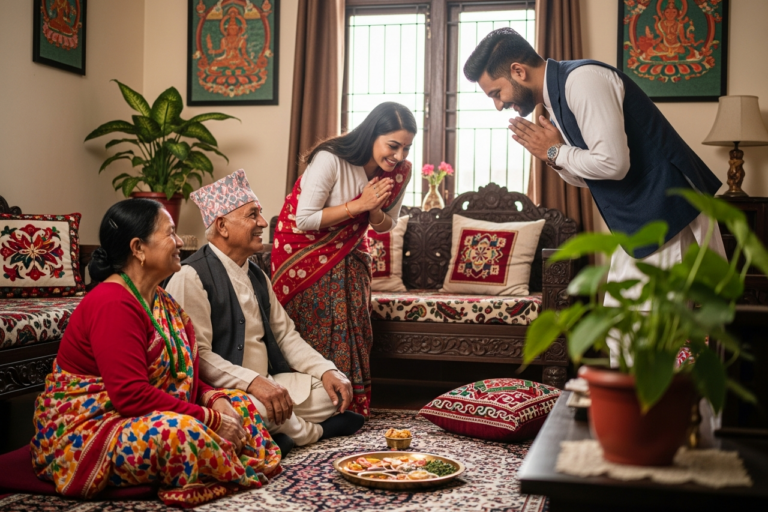
The way to do “Namaste” is to put your palms together. This gesture is called the Anjali Mudra.
-
Greetings are a big part of Nepali culture. They help show mutual respect and let people build good social bonds.
-
People use different greetings in Nepali culture. This can change with the time of day, the age of the person, or their social status.
-
If you learn some basic Nepali greetings, it is a good way to connect with people and show you respect their cultural identity.
Introduction
Welcome to the bright and lively world of Nepali culture! If you plan to visit this lovely country in the Himalayas, you will soon notice the kindness of the people. The people in Nepal are warm and friendly. This warmth comes from the way they greet others. The traditional greeting is one big part of their warm hospitality. Knowing about the traditional greeting helps you feel close to the people. You get to see life from their view. This guide will show you the simple and deep greetings found in Nepal.
The Cultural Importance of Greetings in Nepal
Greetings in Nepal are not just a simple “hello.” They mean a lot in nepali culture. People see them as a sign of mutual respect and strong ties in the community. The traditional greeting, “Namaste,” is more than just words. It means “the spirit within me salutes the spirit within you.” This traditional greeting shows the deep meaning it carries.
These cultural traditions are all about showing mutual respect to people, no matter where they come from. When you greet others the nepali way, you help keep this old custom alive. You also help make social ties stronger and honor the cultural significance of nepali culture.
How Greetings Help Build Social Bonds in Nepal
In Nepal, a greeting is the first thing you do to start a bond between people. When you say hello, it is not just to be polite. You let the other person know that you value them and want to make a connection. This small act helps grow a sense of closeness and mutual respect.
The Nepali people are known to be friendly. They enjoy it when visitors make time to talk with them and try to follow the local ways. Using a traditional greeting will help them feel good and ready to talk with you. It may seem like a small thing, but it can lead to good talks and help you learn more about the culture there.
When you follow their cultural heritage and use a traditional greeting, you are not just a visitor. You show that you are a guest who really cares about their ways. The Nepali people will notice this and it can help you make strong, friendly ties while you are there.
Traditional Values Reflected in Nepali Greetings
The traditional greeting in Nepal shows the country’s core values in a simple way. “Namaste” is the most used greeting. It means more than just saying hello. It is a real symbol of respect and humility. When people say “Namaste,” they press their palms together. This action shows what the word means.
This respectful greeting is a big part of daily life and helps form Nepal’s cultural identity. You will see people use it everywhere. They do it during friendly talks on the street and at religious ceremonies, too. The meaning of “Namaste” is deep. It is about seeing something special in each person.
The way people greet with “Namaste” shows how important respect, humility, and equality are in Nepali society. It says that everyone should be respected. People learn this through this easy daily act, and it brings everyone closer as a group.
Common Nepali Greeting Words and Their Meanings
Other than the well-known “Namaste,” there are a few more Nepali phrases you can use to greet people. Many of these words take the roots from the old Sanskrit language. This brings a strong history into the talk you have every day. When you learn some of these, your talks with others can feel more special.
When you know how to say “good morning” or ask someone how they are, it shows a true effort to connect. The people there see these easy phrases as part of the rich cultural heritage of Nepal. These words are welcome by the locals you see. Now, let’s look at some of these greetings and know what they mean.
“Namaste” – The Universal Nepali Greeting
If you want to know how to say “hello” in Nepali, you should use the word “Namaste.” This is the traditional greeting in Nepal. People in many south Asian countries use it, too. You can say “Namaste” any time of day, to any person you meet. It works with both friends and strangers.
The gesture that goes with “Namaste” is called anjali mudra. It is done by pressing your palms together in front of your chest. You should give a small bow with your head. Doing this gesture along with the word “Namaste” adds feeling and shows you mean it. This shows good manners, too.
A real “Namaste” shows respect. It has a strong cultural significance in Nepal. It means you see the other person and that you value them. When you greet someone this way, you take part in a nice tradition. It is a big part of the warmth and friendliness found in Nepal.
Greetings Like Good Morning, Good Evening, and Good Night in Nepali
While “Namaste” is fine to say at any time of day, you can also use certain Nepali phrases for different parts of the day to switch up your greetings. If you use these in your daily life in Nepal, it will show you want to learn more about the local language and culture.
These greetings are a good way to start the day or end a chat with locals. They are easy to pick up and people will like it when you use them. If you see a teahouse owner in the morning or you want to say good night to your guide, these phrases will help you out.
Here are some key time-based greetings:
-
Good Morning: Subha Prabhat
-
Good Evening: Subha Sandhya (but most people still use “Namaste”)
-
Good Night: Subha Ratri
Understanding the Meaning and Significance of “Namaste”
The word “Namaste” has a deeper meaning. It’s more than just a simple hello. There is a spiritual meaning that is a symbol of respect in Nepali culture. The word comes from the old Sanskrit language. At its heart, it means, “I bow to you.”
People show this with the Anjali Mudra. You join your hands and lower your head. This action says you honor the light inside the person you meet. In the next parts, we will look at what this spiritual meaning stands for and how people use it in daily life.
Spiritual Symbolism Behind Namaste
The spiritual meaning of “Namaste” is deep and lovely. It means that there is a special presence in all living things. When you say “Namaste,” you are showing respect for that feeling in the other person. It is like saying, “The good in me honors the good in you.”
Anjali Mudra is the gesture where you put your palms together in front of your chest. It is a big part of what “Namaste” means. Your hands are over your heart area, which is known as the place where people connect. This gesture helps share love and respect.
This greeting is used often in religious ceremonies and in spiritual practices. That shows how sacred the word is. People use “Namaste” not only in holy events. The spirit of the word can be found in daily life, turning a simple “hello” into a time to share and connect with others.
Usage of Namaste in Everyday Life
In Nepal, people use “Namaste” all the time in daily life. The word means hello, goodbye, and even thank you. It also shows respect without using many words. You can hear it on the busy streets of Kathmandu and out on quiet mountain paths. A true “Namaste” can help start friendly talks with nepali people.
When you say “Namaste” to someone, you do more than say a word. You join in with a local tradition. This greeting shows that both people have mutual respect. It often helps break the ice and opens the way for good talks. You will notice that it helps you start chats and brings a good mood everywhere.
If you meet someone for the first time, greet an elder, or pass another person on your path, a simple “Namaste” and small bow is always right. It is the way to say hello in Nepali. It also shows that you care about their way of life and have respect for nepali people and culture.
Other Popular Greeting Phrases in Nepal
“Namaste” is the most well-known of Nepali greetings. You say it by pressing your hands together in front of the chest. Still, you can use many basic Nepali phrases to make your stay better. Learning these extra words shows you want to know more about the culture. It can help you feel closer to the people you meet.
You can use these phrases when you ask how someone is or when you wish them good morning. They are simple. People like to hear them. Here are some different ways to greet people, welcome others, and show thanks in Nepal.
How to Say “Welcome” in Nepali
The Nepali people are known for their warm hospitality. This comes from their belief in “Atithi Devo Bhava,” which means “the guest is God.” They do not have one word for “welcome” like we do in English. Instead, they show it with their actions and different phrases.
When you go into a home or a shop in Nepal, you will get a big smile and hear the traditional greeting “Namaste.” If someone wants to welcome you with more formality, they may say “Swagatam.” But you will see “Swagatam” most often in written items or at special events.
The most important part is how the Nepali people show their welcome. You will feel their generosity and respect in what they do for you. They make their guests feel valued and special. That is the kind of warm hospitality that goes beyond any single word.
Keywords: traditional greeting, nepali people, atithi devo bhava, warm hospitality
Expressing Gratitude and Farewells in Nepali
Expressing thanks and saying goodbye are just as important as saying hello. Both show respect and appreciation. Saying “thank you” makes people feel good about the warm hospitality they offer in Nepal. Learning some basic Nepali phrases can help you leave a good impression.
When you say goodbye, you have different phrases to use. You can use “Namaste” to say goodbye, but knowing a few other phrases is good. These show you put in a genuine effort to learn the language.
Here are some useful Nepali phrases for saying thanks and farewell:
-
Thank you: Dhanyabaad
-
See you later: Pachi Bhetaula
-
Nice to meet you: Tapai lai bhetera khushi lagyo
Greeting Etiquette and Body Language in Nepal
Knowing how to greet someone and using good body language is important in Nepal. It shows you have respect for others. In Nepal, there are special ways to act, especially with your hands. People see the left hand as not clean, so always try to use your right hand when you give or take something.
The way you stand and the eye contact you use are also a sign of respect. When you want to greet older people, bow your head down a little. This shows you respect them. Below, you can learn more about how people greet each other with words and actions, and why hand gestures and bowing matter so much.
When to Use Verbal vs. Non-Verbal Greetings
In Nepal, it is good to know when to use words or just actions when you greet someone. This can help you handle social situations in a good way. There are cultural traditions that show the right way to greet, and these may change with each situation.
Most of the time, people say a greeting along with a gesture. For instance, people say “Namaste” and put their hands together in the anjali mudra. Sometimes, you may just use a gesture like a head nod or a smile, such as when you see someone far away. People here do not use physical contact much, like shaking hands, especially not between men and women.
Here is a simple guide:
-
Verbal and Non-verbal: Say “Namaste” and use the hand gesture when you meet someone for the first time or in a formal meeting.
-
Non-verbal only: Give a head nod or a smile if you are passing someone on a path or if the person is too far for you to talk.
-
Verbal only: It is not common, but you may call out a greeting to a person you know well if you are not close enough to them.
The Role of Hand Gestures and Bowing
Hand gestures are an important part of Nepali greetings. The most common one is the anjali mudra. To do it, you put your palms together, point your fingers up, and hold your hands in front of the chest. People use this with the word “Namaste.”
You can also bow your head a little when you do anjali mudra. This small bow shows even more respect. If you bow lower, it means you have even more respect, like for elders or leaders.
It is also important to always use your right hand for things that matter. When you give or get something, use your right hand. You can touch your right elbow with your left hand as you do this to show that you respect the other person. These small details in body language are a good way to show that you honor Nepali greetings and local ways.
Age, Status, and Situational Differences in Nepali Greetings
Greetings in Nepal depend on the age, who the person is, and the time or place. “Namaste” is used everywhere as a sign of mutual respect. Still, the cultural traditions guide people to use other words when talking to others to show respect. For example, people call family members by using titles like “didi” for an older sister or “bhai” for a younger brother.
These small differences are a big part of how people live together in Nepal, especially when it comes to family members and showing respect to others. If you know how to greet elders, friends, or children in the right way, you will find it easy to get along with people. It helps you show kindness, understand the culture, and treat everyone with mutual respect.
How to Greet Elders and Authority Figures
When greeting elders and people with authority in Nepal, it is important to show respect. This is a big part of the culture. To show a respectful greeting to an elder, you should bow your head more and use the “Namaste” gesture.
Younger people usually start the greeting as a sign of respect. In some traditional families, younger people may touch the elder’s feet, which is seen as the highest sign of respect. As a foreigner, you don’t need to do this. A deeper bow is enough to show your respect.
It is also good to use formal language and speak in a gentle voice. Showing respect is not just about age, but also about social status. If you know the right honorifics, using them shows that you understand and appreciate their culture.
Appropriate Greetings for Friends, Strangers, and Children
While “Namaste” is a great catch-all, greetings for friends, strangers, and children can vary. The level of formality changes, reflecting the nature of the relationship. It’s all about showing mutual respect in a way that fits the social context.
For friends and family members, greetings are often more casual. With strangers, a polite and standard “Namaste” is always a safe and respectful choice. When greeting children, a warm smile and a gentle “Namaste” will be well-received.
Here is a simple breakdown of how greetings might change:
|
Who You’re Greeting |
Common Greeting |
Notes |
|---|---|---|
|
Friends & Peers |
“Namaste” or “K chha?” (What’s up?) |
Can be more casual and friendly in tone. |
|
Strangers |
“Namaste” |
Always polite and respectful. Use the full gesture. |
|
Children |
“Namaste” |
Said with a warm, gentle tone. A smile goes a long way. |
|
Family Members |
“Namaste,” often with specific titles. |
Titles like “didi” (older sister) or “dai” (older brother) show respect. |
FAQs (Frequently Asked Questions)
Many people want to know how to greet others in Nepal. This shows that there is a real interest in the vibrant Nepali culture. People have questions about the meaning behind the namaste gesture. This traditional greeting is done by putting the palms together at chest level. It means respect and warmth.
You may wonder what the right way is to greet your family members or others in different places, like during daily life or at religious ceremonies. If you know these things, it helps you show mutual respect to Nepali people. When you learn about their traditional greeting, you also get to enjoy more of their cultural heritage. It opens up new ways to understand and connect with them and their culture.
Is it appropriate to shake hands when meeting someone in Nepal?
In business, men often shake hands. But the traditional greeting of “Namaste” is better, since it does not need any physical contact. To show mutual respect, you should use “Namaste,” mainly when you greet women or elders. Watch their body language and follow what they do, as this is always a good way to act.
How should foreigners greet locals when visiting Nepal?
Foreigners should greet people from India with a real “Namaste.” This respectful greeting shows you care about their culture. Use the usual hand gesture when you say it. People feel good when you do this and see that you know the cultural significance of their cultural heritage.
Can you give examples of greetings for different times of day in Nepali?
Yes! In the morning, you can say “Subha Prabhat” to wish someone good morning. In the evening, people say “Subha Sandhya” for good evening. But in daily life, most people just use “Namaste”. It is a warm and good way to greet someone any time of day.
Conclusion
In the end, greetings in Nepal mean much more than just a few words. They show the deep traditions and values of the Nepali people. When you hear “Namaste” or any other greeting during the day, know that each one helps people feel closer and shows real respect for others. Learning when and how to greet, like how age and rank matter, can make your talks better and help you connect for real. If you travel around this amazing country or want to know its way of life, using these greeting customs will make your time there better and help you see how special Nepal is. If you are getting ready to go or just want to learn more, feel free to ask for help!



