

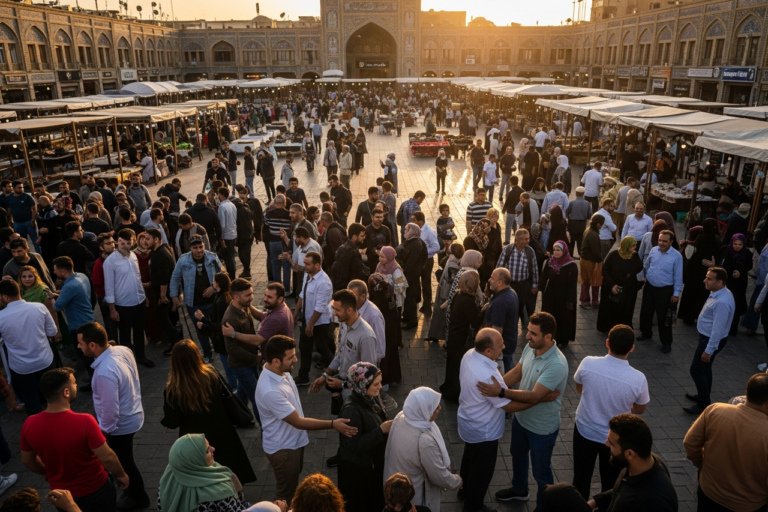
Key Highlights
-
The most common greeting in Iraq is “As-salamu alaykum” (Peace be upon you). The reply to this is “Wa alaykum as-salam.”
-
Handshakes are usual in Iraq, but always use your right hand. Men may hold a handshake longer than what Westerners may know.
-
In Iraqi Arabic, you can also say “Marhaba” (Hello) or “Shlonak?” (How are you?).
-
If you meet someone of the opposite gender, it is good manners to let them offer their hand first for a handshake.
-
Greetings mean a lot in Iraqi culture and show respect. You need to stand up when an older person comes in or leaves the room.
-
Friends of the same gender may greet with a kiss on the cheek, and this is normal in Iraq.
Introduction
Welcome to the world of Iraqi greetings! If you want to go to Iraq or spend time with Iraqi friends, it is good to know their customs. This helps you show respect and get close to people. People in Iraq see greetings as more than a simple “hello.” They be a big part of the culture and show a lot of warmth and hospitality. If you learn some easy arabic greetings and pay attention to non-verbal signs, it can help a lot. This guide will give you the most important iraqi arabic words you need to greet others the right way.
Understanding Iraqi Greeting Customs
In Iraq, greeting someone is very important. It helps to build respect and show that you want to be friendly. For Muslims, who are many in the country, people use religious greetings a lot. These greetings have a lot of meaning and are a big part of life in the arab world.
When you meet a person for the first time, how you say hello can say a lot. A formal and kind greeting is key. This lets others know that you have good will and that you care about their ways. Now, let’s look at why these greetings matter and how a formal or an informal greeting can be different.
Cultural Significance of Greetings in Iraq
In Iraq, greetings are very important. They show respect and good manners. In the arab world, and most in iraq, people take time to greet each other the right way. This helps everyone feel that they are important. It also helps build trust and a close bond between people.
For iraqi muslims, the most common greeting is “As-salamu alaykum,” or “Peace be upon you.” The other person will say, “Wa alaykum as-salam,” or “And peace be upon you.” People use this arabic saying almost everywhere. You hear it in work meetings, at home, or just walking down the street. It is a nice way to wish good things for someone.
There are other ways to say hello, too, like “marhaba.” People in iraq will often ask about your family or your work right after saying their greeting. In the arab world, this is normal. It is not seen as being rude. They just want to show that they care about you and want to know you better.
Differences Between Formal and Informal Greetings
Knowing when to use formal or informal greetings in Iraqi Arabic helps you make a good impression. If you are meeting someone for the first time, it is a good idea to use formal greetings. This is important if the person is an elder or has a top job. You should say the person’s title, like “Doctor,” and then say their first name.
For close friends and family, informal greetings fit better. With friends, you can just use their first name too. You might use sweet family words, like “ikhti” (my sister), even for people who are not your real family. This shows you feel close to them.
In formal times, using “As-salamu alaykum” for a greeting is safe and shows respect. You may also use “Ahlan wa sahlan,” which means you welcome the person. For a friendly chat, mainly with younger people, it is normal to say “Halo” (hello) or “Shlonak?” (How are you?). The best thing is to watch the other person and match what they do.
Salamu alaykum, ahlan wa sahlan, shlonak—the right words in Iraqi Arabic help you get along well with others and show what type of connection you have.
Common Iraqi Greetings and Language Essentials
When you start to learn the Iraqi Arabic dialect, you will hear many different ways to greet people. “As-salamu alaykum” is used by everyone, but people also use friendlier phrases each day. If you know these, you can talk with people and feel more at home.
Easy phrases like “Marhaba” (Hello) and “Ahlan wa sahlan” (Welcome) are common. You can say these and people in Iraq will know what you mean. If you want your talk to sound more Iraqi, you can use “Shlonak?” This means “How are you?” These few words are a simple way to show you spent time learning Iraqi Arabic and are ready to meet people.
Let’s check out some more popular phrases, and learn how to use them the right way with others.
Popular Ways to Say Hello and Respond in Iraqi Arabic
If you want to say hello in Iraqi Arabic, you have a few good choices. “Marhaba” is a simple and friendly way to say “hello” that you can use most of the time. If you want something that is more casual and sounds more Iraqi, you can say “Shlonak?” if you talk to a man, or “Shlonich?” when you talk to a woman. Both of these mean “How are you?”
When someone asks you “Shlonak?” you can answer with “Bashi,” which means “Good.” In the last few years, some people also use “Halo.” This comes from English, but people in Iraq say it a bit differently. If you are greeting someone older or a person you see as above you, it’s better to use the formal “As-salamu alaykum.” This is the highest form of respect in iraqi arabic.
Here are some common ways to say hello:
-
Marhaba: A neutral and kind hello.
-
Shlonak? / Shlonich?: An informal “How are you?” used between friends.
-
Ahlan: A warm and open hi.
-
As-salamu alaykum: The most respectful greeting, and best for older people or those you look up to.
Polite Phrases and Typical Etiquette
After you say hello, it’s nice to keep talking with a few friendly words. You can ask “Kayfa haluk?” if you want to say “How are you?” in formal Arabic. In Iraqi, people say “Shlonak?” instead. When you use these words, native speakers will see that you are trying to be polite in their language.
It is normal to ask about family or work after a greeting. This lets the other person know you care and want to get to know them. If you are with Arabic speakers, it is good to stand when an older person comes in or leaves the room. This is a way to show respect.
Here are some nice things you can say after you say hello:
-
Shlon sahtik?: “How’s your health?”
-
Shako mako?: This means “What’s up?” in a relaxed way.
-
Ismi…: You say “My name is…” when you meet someone new.
Gestures and Body Language in Iraqi Greetings
In Iraq, greetings are about much more than words. People in Iraq also use many gestures and body language when they greet someone. Non-verbal cues like these are used to show respect, warmth, and honesty. The most important thing to remember is to always use your right hand when you shake hands or give something to someone. The left hand is seen as unclean.
Physical contact is different for each person. It depends on things like gender, age, and the kind of relationship you have with someone. Most people shake hands, but hugs and kisses on the cheek are not as common. These other signs of physical contact happen only in special situations. Knowing these things can help you to not feel out of place or make someone else feel uncomfortable. We will talk about which gestures and customs to use for different groups soon.
Appropriate Gestures and Handshakes
Yes, it is often appropriate to shake hands when greeting people in Iraq, but there are nuances. A handshake is a standard part of greetings between Iraqi men. They tend to shake hands gently but may hold the grip for a longer duration while exchanging pleasantries. Always use your right hand for a handshake.
When greeting women, it’s best to wait for them to extend their hand first. Some conservative Muslim women may prefer not to have physical contact with men they are not related to. In such cases, a nod and a verbal greeting are sufficient. Placing your right hand over your heart after the greeting is a gesture of sincerity and respect.
Here’s a quick guide to handshakes and gestures:
|
Situation |
Appropriate Gesture |
|---|---|
|
Man greeting a man |
A gentle handshake with the right hand; may be held for a long time. Close friends may kiss on the cheek. |
|
Man greeting a woman |
Wait for her to extend her hand. If she doesn’t, a verbal greeting with a nod is polite. |
|
Woman greeting a woman |
Handshakes, hugs, and two or three kisses on each cheek are all common and affectionate. |
|
Greeting an elder |
Stand up when they enter. A kiss on their forehead or right hand shows deep respect. |
Unique Customs for Men, Women, and Generations
Greeting people in Iraq changes a lot based on things like gender and age. Iraqi men usually greet each other with a handshake. If they are close friends, they may also kiss each other on the cheek. When women greet other women, they are often very warm and may give hugs and more than one kiss on each cheek.
Things change if you are greeting someone of the opposite gender. Because of their conservative values, people in Iraq often avoid physical contact between men and women who are not related. It is good manners to wait for the woman to start any physical contact, like a handshake. If she does not reach out first, just say a greeting with your voice.
There are differences with each generation too. Older people usually stick to formal and traditional ways, using titles and showing a lot of respect. Younger people, mostly in cities, can be more casual about greetings. You may even hear some English words like “Halo.” Still, everyone shows respect for elders, no matter how they greet others.
Mistakes to Avoid and Helpful Tips for Foreigners
For people from other countries and westerners who visit Iraq, it’s good to know the local customs. This helps you stay away from problems. A little bit of learning helps a lot to show you care and respect the people there. Small mistakes in arabic greetings may look rude to others, even if you do not mean them that way. If you learn the basic things about arabic greetings, your talks with people will go much better.
It is important to watch, be polite, and be ready to change how you do things in Iraq. People here are warm and will like it if you try to respect their culture. Now, let’s talk about some mistakes you should not make and get some tips, so your greetings in arabic always come across well.
Common Errors Foreigners Make
One mistake that happens a lot in Iraq is about physical contact. People from the West may try to shake hands with a woman without waiting to see if she wants to do it. This can be awkward. Also, men in Iraq might hold each other’s hand for a longer time than Westerners are used to. If you pull your hand away too soon, it could look like you are saying no to the other person.
Another mistake is using your left hand. In Iraqi culture, the left hand is seen as not clean. Do not use your left hand for a greeting, a handshake, giving a gift, or when you eat. Always use your right hand in these moments. Getting arabic words wrong happens too, but if they see you are trying, most Iraqis will not mind.
Here are a few mistakes to avoid:
-
Using the left hand: Never use your left hand for greetings or giving/receiving items.
-
Initiating contact with women: Always wait for a woman to extend her hand for a handshake.
-
Rushing the greeting: Take your time. Greetings are an important social ritual.
Dos and Don’ts When Greeting Iraqis
Showing the right manners when greeting an Iraqi person is a clear sign that you respect their ways. Try to learn and use a few easy Arabic greetings. Even if your Arabic pronunciation is not perfect, most people will like that you made an effort more than if you just use English.
With body language, it is good to stand up when an elder or a woman comes into the room. This shows respect in a very clear way. Never point with your finger. Use your whole hand if you have to gesture. When you sit down, avoid showing the soles of your feet, because many people see it as rude.
Here are some quick dos and don’ts:
-
Do stand up to greet elders and when they leave.
-
Do use your right hand for handshakes and when you give things.
-
Don’t start any physical contact with someone of the opposite gender unless they do it first.
-
Don’t rush the greeting. This time is meant for you and the other person to make a connection.
Conclusion
To sum up, knowing and using Iraqi greeting customs is key to building good connections and showing respect in social settings. Greetings in Iraq are more than just words. They hold meaning in the culture and show how important kindness and being warm are to the people there. If you keep both the words and the actions that go with them in mind, you will handle each meeting in a good way. Before you meet someone new, think about the dos and don’ts given in this guide so you make a good impression. Enjoy the special way of greeting in Iraq, and let it make your time there even better!
Frequently Asked Questions
Is it okay to use English greetings in Iraq?
Many young people, or people in the city, in Iraq might get an English greeting. But it is always best to try arabic greetings when you talk to someone. Even if you only know a simple phrase from iraqi arabic, it shows you care about their culture. This small act can make you look good and help make a nice first impression.
What’s the proper way to greet elders and superiors?
When you meet elders or people above you, use formal greetings, such as “As-salamu alaykum.” It is good to stand up when they come into or leave a room. If you give a handshake, always use the right hand. Some people may show even more respect with a kiss on the hand or forehead. But a simple salamu or even a spoken greeting is always the right choice.
How do greetings change between younger and older Iraqis?
Older people in Iraq often use formal greetings and follow tradition closely. Younger people in Iraq are more relaxed and might say things like “Halo” or “Shlonak.” They also may know more about Western ways. Still, all generations in Iraq show respect for their elders.



