

Key Highlights
-
Indonesian greetings change based on the time of day. People often say Selamat Pagi for good morning and Selamat Malam for good evening.
-
If you want to give an informal greeting, you can use “Halo” or “Hai.” The phrase “Apa kabar?” (“How are you?”) is common too.
-
When you need to be formal, add Bapak (Mr.) or Ibu (Mrs.) before someone’s name, especially if they are older or have a higher position.
-
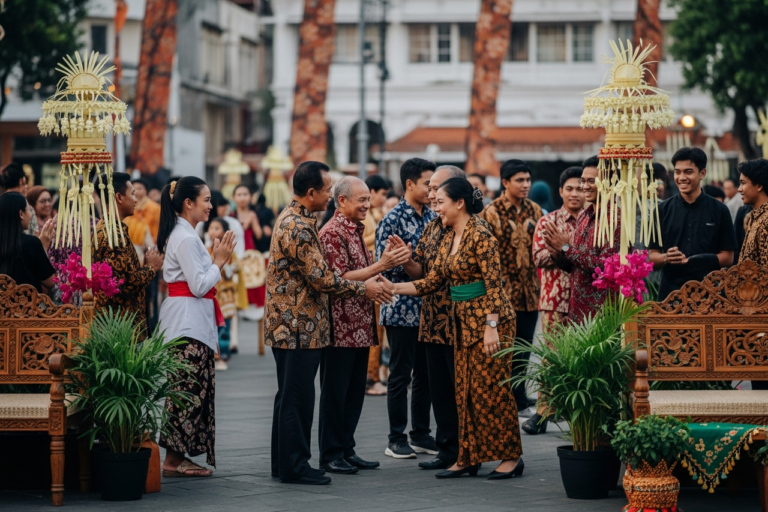
Body language matters a lot. Use a gentle handshake with your right hand. Sometimes people touch their heart after the handshake.
-
To say goodbye, use Selamat tinggal if you are the one leaving. Use Selamat jalan if the other person is going.
-
It is important to greet elders first and follow these cultural habits for good social interactions in Indonesia.
Introduction
Are you planning to go to the nice islands in Indonesia? Learning some simple Indonesian greetings can help change your time there. It will not just be a trip. It will feel more new and full of the real Indonesian culture. Many people there know English. But, when you try to use the Indonesian language, the people see that you respect them. This can help you have better talks and make more friends. If you use a small word like “hello” in the local language, you may connect with the friendly people, and this will make your time shine in a good way.
Most Common Ways to Say Hello in Indonesian
When you are in Indonesia, you will find that there are many easy and good ways to greet people. The most common Indonesian greetings are easy to know and you can use them in many different times. You can say “good morning” or ask how someone is. These simple phrases help you start friendly conversations.
If you learn some basic greetings in Bahasa Indonesia, talking to people will be much smoother for you. One phrase you will hear a lot is “Apa kabar?”. This is a friendly way to say “How are you?” Let’s look at the most common and good ways to say hello with these basic Indonesian greetings.
Popular greetings for everyday situations
For your daily interactions, you can use a few easy standard greetings that people know and like. One of the most used phrases is “Apa kabar?”. This means “What’s the news?” but it’s how people say “How are you?”. It’s a warm way to start a talk with someone.
If someone asks “Apa kabar?”, you can answer with “Baik” (Good) or “Kabar baik” (Good news or I’m fine). If you are not feeling well, you can say “Tidak bagus” (Not good). When you use these, it shows you care about how the other person is doing.
Here are some great daily interactions and greetings you will use often:
-
Apa kabar?: How are you?
-
Bagaimana harimu?: How is your day?
-
Senang bertemu denganmu!: Nice to meet you!
Basic “halo” and “hai” explained
Just like how it is in English, the Indonesian language also uses “Halo” and “Hai” as basic greetings. These are an informal greeting, so they are good for when you talk with friends, family, or people near your age. You will hear the words a lot in the city, and many young people say them.
If you use “Halo”, it is just like saying “hello” in English. “Hai” means “hi”. Both words are easy to say and remember. This makes them safe and friendly if you are new to the Indonesian language or feel shy using other words.
These greetings might be simple, but they are a good way to start talking to someone. You can say them when you walk into a shop or when you see someone on the street in a relaxed place. These are basic greetings that show you are being friendly and people will always get what you mean.
Formal Greetings and Etiquette in Indonesia
In formal situations, such as business meetings or when you talk to someone older, it’s important to use the right greetings. This is because the Indonesian culture of respect values politeness a lot. Saying Selamat Pagi (good morning) is a polite way to begin any formal meeting.
Knowing proper etiquette is about more than just words. It also means how you address people and what your body language says. When you use the right honorifics and a respectful tone, people will think well of you. Let’s see how to use “selamat” to greet someone and how to talk to people who have higher status.
The use of “selamat” in polite greetings
The word selamat is an important part of formal Indonesian greetings. People say it like “suh-lah-mat.” This word means you want someone to be safe, have peace, or be happy. When you put it with a time of day, you get a polite way to say hello in many cases.
For example, Selamat Pagi means “good morning.” If you say Selamat Sore, it means “good afternoon.” And Selamat Malam means “good evening.” These Indonesian greetings are the standard way people welcome others all through the day. Using these greetings shows that you care about Indonesian culture and want to be kind.
You will hear these time of day greetings in many places. People use them in hotels, restaurants, business meetings, and with family or friends. These greetings are an important part of daily life. If you want to handle social interactions in Indonesia, it is good to know these specific greetings.
Addressing elders and people of higher status
In Indonesian culture, showing respect to older people and those with higher social status is very important. When you greet elders, you should always greet them first. This is a way to show respect. You can also give a slight nod with your head while you greet them. This small action shows even more politeness.
When you speak to someone, it is important to use honorifics. These are special titles you put before a person’s name to show you respect them. This is part of proper etiquette and shows you understand the culture of respect.
Here are the main honorifics to use:
-
Bapak (or Pak): Use this for adult men. It is like saying “Mr.” or “Sir.”
-
Ibu (or Bu): Use this for adult women. It is like saying “Mrs.” or “Madam.”
Informal Greetings with Friends and Peers
When you are with your friends, with people close to your age, or in times that are not formal, it is good to use an informal greeting. Indonesian people are warm and like to make others feel at home, so saying hi in a friendly way helps you connect with them.
These easy, friendly words are what people use when they talk with each other every day. They help you feel more at ease and make the talk smooth. Now, let’s find out about some of the most common friendly greetings and see how to say hello in these informal situations.
Friendly expressions among Indonesians
Indonesian people are known to be friendly. This can be seen in the way they talk with others. Their basic greetings sound warm and welcoming. If you want your chat to feel more real and friendly, you can use some of these simple phrases. They work well when you want to get to know the other person.
After you have said your first hello, you may ask how their day is going or show you are happy to see them. These small things help you build a good bond with them. The friendly people of Indonesia will like it when you make a little extra effort to speak at their level.
Here are some friendly expressions you can use:
-
Apa kabar?: How are you?
-
Senang bertemu denganmu!: Nice to meet you!
-
Jumpa lagi: Meet you later.
-
Bagaimana harimu?: How is your day?
How to greet in casual settings
When you are in casual social situations, you can be more relaxed with how you greet people. Using an informal greeting like “Hai” or “Halo” is fine. This is common, and many young people or Indonesian colleagues of the same age use it. It is an easy and quick way to say hello.
You can also just say “Apa kabar?” which means “How are you?” in Indonesian. People often say this as a greeting, just like “What’s up?” in English. It helps start a short and friendly talk, so it is good for social situations.
It is okay to be easy going in these types of meetings. Indonesians do not mind mistakes from someone learning their language. If you give a friendly smile and speak with a nice tone, they will like it. Your effort to use their words will make them happy.
Time-Specific Indonesian Greetings
In Indonesia, people use a different greeting for each part of the day. This is just like what you see in many other cultures. It’s polite to use the right words for the right time, and it helps show respect for their way of life. The words for “good morning,” “good afternoon,” and “good evening” all use the word “selamat.”
You say Selamat Pagi for good morning in the early hours. After the sun goes down, people use Selamat Malam to say good evening or good night. These greetings are a big part of daily talk in Indonesia. If you learn when to use each one, you will sound more local. The next part will help you see all these greetings and when you should use them in a day.
Morning, afternoon, evening, and night phrases
Knowing the right greeting for the time of day is very useful in Indonesia. The day is divided into distinct periods, each with its own greeting. It starts with Selamat Pagi for “good morning,” used until about 11 AM.
As the day progresses, the greetings change. You’ll use different phrases for the afternoon and evening. It’s also important to distinguish between “good evening” (Selamat Malam) and “good night” (Selamat Tidur), as the latter is only used when someone is going to bed.
Here is a simple guide to help you remember:
|
Greeting |
English Translation |
Time of Day |
|---|---|---|
|
Selamat Pagi |
Good Morning |
From sunrise until ~11 AM |
|
Selamat Siang |
Good Day/Afternoon |
From ~11 AM until ~3 PM |
|
Selamat Sore |
Good Afternoon/Evening |
From ~3 PM until sunset (~6 PM) |
|
Selamat Malam |
Good Evening/Night |
After sunset |
|
Selamat Tidur |
Good Night |
When someone is going to bed |
Context and pronunciation tips
When you learn new words, getting the way you say them right can help a lot. The good thing is, Indonesian sounds are mostly phonetic. This means you say the words how you see them spelled. For example, in selamat, the ‘e’ sound is soft, so you say it more like “slamat.” This helps people who speak English get used to the words faster.
Another thing to help you be better at language learning is to listen closely to native Indonesian speakers. Try to hear how they say the vowels and how their speech flows. For example, in siang, the ‘i’ makes a long “ai” sound. Noticing these small things will help you sound more like them when you greet people for a certain time of the day.
Don’t worry about making mistakes when you practice. The more you use these new words, the better you will get. People will value your effort, even if you don’t say every word just right. It’s all part of learning a new language!
Gestures and Body Language When Greeting
In Indonesia, your body language matters as much as what you say. Gestures can be very important when you talk with people. For example, you should use your right hand to greet others. People think the left hand is not clean. When greeting, there is often a slight nod of the head along with words.
When you shake hands, use a soft handshake grip. Do not grip too firm. After shaking hands, some people touch their hand to the front of the chest. This shows that they are sincere. If you want good social interactions, you need to know these non-verbal cues.
Handshakes and their significance
Handshakes are common in Indonesia. But they are not the same as the firm handshake used in many Western places. Here, you should use a soft handshake grip. If you use a firm handshake, people can see it as too strong or even aggressive. It is more like a light touch, not a hard squeeze.
You need to always use your right hand to shake hands. People use the left hand for personal things, so using the left hand for greetings or for handing something over is not polite. If someone gives their hand first, it is good to do the same. When you finish the handshake, touching your right hand to your heart for a moment shows respect and is a kind gesture.
Be aware that in some conservative Muslim communities, a man and a woman who are not family may not touch each other. In those cases, wait to see if the other person wants to start the handshake. If they do not, a friendly smile and a nod work just as well.
Cultural norms for greeting strangers and acquaintances
When you meet new people or people you do not know well in Indonesia, it helps to follow the local ways. This will make your social interactions better and show that you respect others. In Indonesian culture, people care a lot about being polite and humble. The best thing to do is to be gentle. A smile is a good way to show you are friendly. Most people will like it.
It is also good to know some gestures. When you say hello to someone who is older or higher in status, a small bow of your head shows you respect that person. This is not to say you are less than them. It is part of proper etiquette and shows extra care.
Here are a few gestures you should remember:
-
The Salam: Touch the other person’s outstretched hands with both of yours in a gentle way. Bring your hands back to your chest after this.
-
The Sembah: Put your palms together and place them against your chest, then give a little bow. People often do this in Hindu or Buddhist areas, like Bali.
These easy steps will help your social interactions go well in Indonesia and show that you know about indonesian culture and proper etiquette.
Saying Goodbye in Indonesian
Just like you learn to say hello, it is also good to know how to say goodbye in Indonesian. Saying it right helps end your chat in a nice way. The words you say for “good bye” in Indonesian can change based on who goes and who stays. If you are going, you would say selamat tinggal to the person who stays. But if you are staying and the other person is leaving, you would say selamat jalan.
There is also an easy and friendly way to say bye. You can use sampai jumpa, which means “See you later.” You can say this if you’re the one going or staying. It shows that you hope to meet that person again. These special ways to say goodbye make the language feel nice and show respect to the people you talk with.
Farewell expressions and their usage
Knowing the reason for the words people use when they leave or say goodbye makes it easier to pick the right phrase. The way you choose between Selamat tinggal and Selamat jalan shows how the language is made with care.
Selamat tinggal means “stay safely.” You say this when you are the one going away. But when someone else is the one going, you use Selamat jalan, which means “go safely.” If you want something more friendly and relaxed, you can use Sampai jumpa. This one means “see you later.” It works anytime, with anyone, and always brings the good news that people are happy to meet again.
Here is a quick guide for these farewells:
-
Selamat tinggal: Goodbye (the person who is leaving says this).
-
Selamat jalan: Goodbye (the person who is staying says this).
-
Sampai jumpa: See you later (anyone can use this).
-
Jumpa lagi: Meet you later (this one is a smaller and more relaxed way to say Sampai jumpa).
How to Greet Someone for the First Time
Meeting someone for the first time can be a good moment to show who you are. You can use the right Indonesian greetings to help you make a good start. If it is the morning, you can say selamat pagi. Later in the day, you can use selamat siang. These greetings are polite and show respect.
After you say hello, give a small handshake with your right hand. At the same time, show a smile. Doing these things makes people feel at ease.
Once you greet the person, it is common to introduce yourself. If you know a few basic greetings and easy words, it shows you care about the local ways. People like it when you try. This can make the first time meeting someone into a chance for real talk. It may even help you and the other person start a new friendship. Using Indonesian greetings is a good way to get to know people and build genuine connections.
Introductions and common phrases
After you say “hello,” the next thing to do is introduce yourself. You can ask someone their name by saying, “Nama kamu siapa?” This means, “What is your name?” To tell them your name, say, “Nama saya…” and add your name.
A nice thing to say after you introduce each other is “Senang bertemu denganmu.” It means “Nice to meet you.” This helps show that you are being warm and honest. You can also ask, “Apa kabar?” which means “How are you?” This keeps the chat going. Many people will answer with “Kabar baik.” That means “I am fine.”
Learning these easy words is good if you are new to language learning. It lets you show respect for Indonesian culture.
-
Nama kamu siapa?: What is your name?
-
Nama saya [Your Name]: My name is [Your Name].
-
Senang bertemu denganmu: Nice to meet you.
Cultural Customs and Etiquette for Greetings
In Indonesia, greetings are not just about what you say. They also show how well you know Indonesian culture. People here place a lot of value on proper etiquette when they meet with others. By following their way of doing things, you show that you respect your hosts and their way of life. There is a culture of respect that is clear in how people greet each other.
In Indonesia, know that using the right hand and bowing a little at times is part of being polite. These are important parts of good social interactions. If you want to make a good first impression, it is helpful to learn some of the dos and don’ts of greetings in this culture.
Dos and don’ts when meeting someone
When you meet someone in Indonesia, you can follow a few easy rules of proper etiquette. This will help you get along in a polite way. In Indonesian culture, it is very important to show humility and respect. The way you move and act is just as important as what you say.
Remember to always smile. It is a simple act, but people here see it as a sign of being friendly. There are different Indonesian greetings for different times. Use the right greeting in a formal or an informal moment. This shows that you know the rules and care about respect.
Here are some quick dos and don’ts:
-
Do use your right hand when you shake hands, or when you give or get something from someone.
-
Do keep a smile and a friendly look on your face.
-
Don’t squeeze someone’s hand too hard when you shake hands. Just a soft touch is what people here like.
-
Don’t point at anyone or anything with your index finger. You should use your thumb or your whole open hand.
-
Don’t forget to use words like Pak and Ibu when you talk to elders or superiors, as these respectful honorifics are part of Indonesian greetings.
These steps are simple, but they show the good values in Indonesian culture, like respect and care for others. Your body language, right hand use, and spoken words all matter when you meet people in a polite way.
Conclusion
Saying hello to someone in Indonesia is not just about the words you use. It shows how the people value their indonesian culture and respect social rules. You need to know both formal and informal greetings. This will help you get along better with people when you are there. Also, notice the way you stand, your body language, and when to use different greetings depending on the time of day. When you follow these ways, you leave a good impression and show that you care about the unique indonesian culture. If you want to learn more about body language or other detailed parts of these customs, feel free to reach out for a free consultation!
Frequently Asked Questions
What is the proper way to greet elders in Indonesia?
To greet elders in Indonesia, you can use formal Indonesian greetings like “selamat pagi.” Say “Bapak” when talking to men and use “Ibu” for women. It is a polite way to show respect if you give a slight nod or a small bow and greet them first. This helps show you know about higher social status and that there is a strong culture of respect in Indonesia. Using these indonesian greetings every day is a good way to help people feel seen and welcomed.
Can I use informal greetings with everyone?
No, an informal greeting is not good for everyone. You can say “Halo” or “Hai” with your friends and people your age. But, in formal situations or when you talk to elders, you should use a formal greeting instead. Using the polite way of speaking shows that you respect indonesian culture and know about the indonesian language. It is good to be careful with how you greet people.
Should I shake hands with people in Indonesia?
Yes, people often use a handshake as a greeting in Indonesian culture. But the handshake should be soft, not strong. You always need to use your right hand. Doing this is a polite way to show respect. In their body language, if someone puts their hand on their heart after the handshake, it means they are being sincere.



