

Key Highlights
-
Greetings are a big part of Ghanaian culture. They are a way people show politeness and respect.
-
You should always use your right hand when you greet someone. This is important, for a handshake or when you give or take things.
-
When you learn and use common Twi greetings like “maakye” for “good morning,” people see your goodwill.
-
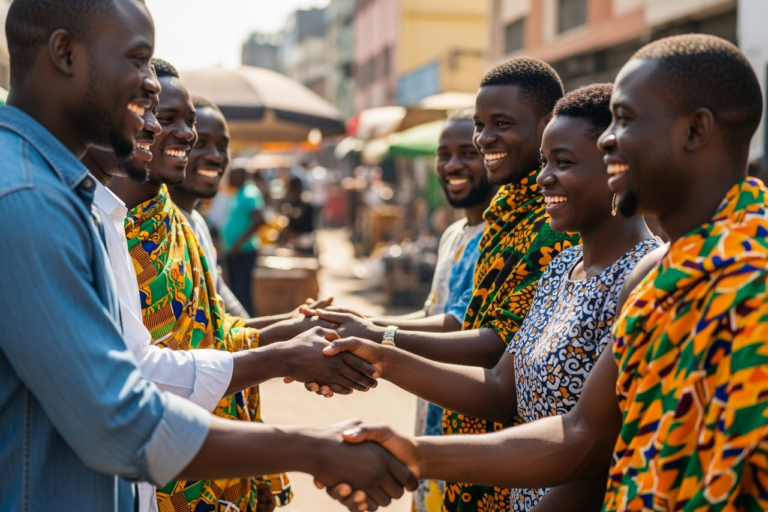
In Ghana, a handshake that is firm and sometimes ends with a snap of the middle finger is seen as warm and friendly.
-
When you walk into a room, go from right to left and greet each person. This follows part of Ghanaian culture.
-
When you greet elders, call them “Auntie” or “Uncle” to show respect and politeness.
Introduction
Are you getting ready to travel to Ghana? You will meet some really warm and friendly people there! Saying hello to someone is a big part of the Ghanaian culture. In Ghana, a greeting is not just a “hi.” It is a way to show respect and make a connection. Many people speak English, but if you learn the local greeting customs, you can make your talks with them much better. This guide will help you understand greetings in Ghana so you can connect with the people in a real way.
Common Greetings and Their Meaning in Ghana
In Ghanaian society, greeting people is a big part of everyday life. Saying hello when you walk into a place is important. It does not matter if you are in a waiting room or at someone’s home. This is seen as good manners in Ghanaian culture. If you do not greet others, they may think you are being unfriendly.
Many Ghanaians like it when you start the greeting. You can wave if you are in a big group. For a small group or just one person, a handshake will be better. Saying a few common Twi greetings, like “good morning,” can make you look polite. It shows that you understand something about Ghanaian culture. People will notice this and be happy. Now, let’s see some words you can use for greeting in Twi.
Everyday Words for Saying Hello and Responding in Twi and Other Local Languages
While English is an official language, learning a few Twi greetings can help you start a great conversation. A common way to ask “How are you?” is by saying, “Wo ho te sen?”. You can use this phrase in most casual situations to show you care. When asked “Wo ho te sen?”, a typical response is “Onyame na adom me hu ye,” which means “By the grace of God, I am fine.” This reflects the deep importance of faith in many Ghanaians’ lives.
Another friendly Twi greeting you might hear is “yaa nua,” which is a kind reply often used between peers. You don’t need to be fluent in the language to make a positive impression. Just knowing these common Twi phrases goes a long way. Using time-specific Twi greetings like “maakye” for good morning can also make your interactions feel more personal and warm.
|
Time of Day |
Twi Greeting |
English Meaning |
|---|---|---|
|
Morning |
Maakye |
Good morning |
|
Afternoon |
Maaha |
Good afternoon |
|
Evening |
Maadwo |
Good evening |
Differentiating Between Formal and Informal Greetings
In Ghana, the way you introduce yourself shows your respect. People take their time and do not rush into the reason for the meeting. It is not polite to go straight to business. You always begin with a greeting and ask the other person how they are. You should also ask about their family before you talk about why you are there. This is a big part of Ghanaian culture, and people do this even for small things. In a formal setting, what you do with your body is as important as the words you speak.
When you go into a formal setting, what you do matters even more. The way you stand or the way you move your hands can have meaning in Ghana, especially with a chief or someone older that many people look up to. If you are in an informal place, a simple “yaa nua” is often enough to say hi to your friends. It’s okay to speak English too, but learning Twi greetings always helps you get along better with people.
Here are some important things to do when you’re in a formal setting in Ghana as part of Ghanaian culture:
-
Use honorific words like “Auntie” or “Uncle.”
-
Take your hat off if you have one on.
-
Do not put your hands in your pockets.
-
Do not cross your legs.
These small things show your good manners and respect in Ghana. Politeness and warm pleasantries are big parts of greeting. Twi greetings have a place in every
Cultural Etiquette and Traditions in Ghanaian Greetings
Greeting people in Ghana is not just about saying polite words. It is a big part of everyday life and an important part of Ghanaian culture. When you greet someone, you let them know you see them, and you show goodwill. This helps everyone get along and keep peace in the group.
If you do not greet someone, it can come off as rude. Some may even think you are upset with them. That is why it is not something to forget or skip. Taking time to share pleasantries before doing anything else is a way to show respect for each other. When you look at these traditions, you see how greetings are a key part of Ghanaian culture. Now, let’s talk about how to greet elders the right way, and what gestures to use.
Greeting Elders and Showing Respect
Showing respect to elders is an important part of Ghanaian culture. When you talk to someone who is older or in charge, use titles like “Auntie” or “Uncle.” You can do this even if you do not know them. It shows that you see their place and you respect it. For example, when you say “yaa agya” to an older man, it is a polite way to give this respect.
When you are in a formal setting with a chief or someone who is greatly respected, what you do is just as important as what you say. You can bow your head a bit when you walk up to them. If there might be a handshake, use your right hand. It is better to let the elder offer their hand first. In some areas, kneeling is another way to show you truly respect someone.
When you do these simple things, you let others see that you care about their customs and that you value every person in their community.
-
Always use honorific titles.
-
Wait for an elder to extend their hand for a handshake.
-
A slight bow shows humility and respect.
Appropriate Gestures, Handshakes, and What to Avoid
Your body language says a lot when you greet people in Ghana. The most important thing to remember is to always use your right hand. This rule is not just about a handshake. In Ghanaian culture, you should use your right hand when you give, get, or eat something. People there think the left hand is not clean. So, you should stay away from using your left hand for greetings or when you give or get something. If you only have your left hand free, you should say sorry before you use it.
A handshake is a big part of greetings in Ghana. It is more than just a simple grip. What makes it special is a snap you and the other person do with your middle fingers when you let go. This snap can be loud, but that’s fine. The snap means you have good will and show warmth to the other person. When you come into a room, you are expected to greet each person. Start from the right and go to the left, shaking each person’s right hand.
This way of greeting may feel new if you are not from Ghana. But when you follow these customs, people know you respect their way of life. Here are a few things to remember:
-
Always use your right hand for a greeting.
-
Don’t be shy about the finger-snap handshake.
-
Greet people in a line from right to left.
-
Avoid using the left hand to give or receive items.
Conclusion
To sum up, knowing how greetings work in Ghana helps you make real connections with people and show respect. When you learn words often used in local languages such as Twi, and you get to know the right way to greet, you are showing you care about Ghanaian culture. These everyday greetings are not just simple words. They also show respect and kindness, which are big parts of life in Ghana. Try to use these customs when you meet others in Ghana. It will give you better moments with those you meet. If you want to learn more about Ghanaian culture or you need help, feel free to get in touch!



