

Key Highlights
-
Learn the key German greetings you need for both formal and casual times, like “Guten Tag” and “Hallo.”
-
See what makes formal greetings right for work or business, and how they are not the same as what you use with friends.
-
Get to know time-based greetings such as “Guten Morgen,” and see how people say hello in new ways in northern and southern Germany.
-
Learn why a firm handshake and looking straight at someone’s eyes matter a lot in German culture.
-
Know that when you use “Sie” or “du,” it makes a big difference in how polite or close you sound.
-
Find out the way people say goodbye, both in formal times with “Auf Wiedersehen,” and in a casual way with “Tschüss.”
Introduction
Welcome to the world of German greetings. Have you ever wanted to know how to say hello in Germany without doing the wrong thing? A greeting is not just a word. It is your first meeting with someone. In German culture, it is good to know when to use formal or informal greetings. This can be important for you.
This guide will show you how to say hello and goodbye in German. It will help you understand what is the best way to greet people. You can use these tips for travel, work, or when you make new friends. With the right greetings, you will connect with German speakers and have a good first moment.
Understanding German Greeting Traditions
In German culture, saying hello the right way is important. It shows respect, and it helps set the mood for your talk. German greetings change, based on who you talk to. The way you greet can depend on age, status, and how close you are to the person. You should be careful with the words you pick, but the reason behind it counts too.
After you say hello, people often ask, “Wie geht es?” That stands for “How are you?” in German. This means the person wants to know how you really feel. Knowing these easy traditions helps you show you value the culture. Let’s look at what makes german greetings stand out.
The Importance of Greetings in German Culture
Greetings are very important in German culture. The way you say hello can show respect and help people understand your role in a group. Your first, or initial greeting, can set the mood for how you and the other person talk to each other. If you use formal greetings, it means you see that the other person may be older or holds some kind of authority. That matters a lot in Germany.
It is good to use more formal greetings for older people or anyone with a higher status. Always use this kind of language until they let you speak in a more relaxed way. This is a must for polite talk with people in Germany.
The time of day also changes how you greet someone. Many say “Guten Morgen” for good morning before noon or “Guten Abend” for good evening when it gets dark. Using these words is common in everyday talk. It is a way to show you pay attention and you are polite.
How Social Context Shapes Greetings
The social setting is very important when using german greetings. At work or in business, always use the formal way. You should talk to your co-workers, bosses, or new business contacts by saying “Sie” (the formal “you”) and their last name. This shows respect and is the right thing to do in professional settings.
In informal situations, like when you are with friends, family, or people who are your own age, the way you speak can be more relaxed. Among friends, you will use “du” (the informal “you”) and call them by their first name. Using this shows that you are close and know each other well. Younger people also use friendly and simple german greetings with each other more often.
When you meet strangers, and especially when meeting older people, it is best to start with a formal greeting. If the other person wants to be less formal, they will tell you. This helps you know what to do when you meet someone new.
Formal German Greetings and Farewells
When you are in a formal setting in Germany, like when you are at a business meeting or talking to someone you don’t know, it is important to use the right language. Formal greetings play a big role in german culture. They help you show respect, and setting the right tone can leave a good first impression.
Learning how to use these phrases is more than just saying hello. You also need to know the right way to say goodbye. Below, you can see the key words and things to say that will help you in formal settings. For people who want to fit in or stand out for good reasons in german culture, these formal greetings really matter.
Common Formal German Greetings
To handle formal situations in German, it’s good to know a few simple phrases. The easiest formal greeting you can use is “Guten Tag.” It means “Good day,” and you can use it during most of the day, up until the evening.
When you meet someone in a work setting for the first time, you can say, “Es ist schön, Sie kennenzulernen.” This means “It’s a pleasure to get to know you.” This phrase will help you sound more polite when you start talking to people.
Here are a few of the most common formal greetings you will hear:
-
Guten Morgen: This means “Good morning” and you can use it until around 10 or 11 a.m.
-
Guten Tag: Use this for “Good day” or “Hello” in the afternoon.
-
Guten Abend: This means “Good evening” and it is used once it gets dark.
Knowing this basic german vocabulary for formal greetings like guten morgen, guten tag, and guten abend will help you sound friendly and polite when you meet people for the first time.
Saying Goodbye in Professional and Formal Settings
The way you say hello at work is important, but how you say goodbye in professional settings is important too. The standard, polite way to say goodbye is “Auf Wiedersehen.” This means “until I see you again.” It is a good phrase to use when you know you will not see the person for some time.
When you write work emails or letters, you will often use phrases like “Mit freundlichen Grüßen.” This is like saying “Yours sincerely” in English. It helps you keep a respectful tone, just like you did at the start of your message. Make sure to use the formal “Sie” in your words until the end as well.
You might be wondering about the phrase “Gute Nacht.” This means “good night.” People usually say it at the very end of the day, right before they go to bed. It is not often used in professional settings unless you are leaving late at night. Most of the time, it is better to go with “Auf Wiedersehen” for a formal goodbye.
Informal Greetings in Germany
When you are with friends, family, or people who are the same age as you, german greetings are easier and more relaxed. The rules are not as strict, so you can be more friendly and speak in an informal way. Learning informal german greetings can help you sound like a native speaker and get closer to people.
It is not hard to say hello or goodbye in an informal way after you know the words. Let’s look at the common phrases that you will use in times like this.
Greeting Friends and Family
In informal settings, you don’t have to use the formal “Sie.” You can go with the familiar “du.” The easiest and most common way to say hello in these moments is “Hallo.” It works with almost anyone when things are laid-back. If you are with close friends, you can also ask “Wie geht’s?” This is just the informal way to say “How are you?”
After your initial greeting, it’s normal to say “Freut mich,” which means “Nice to meet you,” if you meet someone new. People will often use the other person’s first name in informal settings like this.
Here are a few greetings you can use with close friends and family:
-
Hallo: A simple and easy “Hello.”
-
Was geht ab?: The german equivalent of “What’s up?”
-
Grüß dich: A warm “Greetings to you,” which people say with friends.
-
Wie geht’s?: A casual way to ask “How are you?”
Casual Farewell Expressions
When you need to say goodbye to your friends, don’t worry about using “Auf Wiedersehen.” That word is too formal, and most people do not say it with friends. The most common informal goodbye is “Tschüss.” It is simple, friendly, and fits well in almost any relaxed setting. Think of it as the german equivalent of saying “Bye!” in English.
There are other easy phrases if you know you will see someone soon. You can say “Bis bald,” which means “See you soon.” If you will meet again later the same day, say “Bis später,” or “See you later.” When you use these, it sounds friendly and personal.
One more warm way to end a chat is to say, “Mach’s gut.” That means “Take care.” When you use these informal greetings and common goodbyes, you will sound like you know the local way, and people see that you feel good with the language.
Time-Based Greetings in Germany
In Germany, people change their greetings based on the time of day. This habit helps you look aware and polite. You can say “Guten Morgen” in the morning or “Guten Abend” in the evening. Both are good ways to greet someone at the right time and make you sound more friendly.
You will hear these greetings in all types of settings. People use them at work, at home, or when talking to someone they don’t know well. They are good words to learn if you want to meet people at different times of day in Germany.
Morning, Afternoon, and Evening Phrases
Adjusting your greeting to the time of day is a key part of speaking German politely. “Guten Morgen” is the standard phrase for “Good morning,” which you can use until around noon. It’s a cheerful way to start any conversation.
As the day progresses, you’ll switch to “Guten Tag.” This literally means “Good day” and serves as a general “Hello” or “Good afternoon” until evening approaches. Once the sun starts to set, it’s time to use “Guten Abend” for “Good evening.”
These phrases are mainstays of daily communication in Germany. Here’s a simple guide to help you remember:
|
German Phrase |
English Equivalent |
When to Use |
|---|---|---|
|
Guten Morgen |
Good morning |
In the morning (until around 10 or 11 a.m.) |
|
Guten Tag |
Good day |
Throughout the day, until early evening |
|
Guten Abend |
Good evening |
In the evening, after the sun has set |
Seasonal and Holiday Greetings
Special times need special words. In german culture, it is kind to wish someone well on their birthday or at a holiday. People like to hear these greetings. You can use these greetings in formal or informal situations. They are easy to use with anyone.
The most used birthday greetings are simple. You can say “Alles Gute zum Geburtstag!” That means “happy birthday!” If you want a shorter way, you can say “Alles Gute!” This means “all the best.” You can use this at a birthday or just when you want to wish someone well.
At the end of the year, you may say some specific greetings. Say “Frohe Feiertage!” to wish “happy holidays!” If you want to wish a good Christmas, say “Frohe Weihnachten!” When the new year comes, say “Frohes neues Jahr!” People like these greetings. They help you connect with them and make you feel a part of these special days.
Regional and Local Variations of German Greetings
The German language comes with many dialects, just like the greetings people use. For example, what you hear in northern Germany is often not the same as the phrases in southern Germany. These local ways of saying hello give the language a lot of life and style.
If you know about regional greetings, you can connect better with people when you travel. Let’s look at some special phrases you may find in different parts of the country.
Northern Germany: Unique Phrases
If you go to northern Germany, and you are in Hamburg or Bremen, you will hear people say “Moin.” People often say “Moin Moin” too. This greeting works any time of day, from the morning to night.
People will know “Guten Tag” where you go, but if you use “Moin,” it shows you know something local. It is a good way to start a talk. This is a warm greeting, and it helps you feel a bit more at home in northern Germany.
Here are some other regional greetings you might hear:
-
Moin: The all-purpose hello in the north.
-
Moin Moin: A slightly more enthusiastic version of “Moin.”
-
Tschüss: While used everywhere, its pronunciation can have a distinctly northern flair.
Southern Germany and Austria: Distinct Expressions
When you go to southern Germany, the way people greet each other changes. This is most clear in Bavaria and also in Austria. The greeting you will hear a lot is “Grüß Gott.” This means “Greet God.” People use this word in everyday life and it is a polite way to say hello. You will hear it often in this mostly Catholic area.
Native speakers in the south do understand if you say “Guten Tag.” But if you use “Grüß Gott,” it shows you respect local ways. This is a good example of how regional variations are important where people live and work.
People in the south may also say “Servus.” You can use this word to say both hello and goodbye. That makes it a good word to know if you are talking with people in Bavaria or Austria. Learning these regional greetings tells people you know about their area and want to get along. It will help your communication be better in southern Germany.
Gestures, Etiquette, and Pronunciation
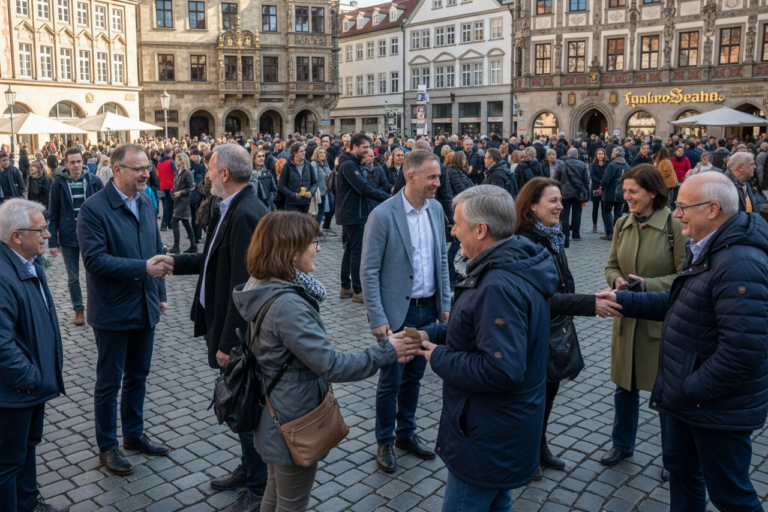
In Germany, greetings are not just about what you say. Your body language is also important. People often give a firm handshake when they first meet, especially in a work setting or when things need to be formal. This kind of physical greeting helps you make a good first impression.
If you understand these non-verbal signs and know how to say the usual greetings the right way, you will speak with more trust in yourself and people will get you. Here are the main things you need to know about German greeting etiquette.
Handshakes, Body Language, and Physical Contact
A firm handshake is the norm when you greet someone in Germany, especially in formal or business places. When you give a handshake, you should also look the other person in the eye. Doing both things shows your confidence and respect, no matter who the person is.
Germans are usually careful about physical contact. Most hugs are just for close friends or family members. You usually don’t see people greet each other with cheek kisses, even when they are friends.
Here are some important points about body language and physical greetings:
-
Firm Handshake: Give a short but firm handshake when you meet someone for the first time or when you are in a formal setting.
-
Direct Eye Contact: Always keep eye contact while greeting someone.
-
Hugs: Save hugs for your close friends and family only.
-
Cheek Kisses: Cheek kisses are not usual and most people avoid them.
Pronouncing Common German Greetings
Getting the right pronunciation can help a lot when you use a German greeting. It may feel hard at first, but the easiest way to get better is to listen to native speakers and break the sounds down bit by bit. If you keep practicing, you will improve over time.
Lots of German words are spoken like they look, so that can help you learn faster. For example, when you say “Guten Tag,” you say it like “GOO-ten TAHK.” You do not have to be perfect from the start. Most people in Germany will be glad that you try to use their language.
Here is a quick guide for saying some common German words when you want to greet someone:
-
Guten Morgen: You say this like “GOO-ten MOR-gen.”
-
Guten Tag: You say this like “GOO-ten TAHK.”
-
Auf Wiedersehen: You say this like “owf VEE-der-zane.”
-
Tschüss: You say this like “chooss.”
Conclusion
To sum up, greetings in Germany are more than just saying hello. They are a big part of how people talk to each other and show their values and ways of acting. If you know about formal and informal greetings, the time of day, and regional variations, you can make better connections with people. This helps in both personal and professional settings. It is also good to pay attention to how you use gestures and say the words right. This makes your talks with people deeper and more real. If you are in Germany or talking with German-speaking friends, these greeting ways can help you have stronger relationships. Try out different greetings and see how each one can help you feel welcome and included in your talks!



