

Key Highlights
-
The word “Bula” is the most common Fijian greeting. It means more than just “hello” in Fiji. You use it to wish someone good health and a good day.
-
In Fijian culture, greetings are very important. These are a big part of good manners and show respect toward others. People use greetings to connect with each other in this friendly South Pacific country.
-
Some other helpful words to know are “Vinaka” when you want to say thank you, and “Kerekere” if you want to say please.
-
In a formal setting, a respectful nod is often used, especially when talking to elders or someone with high status.
-
There are greetings for different times of the day. For good morning, you would say “Ni sa yadra.”
-
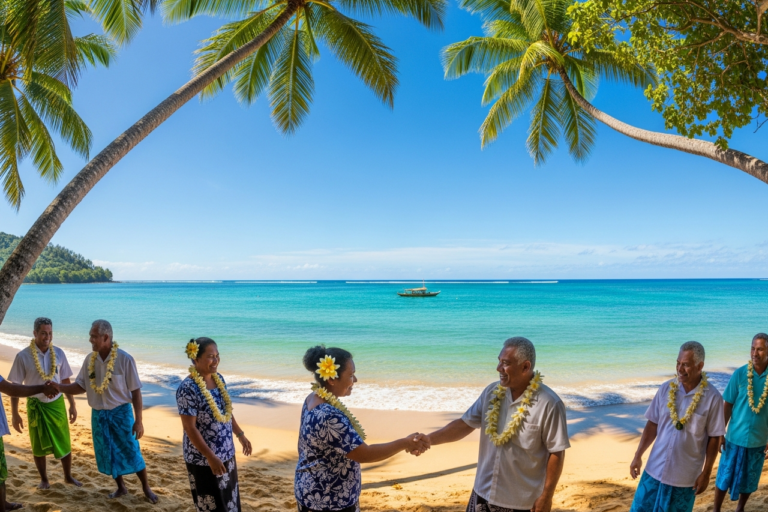
A handshake that lasts a bit longer is a common way to greet someone in Fiji. This shows how welcoming and warm the Fijian people can be.
Introduction
Taking a trip to the islands of Fiji is a time you will always remember. It gets even better when you talk with the local people and get to know the culture. For many, it all begins when you say “hello.” The most popular Fijian greeting you hear is “Bula!” When you use this word, you show kindness and wish someone good health and a good life. Learning when and how to use this, and other greetings, is often the first thing you do to get closer to the Fijian way and show you care about their customs.
Good Fijian greetings like “Bula” help you fit in and connect as soon as you get to Fiji.
The Importance of Greetings in Fijian Culture
In Fijian culture, greetings are more than just saying hello. They are a big part of good manners and politeness. People in this south pacific area believe in showing respect and being part of the community. For indigenous Fijians, giving a proper greeting lets you show that you see the other person and know their status in society.
The Fijian language is one of the official languages and has many ways to greet others. These words help show respect and keep the culture strong. When you meet someone new or pass by a neighbor, it is important to greet them in the right way. This shows you care about their customs and want to connect with them.
Why Greetings Matter in Everyday Life
Using a Fijian greeting is the most common way to start talking and show that you are friendly. When you use the local language, even if you just say one simple word, it can help you open doors. It lets people you meet know that you want to connect with them and their culture, and not just see the sights like any other tourist. This is a great way to be a part of Fijian culture.
The word “Bula” is a good example. What does ‘bula’ mean in Fijian culture? It translates to “life,” but in Fiji it means much more. When you say “Bula,” you are wishing someone a good life and good health. You are showing the positive and welcoming spirit you see in the islands. It’s not just a greeting; it acts as a blessing.
Learning a few simple phrases in one of the official languages of Fiji can make your experience better. This gesture shows that you respect the people and want to get to know them. Your time and talks will be more meaningful and memorable when you use the official languages of Fiji.
Cultural Values Reflected in Fijian Greetings
Fijian greetings reflect the culture’s focus on respect, community, and knowing a person’s place. The way people greet in Fiji can change based on age, gender, or where someone stands in the group. Indigenous Fijians may hold your hand after a handshake. They use this time to talk and connect with you.
When greeting someone in Fiji in a formal way, things change if the person has a higher rank or is an elder. In this case, you often use a respectful nod and speak a greeting. You might not shake hands. This shows respect and tells the other person you know their status in the group.
In rural areas, Indo-Fijians may press their palms together and say “Namaste.” This is another sign of deep respect. These ways of greeting, especially for native speakers, come from a real feeling for the other person. Fijian greetings are about showing you care and seeing the other person, not just following a rule.
Common Ways to Say Hello in Fiji
When you visit Fiji, you will hear “Bula” a lot. It is the most common greeting in the country. This is one of the first fijian phrases you will learn. It is a good way to connect with people. The word bula is simple, and the pronunciation is easy for anyone. So, it is great for people who are just visiting.
If you learn more simple words of the fijian language, it can feel really good. Fijian is one of the official languages there. People like it when you try to speak their local language. So, saying thank you with “Vinaka” is important too. These small bits of fijian show you care. They make your time in fiji even better.
The Meaning and Usage of ‘Bula’
The Fijian greeting “Bula” is very special. It means “life.” When people in Fiji say “Bula,” they are wishing you good health, a good life, and a good day. This greeting shows the heart of Fijian hospitality.
You might hear a few other ways to say this greeting. If someone says “Ni sa bula,” it is a more formal way to greet. They use it when talking to a group or someone they respect even more. If you hear “Sa bula,” it is a bit more relaxed, but it still gives the same warm feeling.
No matter which greeting you hear or use, the meaning does not change. It is always nice to answer with a happy “Bula.” This greeting is part of life in Fiji and helps people feel good and welcome every day.
Other Popular Fijian Greeting Phrases
If you know how to say “Bula,” that is a great start for a greeting. Learning a few more Fijian phrases will make your talks easier and show you care about the local way of life. These words may be small but can do a lot when you want to speak to people. So, are you looking for the basic Fijian phrases to use as a tourist? The answer is yes, I can help you.
If you spend some time on these Fijian phrases, it will be easier for you to go about your day and talk with people on the islands. Good manners and respect are at the center of using these words, and practicing them can help you have a good life during your stay.
Here are some important phrases to know:
-
Vinaka: Use this word for “thank you.” You will hear and use it a lot.
-
Vinaka vaka levu: This means “thank you very much,” if you want to show extra thanks.
-
Kerekere: This means “please.” Use it when you want to ask for something in a nice way.
-
Ni sa bula: Say this as a more formal “hello.” It is best when speaking to elders, a group, or someone you want to show respect to.
Time-Specific Greetings in Fiji
While “Bula” is the most common greeting in Fiji and can be used any time of day, there are also other Fijian greetings you can use at different times. When you say a good morning or evening greeting, it shows that you want to go a bit deeper with the language and learn about their local customs.
If you want to say “good morning” in Fijian, the way to do it is to say “Ni sa yadra.” Using this in the morning is a nice way for people to start their day and meet others. There are also greetings for the afternoon and evening. This helps you use the right Fijian greeting to match the time of day.
Morning, Afternoon, and Evening Expressions
Are there different greetings in Fiji for morning, afternoon, and evening? Yes, there are! Using the right greeting for the time of day is a wonderful way to show respect and attentiveness. The most common morning greeting you’ll hear is “Ni sa yadra,” which means “good morning.” It literally translates to “you are awake,” a cheerful acknowledgment to start the day.
As the day progresses, the greetings change. You can continue to use “Bula” or “Sa bula” throughout the afternoon. For the evening, a common expression is “Ni sa bogi,” which means “good evening.” Using these phrases will surely bring a smile to the faces of the locals you meet.
Here is a simple table to help you remember these time-specific greetings.
|
English Phrase |
Fijian Phrase |
|---|---|
|
Good Morning |
Ni sa yadra |
|
Good Evening |
Ni sa bogi |
Appropriate Responses to Various Greetings
Knowing how to answer greetings is as important as knowing how to start them. So, what should you say when someone in Fiji greets you with “bula”? The answer is easy. Just say “Bula” back with a warm smile! Saying “Bula” in reply is the best way to join in the good feeling and finish the greeting.
For other Fijian phrases, there are some easy and polite answers you should know. When someone thanks you by saying “Vinaka,” you can reply with “Sega na leqa.” This means “no worries” or “you’re welcome.” People in Fiji use this phrase a lot, and it helps make talking with them feel friendly.
Here are a few more simple replies to remember:
-
Io: “Yes”
-
Sega: “No”
-
Au sega: “I don’t” or “I don’t have”
-
Sega na leqa: “No worries” or “No problem”
Formal and Informal Greeting Etiquette
Knowing the difference between formal and casual greetings is important to show good manners in Fiji. When you meet someone in a regular way, you can simply wave and say “Bula.” That is fine for most people. But when you meet someone with high status or when you are at a special event, you need to greet them in a more formal way.
Indigenous Fijians use their own way when they greet people in these situations. They may give a respectful nod or do a longer handshake instead of a simple one, especially if the person is older or has more social standing. Paying attention to these details is a good way to show you understand and respect the local culture in Fiji.
Greeting Elders and Respected Individuals
It is common to use Fijian greetings with elders or when you are in a formal setting. In fact, people encourage it, but you need to pick the right style. If you are talking to elders or someone with high status, like a chief (called “Ratu” for men and “Adi” for women), you should use a more formal way, such as “Ni sa bula” instead of just “Bula.” This shows your politeness.
Body language matters a lot, too. A respectful nod is better than a handshake. The nod shows that you know they are important in their community and that you respect them.
For Indigenous Fijians, these ways of showing respect are a big part of life. If you use these customs, you will show you value their culture and what is important to them. They will appreciate it.
Gestures and Physical Customs such as Handshakes
Handshakes and other ways of saying hello are very common in Fiji. The handshake is a big part of Fijian greetings, but it is different from some other places. It is often just one smooth up-and-down movement. After this, you will hold the person’s hand for a while as you talk. Keeping their hand for a bit longer shows warmth and is a friendly way to be with each other.
There are other gestures and ways of being polite, too. Fijian women often greet each other with a soft hug. They might also do what looks like an air kiss near the cheek, but it is more of a gentle sniff. If a woman meets a man, she will usually wait for him to hold out his hand first.
Here are some important things about these customs:
-
A handshake that lasts longer shows friendship.
-
A respectful nod is used for people who have higher status.
-
Women may greet other women by hugging and giving a soft “sniff” kiss on the cheek.
-
In rural areas, Indo-Fijians might use the “Namaste” gesture.
These greetings are a big way people in Fiji show respect and care for each other.
Conclusion
In short, knowing how to greet someone in Fiji is about more than just saying “hello.” These greetings are a big part of Fijian culture and help bring people together. When you know common greetings like “Bula” and when to use them, you show respect in the community. This can help you connect with people and leave a good mark when you visit Fiji.
Taking part in these greetings makes your trip better. It also shows that you care about Fijian culture. If you want to know more about how to act in Fiji, you can get a free talk or advice.
Frequently Asked Questions
What are typical mistakes tourists make when greeting locals in Fiji?
One common mistake is to not say “Bula” back when someone says it first. This can come off as not friendly. Another is to make a handshake too quick or miss the small details of showing good manners when you meet older people. It is always good to use some Fijian phrases and speak with a polite tone. Showing respect and good manners is the best way to go.
How do you say goodbye or farewell in Fijian?
To say goodbye in Fiji, use the word “Moce.” You say it like “mo-they.” This is the main way people say farewell in Fiji. If you want to thank someone as you leave, you can add “vinaka vaka levu.” This means “thank you very much.” By using these words, you show that you are warm and respectful. People in Fiji be happy when you say “vinaka” before leaving, too.
Can you share essential Fijian phrases a visitor should learn before traveling?
The most important Fijian phrases to use are “Bula” for hello and life, “Vinaka” for thank you, and “Kerekere” for please. It helps to know “Io” means yes and “Sega” means no. When you learn these simple Fijian words, you can speak with people and be polite while in Fiji.



