

Key Highlights
-
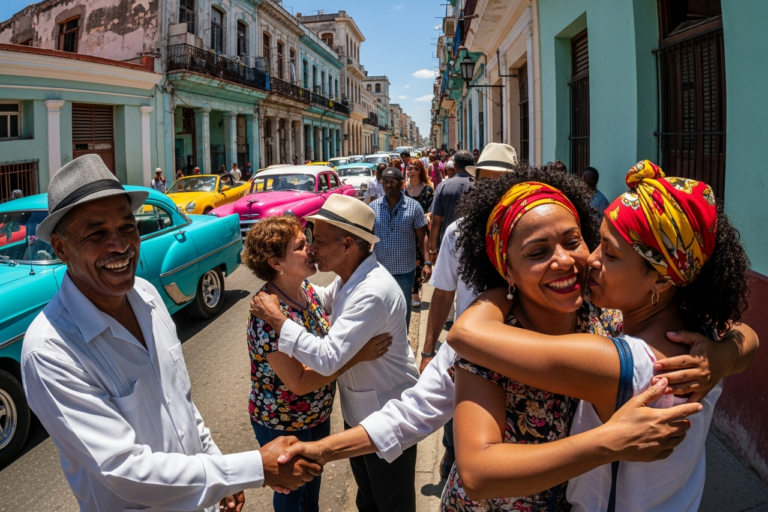
Cuban greetings are very warm. They often use a kiss on the cheek. This is a big part of Cuban culture.
-
A handshake is used more by men or when the situation is very formal.
-
Cuban Spanish has its own style. People use special phrases and Cuban slang like “asere” in casual greetings.
-
If you say “Usted,” it means you are being formal and polite. Use “tú” with close friends or family.
-
Knowing these signs in greetings will make your talks better. It also shows you respect local customs.
-
Nonverbal communication in Cuban greetings matters. People use touch and clear gestures, not just words.
Introduction
Welcome to the lively world of Cuban culture! When you travel to Cuba, you will see that talking with people is one of the best parts of the trip. This often starts with a simple hello. Cuban greetings are more than words. They show the warm spirit and kindness of the island. Knowing some basic Cuban Spanish greetings helps you feel relaxed in social settings and can also let you have real talks with the friendly Cuban people.
Understanding Cuban Greeting Culture
Cuban culture is a mix of Spanish, African, and other roots. This makes life there special, and you can see it best in Havana. Greetings are a big part of life for Cuban people. These are full of happiness, humor, and lots of expression. People in Cuba are talkative and kind. They want you to feel welcome.
One common way to say hello in cuba is with a warm kiss on the cheek. Such greetings are a daily way to show caring and togetherness. This is a big part of Cuban culture and the way they connect. When you learn about these greetings, you can start to enjoy their customs more. Now, let’s talk about the things that make their style of saying hello different.
Key Traits of Cuban Social Interactions
Cuban culture is shaped by both Spanish and African roots. Because of this, people in Cuba are talkative, cheerful, and full of life. When you meet new people, you will see that Cubans are quick to joke, easy to talk to, and very open. They look at life in a hopeful way, often joking, even when things are hard. This kind way of thinking is how they act with both Cuban friends and visitors.
When you meet someone in Cuba for the first time, you’ll get a warm and personal hello. People may stand closer than you are used to. Most of the time, you greet each other with a kiss on the cheek, even if you have just met. For Cubans, this is a friendly sign that they accept you into their social group.
This friendly and open way is at the heart of Cuban culture. Their kindness is real, and they like to talk and laugh with others. What starts as a quick hello can turn into a long and good chat. Meeting new people feels easy, and you will find it simple to feel at home with Cubans.
Role of Language and Nonverbal Communication
In Cuba, the way you say something is as important as what you say. People in Cuba speak a type of Spanish called Cuban Spanish. It has a special sound and unique phrases. You do not have to get the pronunciation perfect if you are just staying for a short time. But it helps to know how people here talk. If you are meeting someone for the first time or do not know them well, use the formal “Usted.” This is a way to show respect. The informal “tú” is used only with close friends and family.
How people act without words is also a big part of talking in Cuba. In fact, the most usual way people greet each other is with a kiss on the cheek. Almost all people use this way to say hello. If people are very close, they might hug too. Still, the cheek kiss is the main greeting.
You will see handshakes less often in Cuba. Most times, a handshake happens only between men or when it is a very formal or work meeting. Most of the time, Cubans like to greet with some kind of gentle touch. This shows how open and warm the people in Cuba are.
Common Greetings and Phrases in Cuba
Learning a few common Cuban greetings in Spanish can help a lot. Simple words like “Hola” for hello, “Buenos días” to say good morning, or “Buenas tardes” for good afternoon are used and understood by everyone. Using these easy greetings shows you want to connect with the Cuban culture.
But Cuban Spanish is not just about the basics. There are words and slang you will hear only in Cuba. These phrases make talks more lively and fun, and they are part of everyday speech there. Let’s look at some of the words and Cuban slang you might hear when you visit.
Everyday Ways to Say Hello and Goodbye
The most common way to say hello in Cuban Spanish is “Hola.” It works for any time of day and in almost any place. This is what people in Cuba will use when they want to greet someone in a simple way.
There are also different greetings you can use at certain times. These are polite words people say in the morning, afternoon, or night. People in the stores and any new Cuban friends will greet you using these phrases:
-
Buenos días: Good morning (people say this until noon)
-
Buenas tardes: Good afternoon (you can use this from noon until night comes)
-
Buenas noches: Good evening or Good night (you use this greeting in the evening, and you can use it when you say hello or when you leave)
When you need to leave, “Adiós” means Goodbye and is used often in Spanish. “Chao” is another common way to say bye, and you will hear it used in Cuba a lot, especially when people leave in a friendly way. If you use these Cuban Spanish greetings, like “hola,” “buenos días,” “buenas tardes,” and “buenas noches,” your talks with others will feel easy and nice. People will see that you respect their culture.
Popular Cuban Slang Used in Greetings
Yes, Cubans use a lot of slang when they greet each other in a casual way. This is a big part of what makes Cuban Spanish fun and full of life. People can say “Hola,” but there is much more to hear than just that.
One of the most well-known Cuban slang greetings is “¿Qué bolá?” This is a very casual way to say “What’s up?” in Cuban Spanish. There is also the word “asere” (or sometimes “acere”). People use this like we say “dude” or “buddy” with good friends. So, you might hear someone say, “¿Qué bolá, asere?” when meeting a friend.
You will find these casual greetings used often in Cuban Spanish. They are a big part of how people speak with each other. Here are a couple of examples you might hear:
-
¿Qué bolá?: What’s up?
-
Asere: Dude/Buddy
You might find it tough to use these Cuban Spanish phrases yourself if you visit, but if you know them, you will understand the easy-going and friendly talks all around you. This makes it easier to catch what Cubans really say when giving a greeting.
Greeting Etiquette for Different Situations
In Cuba, how you greet someone depends on where you are and who you are with. A Cuban will greet a close friend in one way, but say hello to a stranger or business partner in another way. There is always warmth when saying hi, but sometimes there is more formality or less physical contact depending on the moment.
You can pick up these social rules fast when you see others greet each other. If you know what makes greetings different, you feel more sure of yourself when you meet new people, talk to friends, or are in a business meeting. Next, we will show how greetings change with friends and strangers, and how things work in social settings versus the business world.
How Cubans Greet Friends vs. Strangers
When you look at Cuban greetings, you can see there is a clear way that people act with Cuban friends and with new people. With Cuban friends, the greetings are always very warm and full of feeling. It is normal to hear a quick and happy “Hola!” when people meet. There will often be a kiss on the cheek, a hug, or maybe a friendly pat on the back. After this, the talk is lively. People use their hands and show how they feel.
With new people, Cuban greetings are friendly but a bit less open. People will use words like “Buenos días” or “Buenas tardes” to say hello. A kiss on the cheek can still happen when you meet someone for the first time. It is how things are in Cuban culture, but it can seem more proper than what you see between old friends.
The most important thing to know is that touch is normal when people say hello in Cuba. Do not be shocked if a person you just met goes to give you a kiss on the cheek. This is a way of welcoming you and making you feel a part of things, even if you are new to them.
Business vs. Social Greeting Customs
Yes, there are definite differences in greeting etiquette between business and social settings in Cuba. While Cuban culture is generally informal and warm, professional environments call for a slightly more conservative approach.
In social settings, greetings are relaxed and physically expressive. A kiss on the cheek is the norm for men and women, even when meeting for the first time. The atmosphere is talkative, humorous, and open. It is all about personal connection and warmth.
In business meetings, greetings become more formal. A firm handshake is the standard greeting, especially between men or in a very formal context. It’s also important to use formal titles and the “Usted” form of “you” until a more casual rapport is established. Punctuality and professional attire are also more emphasized in a business context compared to laid-back social gatherings.
|
Feature |
Social Greeting |
Business Greeting |
|---|---|---|
|
Physical Contact |
Kiss on the cheek is standard |
Handshake is more common |
|
Formality |
Informal, relaxed |
More formal and reserved |
|
Language |
Casual language, slang (“tú”) with friends |
Formal language (“Usted”), professional titles |
|
Overall Tone |
Expressive, humorous, personal |
Respectful, professional, polite |
Beginner’s Guide: How to Greet People in Cuba
Ready to use your Cuban greeting skills? Don’t worry—it is easier than you think. The key is to be open, friendly, and watch what people do around you. When you go to Cuba, even a small effort to follow what the people do will help you show respect and make real connections.
The usual greeting in Cuba, when you meet someone for the first time, is a quick kiss on the cheek. This may feel odd if you’ve not done it before, but it is a normal and nice gesture. Now, let’s look at what you should know and the simple steps so you can say hello with confidence in Cuba.
What You’ll Need to Get Started (Basic Phrases, Cultural Awareness)
To get going, you just need some basic cuban spanish phrases and a little bit of culture knowledge. The people in cuba are open when you make mistakes and like it when you try their way of speaking. So, when you talk with someone, remember to be real and kind.
If you know a few simple words, it can really help you. The phrases here are common, not hard to learn, and you will use them often.
-
Hola: Hello
-
Por favor: Please
-
Gracias: Thank you
There is more, though. In cuban culture, talking with others in a friendly way is important. Smile, look at people when you talk, and do not worry about starting a chat. It is good to be upbeat and open. If you talk to older people or someone with more power, saying “Usted” shows you respect them.
Step-by-Step Guide for Cuban Greetings
Greeting people in Cuba feels warm and friendly. To help you feel sure of yourself, here is a simple step-by-step guide. If you follow these steps, your Cuban greetings will look friendly and show respect for Cuban culture.
The process is easy. First, look at the situation. Then, pick the right words. Last, use the gesture that fits. If you keep these things in mind, you will move through any social meeting in Cuba without worry. Let’s take a closer look at each step.
Step 1: Choose Your Greeting Based on the Situation
The first thing to do is read the room and pick the right greeting. Think about what time it is and how formal the setting is. In most cases, “Hola” is a good greeting that works for any time or place.
When things are a bit more formal or you want to be polite, use a greeting for that time of day. These greetings show you respect others and can be used for anyone. You can say them to hotel staff or people you meet in the street.
-
Good morning: Say “Buenos días” before noon.
-
Good afternoon: Say “Buenas tardes” from noon until evening.
-
Good evening: Use “Buenas noches” after it gets dark.
When you speak with people who seem to be your age or you are in a relaxed place, you may hear more slang. But as a visitor, it’s best to use casual greetings like the ones above. These greetings are clear, simple, and show respect to everyone.
Step 2: Use Proper Physical Gestures (Handshake, Hug, Kiss)
After you choose your words, the next step is what you do with your body. In Cuba, this is a big part of saying hello. The most common thing to do is to give one quick kiss on the cheek. This is the way for women, for a man and a woman, and sometimes for men if they know each other well or are in the same family. If you are not from Cuba and someone from there starts the kiss, it means you are welcome.
A handshake is another thing you might see. People in cuba do this mostly when things are more serious, like during a work meeting or when two men do not know each other well yet. If you are not sure, you can give your hand to shake. Just know it might turn into something more friendly if the person from cuba wants.
Most people do not hug someone if it is the first time you meet. You might only get a hug if a close friend who knows you both is there. Hugs are usually for people who already have a close feeling or friendship. If you do not know what to do, wait for the cuban person to start, and do what they do.
Important Do’s and Don’ts When Greeting in Cuba
To make sure you always have good interactions, it’s helpful to know some basic do’s and don’ts of greeting etiquette in Cuba. The main thing to do is to be warm and open. People in Cuba like it when you are friendly. A smile and a sure ‘Hola’ go a long way. Try to use some basic Cuban Spanish phrases when you greet people. They will see your effort, and they will like it. You should also expect some physical contact, like a kiss on the cheek, when you say hello.
But there are also some things you should not do. Don’t be too quiet or act closed-off. People may think you do not want to be with them. Do not use ‘tú’ with someone unless you are asked, or you know them very well. Stick with using ‘Usted’ to show respect. When you know these simple rules about Spanish greetings, you can get along with people in Cuba much better.
Things to Avoid in Cuban Greetings
When you greet someone in Cuba, there are a few easy things you can do right to show respect. The biggest thing is, don’t act cold or keep your distance. If someone offers you a kiss on the cheek, don’t pull away. That can feel rude or like you are saying no to them. It’s best to enjoy the warm ways people in Cuba greet each other.
With language, you don’t need to speak perfect Cuban Spanish. But, you should not use the informal “tú” right away. This form is for people you know well. At first, use the formal “Usted” to be more polite. Later, if you get to know the person better, you can use “tú.”
Here are some things you should avoid when saying hello in Cuba:
-
Being physically withdrawn: Don’t turn away from a kiss on the cheek or a warm touch.
-
Using informal language too soon: Use “Usted” instead of “tú” when meeting someone new.
-
Forgetting to greet someone: It is not polite to enter a small shop or room in Cuba without saying “Buenos días” to the people there.
These simple steps can help you make a good impression with your greetings when visiting Cuba. Whether you’re using Cuban Spanish or learning as you go, a warm hello goes a long way.
Polite Expressions to Use After Greeting
After you say hello or “Buenas tardes,” it’s good to use a few polite words. Doing this helps keep the chat going and shows good manners. When you ask a simple question or say something kind, it lets the other person know you want to talk with them.
One way people in Cuban Spanish often do this is by asking, “Cómo está usted?” This means “How are you?” in a formal way. It is a simple and polite thing to say. This shows that you care about them, not just saying hello. It can help turn a short chat into a nice talk.
Here are some other polite words you can use in Cuban Spanish after a greeting:
-
Mucho gusto: This means “Nice to meet you.” People use it all the time, and it always fits.
-
Con permiso: You say “Excuse me” with this phrase if you want to walk by someone.
-
Por favor and Gracias: These are the words for “Please” and “Thank you.” You should use them in any chat.
These soft words help people get along better when talking in Cuban Spanish. They show respect and help make talking feel good for both people.
Conclusion
To sum up, learning how people greet each other in Cuba can help you have better talks and feel more at home on the island. People often give a warm hug or a handshake, especially at work. Each way of saying hello shows the friendly and respectful Cuban style. If you know some common phrases, basic gestures, and the most important rules, you will feel more at ease and real when meeting others. A real greeting can help you make strong bonds and great memories while you are in cuba. Try to greet people the cuban way, and you will stand out wherever you go!
Frequently Asked Questions
Is it common to greet with a handshake, hug, or kiss in Cuba?
Yes, physical touch is a big part of Cuban greetings. The most usual way is to give a single kiss on the cheek. Friends often share a hug. A handshake is not very common in Cuba. People use it mostly in formal business situations, or when men who do not know each other very well want to greet. Cuban greetings always have that warm and close touch.
Are there special phrases used in Cuban Spanish for greetings?
Yes, that’s right. People do use basic Spanish greetings, but cuban spanish has its own way of talking. In cuba, you will hear casual greetings that are special to their spanish. For example, people often say “¿Qué bolá?” when they want to ask, “What’s up?” They also use “asere” a lot in chat. This word is a piece of slang in cuba, and it means “dude” or “friend.” You will find these greetings in many talks in cuba.
How should tourists greet shopkeepers or waiters?
When you meet shopkeepers, waiters, or taxi drivers in Cuba, it is good to be polite and friendly. You can say a simple “Hola” or greet them with “Buenos días,” depending on the time of day. If you smile and make eye contact, you will show respect, and people will really like that. Using these casual greetings helps you in daily life and helps you get along well with Cuban people.
Are there differences in greeting etiquette for business and social settings?
Yes, there are some clear differences. Cuban social greetings are very easy-going and warm. People often greet each other with a kiss on the cheek. But in business, the way people greet is more formal. You should give a firm handshake. Use formal language, like “Usted,” and say the person’s professional title. This shows the more careful Cuban way of doing business.



