Key Highlights
-
Jagannath Rath Yatra 2026 in the UK will take place on Sunday, 24 May 2026. London will be the main place for this big chariot festival.
-
The rath yatra is done to honour Lord Jagannath, Baladeva, and Subhadra. There are colourful processions where you can see them travel together.
-
The rath yatra starts in Puri at the Jagannath Temple. It takes place in the month of Ashadha, according to the Hindu calendar.
-
At the heart of the festival, people go on a journey with the chariots, sing kirtan, dance and share prasad with others.
-
In the UK, these rath yatra events show devotion, fill the streets with music and bring the community together.
-
What is special about this day? People can watch, take part, and even help pull the chariots.
Introduction
Jagannath Rath Yatra is one of the most joyful public gatherings in the Hindu world. People also call it the festival of chariots. During this time, lord jagannath comes out to be among the people. It feels warm, open and close to the heart. This festival is not only in Puri but also in London. It brings together families, those who pray and people who are curious too. If you want to know why rath yatra means so much, you can start with its stories and living ways. They help people understand more about this celebration.
Overview of Jagannath Rath Yatra
Rath yatra is the annual journey where the deities of Lord Jagannath, Balabhadra, and Subhadra are brought out from the Jagannath Temple. They are taken on big chariots during this event, which lets people see them. This is why many call it the festival of chariots.
In the Hindu calendar, rath yatra happens in the month of Ashadha. The tradition of this annual journey is tied to Lord Krishna and his family. The festival lets people from all walks of life see the deities up close. To know more about rath yatra, it is good to learn where it began and what spiritual meaning it has.
Origins and Historical Significance
The story of Jagannath Rath Yatra is deeply connected to Puri and the holy practice of worshipping Lord Jagannath. In this story, King Indradyumna and Queen Gundicha showed great respect and love for Bhagwan Krishna. One night, the king saw a dream. In the dream, he was told to make wooden figures of the three divine siblings.
After this, an old builder came to start making the idols. He asked for one thing—to be left alone for 21 days while he worked. No one should open the room during this time. But when the work sounds stopped, the door was opened before 21 days were up. Inside, there stood the unique shapes of Lord Jagannath, Balabhadra, and Subhadra.
A holy voice spoke to the king then, saying the idols were finished and had their own sacred meaning. After this event, the great Jagannath Temple was built. With the passing of years, the festival’s journey linked with the hindu lunar calendar. The event turned into one of the most famous and loved religious celebrations in India.
[rath yatra], [lord jagannath], [jagannath temple], [hindu lunar calendar], [king indradyumna]
The Spiritual Meaning Behind the Festival
Jagannath Rath Yatra is a big festival with deep meaning. At its centre, rath yatra is about showing our devotion in public. The deities are brought out of the temple for all people to see. This means that everyone, not just those inside, can get darshan.
The act of moving the deities from the temple holds more meaning. Many people feel the divine presence gets closer to us this way. It shows the eternal essence of the divine is not far from people. Instead, it is close, kind, and ready to reach out to everyone.
This festival tells us an important message of devotion. When we show patience, faith, and loving service, we gain blessings. The stories about King Indradyumna and Queen Gundicha give clear proof of this. For many people, the Lord’s journey in the rath yatra is a gentle reminder that the spiritual way grows when we keep a heart of love.
The Journey of Lord Jagannath – Legends and Stories
The journey of Lord Jagannath is more than just a show on the road. The stories passed down with this yearly journey hold the heart of Lord Krishna, Goddess Subhadra and Balabhadra. These stories, about what they say and do, help to make the ratha yatra special and close to people.
In the bright fortnight of this holy time, people think of how the Lord comes out so everyone can see him, love him and celebrate together. The stories below explain why the annual journey of Lord Jagannath is something people remember so well, year after year, across different places and families.
Famous Myths and Legends Associated with Rath Yatra
There are quite a few interesting stories and legends that go with the Jagannath Rath Yatra. One of the most well-known starts with King Indradyumna who had a dream. He was told to make wooden forms of the divine siblings. These special forms are the same deities people visit and worship today.
There is another touching legend behind the journey. Queen Gundicha did not have children and felt sad. Lord Jagannath told her that he and his brother Balabhadra would become her sons and visit her every year. Because of this promise, the Jagannath Rath Yatra to the Gundicha Temple still happens every year.
For many, these legends remind them of memories of Lord Krishna and his life with his family. Lord Jagannath is seen as an incarnation of Lord Vishnu, but people feel close to him and care for him in a warm way. Little things, such as the humble peacock feather that is tied to Krishna, make that connection even deeper.
Devotee Experiences from India and the World
People from many walks of life say that Rath Yatra gives an uplifting and deeply personal feeling. In Puri, there are huge crowds who come together to watch and pull the chariots. People sing loudly, move together in devotion, and you will see joy on many faces. Even in a crowded noisy place, they say they feel calm, connected, and spiritual.
Outside India, the mood of Rath Yatra stays strong, even when the place looks different. The festival first came to the West in 1967, when A. C. Bhaktivedanta Swami Prabhupada brought it to San Francisco. Now, many countries join in these celebrations. London has grown to be one of the biggest centres for this tradition.
Devotees talk about making a closer bond through easy things like chanting, walking with others in the procession, and sharing prasad. While international media often highlight the colours and scale, the people there remember something that lasts much longer. Many speak about feeling welcome, united, and having a strong sense of eternal love.
The Importance of Chariots in Rath Yatra
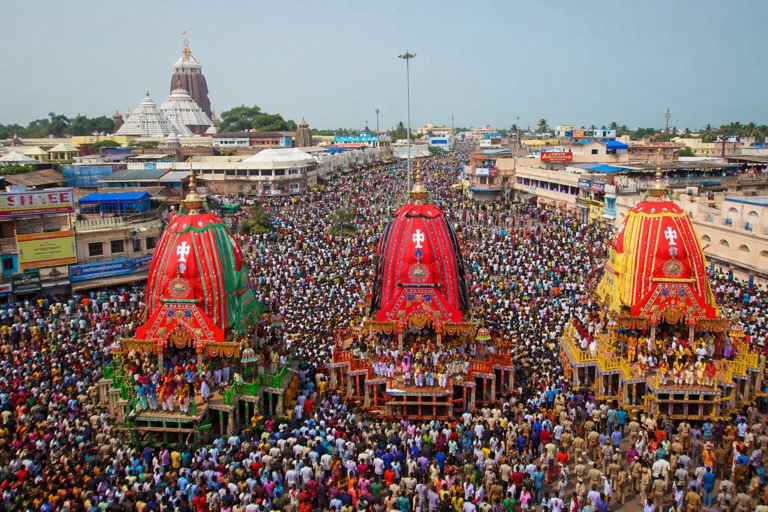
The huge chariots are at the heart of this chariot festival. They take Lord Jagannath, Lord Balabhadra, and Subhadra down busy public streets. This makes the devotion easy to see and joins people together. That is why the journey feels so strong for everyone.
These wooden chariots do more than just move the gods around. They are holy and made with a lot of care. Their bright look, with rich covers and lovely details, helps give the festival its one-of-a-kind feel. If you want to know why these wooden chariots mean so much, you should see what the chariots show and how they are made.
Symbolism of the Chariot Procession
The chariots in the Jagannath Rath Yatra have deep meaning. During the festival of chariots, the Lord does not stay inside the temple. He comes out to the people in the streets. This makes it easy for anyone to feel close to him and take part in the rath yatra at once. This public walk is a big part of what gives the festival its meaning.
For many people, the rath yatra shows an inner search as well. As they pull the chariot ropes, they think about devotion, giving up control, and wanting to get closer to God. To try and steer or have control of his chariot can mean guiding your life using faith, hope, and self-control.
The festival of chariots also helps people think about the cycle of birth and the fleeting nature of material goods. The chariots move forward. The crowds come and go. This tells us that life is short and changes fast. But the wish for an eternal search for a deep link to the divine is always there and has real value.
Details of Chariot Construction and Decorations
Many things are done to get ready for the Jagannath Rath Yatra. The huge chariots are made to be holy and can be seen by all. They are built so the deities will be safe, and to help people feel close to the gods. In Puri, these chariots are well known for their size. In the UK, the colourful wooden chariots are made to fit the city streets and to welcome big crowds.
People notice the way the chariots look. They are built with traditional things and are covered in festive decorations. These huge chariots let people see the deities—Lord Jagannath, Subhadra, and the Balabhadra murti—during the whole rath yatra journey and when everyone gathers to celebrate.
-
The wooden chariots are made for carrying Lord Jagannath, Subhadra, and the Balabhadra murti on the day of rath yatra.
-
People put bright cloths on the carts, add gold ornaments, and use beautiful details. They also use forest flowers to make it look special.
-
Many volunteers and stewards help set up the ropes, look after how people move, and manage the rath yatra path so that all can join in safely.
Rituals and Celebrations of Jagannath Rath Yatra
The festival of chariots has many main rituals that shape the way people celebrate. These steps help people follow the journey of the deities, starting from their first preparation, during the procession, and when they come back.
Some of the most well-known names are ceremonial bath, hera panchami, and bahuda yatra. Each of these has its own meaning and makes the festival feel both lively and holy. When you take a closer look at the rituals and see all the things people do, it makes the festival of chariots easier to understand.
Main Rituals Performed During Rath Yatra
What are the main rituals performed during the Jagannath Rath Yatra? The compiled details mention several important observances linked with the journey of the deities. These include Snana Yatra, the outward Rath Yatra, Hera Panchami and the return journey known as Bahuda Yatra.
Snana Yatra is the ceremonial holy bath of the deities. Rath Yatra marks their public procession to Gundicha Temple. Hera Panchami is associated with Goddess Lakshmi, while Bahuda Yatra marks the return. Some traditions also note the second day and later days as part of the wider festive sequence.
|
Ritual Name |
Timing |
Short Explanation |
|---|---|---|
|
Snana Yatra |
Before the main procession |
A ceremonial bath or holy bath of the deities |
|
Rath Yatra |
Main festival day |
The deities travel out in chariots for public darshan |
|
Hera Panchami |
During the stay away from the main temple |
A ritual linked with Goddess Lakshmi |
|
Bahuda Yatra |
Return phase |
The deities journey back after the visit |
Cultural Activities and Participatory Elements
Rath Yatra is not just a ritual. The event is a big public celebration full of sound, energy and shared joy. If you are in a city like London, you will see singing, dancing, drama, talks about philosophy and prasad, all made part of the annual journey of the deities.
This mix gives Rath Yatra strong cultural meaning. The people do not sit on the side and only watch. They sing, walk, clap, see friends and spend the day in each other’s company. These colourful processions make the place feel good for all. It welcomes those who have faith and those who have come for the first time.
-
Join the singing sections, dancing groups, and get involved with the big crowd along the way.
-
Share prasad with others and enjoy the large meal with the community after the procession.
-
Take time for the wider festival. There may be festive shopping and different cultural shows to see.
Jagannath Rath Yatra 2026 in the United Kingdom
Jagannath Rath Yatra now has a strong and growing following in Britain. Every year, the celebration attracts many people and visitors in the UK. The best-known event is in London. There, you will see the streets come alive with music, dancing, and people showing their devotion. For many, this is the time to take part in a real and living custom that started in Puri. Now, this custom reaches people much further than India.
If you look at the Gregorian calendar, you will see that the main rath yatra in the UK is on Sunday 24 May 2026. While the old way uses the bright fortnight and sacred lunar dates for timing, the UK celebration gives local devotees, or followers, a public way to gather, serve, and have time together. Below, you can find more about where to go for the event and how it now fits with local life.
Date, Timing, and Major Locations for UK Celebrations
For the UK event covered here, the key date is Sunday 24 May 2026. In the Gregorian calendar, that is the announced day for the London celebration. Traditionally, Rath Yatra is linked to the month of Ashadha and the Dwitiya tithi of the bright fortnight, but local public schedules are announced separately.
London hosts the biggest UK festival of chariots. The procession begins at Park Lane junction with Piccadilly near Hyde Park Corner, travels through Piccadilly and Haymarket, and ends at Trafalgar Square. Festivities continue there into the afternoon.
If you are wondering about major locations, this event centres on the route rather than a single main temple site. The public venues are the focus for gathering, music and prasad.
|
City |
Venue |
Timing |
|---|---|---|
|
London |
Park Lane junction with Piccadilly, near Hyde Park Corner |
12:00 pm parade starts |
|
London |
Procession route via Piccadilly and Haymarket |
Around 12:00 pm to 2:30 pm |
|
London |
Trafalgar Square |
2:00 pm to 5:00 pm kirtan, dance, prasad |
Unique Preparations and Local Adaptations in the UK
In the UK, the festival holds on to its devotional nature but also makes changes for local needs, like being in public streets, using transport, and watching out for safety. The London event plans the route in advance, provides steward help, gives advice on staying hydrated, and ends the day at Trafalgar Square. This helps more people in the city join in and enjoy the celebration.
There is a strong focus on community in this event. Many kirtan groups and dancers join the walk, and visitors can join in by helping to pull the ropes while listening to staff. Events like drama shows, dance, talks about philosophy, and sharing prasad all make the day feel like a complete festival.
-
Free public entry means people from all communities can take part.
-
Water stations, travel tips, and help for people who need support show that there is clear planning, especially after the long absence from the usual temple-style gatherings.
-
Public notices sometimes have practical info, but a coupon code is not something that is part of this main festival experience.
Conclusion
As we get ready for the Jagannath Rath Yatra in 2026, it is good to take in the rich culture and meaning of this special festival. The journey of Lord Jagannath is not just about faith. It also helps us get closer to our old ways and brings people together from many places. The bright events, large chariots, and time spent with other people make this festival stand out. You may join in the rath yatra in the UK, or watch the journey of Lord Jagannath from any other place in the world. Take some time to soak up the fun and think about what these moments truly mean. Come be part of this big day with us, and let the spirit of Jagannath bring us all joy and keep us united. If you have questions or wish to share what you feel, you can get in touch with us any time.