Quick answer: Hungry Ghost Month 2026 begins on 13 August and runs to 10 September 2026, marking the 7th lunar month. During this period, Chinese tradition holds that spirits roam the living world. Families honour ancestors through offerings, rituals, and acts of remembrance observed across communities worldwide, including in the UK.
Every year, as summer draws on, millions of Chinese families around the world turn their attention skyward — and inward. Hungry Ghost Month is one of the most spiritually significant periods in the Chinese calendar, a time to remember those who have passed and to fulfil duties to ancestors believed to walk among the living once more.
For Chinese communities across Britain — in London, Manchester, Birmingham, and beyond — this month carries deep cultural weight. Whether you grew up observing these traditions or are learning about them for the first time, this guide covers everything you need to know about Hungry Ghost Month 2026: when it starts, what it means, and how families typically mark the occasion.
When Does Hungry Ghost Month 2026 Start?
Hungry Ghost Month 2026 begins on 13 August 2026 and ends on 10 September 2026. It corresponds to the 7th month of the lunar calendar, a period when, according to Chinese folk belief, the gates of the afterlife open and spirits — including ancestors and wandering ghosts — are free to roam the world of the living.
The midpoint of the month, known as Ghost Day or the Hungry Ghost Festival (鬼節, Guǐ Jié), falls on the 15th night of the lunar month. In 2026, this lands on 27 August. This night is considered the most spiritually active of the entire month.

What Is the Meaning Behind Hungry Ghost Month?
Hungry Ghost Month sits at the intersection of Taoism, Buddhism, and Chinese folk religion. The core belief is that during the 7th lunar month, the boundary between the living and the dead becomes permeable. Spirits — particularly those who died without descendants to care for them, or whose lives ended tragically — are thought to wander freely.
For families, the month is a call to action. Ancestors are honoured, the wandering dead are appeased, and the living reaffirm their bonds with those who came before. It is both a solemn and a communal occasion, often involving extended family gatherings and shared rituals.
Whilst Western observers sometimes focus on the more supernatural aspects of the festival, for many Chinese families it functions similarly to occasions like All Souls’ Day in Catholic tradition — a moment of structured remembrance and spiritual duty.
How Do Families Observe Hungry Ghost Month?
Making Offerings to Ancestors and Spirits
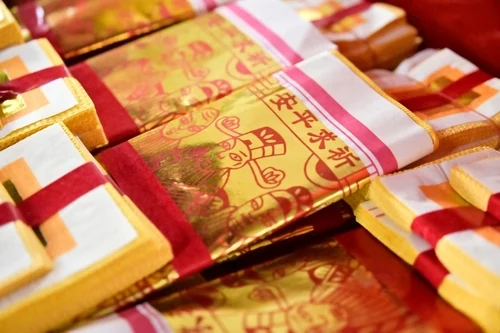
The most visible tradition during Hungry Ghost Month is the burning of offerings. Families burn joss paper (also known as ghost money or spirit money) — specially printed paper representing currency, gold, or material goods — so that these items pass into the spirit world for their ancestors to use.
More elaborate offerings may include paper replicas of houses, cars, clothing, and even smartphones. The practice reflects a genuine desire to ensure that departed loved ones are comfortable in the afterlife.
Incense burning is equally central. The smoke is believed to carry prayers and intentions to the spirit realm. Many families set up small altars outside their homes or in community spaces, laying out food offerings such as fruit, cooked rice, and sweets.
Leaving Food for Wandering Spirits
Alongside honouring known ancestors, families often leave food out for hungry ghosts — spirits with no living relatives to care for them. This act of generosity is thought to prevent these spirits from causing mischief or misfortune.
In some communities, communal feasts are prepared and left in public spaces. The first seats at any table are sometimes left empty and symbolically reserved for visiting spirits.
Getai Performances
One of the most distinctive features of Hungry Ghost Month in Chinese communities is getai (歌台) — live entertainment performances staged outdoors. These shows traditionally feature singers, comedians, and dancers performing for both the living audience and the spirits watching from the front row (seats often left deliberately empty).
Getai performances are particularly common in Singapore and Malaysia, but Chinese cultural associations in the UK occasionally organise similar cultural events during this period.
What to Avoid During Hungry Ghost Month
Many families observe a set of informal guidelines throughout the month:
- Avoid swimming at night, as water is considered a place where spirits may linger
- Do not move house or start a new business during this period, as it is considered inauspicious
- Avoid stepping on offerings left on the street, as this is disrespectful to both the spirits and the families who placed them
- Refrain from staying out late, particularly around bodies of water
- Do not whistle at night, which is thought to attract wandering spirits
These traditions vary across different Chinese regional groups and generations. Younger British Chinese individuals may observe some but not all of these customs.
Observing Hungry Ghost Month as a British Chinese Family
For Chinese communities in the UK, observing Hungry Ghost Month often requires a degree of adaptation. Burning offerings outdoors may not always be practical due to local regulations and urban living arrangements. Many families use designated community spaces, Chinese temples, or simply observe the customs indoors with incense and altar arrangements.
Chinese temples across the UK — including the Fo Guang Shan Temple in London, and various Taoist community centres in Manchester and Liverpool — often hold dedicated ceremonies during the 7th lunar month. These can be a meaningful way to participate in the traditions even without access to the larger-scale outdoor events common in Southeast Asia.
Community associations and Chinese cultural societies sometimes organise events throughout the month, particularly around Ghost Day on 8 August. Checking with your local Chinese community centre is a good place to start.
Why Hungry Ghost Month Still Matters to British Chinese Communities
Cultural practices travel with people. For the British Chinese diaspora — a community with roots across Hong Kong, mainland China, Malaysia, Singapore, Taiwan, and beyond — Hungry Ghost Month is one thread in a rich fabric of cultural identity.
For some families, observing the month is a deeply held spiritual practice. For others, it is primarily an act of cultural continuity: a way to remain connected to heritage, to teach younger generations where they come from, and to honour family members who are no longer living.
Research on diasporic communities consistently shows that cultural and religious observances serve as anchors of identity, particularly for second and third generation immigrants navigating life between two cultures. Hungry Ghost Month, in this context, is far more than superstition — it is a form of belonging.

Frequently Asked Questions About Hungry Ghost Month 2026
When does Hungry Ghost Month 2026 start and end?
Hungry Ghost Month 2026 starts on 13 August 2026 and ends on 10 September 2026. It spans the entire 7th month of the Chinese lunar calendar.
What is Ghost Day and when does it fall in 2026?
Ghost Day, also called the Hungry Ghost Festival, falls on the 15th night of the 7th lunar month. In 2026, Ghost Day falls on 26 August 2026 — the peak of spiritual activity during the month.
What is the difference between Hungry Ghost Month and Qingming Festival?
Both involve honouring ancestors, but they are distinct occasions. Qingming (Tomb Sweeping Day) takes place in April and focuses on visiting graves and cleaning burial sites. Hungry Ghost Month centres on the belief that spirits actively roam the living world and must be appeased through offerings and rituals.
Is it bad luck to do certain things during Hungry Ghost Month?
Many Chinese families avoid starting new ventures, moving house, or swimming at night during the 7th lunar month. These are traditional beliefs rather than universal rules, and observance varies widely between families and generations.
How can British Chinese families observe Hungry Ghost Month in the UK?
Options include burning incense and setting up a home altar, visiting a local Chinese temple for ceremonies, joining community events organised by cultural associations, and preparing food offerings for ancestors. Burning paper offerings may require checking local guidelines regarding open fires.