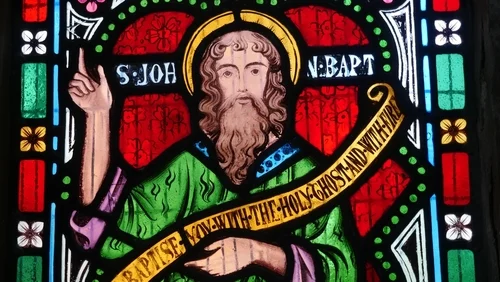
Quick answer: The Feast of the Beheading of St John the Baptist falls on 29 August each year. In 2026, this date lands on a Saturday. Observed across Anglican, Catholic, and Orthodox traditions, the feast day commemorates the martyrdom of John the Baptist, who was executed at the request of Salome, daughter of Herodias.
Few saints occupy as prominent a place in Christian tradition as John the Baptist. Revered as the forerunner of Christ, he is one of the only saints in the liturgical calendar whose birth, death, and beheading each receive their own dedicated feast day. Of these, the Feast of the Beheading — formally known as the Decollation of St John the Baptist — is the most solemn.
For churchgoers across Britain, 29 August is a date of quiet reflection. It sits apart from the more celebratory feasts of the liturgical year, inviting Christians to contemplate themes of conscience, courage, and the cost of speaking truth to power. In 2026, the feast falls on a Saturday, making it accessible for those who wish to attend commemorative services without the constraints of the working week.
This post explores the history behind the feast, what it means within the British church tradition, and how different Christian communities in the UK mark the occasion.
What is the Feast of the Beheading of St John the Baptist?
The Feast of the Beheading of St John the Baptist — sometimes called the Decollation of St John — commemorates the execution of John the Baptist as recorded in the Gospels of Matthew (14:1–12) and Mark (6:14–29).
According to scripture, John the Baptist was imprisoned by Herod Antipas after publicly condemning Herod’s marriage to Herodias, his brother’s wife. During a banquet, Herodias’s daughter Salome danced for Herod and pleased him so greatly that he offered her anything she wished. Prompted by her mother, she requested the head of John the Baptist on a platter. Herod, unwilling to break his oath in front of his guests, gave the order. John was beheaded in prison, and his head was brought to Salome.
The feast day has been observed by the Church since at least the fifth century. It is considered a day of fasting and penance in many traditions — a recognition that John’s death was not a cause for celebration, but a solemn moment in salvation history.

When is the Feast of the Beheading of St John the Baptist in 2026?
The feast is observed on 29 August each year across Western Christian traditions, including the Catholic Church and the Church of England. In 2026, this date falls on a Saturday.
Eastern Orthodox churches that follow the Julian calendar observe the feast on 29 August in the Julian reckoning, which corresponds to 11 September in the Gregorian calendar.
How is the Date Observed in the UK?
The Church of England
Within the Church of England, the Beheading of St John the Baptist is listed in the Calendar of Common Worship as a Lesser Festival. Churches dedicated to St John the Baptist — of which there are hundreds across England — may observe the day with a Eucharist or special service.
The tone of observance is deliberately muted. Unlike the Nativity of St John the Baptist on 24 June, which carries a celebratory character, the August feast day encourages sober reflection. Some clergy use it as an opportunity to preach on the themes of prophetic witness and moral courage.
The Catholic Church in England and Wales
For Catholics, 29 August is observed as the Passion of Saint John the Baptist, ranked as a Memorial in the Roman Rite. It appears in the Roman Martyrology and is kept by religious communities and parishes throughout England and Wales. Masses on this day typically incorporate readings and prayers that highlight John’s role as a martyr who died defending the sanctity of marriage and the demands of the moral law.
The Orthodox Church in Britain
The British Orthodox Church and other Eastern Orthodox communities in the UK mark the feast with particular solemnity. In Orthodox tradition, John the Baptist holds an exceptionally high place — second only to the Theotokos (the Virgin Mary) among the saints. The feast of his beheading is observed as a strict fast day, with Orthodox Christians abstaining from meat, dairy, fish, wine, and oil.
Icons depicting the severed head of John the Baptist on a platter — known as “The Head of the Forerunner” — are venerated in Orthodox churches on this day.

Why Does This Feast Matter to British Christians?
Britain has a long and layered relationship with St John the Baptist. Countless parish churches, hospitals, and charitable institutions bear his name. The Knights Hospitaller, who were formally known as the Knights of the Order of St John of Jerusalem, took him as their patron — and their legacy lives on in the Order of St John, which oversees St John Ambulance in the UK to this day.
Beyond institutional history, the feast carries a message that resonates across generations. John the Baptist is remembered not only as a prophet who prepared the way for Christ, but as someone who refused to compromise his convictions when it cost him his freedom — and ultimately, his life. For many British Christians, the feast is a prompt to consider where their own moral courage is called upon.
The narrative of Salome and Herodias has also permeated British culture far beyond the church. Oscar Wilde’s play Salome (1891), written while Wilde lived in London, drew heavily on the Gospel account and remains one of the most recognised artistic treatments of the story in the English-speaking world.
Are There Any Special Traditions or Devotions Associated with the Feast?
Several traditions are associated with the feast across different communities in Britain:
- Fasting: In Orthodox and some Catholic communities, 29 August is observed as a fast day. The tradition of not eating round foods — a folk custom in some Eastern European communities — is occasionally referenced, though it is not formally prescribed by any church in the UK.
- Veneration of relics: A number of British churches claim relics associated with St John the Baptist. Amberley Castle in West Sussex once housed what was believed to be a relic of the saint. Various churches hold images or secondary relics that may be venerated on feast days.
- Pilgrimage: Some Anglican and Catholic pilgrimage routes in Britain pass through sites dedicated to St John the Baptist, and the August feast occasionally marks the culmination of such journeys.
- Choral music: Many cathedrals and collegiate churches mark the feast with choral Evensong or Solemn Mass, drawing on the rich tradition of English sacred music.

What Can You Expect at a Church Service on This Day?
If you plan to attend a service on 29 August 2026, the experience will vary depending on the tradition:
Anglican services may include Morning Prayer, Holy Communion, or Choral Evensong, with readings from Mark 6 or Matthew 14 and a sermon reflecting on John’s witness and martyrdom.
Catholic Masses will follow the liturgical texts for the Memorial of the Passion of Saint John the Baptist, including the Collect prayer that asks for the grace to defend truth even in the face of hardship.
Orthodox services will typically include Orthros (Matins) and the Divine Liturgy, with fasting observed throughout the day. Congregations are generally invited to venerate icons of the Forerunner.
If you are not sure whether your local church is holding a special service, the Church of England’s A Church Near You directory and the Catholic Bishops’ Conference of England and Wales website both provide parish contact details.
What This Day Invites Us to Consider
The Beheading of St John the Baptist is not a comfortable feast. It does not end with resurrection or triumph. John dies in prison, his head delivered as a party favour to a girl at a banquet. The Gospels record no miracle, no rescue, no last-minute reprieve.
And yet the Church has commemorated this day for over fifteen centuries. The reason, theologians have long argued, is that John’s death reveals something essential about the nature of prophetic witness. His willingness to speak an unwelcome truth — knowing the personal cost — has made him a model for Christians in every era who face pressure to stay silent.
For British Christians in 2026, the feast offers a rare moment to sit with a difficult story and ask what it still demands of them.
Frequently Asked Questions
When is the Feast of the Beheading of St John the Baptist in 2026?
The feast falls on 29 August 2026, which is a Saturday.
Is 29 August a public holiday in the UK?
No. The Feast of the Beheading of St John the Baptist is a religious observance, not a public or bank holiday in the United Kingdom.
What is the difference between the Nativity of St John the Baptist and the Beheading of St John the Baptist?
The Nativity of St John the Baptist (24 June) celebrates his birth and is a joyful feast. The Beheading of St John the Baptist (29 August) commemorates his death and is a solemn, penitential observance in most Christian traditions.
Do Orthodox Christians observe the feast on a different date?
Yes. Orthodox churches following the Julian calendar observe the feast on 29 August in the Julian reckoning, which corresponds to 11 September in the Gregorian calendar used in the West.
Why is John the Baptist considered so important in Christian tradition?
John the Baptist is venerated as the last of the Old Testament prophets and the immediate forerunner of Jesus Christ. He is one of the few saints in the liturgical calendar with multiple feast days dedicated to him, reflecting his unique role in salvation history.
Are there churches in Britain named after St John the Baptist?
Yes. St John the Baptist is one of the most common church dedications in England. Hundreds of parish churches across the country bear his name.