Quick answer: Onam 2026 falls in late August or early September and celebrates the legendary homecoming of King Mahabali with ten days of festivities. Across the UK, Malayali communities honour the harvest festival through elaborate pookalam displays, Onasadya feasts, traditional dance performances, and community gatherings that keep Kerala’s cultural heritage alive.
Every year, as summer edges towards autumn, Malayali communities across Britain transform local halls, temples, and living rooms into vibrant celebrations of one of Kerala’s most beloved festivals. Onam is not merely a harvest festival — it is a ten-day cultural homecoming rooted in mythology, food, art, and shared identity. For the hundreds of thousands of Keralites living in the UK, it is one of the most meaningful occasions of the year.
This guide covers everything you need to know about Onam 2026: when it falls, what the key traditions involve, and how Malayali communities across Britain celebrate the season far from Kerala’s backwaters.
When Is Onam 2026?
Onam follows the Malayalam calendar and begins on Atham — the first of ten days — culminating in Thiruvonam, the most auspicious day of the festival. In 2026, Thiruvonam falls on 28 August, making Atham on 19 August 2026.
The full ten-day celebration, known as Onam Week or Onam season, runs from 19 to 28 August 2026. Most UK community events are organised around the Thiruvonam weekend, typically the last weekend of August.

The Legend Behind Onam: Who Is King Mahabali?
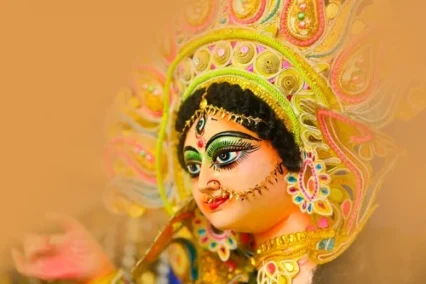
Onam’s origins lie in Hindu mythology. According to legend, Mahabali was a beloved and just king of Kerala whose reign brought prosperity and equality to all people. The gods, envious of his power, asked the god Vishnu to intervene. Vishnu appeared as a dwarf Brahmin named Vamana and, in three strides, reclaimed the earth and heavens — banishing Mahabali to the underworld. As a final gift, Mahabali was granted one wish: to visit his people once a year.
Onam celebrates that annual return. Every pookalam laid at the doorstep, every feast prepared with care, is an act of welcome — a signal to Mahabali that his people are happy and thriving.

What Are the Main Onam Traditions?
Pookalam: The Floral Rangoli of Onam
Pookalam is one of Onam’s most recognisable traditions. Families and community groups arrange fresh flowers in intricate circular patterns on the ground — typically at the entrance of a home or hall — adding a new ring each day for all ten days of the festival.
In Kerala, flowers like thumba, murikku, and chethi are used. In the UK, communities often source marigolds, chrysanthemums, and other seasonal flowers available locally. Many diaspora groups host pookalam competitions, drawing participants of all ages.
Onasadya: The Grand Onam Feast
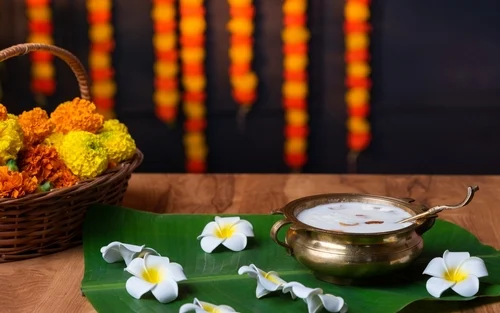
The Onasadya is the centrepiece of Thiruvonam. Served on a banana leaf, this traditional vegetarian feast can include up to 26 dishes — from sambar and avial to payasam and papadum. Every element of the meal follows a specific placement on the leaf, and eating it is considered an act of cultural pride as much as a culinary experience.
Across UK cities, Malayali associations and restaurants prepare Onasadya for the community, often serving hundreds of guests in a single sitting. The meal is as much about togetherness as it is about taste.
Vallam Kali: Snake Boat Racing
In Kerala, Onam is synonymous with the Nehru Trophy Boat Race — a spectacular snake boat race held on the Punnamada Lake in Alappuzha. Dozens of long, ornate boats (chundan vallams) compete to the rhythm of traditional rowing songs.
While the UK cannot replicate a race on that scale, some communities screen live coverage of the event, and the spirit of friendly competition carries over into local sports days and cultural tournaments.
Kaikottikali and Thiruvathirakali: Traditional Dance Forms
Women traditionally perform Kaikottikali and Thiruvathirakali during Onam — graceful, rhythmic dances performed in circles, accompanied by song. These dance forms are a staple of UK Onam cultural programmes, often performed by community members who have learned from family or local Kerala cultural organisations.
Pulikali, the tiger dance performed by men painted as tigers and hunters, is another crowd favourite, though it is more commonly seen on Onam’s fourth day in Kerala.

How Do Malayali Communities Celebrate Onam Across the UK?
The UK is home to a significant Malayali population, concentrated in cities like London, Birmingham, Manchester, Leicester, and Glasgow. Cultural organisations such as the Kerala Cultural Association UK, local Malayali Associations, and Hindu temples play a central role in coordinating Onam events.
Typical UK Onam celebrations include:
- Community Onasadya lunches hosted in community halls or restaurants
- Cultural stage programmes featuring classical and folk performances
- Pookalam competitions open to all age groups
- Children’s activities, including fancy dress as Mahabali and Vamana characters
- Fashion shows celebrating traditional Kerala attire, including kasavu sarees and mundu
Many events take place over the Thiruvonam weekend, allowing working families and students to attend without taking time off. Advance registration is often required, as these events can attract several hundred attendees.

Tips for Celebrating Onam in the UK in 2026
Find your local Malayali association. Most cities with a sizable Keralite population have an active association that organises Onam events. A quick search for “Onam 2026 [your city]” or checking Facebook groups for local Kerala communities is the fastest way to find events near you.
Plan your Onasadya early. If you are hosting at home, sourcing banana leaves and traditional ingredients can take planning. Indian grocery stores in cities like Wembley, Southall, and Sparkhill typically stock Onam essentials. Order ahead if you can.
Dress the part. Onam is one of the occasions when traditional dress is widely worn. Women often wear a kasavu saree (cream with a gold border), while men wear a mundu. Many families purchase new clothing specifically for the festival.
Involve younger generations. For children born or raised in the UK, Onam can be a meaningful way to connect with Kerala’s heritage. Explaining the legend of Mahabali, involving them in pookalam making, and attending community events together all help pass traditions down in a meaningful way.

Keeping Kerala’s Harvest Season Alive Abroad
Distance does not dilute Onam — if anything, it deepens it. For many Malayalis in the UK, the festival is one of the clearest expressions of where they come from and who they are. Each pookalam arranged in a British sitting room, each banana leaf spread on a community hall table, carries the same meaning it would in Thrissur or Thiruvananthapuram.
Onam 2026 falls across the last ten days of August. Whether you are a long-standing member of your local Malayali community or celebrating Onam for the first time abroad, the traditions are there to be shared, adapted, and passed on.
Frequently Asked Questions About Onam 2026
When is Onam 2026 in the UK?
Thiruvonam, the most important day of Onam, falls on 28 August 2026. The ten-day festival begins on 19 August 2026 (Atham) and concludes on Thiruvonam.
What is the significance of Onam?
Onam celebrates the annual homecoming of the mythological King Mahabali, a beloved ruler of Kerala. The festival marks the harvest season and is observed with feasts, floral displays, dance, and community gatherings.
Is Onam only celebrated by Hindus?
No. While Onam has Hindu mythological roots, it is widely celebrated across all communities in Kerala — including Christians and Muslims — as a cultural and harvest festival. In the UK diaspora, it is similarly inclusive.
What is a pookalam?
A pookalam is a floral rangoli made from fresh flower petals arranged in circular patterns, typically at the entrance of a home or venue. A new ring is added each day for all ten days of Onam.
What is served at an Onasadya?
An Onasadya is a traditional Onam feast served on a banana leaf. It is entirely vegetarian and can include up to 26 dishes, such as sambar, avial, olan, erissery, rasam, and multiple types of payasam (rice pudding).
How can I find Onam events near me in the UK?
Search for your local Malayali Association, Kerala Cultural Association, or Hindu temple. Social media groups — particularly on Facebook and WhatsApp — are commonly used by UK Malayali communities to share event announcements.