Key Highlights
-
The Battle of the Boyne took place in 1690. It was between William of Orange and James II near the River Boyne.
-
This fight was linked to the Glorious Revolution and later had a big effect on Irish history.
-
The main groups in this war were the Williamite forces and the Jacobite forces. Both kings were there for the fight.
-
The main spot where the battle was is Oldbridge in the Boyne Valley.
-
In Northern Ireland, the Orange Order talks about this history in The Twelfth.
-
People mark this day with parades, bonfires, and public remembrance.
Introduction
The Battle of the Boyne is one of the most famous events in the history of Ireland and Britain. This fight happened in 1690 between William III and James II. It was not just one day of fighting. The event became a strong symbol of power, faith, and who people are, especially for those in Northern Ireland. Even today, people in Northern Ireland think of it as they mark The Twelfth. To understand The Twelfth and why it matters, you need to begin with the day of the battle itself, the men who were there, and what they left behind.
Historical Origins of the Battle of the Boyne
The Battle of the Boyne happened because of the Glorious Revolution. In that event, James II lost his throne, and William became king. But this did not fix things. It brought new fighting across Britain, Ireland, and Europe.
In Irish history, this battle is a key part of the Williamite War. James II went to Ireland to get support and try to win back his throne. William came to face him in person, so the struggles became a real war.
Political and Religious Context in 17th Century Britain and Ireland
In the seventeenth century, Britain and Ireland saw a lot of issues around power, who would be king, and religion. Many Protestants were afraid that King James II, who was Catholic, would make a line of kings who follow the Catholic church. These worries were a key reason for the Glorious Revolution.
At this time, questions about faith touched everyday life and who people supported in politics. Religious freedom and liberty of conscience mattered, but each group saw these ideas in its own way. A lot of Irish Catholics thought King James was their hope for safety and better times. But Protestants did not trust him at all.
This split helps us see why the problem turned into fighting. The crisis was not just about one king facing another. It was over who would lead, who they would help, and how religion would guide the country in Britain and Ireland.
Events Leading up to July 1690
After the Glorious Revolution in 1688, James II was forced from power and had to leave for France. He did not let go of his claim. Instead, James II saw Ireland as the place where he could try to return.
In March 1689, James II went to Ireland. He had help from Louis XIV of France. Many Irish supporters gathered around him. The Jacobite cause quickly grew stronger. This led to a bigger political crisis and became the Williamite War.
William III had to act. For him, James II being in Ireland was a big danger to his rule and his fight against France in Europe. By the summer of 1690, both sides got ready for a huge battle at the Boyne.
Importance of the Boyne River Location
The River Boyne stood as a key defensive line. It is north of Dublin, and this was the last big obstacle for William before he could move towards the city and face James’s strong place. This made the Boyne be a clear spot for both sides to meet.
The real fighting took place at the crossings in the Boyne Valley, with most of it happening near Oldbridge. Taking control of the main ford was important because if anyone got across the river there, they could break the Jacobite side and make them pull back.
Now, people can visit the area and see where events happened. You will find Oldbridge House and the Battle of the Boyne Visitor Centre on the south side of the river. There are walkways for the battle, riverside paths, exhibitions, displays with both replica and original weapons, gardens, and an audiovisual show.
Key Figures in the Battle of the Boyne
At the heart of the Battle of the Boyne were James II and William of Orange. They were both kings, and they were linked by family. This fight was not just about their personal feud, but also showed a deep split in Irish history. Their own leadership made the battle matter even more.
But there was more to it than these two men. Louis XIV and the Grand Alliance were key as well. There were old rivalries in Europe, and French help for James II made it bigger. William of Orange had the backing of many from outside Ireland too. Because of this, the Boyne was not just a local clash. It became part of a much larger war that shaped what people later said about Irish history.
William III (William of Orange) and His Allies
William of Orange, who later became King William III, already knew a lot about fighting in wars before he came to Ireland. He was not just King William, but was also Stadtholder of the Netherlands. He was a very important man in the Grand Alliance which worked to stop Louis XIV from gaining too much power in Europe.
What happened in Ireland was not separate from this bigger fight. William thought that keeping the crowns of England, Scotland, and Ireland was needed to stop Louis XIV. When James came back to power in Ireland, William saw it as a problem that had to be dealt with fast and for good.
The Williamite forces showed how big this fight was. The soldiers were from many places. There were Dutch, Danish, German, Huguenot, English, Scottish troops, and Ulster Protestant skirmishers with them. William’s army was big. It was well set up and had what it needed. People who saw them when William landed talked about how well supplied and strong the army was.
James II and the Jacobite Forces
James II, also known as King James II, went into Ireland because he wanted to win back the thrones he had lost. As a Catholic king, James got strong support from many Irish supporters. Many people, especially those who thought his return would help their lives, stood by him.
The people who backed him became called the Jacobite army, taking their name from Jacobus, the Latin word for James. Most of Catholic Ireland was quick to join this cause. King James II set up his position on the south side of the Boyne, just outside Drogheda. It was there that he came face to face with William himself.
The Jacobite forces were not all the same in strength. Some of the Irish infantry did not have good weapons. Many had to fight with farm tools and scythes, but their spirits were high. Still, King James II’s side had strong cavalry and support from the French. This help gave his army the discipline and fight they needed in the battle and after, especially during their withdrawal.
Influence of European Powers in the Conflict
The Boyne was linked to what was happening in Europe at the time. Louis XIV of France helped James II because hurting William could make France stronger. James came to Ireland with help from Louis XIV, and groups of French troops really took part in the fight.
On the other side was the Grand Alliance. The Alliance did not want Louis XIV to spread his power. William was important in the Grand Alliance, so his battle in Ireland helped protect his role across Europe too. This is why the Boyne mattered for more than just Ireland.
There is one thing that often surprises people. Pope Alexander VIII gave his support to William’s side in the big struggle against Louis XIV of France. So, even though we remember the Boyne as a fight between Protestants and Catholics, European politics often did not fit these simple labels.
Armies and Strategies at the Battle
The armies at the Boyne were not the same in how they were trained, how many men they had, or in the gear they used. The williamite troops had many professional soldiers who came from other places in Europe. The jacobite forces counted more on Irish men, better cavalry, and some tough regiments of french troops.
The plan for war was just as important as the size of the armies. William used military means that put pressure at the river crossings and at the same time, he started a diversion in another spot. James tried to block those plans and keep Dublin safe, but when his line got too thin, the fight began to go the other way.
Composition and Numbers of the Opposing Armies
The scale of the battle was striking. The williamite army had about 36,000 men, while the jacobite army had about 25,000. It was the largest deployment ever seen on an Irish battlefield, which helps explain why the battle still carries such weight.
Quality also differed. Much of William’s force consisted of professional soldiers who were paid, fed, and properly armed. By contrast, parts of the Irish infantry were less well equipped, though the Jacobite side had strong cavalry and determined morale.
|
Force |
Estimated strength |
Main features |
|---|---|---|
|
Williamite army |
36,000 |
Williamite infantry, Dutch, Danish, German, Huguenot, English troops, Scottish troops, Ulster Protestant skirmishers |
|
Jacobite army |
25,000 |
Irish infantry, Irish cavalry, French support, high morale, mixed equipment |
Military Tactics and Strategic Decisions
The Battle of the Boyne was not won by just one big charge. Instead, the sides moved with care and made smart moves. William’s commanders watched the river crossings close and saw that the main ford near Oldbridge could be the key to winning the day.
One smart idea was to make it seem that a big attack was about to happen out west at Slane and Ross na Rí. This made a lot of James’s army leave the centre. So, williamite forces found it easier to cross at Oldbridge. This put new pressure on the spot where it mattered most.
These moves by the army started to break down the Jacobite side bit by bit. When the troops got over the river, there was hard fighting. But the wider plan had already changed things. By pulling james’s army from side to side, william’s side made the right path for their win at the boyne.
Notable Sites: Oldbridge and Surrounding Areas
Oldbridge is the place most people connect with the battle. It is in the Boyne Valley, on the south bank of the river. This spot is close to where fighting was very heavy after William’s men made their way across the river.
Today, the main focus at the site is the Battle of the Boyne Visitor Centre. It sits inside the old Oldbridge House, a building from the eighteenth century that stands right on the battlefield. You can walk around the grounds, see the formal gardens, and follow routes marked across the land.
When you step inside the visitor centre, you will find weaponry from the seventeenth century, copies of arms, exhibitions, and a laser model showing the battlefield. There is also an audiovisual story and paths to walk by the river. For many people, this is the best way to join up what they see with the story of the boyne.
The Course of the Battle on 12 July 1690
On the eve of the battle, both sides understood the Boyne would be key. William’s army had to cross the river to move forward. James’s army had to hold their line for long enough to stop this and keep Dublin safe.
When the fighting started, the Battle of the Boyne saw a number of important moments, not just one quick finish. There were river crossings, small fights, and steady pressure on James’s army. All these things helped William’s army come out on top in the end.
Key Engagements and Turning Points
One early change in the battle happened before the main fighting began. William checked the crossing points himself and was hit on the shoulder by enemy fire. People said he had died, but he stayed active and kept going.
The next big part focused on the main ford at Oldbridge. Williamite troops crossed while under a lot of pressure and fought closely with the other side. At the same time, some movement further west pulled parts of the jacobite side away. This made it hard for James to keep his line strong.
After many hours of hard fighting, enough of William’s men got to the south bank to make the spot tough for others to win back. James’s horsemen tried to hold them in place for a while, but things had already changed. It was this slow, steady change, not just one big moment, that shaped how the battle ended.
Famous Events and Noteworthy Incidents
Many things have kept the Battle of the Boyne clear in the minds of people. Some moments from this day were exciting, some are not expected, and some are important as they show what really happened when William’s army met James’s army.
A few things really stick out:
-
This was the last time two crowned kings of England, Scotland, and Ireland fought each other.
-
William got hit by a bullet, but it only grazed him before the real fighting began.
-
The battle was fought on 1 July 1690 using the old calendar, which is now marked as 12 July.
-
William’s victory did not stop the war right away. Fighting went on until the Battle of Aughrim and the battles at Limerick.
The boyne is still famous for these reasons. It mixed the rivalry of kings, problems with other countries, and big moments in battle. So, many people over the years keep talking about it and find new ways to look at what happened.
The Withdrawal and Outcomes for Both Sides
Even though they lost, the Jacobite army did not fall into chaos right away. The army avoided a total breakdown because the cavalry, who got help from the French, made sure their side could leave safely. This meant the soldiers could pull back while fighting, which helped keep the williamite war going for another year.
James II chose not to stay with his own army. He went to Dublin, and then from there went back to France. Because of that, people lost some trust in his cause, even though his troops kept on fighting in the williamite war after the boyne.
What happened next took place both right away and over some time. William got control and went into Dublin later, but all sides did not reach an agreement until the treaty of limerick in 1691. The boyne was an important win, but it was not the last part of the war.
Aftermath and Long-term Impact
The Battle of the Boyne did more than just decide one fight. It made William’s rule over the crowns of England, Scotland, and Ireland stronger. The battle also shaped the way the Williamite War went until the Treaty of Limerick was signed.
But the effect of this battle did not stop in 1691. Big questions about Irish sovereignty, who would have political power, and what people remembered from those days, stayed with the country well into the late 18th century and after. If you want to understand this, it is good to think about how politics, religion, and who people said they were, all worked together and changed each other during and after the williamite war.
Changes in Irish and British Politics
William of Orange came out of the campaign with a firm hold on the crowns of England, Scotland, and Ireland. This was not just important on paper; it changed real politics too. James could no longer hope to win back power, and people stopped doubting William’s rule.
In the Irish context, the result was clear. People who had hoped James would get back their lost land were let down. The political power shifted from those who stood with James to other groups. There were still talks about who should be in charge, but the line of rule became more easy to see.
The Treaty of Limerick in 1691 brought an end to fighting. In politics, it was also the time when things began to move away from the hands-on monarchy James had enjoyed, and towards more power for parliament under William of Orange and Mary.
Religious and Social Effects across the UK and Ireland
The effects of the Boyne on religion stayed for a long time. These effects were not the same for everyone. Many Protestants saw William’s win as a way to keep their place and shape what would come next. This was even more clear for Ulster Protestants, as the result became a big part of who they are. It stayed with them across many years.
For Irish Catholics, the story was not the same. A lot of them had stood with James. They did this because they wanted more safety and hoped things would get better. These hopes did not come true. So, the Boyne became more than just a fight. To many, it stood for loss as well as a win, and this mostly depended on which group you were in.
People kept talking about the idea of religious freedom and liberty of conscience. These things mattered to many, but not everyone got the same out of them. Over time, what people remembered about the Boyne got more fixed. The battle started to mean a lot in how people talked about power, rights, and what it means to belong. It also became a big part in talks about public tradition for both the Ulster Protestants and Irish Catholics.
The Battle’s Role in Shaping Modern Northern Ireland
In today’s Northern Ireland, the Battle of the Boyne is not just part of the past. People keep the meaning of this event alive with their the boyne celebrations. These events help connect the battle to how many see their own community and what they remember as a group.
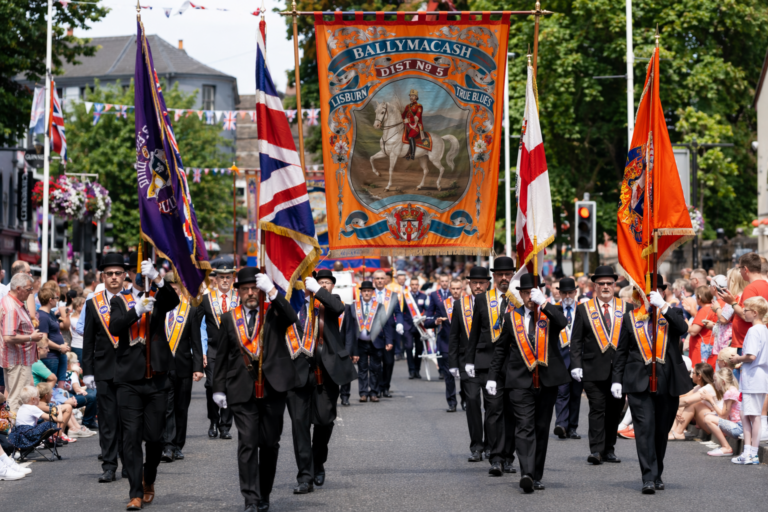
The Orange Order has the biggest part in keeping these the boyne traditions going. The group takes its name from william of orange. They hold big events every year on The Twelfth to mark this win. Because of them, the battle is still seen often in parades, symbols, old songs, and at many events through the year in northern ireland.
This strong link from those early days to now helps show why the the boyne holds such a key place in irish history. A lot of things from 1690 sit in history books or in museums. But the Battle of the Boyne is different—it is heard on the streets, taken up in talks, and made part of life by many in these traditions, so its story stays at the heart of things, not just in the past.
The Twelfth – Commemorations and Traditions
The Twelfth is the main public event that remembers the Battle of the Boyne. The date is now 12 July. This is because a change in the calendar moved the old date from 1 July 1690, to the new date that Britain started to use from 1752.
The Orange Order now leads the best-known events on this day. You will see parades, bonfires, and gatherings in parts of Northern Ireland. People also have local events at this time. These ways of marking the day help people in the area remember William’s victory each year.
Meaning and Customs of the Twelfth Bank Holiday
The Twelfth bank holiday is about remembering William of Orange and what happened at the Boyne. For those who support it, the day is both about looking back at history and sharing a social tradition. People pass it on through families, the Orange Order, and local groups.
The Orange Order helps to organise how the day is held and adds meaning to the events. You will see there be ceremonies, music, flags, and people coming together. All of these show how the history of the boyne joins up with how people see themselves.
Common things that happen on The Twelfth:
-
Orange Order parades are held in many towns and cities.
-
People have bonfires as part of bigger traditions for the season.
-
Banners and other images that show William of Orange.
-
People gather together to share what The Twelfth means.
Because of these things, the Twelfth is a day to remember the past as well as to have time off. People do not just talk about the battle at the boyne. They keep it going by taking part in these public events each year.
Parades, Bonfires, and Events in Northern Ireland
Across Northern Ireland, people remember the boyne with parades and local events. Some are big and some are small. But all of them are about remembering william’s victory and showing there is still a link to that event from the past.
The orange order is a big part of these events. It has shaped how people honour the day. Its role helped turn thinking about the battle from something private to something people do together in towns and cities. In some places, there are also bonfires to add to the spirit at this time of year.
These ways of marking the boyne did not start by chance. They grew out of things people did together over many years. By the late 18th century, their shape was more clear. This long growth is a reason the boyne is still such a big part of life and thinking in northern ireland.
Conclusion
In the end, the Battle of the Boyne was not just a key event in history, but it is still important in Northern Ireland today. The memory of this day still shapes how people think and act now. It plays a big part in events like the Twelfth Bank Holiday. When we look back at what happened on 12 July 1690, it helps to know the history and what it means for us. Taking part in these traditions can help us all see and think about our history together. If you want to talk more about the boyne or northern ireland, you can always ask for a chat or advice.