Key Highlights
-
Asalha Puja, also called Dharma Day, is when people remember the Buddha’s first sermon after he reached enlightenment.
-
This day is about the first turning of the wheel of dharma and the sharing of buddhist teachings.
-
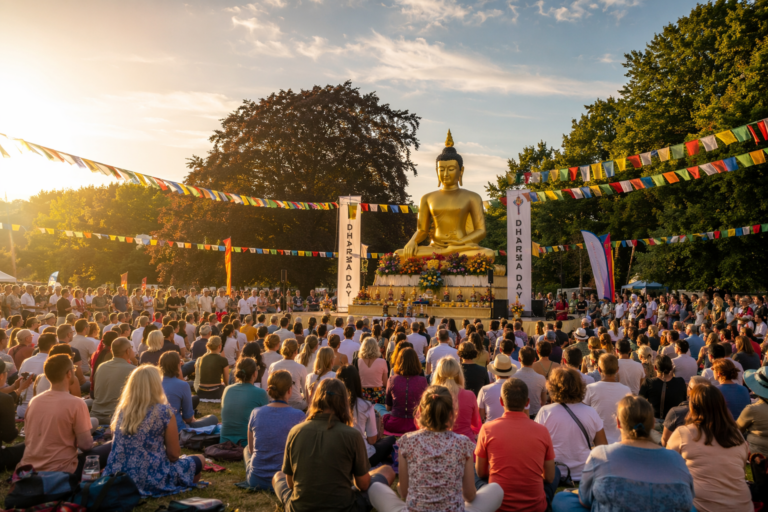
In the UK, people often celebrate around the full moon in July. There may be meditation and puja on this day.
-
The event helps people go back to the four noble truths and think about the Buddha’s first teaching.
-
In the UK, people may share meals, listen to talks, give offerings, and spend time with the sangha.
Introduction
Dharma Day, which people also call Asalha Puja, is a special day in buddhism. On this day, buddhists remember when the Buddha first shared the dharma with other people. Many in the UK see this as a spiritual festival and a good time to come together as a group. You can see people join in meditation, puja, share food, and listen to talks. The main idea of Dharma Day is to celebrate when buddhist teachings began to pass from the Buddha to his disciples.
Understanding Asalha Puja (Dharma Day) and Its Importance
Dharma Day is special because it marks the time when the Buddha gave his first teaching after he reached enlightenment. This was the moment when he shared his wisdom with other people for the first time. It was no longer just about his own awakening; it became helpful for many.
In simple words, Dharma Day is about the first sermon by the Buddha and the first turning of the wheel of dharma. This was the beginning of Buddhism. On this day, people are reminded of the noble truths and how important the Buddha’s first teaching still is in our lives. The next sections will go into more detail about what this day means and why the name is important.
The Spiritual Origins and Meaning of Dharma Day
At the spiritual level, Dharma Day is when people think about the time the Buddha first shared his teachings. He showed others the way to awakening, not just for himself but for everyone. The information passed down says this is the point when buddhism really began. Before the first sermon, enlightenment was only his own. After that moment, it became a path others could walk as well.
This is why the day links with the dhammacakkappavattana sutta and the idea of the first turning of the wheel of dharma. The event marks the change from silence to speaking, from keeping insight to starting a shared practice. You can see why the beginning of buddhism depends on moments like these.
There is a strong personal meaning here too. Dharma Day invites us to think about enlightenment, the noble truths, and how we can change by using practice. It isn’t just about looking back at the past. It means we hear the dharma in new ways in our own life now.
Why Is Dharma Day Also Called Asalha Puja?
The name Asalha Puja connects this special day to the full moon in the eighth month of the lunar calendar. This means it often takes place in July. When people say Asalha Puja or Dharma Day, they are talking about the same day, but from different views.
One name tells us about the meaning, and the other tells us about the timing. Dharma Day shows the first time the Buddha shared the dharma. Asalha Puja shows the time of this event by using the lunar calendar. Both names help people remember when the wheel of the dharma started to turn for the first time.
The story also links this day to the Buddha’s first teaching to others. Many Buddhist stories say this first teaching took place at Sarnath. So, Asalha Puja is not just a date on the calendar, but also a time to remember that first teaching.
Date and Timing of Asalha Puja (Dharma Day) 2026 in the UK
The date for Asalha Puja, also called Dharma Day, is set by the full moon in July. It links to the eighth month of the lunar calendar, so the date changes each year. In the UK, Buddhist groups plan their events on or close to the full moon. This helps to keep a close tie to the season and the lunar times.
For 2026 in the UK, one list shows that Dharma Day will be on Sunday, 26 July. It will run from 10.30am to 4.30pm. One more example from another year in the UK shows people coming together in July for meditation, a talk, some festive puja, and a shared vegan meal. These show how people in the UK mark this date based on the full moon, keeping close to old ways. Up next, we’ll see how to work out the date and how British groups celebrate this special time.
How the Date Is Determined Each Year
Asalha Puja is not fixed to one date on the standard civil calendar. Instead, it is determined by the full moon in July and by the eighth month of the lunar calendar used in the buddhist calendar. That is why the observance moves each year, even though the spiritual focus stays the same.
In practical terms, Buddhist communities look to the lunar timing and then set local events around it. In the UK, centres may choose a full festival day, a day retreat, or a community gathering that fits the calendar and the needs of the sangha.
|
Date marker |
How it shapes Asalha Puja |
|---|---|
|
Full moon |
The festival is linked to the full moon observance |
|
July |
The compiled information places Dharma Day in July |
|
Eighth month of the lunar calendar |
This gives the festival its Asalha Puja timing |
|
Buddhist calendar |
The annual date is worked out from this lunar system |
|
UK local event planning |
Centres schedule talks, puja, and meditation around that date |
Celebrations and Observances by Buddhist Communities in Britain
All over the UK, buddhists come together for Dharma Day with shared events that blend quiet thinking, learning, and being with others. The different examples show busy days that include meditation, talks, puja, and eating food as a group. This day lets people have both silent practice and a chance to get close with others.
Some centres let people just come in and join as they like, so the day is open to many buddhists. Tea and biscuits are often given at break time. Those who stay longer for events are often asked to bring a vegetarian or vegan lunch to share. That helps lay communities have a clear place in all the activities.
There are also other ways to mark the day. People can write a much-loved dharma quote for the shrine. They can join in both morning and afternoon sessions. After the festival, people help out with jobs that need to be done. So, in Britain, Dharma Day is not only a special event. It is about all being together, being welcoming, and working as one group.
Rituals, Traditions, and Community Events Marking Dharma Day
Dharma Day rituals and traditions often focus on meditation, shrine offerings, talks, and puja. By taking part in these, people remember the Buddha’s teaching and come closer to the dharma.
There are important community times, too. In UK groups, lay communities come together for shared meals, tea breaks, and to help each other during the day. At some events, buddhist monks or teachers lead, while at others, volunteers, families, or friends join in. The next sections will talk about common offerings and show newcomers how to join in a respectful way.
Typical Buddhist Rituals and Offerings
A Dharma Day gathering brings together formal practice and simple acts of devotion. What you will often find is meditation, talks, a festive puja, sharing a favourite dharma quote at the shrine, and eating food together. All these actions show gratitude for the Buddha’s teachings and help to make buddhist faith stronger by joining in, rather than just watching.
You may see there is practical care in how people take part. The people bring mugs, lunches, cakes, chairs, or meditation things. They help tidy up and give support throughout the day. This giving shows the communal side of the dharma.
Typical rituals and offerings at these gatherings may be:
-
Meditation that is led by teachers, monks, or senior practitioners
-
Puja done at the shrine with offerings and incense
-
Food sharing, like vegetarian or vegan lunches
-
Giving alms or donations, letting people give what they can
-
A simple moving in line to bring quotes or gifts up to the shrine
Inclusivity: Welcoming Non-Buddhists to Dharma Day Celebrations
Dharma Day events in the UK are welcoming for people who are not buddhists. One main list shows this very clearly. You do not have to book ahead. You can just show up. If you are visiting for the first time, you are told it is fine to come and see if it feels right to you. This open way of doing things matches the compassion and confidence found in buddhist teachings.
Respect is still very important. People are usually asked to take off their shoes before going into the shrine room. You should wear comfortable clothes and follow along with what is happening during the day. If there is lunch to share, you can bring a vegetarian or vegan dish. This is a thoughtful way to join in. During meditation and puja, sitting quietly and paying attention helps to show gratitude and mindfulness.
If you are new, here is a kind and respectful way to be part of things:
-
follow what the sangha or event hosts say
-
wear simple clothes and act quietly in practice spaces
-
join shared meals or give donations only if you want to
-
join in with curiosity, compassion, and mindfulness
The Significance of Asalha Puja for Western Buddhist Communities
For a western Buddhist setting, Asalha Puja is about the time when the Buddha turned enlightenment into teaching. It shows people that the dharma should be heard, used in life, and shared with others.
In the UK, Dhamma Day gives lay communities a special day each year to come back together. People meet for meditation, puja, learning, and to build friendships. This festival keeps things going, as it helps old friends catch up and new people join the sangha. To see why this is so good, it helps to look at the Buddha’s first teaching and how it plays a part in daily practice now.
Teaching of the Buddha on Dharma Day
Dharma Day is about the first sermon. It remembers when the Buddha told others about what he found after enlightenment. The stories say this was the time when other people could also get awakening by following what he shared. This is why this day means so much for those interested in Buddha’s teachings.
This first teaching often links with the four noble truths and the noble eightfold path. Simply put, this is when the path could be shown by the Buddha to other people. Thinking about Sarnath and this first turning of the wheel of dharma helps many Buddhists feel close to a real event that still matters now.
The first teaching went to the Buddha’s first disciples. These were the ascetics, who listened and learned right from him. For people today who follow the dharma, Dharma Day is both to remember and to celebrate passing the teachings between people.
Dharma Day’s Role in Contemporary UK Buddhist Practice
Rewritten:
In the United Kingdom include a collective becomesIn simple words:
The result isAgain:
a livingfew one has:
“a living system where”
Some clarifyhow <|vq_9850|>{{$reateExamples$}} works, makes the rephrase thenbut.
So, the intendedOutputalong ful :
The result is (should fail incense gives).
“In the UK today, a living is briefly rather than(formula_961 code).
And with emphasis:the result is a living system
This gives(maybe an) emphasis sense cultural(didto highlightparts).
Conclusion
Asalha Puja, also called Dharma Day, is very important for Buddhists in the UK and across the world. It is the time to think about the teachings of the Buddha and the need to follow a path that leads to enlightenment. On this day, there are often special events. People come together for rituals, talks, and community gatherings. Both Buddhists and those who are not Buddhists are invited to join, which helps bring everyone closer and builds a feeling of togetherness. When we see and take part in these asalha puja observances, we show respect for Buddhist traditions and get to know more about the meaning of dharma. This is a good moment to look at what Dharma Day is truly about. If you get the chance, take part in celebrations nearby and see how much this occasion can offer you.
Frequently Asked Questions
When did the Buddha first teach on Dharma Day and who was it addressed to?
Dharma Day is when people remember the first sermon given after the Buddha reached enlightenment. This was the first time the Buddha shared his teaching with others. His words were for his first disciples, who are often called ascetics. In Buddhist stories, this all took place at the deer park. It is seen as the start of the dharma teaching and the time when people began to learn from the Buddha’s words.
How do Buddhists in the UK typically celebrate Asalha Puja (Dharma Day)?
In the UK, people mark Asalha Puja with meditation, a talk, a lively puja, and food that is shared by all. Some centres ask people to come in and give the amount or things they can. During the day, the focus is on the community. There are tea breaks, people place things at the shrine, and everyone gets time to take part in these things together. The mood is warm and open to all who want to join in.
What can non-Buddhists do to respectfully join in Dharma Day events?
Non-buddhists can take part if they act with respect. You can follow what the sangha asks you to do. It helps to dress in plain clothes, take off your shoes where you need to, and join in without making noise. If you bring a vegetarian or vegan dish for everyone, it shows kindness. What matters most for buddhists is that you show compassion, mindfulness, and gratitude, not that you know every rule.