English (US) – Page 32

How Do People Greet Each Other in the Philippines?

Discover how to greet in Philippines with our insightful guide. Learn the customs and phrases that will help you connect with locals effortlessly.

English (US)

Key Highlights

  • Filipino greetings are a big part of filipino culture. They show respect and a friendly attitude. You will see this with family members or when talking to other people in everyday conversations.

  • “Kumusta” is a word that people use the most when saying hello in Tagalog. You can hear it almost anytime in daily talk.

  • People use formal greetings with words like “po” and “opo” to be polite. This is very important, especially with elders.

  • The “mano po” is a gesture that shows respect to older family members or authority figures.

  • The type of greeting changes with the time of day. For example, people say “magandang umaga” to mean good morning.

  • Other than Tagalog, folks use other regional greetings too. Some like to use English as well.

Introduction

Welcome to the warm and friendly world of Filipino greetings! The Philippines is a place where people are known for their kindness. The way they greet each other shows this well. Learning Tagalog greetings is not just about knowing some words. It is also about feeling and being part of Filipino culture. This helps people get closer and understand each other more. It does not matter if you want to go there or you are only interested, this guide will show you the sweet ways Filipinos say hello.

Overview of Filipino Greetings and Cultural Context

In the Philippines, saying hello is not just about talking. It’s a way to show respect, care, and how people feel close to each other. Filipino greetings have a big part in what people say every day. These greetings can change because of things like how old you are, who you are, and where you stand in society. This means you need to have some cultural understanding to use them right.

You will hear these greetings in all kinds of everyday conversations. People use them with friends for a quick talk or even in a big work meeting. Filipino greetings show how respect is very important in the Filipino culture. They keep people feeling close and welcome each day.

The Role of Greetings in Everyday Filipino Life

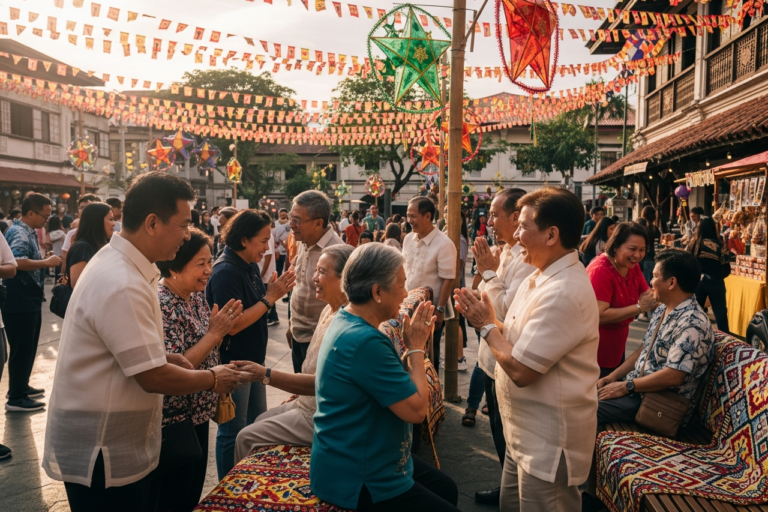
Greetings are a regular and loved part of everyday conversations in the Philippines. The way you greet someone can change based on your relationship with them. When people meet strangers, men might use a light handshake and a smile. Women may wave instead. It’s also usual for men to let women choose if they want to shake hands first.

When it comes to close family members or Filipino friends, greetings are warmer. Men often shake hands and give each other a small pat on the back. Women usually hug and give a kiss on the cheek. This is called “beso-beso.” These actions show how much Filipinos care about their loved ones and how important their relationships are.

When Filipinos are in relaxed groups with people they know, you will see these caring greetings even more. The meaning is to help people feel welcome and at home. How people greet each other in Filipino culture helps everyone feel close and cared for. It is a special part of daily life.

Importance of Respect and Hospitality in Filipino Culture

Respect and hospitality are very important in Filipino culture. You can see this a lot in the way people greet each other. In the Philippines, it is important to show respect, especially to elders and authority figures. If you want to connect well with Filipinos, you need to have a good cultural understanding of these habits.

People do not call elders by their name only. You will always hear someone use a title like “Ma’am,” “Sir,” “Lola” for grandmother, or “Lolo” for grandfather. This does not just apply to grandparents. The same goes for people who are only a bit older than you, even if they are in your family or work.

Some special honorifics like “kuya” for an older brother and “ate” for an older sister are often used. These words do not translate straight into English. They are used out of respect for age and for what someone has gone through in life. One more big sign of respect in Filipino culture is “mano po.” This is when you take an elder’s hand and press it to your forehead. It is a way to ask for blessing and to show respect to them.

Using “mano po,” thinking about authority figures, and using the right titles will help you get closer to Filipinos and understand their culture better.

Most Common Ways to Say Hello in the Philippines

In the Philippines, you will hear many ways to say hello. The most common and friendly greeting is “Kumusta?” This simple word in Tagalog means “How are you?” People use it a lot in everyday conversations. It’s a warm way to start talking to someone.

Along with “Kumusta,” people use greetings that match the time of day. For example, “Magandang umaga” means “Good morning.” Many Filipino greetings have their own changes and there are also lots of English greetings used too.

Kumusta and Its Variations

The word most people use to say hello in the Philippines is “Kumusta.” You will see this simple Tagalog word a lot. It comes from the Spanish phrase “cómo estás.” This shows how the country’s Spanish colonial influence is still felt today. People use “Kumusta” in almost any situation. You can say it to a friend or someone you just met.

There are a few small changes to this greeting that you may hear, depending on who you are talking to. This helps you show more care and knowledge about Filipino culture and tagalog greetings.

Here are a couple of the most common forms:

  • Kumusta ka? – This means “How are you?” It is used when talking to one person.

  • Kumusta kayo? – This is for more than one person, or when you want to be formal. Use this if you are talking to a group or someone older or with more respect.

So, if you want to get closer to people when you are in the Philippines, try these Filipino greetings. They can help you connect with others.

Greeting in English and Other Philippine Languages

While you will often hear Tagalog greetings, do not be surprised if you hear a lot of English, too. English is one of the main languages in the Philippines. People use it often, especially in urban areas and at work. Many Filipino speakers know two languages. So, saying “Hello” or “How are you?” is common and people will get what you mean.

The Philippines is home to many languages. There are more than 180 living languages in its islands. Because of this, greetings can be different in every place. In the Visayan regions, for example, the things people say can be different from Tagalog greetings.

Here are some ways to say good morning in other big languages in the country:

  • Maayong buntag: “Good morning” in Cebuano.

  • Naimbag a bigat: “Good morning” in Ilocano.

  • Marhay na aga: “Good morning” in Bicolano.

Formal and Informal Greetings: What You Need to Know

When you use Filipino greetings, you need to know when to be formal or casual. In Filipino culture, respect is very important. The language shows this by using special words for different people and situations. Picking the right level of formality can make a big difference when you talk to others.

If you talk with friends in a casual way or speak to someone older, you need to know the difference between formal greetings and casual greetings. It helps to use words like “po” and “opo” to show politeness. You also need to know how to greet elders and authority figures in the right way in different social contexts.

When to Use “Po” and “Opo” for Politeness

In the Philippines, people use formal and informal greetings. The words “po” and “opo” are important in showing this difference. These short tagalog words show a lot of respect. You use them in your sentences when you talk to someone who is older, in charge, or someone you do not know well.

“Opo” is a formal way to say “yes.” The word “po” is often added to sentences to sound polite and show respect. For instance, instead of just saying “Salamat” for thank you, you say “Salamat po” when you talk to an elder. This small word makes the level of formality clear.

Knowing when to use “po” and “opo” is part of showing respect in Filipino culture. Using these tagalog words is one way to follow local customs, respect others, and make everyday talks easier and better for everyone.

Addressing Elders and Authority Figures Respectfully

The most respectful way to greet elders or anyone with a high position in Filipino culture is not just by saying kind words. You also need to use honorific titles, polite words, and some gestures. People use “po” and “opo” whenever they talk with these people because it is a must.

Besides those words, it is also important to use the right title. If you meet elders, call them “Lolo” for grandfather or “Lola” for grandmother, even if they aren’t in your family. When you talk with authority figures or people who are only older but not close to you, you can call them “Sir” or “Ma’am.” If someone is just a little older but close, call them “Kuya” for older brother or “Ate” for older sister.

Using polite language with this kind of level of formality and these titles shows respect for their age or place. In Filipino culture, you can use the gesture called “mano po” along with polite words. This simple act is part of local customs and is a sure way to show someone that you value and respect them. Making use of these practices also helps you leave a good image.

Beginner’s Guide to Greeting People in the Philippines

Are you ready to greet people like you are from the Philippines? This simple guide will help you get started. If you learn some basic Tagalog words, you will show you care about the Filipino culture. It also helps you feel closer to people there. Picking up new words is a nice and easy way to make your language learning more fun.

Do not stress about speaking perfectly. People will like that you try. In this guide, you will find the key phrases, the right gestures, and easy ways to say hello and more. You will feel sure of yourself when you greet people in any place or time that fits with Filipino culture.

Essential Phrases and Resources for Getting Started

For someone new, learning just a few key phrases can help you a lot. Your first Tagalog phrase should not be hard. Easy greetings are a great way to start talking and show the people that you want to make friends.

To get going, search for online Tagalog lessons. Go for ones that give you practical lessons to help a beginner. There are many places the people can find. Some teach you the Tagalog alphabet. They also help you say words right, and learn the most important basics.

Here are some basic Tagalog phrases you can use when meeting someone in the Philippines:

  • Kumusta ka? – How are you?

  • Salamat po. – Thank you (formal).

  • Paalam. – Goodbye.

Step-by-Step Guide to Greeting in Filipino Settings

Greeting someone in Tagalog as a foreigner can be a nice and good way to meet people. Filipinos are often very open and they will see your effort to say even a few words. If you use the right greeting, it can help you have more everyday conversations. It also shows you have some cultural understanding.

The main point is to say your words with a smile and try to be friendly. Do not worry about your accent or if you make a mistake. That is just part of how we get better. When you use specific greetings that fit the time or day, people can tell you took your time to know this. It is a way to show respect to them.

These practical lessons in how to greet people will help you a lot in many Filipino settings. You should start with the basics and watch how people talk to each other. Soon, you will see what makes up Filipino talk and be able to add those things when you speak too. People will also be happy to see you trying and may give you more to learn.

Step 1: Choosing the Right Greeting for the Situation

Picking the right greeting is the first thing you need to do, and it may be the most important. As you saw, people in the Philippines use both formal and informal greetings. What you say depends on the time of day and who you talk with. Think about their age and what your relationship is with them. If you notice these things, you will make real connections.

The level of formality is important. Are you speaking to a friend, or are you talking to someone older? If it is your friend, you can simply say “Kumusta?” If you talk to an elder, say “Kumusta po kayo?” That shows you know the right way to greet people, and you respect the level of formality.

Also, keep in mind the time of day. Greeting someone with “magandang umaga” for “good morning” or “magandang gabi” for “good evening” fits the moment. These options make your real conversations feel warm and natural. Using these contextual greetings the right way helps you get along better with everyone.

Step 2: Using Appropriate Gestures and Body Language

Yes, it is very common in the Philippines to use hand gestures and body language when you greet people. What you say is just one part of the message. The way you move and act also helps show respect and care. A quick smile can go a long way and is always a good start.

Most of the time, you can greet someone with a small wave or a soft handshake. You should keep in mind that in Filipino culture, a man will wait for the woman to reach out first if they are going to shake hands. If you notice and follow these local customs, it shows that you pay attention and that you respect others.

Here are some physical gestures to watch for:

  • Mano po: You hold the hand of an older person and bring it to your forehead. This shows a lot of respect.

  • Beso-beso: You touch cheeks with a friend or family member. This is common for women.

  • Handshake: People often use a gentle handshake in formal or work places.

These actions are key in filipino culture. They help you show warmth to other people and follow the local customs. When you use these simple gestures, you fit in better and make others feel good.

Step 3: Practicing Greetings in Real-Life Scenarios

For people who are trying to learn a new language, the best way to get better is to practice often. The top way to get used to using Filipino greetings is to use them with real people, not just in books. Don’t be shy—go ahead and try out these greetings when you see Filipinos. If you do this, you will start to see real progress instead of just learning words from a list.

When friends in the Philippines see each other in a relaxed place, they greet each other in a warm way. You might notice them saying “Kumusta?” with a hug or maybe a quick pat on the back. Take your time to watch and listen to the way they speak. Try to focus on their voice and the moves they make with their body—these small things will help you pick up pronunciation tips.

Try to find good times to practice. You can work with a language partner, join online Tagalog lessons, or talk to people at a local market. Every time you say something, you help yourself get better. If you keep doing it, your Filipino greetings will sound more natural, and you will be more confident.

Regional and Time-Specific Filipino Greetings

How you say hello in the Philippines can change depending on where you are and what time of day it is. The Filipino culture is full of many traditions, and this shows in the different ways people speak and greet each other. Using special greetings for the morning or the evening makes your talk sound better.

Where you are in the Philippines matters too. The country has many islands and there are lots of local dialects, so you will find different greetings in each place. Now, let’s see how to greet someone at different times of day and learn about some special greetings from around the country.

Morning, Afternoon, and Evening Greetings

Yes, you can absolutely use traditional Filipino greetings for different times of day! These greetings are very common and are a wonderful way to sound more like a local. The word “maganda” means beautiful or good, so when you say “Magandang umaga,” you’re literally wishing someone a “beautiful morning.”

These time-specific greetings are used widely, from casual chats to more formal settings. You can say “Magandang hapon” when you walk into a shop in the afternoon or “Magandang gabi” when meeting friends for dinner. It’s a polite and thoughtful way to acknowledge the time of day. A common reply to “Magandang umaga” is “Magandang umaga rin,” which means “A beautiful morning to you too.”

Here is a list of traditional greetings for different times of day:

English Greeting

Tagalog Greeting

Pronunciation Guide

Good morning

Magandang umaga

ma-gan-DANG oo-MA-ga

Good day/noon

Magandang araw

ma-gan-DANG AH-row

Good afternoon

Magandang hapon

ma-gan-DANG HA-pon

Good evening

Magandang gabi

ma-gan-DANG ga-BI

Unique Greetings from Different Regions in the Philippines

Greetings in the Philippines can change a lot depending on where you are. Tagalog is the main language, but people use over 180 other languages in the country. Because of this, there are many unique ways to greet people. These greetings help show the local customs and the history of each area.

For those in the Visayan regions, most filipino speakers use Cebuano or Hiligaynon. If you go to these places, you will hear different greetings compared to the Tagalog used around Manila. When you use a local greeting, it is a nice surprise and shows respect for the people and their culture.

Here are some common greetings in different parts of the country:

  • Cebuano: In Cebu and many other parts of the Visayas, the greeting is “Maayong adlaw” for “Good day.”

  • Ilocano: In the Ilocos region in the north, people say “Naimbag nga aldaw” for “Good day.”

  • Ilonggo (Hiligaynon): In parts of the Western Visayas, people use “Kamusta ka?” which is much like the Tagalog greeting. Many of these greetings also come from a spanish phrase.

Knowing greetings for each area helps you fit in well with the community. It shows you want to learn more about their way of life.

Non-Verbal Greetings and Gestures in Filipino Culture

In Filipino culture, what you don’t say can matter as much as what you do. Non-verbal greetings and physical gestures play a huge part in the way people in the Philippines talk to each other. They help show respect, friendly feelings, and care for one another, and they do this without using words. These actions are now a natural part of how people connect with others.

From the respectful “mano po” to the friendly “beso-beso,” these gestures give every greeting more depth and meaning. If you get to know these non-verbal cues well, it will be easier for you to deal with any social moment. You’ll also be able to show respect for Filipino culture and all local customs.

Mano Po: Showing Respect to Elders

One of the strongest physical gestures for showing respect in Filipino culture is called “mano po.” This nice tradition is a big part of showing how much people care for their elders. To do the gesture, you take the back of an elder’s hand and gently touch it to your forehead. When you say “mano po,” you are asking for a blessing, because “mano” means hand and “po” is a way to show respect.

People do this when they see older family members, like grandparents, aunts, uncles, or other authority figures. It is common to do this when you visit an elder’s house or see them at a gathering. “Mano po” is a strong way, without words, to show that you know they have wisdom and high status.

There are some new local customs, like “beso-beso,” that some people use instead, but “mano po” is still one of the most important gestures for honoring elders. Doing it means you understand and respect family members and what is important in Filipino culture.

Beso-Beso, Handshakes, and Other Physical Gestures

Besides “mano po,” there are more physical gestures that people use for Filipino greetings. The way you greet with these physical gestures often depends on how close you are to the person and what the place or event is like. “Beso-beso” is a cheek-to-cheek kiss. It’s a common hello between women and also between men and women who are close friends or family. The kiss is gentle, and it usually touches the right cheek.

People also do handshakes for Filipino greetings. You will see it most in business meetings or formal places, especially in urban areas. A Filipino handshake is light and soft. It does not squeeze hard. This gesture shows goodwill or friendship.

Here are some more physical gestures you could see:

  • A pat on the back: This sometimes comes with a handshake among male friends.

  • The “sniff” kiss: This is when someone takes a deep, loud breath. This gesture is common from a parent to a child or grandchild. It shows affection while hugging or doing “beso-beso.”

  • A smile and a hand wave: People use this for a friendly hello when greeting someone they don’t know well or see from far away.

Frequently Asked Questions (FAQ)

Knowing common questions about filipino greetings can help you understand the culture better. One question people often ask is, “What’s the meaning of ‘mano po’?” This old gesture shows respect, especially to elders. People also want to know the difference between casual and formal filipino greetings. If the setting is casual, many say “kumusta kayo?” In a formal situation, you might hear “magandang umaga” or “magandang gabi.” Using things like social media and language classes can make you better at saying the right thing and talking the real way.

Are greetings in English widely accepted in the Philippines?

Yes, English greetings are used a lot. English is one spoken and written official language in the country. Many Filipino speakers use the language as their second language almost every day. This is common in urban areas and at work. So, saying a simple “Hello” or “How are you?” is normal to hear. People will get what you mean everywhere.

How do you greet someone as a foreigner in the Philippines?

As a foreigner, you can begin with a friendly smile and say, “Kumusta po?” Saying “po” is important because it shows respect. Respect is very important in Filipino culture. When you try to use even basic formal greetings and follow local customs, people will notice your effort. This can help you make real, authentic connections with them.

Is it necessary to bow or use gestures when greeting?

Bowing is not a common Filipino gesture. People in the Philippines often use other physical gestures when meeting others. The “mano po” is a must when saying hello to elders. In many cases, a handshake or a smile can be good too. The best gesture to use will depend on the situation and who you are with.

What are some common mistakes foreigners make when greeting Filipinos?

People often forget how important it is to be formal and show respect, especially when you talk to elders. This means you should use words like “po” and “opo” or use the right titles. Some people also make the mistake of being too direct or talking too casually right away. If you use a few basic Tagalog words and show you have some cultural awareness, it will help a lot.

Conclusion

To sum it up, knowing how to greet people in the Philippines is about more than just saying the right words. It’s also about understanding the rich culture behind every greeting and gesture. When you use warm greetings like “Kumusta?” or add “po” and “opo” to show respect, you can really see the heart of Filipino warmth. By learning these greetings and paying attention to how people use body language, you can build better connections with them. You also show that you value their customs. Whether you want to go to the country or just want to know about Filipino ways, let these tips help you make the most of your time with the people in the Philippines.
Key Highlights

  • Indonesian greetings change based on the time of day. People often say Selamat Pagi for good morning and Selamat Malam for good evening.

  • If you want to give an informal greeting, you can use “Halo” or “Hai.” The phrase “Apa kabar?” (“How are you?”) is common too.

  • When you need to be formal, add Bapak (Mr.) or Ibu (Mrs.) before someone’s name, especially if they are older or have a higher position.

  • Body language matters a lot. Use a gentle handshake with your right hand. Sometimes people touch their heart after the handshake.

  • To say goodbye, use Selamat tinggal if you are the one leaving. Use Selamat jalan if the other person is going.

  • It is important to greet elders first and follow these cultural habits for good social interactions in Indonesia.

Introduction

Are you planning to go to the nice islands in Indonesia? Learning some simple Indonesian greetings can help change your time there. It will not just be a trip. It will feel more new and full of the real Indonesian culture. Many people there know English. But, when you try to use the Indonesian language, the people see that you respect them. This can help you have better talks and make more friends. If you use a small word like “hello” in the local language, you may connect with the friendly people, and this will make your time shine in a good way.

Most Common Ways to Say Hello in Indonesian

When you are in Indonesia, you will find that there are many easy and good ways to greet people. The most common Indonesian greetings are easy to know and you can use them in many different times. You can say “good morning” or ask how someone is. These simple phrases help you start friendly conversations.

If you learn some basic greetings in Bahasa Indonesia, talking to people will be much smoother for you. One phrase you will hear a lot is “Apa kabar?”. This is a friendly way to say “How are you?” Let’s look at the most common and good ways to say hello with these basic Indonesian greetings.

Popular greetings for everyday situations

For your daily interactions, you can use a few easy standard greetings that people know and like. One of the most used phrases is “Apa kabar?”. This means “What’s the news?” but it’s how people say “How are you?”. It’s a warm way to start a talk with someone.

If someone asks “Apa kabar?”, you can answer with “Baik” (Good) or “Kabar baik” (Good news or I’m fine). If you are not feeling well, you can say “Tidak bagus” (Not good). When you use these, it shows you care about how the other person is doing.

Here are some great daily interactions and greetings you will use often:

  • Apa kabar?: How are you?

  • Bagaimana harimu?: How is your day?

  • Senang bertemu denganmu!: Nice to meet you!

Basic “halo” and “hai” explained

Just like how it is in English, the Indonesian language also uses “Halo” and “Hai” as basic greetings. These are an informal greeting, so they are good for when you talk with friends, family, or people near your age. You will hear the words a lot in the city, and many young people say them.

If you use “Halo”, it is just like saying “hello” in English. “Hai” means “hi”. Both words are easy to say and remember. This makes them safe and friendly if you are new to the Indonesian language or feel shy using other words.

These greetings might be simple, but they are a good way to start talking to someone. You can say them when you walk into a shop or when you see someone on the street in a relaxed place. These are basic greetings that show you are being friendly and people will always get what you mean.

Formal Greetings and Etiquette in Indonesia

In formal situations, such as business meetings or when you talk to someone older, it’s important to use the right greetings. This is because the Indonesian culture of respect values politeness a lot. Saying Selamat Pagi (good morning) is a polite way to begin any formal meeting.

Knowing proper etiquette is about more than just words. It also means how you address people and what your body language says. When you use the right honorifics and a respectful tone, people will think well of you. Let’s see how to use “selamat” to greet someone and how to talk to people who have higher status.

The use of “selamat” in polite greetings

The word selamat is an important part of formal Indonesian greetings. People say it like “suh-lah-mat.” This word means you want someone to be safe, have peace, or be happy. When you put it with a time of day, you get a polite way to say hello in many cases.

For example, Selamat Pagi means “good morning.” If you say Selamat Sore, it means “good afternoon.” And Selamat Malam means “good evening.” These Indonesian greetings are the standard way people welcome others all through the day. Using these greetings shows that you care about Indonesian culture and want to be kind.

You will hear these time of day greetings in many places. People use them in hotels, restaurants, business meetings, and with family or friends. These greetings are an important part of daily life. If you want to handle social interactions in Indonesia, it is good to know these specific greetings.

Addressing elders and people of higher status

In Indonesian culture, showing respect to older people and those with higher social status is very important. When you greet elders, you should always greet them first. This is a way to show respect. You can also give a slight nod with your head while you greet them. This small action shows even more politeness.

When you speak to someone, it is important to use honorifics. These are special titles you put before a person’s name to show you respect them. This is part of proper etiquette and shows you understand the culture of respect.

Here are the main honorifics to use:

  • Bapak (or Pak): Use this for adult men. It is like saying “Mr.” or “Sir.”

  • Ibu (or Bu): Use this for adult women. It is like saying “Mrs.” or “Madam.”

Informal Greetings with Friends and Peers

When you are with your friends, with people close to your age, or in times that are not formal, it is good to use an informal greeting. Indonesian people are warm and like to make others feel at home, so saying hi in a friendly way helps you connect with them.

These easy, friendly words are what people use when they talk with each other every day. They help you feel more at ease and make the talk smooth. Now, let’s find out about some of the most common friendly greetings and see how to say hello in these informal situations.

Friendly expressions among Indonesians

Indonesian people are known to be friendly. This can be seen in the way they talk with others. Their basic greetings sound warm and welcoming. If you want your chat to feel more real and friendly, you can use some of these simple phrases. They work well when you want to get to know the other person.

After you have said your first hello, you may ask how their day is going or show you are happy to see them. These small things help you build a good bond with them. The friendly people of Indonesia will like it when you make a little extra effort to speak at their level.

Here are some friendly expressions you can use:

  • Apa kabar?: How are you?

  • Senang bertemu denganmu!: Nice to meet you!

  • Jumpa lagi: Meet you later.

  • Bagaimana harimu?: How is your day?

How to greet in casual settings

When you are in casual social situations, you can be more relaxed with how you greet people. Using an informal greeting like “Hai” or “Halo” is fine. This is common, and many young people or Indonesian colleagues of the same age use it. It is an easy and quick way to say hello.

You can also just say “Apa kabar?” which means “How are you?” in Indonesian. People often say this as a greeting, just like “What’s up?” in English. It helps start a short and friendly talk, so it is good for social situations.

It is okay to be easy going in these types of meetings. Indonesians do not mind mistakes from someone learning their language. If you give a friendly smile and speak with a nice tone, they will like it. Your effort to use their words will make them happy.

Time-Specific Indonesian Greetings

In Indonesia, people use a different greeting for each part of the day. This is just like what you see in many other cultures. It’s polite to use the right words for the right time, and it helps show respect for their way of life. The words for “good morning,” “good afternoon,” and “good evening” all use the word “selamat.”

You say Selamat Pagi for good morning in the early hours. After the sun goes down, people use Selamat Malam to say good evening or good night. These greetings are a big part of daily talk in Indonesia. If you learn when to use each one, you will sound more local. The next part will help you see all these greetings and when you should use them in a day.

Morning, afternoon, evening, and night phrases

Knowing the right greeting for the time of day is very useful in Indonesia. The day is divided into distinct periods, each with its own greeting. It starts with Selamat Pagi for “good morning,” used until about 11 AM.

As the day progresses, the greetings change. You’ll use different phrases for the afternoon and evening. It’s also important to distinguish between “good evening” (Selamat Malam) and “good night” (Selamat Tidur), as the latter is only used when someone is going to bed.

Here is a simple guide to help you remember:

Greeting

English Translation

Time of Day

Selamat Pagi

Good Morning

From sunrise until ~11 AM

Selamat Siang

Good Day/Afternoon

From ~11 AM until ~3 PM

Selamat Sore

Good Afternoon/Evening

From ~3 PM until sunset (~6 PM)

Selamat Malam

Good Evening/Night

After sunset

Selamat Tidur

Good Night

When someone is going to bed

Context and pronunciation tips

When you learn new words, getting the way you say them right can help a lot. The good thing is, Indonesian sounds are mostly phonetic. This means you say the words how you see them spelled. For example, in selamat, the ‘e’ sound is soft, so you say it more like “slamat.” This helps people who speak English get used to the words faster.

Another thing to help you be better at language learning is to listen closely to native Indonesian speakers. Try to hear how they say the vowels and how their speech flows. For example, in siang, the ‘i’ makes a long “ai” sound. Noticing these small things will help you sound more like them when you greet people for a certain time of the day.

Don’t worry about making mistakes when you practice. The more you use these new words, the better you will get. People will value your effort, even if you don’t say every word just right. It’s all part of learning a new language!

Gestures and Body Language When Greeting

In Indonesia, your body language matters as much as what you say. Gestures can be very important when you talk with people. For example, you should use your right hand to greet others. People think the left hand is not clean. When greeting, there is often a slight nod of the head along with words.

When you shake hands, use a soft handshake grip. Do not grip too firm. After shaking hands, some people touch their hand to the front of the chest. This shows that they are sincere. If you want good social interactions, you need to know these non-verbal cues.

Handshakes and their significance

Handshakes are common in Indonesia. But they are not the same as the firm handshake used in many Western places. Here, you should use a soft handshake grip. If you use a firm handshake, people can see it as too strong or even aggressive. It is more like a light touch, not a hard squeeze.

You need to always use your right hand to shake hands. People use the left hand for personal things, so using the left hand for greetings or for handing something over is not polite. If someone gives their hand first, it is good to do the same. When you finish the handshake, touching your right hand to your heart for a moment shows respect and is a kind gesture.

Be aware that in some conservative Muslim communities, a man and a woman who are not family may not touch each other. In those cases, wait to see if the other person wants to start the handshake. If they do not, a friendly smile and a nod work just as well.

Cultural norms for greeting strangers and acquaintances

When you meet new people or people you do not know well in Indonesia, it helps to follow the local ways. This will make your social interactions better and show that you respect others. In Indonesian culture, people care a lot about being polite and humble. The best thing to do is to be gentle. A smile is a good way to show you are friendly. Most people will like it.

It is also good to know some gestures. When you say hello to someone who is older or higher in status, a small bow of your head shows you respect that person. This is not to say you are less than them. It is part of proper etiquette and shows extra care.

Here are a few gestures you should remember:

  • The Salam: Touch the other person’s outstretched hands with both of yours in a gentle way. Bring your hands back to your chest after this.

  • The Sembah: Put your palms together and place them against your chest, then give a little bow. People often do this in Hindu or Buddhist areas, like Bali.

These easy steps will help your social interactions go well in Indonesia and show that you know about indonesian culture and proper etiquette.

Saying Goodbye in Indonesian

Just like you learn to say hello, it is also good to know how to say goodbye in Indonesian. Saying it right helps end your chat in a nice way. The words you say for “good bye” in Indonesian can change based on who goes and who stays. If you are going, you would say selamat tinggal to the person who stays. But if you are staying and the other person is leaving, you would say selamat jalan.

There is also an easy and friendly way to say bye. You can use sampai jumpa, which means “See you later.” You can say this if you’re the one going or staying. It shows that you hope to meet that person again. These special ways to say goodbye make the language feel nice and show respect to the people you talk with.

Farewell expressions and their usage

Knowing the reason for the words people use when they leave or say goodbye makes it easier to pick the right phrase. The way you choose between Selamat tinggal and Selamat jalan shows how the language is made with care.

Selamat tinggal means “stay safely.” You say this when you are the one going away. But when someone else is the one going, you use Selamat jalan, which means “go safely.” If you want something more friendly and relaxed, you can use Sampai jumpa. This one means “see you later.” It works anytime, with anyone, and always brings the good news that people are happy to meet again.

Here is a quick guide for these farewells:

  • Selamat tinggal: Goodbye (the person who is leaving says this).

  • Selamat jalan: Goodbye (the person who is staying says this).

  • Sampai jumpa: See you later (anyone can use this).

  • Jumpa lagi: Meet you later (this one is a smaller and more relaxed way to say Sampai jumpa).

How to Greet Someone for the First Time

Meeting someone for the first time can be a good moment to show who you are. You can use the right Indonesian greetings to help you make a good start. If it is the morning, you can say selamat pagi. Later in the day, you can use selamat siang. These greetings are polite and show respect.

After you say hello, give a small handshake with your right hand. At the same time, show a smile. Doing these things makes people feel at ease.

Once you greet the person, it is common to introduce yourself. If you know a few basic greetings and easy words, it shows you care about the local ways. People like it when you try. This can make the first time meeting someone into a chance for real talk. It may even help you and the other person start a new friendship. Using Indonesian greetings is a good way to get to know people and build genuine connections.

Introductions and common phrases

After you say “hello,” the next thing to do is introduce yourself. You can ask someone their name by saying, “Nama kamu siapa?” This means, “What is your name?” To tell them your name, say, “Nama saya…” and add your name.

A nice thing to say after you introduce each other is “Senang bertemu denganmu.” It means “Nice to meet you.” This helps show that you are being warm and honest. You can also ask, “Apa kabar?” which means “How are you?” This keeps the chat going. Many people will answer with “Kabar baik.” That means “I am fine.”

Learning these easy words is good if you are new to language learning. It lets you show respect for Indonesian culture.

  • Nama kamu siapa?: What is your name?

  • Nama saya [Your Name]: My name is [Your Name].

  • Senang bertemu denganmu: Nice to meet you.

Cultural Customs and Etiquette for Greetings

In Indonesia, greetings are not just about what you say. They also show how well you know Indonesian culture. People here place a lot of value on proper etiquette when they meet with others. By following their way of doing things, you show that you respect your hosts and their way of life. There is a culture of respect that is clear in how people greet each other.

In Indonesia, know that using the right hand and bowing a little at times is part of being polite. These are important parts of good social interactions. If you want to make a good first impression, it is helpful to learn some of the dos and don’ts of greetings in this culture.

Dos and don’ts when meeting someone

When you meet someone in Indonesia, you can follow a few easy rules of proper etiquette. This will help you get along in a polite way. In Indonesian culture, it is very important to show humility and respect. The way you move and act is just as important as what you say.

Remember to always smile. It is a simple act, but people here see it as a sign of being friendly. There are different Indonesian greetings for different times. Use the right greeting in a formal or an informal moment. This shows that you know the rules and care about respect.

Here are some quick dos and don’ts:

  • Do use your right hand when you shake hands, or when you give or get something from someone.

  • Do keep a smile and a friendly look on your face.

  • Don’t squeeze someone’s hand too hard when you shake hands. Just a soft touch is what people here like.

  • Don’t point at anyone or anything with your index finger. You should use your thumb or your whole open hand.

  • Don’t forget to use words like Pak and Ibu when you talk to elders or superiors, as these respectful honorifics are part of Indonesian greetings.

These steps are simple, but they show the good values in Indonesian culture, like respect and care for others. Your body language, right hand use, and spoken words all matter when you meet people in a polite way.

Conclusion

Saying hello to someone in Indonesia is not just about the words you use. It shows how the people value their indonesian culture and respect social rules. You need to know both formal and informal greetings. This will help you get along better with people when you are there. Also, notice the way you stand, your body language, and when to use different greetings depending on the time of day. When you follow these ways, you leave a good impression and show that you care about the unique indonesian culture. If you want to learn more about body language or other detailed parts of these customs, feel free to reach out for a free consultation!

Frequently Asked Questions

What is the proper way to greet elders in Indonesia?

To greet elders in Indonesia, you can use formal Indonesian greetings like “selamat pagi.” Say “Bapak” when talking to men and use “Ibu” for women. It is a polite way to show respect if you give a slight nod or a small bow and greet them first. This helps show you know about higher social status and that there is a strong culture of respect in Indonesia. Using these indonesian greetings every day is a good way to help people feel seen and welcomed.

Can I use informal greetings with everyone?

No, an informal greeting is not good for everyone. You can say “Halo” or “Hai” with your friends and people your age. But, in formal situations or when you talk to elders, you should use a formal greeting instead. Using the polite way of speaking shows that you respect indonesian culture and know about the indonesian language. It is good to be careful with how you greet people.

Should I shake hands with people in Indonesia?

Yes, people often use a handshake as a greeting in Indonesian culture. But the handshake should be soft, not strong. You always need to use your right hand. Doing this is a polite way to show respect. In their body language, if someone puts their hand on their heart after the handshake, it means they are being sincere.

Key Highlights

  • If you want to connect with Thai people and understand Thai culture, you should know thai greetings well.

  • People use the word “Sawasdee” as a greeting word in the thai language, and it works for any time of day.

  • The wai gesture, where you give a slight bow and press your palms together, is an important sign of respect.

  • Thai greetings use polite particles like “khrap” for men and “kha” for women. These are needed if you want to be polite.

  • Social hierarchy is a big part of thai greetings. You need to greet someone with higher status or older with more respect.

  • The wai gesture is tradition, but sometimes, handshakes happen at work or where western style is used.

Introduction

Welcome to the lively world of thai greetings! Knowing how to greet thai people is not just about saying the right words. It is also about showing respect and care that is important in thai culture. When you use thai greetings, you show that you care about their rich culture and want to connect with them. You can also use the wai gesture and enjoy the way their language sounds. Every time you greet someone, you get the chance to feel thai culture in a real way. Doing so can help make your time in Thailand special and help you get much more out of the experience.

Greeting Customs in Thailand: Key Practices and Etiquette

When you go to Thailand for the first time, knowing how Thai people greet each other is important. In Thai culture, you see a lot of respect and politeness in their greetings. The way they use the Thai language shows this.

You do not need to learn many different words for “good morning” or “good evening.” Thai greetings are easy but mean a lot. If you know some simple ways to greet, you will feel good in social situations. You will also show respect and fit in better.

Let’s look at thai greetings. We will see how to say “hello” and learn how Thai people show respect in different situations.

1. Saying Sawasdee – The Classic Thai Hello

The most common way to say hello in Thailand is by using the greeting word “Sawasdee.” You can use this one word in the thai language at any time of the day. This makes it very easy for travelers because they do not need to learn other thai words for saying hello in the morning, afternoon, or evening.

“Sawasdee” comes from a sanskrit word “svasti,” which means well-being. It was first used in the 1930s and is now an important part of the way people greet each other in Thailand. When you say this greeting word, you are not just saying hello. You are also wishing good for the person you meet.

“Sawasdee” is simple. You can use it for both “hello” and “goodbye,” so it should be one of the first thai words you get to know. This makes it a good choice for anyone learning the thai language.

2. The Wai Gesture: Showing Respect with Your Hands

The wai gesture is an important part of thai culture. It shows respect without using words. To do the wai gesture, you press your palms together. Your hands look like you are about to pray. There is a slight bow of your head too. This sign of respect says a lot before you even speak. When you use the wai, you should not make eye contact. That shows humility.

The height of your hands when you do the wai gesture shows the level of respect. If you are greeting peers, your hands can be at chest level. For elders and monks, keep your hands higher. This is because thai people care about social hierarchy in thai society. It is good to watch how locals do it. That helps you learn the right way.

The person who is younger or with lower status usually starts the wai. The other person will return this sign of respect. If someone gives you a wai, it is polite to return it. Don’t worry if you are not sure about all the rules. A simple smile and nod when you return it means a lot and will always be liked.

3. Greeting Differences for Men and Women

Yes, there are clear differences in thai greetings that men and women use. You can see this in the thai language at the end of sentences when people speak. They use polite particles that show respect. Men and women say different particles when they greet others, and when they speak in other ways, too.

For men, the polite particle is “khrap”. You can say “Sawasdee khrap” to say “hello” if you are a man. In thai greetings, men use this word mostly when talking with strangers, elders, or in formal places.

For women, the polite particle is “kha”. Women say “Sawasdee kha” for a greeting. These differences are a big part of thai language. Using the right polite particle helps you show that you want to be respectful to both people and the culture.

4. Polite Particles: Adding “Krap” and “Ka”

Adding “khrap” for men and “kha” for women when you use thai greetings is the easiest way to sound more polite. These polite particles are put at the end of phrases in the thai language. They are a big part of how people speak in Thailand. The way you use them is like saying “sir” or “ma’am” in English, but in Thai, you use them a lot more.

These polite particles are not just for greetings. You put these at the end of many sentences to keep things respectful. When you begin your language learning journey, it is good to start getting used to saying them. Using these right shows you want to act in a polite way.

Practice helps a lot. Try saying full phrases like “Sawasdee khrap” or “Khop khun kha” (thank you) instead of just one word. This makes you remember if you should use “khrap” or “kha,” depending on your gender. Thai speakers will see you are making an effort. It makes talking with them go more smoothly.

5. Greeting Elders and People of Higher Status

Greeting elders and people of higher status in Thailand needs a bigger show of respect. This is a big part of thai culture. The wai gesture is used for this, but how you use it depends on who you talk to. Social hierarchy matters a lot in daily life.

When you greet an elder or a person with authority, you need to make a deeper and more respectful wai. Hold your palms together higher up. Your fingers should reach your nose or your forehead, especially for monks. You should also lower your head and body more.

This shows a sign of respect by letting them know their place in thai society and social hierarchy. The younger person or someone with lower status always does the wai first. Giving this level of respect is not just polite. It is what people expect and value when you greet elders.

6. Formal vs. Informal Thai Greetings

In the Thai language, the greeting you use depends a lot on the situation and who you are talking to. If you are in a formal situation, meeting someone for the first time, or speaking to elders, you should say “Sawasdee” and add the right polite word at the end. Men say “khrap,” and women say “kha.” This is the best way to give a polite greeting in formal settings.

With close friends and family, things are more relaxed. You can still use “Sawasdee,” but lots of people call each other by nicknames or use more casual greetings. In casual conversations, people often say “Sabai dee mai?” to ask “how are you?” The answer is usually “Sabai dee,” which just means “I’m fine.”

The time of day doesn’t really change the way you greet someone with the greeting word in Thai. But who you are talking to still matters. For example, a student will always use the formal style when they greet a teacher, no matter what time of day it is. If you are visiting Thailand and you want to be polite, it’s a good idea to use “Sawasdee khrap” or “Sawasdee kha” in any situation. This way, you show respect to everyone.

7. Essential Thai Greetings for Travelers

If you are going to Thailand, knowing some basic Thai greetings can make your trip better. When you use some simple greeting words, it can help you connect with people. You don’t have to be great at Thai, but a few easy words show you want to learn. These thai greetings can open up friendly small talk with people you meet.

It is not just about saying “hello.” There are other thai words that you will need when you travel. It helps to know how to say thank you and sorry too. Thai made simple means you use these easy words often in your day. The thai equivalent for these expressions is good to have.

Here are a few must-know Thai greetings and phrases for travelers:

  • Sawasdee khrap/kha (สวัสดี ครับ/ค่ะ): This one is used to say both hello and goodbye.

  • Khop khun khrap/kha (ขอบคุณ ครับ/ค่ะ): You say this to say thank you.

  • Khor thot khrap/kha (ขอโทษ ครับ/ค่ะ): Say this when you want to say sorry or excuse me.

8. When to Shake Hands in Thailand

While the wai is the usual way to greet in Thailand, there may be times when a handshake is offered. This happens mostly because of Western influence, especially in formal situations or when dealing with international companies. If someone gives you their hand, it is fine to shake it.

But, you should not start a handshake with thai people, mainly with women or elders. The wai stays as the most common and respectful traditional thai greeting. In most daily meetings, shaking hands can seem out of place and might feel awkward.

A simple tip is to let the other person decide. If they offer their hand, you can gently shake it. If not, use the wai. Knowing what to do in different situations shows you respect thai people and want to fit in well.

9. Greeting Customs to Avoid

To have good interactions with Thai people, there are some greeting habits you should stay away from. Thai culture puts a lot of value on respect and being careful with how you act. Some things that look normal in other places can be seen as wrong or rude in Thai society.

You should not get too friendly too fast when you first meet someone. Do not greet people in a loud way or shake hands in a rough way. You should also skip touching, like patting someone on the back. Most of all, do not touch anyone’s head. The head is seen as the most special part of the body.

Here are a few things to watch out for when meeting or greeting Thai people:

  • Touching someone’s head: Do not touch someone’s head. Thai people feel it is very rude and hurtful.

  • Pointing with your feet: In thai culture, feet are the lowest part of the body. Never point your feet at people or at anything sacred, as this upsets others.

  • Returning a wai to children or service staff: If kids or people working for you give you a wai greeting, just nod or smile back. That is much better than giving a full wai back.

If you keep these things in mind, you will find it easier to get along with thai people and show that you respect thai society.

10. Personal vs. General Greetings in Thai Culture

In Thai culture, how you greet someone can change a lot depending on the situation. For general greetings, like when you say “Sawasdee” to a shopkeeper or hotel receptionist, there is a set and polite way to do it. These moments follow rules that come from the social hierarchy. People usually use a respectful wai gesture and add polite particles.

When you greet close friends or family, things are much more easygoing. While many still say “Sawasdee,” a lot of people skip it and use nicknames or ask casual questions like “Pai nai ma?” This means “Where have you been?” You will also see the wai gesture less often with those you see all the time, like friends.

The big change is in how formal each greeting is. General greetings are all about showing respect in different situations and keeping things smooth in a social setting. Personal greetings, however, are about comfort, history with each other, and being yourself. They drop some of the structure you see in Thai culture and the social hierarchy. This lets people talk in a way that feels close and direct.

Common Mistakes with Thai Greetings and Etiquette

Even if you mean well, it can still be hard to get thai greetings and etiquette right when you are new. Many people who are learning slip up on some usual things, but there’s no need to be upset about it. Thai people are very kind when you try your best, and they often thank you for putting in the work. The first thing to do is spot these small problems so you can stay away from them.

From making mistakes with the wai gesture to not saying the tones right in the thai language, these small things often happen when you are doing language learning. This is all a normal part of growing as you use thai greetings. Now, let’s go through a few real examples of everyday slips. This will help you say hello with more confidence and know more about thai culture.

Misusing the Wai or Polite Language

For many people visiting Thailand for the first time, it is common to make mistakes with the wai gesture. One mistake is putting your hands too high when you do a wai, like when you give a high wai to a child or someone who works in a store. This can seem like you are not being serious or that you are making fun of them. The wai should match the person’s status.

People also get confused about when to return a wai. If a person who is the same age as you or older gives you a wai, it is polite to give one back. But you do not have to return a wai from someone who works in a shop, like a cashier, or from a little child. In these moments, it is good to just nod and smile.

Some people also use polite language the wrong way. If you forget to say “khrap” or “kha,” you may sound rude. Thai people are very kind, but when you try to add these polite words to thai greetings, it shows you care and thai people will notice your effort.

Overlooking Cultural Hierarchies During Greetings

Missing the way that thai culture shapes thai greetings is a common mistake for foreigners. The age and social rank matter a lot in Thailand. People use greetings to show their place in the group. If you don’t show the right respect to someone with higher status, it looks rude.

For example, the person with lower status or who is younger should start the wai. If you are older or ranked higher, you should let the other start and then reply with your own wai. This respect shows up in many everyday situations, like work talks and family events.

It is important to know how deep to bow and how high your hands should go when you do the wai. If you give the same wai to everyone, like you give it to both your close friend and a respected older person, it means you do not know the ways of thai culture. To get the hang of it, watch how Thais greet each other in real life.

Conclusion

To sum up, it is important to know and use the greeting customs in Thailand if you want to connect with the people and the culture. The classic “Sawasdee” and the wai gesture are used to show respect and good manners, which matter a lot in Thai society. You should also learn how greetings change depending on things like gender, status, and the situation. This can make your meetings go better and keep you from making mistakes. As you get ready to visit Thailand, keep these customs in mind. This will help you feel more at home and show that you respect the old ways of this beautiful place. If you want more tips, you can get in touch with our team for a free consultation.

Frequently Asked Questions

What is the most respectful way to greet someone in Thailand?

The best way to greet thai people is with the wai gesture. Put your palms together. Give a slight bow. If the person is older or has a higher place in the social hierarchy, make your hands higher and bow deeper. This shows respect.

Are there times when the wai gesture is not appropriate?

Yes, you do not always need to use the wai gesture. You do not have to give a wai to kids or service staff like hotel porters or cashiers. A nice nod and smile will be good for them. In some very casual or formal situations, especially with Westerners, the wai gesture can feel strange. But it is almost never a mistake.

What basic Thai greeting phrases should every visitor know?

Every traveler should know “Sawasdee khrap/kha” for hello or goodbye. You can use “Khop khun khrap/kha” to say thank you. There is also “Khor thot khrap/kha” when you want to say sorry or excuse me. These three polite phrases are some of the most useful Thai words. They will help you get through many social situations with respect when you visit.

Key Highlights

  • Learning vietnamese greetings is the first step to build strong and meaningful connections with vietnamese people.

  • “Xin chào” is a more formal way to say hello, but native speakers often just use “chào” plus a pronoun when talking with others every day.

  • There are different greetings for elders and for close friends, so the words you pick can change depending on how formal you want to be.

  • People also use time-based greetings like “good morning,” but you will not hear them often with close friends or in casual talks.

  • In vietnamese culture, handshakes or a small bow are important. They help show respect when you greet someone.

  • Picking the right greeting can show respect for older people and lets others know you understand the social rules.

Introduction

Are you ready to talk to people in Vietnam? A simple greeting is a great way to meet others and start a chat. Saying hello the right way is not only about using the right word. It also shows that you want to understand Vietnamese culture. When you greet someone in the right way, you show that you care and make a good start for real connections. If you are visiting or trying to build new relationships, knowing how to greet native speakers will help you a lot.

The Importance of Greetings in Vietnamese Culture

In vietnamese culture, greetings are more than just a simple way to say hello. They show respect, tell you about the social status, and help show the relationship between people. For vietnamese people, the right greeting matters. It can set the mood for a conversation and help show your cultural understanding.

When you take time to learn these customs, you are closer to having meaningful connections. You show that you care about their traditions and want to get to know them better. It’s more than just talking or meeting someone. We will look at why greetings are so important to everyday life and what they mean in the vietnamese cultural context.

Why Greetings Matter in Everyday Interactions

Everyday Vietnamese greetings are an important part of social life. When you greet someone, you show that you notice them and that you respect them. It can help everyone get along. Vietnamese people like it when visitors or foreigners try to use the local language.

Using the right vietnamese greetings shows you have a genuine interest in the culture and the person you talk to. It lets them know you care enough to learn what matters in their life. People may feel warmer toward you when you do this. You won’t be just another tourist. You will be someone who wants to connect.

Taking time for these greetings can help you make a great first impression. Think about going into a shop and saying “Chào chị” to the owner instead of just nodding. This small effort can open up a friendly chat or get you a good suggestion. It may even help you start meaningful connections with vietnamese people and native speakers.

Cultural Context Behind Vietnamese Greetings

Vietnamese greetings are based on respect and social order. People in Vietnam use a special set of pronouns. These pronouns are not like “you” in English. You must pick an appropriate pronoun by thinking about the other person’s age, gender, and place in society compared to you.

There is a big focus on showing respect in vietnamese greetings, especially to elders. It’s normal to ask someone for their age when you first meet. This helps you use the correct word. Body language is also important. When you greet someone older, use a slight bow or a small nod. This goes with your spoken greeting and shows you have cultural awareness.

It’s key to understand this background. Just saying “hello” is not enough. Your body language, the appropriate pronoun, and your tone all matter in vietnamese greetings. Showing cultural awareness will help you get along well with others and show respect in every meeting.

Common Vietnamese Greetings and Their Meanings

When you start to learn Vietnamese, you will come across “Xin chào.” It is easy to use and works everywhere. But there are more common Vietnamese greetings that native speakers use. People often say different words in different situations.

Knowing basic Vietnamese words for greetings will help you talk in a natural way. You can use simple phrases with friends or more formal expressions with others. There are many ways to say hello. Let’s look at some of the most popular greetings. This includes “Xin chào,” greetings for different times of day, and casual options.

Universal Greeting: Xin Chào

“Xin chào” is the first thing most people learn when starting with vietnamese greetings, and with good reason. It just means “Hello” in English. It is the most polite way to greet someone in Vietnam. The word “Xin” comes from a word that means to ask or request, and this makes the greeting very nice and polite. You can use it for anyone. It does not matter how old they are or what their job is. There will be no offense if you say this.

But, you should know that most native speakers do not use “Xin chào” with each other when they talk in a normal way every day. You often see it in big meetings, on tv, or when someone talks to a crowd. If you are not sure which pronoun to use, it is a good choice for you.

If you want to sound right, say “Xin” with a normal level tone, and say “chào” with a voice that goes down, or a falling tone. Say it with a smile so people feel your good will. It is the best first step before you learn more about which words or pronouns to use in certain cases as you keep learning from native speakers.

Time-Based Greetings: Morning, Afternoon, Evening

Like in many languages, Vietnamese has greetings that correspond to the time of day. While not as common in casual conversation as “chào” plus a pronoun, these phrases are still good to know, especially for slightly more formal situations. They can add a touch of politeness to your interactions.

These greetings are straightforward. You simply add the word for the time of day after “chào.” For example, “chào buổi sáng” is how you say “good morning.” These phrases are understood across the main dialects of Vietnam, making them widely applicable.

Here’s a simple breakdown of when to use each greeting:

Greeting Phrase

English Meaning

When to Use

Chào buổi sáng

Good morning

From early morning until around 11 AM

Chào buổi chiều

Good afternoon

From around 11 AM to 5 PM

Chào buổi tối

Good evening

From 6 PM onwards

Informal Greetings Among Friends and Peers

When you are around close friends or people who are about your age, things are not as strict as with formal greetings. In these informal settings, you do not need to use the word “Xin” to sound polite. You can be more laid-back and use a friendly greeting instead. It is good to use the “chào + pronoun” style, but with words that feel more close and easy for you and your friends.

For example, you can say “Chào bạn” to greet someone who is your peer. You can say “Chào em” if you talk to someone younger. These informal greetings help you and your Vietnamese friends feel at home and friendly with each other. It makes things feel good and brings a sense of being together.

Here are some good ways to greet friends in a laid-back way:

  • Chào + [Name]: You just say “chào” and add your friend’s name after it. People use this greeting a lot.

  • [Pronoun] + ơi: This is a friendly and common way to call someone or get their attention. For example, you might say “Anh ơi!” which means “Hey, older brother!”

  • Đi đâu đấy?: This means “Where are you going?” People use it a lot to start a talk, kind of like saying “What’s up?”

Using these ways to greet in informal settings will help you sound natural and friendly. They are perfect when you

Formal vs. Informal Greetings in Vietnam

It is important to know the difference between formal greetings and informal greetings in Vietnamese culture. People use formal greetings at work, the first time they meet someone, or when they talk to elders. In these situations, you should use polite words and show respect with your actions. This shows that you respect the other person.

On the other hand, people use informal greetings for friends, family, and others in informal settings. Using the right style helps show that you understand the person and care about them. If you pick the wrong type, the person might think you are either not friendly enough or too close. Now, let’s see how you should greet elders and what you need to say in formal situations.

How to Greet Elders and Show Respect

In Vietnamese culture, it is very important to show respect to elders. One way you do this is by how you greet them. When you meet older people, you have to use the correct terms for their age and place in the family. Always say hello to the oldest person in the group first. If you are sitting, make sure you stand up. This action shows you give respect even before you say anything.

The most polite way to greet an older person is by saying “chào” and then the right term for them. If it’s an older male who is around the age of your parents, you call him “chú” or “bác.” If it’s an older woman from that generation, you use “cô” or “bác.” For someone who is about as old as your older brother, you say “anh.” These ways to say hello let people know you respect them and understand their role in the family.

Your body language is also key. You should give a small bow of your head when you greet someone. This shows respect without words. If you greet an older male or someone who has power, do not keep strong eye contact for a long time. Just lower your eyes a bit as a sign of respect. All these small steps help you show respect which is a big part of Vietnamese culture.

Polite Expressions for Formal Situations

In formal situations, like a business meeting or a conference, it is important to use the right polite words. This helps to make a good impression. The most common and polite way to greet someone is by saying “Xin chào.” This greeting shows that you are in a formal setting.

Another polite expression for meeting people is “Rất vui được gặp bạn.” It means “Nice to meet you.” Using this phrase shows both warmth and professionalism in the first meeting. Formal greetings, unlike informal greetings such as a quick “chào,” are often full sentences and sound more careful.

For people who are not native speakers, using formal greetings is a safe and simple way to talk in professional settings. It shows respect and helps you follow the cultural norms. While informal greetings are fine for friends, using them in a business meeting may not appear professional.

Keywords: native speakers, polite way, formal situations, informal greetings, formal greetings

Non-Verbal Greetings and Gestures

In Vietnam, to greet someone, what you say is not the only thing that matters. The way you move, stand, and act also shows respect and how honest you are. These body language actions are a big part of how people greet each other. They can change based on where you are or who you meet.

There are times when a simple nod works. At other times, people use a formal bow. Body language helps add meaning to your greeting. Knowing about these ways to move is important for good talk with others. Next, we will share things people often do like bowing and shaking hands. We will also tell you which actions to stay away from.

Bowing, Handshakes, and Other Customary Actions

Non-verbal communication is a good way to make meaningful connections with others. In Vietnam, people use special actions with their greetings. Bowing your head shows respect, mainly when you greet elders or someone who has a higher status. A deeper bow means you show more respect. People in country areas sometimes use a traditional bow. They put their hands together at their waist when they bow.

Handshakes are popular too. You see them a lot in business meetings and in cities, especially with younger people. Men usually shake hands with other men and add a small nod. If the situation is formal, putting your left hand on top of the handshake shows extra respect. You should let the woman reach out first if you greet a woman.

A simple and polite nod is enough to let someone know you see them. This is good for greeting a woman or a Buddhist monk. Knowing about all these body language habits helps you feel more sure and show respect in different social situations.

What to Avoid When Greeting Someone

To make sure your greetings are welcome, you have to think about some things you should not do. Good manners can help you not make big mistakes that could upset people, even if you did not mean to. Part of cultural understanding is to learn both what to do and what not to do.

Body language matters a lot. Some gestures you use in Western countries may not be right in Vietnam. Paying attention to these little things shows respect for the customs there.

Here are a few things you should remember:

  • Avoid aggressive handshakes: It is best to give a gentle handshake.

  • Don’t initiate a hug: Hugging is only for close friends and family.

  • Refrain from prolonged eye contact with elders: Looking down a bit shows respect.

  • Don’t point with your finger: You should use your whole hand if you need to gesture.

If you mess up, just smile and say sorry in a friendly way. A nice reaction often goes a long way.

Beginner’s Guide to Using Vietnamese Greetings

Are you ready to use some Vietnamese greetings? This simple guide will help you get started. It shows you how to practice and get better, step by step. First, you need to know some basic Vietnamese words. What really helps you make real progress is to practice these words all the time.

You do not have to be perfect right away. There are many ways to get help with Vietnamese. You can try practice activities or talk to online Vietnamese tutors. Both can support you and make the process easy. You just need to know what to do first, learn some helpful tips, and look at how to say the words right and use the right body language.

What You Need to Get Started (Resources, Tips, Practice Tools)

To start learning Vietnamese greetings, it is good to have the right tools. You want resources that give lesson insights and help you practice with native speakers. A global online learning platform is great for this. The platform puts you in touch with tutors and clear courses.

Doing daily exercises is important in mastering Vietnamese greetings. When you repeat them each day, you make them feel like second nature. You can watch Vietnamese shows or YouTube videos. That will let you see how people use greetings in real life.

Here are some tools and platforms to get you started:

  • Language Apps: Use apps with interactive lessons and guides for how to say Vietnamese words right.

  • Online Tutors: Talk with native speakers online to practice one-on-one.

  • Spaced Repetition Systems (SRS): Try flashcard tools to help remember greetings and phrases in context.

  • Vietnamese Media: Watch movies and listen to Vietnamese music. It helps you get into the language.

Step-by-Step Guide to Greeting in Vietnamese

Are you ready to use your knowledge? This simple guide shows you, step by step, how you can greet someone in Vietnamese. The aim is to help you move from just knowing basic phrases to really using them when you talk to new people.

Scenario practice is a good way to get ready for new things. Think about the times you will meet new people, like when you are at a coffee shop or walk into a store to greet someone. If you act out these times in your mind a few times, you will get better at knowing what to say when the moment is there.

Start with the simple things. You do not have to try for a long talk at first. It is good to start with a clear and polite hello. When you feel okay with that, you can use a few new words, like learning to ask, “How are you?” You will get better each time you try.

Step 1: Choosing the Right Greeting for the Situation

The first thing you do when talking to someone is pick the right Vietnamese greeting. You need to look at the moment and think about where you are. Ask yourself if this is a formal place or just a casual spot. Think if you are talking to someone who is older, younger, or about your age. The answers help you know which greeting is the best to use.

If you are in a meeting at work, you use a formal greeting like “Xin chào.” This is the right Vietnamese greeting in that kind of place. But if you meet someone at a café and it’s not so serious, you use an informal greeting, like “Chào bạn.” That is a good choice for this setting.

Knowing if a place is formal or informal is very important in Vietnamese culture. If you stop and think before you start speaking, people see you as someone who cares. This shows you respect others and their ways.

Step 2: Pronouncing Key Phrases Correctly

Vietnamese uses tones for words, so saying them right is key. One word can sound almost the same but mean something else, based on the tone. There are six tones, but you just need to get a few for basic Vietnamese words, especially greetings.

“Chào” needs a falling tone. You should drop your voice at the end. “Xin” uses a level tone. Keep your voice flat through the whole word. For “không” in “Khỏe không?”, use a rising tone. Your voice goes up, like the end when you ask something in English.

To work on your pronunciation, listen to native speakers. Try to copy what they say. Expert tutors can help and tell you what to fix right away. Don’t feel bad if you can’t get the tones right from the start. The more you practice, the better you will get.

Step 3: Using Proper Body Language and Etiquette

After you pick your words and think about how to say them, it is key to use the right body language. The way you move and act can be as important as the words you say, especially when meeting someone for the first time. Good manners show cultural awareness and respect.

A smile can be understood everywhere and will make your greeting feel warmer. If you greet someone, mainly an elder, nod your head a little. This shows respect. Eye contact matters too. With older people, look them in the eye first, then shift your gaze lower. That is polite.

Your actions should show that you have genuine interest in the other person. If you meet someone older or someone with a higher status, stand up to greet them. These small polite moves help your words stand out and let them know you truly want to connect.

Greetings in Different Social Settings

How you say hello to someone in Vietnam can be very different based on where you are and who you are with. The greeting you use with friends is good for that time, but may feel strange at a work meeting. The words you use with family at family gatherings are not the same as what you say with new people you just met.

It is important to know how to change your greeting to match who you are with and where you are at. When you use the right words at work or when you see loved ones, you say that you respect them. This is a good way to connect with people. In this guide, we will talk about what to say when you meet new people for the first time, what to say at your job, and what works best at family gatherings.

Meeting Someone for the First Time

Meeting someone for the first time is your chance to make a great first impression. In Vietnam, people often start with a more formal and respectful greeting. You can say “Xin chào” to be safe and polite. This works well if you do not know the person’s age or role.

After you greet someone, you can say “Rất vui được gặp bạn.” This means “Nice to meet you.” You may offer a gentle handshake if it feels right, and a slight nod is good, too. Keep your body language open and friendly, but do not act too familiar with them. Practicing these scenarios is a good way to feel more confident for these first time meetings.

Using some basic Vietnamese words and polite gestures helps make a good impact. It lets people see that you respect their way of greeting. You also show you took time to learn about vietnamese culture. Even small efforts like these can set a good tone for your day and help the rest of your meeting go well.

Professional and Business Greetings

In work or business places, the way you act is very important. You should always use formal greetings and show respect. This is the way to do it in both Hanoi and ho chi minh city. When you shake hands in formal situations, give a gentle shake. It should not be firm.

If you meet a group of people, talk to the most important person first. Call people by their formal title and last name unless someone tells you to use their first name. Most people will start with “Xin chào” and add the title if they know it.

Here are some tips for greetings at work or in formal situations:

  • Handshakes: A light handshake is usual for both men and women at work. Men start the handshake most of the time, but if you are with a woman, wait for her to hold out her hand first.

  • Business Cards: Giving out your business card is a normal part of meetings. Hold the card with both hands when you get it to show respect.

  • Verbal Greeting: Use polite, formal greetings like “Xin chào.”

Greeting Family and Close Friends

When you are with family or close friends, greetings are much friendlier and relaxed than in more serious places. At family gatherings, people still show respect to elders, but the mood is warm and easy. With your Vietnamese friends who are around your age, it is normal to use informal greetings.

You can leave out the word “Xin” from “Xin chào” and just say “chào” with a pronoun or the person’s name. Doing this helps create a close and familiar feeling. These casual talks let you use your conversational Vietnamese more and help you be close with people.

Here are some greetings you can use with close friends or younger people in informal situations:

  • “Chào bạn” or “Chào em”: This is a simple and friendly greeting for peers or younger people.

  • Getting someone’s attention: Saying “[Pronoun] + ơi” (like “Chị ơi!”) is a common and friendly way to call someone.

  • Asking about their day: You can ask “Đi đâu đấy?” to mean “What’s up?” in a friendly way with vietnamese friends.

Conclusion

Understanding greetings in Vietnam is an important part of the country’s culture. It helps you move around social events and show respect for the people you meet. You can use “Xin Chào” with everyone, but there are other greetings you say at different times of the day. When you learn more about these greetings, your trips and talks will feel better.

In Vietnam, it is not just the words that matter. Body language and knowing the right time or way to greet also have a big part. Being open to both formal and informal greetings lets you build good relationships with people. If you meet someone for the first time or see family again, your greeting can make the day start well.

If you want to learn more and become better at greetings, you can look for resources that focus on Vietnamese culture. This will help you grow your skills and feel more at home during your time with others.

Frequently Asked Questions

What are the easiest ways to say hello in Vietnamese for beginners?

If you are new to speaking, you can start by saying “Xin chào.” This is a simple and polite way to say “hello” and you can use it anywhere. When you feel okay with using more basic Vietnamese words, try saying “chào” with pronouns. For an older male, you say “anh,” and for an older female, you say “chị.”

How should I greet elders or older people in Vietnam?

To show respect, you should greet older people by using formal greetings with the right pronoun. If you meet a man who is like a grandfather, say “Chào ông.” If you greet a woman who is like a grandmother, use “Chào bà.” For someone who is the age of an older brother, you can say “Chào anh.” When you use these formal greetings, give a small bow of your head.

Are handshakes common in Vietnam?

Handshakes are a normal part of life in Vietnamese culture. People use them a lot at work and men do it more often. You should have a soft grip when you shake hands. If you are meeting someone for work or want to show more respect, put your left hand on top of the handshake. It is usual to wait for the woman to offer her hand first.

Do greetings change depending on the time of day?

Yes, you can use time-based greetings in the Vietnamese language. For “good morning,” you say “Chào buổi sáng”. For “good afternoon,” you use “Chào buổi chiều”. And for “good evening,” you say “Chào buổi tối”. But these are basic phrases and sound a bit formal. In most casual talk, people just say “chào” with a pronoun.

Key Highlights

  • In South Korea, people often say “Annyeong haseyo” to greet each other, but the level of formality changes.

  • The way you say hello shows where people stand in the social hierarchy and calls for different words when talking to elders and superiors.

  • Bowing is a key gesture, and the depth of the bow tells how much respect you are giving.

  • “Annyeong” is for close friends and is more casual, while “Annyeong haseyo” is the polite form and used more often.

  • If you are not from South Korea, you should stick with the formal greetings and add a slight bow.

  • The usual way in formal settings is to use words along with a gesture like a bow or a handshake.

Introduction

Welcome to the world of korean greetings! In south korea, saying hello is not just about words. It shows the nation’s culture and values. To master the korean language, you need to know these key ways people interact. This guide helps you see how korean greetings work. It covers formal and informal phrases. It also explains the meaning of gestures like bowing. You will learn how to use korean greetings well. This will help you connect with people in a respectful and confident way.

Understanding Korean Greeting Culture

In Korean culture, the first greeting matters a lot. It shows respect and that you understand where each person stands in the social hierarchy. People use many forms of greeting, and these are part of everyday life.

The Korean language has levels of politeness that shape how people greet each other. The system of greeting shows respect for age and status. Greetings are an important part of how people act in social situations. Let’s look at this more closely.

The Importance of Greetings in South Korea

Greetings play a big part in the social interactions in Korean culture. They are not just about saying “hello.” The way you greet someone can shape the whole relationship. It’s your first chance to show respect and also let the other person know you see their place in the group.

What you say and how you say it show what you know and how much you think about them. You might use a formal way to greet someone older. You might use a more common way with a friend. No matter what, your choice is important. That first moment can bring you and the other person closer or can push you apart.

The most common way to say hello in South Korea is “Annyeong haseyo” (안녕하세요). This greeting is polite and works in many everyday situations. It mixes both formality and friendliness. That makes it an important thing to know for anyone who wants to fit in with Korean culture.

Social Hierarchy and Politeness in Greetings

The idea of social hierarchy is a big part of Korean society. It affects the way people greet each other in daily life. Age, job title, and how well you know someone decides the right polite form to use. This system helps people show respect from the very start.

If you greet someone of higher status, like a boss, teacher, or elder, you need to use formal language. In very official moments, you might hear “Annyeonghasimnikka” (안녕하십니까). This greeting shows strong respect and is often said in business or at formal events.

Using informal language with someone older can seem disrespectful. It is important to use the correct polite form in all situations. That way, you make sure all your interactions in Korean society go well.

Honoring Elders Through Greeting Etiquette

Showing respect for elders is very important in Korean culture. Greeting manners play a big part in this. When you meet someone older, your greeting should show a high level of respect. The way you speak and act both matter.

A respectful bow is a key part of this in korean culture. You need to bow deeper and hold it longer than you would to someone your own age. This lets the elder know that you honor them and respect what they have done. Your actions show the level of respect you have for them.

It is also important to use honorifics when greeting elders in Korea. Honorifics are ways you speak to show you are being polite and do not cross any lines. If you do not use them, people see it as rude and it can hurt how you connect with others. Using honorifics shows that you respect the value age has and what someone has learned over the years.

Common Ways to Say Hello in South Korea

When you talk about korean greetings, the situation really matters. The most common way to say hello is “Annyeong haseyo.” Still, there are different phrases for everyday situations. Knowing which one to use will help you do well in social interactions.

The language changes when moving from formal situations at work to hanging out with friends. You might need formal speech for a CEO but use informal speech with a classmate. We will look at the key phrases and when to use them.

“Annyeong” vs. “Annyeong Haseyo” Explained

Understanding the difference between “Annyeong” (안녕) and “Annyeong haseyo” (안녕하세요) is one of the first lessons in Korean greetings. The primary distinction lies in the level of formality. “Annyeong haseyo” is the standard, polite way to say “hello” and is suitable for most situations.

“Annyeong,” on the other hand, is a very informal and casual greeting. It is a form of casual speech reserved for close friends, family members, and people who are younger than you. Using it with a stranger or someone older would be considered impolite.

This table breaks down the key differences to help you choose the right greeting.

Greeting

Formality

When to Use

Annyeong haseyo

Standard/Polite

Strangers, colleagues, elders, most everyday situations.

Annyeong

Informal/Casual

Close friends, family, people younger than you.

When to Use Formal, Standard, or Informal Greetings

Picking the right way to say hello in Korean depends on the person and the situation. People show respect and keep things running smoothly by using different greetings and being careful about politeness. It is important to use the correct greeting in that moment.

If you need the formal way, like “Annyeonghasimnikka” (안녕하십니까), you use it in business meetings, formal announcements, or with someone who has high status. The standard way, “Annyeong haseyo” (안녕하세요), is what you should say most of the time. You use it when you meet someone for the first time, with colleagues, store clerks, or those older than you.

The informal way, “Annyeong” (안녕), is just for close friends and family. You only say it with people who are very close and casual. Here’s a simple guide:

  • Formal: Use this for business meetings, with high-ranking officials, or in formal announcements.

  • Standard: Say this when it’s the first time meeting someone, with colleagues, store clerks, or acquaintances.

  • Informal: This way is good for close friends, siblings, and people you have a casual relationship with.

Phone Greetings and Everyday Situations

People in Korea use different greetings in everyday situations, even when just picking up the phone. When you answer a phone call, you say “Yeoboseyo?” (여보세요?). This is what people in Korea say as “hello” just for phone conversations. It works if you are the one making the phone call, and also if you are the one who picks up the phone.

“Yeoboseyo?” is easy because it is not mixed with lots of extra rules about being formal or informal. Anyone can use it. But after you find out who is calling, you switch to the right, polite way to speak for the rest of your talk.

Here are some other ways people say hello in everyday situations:

  • Entering a shop: The shop workers will usually say “Annyeong haseyo” to you. It is good manners to say “Annyeong haseyo” back with a slight nod of your head.

  • Morning greeting: There is a special way to say “good morning” in Korea, but most people still just say “Annyeong haseyo.” It does not matter the time of day—it’s used in the morning or at night.

Essential Korean Greeting Phrases for Beginners

If you are just starting out with language learning, it helps to know some basic Korean greetings. These easy Korean words are a good way to say hello, show respect, and make a good first impression. You will also show people you want to learn about their way of life.

When you use these phrases, make sure to focus on your Korean pronunciation so others understand you. It is important for anyone trying to learn Korean words and use them in real life.

We will go over a few key phrases that go beyond just saying “hello.” These basic Korean greetings can help new learners talk with others. After a bit of practice, you can use these greetings every day and feel sure about the way you say them.

How to Say “Nice to Meet You”

When you meet someone for the first time, it’s good manners to say that it’s nice to meet them. In the Korean language, the standard way to say “Nice to meet you” is “Mannaseo bangapseumnida” (만나서 반갑습니다). You can use this phrase in most first meetings. It shows you are polite.

There’s also a less formal version, “Mannaseo bangawoyo” (만나서 반가워요). You may use this with people your age or in friendly settings. When you are not sure which to use, go with the formal version to be safe. It’s always respectful.

To get the correct Korean pronunciation, say “mah-nah-saw pan-gap-soom-ni-da.” You often use this phrase with a bow and handshake, especially in a business or formal time. It’s a good way to make a strong first impression.

Asking “How Are You?” in Korean

In everyday situations in Korea, people don’t usually ask “How are you?” like many do in Western cultures. There is not a direct equivalent used as a simple greeting. Instead, people tend to ask about well-being in other ways, such as “Have you eaten?” (“Bap meogeosseoyo?” / 밥 먹었어요?).

If you want a polite way to check on someone, you can say “Jal jinaeseyo?” (잘 지내세요?). This is used when you have not seen the person for some time. It is a real question that shows you care about them.

There is a casual form for close friends, “Jal jinae?” (잘 지내?), but you should use this only with people you know well. Most of the time, just saying “Annyeong haseyo” works and you do not need to ask more about how the person is.

Seasonal and Holiday Greeting Phrases

Just like in other places, people in Korea have special greetings for each season and holiday. These greetings help you connect with others at important times of the year, like the Lunar New Year (Seollal) or Chuseok (Korean Thanksgiving).

For the Lunar New Year, many people say “Saehae bok mani badeuseyo” (새해 복 많이 받으세요). The words mean “Please receive a lot of luck in the new year.” It’s common to use this greeting with family, friends, and people you work with. This greeting is warm and friendly.

At other times, there are different ways to say good wishes. For example, during Christmas, people might say “Meri Keuriseumaseu” (메리 크리스마스). This greeting comes from the English phrase “Merry Christmas.” Knowing and using these greetings can help show you think about the culture. It also adds a nice touch to what you say to people on these special days.

Greeting Gestures in Korean Culture

In Korean culture, greeting gestures mean as much as words. The most important gesture is bowing. People use it to show respect and to be polite. Handshakes happen too, mainly in work situations. They have their own way of doing them.

People sometimes mix both gestures. They may bow a little while shaking hands. This mix sends a special message. Next, we will talk more about how to bow and shake hands the right way.

Bowing Etiquette and Meaning

In Korea, bowing is a big part of how people show respect. How deep and how long you bow tells others how much respect you have for them. The right bow depends on the level of formality for the time and place. This is an important way to say a lot without words.

A slight bow is when you nod your head and shoulders forward about 15 degrees. This is normal between friends or in casual settings. If you are with elders, superiors, or in formal situations, you should give a deeper bow. This respectful bow is about 30 to 45 degrees. This shows that you have more respect for them.

To do it right, bend from your waist, keep your back straight, and look down. If you need a very formal or respectful bow, put your hands together in front. These little things matter. They help people see the respect you want to give with your bows.

Handshakes: When and How They Are Used

While bowing is the usual way to greet someone, people also shake hands, especially at work and during formal occasions. It is normal for the older or higher-up person to start the handshake. If someone goes to shake your hand, it is polite that you do it as well.

When you shake hands, use your right hand. To give extra respect, you can use your left hand to touch your right forearm or elbow. This move shows that you have humility and respect for the person you meet. Keep your handshake firm but not too strong. A hard grip is not good.

Many people also mix a slight bow with a handshake. You may give a small bow right before or while you reach out your hand. This way shows respect and combines both the slight bow and the handshake. This blend of new and old is normal in business settings and other formal occasions.

Combining Gestures with Verbal Greetings

To show extra respect, Koreans like to use both words and actions together when they greet others. This is very important in formal settings or when saying hello to someone with higher social standing. The respectful bow or gesture helps support the polite things being said.

For example, if you say “Annyeong haseyo” to an elder or someone above you, you will almost always add a respectful bow. The deeper your bow, the more you show your level of respect. Even when people meet in a casual way, it’s normal to give a slight nod with your greeting.

At a formal business meeting, you may say “Mannaseo bangapseumnida” (“Nice to meet you”), do a respectful bow, and then take a handshake. Using words and actions together helps your greeting be seen as polite, warm, and right for the culture. This will make sure you leave a good impression on the other person.

Greeting Friends vs. Strangers in Korea

In Korea, the way you greet close friends is very different from how you greet strangers. If you meet someone for the first time, you should use formal greetings. This is a way to show respect and be polite.

But when you are with your close friends, you can relax. You use informal language and casual greetings. This is an important part of the way people act in Korea. Understanding these differences will help you know what to do in different social situations.

Casual Greetings Among Peers

When Korean friends or people of the same age meet, the way they greet each other is more relaxed. The most casual way to say hello is “Annyeong” (안녕). People use this informal greeting with close friends all the time, and it can also mean goodbye.

On top of that, body language with younger people or Korean friends is always much more casual. Most of the time, instead of a big, formal bow, you might see a slight nod, a wave, or maybe someone giving a friend a quick pat on the back. When people are close, they talk to each other in a casual way and even use slang or short phrases.

If you are with close friends, you can speak without using formal words. Using this kind of informal language shows how comfortable you are with the other person, and it means you are close. But you should keep this level of casual way of talking just for people who are about your age or younger and who you know well.

Formal Greetings for First Encounters

When you meet someone for the first time, it is best to use formal greetings. This shows respect and helps you make a good first impression. Most people say, “Annyeong haseyo” (안녕하세요) at these meetings. It works well for almost any first-time meet.

For extra politeness, use a bow along with your words. You should give a deeper bow if the person is much older or holds a higher position. This shows them strong respect without speaking.

You can also say, “Mannaseo bangapseumnida” (만나서 반갑습니다). It means, “Nice to meet you.” In formal situations, every part of your greeting matters. The words, your bow, and how you stand all help people know how polite you are. It is better to be too polite than too casual.

Polite Ways for Foreigners to Greet Koreans

As a foreigner in Korean society, it helps to greet people in a polite way. Try to show respect at all times. Even if your pronunciation is not perfect, most people will see and like your effort. Language learners should try to get a few main phrases right.

If you are not sure, choose formal language. Saying “Annyeong haseyo” is a good and polite way to greet almost anyone. Make a slight bow or nod your head with it. This simple mix is a good and respectful way for any foreigner to greet.

Here are a few tips for making a good impression:

  • In business meetings, wait for the senior person to start the handshake. When you shake hands, support your right arm with your left hand for extra respect.

  • Always use formal language and titles until you are told it’s OK to speak more casually. This shows you know and follow their cultural norms.

Do’s and Don’ts of Greeting in South Korea

It can look hard to find your way through Korean cultural ways, but you can avoid many mistakes by following a few easy do’s and don’ts. The main rule you should know is to always choose to be polite. Using the polite form helps you show respect for what people do in South Korea.

Knowing these simple rules will help you have smoother and better social interactions while you are there. Let’s go over the most important things you should do, and also what not to do, when you greet someone in South Korea.

Using Honorifics with Elders and Authority Figures

In Korea, it is very important to use honorifics when you talk to elders or people who have higher status. Using honorifics is not just something you can choose to do. It is required if you want to speak politely and show respect. You should use formal language and say the right titles.

When you talk to someone, do not call them by their first name. Instead, say their title, like “seonsaengnim” for a teacher or “sajangnim” for a company president. You add “-nim” at the end, which is a way to show respect for their role and experience.

If you forget to use honorifics, people can see it as being very disrespectful. It does not matter if you are a foreigner or someone from Korea. If you take time to learn the right way to address people, they will see that you know and respect their culture. This will mean a lot to your Korean friends or coworkers.

Cultural Mistakes to Avoid as a Foreigner

If you are new to Korea, most people will understand if you make small mistakes in their culture. But if you can avoid these, it will help your social interactions be much smoother. The most important things are to watch, show respect, and try to learn. If you put in a little work to show extra respect, it can really make things better.

One big thing you should know is to not be too casual at the start. Korean culture puts a lot of value on having a clear order, and you should show a good level of formality until you get to know someone. This means you need to be careful about the words you use, your hand motions, and your personal space.

Here are some common mistakes you want to avoid in korean culture:

  • Using informal language, like saying “Annyeong” to someone you just met or who is older than you.

  • Shaking someone’s hand while your other hand is in your pocket.

  • Calling a person by their first name without being told you can, especially when they are older or in a higher spot than you.

  • Not bowing back or giving a bow in too simple a way, like just doing a small nod.

This little extra respect and the right level of formality will really help your social interactions go better.

Conclusion

To sum up, knowing how to greet people in South Korea is more than just the words you use. It shows what you know about their culture, which values respect and puts a lot of importance on social hierarchy. When you learn these greetings, you can make your time with people there better and it also helps you connect in a good way with locals. Things like bowing and picking the right level of formality are not just small customs—they make what you do in South Korea feel real and honest. When you try to follow these greeting customs, people will notice your effort, and it can help you get closer to them. If you want to go to South Korea or you want to learn more, take some time to find out about this amazing culture.

Frequently Asked Questions

Is it necessary to bow every time you greet someone in Korea?

In Korean society, people use a bow as a greeting, but you don’t have to do it every time. A deep bow happens in formal situations or when you need to show a lot of respect. When with friends or the same age group, a slight nod is fine.

How should foreigners greet Koreans when meeting for the first time?

The most polite way when you meet a Korean for the first time is to say “Annyeong haseyo.” Give a slight bow with it. In business meetings, be ready for a handshake. Use your right hand and support it with your left. When you use the formal Korean language, it shows respect and that you know the culture.

What is the difference between greetings in North and South Korea?

While people use the Korean language in both North and South Korea, the way they greet each other is not the same. In South Korea, most people say “Annyeong haseyo” when they greet someone. But in North Korea, they use “Annyeonghasimnikka” which is a more formal way to speak. People in the North tend to use more formal speech and older ways of talking when they give korean greetings. South Korea uses korean greetings with many levels of formality, so things sound a bit different in both places.

Key Highlights

  • In India, the most common greeting is “Namaste.” This greeting is a way to show respect and to see the good in other people.

  • Indian greetings are not the same all over the country. They change a lot from one place to another, which comes from india’s big mix of cultures.

  • When people greet each other in India, they often use gestures such as joining hands together. These actions have deep meaning in their culture and also have a special spiritual touch.

  • People in india know when to use a formal or an informal greeting. It mostly depends on who you are talking to.

  • Learning indian greetings is a good way to show respect and make connections with people in india.

  • From “Sat Sri Akaal” in the north to “Vanakkam” in the south, you will see many ways for welcoming people through different greetings.

Introduction

Are you planning a trip to India? Or maybe you are meeting new friends from this country full of life? One good way to make a strong first impression is to learn and use indian greetings. In india, even a simple “hello” can help you connect with people. It shows that you care about their culture and respect it. Indian greetings are not just about words. They show a bigger picture of indian traditions and values. This guide will show you many different ways that people greet each other across india.

The Significance of Greetings in Indian Culture

In India, greeting someone is a special act. This greeting can shape the mood when you meet people. It is a big part of welcoming people, showing them respect, and making strong bonds. The word “Namaste” is the most used greeting, but every part of india has its own way to say hello.

This mix of greetings shows how many different groups and ways of life there are in india. If you go to the north or the south, the way you greet people tells a lot. It can show how much you get and value their local ways. Let’s talk more about why greetings are key in daily life in india and what they stand for.

Why Greetings Matter in Everyday Interactions

Have you ever thought about how a simple greeting can help you make good connections? In India, greetings are a big part of daily life. When you use the right greeting, your talk with others feels more friendly and real. People like it when you try to understand the local culture, whether you talk to a shopkeeper, someone you just met, or a friend you have known for years.

The most common greeting is “Namaste.” This one is good for almost any moment. If you say, “Namaste, aap kaise hain?” (Hello, how are you?), it’s an easy way to begin a chat and help someone feel welcome. Small acts like this can make people smile and bring good feelings to the talk.

In the end, knowing different greetings will help you when you meet new people in India. It will also help you feel sure of yourself. Native speakers will see and value your effort. Using the proper greeting makes learning about India’s culture better. Your daily talks get warmer and richer when you start with a greeting that shows respect and care for local ways.

The Values Reflected in Indian Greetings

Indian greetings are an important part of showing respect in the culture. When you greet an older person or someone you do not know in India, your greeting can show how much you value respect. For example, saying “Namaskar” instead of “Namaste” gives more respect. People often use this with elders, teachers, or those in charge.

The way you use your hands in these greetings also has meaning. Many people join their hands together when they say greetings like “Namaste.” This action means you see and honor the good in the other person. It brings both people together in a feeling of respect and togetherness without even needing to touch the other person. It shows how both people are equal and humble.

Among friends, indian greetings are usually relaxed. But respect is still strong in these moments. Sometimes, a friend will say “hello” and add “-ji” at the end of a name, for example, “Madhavji.” This shows love and care while being polite. These small touches show how greeting in india includes respect in everyday life.

The Meaning and Usage of Namaste

The most common greeting in India is “Namaste.” This greeting comes from Sanskrit, and it means “I bow to you.” It’s a nice way to show that you notice something special in the person you are meeting. You can say it any time of the day, so it is good for people who are new to the culture.

If you are from another country, you can use “Namaste” and people will often like it. It shows you want to understand Indian culture better. Many people know this greeting and the feelings behind it, so you can use it in almost every situation. Now, let’s look at how to say it the right way and what the gesture means.

How to Say Namaste and What It Signifies

Saying “Namaste” in Hindi is easy, and doing it right will give you a good impression. The right way to say it is “nuh-MUS-tay.” Make sure you stress the middle part. Many people in the West say it a little different, so if you copy the rhythm used by native speakers, they will like it.

The word “Namaste” comes from Sanskrit. It got the parts “namah,” which means to bow, and “te,” which means to you. So it means “I bow to you.” It shows that you have a lot of respect for the other person and you see something special in them. By saying it, you show humility and you honor them, so it is a very warm and nice way to say hello.

What makes “Namaste” special is how you can use it all the time. It is not like “good morning” (“Suprabhat”) or “good night” (“Shubh Raatri”), which fit certain times. You can use “Namaste” anytime, day or night. Because of that, it is easy to say, and beginners can use this greeting with native speakers in many different situations.

The Gesture and Its Deeper Symbolism

The “Namaste” greeting is more than just a word. It comes with a gesture called the Anjali Mudra. To do this, bring your palms together with your fingers pointing up. Put your hands in front of your chest. Usually, you also give a small bow of your head.

This gesture means a lot. When you press your hands together, it shows two people meeting and their spirits coming together. By placing the hands at the heart, it shows that the greeting is filled with love and respect. It’s a way to feel calm inside and to honor the light in both the person saying “namaste” and the one who hears it.

This way of greeting stands for respect and unity. It can even mean forgiveness. It shows that we are all connected. Many indian greetings use this simple action. It’s a strong, non-verbal way to show respect, equality, and to share a sense of being together as humans, without needing to touch.

Popular Greetings Across Indian Regions

While many people in India know and use “Namaste,” there are also different ways people greet each other in this country. India has many languages and cultures, so each part of the country has its own style of saying hello. Every state and community has some commonly used greetings that come from their own language and way of life. If you travel in India, you will hear many sounds of people welcoming others.

The sounds can be happy in the north. In the south, you might see gestures that show respect. If you learn a few different ways to greet others, it will help you know more about the people and their culture. Now, let’s look at some popular greetings you could hear in northern and southern India. Each one has its own charm and gives a small look into the area’s life.

Northern Greetings: Sat Sri Akaal, Ram Ram, and More

In North India, the greetings are as vibrant and diverse as the region itself. In Punjab, for instance, you’ll hear the joyful greeting “Sat Sri Akaal.” Used by the Sikh community, this phrase means “God is Truth” and is a bright, positive way to say hello. It’s often said with a warm smile and is always a welcome sound.

In other parts of North India, particularly in Hindi-speaking areas like Haryana, “Ram Ram” is a common greeting. This greeting invokes the name of the Hindu deity Ram and is a way of wishing blessings upon the other person. You’ll also encounter “Adab,” an elegant greeting popular among Urdu speakers, often accompanied by a graceful hand gesture.

These greetings reflect the rich cultural and religious tapestry of North India. Learning them can make your interactions more authentic and meaningful.

Greeting

Region/Community

Meaning

Sat Sri Akaal

Punjab (Sikh community)

“God is Truth”

Ram Ram

Haryana, Uttar Pradesh

Invokes the name of Lord Ram

Adab

North India (Urdu speakers)

“I offer you respect”

Salaam

Throughout India (Muslim community)

“Peace be upon you”

Southern Greetings: Vanakkam, Namaskaram, and Unique Customs

When you travel to the southern states of India, you will find many greetings. Each one is special in its own way. In Tamil Nadu, people greet others by saying “Vanakkam.” This is just like saying “Namaste,” and people put their hands together when they say it. It is a common and nice way to welcome someone in tamil nadu.

In Kerala and Karnataka, you will hear greetings like “Namaskaram” in Malayalam and “Namaskara” in Kannada. These words mean the same as “Namaste,” but they fit the local tamil, malayalam, and kannada languages. When you use these greetings, it shows you value the culture and people of that place.

All these greetings from tamil nadu, kerala, and karnataka are an important part of life in south india. People in this part of the country think respect and good manners matter a lot. No matter if you are in a busy city or out in a quiet village, a simple “Vanakkam” or “Namaskaram” will always be answered with a smile.

Formal and Informal Ways of Greeting in India

Knowing the difference between a formal and informal greeting is important if you want to handle social situations in India. How you greet someone in India depends on things like their age, their social status, and your own way of knowing them. Each time you greet someone, you show the right respect for the person in that moment. When you meet elders or people with power, a formal greeting is a must.

Talking with your friends and others your age is more relaxed. In these moments, you can use an informal greeting that shows you are close or have spent time together. If you know when to use a formal greeting and when to use a casual one, you will be able to talk with people in India in a good and respectful way.

Addressing Elders, Strangers, and Authority Figures

In India, showing respect for elders, strangers, and people who have power is a big part of life. How you greet them really matters. When you meet someone who is older than you or someone with a high position, you need to greet them in a more formal way. You can use “Namaskar,” which sounds more serious and important than “Namaste.”

Most times, you begin by calling people by their title and last name like “Mr. Sharma” or “Mrs. Gupta.” You should do this until they tell you to call them by their first name. Also, many people add “-ji” to a name, like “Rahul-ji,” as a mark of respect. This small change in a greeting can make a real difference and people will notice.

In some families, the younger ones might touch the feet of their elders to show deep respect. If you are visiting, you do not need to do this. Saying a nice “Namaskar” and giving a small bow of the head is a great way to show respect. It really helps you make a good impression.

The greeting you use says a lot about you in india, so picking the right word and using it the right way can help you fit in well and show respect to others.

Friendly and Casual Greetings Among Peers

When you greet friends or people your age in India, things feel a lot more easygoing. You do not need to stick to formal greetings. You can just say “Hello” or “Hi.” This is common, especially in cities where the people often speak English. A lot of young people in India use both English and Hindi at the same time. It is called “Hinglish,” and it feels playful.

With friends, you might say “Kya haal hai?” This phrase is like saying “What’s up?” or “How are you?” when you talk to friends at home. It is a good way to get closer to people you know well.

You can also say time-friendly greetings like “Good Morning” or “Good Night.” In Hindi, “Good Morning” is “Suprabhat” and “Good Night” is “Shubh Raatri.” The English versions are just fine too, and people use them in everyday talk. These small greetings, like good morning or good night, make things warm and relaxed when you chat with friends.

Conclusion

To sum up, greetings in India are not just simple words. They are a big part of the deep and rich culture in this country. When you say “Namaste” or use other greetings from different areas, you show respect. Each greeting has its own meaning, and they help people feel welcome. These words show how people care for each other, both in daily life and during big events. When you learn and use these greetings, you understand India better. You also make others feel good and help new friendships grow. If you want to know more about India and the meaning behind greetings like Namaste, you can always ask for more information.

Frequently Asked Questions

Is it appropriate for foreigners to use ‘Namaste’ when greeting Indians?

Yes, you can use “Namaste” as your greeting in India. People in India know this word, and they will be happy that you use it. When you say “Namaste,” it is a good way to show respect for their culture. This small act will help you connect with people there and make new friends.

Are there special greetings during festivals or religious events in India?

Yes, India has its own greetings for different festivals. For example, people say “Eid Mubarak” when it is Eid, and “Happy Diwali” for Diwali. Using these greetings is a good way to join the fun. It helps you share in the joy of the local culture and tradition in India.

Why do some Indian greetings involve gestures like joining hands?

Joining hands is a sign of respect and humility in Indian culture. It shows that you see a special spirit in the other person. You make this connection without using touch. When someone says “Namaste,” they use this gesture. It shows both people are equal and respects the shared humanity in them.

Key Highlights

Here’s a quick look at what you’ll learn about Japanese greetings:

  • Greetings in Japan, called aisatsu, are very important. They help keep social harmony, or wa, in the group.

  • The most common japanese greetings depend on the time of day. For example, you say Ohayō gozaimasu in the morning.

  • Bowing is a basic part of greeting. The bow needs to match the level of respect you show to the other person.

  • There are different levels of formality. You use certain phrases with friends and other ones with your boss.

  • Using the polite way when you greet someone shows you have good manners and social awareness.

  • Body language, especially bowing instead of shaking hands, is just as important as the words you speak.

Introduction

Are you getting ready to learn about Japanese culture? The basics of Japanese greetings are a good way to start. In Japan, greetings are not just a way to say “hello.” Greetings show respect and are important for social harmony. People in Japan use special phrases and simple gestures when they meet others. These greetings, called aisatsu, are a key part of every meeting. This guide will talk about the basics of Japanese greetings. It will help you make a good first impression, whether you go to Japan, start language learning, or want to know more about Japanese culture.

Understanding the Importance of Greetings in Japanese Culture

In Japanese culture, greetings are not just about being polite. They are a way to show your level of respect and help keep social harmony, which is very important there. Using the right greetings shows you have social awareness and care about how you interact with people.

When you pick the right greeting, it means you know what is going on around you. It does not matter if you are talking with a friend or going to a business meeting. When you try, it shows you understand Japanese culture, and this can change how people see you.

The Role of Greetings in Building Relationships

Greetings are a big part of making friends in Japan. When you meet someone for the first time, it is good manners to say the right phrase, like Hajimemashite (“Nice to meet you”). This shows Japanese people you want to understand and respect their way of doing things. It is a small step that helps make a good start.

When you get to know someone better, casual greetings become okay. You should keep to formal greetings if you are at work or meeting someone you do not know. But when you meet a new friend, you might just give a nod or say something more relaxed. Japanese friends use casual greetings with each other, like Ossu or Yah-hoh. These greetings often go with a wave instead of a bow, which would be too formal.

In the end, using the right greeting matters a lot in any social setting. If you know what to say, it helps you get along with others. You can make a new friend or show respect to an older person. This makes the path to good connections easier for everyone.

Why Proper Greetings Matter in Japan

Using the right words for greetings in Japan is important. It helps you show respect and keeps social harmony strong. The japanese language has built-in levels of formality. Picking the right words can affect how people take your message. A respectful tone is needed, especially in formal settings like business meetings or when you talk with elders.

For example, if you say “Ohayō” to your boss, it can sound too casual and may come off as rude. The right way to say it is “Ohayō gozaimasu,” which is more formal. This shows how important it is to choose the right words for the social setting.

If you do not use the correct greeting, you might look out of place or not respectful. To stay safe, you should use more formal greetings in new situations until you know it is okay to be casual. This effort tells others that you respect their culture and you want to have a thoughtful and polite conversation.

Common Japanese Greeting Phrases for Everyday Situations

Learning some common Japanese greetings can help you in many types of encounters. The Japanese language has many useful Japanese phrases. These can change a lot depending on how polite you want to be and the time of day. Knowing the right, common greeting for each moment is a good first step.

You can use a simple “hello,” or try other phrases that people use only on the phone. All of these are basic to daily conversation. Now, let’s look at some top Japanese greetings for the morning, noon, and night. We will also see greeting examples that sound polite, and those you can use with friends.

Essential Greetings for Morning, Afternoon, and Evening

One of the first things you’ll notice about Japanese greetings is that they change depending on the time of day. Using the correct phrase for specific times of day is a simple way to sound more natural. For example, the way you say “good morning” is different from how you would say “good afternoon.”

The most well-known greeting, Konnichiwa, is generally used for “good afternoon,” but what do you say when you wake up or after the sun goes down? Knowing these useful Japanese phrases will help you greet people appropriately throughout the day.

Here is a simple breakdown of greetings based on the time of day:

Greeting

Pronunciation

English Meaning

When to Use

おはようございます

Ohayō gozaimasu

Good morning (polite)

Before noon, especially in formal settings or with superiors.

おはよう

Ohayō

Good morning (casual)

Before noon, with friends, family, or peers.

こんにちは

Konnichiwa

Hello / Good afternoon

From around noon until late afternoon.

こんばんは

Konbanwa

Good evening

After sundown, used in both formal and informal settings.

Useful Polite and Casual Greeting Examples

In the Japanese language, people use many phrases that show different levels of formality for greetings at any time of day. The polite way to greet a person you just met or someone in a higher position is not the same as the words you would use with close friends. Knowing about these levels helps you act the right way in different situations.

Casual greetings are playful and used by people who are about the same age, or who are family members. You may hear these words if you watch anime or talk to your friends. These casual greetings often go with a quick wave or a smile—and not a bow.

Here are a few examples of casual and situational greetings in the Japanese language:

  • Moshi moshi: People use this only when they answer the phone. For business calls, it is better to say Hai (“yes”).

  • Otsukaresama desu: This is a common workplace greeting. It means “Thanks for your hard work.” You can use it as a hello, for goodbye, or to talk about a coworker’s good work.

  • Ossu: This is a very casual “hey,” and young men use it a lot.

  • Yah-hoh!: This is an informal greeting like “yoo-hoo!” Kids and young women often use it.

Body Language and Gestures: Bowing and Beyond

In Japan, the way you use your body is as important as the words you say. Bowing is the most important gesture there. It often takes the place of shaking hands. Shaking hands is seen by many people as an even or equal gesture, but bowing is a way to show respect. Bowing also helps show where people are in social order and helps with social harmony.

Even though bowing is a big deal for japanese people, it is not the only thing you need to know. They are often okay if someone from outside their country uses a handshake instead. But if you know about other ways japanese people move and what those things can mean, you will do better. For example, making direct eye contact may be different there. This makes your talking with others more smooth and respectful.

How to Bow Correctly When Greeting in Japan

The act of bowing, called ojigi, is a simple art with some rules. The depth and time of your bow show the level of respect you give. In formal settings, like a place of work or when you meet someone above you in rank, you should use a deeper bow. For example, people in business usually start with a 30-degree bow, known as Keirei.

While you bow, keep your back straight and bend from your hips. Men need to put their hands at their sides. Women often put their hands on their thighs. It is not good to talk while bowing, so wait until you are standing tall again. Do not make direct eye contact when you bow. It is better to look at the other person’s chin or neck.

Bowing is common, but you do not always need it in every casual situation, such as when you are with friends. But if someone bows to you, it is good to bow back. Giving the same greeting is one of the most proper responses you can show.

Alternative Gestures and Their Meanings

While bowing is the common way that people greet each other, there are other ways you can say hello. In more easy-going or casual situations, a handshake is one way you can greet someone. A handshake is also a fair and simple gesture. Many Japanese people know this when they meet new people, especially foreigners. So do not be shocked if someone offers to shake your hand.

If you are a foreigner and are not sure what to do, you can opt for a head nod. This is not as formal as a bow, but it still shows respect. Another easy and kind way is to give a quick smile. This shows you are friendly and is good to use in casual situations.

Here are a few other things to remember when you are using body language:

  • Head Nod: A small nod with the head is polite. It falls between being formal and informal. It is a good choice instead of a deep bow.

  • Wave: Waving your hand is fine too. It works well with friends and when you are in casual situations.

  • Eye Contact: In some places, direct eye contact is key. For japanese people though, it may look bold. A fast or short look at the person’s eyes is better to use.

When you want to greet others in Japan, think about how formal the place or time is. A quick smile, a handshake, or a head nod can help you fit in just right without being out of place.

Conclusion

To sum up, it is important to know about greeting customs in Japan if you want to interact well with people and understand Japanese culture. Greetings in Japan are more than just simple words. They help people build connections and show respect for each other. Things like knowing when to bow and what words to use at different times of the day matter a lot. If you pay attention to these customs, people will see you in a good way. It will also help you make strong bonds with others. When you are traveling or making new friends, learning these greetings can make your time in Japan even better. If you want to know more about Japanese culture or have other questions about etiquette, just ask!

Frequently Asked Questions

Do I Always Need to Bow When Greeting Someone in Japan?

No, you do not need to bow every time. Bowing is important in formal situations and times when you want to show respect. But you do not have to bow when you are with friends or in a relaxed setting. Japanese people know that many people from other places are not used to bowing. Still, if someone bows to you, the polite thing to do is to bow back.

What Is the Best Way for Foreigners to Greet Japanese People?

For people from other countries, the best way is to use a polite form of japanese greetings, like Konnichiwa. You can add a small head nod with it. This is an easy way to show good manners and respect. You do not need to do a perfect bow. In casual situations, you can just smile and wave. This is also friendly and works well.

Are There Any Greetings or Behaviors I Should Avoid in Japan?

You should not use casual greetings in formal situations. If you use informal words with superiors or elders, it can look like you have bad manners. As a fair warning, you should use proper greetings and formal salutations. Only use a casual style if you know it is okay. You should also not talk while bowing.

Key Highlights

  • Learning Chinese greetings helps you make a good first impression and show respect in Chinese culture.

  • “Nǐ hǎo” is famous, but it is not the most common way people greet each other in daily life.

  • When you need to be formal or talk to elders, “Nín hǎo” is a better choice.

  • Chinese greetings change by the time of day. There are special phrases for morning, afternoon, and evening.

  • In formal settings, people use polite alternatives like “Jiǔ yǎng” and “Xìng huì” to show respect.

  • Knowing the right context for a greeting matters, since some phrases have different uses.

Introduction

When you start to learn Mandarin Chinese, one of the first things you notice is how people say “hello.” Many people know “nǐ hǎo.” But there are more than 20 common Chinese greetings people use in daily life. Some are simple, like “good morning.” Others are more formal. Knowing the right greeting helps you talk with people and makes your time with them feel better. This guide shows you different ways to greet people in China. It gives you the Chinese words, their Pinyin, and the English translation too. This will help you get started with Mandarin and understand Chinese greetings.

The Importance of Greetings in Chinese Culture

In Chinese culture, a greeting is never just a simple “hello.” It is a big part of how people act with others. When you use a greeting, you show respect and make connections. You also give a good first impression. The way you greet someone tells that you know what to do in a social moment.

For Chinese people, picking the right greeting is important. It helps start the talk the right way. When you see someone for the first time or meet a friend again, the words you use matter. Let’s see how greetings help people connect and show respect in Chinese culture.

Social Connections and First Impressions

Making a good first impression is very important. The way you greet someone can really make a difference and open new paths for you. When you meet a new person, the way you say hello shows that you know how to follow social rules. It is best to use a standard greeting with strangers or new acquaintances because it is safe and shows politeness.

In daily life, people use different greetings based on how well they know someone. If you are talking with friends, you can be more relaxed and casual. For example, you may ask, “Have you eaten?” This is not just about food. It is a simple and friendly way to check in and let your friends know you care.

But, if you are in a more formal place or want to be extra polite, it is better to use a formal version of a greeting. Knowing when to use casual or formal greetings is very helpful in daily life. It lets you talk well with everyone, from close friends to new acquaintances.

Respect and Hierarchy in Everyday Interactions

Showing respect is very important for the people in China. The way you greet someone is a common way to show this respect. In China, it’s good to let people see that you know about their age, their job, or their place in the group. This often means the greeting is not the same for everyone.

If you meet people who are older or who have more power, you should use language that is formal. When you use these words, it means you have politeness. It also shows that you care about their place in the group. So, try not to use casual greetings you use with your friends to greet these people.

It is a common way to use people’s titles and surname as a sign of politeness. Call them by their title and surname to show respect. It’s a simple thing that means a lot. This tells them you know the value of the hierarchy in China, and you know why politeness to older generations matters.

Common Ways to Say Hello in China

Many beginners think the most common way to greet someone in Mandarin Chinese is “nǐ hǎo.” That is what you see in most textbooks. But Chinese people don’t use it that much with their friends. It can sound too stiff or formal.

There are many other ways to say hello that feel more natural. In English, you might say “hi” or “hey.” In Mandarin, the greeting you use changes, based on where you are and who you talk to. The default “nǐ hǎo” is used, but there are also more polite ways to greet someone.

你好 (Nǐ hǎo) – The Default Greeting

The phrase “nǐ hǎo” is usually the first thing you learn in Mandarin Chinese. It is a common way to say “hello” and means “you good” in English. It is the basic greeting people use, and most beginners start with this word.

Still, when you say “nǐ hǎo,” it can feel too formal when talking to friends or people you know well in Chinese. Native speakers often pick other ways to greet each other because “nǐ hǎo” may sound stiff or strange in those moments.

Even so, “nǐ hǎo” is a safe and good choice if you are not sure what to say. It works in many settings, and you will not upset anyone by using it. Just make sure to get the pinyin and pronunciation right.

  • 你 (nǐ): you

  • 好 (hǎo): good

“nǐ hǎo” is a fine way for beginners to start speaking Mandarin. But if you only use this greeting, people might think you are a tourist. Most native speakers will say something else when talking to friends. So, using only “nǐ hǎo” can sometimes sound not so close or friendly in casual talks.

Key words in the text include: common way, mandarin chinese, chinese, greeting, mandarin, pinyin, pronunciation, beginners.

您好 (Nín hǎo) – A More Polite Approach

When you want to show more respect in Chinese culture, use “nín hǎo.” It is the formal version of “nǐ hǎo.” The character 您 (nín) means the polite form of “you.”

People use this greeting when meeting someone for the first time in a job setting. It is also used with someone older or in a top position. By saying “nín hǎo,” you show you think about rules and respect.

For example, you can use “nín hǎo” with a teacher, boss, or a friend’s parents. Switching to this greeting makes you sound more polite and fits well with formal situations. It works best with older generations too.

Polite Alternatives to Standard Chinese Greetings

There are more polite Chinese greetings you can use when you want to show respect, especially in formal situations. These phrases go beyond saying “nín hǎo” and help you share a love for the Chinese language and culture. Learning them is a good way to add to your skills.

These essential greetings are great to use if it is the first time you meet someone important, or if you want others to see your respect. Let’s look at a few of these formal Chinese greetings that can help you stand out.

久仰 (Jiǔ yǎng) – Honored to Meet You

“Jiǔ yǎng” is a very formal greeting in Mandarin Chinese. You would use it in formal situations, like meeting someone for the first time, such as when you want to show respect. It is not used with friends or in casual talks.

The literal translation means “long time,” but it really says, “I have been waiting to meet you for a long time.” This makes it one of the most respectful ways to greet someone in Chinese.

If you use “jiǔ yǎng” in the right situations, it shows you know both the language and the culture. It tells people you understand how things work in mandarin.

幸会 (Xìng huì) – Pleased to Meet You

“xìng huì” is a very good formal greeting in Chinese culture. It means “pleased to meet you.” People use it to show politeness, mainly in formal settings. It is common among older generations, but you will sometimes hear younger people use it with friends in a fun way too. Still, most use it when meeting someone new in a more formal way.

This greeting is a step above a simple “hello.” You might say it when you meet a new friend’s parents or talk to a business contact. Using “xìng huì” helps you look sincere and respectful. It can leave a good and strong first impression for their culture. It also shows that you know how to care about what is important to the people you meet.

Time-Specific Greetings in China

Just like in English, Chinese greetings can change based on the time. In your daily life, it’s very common to use phrases for the different times of the day. This way, you add some variety when you talk to people. It also shows that you notice what is going on.

If you want to sound like a native speaker in Chinese, you can say “good morning,” “good afternoon,” or “good evening.” These Chinese greetings are simple. Many people use them all across China. Below, let’s look at each time-based greeting.

早上好 (Zǎoshang hǎo) – Good Morning

A good way to start the day is to say “zǎoshang hǎo” when you want to wish someone “good morning” in Chinese. People in China use this greeting often in daily life, just like you would use the english equivalent. It feels friendly and nice.

If you want something even quicker, you can say “zǎo!” This is like saying “morning!” It’s fast and easy to say. You might use it with a neighbor or someone you see on your way to work. It sounds friendly and works well in daily life.

The way you say it is important. Make sure to listen to the correct pronunciation and the tones in “zǎoshang hǎo.” This way, people will understand you well when you greet them in Chinese. This little greeting is good to add to your vocabulary for every day.

下午好 (Xiàwǔ hǎo) and 晚上好 (Wǎnshàng hǎo) – Good Afternoon and Good Evening

As the day progresses, your greetings should change too. For greetings after noon, you can use “xiàwǔ hǎo” for “good afternoon.” Similarly, as evening approaches, “wǎnshàng hǎo” is the appropriate phrase for “good evening.”

These greetings follow a simple pattern: the time of day followed by “hǎo” (good). This makes them easy to remember and use. Both “xiàwǔ hǎo” and “wǎnshàng hǎo” are standard, polite greetings suitable for almost any situation during their respective times.

Understanding the components can help with pronunciation and memory. Here’s a quick breakdown of these useful phrases.

Chinese Characters

Pinyin

English Translation

下午好

xiàwǔ hǎo

Good afternoon

晚上好

wǎnshàng hǎo

Good evening

Cultural Etiquette When Greeting in China

In chinese culture, it’s not just about the words you say. People use simple gestures and titles to show politeness and calm respect. For example, touching is not common like it is in some other places.

You may see a small nod or a light bow. Handshakes are often used, especially in business. Knowing when to use a gesture, and the right way to address someone, is as important as what you say. Let’s talk about the correct titles and which gestures are good to use in chinese culture.

Using Titles and Honorifics Appropriately

In China, the way you talk to chinese people matters a lot. Using titles and honorifics is one big way to show respect. When you meet someone in a formal or work setting, it is common to use their title plus their surname. People in China do not use first names the same way as in some other places.

If you talk to a teacher, you can call them “Lǎoshī” or use their title. For a manager, use their work title. This shows that you respect them and the role they have. If you call someone by just their surname, it may sound too direct. Using a title is important in china.

Here is how you can use this:

  • Say their job title first, then add their surname, like “Wáng Jīnglǐ” for Manager Wang.

  • If you are not sure, use a general word like “xiānsheng” (Mr.) or “nǚshì” (Ms.) after their surname.

This simple thing can help chinese people see you in a good way.

Physical Gestures: Handshakes, Bows, and More

Physical gestures play an important role in Chinese culture, especially during greetings. These traditions may not be what you see every day in other places. While bigger bows are not part of daily life in Chinese culture now, you will often see a small nod when people greet each other. This small gesture shows respect.

Handshakes are popular in formal situations or when meeting someone at work, and especially during business meetings with foreigners. In Chinese culture, you should use a gentle grip when you shake hands. It’s common to let the older or more senior person start the handshake.

Here are a few key points on physical gestures:

  • Handshakes: Usually seen in business and formal situations. Make sure your grip is light.

  • Bows: Nod your head or do a small bow if you want to show respect. You may do this along with speaking.

  • Other physical contact: It’s best to avoid familiar touches like hugging or patting someone unless you know them very well.

These simple ways to greet someone fit well with Chinese culture in daily life and formal situations. Handshakes and small nods help everyone feel respected and create a good start to your greeting.

Conclusion

In short, knowing and using greetings in China helps you build respect and make good first impressions. The words people say in chinese show the importance of honor and how people relate to each other. If you pick the right phrases and follow the customs, you can handle talks in a real and easy way. Saying “你好” or “您好” both matter when you talk. These phrases are not just talk; they help you connect better with others in China. Want to know more about chinese custom or need help learning the language? Reach out anytime!

Frequently Asked Questions

Why is ‘nǐ hǎo’ sometimes considered insincere in China?

While “nǐ hǎo” is correct, it can sound too formal or not real in a casual chat. In chinese culture, a native speaker will not use it with friends or family, but will choose a greeting that fits better with the situation. Using “nǐ hǎo” with people you know might make things feel less close, so it can feel not sincere.

Are there any Chinese greetings foreigners should avoid?

Foreigners need to be careful with chinese greetings that are too casual or use everyday talk when they do not know the situation. For example, saying “Where are you going?” (去哪儿? Qù nǎ er?) is a chinese greeting that is normal between acquaintances, but it may feel like you are being nosy if you say it at the wrong time or to the wrong person. There is no chinese greeting that will bring bad luck. But, it is important to know the context when you use the greeting.

How can I make my Chinese greeting sound more natural?

To sound more like a native speaker when you give a Chinese greeting, listen to how they talk. Try to copy their tone. Use time-based greetings like “zǎo.” Watch your pronunciation and tones. Saying useful phrases, like asking “Have you eaten?” when talking with friends, helps your greeting feel more real.

Key Highlights

  • Learning some basic greetings in Kinyarwanda is a good way to connect with people in Rwanda.

  • “Muraho” is a word people use to say hello. For “Good morning,” use “Mwaramutse,” and say “Mwiriwe” in the afternoon or evening.

  • In Rwandan culture, greetings matter a lot. They show respect and are a polite way to start a chat.

  • “Murakoze” means “thank you.” It is important to know and use this word often.

  • There can be formal or casual greetings, based on a person’s age and how you know them.

  • Kinyarwanda is the main language of Rwanda, but some people also use Swahili. The greetings in both are not the same.

Introduction

Welcome to the heart of Africa! If you are going to visit Rwanda, you are in for a good time. You will get to see what makes this country special. One way to get close to Rwandan culture is to learn some words in Kinyarwanda. Greetings in Rwanda are not just simple words. They are an important part of how people talk each day and show respect. In this guide, you will see some common greetings in Kinyarwanda. You will use them to talk with people in Rwanda and show that you care about their country and ways.

Greetings in Kinyarwanda: Common Phrases and Their Meanings

In Rwanda, people use simple greetings that mean a lot. The most usual way to say hello is, “Muraho.” You can use it in many places, and it shows respect. When you need to say thank you, just say, “Murakoze.” These two words are helpful. They make people happy and show you care.

You will hear greetings change depending on the time of day. If you want to wish someone a nice afternoon or evening, you can say, “Mwiriwe neza.” Learning these basic Kinyarwanda greetings helps you fit in with local people. It lets people see that you want to understand their culture. Next, we will look at some everyday phrases and how to use them the right way.

Everyday Greetings: How Rwandans Say Hello, Good Morning, and More

Starting your day in Rwanda is great when you use the right greetings. Begin with a bright “Mwaramutse” if you want to say “Good morning.” Most people will like it and answer back with a smile. In Rwanda, greetings change as the day goes on. This makes it easy to talk to people and makes time spent with them feel special. You might hear these words at a busy Kigali market or when you see someone for the first time. Using the correct greetings shows that you care and respect people.

When it is the afternoon or evening, people use the same word. Say “Mwiriwe” and you will cover both “Good afternoon” and “Good evening.” If you want to add a little more feeling, say “mwiriwe neza” for “good” or “well”, making the greeting even nicer. It’s an easy way to be warm to others in Rwanda.

Here are some greetings to use and remember when you are in Rwanda or at a Kigali market:

  • Muraho: This means “Hi” or “Hello.”

  • Mwaramutse: Say this for “Good morning.”

  • Mwiriwe: Use this for both “Good afternoon” and “Good evening.”

  • Ijoro ryiza: Tell people “Good night.”

Try these every day and you will make people happy when you greet them in Rwanda.

Formal vs. Informal Greetings: Which to Use and When

Choosing the right greeting in Rwanda often depends on who you are talking to. Formal greetings are typically used when addressing elders, authority figures, or people you don’t know well. Using phrases like “Muraho” (Hello) or “Mwaramutse” (Good morning) shows a level of respect that is deeply appreciated in Rwandan society. While English and French are also official languages, making an effort in Kinyarwanda is always a good idea.

When you’re with friends or people your own age, you can switch to more informal greetings. These are more casual and are perfect for relaxed settings. For instance, asking “Umeze neza?” (Are you good?) is a common way to check in with a friend. These informal greetings help build a friendly rapport.

Understanding the difference is key to navigating social situations smoothly. Here is a simple table to help you distinguish between formal and informal Kinyarwanda greetings:

Situation

Greeting Option

Meaning

Formal

Muraho

Hello

Formal

Mumeze mute?

How are you? (plural/formal)

Informal

Bigenze bite?

What’s up?

Informal

Umeze neza?

You good?

Greeting Etiquette and Cultural Norms in Rwanda

Greeting others is an important custom in Rwandan culture. In Rwanda, people think it is good manners to say hello to everyone you meet, especially if you are in a small town or village. It does not matter if you are walking into a shop in Kigali or about to go on a trek to see gorillas. A friendly greeting always helps make the moment nicer. Try to give a handshake and look at the person’s face when you greet them. This shows you mean it and respect them.

It is also important to say “Murakoze,” which means thank you, as much as you can. This small act of saying thanks is something people in Rwanda value a lot. All these habits around greetings are ways to show respect and that you see the other person. In the next sections, you will see more about how to call people, answer when they greet you, and learn about other things people do in Rwanda when they greet one another.

Proper Ways to Address People and Respond to Greetings

In Rwanda, how you respond to greetings is just as important as saying hello first. If someone says “Umeze neza?” (Are you good?), you can answer with “Meze neza” (I’m okay) or “Meze neza cyane” (I’m great). It is good manners to ask them the same question, so they know you care about how they are doing too. In Rwanda, showing respect goes both ways.

When you meet someone and want to introduce yourself, start with “Muraho.” To say your name, say “Nitwa,” then your name. For example: “Nitwa John.” If you want to know their name, you can ask, “Witwa nde?” This is an easy way to begin talking with people and make new friends.

Here are some common responses you can use for greetings:

  • Meze neza: I’m okay.

  • Tumeze neza: We are okay.

  • Nasinziriye neza: I slept well (you can use this if someone asks “Wasinziriye neza?”).

  • Don’t forget to say Murakoze (thank you) after they answer you.

Gender Differences and Special Occasion Greetings

In daily life, people use common greetings in Kinyarwanda, and both men and women use the same words. You will see a handshake is done by everyone no matter if they are male or female, mainly when you are in a work setting or at a formal event. Rwandan greetings are less about being male or female, and more about age or who has more status. People often show respect to older people and those in charge.

On special days, Rwandans have ways to say good things for big moments, but there may not be a set phrase for each holiday like you see in some other places. Instead, they often use happy words and everyday phrases but say them with more feeling. For example, in Africa, some languages such as Swahili give different greetings just for holidays, but in Kinyarwanda, people use friendly wishes that work at any happy time.

You may find people saying these for special events:

  • An example is “Nishimiye guhura nawe” (Nice to meet you), but people say it with more joy.

  • Simple good wishes that fit the special moment, hoping for joy and good things for you.

Conclusion

To sum up, greetings in Rwanda show both culture and how people talk to each other. People use phrases like “Muraho” when they want to say hello. You may have to use a different greeting, depending on the place or who you talk to. When you know how and when to use these greetings, your talks with others get better. It is good to think about the local rules and if someone is a man or woman. This shows you care about Rwandan ways. Doing this not only makes your trip better, but helps you get close to others. The next time you go to Rwanda, remember that giving a warm hello can help you meet people and make new friends.

Frequently Asked Questions

How do I introduce myself when meeting someone for the first time in Rwanda?

To introduce yourself in Rwanda, start by saying “Muraho.” This is a polite way to greet people. Then, you can say, “Nitwa [Your Name].” That tells them, “My name is [Your Name].” You can ask, “Witwa nde?” to find out their name. This works well if you are on a trek or in a city.

Are there greetings in Rwanda used specifically for holidays or special events?

Kinyarwanda doesn’t have many holiday greetings like some other tongues in Africa. But Rwandans show a lot of joy and excitement when they celebrate. For big days, people use everyday kinyarwanda greetings, but they say them with more warmth and happiness. These greetings help bring the community closer and make everyone feel good.

How are greetings in Kinyarwanda different from those in Swahili?

Kinyarwanda and Swahili are both Bantu languages, but people who speak them do not always understand each other. The greetings that people use are not the same in each one. For example, to say “Hello” in Kinyarwanda, you say “Muraho.” In Swahili, the common ways are “Jambo” or “Habari.” In Kigali, some people do speak Swahili. But most people in Rwanda use Kinyarwanda for their greetings every day.

Key Highlights

  • Greetings are an important part of the local culture in Uganda. They help you make good and meaningful connections with people.

  • The most common greeting in Luganda is “Oli otya?” This means “How are you?”

  • In Uganda, giving a firm handshake is also a big part of greeting someone. It is a sign of respect.

  • If you know respectful forms of address like “mwattu tuula wansi,” people, especially elders, will appreciate it a lot.

  • Many use greetings for certain times, like “wasuze otya,” which means “good morning,” instead of just saying hello.

  • English is the official language, but knowing a few words in Luganda makes your time and conversations better in Uganda.

Introduction

Welcome to Uganda, known as the “Pearl of Africa.” Many people talk about the country’s beautiful views, but the real treasure is the way people welcome you. If you are in Uganda for the first time, be sure to learn about the local culture. It helps to know the correct way to greet someone. A simple greeting can show respect and help you start to build meaningful connections with people in Uganda. When you greet someone in the right way, it can turn a short meeting into a good memory. You get to see the heart of Africa through the warm smiles of its people.

Understanding Greeting Culture in Uganda

In Uganda, greeting someone is not just a quick “hello.” It is a big part of the local culture and daily Ugandan life. Taking time to greet a person shows a sign of respect. It is often the first step to building a friendly connection with someone.

The warm people in Uganda like it when you use respectful forms of address. Though English and Swahili are official languages in Uganda, many people also speak Luganda. If you know how to greet others and what to say back, you can have better and more positive conversations. Using the right greeting helps you connect well in Ugandan life.

The Importance of Greetings in Daily Life

Greetings are a big part of daily life in Uganda. They are very important in the local culture. The warm people here always start with a greeting, and it’s the first step to any talk. It helps people in Uganda build meaningful connections. If you walk past someone and do not stop to greet them, there is a good chance you could be seen as rude. Taking some time for just small talk matters a lot in this country. This simple act shows that you have respect for the other person.

A greeting like “oli otya?” is the most used way to say “How are you?” in Uganda. It doesn’t take much, but this small exchange can set the tone for a good talk. When you join in with their simple greetings, you step into the warm and open attitude that people know Uganda for.

These moments are about more than just small talk. They show respect, and help people trust one another. You get the chance to know people, and see their real side. Even if you are only a visitor, when you greet others and try to be a part of this local culture, you will learn more about the Ugandan way of life. This habit can help you make good friends, and your time in Uganda will be much better for it.

Traditional Versus Modern Ugandan Greetings

Ugandan greetings mix old customs and new ways of life. In the central Buganda area, many people use the Luganda language to greet each other. They often say “Oli otya?” which means “How are you?”. You will hear this a lot in daily talk.

English, the official language, is used often in cities like Kampala. But if you try even a few words in Luganda, people will be happy. They see this as a sign of respect. It shows that you want to know more about their culture. Many will like that you have made an effort, even when your words are not exactly right.

The handshake is a big part of greetings too. It matters in both traditional and modern ways here. It shows you are open and friendly. From time to time, you may hear Swahili greetings too. Still, most people do not use them in many places in the country.

Common Ways to Greet in Uganda

For people who visit Uganda, it helps a lot to know some common ways to greet others. This is true especially for beginners. The main languages in Uganda are English and Luganda. You can use an English “hello” just about anywhere, and most people will get what you mean.

But when you use a greeting in Luganda, your meeting with someone can feel more warm and stand out. These greetings are not just about saying hello; they often show that you care about the other person’s well-being. In Uganda, people pay attention to both words and body gestures when greeting. Some greetings also change, depending on what time of day it is. Let’s look at some of the phrases and ways you can greet others, both with speech and with your actions.

Handshakes, Gestures, and Body Language

In Uganda, giving a handshake is a strong sign of respect. It is one of the most important ways to greet people each day. The handshake in Uganda can be longer than what you often see in Western cultures. Someone may keep holding your hand while talking to you. This shows that they like you and want to make you feel close.

Your body language is also a big part of a good greeting. It is good to make eye contact, but do not stare. Stand or sit with an open and friendly look. This helps you build trust and support your greeting. These simple, non-verbal acts are very important for good communication.

When you meet someone in Uganda, remember these important things:

  • Always give a handshake when greeting another person.

  • If the handshake goes on longer than you know, see it as warmth.

  • If you place your left hand on your right forearm or elbow when shaking hands, it is a sign of respect.

The way you greet someone in Uganda shows you know about signs of respect and what matters to the people there.

Greetings for Different Times of Day

Yes, in Uganda, greetings are often specific to the time of day and are more conversational than a simple hello. Instead of saying “good morning,” it’s common to ask, “Wasuze otya nno?” which means “How was your night?” A typical response is “Nasuze bulungi,” meaning “I slept well.” This approach is a hallmark of Ugandan communication.

Similarly, for “good afternoon” or “good evening,” you would ask, “Osiibye otya nno?” meaning “How was your day?” When you are leaving for the night or heading to bed, you can say “Sula bulungi,” which translates to “sleep well” or “good night.”

This simple table will help you remember these key phrases. Knowing them will make your interactions feel more natural and respectful.

English Phrase

Luganda Phrase

How are you?

Oli otya?

Good morning (How was your night?)

Wasuze otya nno?

Good afternoon/evening (How was your day?)

Osiibye otya nno?

Good night

Sula bulungi

Thank you

Weebale

I am fine

Gyendi

Respectful Greetings for Elders and Formal Settings

Showing respect to elders is a big part of Ugandan culture. When you are greeting someone older or in a formal place, you should use the right forms of address and respectful forms of address. These small things show that you value their place and what they know.

Simple words like “mwattu tuula wansi,” which means “Please sit down,” can show that you care and want to be polite. It does not matter if you do not say it perfect. When you try to show respect, people will notice it and remember you in a good way.

Use the right greeting and try to be respectful every time.

Approaching Elders and Community Leaders

When you meet elders or leaders in Uganda, it is a clear sign of respect to use special greetings. In Buganda culture, younger people may kneel or give a small bow when they greet older people. Foreigners are not expected to do this, but it is good to show respect with how you stand or move.

It is important to use respectful forms of address. For men, say “Ssebo” (Sir), and for women, say “Nyabo” (Madam). People look for these words when you talk with elders and in formal times. You can also say “mwattu yogera mpolampola,” which politely means, “Please speak slowly.”

Trying to use these phrases is a good way to show respect and connect with the local culture. Even if you do not say them perfectly, people will know you care. This shows your interest in their way of life. It also helps you get warmer answers and deeper conversations with them.

[Sign of Respect] [Forms of address] [Respectful forms of address] [Local culture] [mwattu yogera mpolampola] [uganda] [buganda] [greeting]

Mistakes to Avoid as a Visitor

Visitors often make mistakes with local ways of doing things, but knowing about them can help you be more respectful. Ugandans are kind and will forgive you if you do something wrong, but you can have better talks with people if you avoid some common errors. For example, if you rush through a greeting or walk past someone without even looking at them, that can seem rude.

Another thing you should know is, don’t say you will do something if you aren’t sure. Ugandans value trust, and making a promise you can’t keep is a big problem. Ugandans also like to keep things friendly. They do not like to argue face to face. So, try to talk in a calm and friendly way. If you need to say no, say it gently. You could use a phrase like “Nedda, weebale,” which means “No, thank you,” instead of saying “No” very sharply.

To have better and smoother talks, keep these ideas in your mind:

  • Don’t miss out on greetings. Always take some time to say hello.

  • Try not to be too direct or get into arguments.

  • Don’t promise something if you are not sure you can do it.

  • If you get asked questions about your family, don’t get surprised. This is a friendly way for Ugandans to connect with you.

By knowing the right way to greet, using “nedda” kindly, and understanding how Ugandans talk, you can enjoy your time there and

Conclusion

Greetings in Uganda are very important. They shape how people talk to each other and help everyone feel connected. If you know the different ways to greet people—like using the right handshake or saying the right words for the time of day—you will find it easier to get along with others. It is important to follow local customs, especially when you greet elders or leaders. Doing this gives a good impression. It is good to use these greeting habits because they make your time in Uganda better and also show that you respect the country’s culture. If you are getting ready to visit, remember that a warm and honest greeting can help you meet new people and build strong ties there. You should look forward to your time in Uganda and enjoy being part of its friendly way of life.

Frequently Asked Questions

How do you greet someone in rural areas of Uganda?

In the rural areas of Uganda, people greet each other in a way that takes more time than in the city. They often use Luganda and other local languages. When you are on safari or visiting a small community, make sure to give a proper greeting. This is seen as a sign of respect, and people will like it.

What unique greetings exist in Ugandan languages besides Luganda?

Luganda is used by many people, mostly in Kampala and the Buganda region, but there are more main languages in Uganda. In the west of Uganda, some people use greetings from Runyakitara languages. Swahili is also an official language. People do not use it as much for greetings, but you can still hear it sometimes.

What are typical responses to common greetings in Uganda?

Typical responses matter as much as the greeting. If someone says “Oli otya?” (which means “How are you?”), you can answer with “Gyendi” (that means “I am fine”). After this, it is polite to say “Weebale” (which means “Thank you”). When you hear a casual “Ki kati?” (which is like saying “What’s up?”), answer in a relaxed way, too. Using the right greeting like oli otya or kati helps keep talks friendly.

Key Highlights

Here are the main things you need to know about greetings in Tanzania:

  • People in Tanzania think greetings are important. They show you are polite and respectful.

  • Simple swahili phrases like “Jambo,” “Hujambo,” and “Habari” are part of everyday talk.

  • You should show extra respect to elders when you greet them. Say “Shikamoo” for them.

  • Most people use handshakes, but make sure you use your right hand. The left hand in Tanzania is not used, because it is seen as unclean.

  • The pace of life here is slow, so don’t rush. Taking your time with greetings helps you connect with people.

  • If you learn a few basic verbal and hand signs, it shows you understand their culture. This is a good idea for travelers.

Introduction

Are you going to Tanzania? If you want to meet local people and show respect, learning swahili greetings is a good idea. In tanzania, a greeting is more than just saying hello. It be how you start talking and make a new friend. Swahili greetings let you make people smile and feel welcome. It will make your trip better and help you get to know their culture. You can build real connections and see the good side of this East African place.

Understanding the Role of Greetings in Tanzanian Culture

In Tanzania, greeting each other is very important. It is not just about following a rule. For people of Tanzania, greetings are a big part of how they talk and connect each day. When you stop to say a proper greeting, you show respect. You also let the other person know you see them. This is a big part of the life of every local person in East Africa.

If you rush a greeting in Tanzania, the people might think you are being rude or do not care. The local people care a lot about real human contact. A proper greeting in Swahili is the first thing you need to do to build a good relationship. Let us look at why these small interactions mean so much in everyday life in Africa.

Why Greetings Matter in Everyday Interactions

Taking time to say a proper hello can show people you value them. In East Africa, people move at a slower pace, and a greeting is often more than just words. It gives you both a moment to stop and connect. People here like this personal touch.

Friendliness is very important in east Africa. Tanzanians, for example, are known to be warm and welcoming. If you join in with a friendly swahili greeting, you can match their warmth. Just saying “hello” in swahili can lead to a longer talk and let others know you are open and easy to talk with.

At the end of the day, swahili greetings are used to make or keep good relationships. You can see this when you meet almost anyone in east africa—a shopkeeper, a guide, or even someone new. That first greeting is very important. It helps start things on a good note in day-to-day life all over africa.

The Social Importance of Politeness and Respect

Politeness and respect are at the heart of Tanzanian society. People use greetings to show these values each day. In tanzania, you must always show respect to elders. It is not just a choice, but a part of life in this place. Elders are known to have wisdom and much experience. People honor them above all others.

When you see an elder, you say “Shikamoo” to show respect. The elder will reply with “Marahaba.” This is their way of saying they accept your honor. This exchange means a lot in tanzania and is a good way to show how this culture values older people. You will see this exchange often in rural areas.

Politeness in tanzania does not stop at the elders. It is normal to greet every person in a group or room, no matter who you came to see. If you leave someone out, it can feel rude to them. This use of greetings helps bring people together and makes sure all feel seen and respected.

Common Verbal Greetings in Tanzania

Saying a few Swahili greetings is one common way to start a friendly talk in Tanzania. Swahili is the official language. Most people speak it and use their local tribal words, and many can also use English. When you try some Swahili phrases, people will be happy, and your talk with them will go much better.

If you even try to use the language a little, it shows you want to get to know the culture. Here, you will find essential Swahili greetings you can use, like a simple hello or what to say at different times in the day.

Swahili Phrases for Saying Hello

If you want to know how to say hello, there are some good ways to greet someone in Swahili. The most well-known Swahili greeting is “Jambo.” Many tourists use this. Local people will know what you mean. But if you use a more real greeting, it can show you care to learn more.

One of the most common ways to say hello to one person is “Hujambo.” This is like asking, “Are you okay?” or “Do you have any problems?” The right answer is “Sijambo,” which means “I’m good” or “I don’t have any problems.” There is another very common way to greet. You can say “Habari,” which means “News?” This is the same as saying, “How are you?” or “What’s new?”

Here are a few important Swahili words for greetings:

  • Jambo: This is a simple hello for almost any time. Many people say this to visitors.

  • Hujambo: Use this when you want to greet one person. You ask if they are okay.

  • Habari / Habari gani?: This is a common way in Swahili to ask, “How are you?” or “What’s the news?”

  • Shikamoo: This greeting is for elders and shows respect.

These swahili words, like habari gani, are a common way to start talking with someone in swahili. So, next time you want

Time-of-Day Greetings and Their Meanings

Yes, just like in English, Tanzanians often greet each other based on the time of day. This is a thoughtful way to tailor your greeting and shows a deeper understanding of the language. These greetings are usually formed by adding a phrase after “Habari za,” which means “News of.”

For instance, to say good morning, you would use “Habari za asubuhi?” This is a warm and common way to start the day. Similarly, there are specific phrases for the afternoon and evening. The typical response to these questions is “Nzuri,” which means “Good.”

Here is a simple guide to time-of-day greetings:

Swahili Phrase

English Meaning

Habari za asubuhi?

Good morning?

Habari za mchana?

Good afternoon?

Habari za jioni?

Good evening?

Using these phrases will make your Swahili greetings sound even more natural.

Beginner’s Guide to Greeting Customs in Tanzania

As a beginner, stepping into a new culture in Tanzania might seem hard at first, but learning how to greet people is not as tricky as you think. You do not need an app or a tour guide to help you with swahili greetings. A little practice and the right mindset will help you get started.

When you greet someone, remember it is a quick exchange. It is not just one word. You usually ask a simple question and answer back. After that, you often shake hands. In this next part, you will learn all you need to know. You will get tips about the right attitude and see a step-by-step guide to greeting someone in swahili the right way.

What You’ll Need to Get Started (Language, Attitude, Awareness)

To get started, it’s good to focus on three main things: language, attitude, and being aware of the people around you. You do not need to know all of Swahili, but learning a few key phrases and some essential Swahili greetings will help a lot. Your perfect pronunciation does not matter. People will see your effort, and they will like it.

How you act matters, too. Try to be open, friendly, and have patience with others. In Tanzania, people love to connect. Be ready—the greetings here can take longer than what you may be used to; a warm smile will go a long way.

You should also pay close attention to watching how others act around you, especially when it comes to age and who holds what place in the group. If you do this, you will know how to show respect and fit in better. Here is what you need:

  • Language: Learn a few essential Swahili greetings.

  • Attitude: Be friendly, patient, and open to connection.

  • Awareness: Observe social cues and show respect, especially to elders.

Step-by-Step Guide: How to Greet Someone in Tanzania

Meeting someone in Tanzania is friendly and kind. The steps in this guide will help you feel sure when you say hello to local people. The aim is to make a good connection with them. So, a warm and real way works best.

You start by saying a greeting. Then, you do a handshake with your right hand. After that, there is a short talk where you ask about how each other is doing. This tradition helps people feel close and shows you care. The whole talk is calm and feels personal.

Follow these steps when greeting local people in Tanzania:

  • Step 1: Pick the right greeting for who you meet and where you are.

  • Step 2: Show the right body language. Give a handshake with your right hand.

  • Step 3: Try the back-and-forth chat after.

  • Step 4: Use nice phrases to end the greeting.

Step 1: Choosing the Right Greeting for the Situation

The first thing to do when you greet someone is to pick the right words. This depends on who you talk to and the time of day. If you want a simple and friendly greeting, “Habari?” works well. It can be used anywhere, and people understand it.

Think about where you are and who you talk to. If you greet an elder, use “Shikamoo” to show respect. If you see friends in the evening, “Habari za jioni?” is a good choice. Using swahili greetings for the right time of day shows that you know and care about the culture. People will like this and notice it.

Swahili is the official language in Tanzania. But, many Tanzanians in cities and tourist spots speak english too. It’s okay to greet someone in english. Still, using swahili greetings can help you make a stronger connection with people. It shows you respect their culture.

Step 2: Using Proper Body Language and Gestures

What you do with your body and your hands is just as important as what you say. A nice smile and good eye contact help you look warm and friendly. When you say hello to someone, say it with a handshake. In Tanzania, the handshake is usually soft and may go on for a while, sometimes even while you talk at first. This is a way to show that you are a friend.

Make sure you always use your right hand for a handshake. You should also use it when you give or take anything. People in Tanzania see the left hand as unclean because it is used for personal care. It is seen as rude if you use your left hand for a greeting. If you want to show even more respect, like when you meet an elder, you can put your left hand on your right arm while you shake hands.

Think about personal space and other ways people talk without words. If you meet a woman, wait and let her reach out first, especially in places that are more traditional. If she does not give her hand, it is good to say hello with a smile and a small nod.

Step 3: Engaging in a Typical Greeting Exchange

A Tanzanian greeting is more like a chat than talking by yourself. When you say “hello,” get ready to spend a bit of time on a friendly talk. This short chat is where people really connect with each other. This going back and forth shows that you truly care about the other person.

For instance, if you say “Habari?” (How are you?), most people will answer, “Nzuri” (Good), and then ask you the same thing. It’s nice to also ask about their family, work, or trip. This is one way to show the friendliness that Tanzanians are known for.

Do not hurry this step in the greeting. The slow speed is there for a reason. It lets you show that you value the person more than being in a rush. Using even a few easy Swahili phrases will be welcomed and will give your meeting a good start with anyone in Tanzania.

Step 4: Following Up with Polite Phrases

After you finish the first greeting, it helps to use a few polite swahili words. These short phrases show your good manners and that you feel grateful. Using them will help you stand out in a good way. One of the most important swahili words is “Asante.” It means “Thank you.”

If someone says “Habari?” to ask how you are, a nice answer would be “Nzuri, asante.” That means “Good, thank you.” This is an easy way to show respect. You can also say things to show you are glad to meet someone. It is nice to wish them well too.

Here are some swahili words and phrases you can use:

  • Asante: Thank you. You should try to use it a lot!

  • Asante sana: Thank you very much.

  • Nzuri: Good or Fine. People say this often as an answer to “How are you?”

  • Karibu: Welcome. You will hear this often, and you can use it when you want to welcome someone or give something.

Special Considerations for Greeting Elders and Groups

While everyone should be friendly, you need to know some extra things when you are greeting elders or a group. People in Tanzania really value showing respect to elders. There are certain ways you have to act to show this respect. When you greet a group, there are also some rules that help make sure the greeting feels friendly and that no one gets left out.

Knowing these small differences shows that you have respect for the people and their culture. Tanzanians will notice and like that. Below you will find tips on how to greet elders the right way, and how to be polite when greeting a group.

Showing Respect to Elders and Respected Individuals

When you meet elders or people who have authority, you should always show respect. The most important thing is to use the Swahili greeting “Shikamoo.” Young people use this word when greeting older people. It shows that you give respect. The elder will answer with “Marahaba,” which means they accept that respect.

Your body language matters, too. When you shake hands, you should put your left hand on your right forearm. This gives even more respect. Many people might also bow a little or lower their head when greeting an elder. Let the elder start the handshake.

People in all parts of the country practice these steps, but they are seen more in rural areas. Do not use friendly slang words like “Mambo” with elders. When you use “Shikamoo” and the right body language, you honor an important tradition in their culture.

Etiquette When Greeting Groups or Strangers

When you go into a room or walk up to a group of people in Tanzania, it is good manners to say hello to everyone there. If you only say hi to your host and not the others, that can be seen as rude. People in Tanzania want you to greet the whole group, and then shake each person’s hand after.

If you want to greet a group, you can say “Hamjambo?” This is the plural for “Hujambo.” The group will answer with “Hatujambo,” which means “We are fine.” You can also say “Jambo” to everyone. After saying hello, start shaking hands, beginning with the person who is close to you. In a busy place like Dar es Salaam, things might not be as formal, but it is important to greet each person.

There is a small difference between greeting strangers or friends. When you meet friends, you can use street slang like “Mambo?” or “Vipi?”. For strangers, use more formal words, such as “Hujambo” or “Habari,” until you know them better.

Conclusion

To sum up, it is important to know and use greeting customs in Tanzania if you want to connect with the people. Greetings are the first step to start talking to others and to show respect in social life. If you learn the usual words, the right body gestures, and how to speak to older people or to a group, you will be ready to meet people in the right way. Taking on these customs will help make your time in Tanzania better. It also builds respect and a bond with the local people. So, when you go to Tanzania, keep in mind that a warm greeting can go a long way!

Frequently Asked Questions

Are there differences between formal and informal greetings in Tanzania?

Yes, there is a clear difference. Formal swahili greetings like “Shikamoo” are for elders, and “Hujambo” is used to show respect. People of tanzania use these when being polite. Casual greetings, like “Mambo” or “Vipi,” are common with younger people in tanzania. They use these with friends or in relaxed times. Swahili greetings can change a lot depending on who you talk to.

What gestures should I use when greeting someone in Tanzania?

The usual greeting is a handshake with your right hand. You should not use your left hand, because people think it is not clean. If you want to show more respect, especially when you meet an elder, put your left hand on your right forearm while you shake hands. Look at the person’s eyes in a friendly way and give a warm smile.

How do I address multiple people in a group greeting?

In Tanzania, it is good to greet every person in a group. You can say “Hamjambo?” in Swahili. This means, “How are you all?” After saying this, make sure you shake hands with everyone in the group. This shows respect to all.

Is it common to shake hands or use other forms of physical greeting?

In Tanzania, the handshake is a key part of a greeting. Local people use a gentle handshake to connect with each other. It can last for a while and shows friendship. Hugging is not common, especially if people have just met. But a warm handshake is the usual way to greet someone in Tanzania.

Key Highlights

  • Greetings are a big part of Ghanaian culture. They are a way people show politeness and respect.

  • You should always use your right hand when you greet someone. This is important, for a handshake or when you give or take things.

  • When you learn and use common Twi greetings like “maakye” for “good morning,” people see your goodwill.

  • In Ghana, a handshake that is firm and sometimes ends with a snap of the middle finger is seen as warm and friendly.

  • When you walk into a room, go from right to left and greet each person. This follows part of Ghanaian culture.

  • When you greet elders, call them “Auntie” or “Uncle” to show respect and politeness.

Introduction

Are you getting ready to travel to Ghana? You will meet some really warm and friendly people there! Saying hello to someone is a big part of the Ghanaian culture. In Ghana, a greeting is not just a “hi.” It is a way to show respect and make a connection. Many people speak English, but if you learn the local greeting customs, you can make your talks with them much better. This guide will help you understand greetings in Ghana so you can connect with the people in a real way.

Common Greetings and Their Meaning in Ghana

In Ghanaian society, greeting people is a big part of everyday life. Saying hello when you walk into a place is important. It does not matter if you are in a waiting room or at someone’s home. This is seen as good manners in Ghanaian culture. If you do not greet others, they may think you are being unfriendly.

Many Ghanaians like it when you start the greeting. You can wave if you are in a big group. For a small group or just one person, a handshake will be better. Saying a few common Twi greetings, like “good morning,” can make you look polite. It shows that you understand something about Ghanaian culture. People will notice this and be happy. Now, let’s see some words you can use for greeting in Twi.

Everyday Words for Saying Hello and Responding in Twi and Other Local Languages

While English is an official language, learning a few Twi greetings can help you start a great conversation. A common way to ask “How are you?” is by saying, “Wo ho te sen?”. You can use this phrase in most casual situations to show you care. When asked “Wo ho te sen?”, a typical response is “Onyame na adom me hu ye,” which means “By the grace of God, I am fine.” This reflects the deep importance of faith in many Ghanaians’ lives.

Another friendly Twi greeting you might hear is “yaa nua,” which is a kind reply often used between peers. You don’t need to be fluent in the language to make a positive impression. Just knowing these common Twi phrases goes a long way. Using time-specific Twi greetings like “maakye” for good morning can also make your interactions feel more personal and warm.

Time of Day

Twi Greeting

English Meaning

Morning

Maakye

Good morning

Afternoon

Maaha

Good afternoon

Evening

Maadwo

Good evening

Differentiating Between Formal and Informal Greetings

In Ghana, the way you introduce yourself shows your respect. People take their time and do not rush into the reason for the meeting. It is not polite to go straight to business. You always begin with a greeting and ask the other person how they are. You should also ask about their family before you talk about why you are there. This is a big part of Ghanaian culture, and people do this even for small things. In a formal setting, what you do with your body is as important as the words you speak.

When you go into a formal setting, what you do matters even more. The way you stand or the way you move your hands can have meaning in Ghana, especially with a chief or someone older that many people look up to. If you are in an informal place, a simple “yaa nua” is often enough to say hi to your friends. It’s okay to speak English too, but learning Twi greetings always helps you get along better with people.

Here are some important things to do when you’re in a formal setting in Ghana as part of Ghanaian culture:

  • Use honorific words like “Auntie” or “Uncle.”

  • Take your hat off if you have one on.

  • Do not put your hands in your pockets.

  • Do not cross your legs.

These small things show your good manners and respect in Ghana. Politeness and warm pleasantries are big parts of greeting. Twi greetings have a place in every

Cultural Etiquette and Traditions in Ghanaian Greetings

Greeting people in Ghana is not just about saying polite words. It is a big part of everyday life and an important part of Ghanaian culture. When you greet someone, you let them know you see them, and you show goodwill. This helps everyone get along and keep peace in the group.

If you do not greet someone, it can come off as rude. Some may even think you are upset with them. That is why it is not something to forget or skip. Taking time to share pleasantries before doing anything else is a way to show respect for each other. When you look at these traditions, you see how greetings are a key part of Ghanaian culture. Now, let’s talk about how to greet elders the right way, and what gestures to use.

Greeting Elders and Showing Respect

Showing respect to elders is an important part of Ghanaian culture. When you talk to someone who is older or in charge, use titles like “Auntie” or “Uncle.” You can do this even if you do not know them. It shows that you see their place and you respect it. For example, when you say “yaa agya” to an older man, it is a polite way to give this respect.

When you are in a formal setting with a chief or someone who is greatly respected, what you do is just as important as what you say. You can bow your head a bit when you walk up to them. If there might be a handshake, use your right hand. It is better to let the elder offer their hand first. In some areas, kneeling is another way to show you truly respect someone.

When you do these simple things, you let others see that you care about their customs and that you value every person in their community.

  • Always use honorific titles.

  • Wait for an elder to extend their hand for a handshake.

  • A slight bow shows humility and respect.

Appropriate Gestures, Handshakes, and What to Avoid

Your body language says a lot when you greet people in Ghana. The most important thing to remember is to always use your right hand. This rule is not just about a handshake. In Ghanaian culture, you should use your right hand when you give, get, or eat something. People there think the left hand is not clean. So, you should stay away from using your left hand for greetings or when you give or get something. If you only have your left hand free, you should say sorry before you use it.

A handshake is a big part of greetings in Ghana. It is more than just a simple grip. What makes it special is a snap you and the other person do with your middle fingers when you let go. This snap can be loud, but that’s fine. The snap means you have good will and show warmth to the other person. When you come into a room, you are expected to greet each person. Start from the right and go to the left, shaking each person’s right hand.

This way of greeting may feel new if you are not from Ghana. But when you follow these customs, people know you respect their way of life. Here are a few things to remember:

  • Always use your right hand for a greeting.

  • Don’t be shy about the finger-snap handshake.

  • Greet people in a line from right to left.

  • Avoid using the left hand to give or receive items.

Conclusion

To sum up, knowing how greetings work in Ghana helps you make real connections with people and show respect. When you learn words often used in local languages such as Twi, and you get to know the right way to greet, you are showing you care about Ghanaian culture. These everyday greetings are not just simple words. They also show respect and kindness, which are big parts of life in Ghana. Try to use these customs when you meet others in Ghana. It will give you better moments with those you meet. If you want to learn more about Ghanaian culture or you need help, feel free to get in touch!