

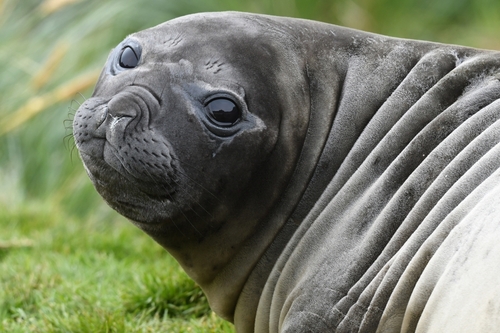
TL;DR: Neil the Seal is a wild southern elephant seal living near Dora Point, Tasmania, Australia. He’s become an internet sensation for wandering into towns, blocking traffic, and napping in unusual spots. Neil is a young, protected marine mammal—fascinating to observe, but safest when admired from a respectful distance.
Every so often, a wild animal captures the world’s attention. Neil the Seal is one of those animals.
He’s not performing tricks or living in a zoo. He’s simply being himself—and that’s apparently enough to make headlines across Australia, the United States, and beyond. Videos of this chunky, unbothered elephant seal lumbering down quiet streets or sprawling across someone’s front lawn have racked up millions of views online, turning him into one of the most recognized wildlife personalities on the internet.
For many Americans, Neil is a fun curiosity—a lovable oddity from Down Under. But there’s more to his story than viral clips. Neil offers a genuine window into the world of southern elephant seals, the challenges of human-wildlife coexistence, and why responsible wildlife behavior matters now more than ever.
This guide covers everything you need to know: who Neil is, why he keeps showing up in unexpected places, what kind of animal he actually is, and how the community around him works to keep both him and the public safe.
Meet Neil the Seal
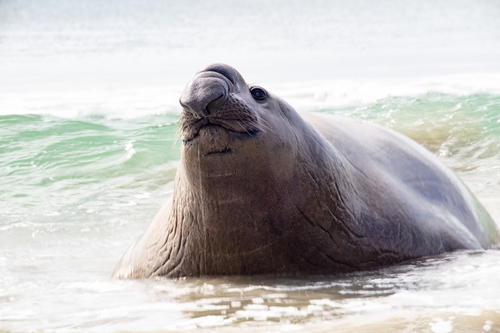
Neil is a wild southern elephant seal (Mirounga leonina) who has made the area around Dora Point in northern Tasmania, Australia, his regular resting spot. He first began attracting attention several years ago when locals noticed him venturing far beyond the shoreline—well into residential streets, driveways, and public spaces.
Southern elephant seals are not native to Tasmania in large numbers, which made Neil’s presence immediately unusual. Wildlife authorities identified him as a young male, and over time, his returning visits turned him from a one-off curiosity into a genuine local celebrity.
The Dora Point community, local wildlife officers, and Tasmania’s Parks and Wildlife Service have all become familiar with Neil’s patterns. Road signs have been put up. Temporary barriers have been installed. Residents have learned to share their neighborhood with a several-hundred-pound marine mammal who shows up, rests for a while, and eventually heads back to sea.
That’s Neil. Unbothered. Unscheduled. Utterly endearing.
Why Is Neil the Seal So Famous?
Neil’s fame didn’t come from a single moment—it built gradually through a series of encounters that ranged from mildly inconvenient to genuinely absurd.
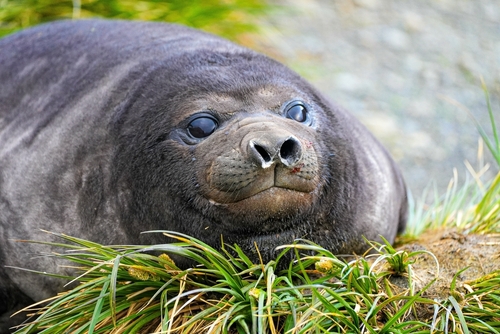
He’s been spotted sleeping across driveways. He’s stopped traffic on roads near the water. Residents have stepped outside to find him resting on their lawns. On more than one occasion, he’s climbed onto cars, leaving behind a trail of confusion, laughter, and social media gold.
Local Australians began sharing videos and photos, which quickly spread to international audiences. Australian news outlets picked up the story. Then international outlets followed. Neil appeared in coverage from the BBC, American news aggregators, and wildlife media around the world. Each new sighting added to the mythology.
What makes Neil so compelling isn’t just his size—it’s his complete indifference to human reaction. He doesn’t startle easily. He seems entirely comfortable in spaces that are, by any reasonable measure, not designed for elephant seals. That combination of scale and serenity makes for irresistible content.
He’s also a consistent presence. Unlike one-time wildlife encounters that trend briefly and fade, Neil keeps coming back—which means fresh content, fresh coverage, and a growing fanbase with each molting season.
What Kind of Seal Is Neil?
Neil is a southern elephant seal, one of the largest marine mammals on Earth.
Here’s a quick breakdown of the species:
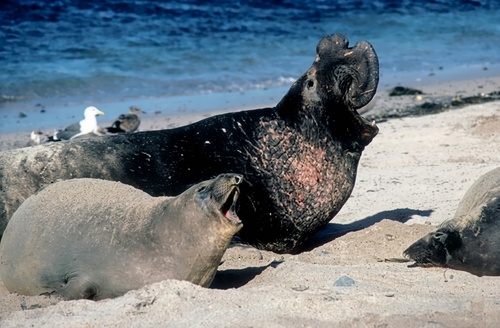
- Size and weight: Adult male southern elephant seals can weigh between 4,400 and 8,800 pounds (2,000–4,000 kg) and reach up to 20 feet (6 meters) in length. Females are significantly smaller. Neil, as a younger male, falls on the lower end of this range—but he’s still enormous by any standard.
- Lifespan: Southern elephant seals typically live 20–22 years. Males tend to have shorter lifespans than females due to the physical demands of competition during breeding season.
- Diet: They feed primarily on fish and squid, diving to extraordinary depths—sometimes exceeding 5,000 feet (1,500 meters)—to find food.
- Natural habitat: Southern elephant seals breed and rest on sub-Antarctic islands. Outside of breeding season, they spend most of their time at sea. Their range extends across the Southern Ocean, and individuals can travel thousands of miles.
- Migration: These seals are long-distance travelers. They haul out (come ashore) twice a year—once to breed and once to molt—before returning to the open ocean.
To put Neil’s potential size in perspective: a fully grown male southern elephant seal is roughly as long as a pickup truck and can weigh as much as a small car.
Is Neil the Seal Dangerous?
Neil is a wild animal. That’s worth stating clearly and directly.
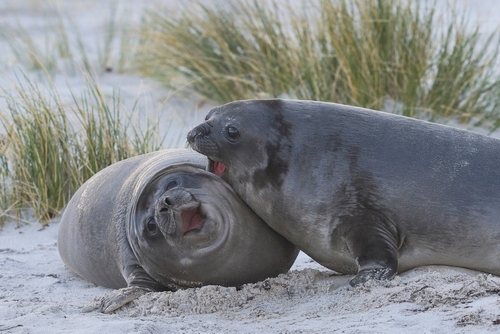
Despite his relaxed demeanor and internet-friendly reputation, southern elephant seals are powerful creatures capable of moving quickly when startled or threatened. An animal of Neil’s size can cause serious injury without intending to—simply by shifting its weight or reacting defensively to a perceived threat.
Wildlife officers in Tasmania have consistently advised the public to keep a safe distance of at least 50 feet (15 meters) from Neil when he’s onshore. Approaching him, attempting to touch him, or making loud noises near him is strongly discouraged.
When Neil appears in a public area, Tasmania’s Parks and Wildlife Service typically coordinates a response. This can include:
- Cordoning off the immediate area around him
- Monitoring his behavior and health
- Directing traffic away from his location
- Educating bystanders on appropriate conduct
The goal is always to minimize stress for Neil and reduce the risk of dangerous encounters for the public. So far, there are no confirmed reports of Neil injuring anyone—but that outcome depends on people maintaining responsible behavior around him.
The message from wildlife authorities is simple: observe, enjoy, and keep your distance.
Why Does Neil Keep Visiting Town?
Neil isn’t lost. He’s not confused. His visits to Dora Point and the surrounding area are, from his perspective, entirely logical.
Southern elephant seals haul out twice a year for two key reasons: breeding (which happens in winter) and molting (which happens in late summer and autumn). During molting, elephant seals shed their outer layer of skin and fur, a process that takes several weeks. It’s energetically taxing and uncomfortable, which is why seals seek out calm, sheltered spots to rest while it happens.
Shorelines near human communities sometimes offer exactly what a molting seal needs—flat ground, minimal predator pressure, and access to fresh water from rain or streams. Neil appears to have identified the Dora Point area as a reliable resting location, and since it has served him well in the past, he returns.
Young male elephant seals are also naturally more exploratory than adults. They haven’t yet established the territorial behaviors that come with maturity, which may explain why Neil wanders further inland than most seals would. He’s not aggressive—he’s curious, well-rested, and completely unaware that he’s causing traffic delays.
How Local Communities Protect Neil
Neil’s safety depends on a coordinated effort between wildlife authorities, local government, and the community itself.
Tasmania’s Parks and Wildlife Service leads the official response each time Neil appears. Their role includes monitoring his health, assessing whether he poses any immediate risk, and making decisions about whether intervention is necessary. In most cases, the guidance is to leave him alone and wait for him to return to the sea on his own timeline.
Local councils have supported this by implementing temporary road closures on routes Neil frequents. Signage warning drivers about seal crossings has been installed in the area. Protective barriers have occasionally been used to guide public access, ensuring people can see Neil without getting dangerously close.
Community cooperation has been essential. Residents near Dora Point have learned to alert authorities quickly when Neil appears rather than approaching him directly. Many locals have become informal ambassadors—sharing accurate information online, correcting misinformation, and encouraging others to follow safe wildlife viewing practices.
Public education efforts have grown alongside Neil’s fame. Schools, wildlife organizations, and media outlets have used his story to talk about marine mammal behavior, conservation, and responsible wildlife tourism. Neil has, without any effort on his part, become a teaching tool.
What Neil the Seal Teaches Us About Wildlife
Neil’s popularity is more than entertainment. His story highlights something important: wild animals are increasingly sharing space with human communities, and how we respond to that overlap matters.
Human-wildlife coexistence is one of the defining conservation challenges of our time. As urban areas expand and wildlife habitats shift, encounters like Neil’s will become more common—not less. The way the Dora Point community has handled his visits offers a useful model: clear communication, coordinated response, and respect for the animal’s needs.
Neil has also sparked conversations about responsible wildlife photography. The temptation to get close for a better photo is real, and social media has amplified it. But crowding a wild animal—even a seemingly calm one—causes stress that isn’t always visible. Wildlife photographers and conservationists consistently recommend using zoom lenses, staying quiet, and never placing yourself between an animal and its route back to water.
On a broader level, viral animals like Neil have a demonstrated impact on conservation awareness. According to research published in journals covering science communication, public engagement with wildlife stories increases donations to conservation organizations, boosts interest in wildlife tourism, and drives policy conversations about habitat protection. Neil’s fame, channeled thoughtfully, can do genuine good.
The Australian Antarctic Program and Tasmania’s Parks and Wildlife Service both provide resources on elephant seal biology and conservation. Organizations like the Marine Mammal Center offer detailed guides on how to behave responsibly near marine mammals, including seals and sea lions.
Neil doesn’t need our admiration to survive. But the attention he’s attracted, handled responsibly, can help protect the wild spaces and species he represents.
Interesting Facts About Neil the Seal
- Neil is one of the most recognized individual wild seals in Australian history, with international media coverage spanning multiple continents.
- Southern elephant seals can dive deeper than almost any other mammal on Earth—deeper than most submarines operate.
- Neil is fully protected under Australian wildlife law. Harassing, feeding, or interfering with him is a criminal offense.
- Despite his size, elephant seals can move surprisingly quickly on land when motivated—reaching short bursts of speed comparable to a running human.
- Neil spends the majority of his life at sea, often traveling thousands of miles before returning to shore. His inland visits represent only a small fraction of his annual activity.
- Each elephant seal’s molting pattern is slightly different, and researchers can use these patterns, along with size and markings, to identify individual animals over time.
- Neil’s story has been used in Australian school curricula and wildlife education programs to teach students about marine mammal behavior and conservation.
Neil the Seal: Why One Animal’s Story Matters
Neil the Seal is, at first glance, a funny story—a large, stubborn seal who refuses to stay in the ocean where people think he belongs. But look closer, and his story becomes something more meaningful.
He represents the reality that wildlife and human communities are not separate. They overlap, and they always have. How communities respond to that overlap—with curiosity, patience, and respect—shapes outcomes for both people and animals.
Neil has done more for public awareness of southern elephant seals than any textbook could. His visits prompt questions: What is he? Why is he here? Is he okay? Those questions lead to answers, and those answers lead to understanding. Understanding, over time, leads to better conservation outcomes.
The next time Neil makes headlines—and he will—consider it an invitation to learn something. Keep your distance, share accurate information, and appreciate what it means to live on a planet still full of wild, wandering, wonderfully indifferent creatures like him.
To learn more about marine mammal conservation and responsible wildlife viewing, visit the Tasmania Parks and Wildlife Service, the Marine Mammal Center, or the Australian Antarctic Program’s elephant seal resources.
Frequently Asked Questions (FAQs)
Is Neil the Seal real?
Yes. Neil is a real, wild southern elephant seal who lives near Dora Point in Tasmania, Australia. He is not a pet and is not managed by any zoo or wildlife park.
Where is Neil the Seal now?
Neil’s location changes with the seasons. He spends most of his life at sea but returns to the Dora Point area periodically to rest and molt. Local wildlife authorities monitor his movements when he comes ashore.
How old is Neil the Seal?
Neil is believed to be a young male, though his exact age has not been publicly confirmed by wildlife authorities. Southern elephant seals can live 20–22 years.
How much does Neil the Seal weigh?
As a younger male, Neil likely weighs several hundred pounds. Adult male southern elephant seals can reach up to 8,800 pounds, though Neil has not yet reached full maturity.
Why is he called Neil?
The name Neil was given to him by locals and media early in his public appearances. The origin is informal—he simply needed a name, and Neil stuck.
Can tourists visit Neil the Seal?
Neil is a wild animal and cannot be scheduled or guaranteed. If he is ashore and in a public area, wildlife authorities manage access to ensure public safety. Tourists should always follow directions from wildlife officers and maintain the recommended viewing distance of at least 50 feet (15 meters).
Is Neil the Seal an elephant seal?
Yes. Neil is a southern elephant seal (Mirounga leonina), one of the largest seal species on Earth.
Why do elephant seals sleep on land?
Elephant seals haul out onto land twice a year—once to breed and once to molt. During molting, they shed their skin and fur over several weeks, a process that requires extended rest on shore.
Are elephant seals protected in Australia?
Yes. Elephant seals, including Neil, are protected under Australian federal and state wildlife laws. It is illegal to harass, feed, touch, or interfere with them in any way.



