

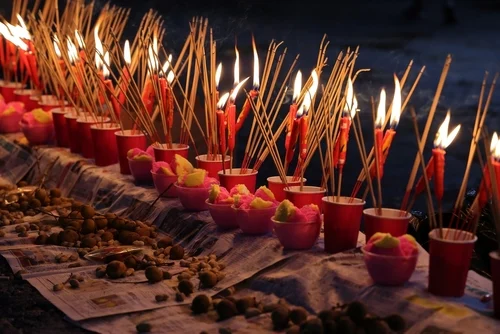
Quick answer: The Hungry Ghost Festival 2026 falls on August 12, with the broader Hungry Ghost Month running from July 28 to August 25. Rooted in Buddhist and Taoist belief, the festival honors wandering ancestral spirits through food offerings, joss paper burning, and communal rituals held across East and Southeast Asia.
Every year, as the seventh lunar month begins, a quiet shift takes place across communities in China, Singapore, Malaysia, Taiwan, and beyond. Streets fill with the scent of burning paper and incense. Elaborate food offerings appear on sidewalks and doorsteps. Opera performances and live concerts are staged—with the front rows left deliberately empty, reserved for unseen guests.
This is the Hungry Ghost Festival, one of the most spiritually significant observances in the Chinese calendar. Far from being a somber occasion, it’s a time of deep reverence, community, and connection between the living and the dead.
Whether you’re observing the festival for the first time or want to understand its customs more deeply, this guide covers everything you need to know about the Hungry Ghost Festival in 2026.

What Is the Hungry Ghost Festival?
The Hungry Ghost Festival—known in Mandarin as Zhōngyuán Jié (中元節) or Guǐ Jié (鬼節)—is a Buddhist and Taoist observance that takes place during the seventh month of the lunar calendar. According to tradition, this is the month when the gates of the spirit realm open, allowing the souls of the deceased to roam freely among the living.
Not all of these spirits are at peace. Some are believed to be “hungry ghosts”—souls with no living descendants to care for them, or those who died with unresolved grievances. Families perform rituals to honor their own ancestors and to appease these wandering spirits, offering food, incense, and paper goods to ensure goodwill and protection.
The festival draws from both Buddhist and Taoist traditions, and its practices vary across regions and families. But the underlying intention is consistent: to show respect to those who came before and to maintain harmony between the spirit world and the living.
When Is the Hungry Ghost Festival in 2026?
The Hungry Ghost Festival falls on the 15th day of the seventh lunar month, which corresponds to August 12, 2026. This date marks the peak of the festival, when the veil between worlds is believed to be thinnest.
The broader Hungry Ghost Month runs from July 28 to August 25, 2026. Rituals and offerings are common throughout this entire period, not just on the festival day itself.

How Is the Hungry Ghost Festival Celebrated?
Traditions vary by region, religion, and family, but several practices are observed widely across the Chinese diaspora.
Burning Joss Paper and Paper Offerings
One of the most recognizable customs is the burning of joss paper—also called “ghost money”—along with paper replicas of everyday items like clothing, electronics, and even luxury goods. The belief is that these items reach the spirit world through smoke, providing comfort and sustenance to ancestors.
Burning typically takes place outdoors, in designated areas, or at roadside altars. Communities often set aside specific locations to ensure the ritual is carried out respectfully and safely.
Making Food Offerings
Families prepare food offerings for their ancestors, arranging dishes at home altars or on tables outside. Common offerings include rice, fruit, roasted meats, and sweets. Incense is lit alongside the food, and chopsticks may be placed upright in rice bowls—a gesture reserved specifically for the dead.
These offerings are meant to nourish both family ancestors and wandering spirits who have no one to provide for them.
Getai Performances
In Singapore and Malaysia especially, getai (歌台) performances are a beloved Hungry Ghost Month tradition. These are loud, colorful live concerts featuring singers, comedians, and performers. The front row of seats is always left vacant—an unspoken invitation for the spirits to enjoy the show.
Getai events bring neighborhoods together and have become a cultural institution in their own right, blending spiritual observance with community entertainment.
Releasing Water Lanterns
In some communities, families release floating lanterns onto rivers or lakes at night. These lanterns are meant to guide lost spirits back to the spirit world and symbolize the hope for peace among the dead.
Visiting Temples
Many people visit Buddhist or Taoist temples during Ghost Month to pray for their ancestors and make merit. Monks and priests may conduct ceremonies to help release trapped souls and bring comfort to those who are suffering in the afterlife.

What Should You Avoid During Ghost Month?
A number of traditional taboos are observed during Hungry Ghost Month, particularly on the 15th day. While not all families follow every rule, these customs reflect a respect for the spiritual significance of the period.
Common things to avoid include:
- Swimming at night, as water spirits are thought to be more active
- Moving into a new home or starting a new business, as it’s considered an inauspicious time
- Picking up items left on the street, especially food or money offerings meant for spirits
- Wearing red or black, colors associated with death in some traditions
- Killing insects, which some believe may be reincarnated ancestors
- Staying out late, as spirits are most active after dark
These taboos differ across families and regions. Many younger generations observe some customs while setting others aside—and that’s perfectly normal.
What Are the Regional Differences in Hungry Ghost Traditions?
The festival looks different depending on where it’s observed.
In China, rituals are deeply tied to ancestor veneration. Families return to hometowns to tend to ancestral graves and make offerings at home altars. The Taoist Zhongyuan Festival and Buddhist Ullambana (Yulanpen) ceremony are both observed during this period.
In Singapore and Malaysia, the festival is a large community event. Getai performances draw big crowds, and communal incense burners are set up in neighborhoods. Auctions are sometimes held to sell blessed items and raise money for the performers.
In Taiwan, Ghost Month is taken very seriously. Many people avoid travel, major decisions, and celebrations throughout the entire month. The city of Keelung holds one of the largest Ghost Month events in the world, attracting tourists from across Asia.
In Vietnam, the equivalent holiday is Tết Trung Nguyên, observed by the Buddhist community with temple prayers and food offerings.

Hungry Ghost Festival 2026: Key Dates at a Glance
| Event | Date |
| Ghost Month begins | July 28, 2026 |
| Hungry Ghost Festival (peak day) | August 12, 2026 |
| Ghost Month ends | August 25, 2026 |
Honoring the Hungry Ghost Festival
The Hungry Ghost Festival is a reminder that care for family doesn’t end at death. For millions of people around the world, this month is about honoring memory, maintaining connection, and fulfilling a duty to those who came before.
If you’re observing Ghost Month this year, take time to learn the specific customs your family or community follows—traditions can vary greatly from one household to the next. And if you’re encountering the festival as an outsider, approach it with curiosity and respect. There’s a great deal of meaning in every offering laid out on a sidewalk and every lantern released into the night.

Frequently Asked Questions About the Hungry Ghost Festival
What is the Hungry Ghost Festival?
The Hungry Ghost Festival is an annual Buddhist and Taoist observance during the seventh lunar month, when the spirit world is believed to open. Families burn joss paper, make food offerings, and perform rituals to honor their ancestors and appease wandering spirits.
When is the Hungry Ghost Festival in 2026?
The Hungry Ghost Festival falls on August 12, 2026. Ghost Month runs from July 28 to August 25, 2026.
Is the Hungry Ghost Festival the same as the Qingming Festival?
No. Qingming (Tomb-Sweeping Day) is a spring festival focused on grave cleaning and ancestor veneration. The Hungry Ghost Festival takes place in summer during the seventh lunar month and involves a broader range of rituals, including appeasing wandering spirits—not only family ancestors.
Which countries celebrate the Hungry Ghost Festival?
The festival is widely observed in China, Singapore, Malaysia, Taiwan, Hong Kong, and among Chinese diaspora communities globally. Related traditions exist in Vietnam (Tết Trung Nguyên) and other parts of Southeast Asia.
Why are the front rows at getai performances left empty?
The empty front rows are reserved for spirits attending the performance. This is a sign of respect and an invitation for the deceased to enjoy the entertainment alongside the living.
Is it bad luck to move house during Ghost Month?
Many people believe that starting major life events—including moving home, launching a business, or getting married—during Ghost Month is inauspicious. However, this varies by family and level of religious observance.



