

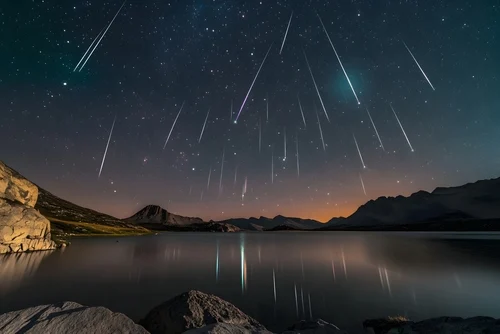
Quick answer: The Perseid meteor shower peaks in mid-August 2026, typically around August 11–13. During peak nights, stargazers can see up to 100 meteors per hour under dark skies. No telescope is needed—just a clear view of the sky, away from city lights.
Every August, one of the most reliable light shows in the natural world returns. The Perseid meteor shower has drawn stargazers outside for centuries, and 2026 is shaping up to be another excellent year to watch it.
Whether you’re planning your first meteor-watching night or you’ve seen the Perseids before, this guide covers everything you need to know. You’ll find out when to watch, where to go, and how to make the most of the experience.
What Is the Perseid Meteor Shower?
The Perseid meteor shower happens every year when Earth passes through the debris trail left by Comet 109P/Swift-Tuttle. As tiny fragments of comet dust enter Earth’s atmosphere at around 37 miles per second, they burn up and create the streaks of light we call meteors—or shooting stars.
The shower gets its name from the constellation Perseus, because the meteors appear to radiate from that direction in the sky. You don’t need to stare directly at Perseus to see them. Meteors can appear anywhere across the sky.
The Perseids are one of the most popular meteor showers of the year in the U.S., largely because they happen during warm summer nights, making outdoor viewing far more comfortable than winter showers like the Geminids.

When Is the Perseid Meteor Shower Peak in 2026?
The Perseids are active from late July through late August, but the peak—when meteor activity is highest—falls around August 11–13, 2026. The night of August 12 into the early morning of August 13 is typically the best single window for viewing.
During the peak, rates can reach 50 to 100 meteors per hour under ideal conditions. That’s roughly one to two shooting stars every minute.
What time should you watch the Perseid meteor shower?
The best viewing window is after midnight and before dawn. By that time, your part of Earth has rotated to face directly into the meteor stream, which increases the rate of visible meteors significantly. Plan to be outside between midnight and 4:00 a.m. local time for peak activity.
How will the moon affect viewing in 2026?
Moon phase plays a major role in meteor shower visibility. A bright moon can wash out fainter meteors, reducing how many you actually see. Check the specific lunar calendar for August 2026 as the date approaches to confirm how much moonlight you’ll be dealing with. Even with some moonlight, the brightest Perseid fireballs will still be visible.

Where Is the Best Place to Watch the Perseid Meteor Shower in the U.S.?
Dark skies make all the difference. The further you are from city lights, the more meteors you’ll see. Light pollution from urban areas can reduce visible meteor counts dramatically.
Some of the best locations in the U.S. for dark-sky stargazing include:
- Cherry Springs State Park, Pennsylvania – one of the darkest spots on the East Coast
- Big Bend National Park, Texas – consistently rated among the best stargazing sites in the country
- Death Valley National Park, California – high altitude and minimal light pollution
- Great Basin National Park, Nevada – remote location with exceptional sky clarity
- Headlands International Dark Sky Park, Michigan – designated specifically for stargazing
If you can’t travel, even a short drive to a rural area outside your city can meaningfully improve your view.
How to Watch the Perseid Meteor Shower: A Simple Guide
You don’t need special equipment. The Perseids are best enjoyed with the naked eye—binoculars and telescopes actually narrow your field of view, which works against you when scanning the sky for fast-moving meteors.
Here’s what to do:
- Find a dark location away from street lights and bright signs
- Arrive early to let your eyes adjust to the dark—this takes about 20–30 minutes
- Lie flat on your back or bring a reclining chair so you can see as much of the sky as possible
- Face northeast, in the general direction of the Perseus constellation, but let your gaze drift across the whole sky
- Avoid your phone screen—the blue light resets your night vision quickly; use a red flashlight if you need light
- Give yourself at least an hour, since meteor activity comes in bursts
Bring warm layers even in summer. Temperatures drop significantly overnight, especially in open fields or at higher elevations.

What Makes the 2026 Perseids Worth Watching?
The Perseids are known for producing a higher-than-average number of fireballs—exceptionally bright meteors that light up a large portion of the sky. These are caused by larger fragments of Swift-Tuttle’s debris trail, and they’re a signature of this particular shower.
Unlike some meteor showers that produce fast, faint streaks, the Perseids often leave visible trails that linger for a second or two after the meteor has passed. Those glowing trails, called meteor trains, add to the visual drama and are part of what makes the Perseids so memorable for first-time viewers.
Tips for Photographing the Perseid Meteor Shower
If you want to capture the Perseids on camera, a DSLR or mirrorless camera with manual settings works best. Set your lens to its widest aperture (lowest f-number), use an ISO between 1600 and 3200, and set your shutter speed to 20–30 seconds. Point the camera toward a dark patch of sky and use a remote shutter or timer to minimize camera shake.
Smartphone photography is possible with recent models that have astrophotography modes, though results will vary. The most important factor is still sky darkness—no camera setting compensates for heavy light pollution.
Frequently Asked Questions About the Perseid Meteor Shower 2026
When exactly does the Perseid meteor shower peak in 2026?
The Perseid meteor shower peaks around August 11–13, 2026. The highest meteor rates typically occur during the early morning hours of August 12–13, between midnight and 4:00 a.m. local time.
How many meteors can I expect to see during the Perseid peak?
Under dark skies, you can expect to see between 50 and 100 meteors per hour during the peak. Light pollution, cloud cover, and moon phase can all reduce that number.
Do I need a telescope to watch the Perseid meteor shower?
No. The Perseid meteor shower is best viewed with the naked eye. Telescopes and binoculars narrow your field of view and are not recommended for watching meteor showers.
What causes the Perseid meteor shower?
The Perseids occur when Earth passes through the debris trail of Comet 109P/Swift-Tuttle. The comet’s dust and rock fragments burn up in Earth’s atmosphere, creating the streaks of light visible from the ground.
Is the Perseid meteor shower visible from anywhere in the U.S.?
Yes. The Perseids are visible across the entire Northern Hemisphere, including all U.S. states. The further north you are, the higher Perseus sits in the sky, which can slightly increase your viewing angle.
What if it’s cloudy during the Perseid peak?
If clouds block your view on the peak night, don’t worry. The Perseids are active from late July through late August, so you can still see a good number of meteors in the nights just before and after the peak. Check a local weather forecast before heading out.
Make the Most of the Perseid Meteor Shower in 2026
The Perseid meteor shower is one of the simplest and most rewarding natural events you can experience. No tickets, no equipment, no special skills—just clear skies and a willingness to stay up late.
Mark August 11–13, 2026 in your calendar now. Scout a dark-sky location ahead of time, check the weather forecast the week before, and plan to be outside between midnight and dawn. The Perseids are consistent, reliable, and genuinely spectacular at their peak.
For families, it’s a great way to introduce kids to astronomy. For seasoned stargazers, it’s an annual ritual worth keeping. Either way, 2026’s peak is one summer night worth planning around.



