

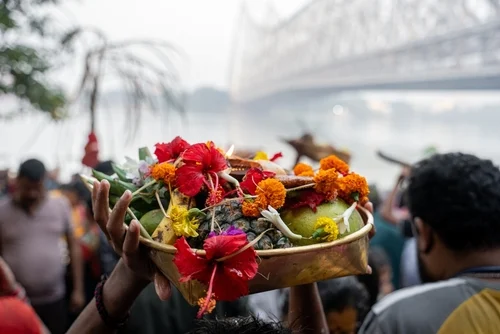
Quick answer: Chhath Puja, a four-day Hindu sun festival, begins November 13, 2026, with the main Sandhya Arghya ritual on November 15. Devotees fast and offer prayers to the setting and rising sun at rivers, lakes, or ponds. In the US, communities gather at local water bodies, temples, and cultural centers to celebrate together.
If you’re sending money home to family in Bihar, Jharkhand, or Nepal this week, you’ve probably noticed the buzz around Chhath Puja. This four-day Hindu sun festival, held six days after Diwali, is one of the most physically demanding and spiritually significant celebrations in the Hindu calendar. Devotees fast for extended periods, stand in water for hours, and offer prayers directly to the sun, without the help of priests or elaborate temple rituals.
For the Indian American community, especially those with roots in Bihar, Jharkhand, and Nepal’s Terai region, Chhath Puja carries deep emotional weight. It’s a festival about gratitude, discipline, and connection to family and tradition, even when celebrated thousands of miles from the Ganges.
This guide covers everything you need to know about Chhath Puja 2026 in the US: the exact dates and timings, the rituals involved, where to celebrate, and how to prepare. Whether you’re observing the festival yourself or supporting loved ones who are, here’s what to expect this week.

What is Chhath Puja and why is it celebrated?
Chhath Puja is a four-day Hindu festival dedicated to Surya Dev (the Sun God) and Chhathi Maiya. It falls on Kartik Shukla Shashthi, the sixth day of the bright half of the Hindu month of Kartik, which places it about a week after Diwali on the lunar calendar.
The festival is most closely associated with Bihar, Jharkhand, eastern Uttar Pradesh, and the Terai region of Nepal. Unlike many Hindu festivals that take place inside temples, Chhath Puja is performed outdoors, directly facing the sun, usually at a river, lake, or pond.
At its core, Chhath Puja is about discipline, purity, and gratitude. Devotees fast, bathe in sacred or clean water, and give thanks for the sun’s life-giving energy. These are the values that resonate just as strongly for Indian American families celebrating in New Jersey or California as they do for families back home in Patna.
When is Chhath Puja 2026 and what happens each day?
Chhath Puja 2026 follows a four-day schedule, according to My Tickets to India (2026):
Day 1: Nahay Khay — Friday, November 13
Devotees begin with a purification ritual, bathing and preparing a simple sattvik meal of rice, chana dal, and bottle gourd (lauki). Onion and garlic are avoided, keeping the meal pure and light ahead of the fasting days to come.
Day 2: Kharna (Lohanda) — Saturday, November 14
This is a full day of fasting. In the evening, devotees break their fast with kheer made from rice, jaggery, and milk, served alongside roti. Once this meal is finished, the strict nirjala fast begins, meaning no food or water until the festival concludes.
Day 3: Sandhya Arghya — Sunday, November 15
This is the main day of the festival. Devotees gather at a river, lake, pond, or other water source to offer prayers to the setting sun. Families prepare baskets of fruit, sweets, and traditional offerings to present during this ritual.
Day 4: Usha Arghya and Parana — Monday, November 16
The final day begins before sunrise, as devotees return to the water to offer prayers to the rising sun. Once this ritual is complete, the fast ends with Parana, and families share a meal together.

What time should I offer Sandhya Arghya and Usha Arghya in my city?
Arghya timings vary by location, so it’s worth double-checking a Panchang for your specific city rather than relying on times from India. According to My Tickets to India (2026), approximate times for two major US cities are:
- Sandhya Arghya (Nov 15): New York City around 4:38 PM; Atlanta around 5:33 PM
- Usha Arghya (Nov 16): New York City around 6:44 AM; Atlanta around 7:12 AM
These times are approximate. Sunset and sunrise shift based on your exact location, so confirm the precise timing with a local Panchang or community organizer before heading to your chosen water site.
What offerings and supplies are used during Chhath Puja?
Traditional Chhath Puja offerings, known as samagri, include thekua (a fried wheat flour and jaggery sweet), bananas, coconuts, seasonal fruits, sugarcane, rice-based sweets, radish, and sweet potato. Families also use bamboo soop and daura baskets to carry offerings, along with earthen diyas, clean water, milk, ghee, and flowers.
Most of these items are available at Indian grocery stores across the US. If bamboo baskets are difficult to find in your area, local community organizers or store owners can often suggest suitable alternatives.

How can I celebrate Chhath Puja in the US this year?
Indian American communities have built strong Chhath Puja traditions across the country, even far from the rivers of Bihar and Jharkhand. According to ANI via ThePrint (2022), hundreds of devotees have gathered at river banks, lakes, and makeshift water bodies in states including California, Arizona, Connecticut, Massachusetts, New Jersey, Texas, North Carolina, and Washington DC.
The Bihar Jharkhand Association of North America (BJANA) has organized some of the largest community celebrations. In 2022, more than 1,500 people attended a Chhath Puja event at Thompson Park in Monroe, New Jersey, while over 300 gathered in Massachusetts for the evening rituals, with organizers expecting 500 or more for the following morning’s ceremony. BJANA began organizing community-wide Chhath celebrations about five years before 2022, and the event has since become one of its signature gatherings.
If you want to celebrate this week, here are a few practical options:
- Join a local community event. Hindu temples, Bihari and Jharkhandi associations, and Indian cultural organizations across the US often host organized Chhath celebrations with shared prasad preparation and designated water access.
- Choose a permitted water body. Many public lakes and ponds restrict religious gatherings, so contact your local park authority or property manager ahead of time. Check whether an event permit is required and review any rules around parking or open flames.
- Observe at home if needed. Families without easy access to a river or lake sometimes perform the rituals on a terrace or balcony using a clean vessel or shallow container of water, following their own family traditions.
- Involve the whole family. Many families use this time to teach children about the significance of the festival and involve them in preparing samagri in advance.

Is the nirjala fast safe, and who should be cautious?
The nirjala fast, observed from the end of the Kharna meal on November 14 until Usha Arghya on November 16, typically lasts around 36 hours without food or water. Practices vary by family and individual health circumstances.
Anyone with a medical condition, who is pregnant, or who has concerns about fasting for an extended period should consult a doctor before attempting a nirjala fast. Chhath Puja’s emphasis on discipline is meaningful, but your health comes first.
Frequently asked questions about Chhath Puja 2026
What are the exact dates of Chhath Puja 2026?
Chhath Puja 2026 runs for four days: Nahay Khay on November 13, Kharna on November 14, Sandhya Arghya on November 15, and Usha Arghya with Parana on November 16, according to My Tickets to India (2026).
How long is the Chhath Puja fast?
The main fasting period is a nirjala fast, meaning no food or water, that begins after the Kharna meal on the evening of November 14 and continues until Usha Arghya on the morning of November 16, roughly 36 hours.
Where can I celebrate Chhath Puja in the US?
Many cities host community Chhath Puja celebrations at lakes, rivers, or parks, often organized by Hindu temples, Bihari and Jharkhandi associations, or Indian cultural organizations. Past celebrations have taken place in states including New Jersey, California, Massachusetts, Texas, and Connecticut, among others.
Do I need a permit to perform Chhath Puja rituals at a public lake or pond?
Possibly. Many public water bodies in the US restrict religious gatherings, so it’s important to contact the park authority or property manager in advance to check permit requirements and any rules around parking or open flames.
Can I celebrate Chhath Puja if I can’t access a river or lake?
Yes. Some families observe the rituals at home using a clean vessel or shallow container of water on a terrace or balcony, adapting the tradition to their circumstances while keeping its spirit intact.
Carrying tradition across the distance
Chhath Puja is a reminder that distance doesn’t have to weaken tradition. Whether you’re standing at a riverbank in New Jersey or offering prayers from a terrace in Texas, the rituals connect Indian American families to generations of devotion, discipline, and gratitude.
If you’re celebrating this week, take a moment to confirm your local arghya timings, check in on any health considerations around fasting, and reach out to family back home who may be observing the festival as well. And if you’re sending support to loved ones celebrating Chhath Puja in Bihar, Jharkhand, or Nepal, Remitly makes it simple to send money internationally with transparent fees and fast delivery, so your gift arrives exactly when they need it.


