

Key Highlights
Here are the key takeaways about religion in Peru:
-
There is a lot of religious diversity in Peru, but the catholic church is still the main faith for most people.
-
Roman Catholicism was brought to Peru by the Spanish in the 16th century. It is now the largest religion, and it has shaped much of the culture and life in the country.
-
Many people in Peru still follow indigenous beliefs, especially those that show respect to mother earth (Pachamama). These old ways are often mixed with ideas from the catholic church.
-
The laws in Peru give people religious freedom, so many different faiths get to exist side by side.
-
In the last few decades, evangelical and other protestant groups have grown a lot.
-
Religious festivals and public celebrations are a big part of life for the people of Peru. These events bring together many old and new ways of life.
Introduction
Let’s take a look at religion in Peru. The country has the rich story of faith and spiritual life. Much of the total population follows Christianity, but there is more to the religion here. Religious affiliation in Peru has come from history, changed over time, and mixed many traditions. The Catholic Church leads, but people also follow old native customs and other Christian groups that are getting bigger now. Religion is an important part of who Peruvians are.
Religious Diversity in Peru: An Overview
Peru has a wide mix of different faiths. Most people in Peru follow a type of Christianity, but the national census shows that beliefs are changing across the country. The main religions in Peru now are Catholicism, some Protestant groups, and old Andean spiritual beliefs.
This religious affiliation is not the same in every part of the country. For example, some areas in the jungle have more people who do not follow any faith. Over the past few years, there has been a drop in the number of Catholic followers. At the same time, more people are joining Evangelical groups. This shows that Peru’s religious makeup is changing.
Major Religious Groups and Their Influence
The Catholic Church is the biggest religious group in Peru. You can see its impact in every part of daily life. The country’s social and political ways are shaped by the Catholic Church. Many family traditions and national holidays are built around Catholic religious beliefs. For lots of people, religious education in the Catholic faith is expected as they grow up.
Besides the catholic church, protestant churches are getting more people these days. Groups like Lutherans, Baptists, and Evangelical churches are larger now. Their numbers keep going up. These religious groups help give people something different for their faith. They are strong in some rural places.
Other religious groups can be found as well. Mormons from the Church of Jesus Christ of Latter-day Saints and Jehovah’s Witnesses are two of them. These groups add to the mix of beliefs in Peru. The country welcomes many forms of Christianity, and each religious group helps shape this spiritual climate.
The Evolution of Peru’s Religious Landscape
The historic evolution of religion in Peru has brought many changes. In the past, most people in the country were Catholic. Now, the country sees more kinds of religions. The guarantee of religious freedom helped this change happen. People are free to choose, and that made the society more open to new faiths.
This shift shows up in both urban areas and rural areas. In major cities, Catholicism is still most common. But in rural areas, evangelical and other Christian groups now have a bigger presence. This is a real change from the past.
Modern-day tools like social media and newer religious movements have played a role in this change, too. Because of these, people now want to look at other spiritual ways. This means fewer people call themselves Catholic. There is a rise in other beliefs, and this shows that religion in Peru is becoming more dynamic and open to change.
The Dominance of Catholicism
The Catholic Church is very strong in Peru. Most people still say they are Catholic, even though there are now many kinds of religious affiliation. The Church has been important for a long time, so it still speaks up about social issues and touches public policy.
The government is supposed to be secular, but Catholic leaders still have a big role. Peru keeps direct ties with the Holy See. The Church also gives its views when the country makes big choices. We will look at how this started long ago and how you see it in daily life.
Historical Roots and Arrival of Catholicism
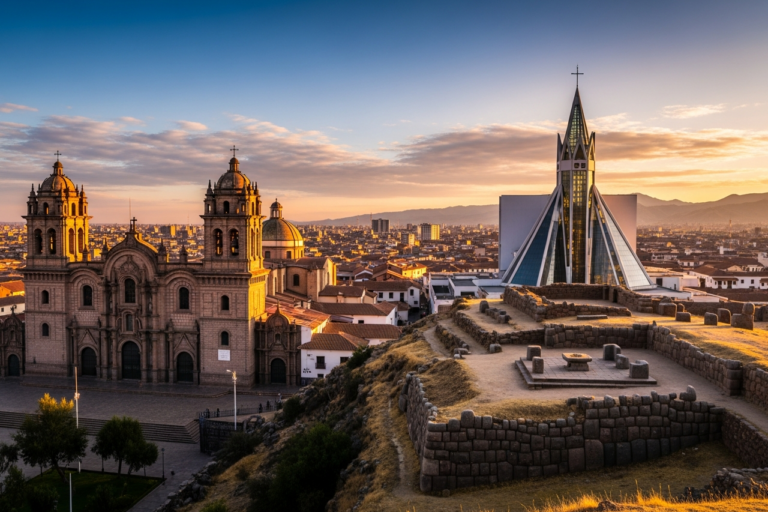
To see why the Catholic Church is so important, you need to know about its historical context. Catholicism came to Peru in the 1500s when Spanish conquerors arrived. These men wanted to spread their faith to the New World. The religion came right after the Spanish took control of the Inca Empire.
The Spanish started to build big Catholic church buildings. Many of these stand strong even now. These churches were a way to show the power and staying force of the faith. After Peru gained independence, the Catholic Church’s role stayed strong and became part of how the new country worked and saw itself.
For a long time, the Catholic Church was the one official church. This only changed in the 1970s. The long history of being recognized by the government helped the Catholic Church keep its long-lasting influence in Peru’s society and culture.
Catholic Traditions in Peruvian Daily Life
Catholic traditions are an important element in the daily lives of many people in Peru. These practices are not just for Sunday Mass. They are a part of family and community events too. Many people use religion to help guide their lives.
A lot of common family events come from Catholic practice. These events mark big moments in life and help bring families close in faith. The way people do these can be different depending on class, but some traditions are found everywhere in the country.
Some of the most common Catholic practices include:
-
Baptism and Confirmation: These are widely done and they bring people into the faith.
-
Marriage: Catholic wedding ceremonies are a big deal and are still a loved tradition.
-
Holiday Celebrations: Big holidays like Christmas, Easter, and different patron saints’ days are celebrated by many.
-
El Señor de los Milagros: Every October, a procession happens in Lima and other cities. It is one of the largest open acts of faith.
Indigenous Beliefs and Traditional Religions
Long before the Spanish were in Peru, the people here followed many different beliefs. These old ways were based on respect for nature, and still, they have not gone away. While people who follow Andean spirituality may not be what you think of as a “religious group” today, they still respect the old gods and ideas.
A big part of these beliefs is the worship of Pachamama, or Mother Earth. There are also mountain spirits called apus. These beliefs often mix with Catholicism. This is called syncretism. Because of this, you see a special mix of spiritual ways in Peru. Now, let’s see how these old practices are still an important part of life there.
Andean Spirituality and Its Continued Practice
Andean spirituality is still an important element in Peruvian culture, mostly in rural areas. People in these places have beliefs that go back many years. They have a strong link to nature, and this way of thinking is still alive now.
For many, showing respect for Mother Earth, or Pachamama, is at the heart of these beliefs. People do rituals and make offerings for her. They do this to ask for her blessing, especially when it is about farming or being healthy. This shows how people and nature are deeply tied together.
Today, big Inca temples are not used the same way as before, but the ideas behind Andean spirituality are still there. People in the Andes respect and keep these traditions, so their spiritual ways stay strong in modern Peru.
Syncretism: Blending Catholicism with Ancient Beliefs
Syncretism helps people understand religion in Peru. It means when people mix old traditions with new ones, like those of the Catholic Church. These two come together and form something new. You can see this best at many religious festivals and celebrations in the country.
For example, the festival called Inti Raymi is for the Sun God and happens at the summer solstice. This takes place at the same time as the Catholic Church’s feast days for Saints Peter and Paul. So, people can celebrate both their old roots and the main faith at the same time.
This mix started when the Spanish ruled Peru. The local people wanted to keep their own customs. So, they adjusted their events and beliefs to fit in with the Catholic calendar and the saints. This led to a special type of religion. Today, you still see this blend in Peru. It shows that religion plays a big part in the daily lives of the people. It helps them feel close to their history and who they are now.
The Rise of Evangelical and Other Christian Communities
One big change in Peru’s religious affiliation in recent years is how Evangelical churches have grown fast. These church groups have seen great growth, and many people in the country now join them.
This trend has changed how people in Peru see religion. It gives people a lively choice apart from traditional Catholic beliefs. As Evangelical churches grow, other Protestant churches and Christian branches in Peru are also getting more followers. Let’s take a closer look at the growth and see which groups are getting bigger.
Growth of Protestant and Evangelical Churches
The growth of Protestant and Evangelical churches is a defining trend in modern Peru. National census data shows a clear pattern of church growth, with the percentage of people identifying as Evangelical increasing significantly between 1993 and 2007.
While Catholicism still holds a majority, its dominance has lessened due to the success of these other congregations. This trend is particularly notable in rural regions, where Evangelical and other Protestant churches have a stronger presence compared to urban areas.
This shift reflects a changing spiritual search among Peruvians. Here is a look at the religious breakdown from the 2007 census, which highlights this diversity:
|
Religious Group |
Percentage of Population (12+) |
|---|---|
|
Catholic |
81.3% |
|
Evangelical Christian |
12.5% |
|
Other Religions |
3.3% |
|
None |
2.9% |
Other Christian Denominations in Peru
Beyond Catholic and Evangelical communities, there are other Christian groups in Peru. These religious groups add more to the mix of faiths that people have in the country. You can find them in big cities and in rural areas.
Some of the best-known are Jehovah’s Witnesses and members of The Church of Jesus Christ of Latter-day Saints, who are sometimes called Mormons. The Church of Jesus Christ said it had over half a million members in Peru back in 2011. This shows that it is now a big religious group in the country.
These groups work hard to reach out to people. They talk to many, share their message, and help people in the community. You can see the church of jesus christ and jehovah’s witnesses not just in cities like Lima but also in rural areas. Because of this, there are more choices in what people follow as their main religions in Peru.
Religious Minorities and Non-Christian Faiths
Christianity is the main religion in Peru. But there are other smaller religious groups in the country too. These non-Christian faiths might not have many people, but they add to Peru’s culture. Some of these groups are the Jewish community, Muslim community, and Buddhist community. They each have found their own place in Peruvian society.
These groups make up only a small part of the people in Peru. Census data shows that about 3.3% of Peruvians belong to “other” religions. Let’s look at these small groups and the new spiritual movements now growing in the country.
Jewish, Muslim, and Buddhist Communities
Minority religions are found in Peru mostly because of people who came from other countries in the past few hundred years. The Jewish community is one example. It has been in the country for a long time. The people in this group have built places like synagogues and community centers.
The Muslim community is small, but it is organized and active. There are groups such as the Islamic Association of Peru. There is also a Buddhist community here. This adds to the spiritual diversity of Peru. All these faiths help make the country more multicultural.
These groups, which are not Christian, make up a small part of the people who live in Peru. They are free to practice their traditions. This shows that there is respect for human rights and religious freedom in Peru. They are able to live their way in a country where most people are Christian.
The Role of New Religious Movements and Spiritualities
Along with old faiths, new religious group ideas and modern spiritual beliefs are growing in Peru. These groups often mix parts of religion, thinking, and old customs. They reach people who want to try other ways of finding meaning.
One well-known local religious group is the Israelitas del Nuevo Pacto. This group stands out because it takes part in politics. The New Age movement is also becoming popular. It attracts many with its wide range of beliefs. A lot of these groups use social media to connect with more people.
More people looking into spiritual ideas does not always mean Peru is getting less religious. It can mean some decide to move away from the usual ways and try new ways to meet their spiritual needs. Interfaith organizations help bring these different groups together and start talks between them.
Religion and Everyday Life in Peru
Religion is not just an idea in Peru. It is an important element in daily life. You can see it every day, in big events and small family moments. Faith is always part of life in the country.
This connection shows up in bright festivals and family rites. These traditions help people come together. They help everyone remember shared values. Let’s look at the strong part that festivals and ceremonies have in Peruvian society.
The Significance of Religious Festivals and Public Celebrations
Religious festivals play a big part in Peruvian life. People come together at these events to celebrate with bright colors, music, and dance. The mix of Catholic and local customs makes these festivals a special part of faith in Peru.
But these festivals are not just about prayer. They help keep the community strong and keep old traditions alive. Even large, national events like Independence Day can have things like an interreligious prayer service. This shows how life in Peru is a mix of public and spiritual events.
These festivals have many roles. They give people:
-
A time for public worship and devotion.
-
An opportunity to strengthen community ties.
-
A vibrant showcase of local culture, music, and dance.
-
A way to pass down traditions to younger generations.
-
A major draw for tourists, sharing Peruvian culture with the world.
Family Rites and Ceremonies
For many Peruvian families, religious ceremonies are an important way to mark big moments in life. Many of these family celebrations are based on Catholic ways. They give a spiritual setting for times like births, weddings, and more.
Baptisms, first communions, confirmations, and weddings are not just parties. These are strong religious ceremonies that help keep family close and keep religious beliefs alive. These events show how faith is a big part of family life.
Kids learn about religious education through these rituals. They understand what each ceremony means by listening to their elders. With these shared times, families build their spiritual connection. This helps keep religious beliefs and traditions going for the next generation.
Religious Freedom and Legal Framework
Peru’s laws give everyone the right to religious freedom. The Peruvian Constitution clearly protects freedom of conscience and religion. People in the country can practice their beliefs without fear. This promise is an important part of modern Peru.
Catholicism has always had a strong place in Peru. But the law gives rights and protection to all faiths. The rules help people with different beliefs live together in peace. Next, we will talk about the protections in the Constitution and the respect people have for many religions.
Constitutional Protections for Religion
The 1993 Peruvian Constitution is the main law that gives people the right to practice their religion. Article 50 makes it clear that there is freedom of religion in Peru. This means the state must respect the different beliefs people have. The law talks about the Catholic Church because of its important history in Peru, but it does not make it the state religion.
Peru’s promise to guard religious liberty matches what other countries do. It follows rules from agreements like the International Covenant on Civil and Political Rights. These rules say Peru has to protect religious freedom for all its people.
Because of these rules, all religious groups in Peru get the right to set up, worship, and share their beliefs in public. These protections help explain why there is so much religious diversity in Peru. The country has the Catholic Church as the main faith, but there are also many smaller groups.
Societal Respect and Challenges for Minority Religions
In general, the people in Peru show good respect to minorities and for different faiths. This helps with social inclusion in the country. The long history of mixing different beliefs may have made people in Peru more open to others. Both travelers and people who live there often find others welcome their own views.
There are groups, like the Interreligious Council of Peru, that bring together leaders from different faiths. These leaders work together to talk and help each other. They look for things they all care about and give the government advice. This advice is meant to boost religious freedom and human rights in Peru.
Still, minority religions can face some problems in a place where Catholic ideas are so strong. But the rules in Peru and people who work for interfaith talks try to make sure everyone gets respect. When the government listens to the council’s recommendations, it helps make protections even stronger for all.
Conclusion
To sum up, the mix of religion in Peru is one of a kind. It comes from many parts of history and what people do today. Catholicism is still the main faith in the country. At the same time, there are strong signs of local beliefs. Now, more people are also joining other groups like evangelicals. All these beliefs shape how people live, think, and celebrate in Peru. They help people respect each other and get along. When you look at religion in Peru, see how it changes what people do with each other, their parties, and even some laws. Learning about religion and culture in this country helps you understand and value the people more. If you want to know more or want to talk about your own stories, you can connect with us!
Frequently Asked Questions
How does religion shape Peruvian social and political life?
The Catholic Church and other faith communities have a big impact on people in Peru. The country is supposed to be secular, but the church and leaders from other groups often speak up when making rules about moral issues. What government officials and many people in Peru believe when it comes to religion shapes the talks and choices made for the country.
Are younger Peruvians less religious than older generations?
National census data shows there is a change in religious affiliation now. There is a drop in the number of people who are part of Catholicism. Young people in Peru get influenced by social media and new trends from around the world. Because of this, they might look for new spiritual ideas or decide not to follow old institutions. This change is part of how the historic evolution of religion works, as each generation finds its own way with faith.
How do expats and visitors participate in Peru’s religious traditions?
Expats and visitors with international travel plans in Peru can join in public celebrations with ease. Many religious festivals in the country are open for everyone, not just locals. Some religious workers visit Peru for their own reasons, but most people who come here can watch or join the lively street events and parades. These processions and activities are a big part of the Peruvian culture.



